Nov 14, 2025
Document AI: The Next Evolution of Intelligent Document ProcessingPersona
Industry
Use cases
Document Parsing API
[ Document Parsing API ]

Use LlamaParse to extract tables, fields, and structure into clean JSON with confidence metadata.
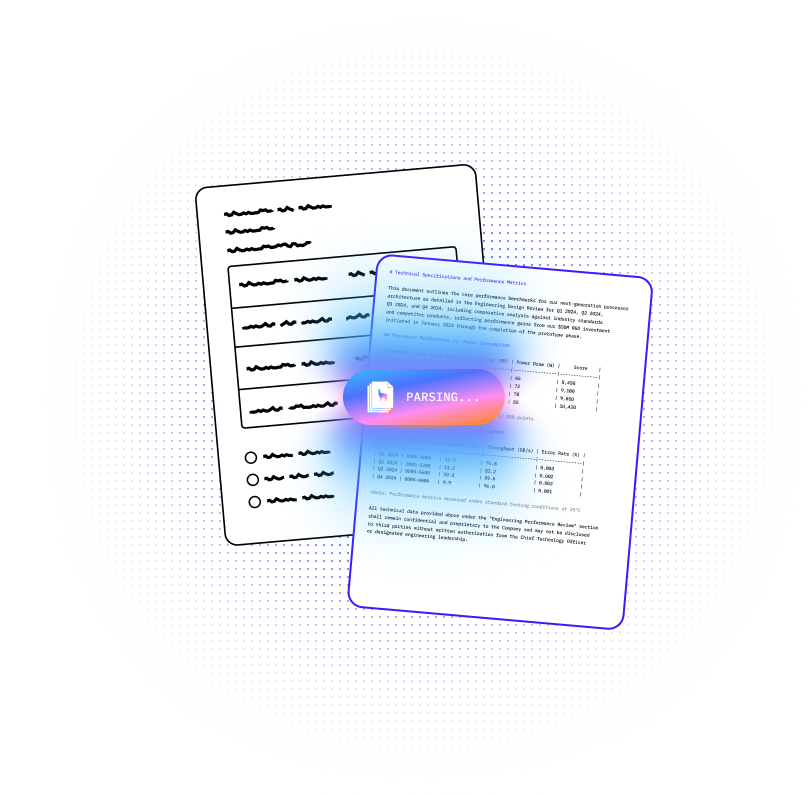
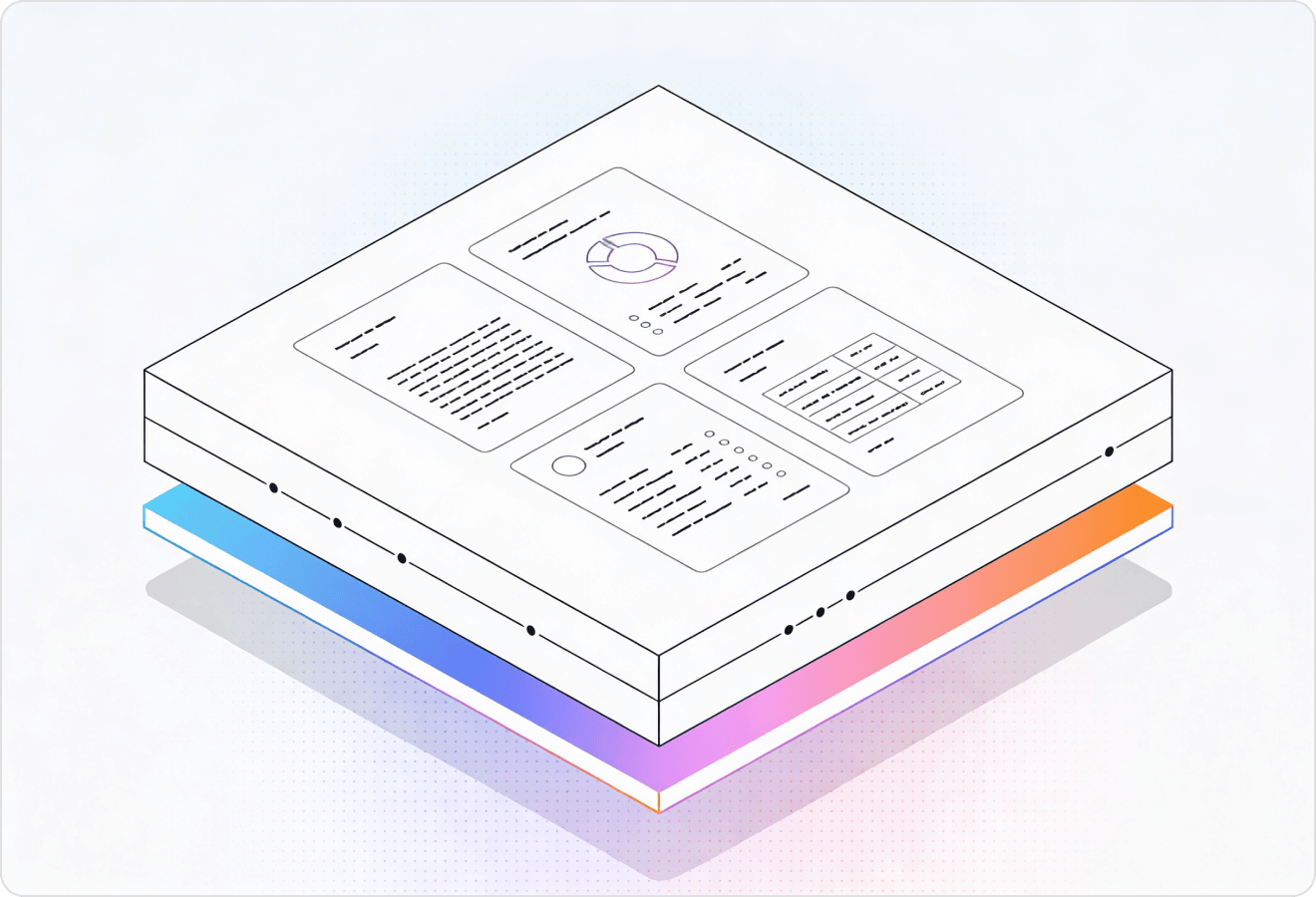

LlamaParse turns messy PDFs, scans, and tables into clean, structured outputs your apps and agents can actually use, fast. It understands layout with vision and validation loops, then delivers Markdown, JSON, or HTML with citations and confidence for reliable automation.
Best-in-Class Accuracy

Turn customer PDFs, pitch decks, and vendor contracts into clean Markdown/JSON so your product can ship document-driven features without weeks of brittle parsing code. Use natural-language parsing instructions to standardize messy inputs into a single schema, keeping your ingestion pipeline stable as templates and formats change.

Parse FNOL packets, adjuster notes, and multi-page estimates with layout-aware table extraction so line items and coverage details don’t get scrambled across columns or headers. Auto-correction loops and granular metadata make exception handling auditable, helping teams reduce rework and speed up straight-through processing.

Convert scanned pleadings, exhibits, and dense contracts into structured outputs with citations and page-level coordinates, so reviewers can trace every extracted clause back to source. Multimodal parsing captures embedded tables and images cleanly, preventing missed evidence and reducing manual document prep.

Extract SKUs, quantities, and pricing from invoices, packing lists, and POs—even when they’re buried in complex tables—into ERP-ready JSON without custom template maintenance. Tier-based agentic processing routes only the hard pages to heavier models, keeping high-volume document ingestion accurate while controlling cost.
The Solution
01
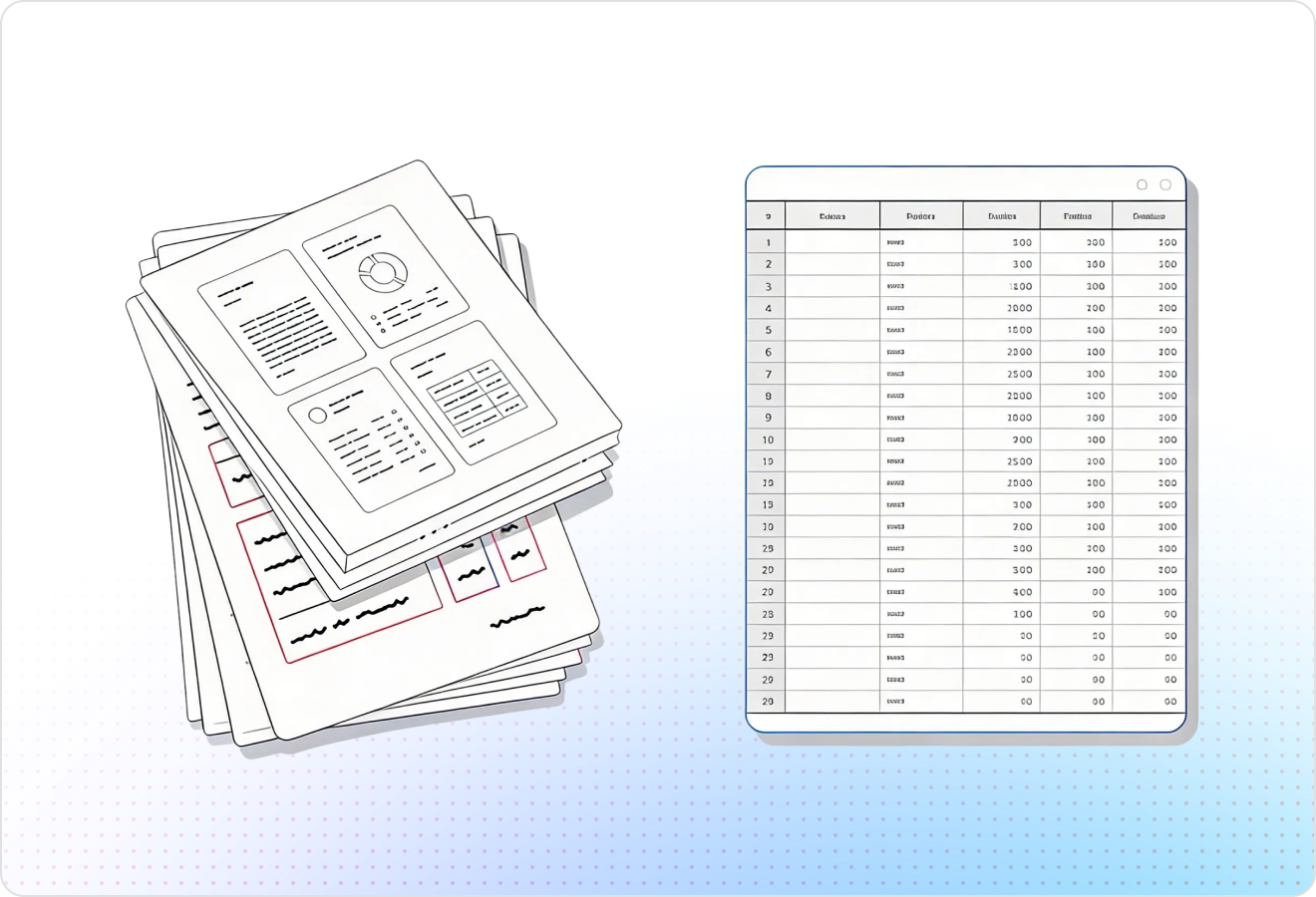
Call LlamaParse via a straightforward REST API or native Python/TypeScript SDKs to turn raw files into clean, AI-ready outputs. It’s built to drop into your existing ingestion service so you can ship a document parsing API without maintaining a brittle parsing stack.
02
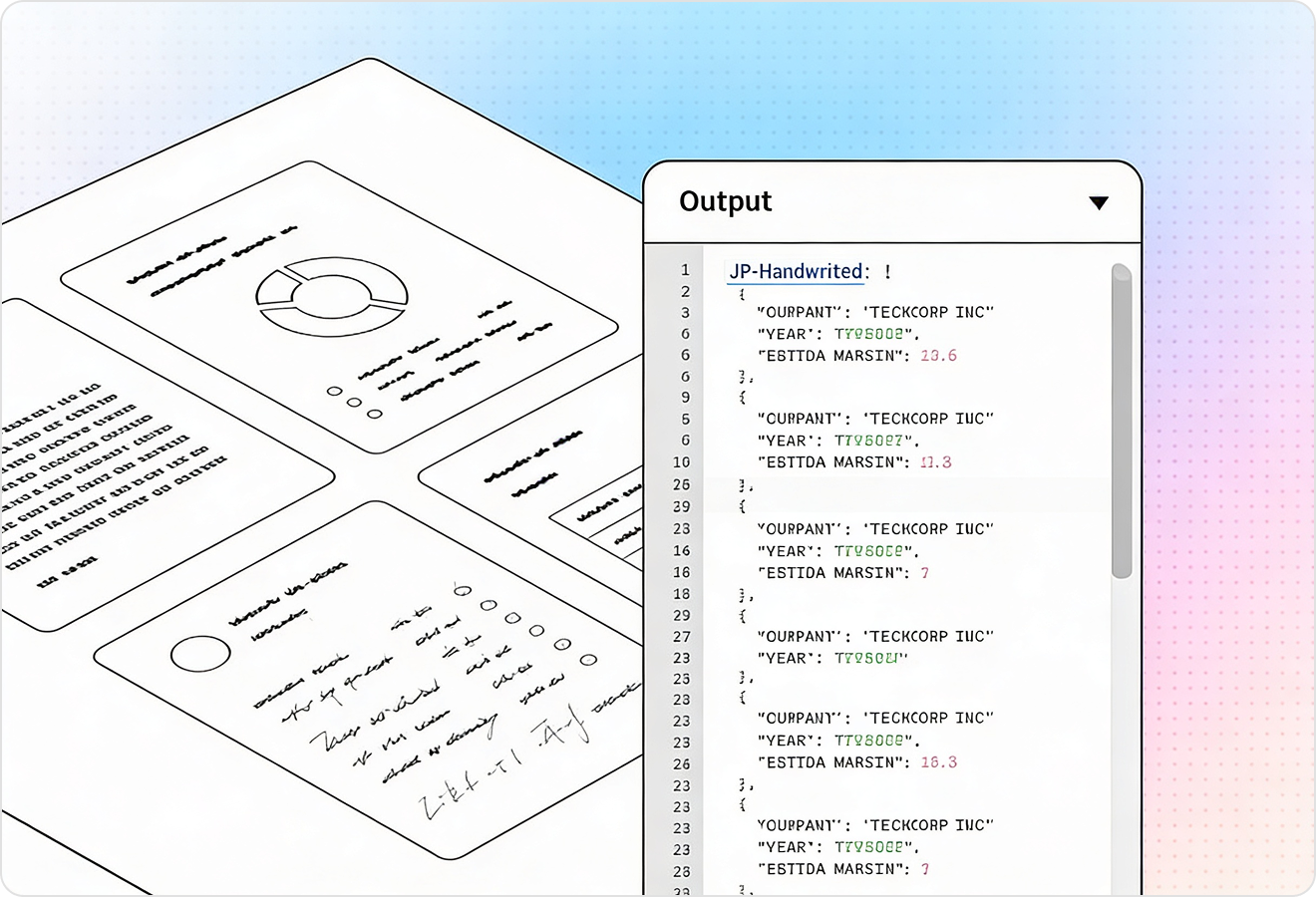
LlamaParse uses layout-aware vision to preserve reading order across multi-column pages, headers/footers, and nested sections. Your API returns structured content instead of scrambled text, which cuts downstream cleanup and reduces extraction errors.
03
Extracts complex tables (merged cells, multi-line headers, nested rows) while keeping structure intact. This makes it easy for your parsing API to deliver consistent table outputs that can be reliably indexed, validated, or loaded into analytics pipelines.
04
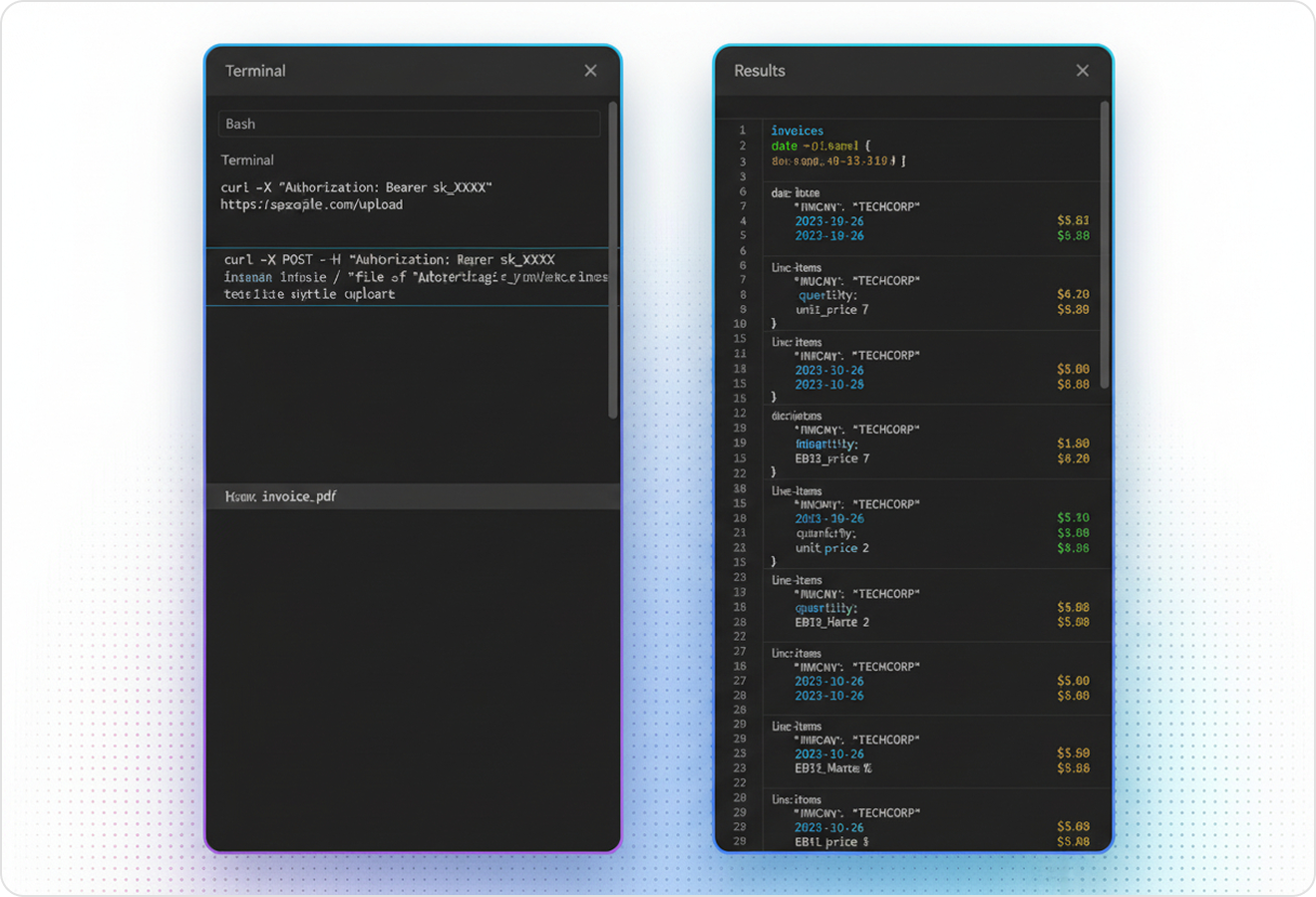
Return strict JSON with element-level metadata like page numbers, node types, and bounding boxes for traceability. This gives your document parsing API deterministic outputs that are easier to test, audit, and wire into downstream workflows.
Technical OCR documentation
Explore our developer guides to easily connect your document pipelines to LlamaParse.
Explore the documentation
Our AI catches the typos that tired eyes miss.

Export to Excel, JSON, XML, or directly via API.

SOC2 Type II compliant with end-to-end encryption.

Train the tool on your specific forms in minutes, not days.

Average processing time of <3 seconds per page.
LlamaParse’s support of a wide variety of filetypes and its accuracy of parsing made it the best tool we tested in our evaluations. The LlamaIndex team was very responsive and we were off to the races within a day.
Common FAQs
01
You can call the API over REST or use the Python/TypeScript SDKs to plug parsing directly into your current upload, queue, or ETL flow. Most teams are able to swap out brittle parsing code quickly and start returning clean, AI-ready outputs without re-architecting their system.
02
Yes—layout-aware parsing keeps content in the correct reading order across columns, headers/footers, and nested sections. That means fewer “scrambled text” issues and less downstream cleanup before you index, summarize, or extract data.
03
Tables are extracted into clean Markdown while preserving structure, including merged cells and complex headers. This makes table outputs more consistent for validation, analytics pipelines, and search indexing compared to plain text extraction.
04
What output formats do I get, and can I rely on them being consistent?
You can return structured JSON designed to be deterministic and easy to test in production. Consistent structure reduces edge-case handling and makes it simpler to build stable downstream workflows.
05
Can I trace parsed content back to the original document for auditing and debugging?
Yes—outputs include element-level metadata like page numbers, node types, and bounding boxes for precise traceability. This is especially useful for audit trails, human review tools, and quickly diagnosing extraction issues.
06
Does this work well for teams shipping a document parsing API to their own customers?
It’s built to drop into your service as a parsing layer, so you can expose document parsing capabilities without maintaining a fragile parsing stack. You get predictable outputs and a clear integration path, helping you ship faster and spend less time chasing parsing edge cases.