Nov 14, 2025
Document AI: The Next Evolution of Intelligent Document ProcessingPersona
Industry
Use cases
Importer Security Filing OCR
[ Importer Security Filing OCR ]

Use LlamaParse to turn messy ISF documents into verified fields your team can approve fast.
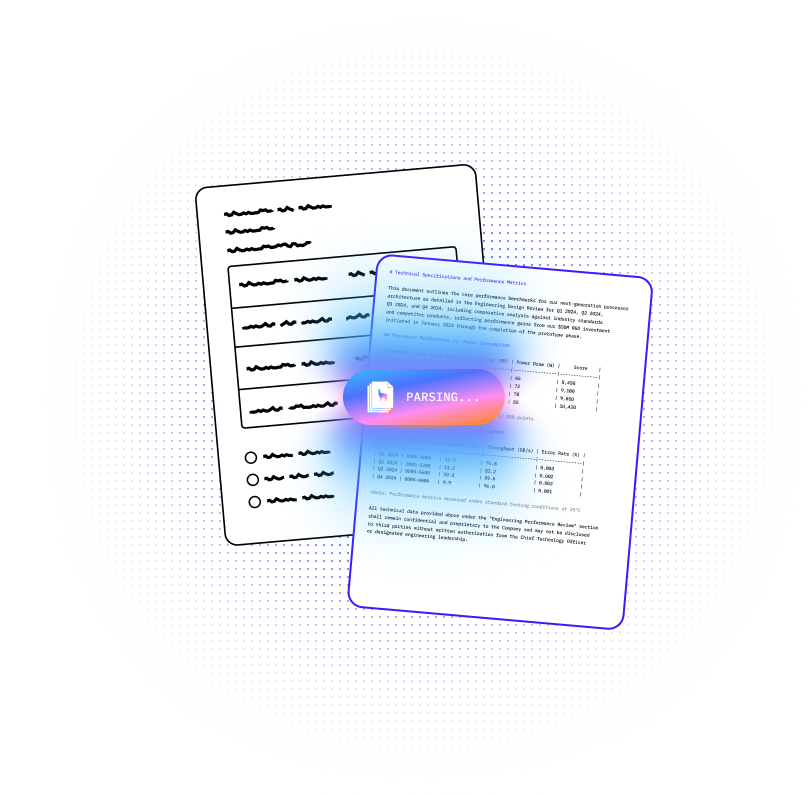


LlamaParse turns messy Importer Security Filing PDFs into clean, structured JSON or tables you can validate, query, and push downstream. It stays reliable when layouts change, using layout-aware vision, validation loops, and confidence metadata to reduce rework and exceptions.
Best-in-Class Accuracy

Turn ISF packets (commercial invoices, packing lists, bills of lading, arrival notices) into clean JSON with citations so brokers can populate 10+2 fields without rekeying. LlamaParse’s layout-aware table extraction and auto-correction loops reduce mismatched container/HTS/shipper data that triggers holds, exams, and chargebacks.

Normalize supplier documents into a single, consistent ISF-ready dataset even when every factory uses a different template or multi-column format. With natural-language parsing instructions, teams can enforce the exact output schema for SKU-to-carton mappings and party details, cutting last-minute ISF scrambles and demurrage risk.

Ship an “upload your docs, we file your ISF” workflow fast by using LlamaParse as the ingestion layer that converts messy PDFs into structured, verifiable fields. Tier-based agentic processing and cost optimizer mode keep unit economics predictable while still handling hard scans and table-heavy documents without custom training.

Extract ISF-critical data from supplier-provided documents that often include complex part tables, mixed languages, and inconsistent Incoterms or consignee fields. JSON mode plus granular metadata creates an auditable trail (page-level traceability) that supports internal compliance reviews and accelerates broker approvals.
The Solution
01
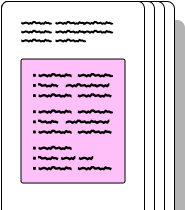
LlamaParse reads ISF-style forms with layout-aware computer vision, preserving field boundaries, checkboxes, and multi-column sections so values don’t get scrambled. This keeps importer, consignee, vessel, and port details aligned to the right fields for reliable downstream filing.
02
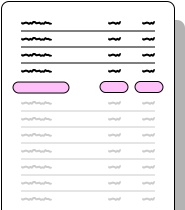
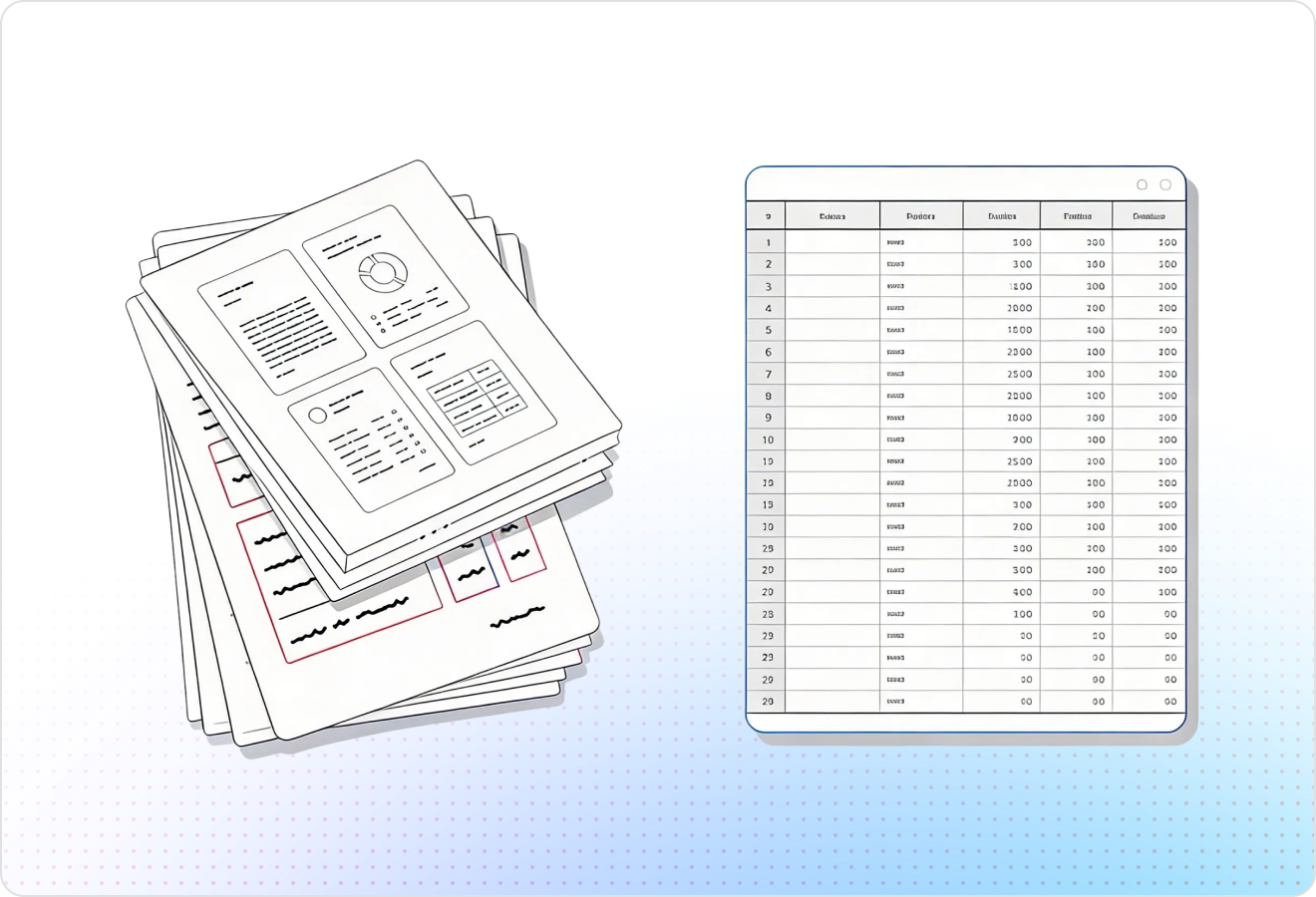
LlamaParse accurately extracts dense tables and repeating line items (e.g., container details, bill references, commodity lines) into structured, machine-usable output. For Importer Security Filing workflows, that means fewer missed rows and cleaner data for validation against your TMS/ERP.
03
You can give LlamaParse natural-language instructions to normalize how key ISF fields are returned, including consistent naming and formatting. This helps enforce your internal schema for elements like HTS codes, manufacturer identity, and country-of-origin without brittle regex post-processing.
04
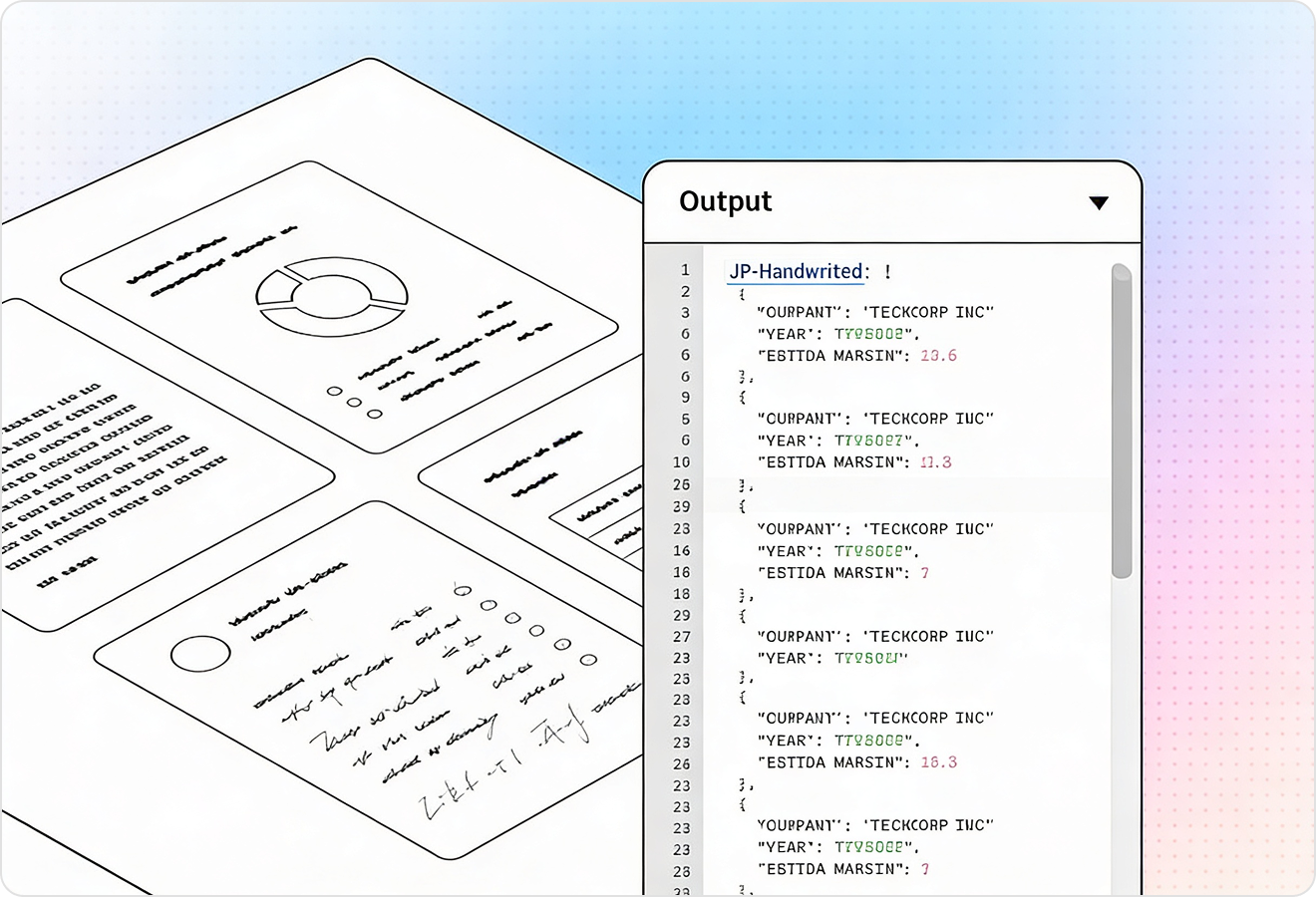
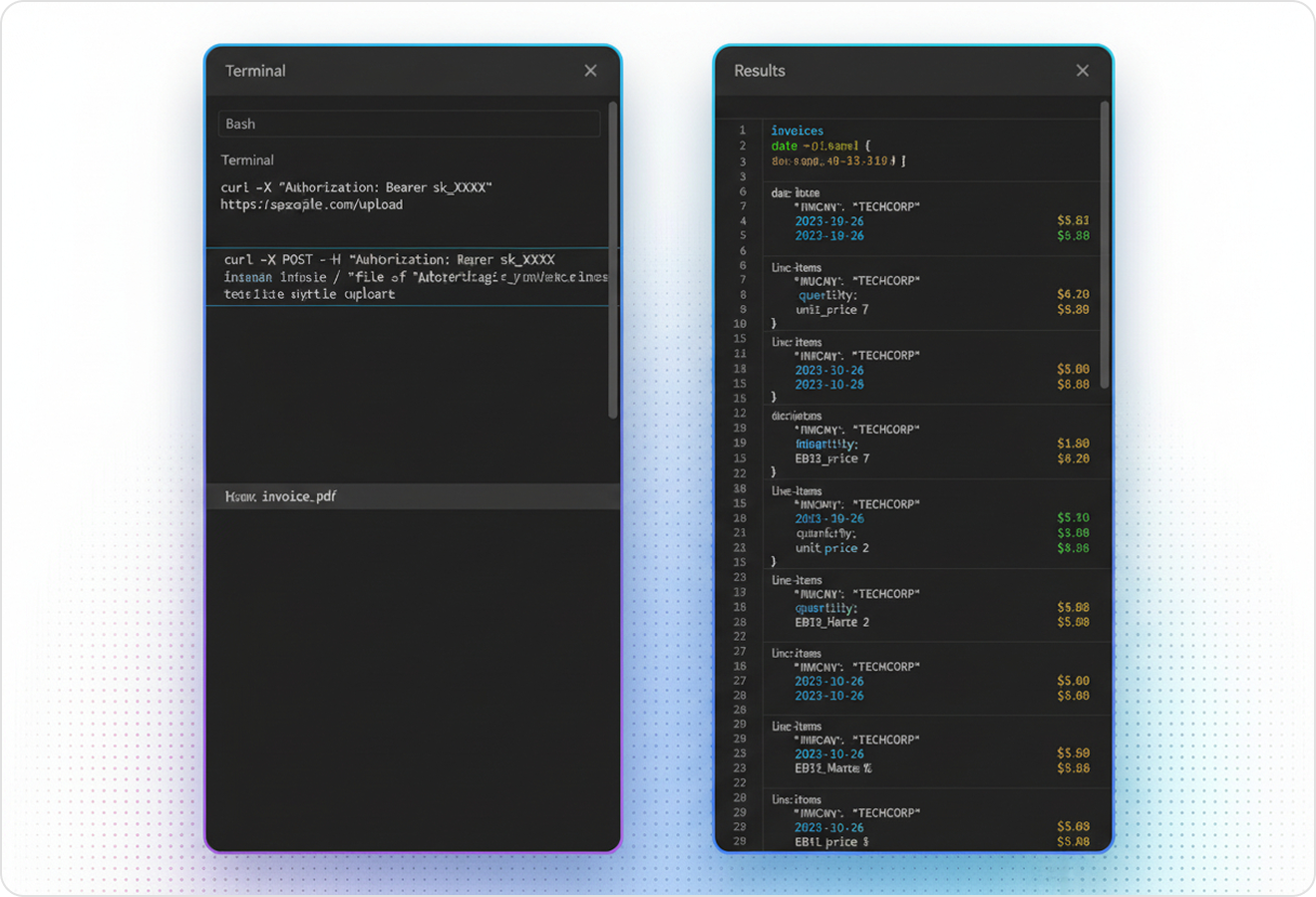
LlamaParse can return JSON with granular metadata like page references and element coordinates for every extracted field. In ISF review and exception handling, this gives auditors and ops teams fast traceability back to the exact spot in the source document before submission.
Technical OCR documentation
Explore our developer guides to easily connect your document pipelines to LlamaParse.
Explore the documentation
Our AI catches the typos that tired eyes miss.

Export to Excel, JSON, XML, or directly via API.

SOC2 Type II compliant with end-to-end encryption.

Train the tool on your specific forms in minutes, not days.

Average processing time of <3 seconds per page.
LlamaParse’s support of a wide variety of filetypes and its accuracy of parsing made it the best tool we tested in our evaluations. The LlamaIndex team was very responsive and we were off to the races within a day.
Common FAQs
01
No—layout-aware extraction preserves field boundaries, checkboxes, and multi-column sections so values stay aligned to the correct ISF fields. This reduces costly rework and helps your team trust the output before submission.
02
It captures tables and line items into clean, structured output, minimizing missed rows and partial entries. That means faster validation against your TMS/ERP and fewer exceptions during ISF prep.
03
Yes—schema-guided parsing lets you provide instructions to normalize field names and formats consistently across documents. You get predictable output that matches your internal schema, even when vendors change templates.
04
How do we verify extracted values during review or audits before filing?
The system can return verifiable JSON with page references and element coordinates for every extracted field. Reviewers can jump straight to the exact spot in the source document to confirm data quickly and confidently.
05
What happens when the source documents vary in layout or quality (scans, faxes, different forwarders)?
The approach is designed for real-world variability by using layout-aware understanding rather than relying on fixed templates. You get more stable extraction across suppliers, reducing the need for per-vendor configuration.
06
How does this help us reduce filing errors and speed up ISF processing end-to-end?
By keeping fields correctly aligned, capturing all line items, and normalizing to your schema, the extracted data is ready for downstream validation and filing workflows. That translates into fewer corrections, faster cycle times, and a smoother handoff from document intake to submission.