Nov 14, 2025
Document AI: The Next Evolution of Intelligent Document ProcessingPersona
Industry
Use cases
Veterinary Medical Records OCR
[ Veterinary Medical Records OCR ]

Use LlamaParse to turn messy vet records into structured, reviewable fields with confidence scores.
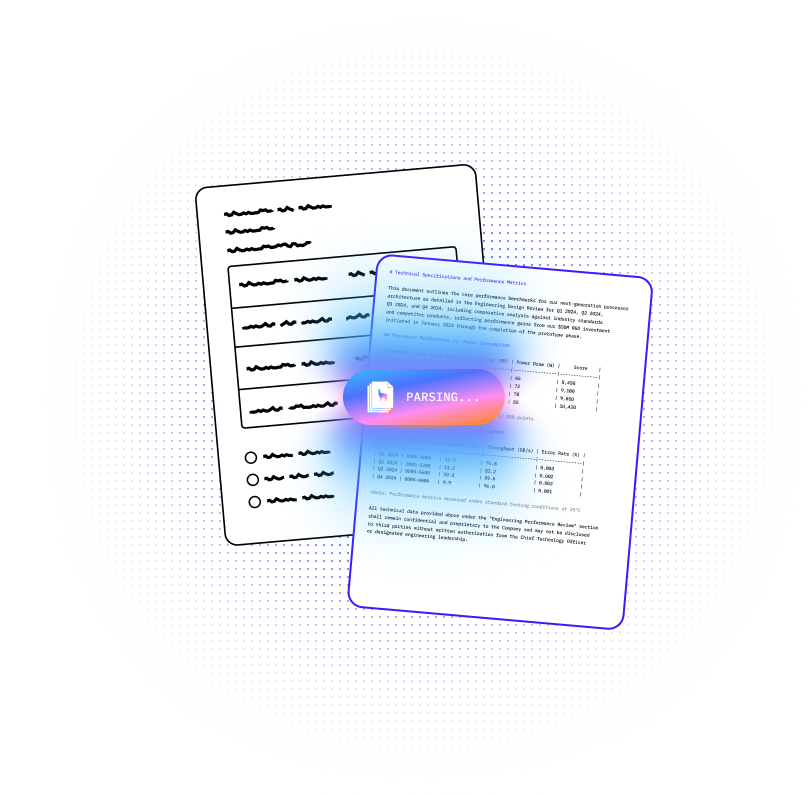
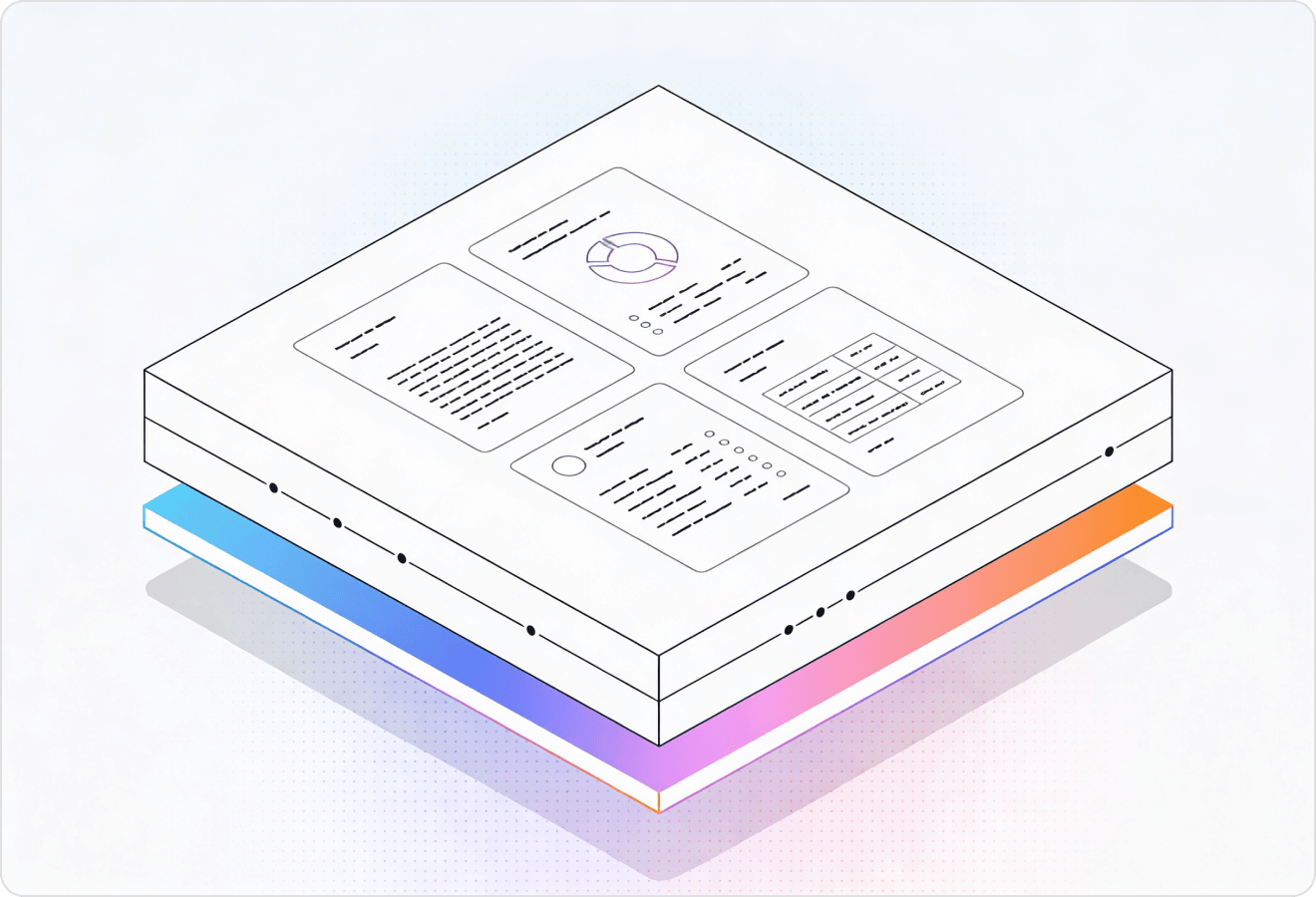
LlamaParse turns messy veterinary charts, scanned PDFs, and referral notes into clean, structured records your systems can actually use. It understands layouts and tables, validates extractions with confidence metadata, and reduces manual entry across high-volume record workflows.
Best-in-Class Accuracy

Use LlamaParse inside LlamaCloud to turn scanned SOAP notes, lab results, imaging reports, and vaccine tables into clean Markdown/JSON so your PMS pulls meds, diagnoses, and reminders without manual retyping. Layout-aware extraction preserves multi-column treatment plans and dosing tables, reducing charting time and cutting claim and referral delays caused by messy, inconsistent documents.

Ingest vet invoices and medical records with agentic document parsing that correctly interprets procedure tables, line-item totals, and embedded notes, producing structured JSON with confidence scores for fast adjudication. Auto correction loops reduce exception queues from broken OCR, so adjusters spend time on true edge cases instead of fixing extraction errors.

Convert adverse event forms, site binders, and study reports into traceable, citation-backed data so teams can search by indication, species, dose, and outcome without building brittle parsing code. Multimodal parsing captures charts and dosing schedules accurately, enabling faster QC and more reliable downstream analytics for regulatory-ready reporting.

Ship an import-and-index workflow for legacy clinic PDFs in days by calling LlamaParse APIs and emitting schema-shaped JSON that fits your database and product UX. Tier-based processing keeps unit economics predictable by routing simple pages cheaply and escalating only complex scans, so you can scale onboarding without a ballooning parsing bill.
The Solution
01
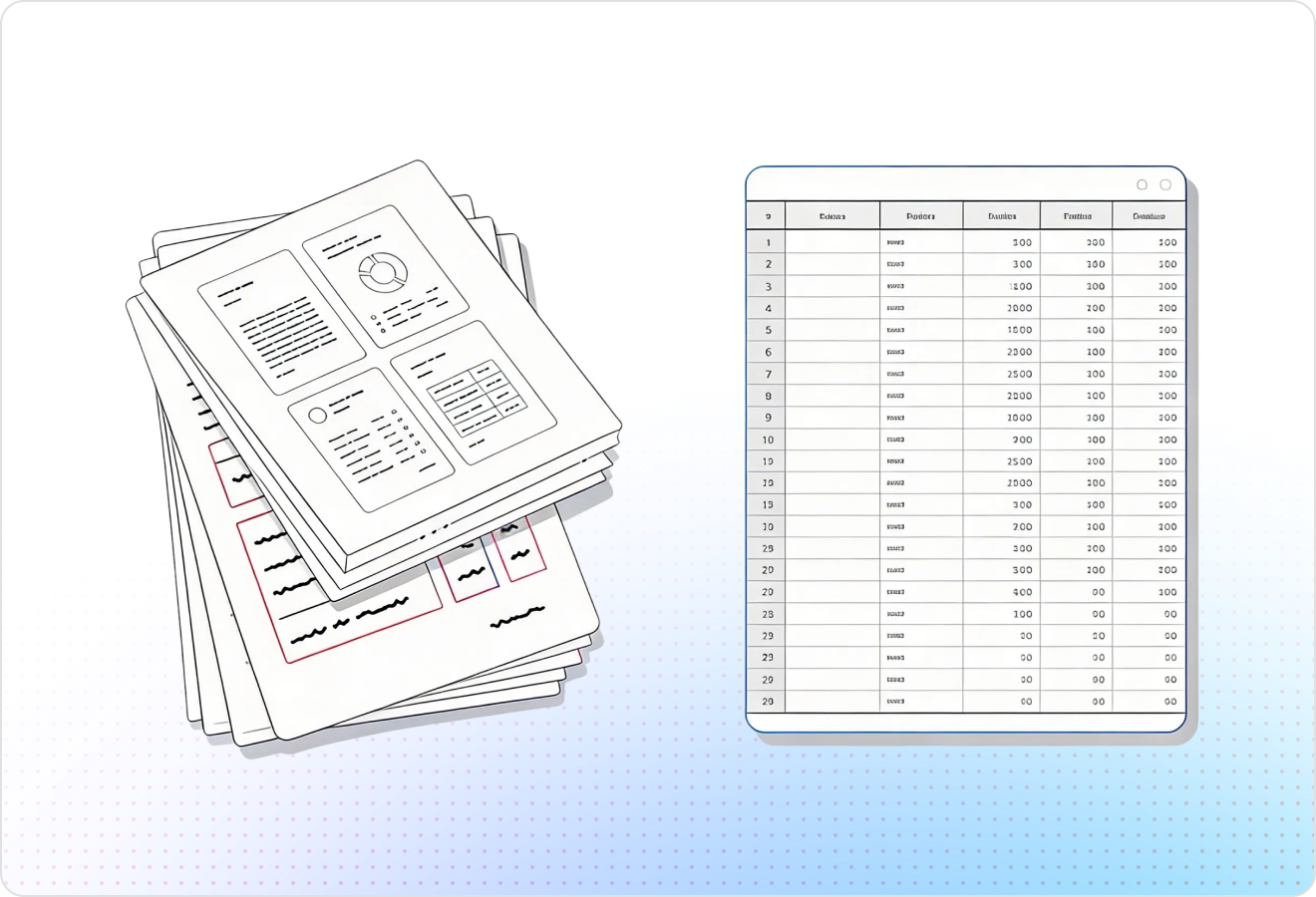
LlamaParse uses layout-aware vision to preserve reading order across multi-column SOAP notes, letterheads, and scanned intake forms. That means veterinary histories, diagnoses, and plan sections don’t get scrambled when you ingest real-world clinic PDFs and faxes.
02
It reliably extracts structured tables like vaccination schedules, lab panels, medication lists, and anesthesia monitoring sheets into clean Markdown or JSON. This lets you convert veterinary medical records into database-ready rows instead of manually untangling broken table text.
03
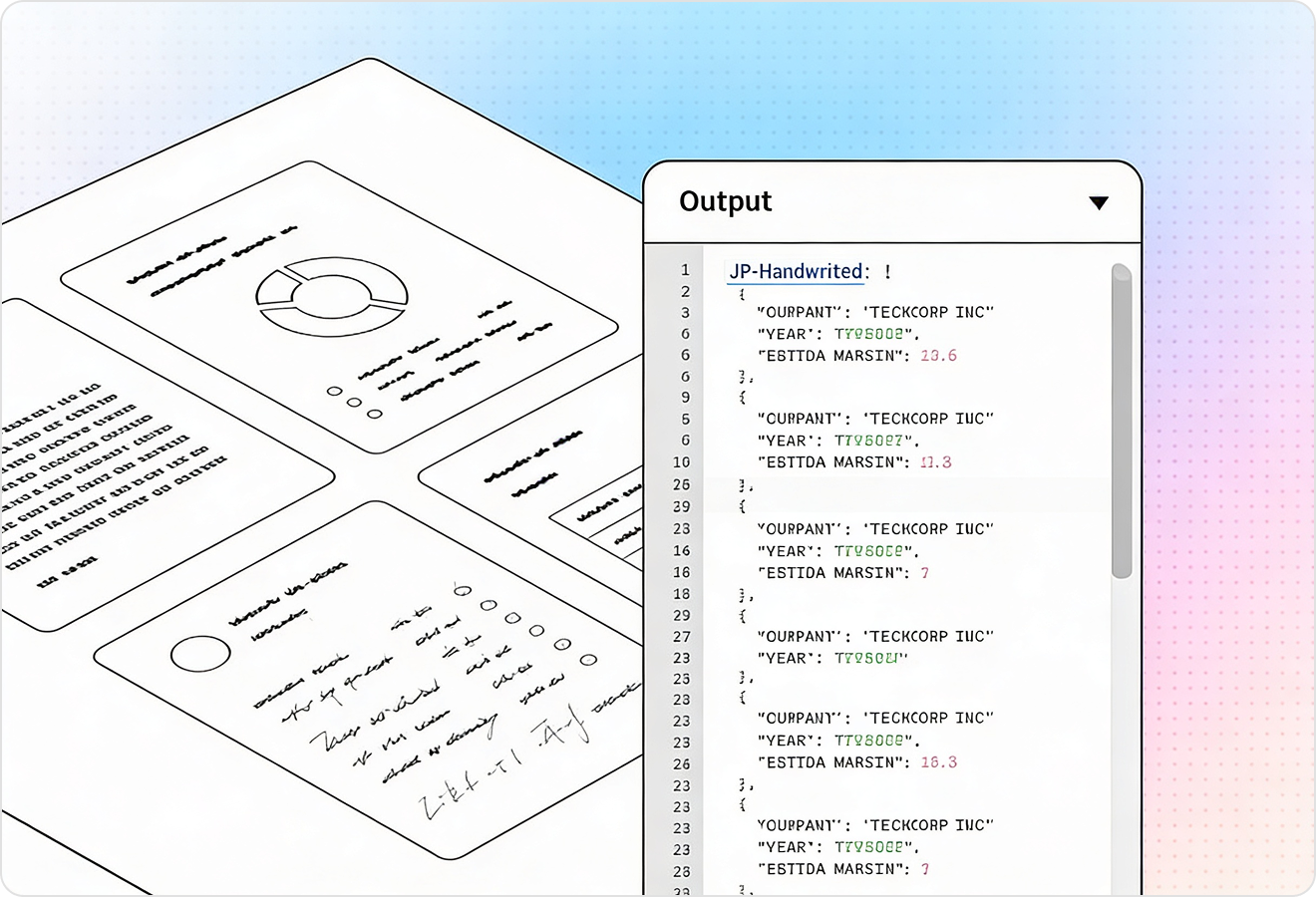
LlamaParse runs self-correction and validation steps to reduce common extraction errors from low-quality scans and noisy PDFs. For veterinary records, this improves straight-through processing on critical fields like dosages, dates, weights, and lab values where small mistakes matter.
04
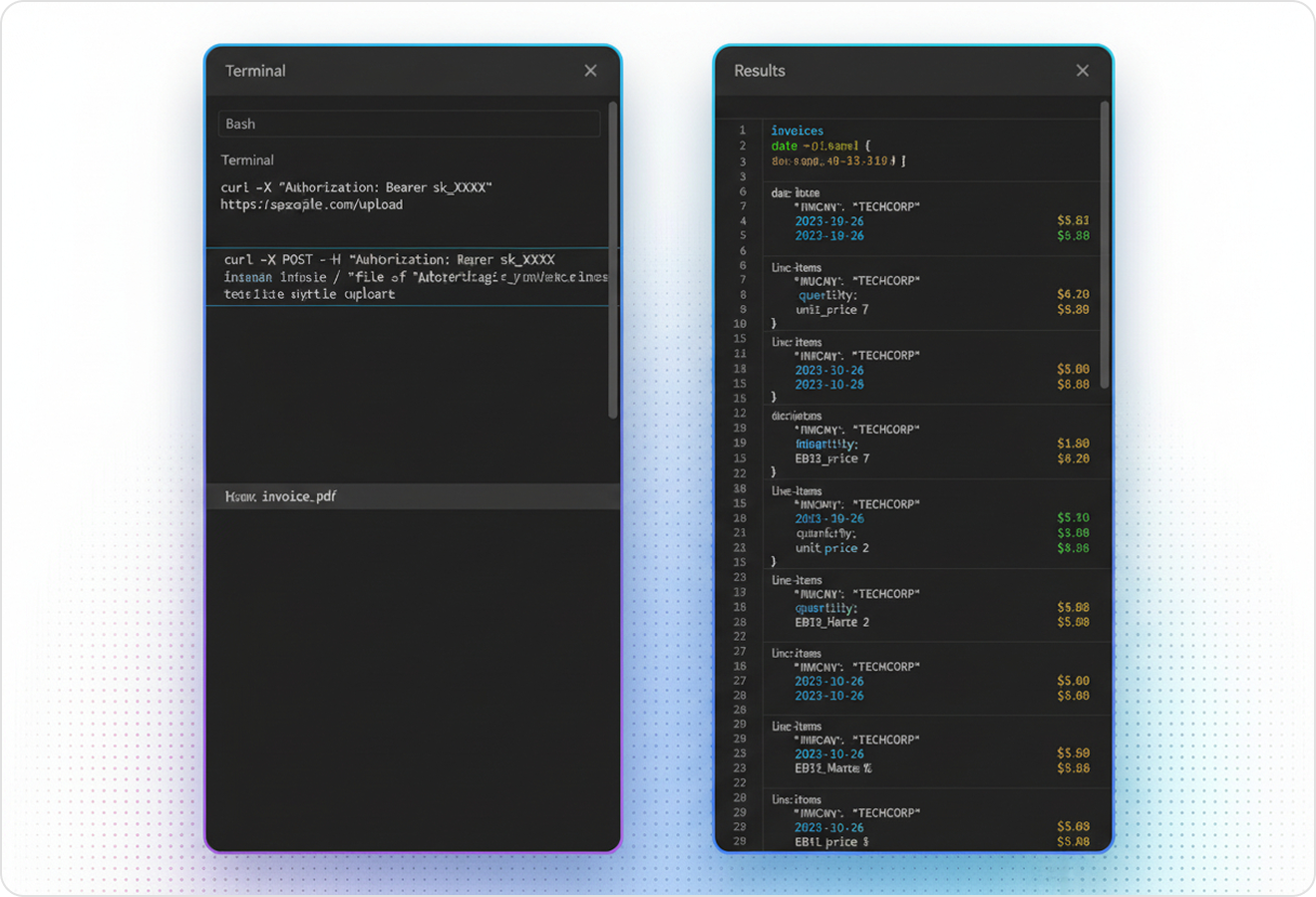
JSON mode returns structured fields with granular metadata like page numbers and bounding boxes for each extracted element. For veterinary medical records, you can trace every extracted allergy, medication, or lab result back to its exact source location for fast QA and human review.
Technical OCR documentation
Explore our developer guides to easily connect your document pipelines to LlamaParse.
Explore the documentation
Our AI catches the typos that tired eyes miss.

Export to Excel, JSON, XML, or directly via API.

SOC2 Type II compliant with end-to-end encryption.

Train the tool on your specific forms in minutes, not days.

Average processing time of <3 seconds per page.
LlamaParse’s support of a wide variety of filetypes and its accuracy of parsing made it the best tool we tested in our evaluations. The LlamaIndex team was very responsive and we were off to the races within a day.
Common FAQs
01
Yes. Layout-aware parsing preserves the original reading flow across multi-column notes, letterheads, and messy scans, so histories, assessments, and plans don’t get mixed together. This reduces manual cleanup and makes downstream review far faster.
02
It’s designed to pull structured tables and flowsheets into clean Markdown or JSON instead of broken lines of text. That means vaccine dates, lab values, and med details can be stored as database-ready rows with much less reformatting.
03
Auto-validation loops run self-correction steps to catch common OCR errors caused by blur, skew, and artifacts. This improves straight-through processing on critical fields like dosages, dates, weights, and lab results where accuracy matters most.
04
Can we trace each extracted field back to the original record for QA and audits?
Yes—JSON mode includes citations such as page numbers and bounding boxes for each extracted element. Reviewers can click straight to the source location for any medication, allergy, or lab value, making QA faster and more defensible.
05
What output formats do you support for integrating with our EMR, data warehouse, or analytics pipeline?
You can export structured JSON for direct ingestion and clean Markdown for human-readable review and templating. This makes it easy to map extracted fields into your database schema and automate downstream workflows without brittle post-processing.
06
How much setup is required to start converting veterinary medical records into usable data?
Most teams can start quickly by pointing the parser at existing PDFs and scans and selecting the fields they care about. With layout-aware parsing, table extraction, and built-in validation, you spend less time tuning rules and more time processing records reliably at scale.