Nov 14, 2025
Document AI: The Next Evolution of Intelligent Document ProcessingPersona
Industry
Use cases
Mortgage Credit Report OCR
[ Mortgage Credit Report OCR ]

Use LlamaParse to turn credit reports into structured fields with citations you can trust.
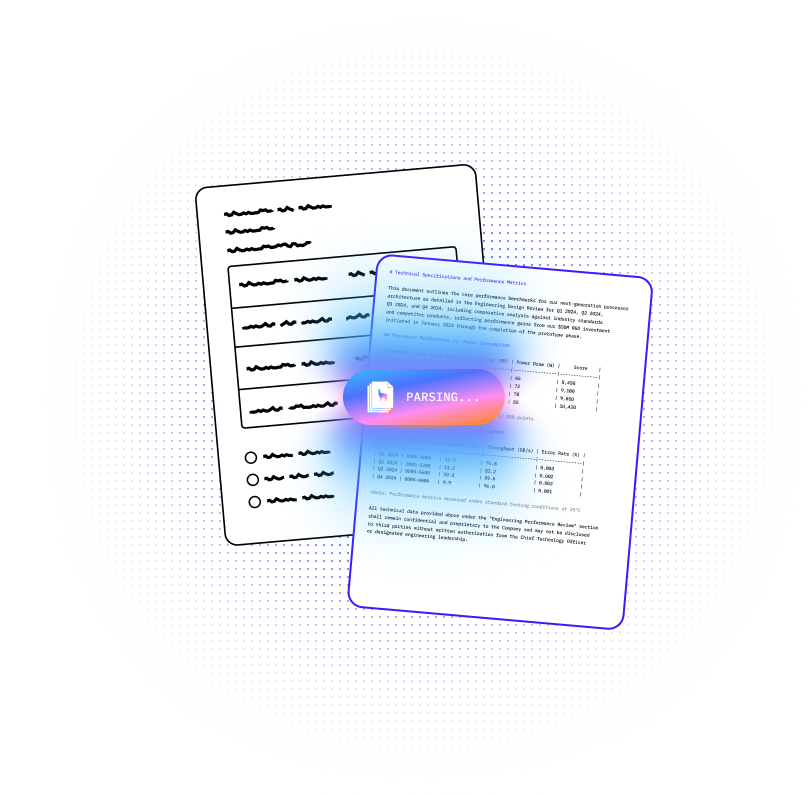
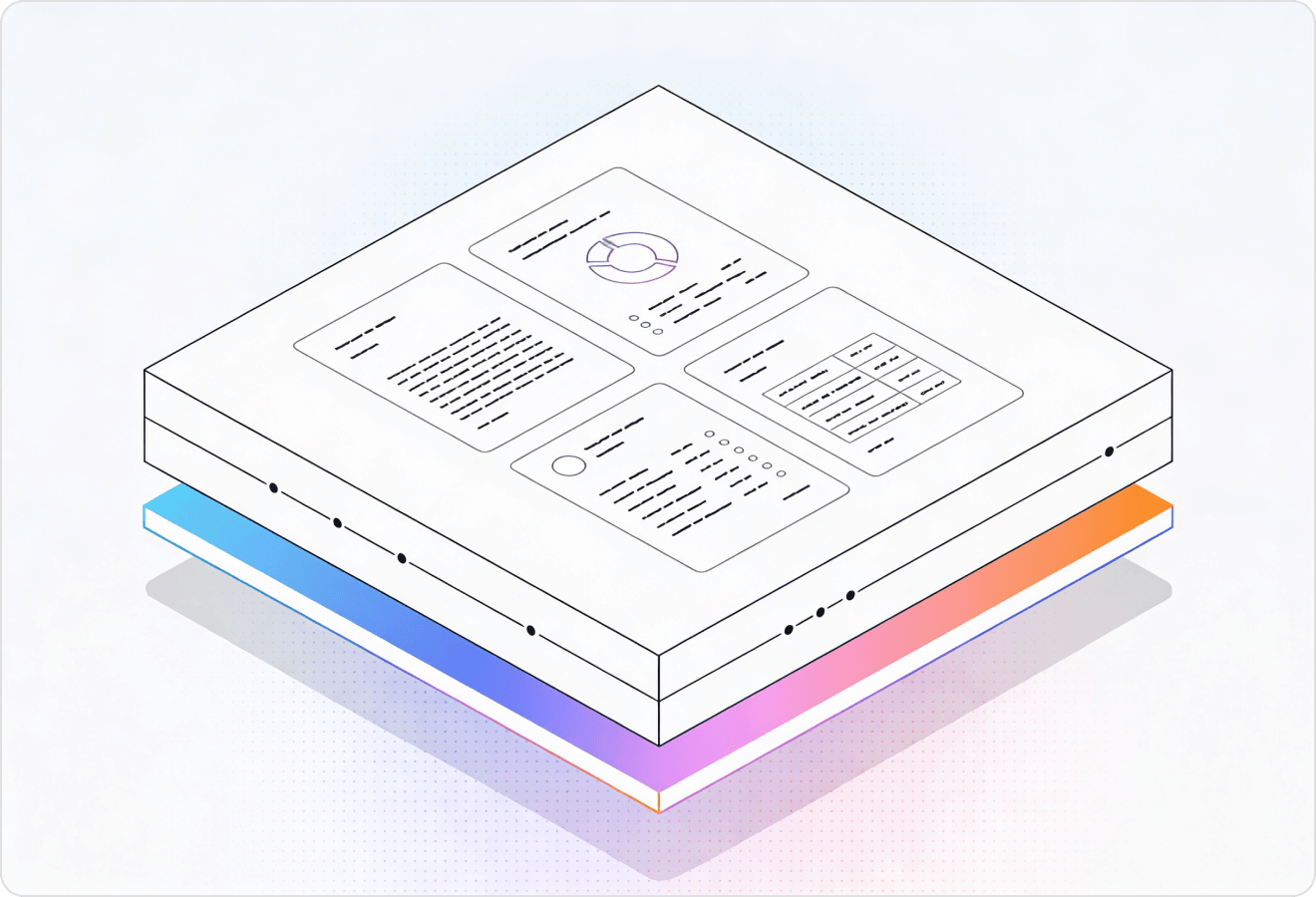

LlamaParse turns messy, multi-page mortgage credit reports into clean JSON or tables your underwriting and risk systems can actually consume. Agentic parsing reads layout, tables, and embedded artifacts, adds citations and confidence, and reduces manual review without constant template fixes.
Best-in-Class Accuracy

Turn borrower credit reports into clean, layout-faithful JSON with citations, so underwriting rules can evaluate tradelines, inquiries, and public records without manual rekeying. LlamaParse handles multi-column sections and dense tables reliably, reducing conditions, rework, and decision cycle time when report formats change.

Extract credit-based insurance factors and prior-address history from mortgage credit reports to speed eligibility checks and fraud flags during quoting and claims review. Natural-language parsing instructions let teams standardize exactly what fields are captured per state/product, without building brittle regex pipelines.

Convert credit report PDFs into auditable, structured outputs that screening teams can use to verify identity signals, address timelines, and adverse items with confidence scores and page-level traceability. This reduces analyst review time and improves dispute handling by pointing directly to the source snippet for every decision.

Ship a production-grade credit intake workflow fast by using LlamaParse APIs to transform uploads into structured data your risk model can consume immediately. Tier-based processing keeps unit economics predictable by reserving heavier agentic parsing only for messy scans and edge-case pages.
The Solution
01
LlamaParse detects columns, sections, and nested tables so credit report tradelines and inquiries don’t get scrambled into a single text blob. That means you can reliably capture account status, balances, limits, and dates even when the report format changes across bureaus and vendors.
02
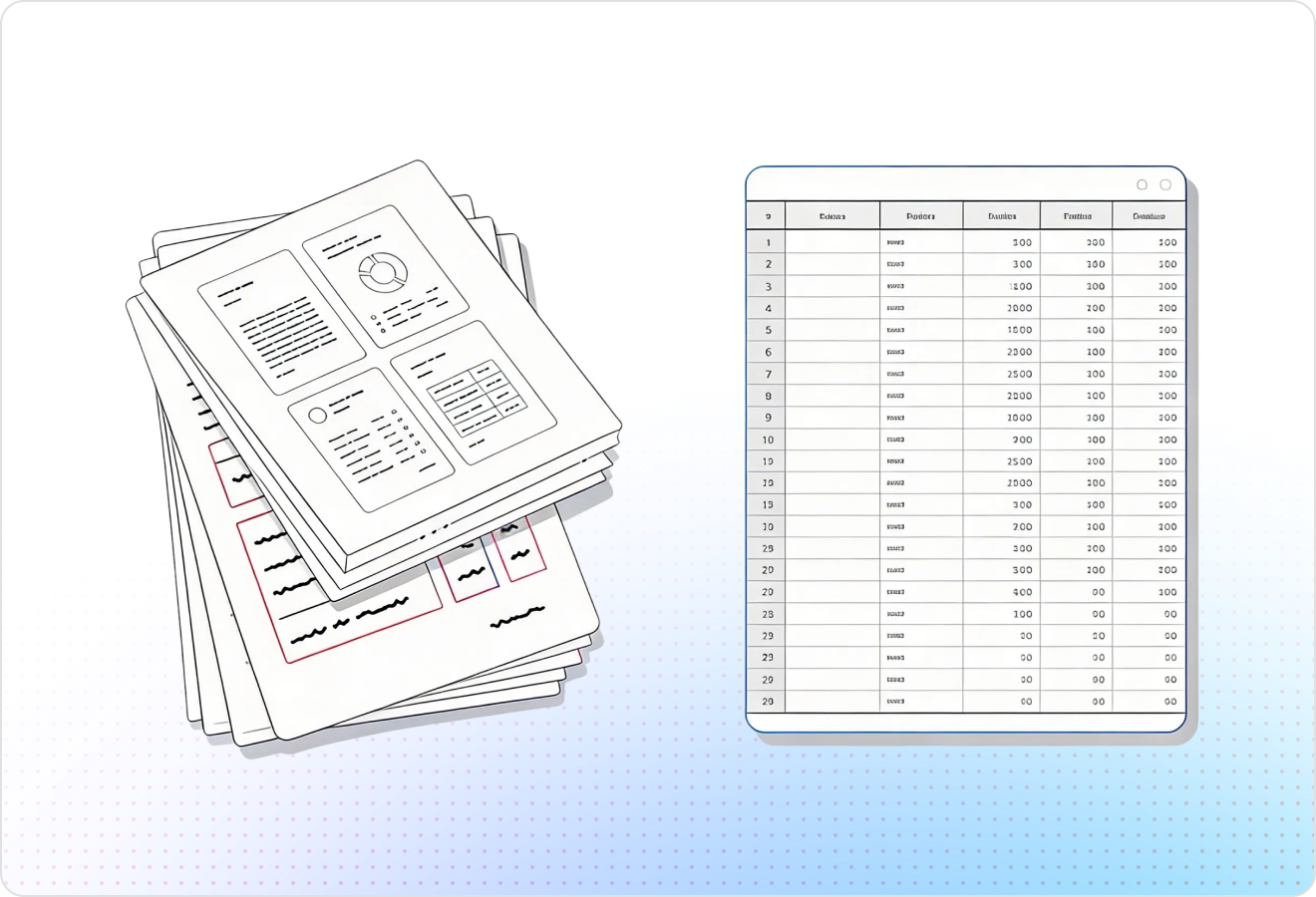
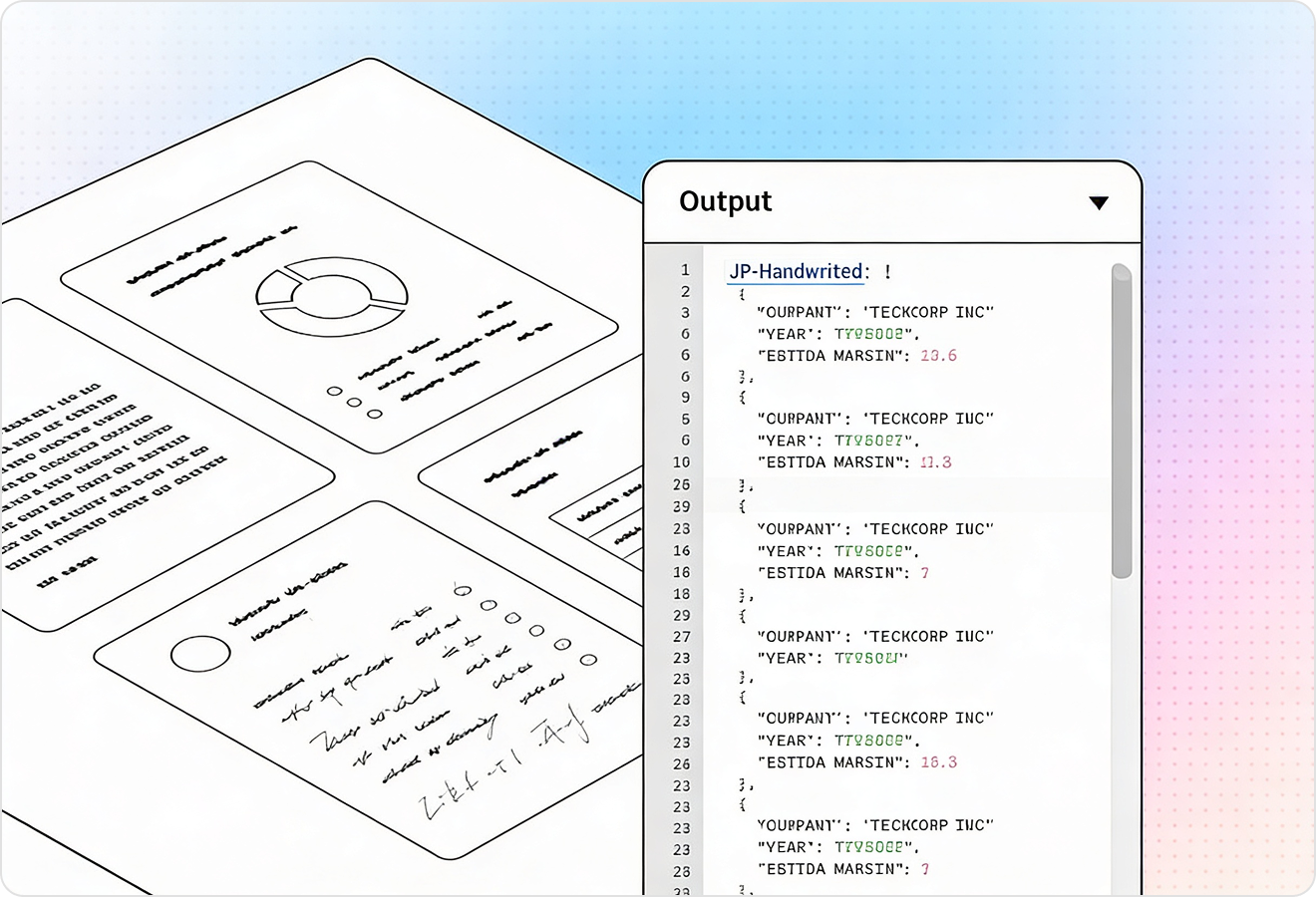
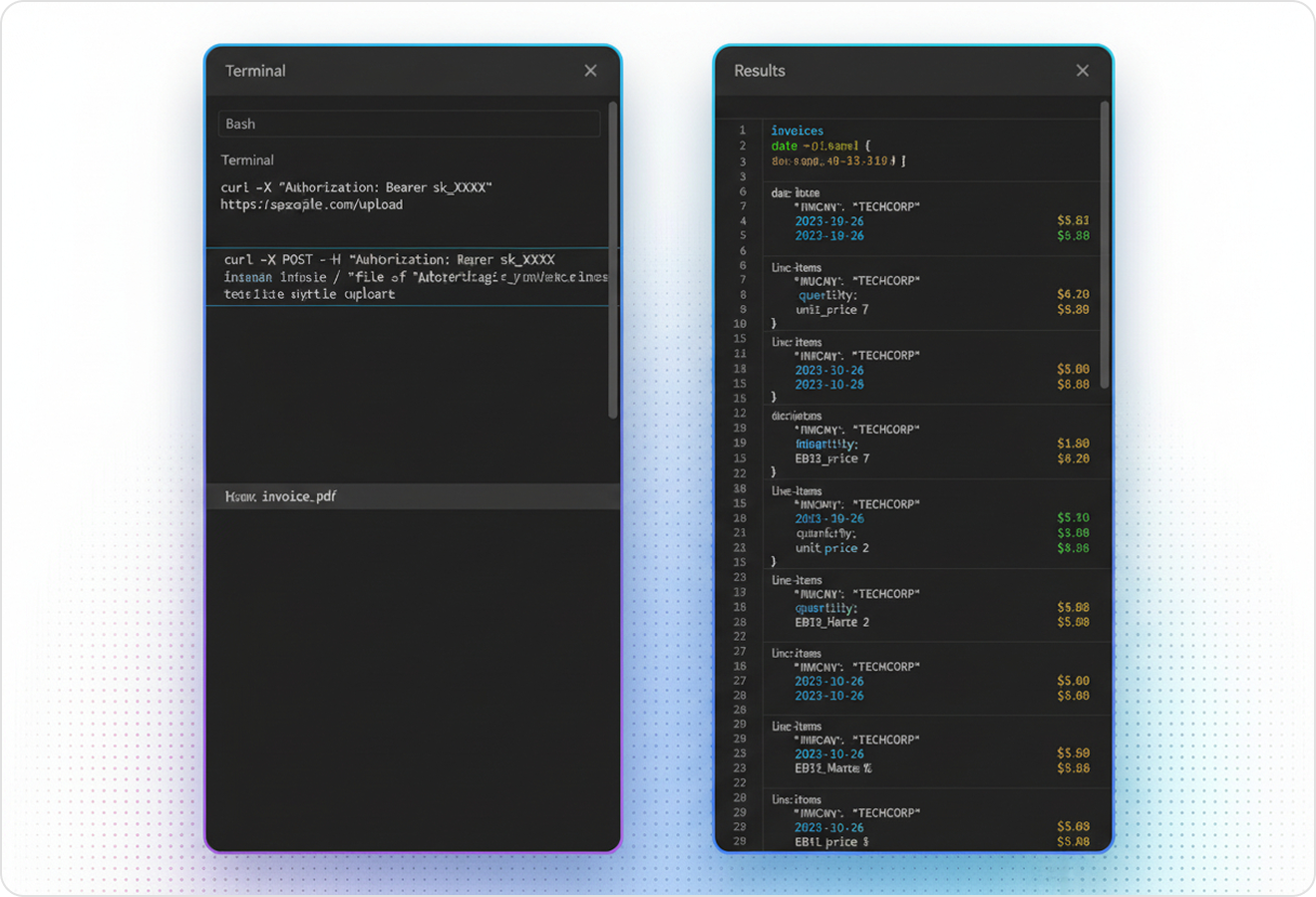
Export mortgage credit reports into clean JSON so borrower identity fields, address history, and tradeline attributes land in consistent keys your pipeline can trust. This makes it straightforward to map parsed data into LOS/CRM systems and run deterministic eligibility and compliance checks.
03
Every extracted value can include page references and spatial coordinates, so teams can trace “where did this number come from?” in seconds. For mortgage underwriting, that audit trail reduces rework and supports human review on disputed items without rereading the full report.
04
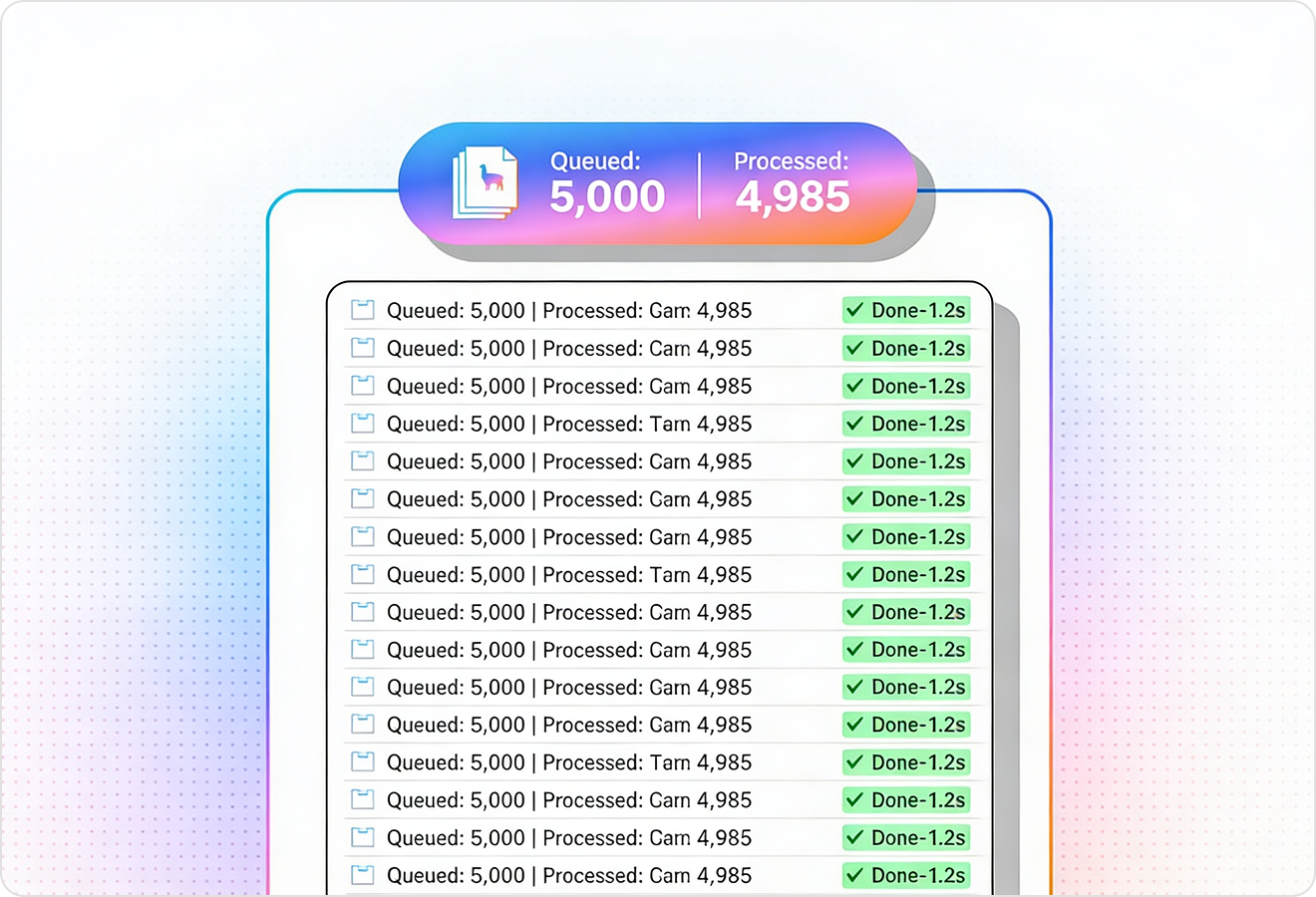
LlamaParse uses validation steps to catch common extraction errors like broken reading order, misread digits, or malformed tables on low-quality scans. This improves straight-through processing for credit reports and cuts the volume of manual exceptions underwriters need to handle.
Technical OCR documentation
Explore our developer guides to easily connect your document pipelines to LlamaParse.
Explore the documentation
Our AI catches the typos that tired eyes miss.

Export to Excel, JSON, XML, or directly via API.

SOC2 Type II compliant with end-to-end encryption.

Train the tool on your specific forms in minutes, not days.

Average processing time of <3 seconds per page.
LlamaParse’s support of a wide variety of filetypes and its accuracy of parsing made it the best tool we tested in our evaluations. The LlamaIndex team was very responsive and we were off to the races within a day.
Common FAQs
01
Yes—layout-aware table extraction detects columns, sections, and nested tables so tradelines, inquiries, and public records don’t collapse into a single text block. This keeps key fields like account status, balance, credit limit, and dates aligned correctly across changing report formats.
02
You can export parsed reports as structured JSON with consistent keys for borrower identity, address history, and tradeline attributes. That makes it easy to map into LOS/CRM systems and run deterministic eligibility, pricing, and compliance checks without brittle, custom parsing.
03
Every extracted value can include page references and spatial coordinates, so reviewers can jump directly to the exact location on the source document. This creates a clear audit trail for disputes and QC without rereading the entire report.
04
How does it handle low-quality scans, skewed pages, or misread digits?
Agentic auto-correction loops add validation steps that catch common OCR issues like broken reading order, malformed tables, and digit misreads. The result is higher straight-through processing and fewer manual exceptions for underwriting teams.
05
Can we trust the data to be consistent enough for automated decisioning and rules engines?
Structured JSON output standardizes how fields land in your pipeline, reducing ambiguity caused by vendor- and bureau-specific formatting. With consistent keys and validation-driven corrections, your rules can be simpler, more reliable, and easier to maintain over time.
06
How quickly can we pilot this on our existing credit report PDFs and workflows?
Most teams start by running a small batch of real reports to validate accuracy on identity fields, tradelines, and inquiries, then expand once mappings are confirmed. Because the output is clean JSON with traceable citations, integration and stakeholder review typically move faster and with fewer back-and-forth cycles.