Nov 14, 2025
Document AI: The Next Evolution of Intelligent Document ProcessingPersona
Industry
Use cases
Cash Settlement Form OCR
[ Cash Settlement Form OCR ]

Use LlamaParse to capture every field accurately, validate results, and reduce manual reconciliation work.
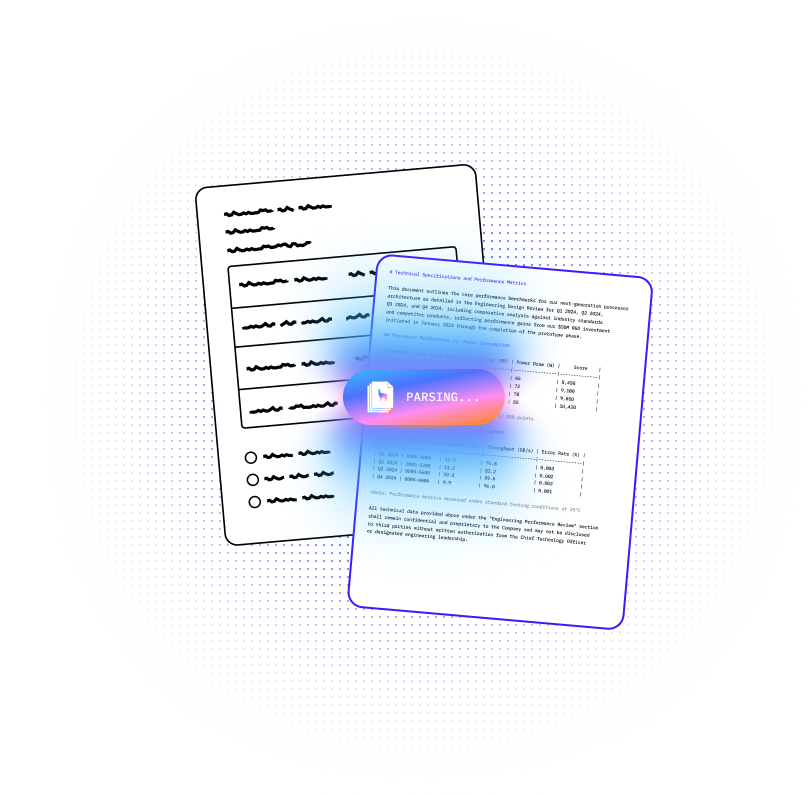


LlamaParse turns messy cash settlement forms into clean, consistent JSON so you can reconcile faster, reduce manual keying, and prevent downstream errors. It uses agentic document parsing that understands layout and tables, then validates fields with metadata so reviewers can trust every value.
Best-in-Class Accuracy

Parse cash settlement forms into audit-ready JSON with line-item tables, signatures, and page-level citations, so claim payments post faster with fewer exceptions. Layout-aware extraction prevents missed fields when adjuster templates change, reducing rework and leakage in high-volume workflows.

Convert cash settlement packets into structured records for reconciliation, exception handling, and downstream posting into core and treasury systems. Granular metadata and confidence scoring enable fast human review on only the risky fields, cutting end-of-day breaks and improving controls.

Extract settlement quantities, pricing, fees, and counterparty details from complex, multi-table confirmations into consistent outputs for ETRM ingestion. Multimodal parsing captures embedded schedules and scanned annotations that legacy extraction misses, reducing disputes and accelerating close.

Ship a working ingestion pipeline for customer-uploaded cash settlement forms using natural-language parsing instructions and schema-shaped JSON outputs, without writing brittle regex or template rules. Tier-based processing routes simple pages cheaply while upgrading only messy scans, keeping unit economics predictable as volume scales.
The Solution
01
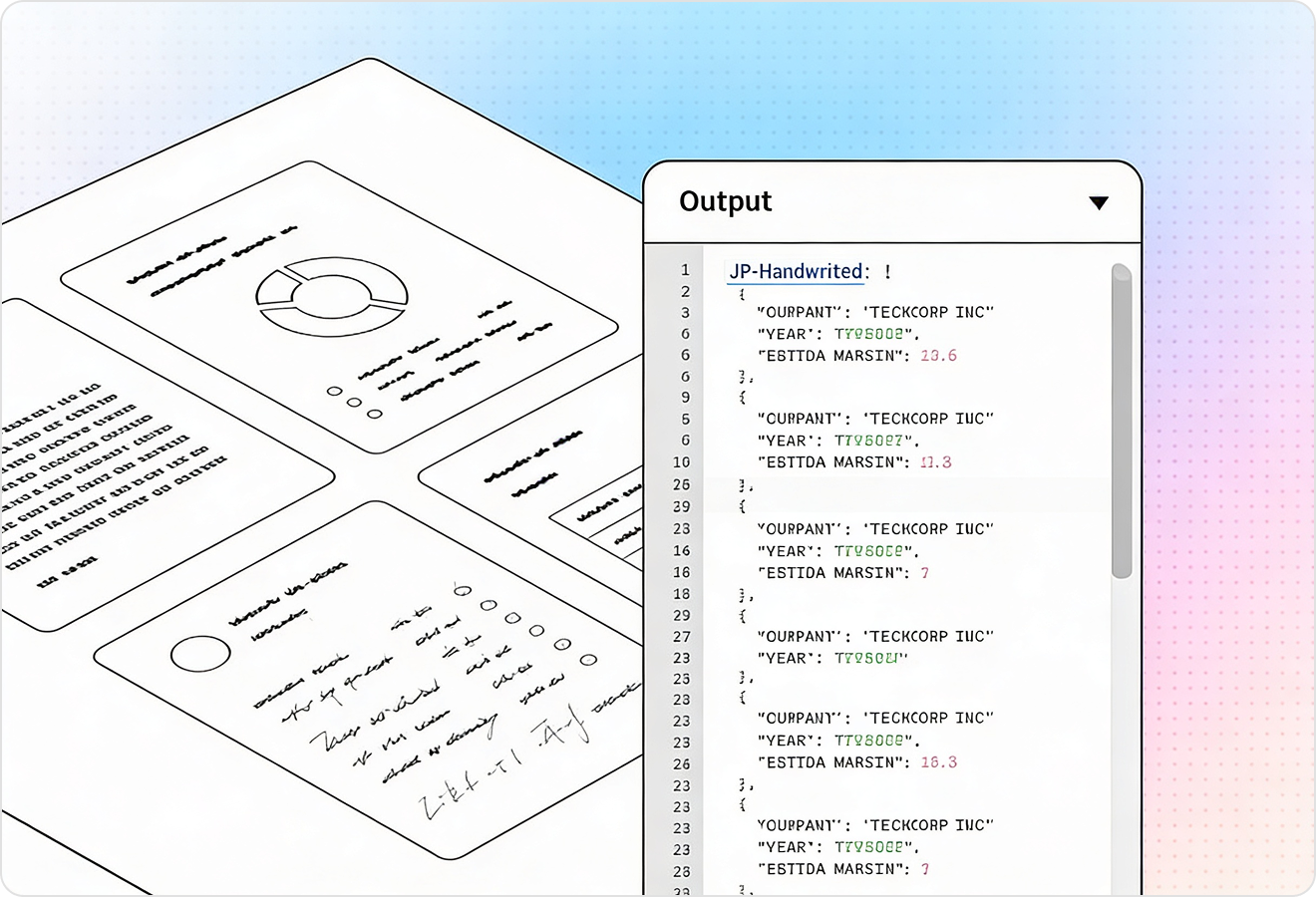
LlamParse understands cash settlement form structure—boxes, rows, multi-column sections, and headers—so extracted text stays in the right fields. This prevents common downstream errors like swapped payer/payee details, misread dates, or totals detached from their labels.
02
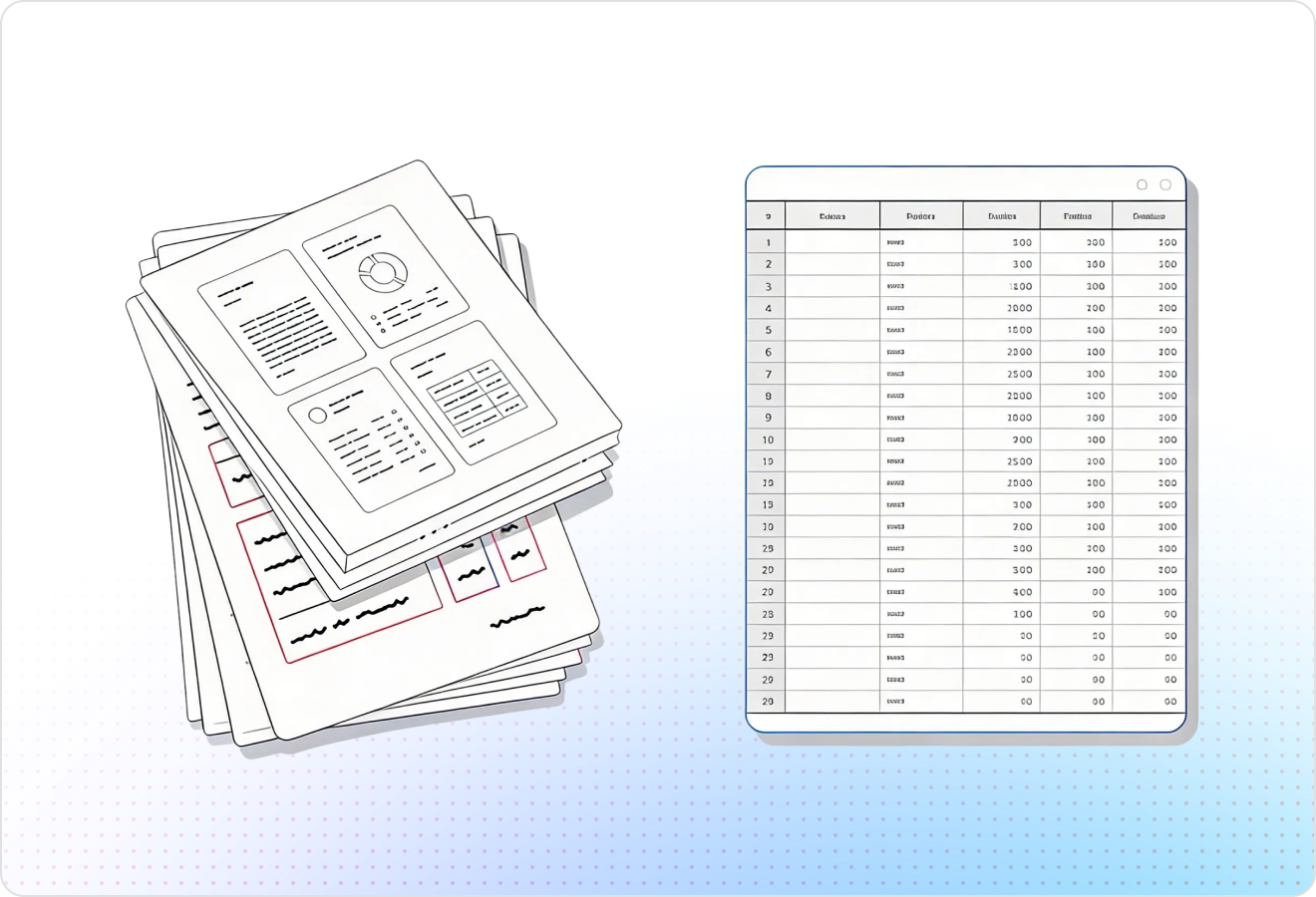
LlamaParse reliably captures tabular sections like denomination breakdowns, fee lines, and settlement line items without scrambling row order. You get clean, AI-ready output that maps directly into your reconciliation and posting workflows.
03
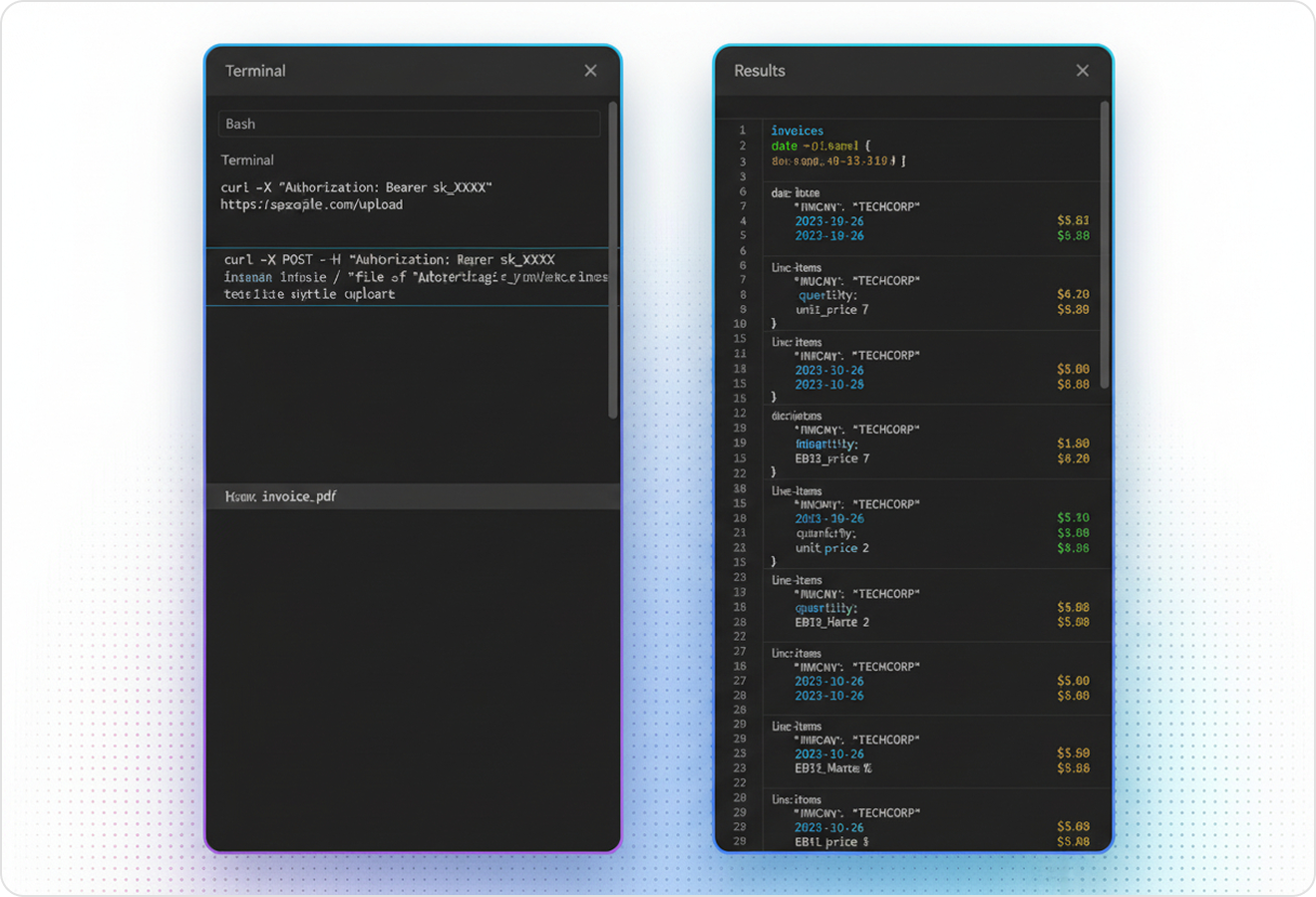
LlamaParse can emit structured JSON for key fields (amounts, currency, account IDs, signatures, references) with page-level citations and spatial metadata. That makes audits and exception handling easier because every extracted value is verifiable back to the original form.
04
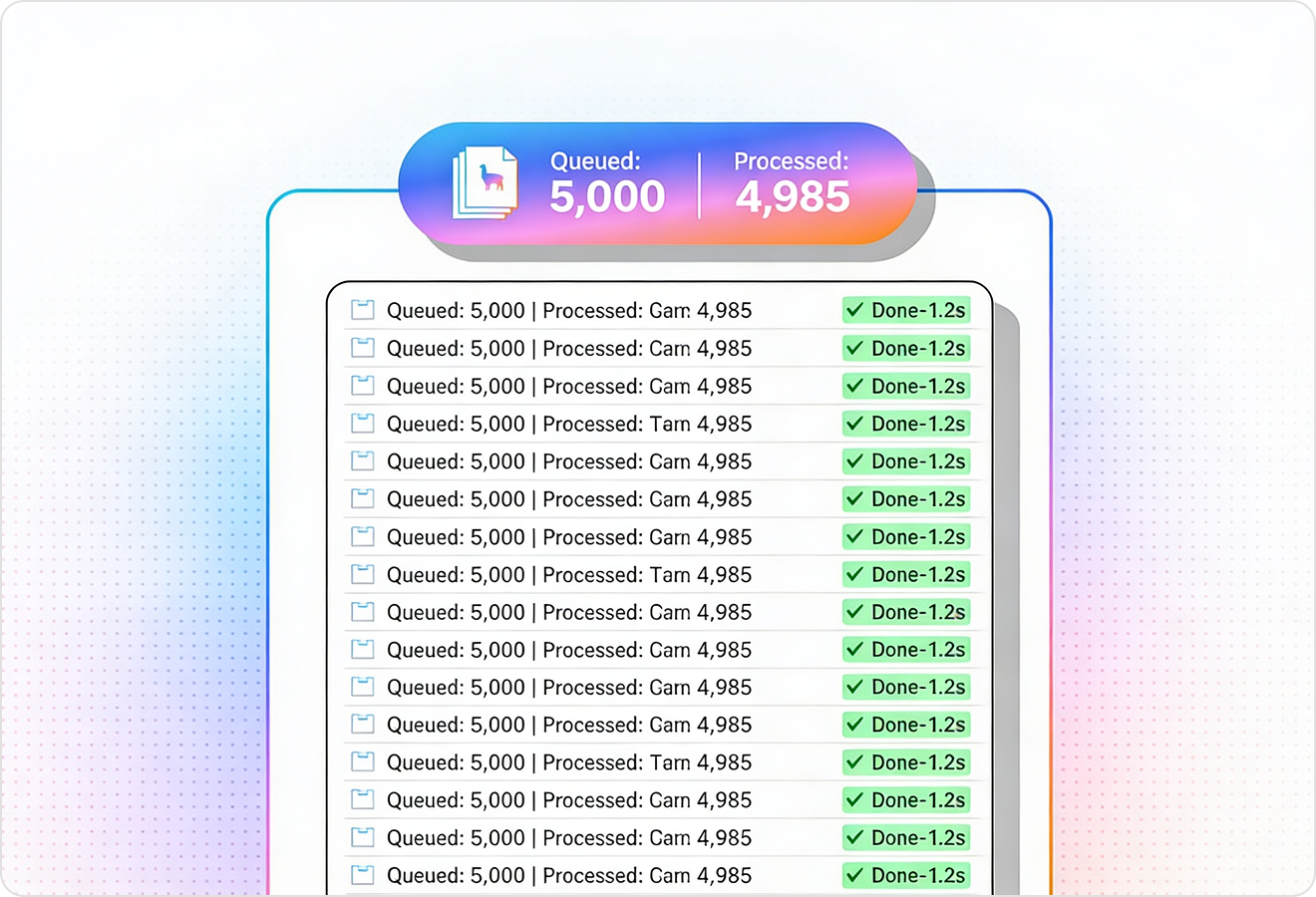
LlamaParse uses iterative validation to catch common cash settlement issues like inconsistent totals, missing mandatory fields, or improbable numeric formats. This increases straight-through processing on noisy scans and reduces the manual review queue.
Technical OCR documentation
Explore our developer guides to easily connect your document pipelines to LlamaParse.
Explore the documentation
Our AI catches the typos that tired eyes miss.

Export to Excel, JSON, XML, or directly via API.

SOC2 Type II compliant with end-to-end encryption.

Train the tool on your specific forms in minutes, not days.

Average processing time of <3 seconds per page.
LlamaParse’s support of a wide variety of filetypes and its accuracy of parsing made it the best tool we tested in our evaluations. The LlamaIndex team was very responsive and we were off to the races within a day.
Common FAQs
01
Yes. Layout-aware parsing understands boxes, multi-column sections, and headers so values stay aligned to the right labels and fields. This helps prevent common downstream issues like swapped party details, misread dates, or totals detached from their descriptions.
02
It reliably captures tables and line items while preserving row order and column structure. That means your denomination breakdowns, fees, and settlement lines map cleanly into reconciliation, posting, and reporting workflows with minimal cleanup.
03
Yes—JSON mode outputs structured fields like amounts, currency, account IDs, references, and signatures in a consistent schema. This makes it easy to automate downstream matching and reduce manual re-keying.
04
How do we verify extracted values during audits or when an exception is raised?
Each extracted field can include page-level citations and spatial metadata that point back to the exact location on the original form. That traceability speeds up audits, simplifies exception handling, and builds confidence in automated processing.
05
What happens when scans are messy or the form has missing fields and inconsistent totals?
Validation and auto-correction loops catch issues like inconsistent totals, missing mandatory fields, and improbable numeric formats before the data hits your systems. This increases straight-through processing and routes only true exceptions to manual review.
06
Will this reduce the amount of manual review our team does without increasing risk?
Yes—the combination of layout-aware extraction, table accuracy, and built-in validation reduces the number of records that require human intervention. And when review is needed, traceable citations make it faster and safer to confirm the right values.