Nov 14, 2025
Document AI: The Next Evolution of Intelligent Document ProcessingPersona
Industry
Use cases
PDF To JSON API
[ PDF To JSON API ]

Use LlamaParse to capture tables, layout, and visuals accurately, then output clean, verifiable JSON.
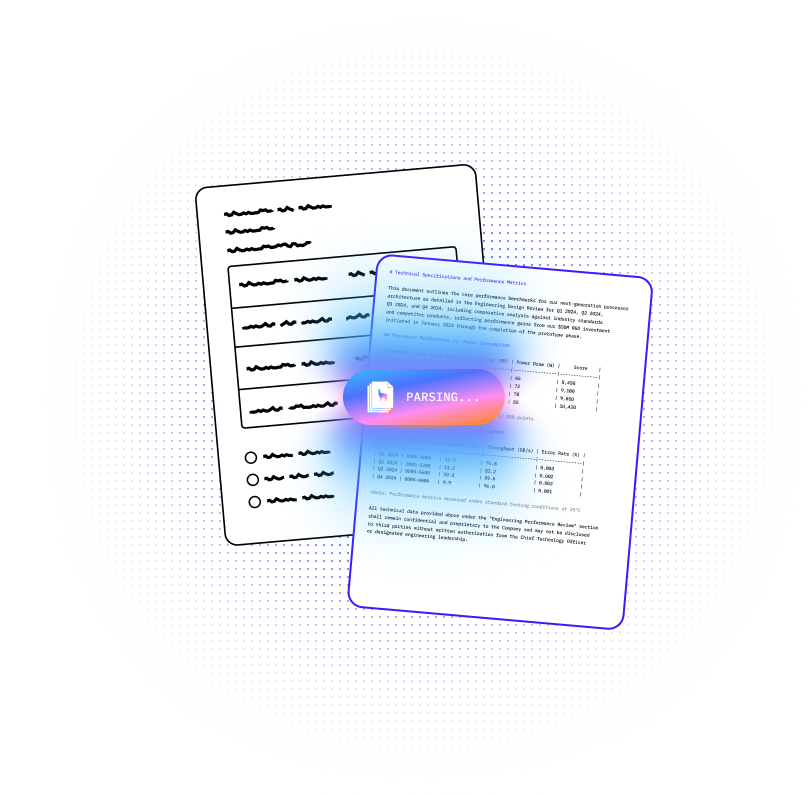
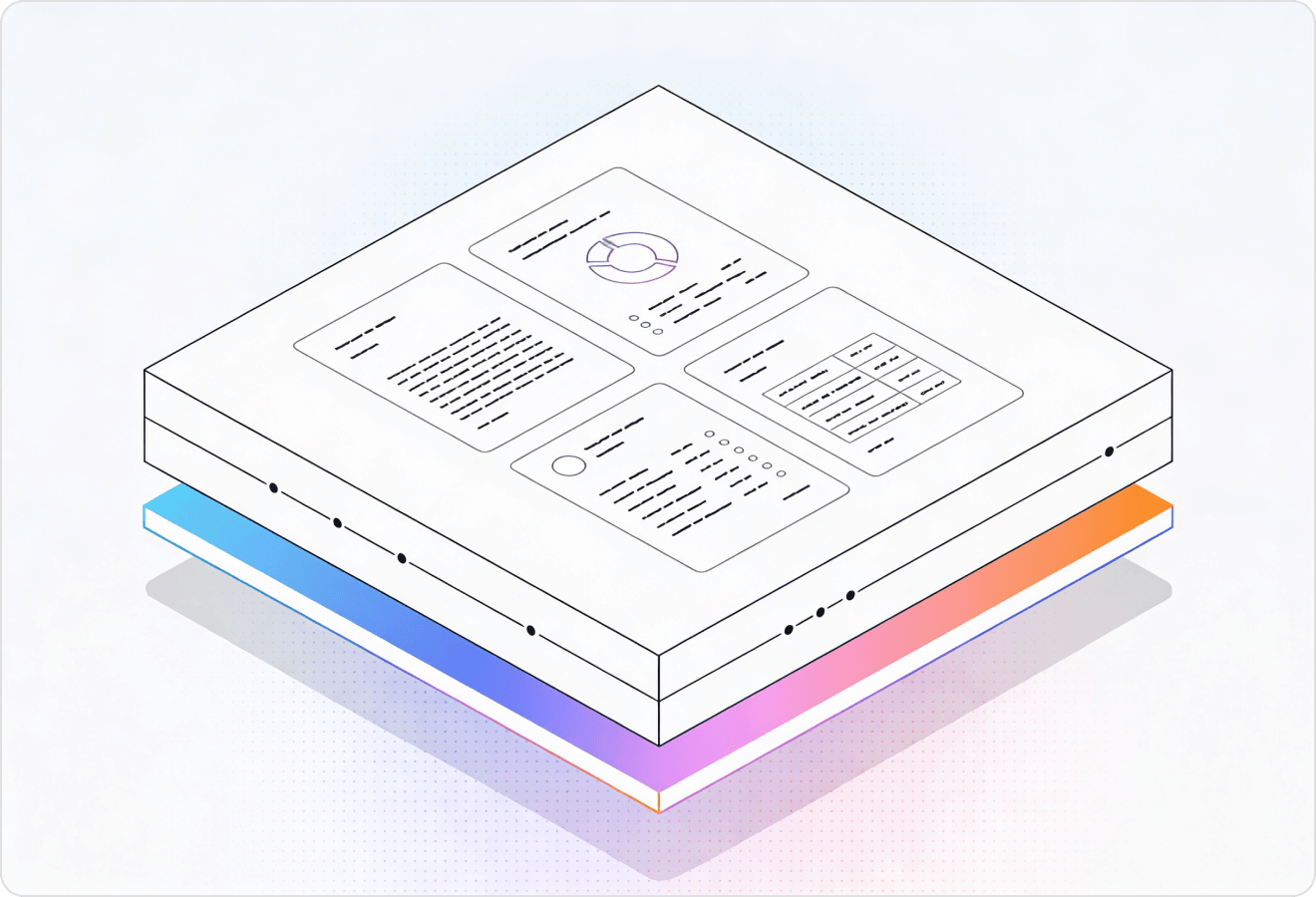

LlamaParse turns messy PDFs into clean, structured JSON your API can trust, using agentic document parsing that understands layout, tables, and embedded visuals. You get verifiable fields with confidence signals and fewer manual fixes, so downstream workflows run reliably as volume and document formats change.
Best-in-Class Accuracy

Ship customer-facing document workflows (uploads, onboarding, summaries) without building brittle PDF parsing code by using LlamaParse to turn messy decks, invoices, and contracts into clean Markdown/JSON. Natural-language parsing instructions let your team iterate extraction and schema changes in hours, while tier-based agentic processing keeps accuracy high without blowing up unit economics.

Automate intake for loan packages by extracting financial statements, pay stubs, and tax forms into auditable JSON with page-level citations and confidence scores for faster underwriting. Layout-aware table extraction prevents scrambled numbers in multi-column statements, reducing manual rekeying and exceptions that stall approvals.

Parse adjuster reports, photos, repair estimates, and loss runs so claim systems can reconcile totals and coverage details even when key data lives in tables, images, or scanned PDFs. Auto-correction loops and multimodal parsing reduce supplement churn by catching mismatched line items and interpreting visual evidence without forcing teams into slow human review.

Convert POs, invoices, packing slips, and spec sheets into structured records that match ERP fields, even when vendors change layouts or embed tables inside PDFs. JSON mode with granular metadata enables deterministic validation and matching across documents, improving three-way match accuracy and speeding up AP and receiving.
The Solution
01
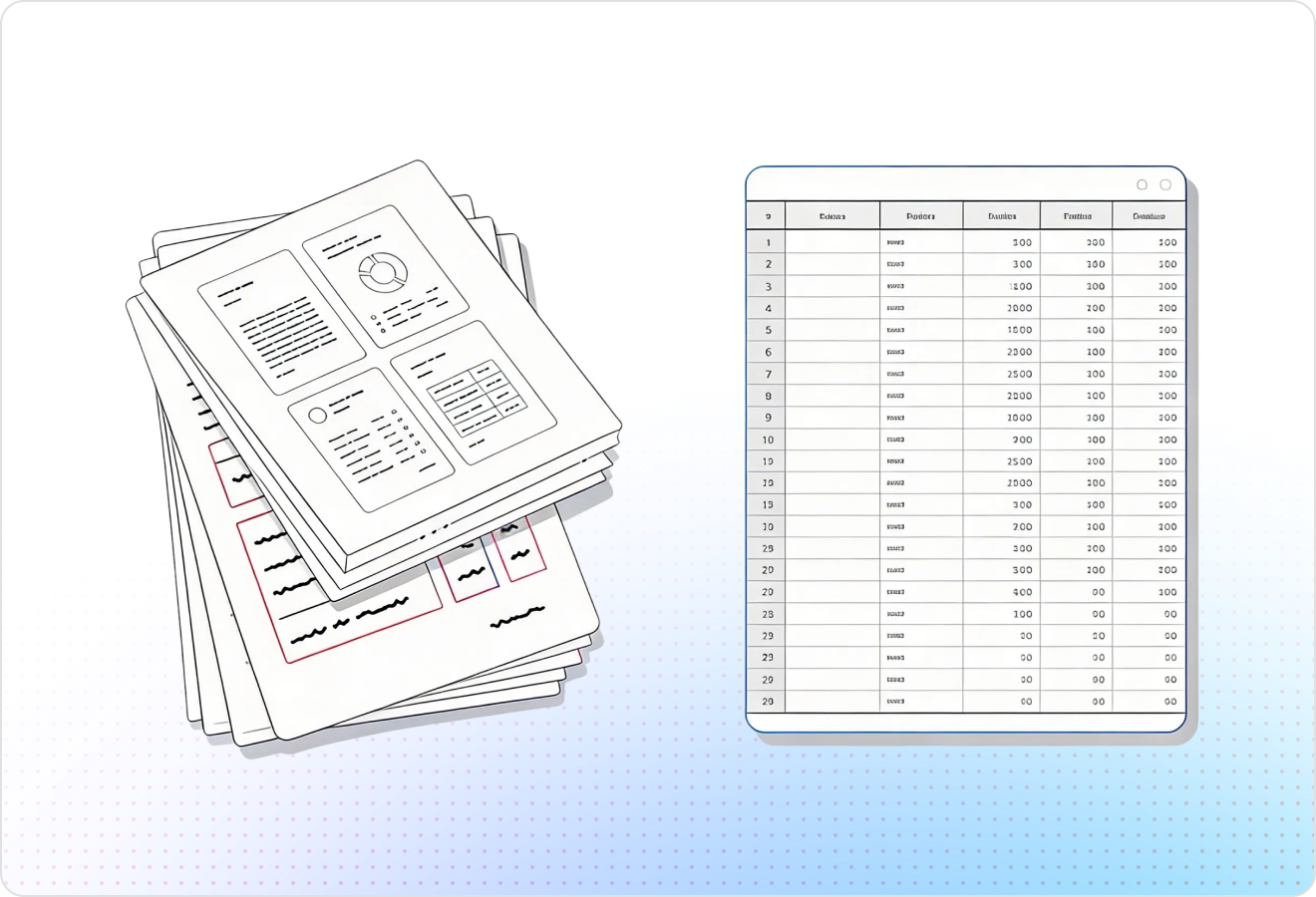
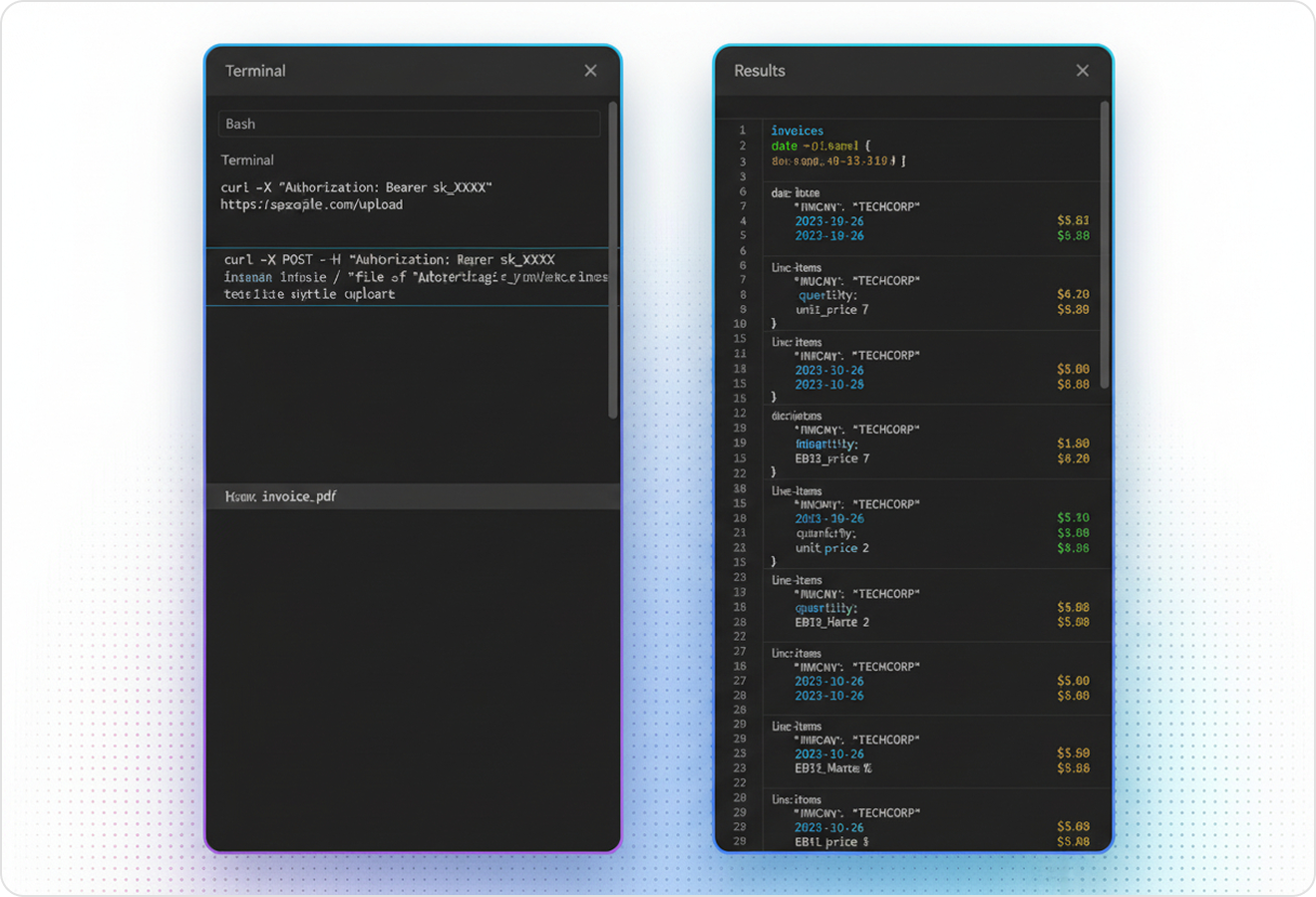
Use LlamaParse via a simple REST API with maintained Python and TypeScript SDKs, so document ingestion fits cleanly into your existing services. This lets you ship a document processing API quickly without hand-rolling file handling, retries, and parsing plumbing.
02
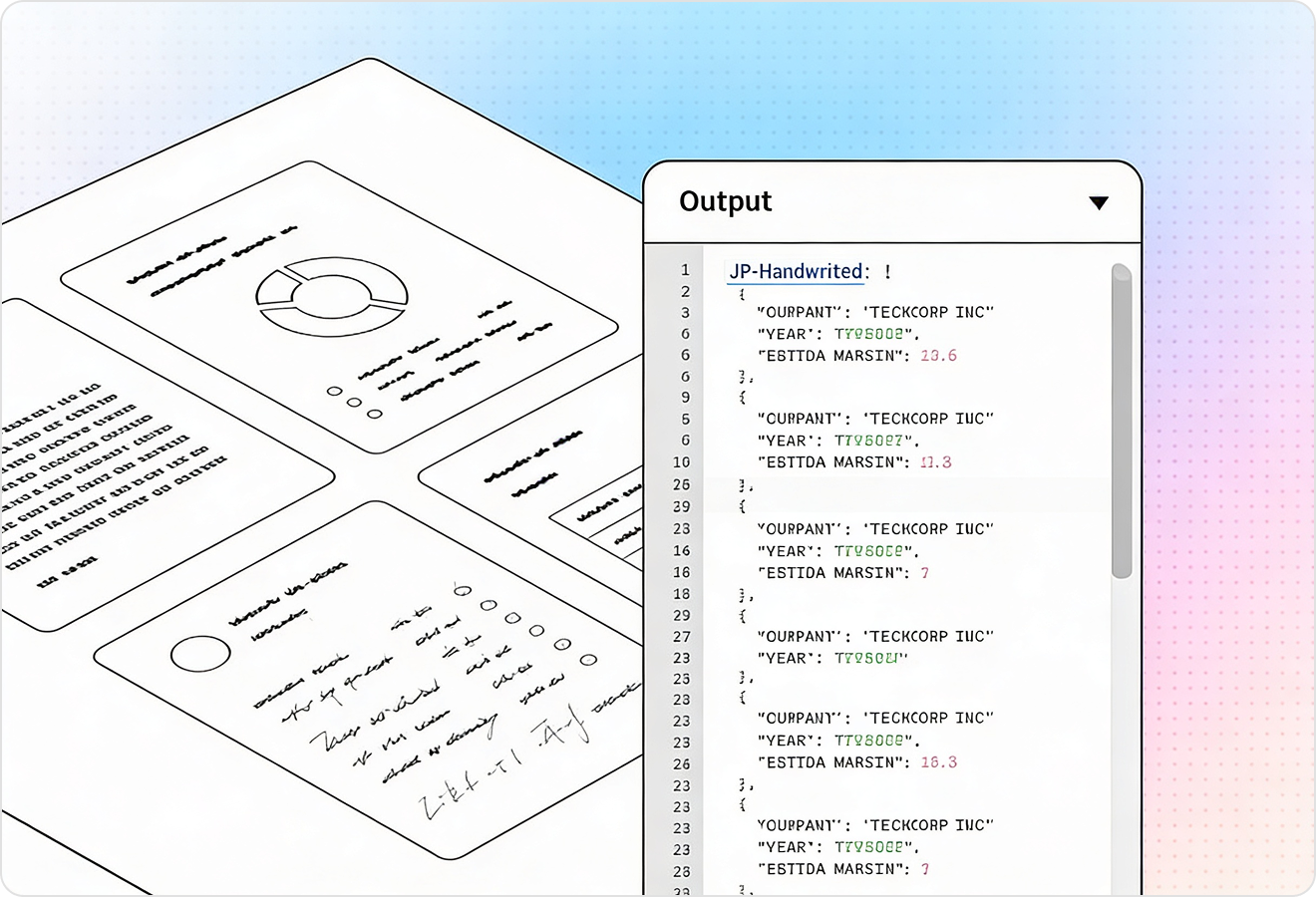
LlamaParse understands page structure (sections, columns, headers/footers) so extracted content keeps the right reading order. That means your API returns consistent, usable text even when inputs vary wildly in layout.
03
It accurately captures complex tables and nested cells and reconstructs them into clean Markdown or structured representations. Your API consumers get data that’s ready for downstream ETL or LLM workflows instead of scrambled rows and brittle post-processing.
04
Return structured JSON with rich metadata like page numbers, element types, and spatial coordinates for traceability. This makes it straightforward to build an API that supports auditing, precise lookups, and human-in-the-loop verification when needed.
Technical OCR documentation
Explore our developer guides to easily connect your document pipelines to LlamaParse.
Explore the documentation
Our AI catches the typos that tired eyes miss.

Export to Excel, JSON, XML, or directly via API.

SOC2 Type II compliant with end-to-end encryption.

Train the tool on your specific forms in minutes, not days.

Average processing time of <3 seconds per page.
LlamaParse’s support of a wide variety of filetypes and its accuracy of parsing made it the best tool we tested in our evaluations. The LlamaIndex team was very responsive and we were off to the races within a day.
Common FAQs
01
You can start parsing documents in minutes via the REST API, or use the maintained Python and TypeScript SDKs to integrate directly into your existing services. The SDKs handle common plumbing like file upload patterns and retries so your team can ship faster with less custom code.
02
Yes—layout-aware parsing preserves page structure like sections, columns, and headers/footers so text comes back in a reliable reading order. This reduces downstream cleanup and prevents “scrambled” content when documents vary widely in formatting.
03
Tables are extracted with support for complex structures, including nested cells, and can be returned as clean Markdown or structured representations. That makes the data immediately usable for ETL pipelines, analytics, or LLM applications without fragile post-processing.
04
Can I get structured JSON output with metadata for auditing and traceability?
Yes—the API can return JSON enriched with metadata such as page numbers, element types, and spatial coordinates. This makes it easy to build audit trails, power precise lookups, and support human-in-the-loop review when accuracy is critical.
05
What happens if a document is messy, inconsistent, or changes format over time?
The parser is designed to handle real-world variability by understanding layout rather than relying on brittle assumptions. You’ll get more consistent results across different templates, scans, and formatting changes—reducing maintenance as your document sources evolve.
06
How do we validate results and debug issues when something looks off?
Rich metadata (like page references and coordinates) helps you trace any extracted field back to where it came from in the original document. This makes it straightforward to verify outputs, spot edge cases, and improve your workflow with targeted rules or review steps.