Nov 14, 2025
Document AI: The Next Evolution of Intelligent Document ProcessingPersona
Industry
Use cases
1099-NEC Form OCR
[ 1099-NEC Form OCR ]

Use LlamaParse to capture every field with confidence scores and ship clean 1099-NEC data.
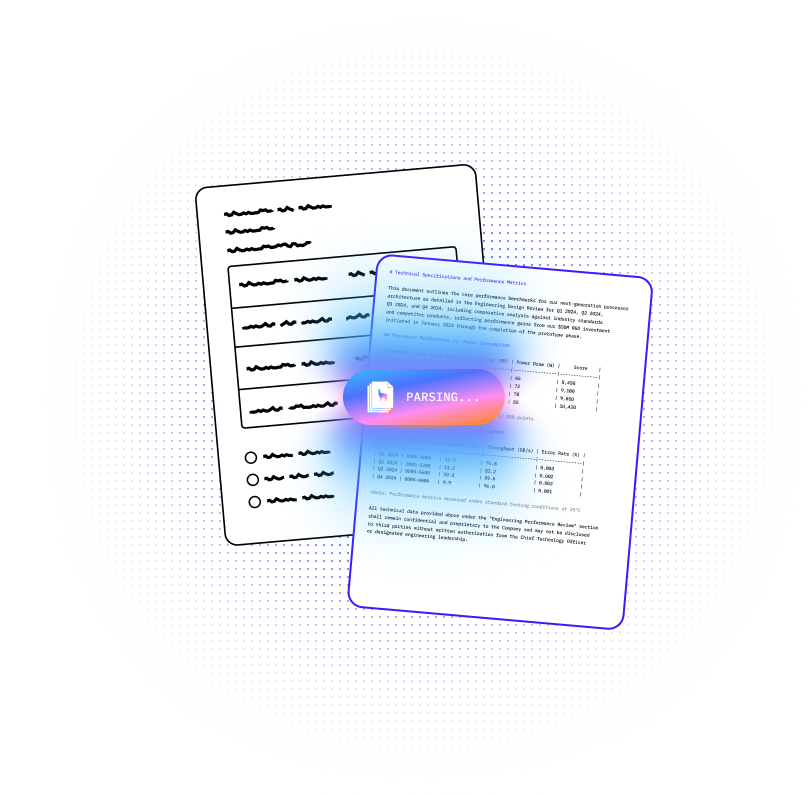
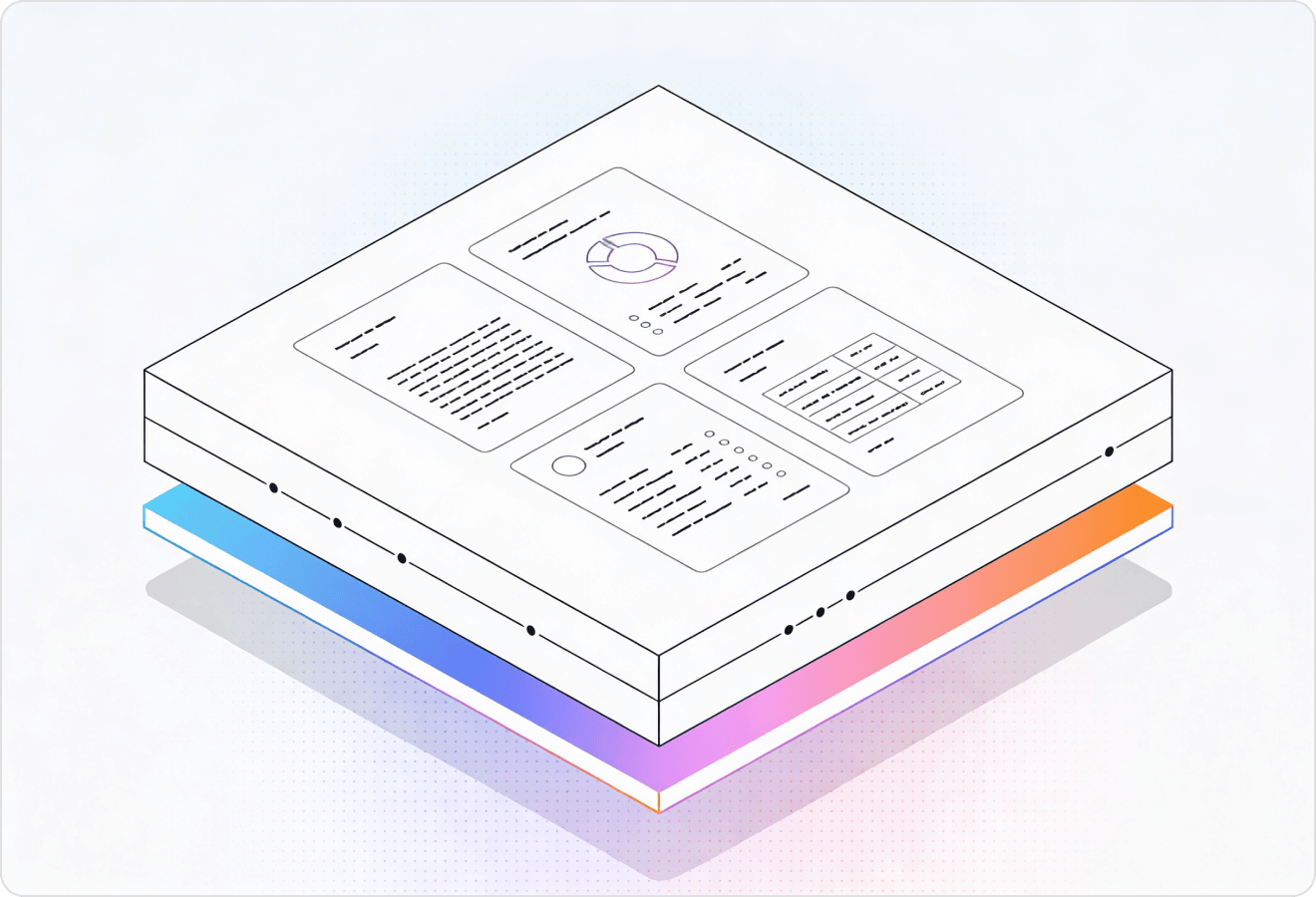

LlamaParse turns scanned or emailed 1099-NEC forms into clean, schema-ready JSON so you can post payments, validate totals, and file faster. Agentic document parsing stays layout-aware across messy vendor submissions, adds confidence metadata for review, and cuts rework compared to brittle OCR.
Best-in-Class Accuracy

Use LlamaParse to turn emailed and scanned 1099-NEC forms into clean JSON with citations, so your product can auto-populate contractor records and year-end filing workflows without brittle template rules. Layout-aware table extraction preserves payer/payee blocks and amount fields even when forms are skewed, multi-page, or have stamped annotations.

Ingest client-uploaded 1099-NECs at scale and extract payer TIN, recipient details, and Box 1 compensation into a reviewable dataset with confidence scores for fast staff verification. Natural-language parsing instructions standardize outputs across messy scans and reduce rework during peak season when forms arrive in dozens of formats.

Automatically parse 1099-NECs from subcontractors and map them to jobs, vendors, and cost codes, preventing missed payments and classification errors that create tax exposure. Agentic processing handles low-quality mobile scans and handwritten notes common in the field, cutting manual data entry before close and at year-end.

Parse inbound 1099-NECs for creator and contractor payouts to reconcile platform disbursements against payer statements and flag mismatches before support tickets spike. JSON mode with granular metadata enables auditable dispute resolution by linking each extracted value back to the exact page region on the original form.
The Solution
01
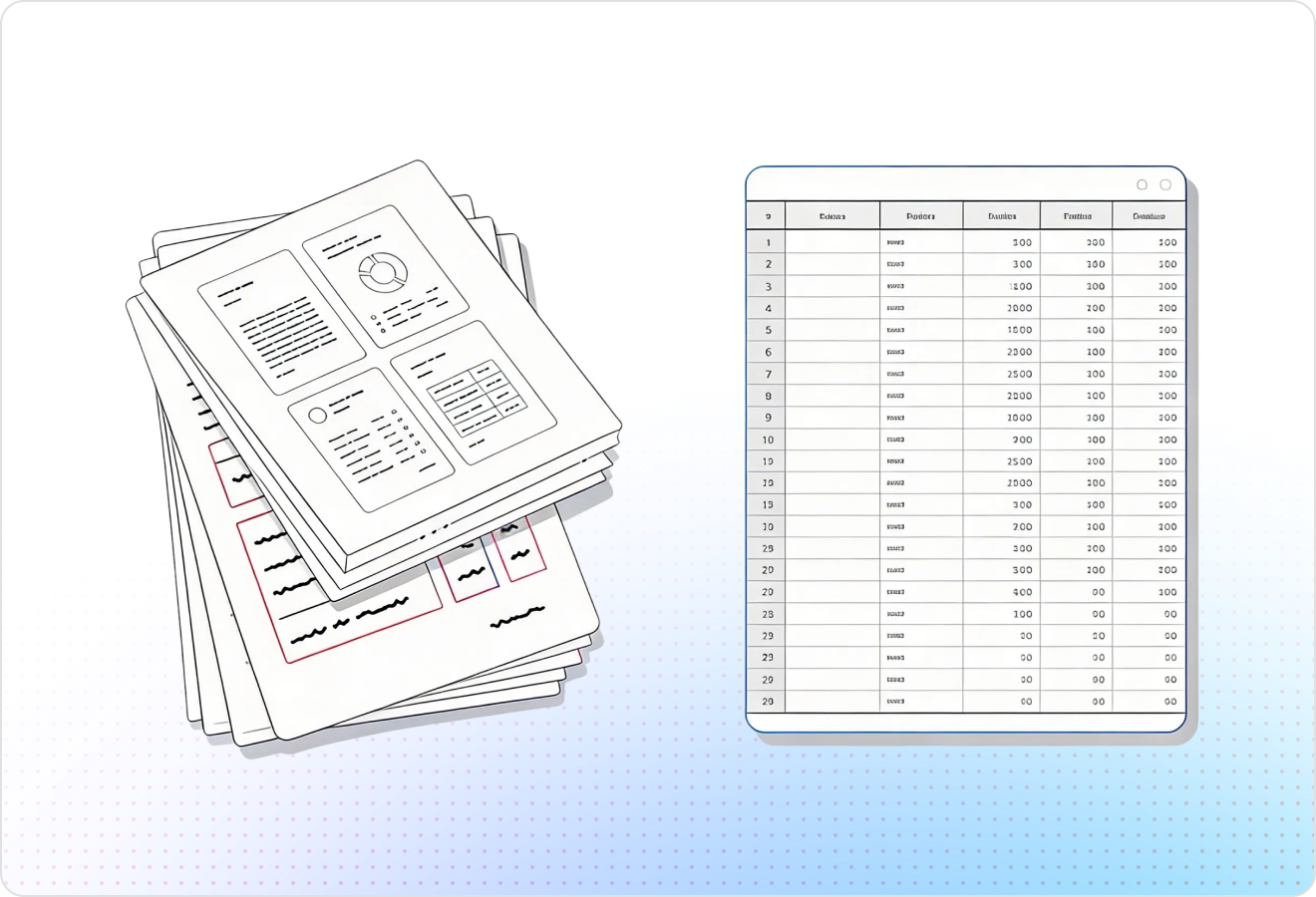
LlamaParse understands the 1099-NEC layout and keeps each box value tied to the right label (payer, recipient, box amounts, addresses) instead of returning scrambled text. This is critical when you’re processing scanned copies, skewed uploads, or multi-column sections where traditional text extraction breaks.
02
Export 1099-NEC fields as clean JSON that maps naturally into your payroll/tax database, including key values like TINs, payment amounts, and payer/recipient details. This reduces brittle post-processing and makes it straightforward to validate, reconcile, and transmit the data downstream.
03
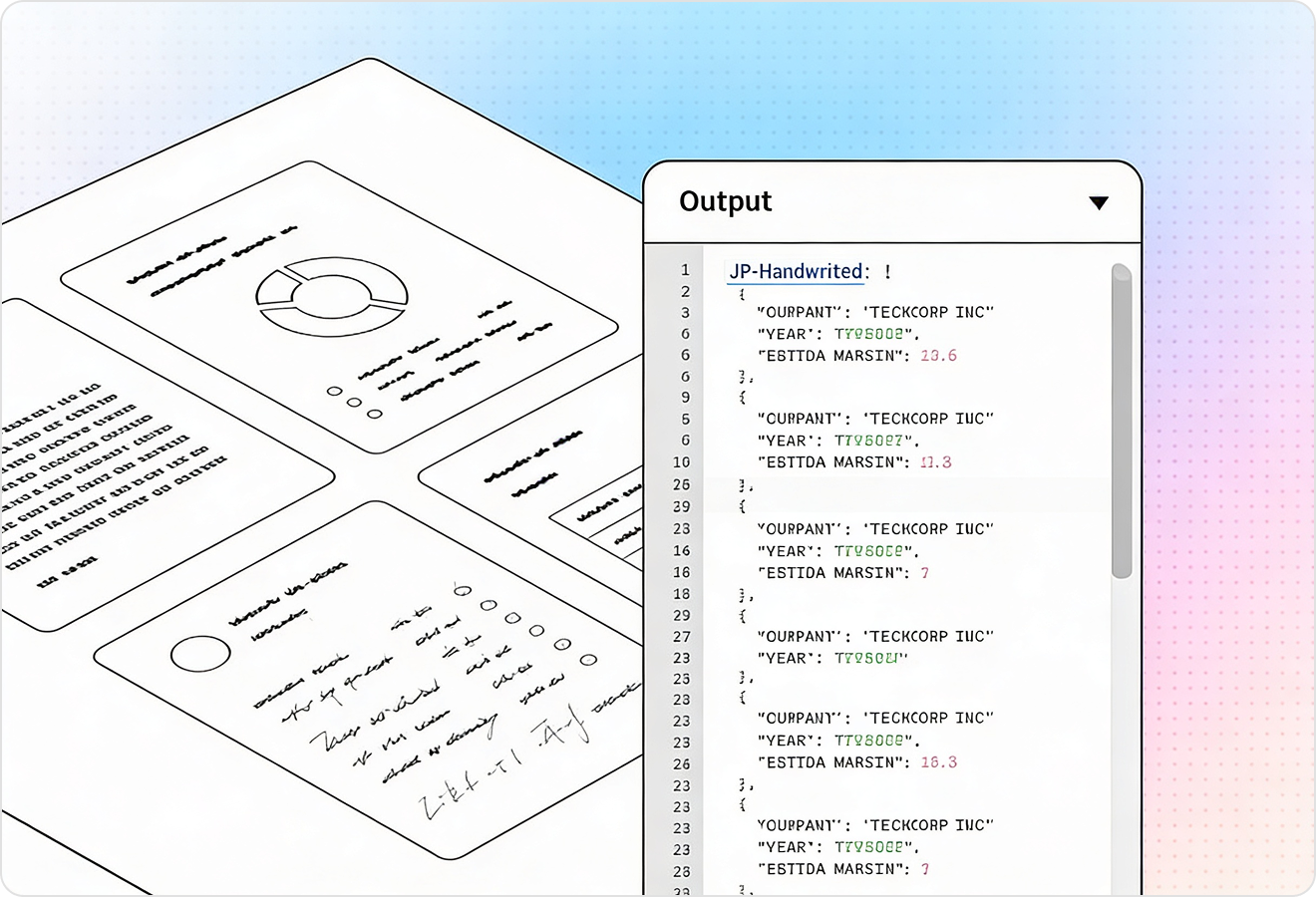
Every extracted 1099-NEC value can include page references and positional metadata so you can trace exactly where it came from on the form. That enables fast human review for low-confidence fields (like TINs) and creates an audit trail for compliance workflows.
04
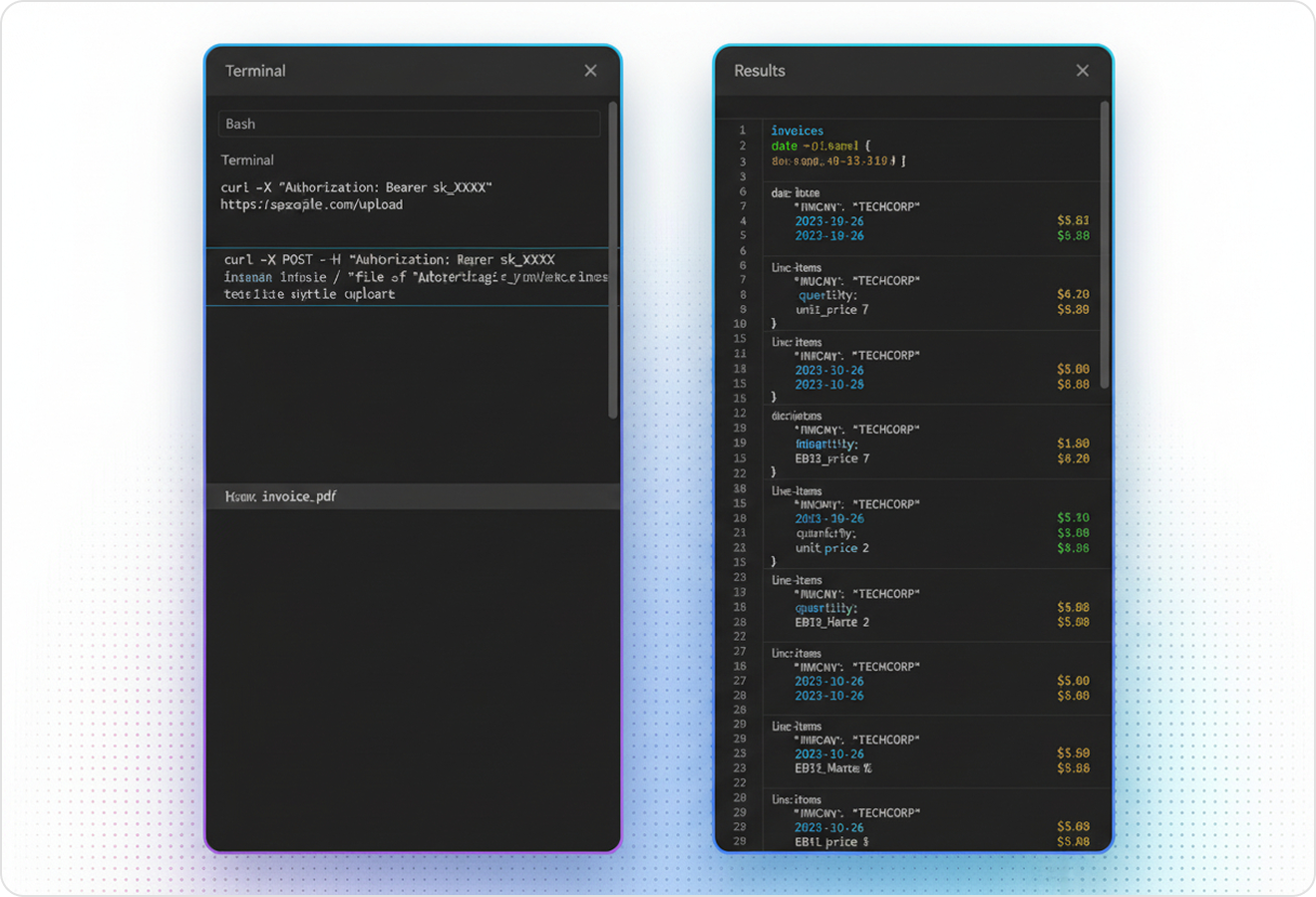
LlamaParse runs validation and self-correction steps to catch common form extraction failures, like transposed digits, missing decimals, or misread characters in EIN/SSN fields. You get higher straight-through processing for 1099-NEC batches without building custom exception-handling logic for every edge case.
Technical OCR documentation
Explore our developer guides to easily connect your document pipelines to LlamaParse.
Explore the documentation
Our AI catches the typos that tired eyes miss.

Export to Excel, JSON, XML, or directly via API.

SOC2 Type II compliant with end-to-end encryption.

Train the tool on your specific forms in minutes, not days.

Average processing time of <3 seconds per page.
LlamaParse’s support of a wide variety of filetypes and its accuracy of parsing made it the best tool we tested in our evaluations. The LlamaIndex team was very responsive and we were off to the races within a day.
Common FAQs
01
LlamaParse is layout-aware, so it keeps each value tied to the correct 1099-NEC box and label even when the scan is skewed, cropped, or has multi-column sections. This prevents the “scrambled text” problem common with basic OCR and improves straight-through processing for batch uploads.
02
You get clean, structured JSON outputs that map naturally to your payroll or tax database fields—payer/recipient info, TINs, and box amounts included. That means less brittle post-processing and faster validation, reconciliation, and downstream transmission.
03
Yes—each extracted field can include page references and positional metadata, so reviewers can quickly verify where a value came from on the 1099-NEC. This creates a practical audit trail and makes spot-checking high-risk fields like EIN/SSN much faster.
04
How do you handle common OCR mistakes like transposed digits, missing decimals, or confusing characters in TINs?
LlamaParse includes auto-correction loops that run validation and self-correction steps to catch frequent form extraction errors. You spend less time on manual exceptions and don’t need to build one-off rules for every edge case.
05
What 1099-NEC fields can you extract?
The parser is designed to capture the core 1099-NEC fields: payer and recipient details, addresses, TINs, and box values such as nonemployee compensation. Because it’s layout-aware, values stay aligned to the correct boxes, reducing downstream cleanup.
06
How quickly can we integrate 1099-NEC OCR into our existing workflow?
Most teams integrate quickly by consuming the structured JSON output and mapping it directly into their existing data model. With built-in metadata for verification and correction steps to reduce exceptions, you can move from pilot to production without building a large custom parsing pipeline.