Nov 14, 2025
Document AI: The Next Evolution of Intelligent Document ProcessingPersona
Industry
Use cases
Document Deep Extraction Agent
[ Document Deep Extraction Agent ]

Use LlamaParse to extract tables, fields, and citations into clean JSON you can trust.
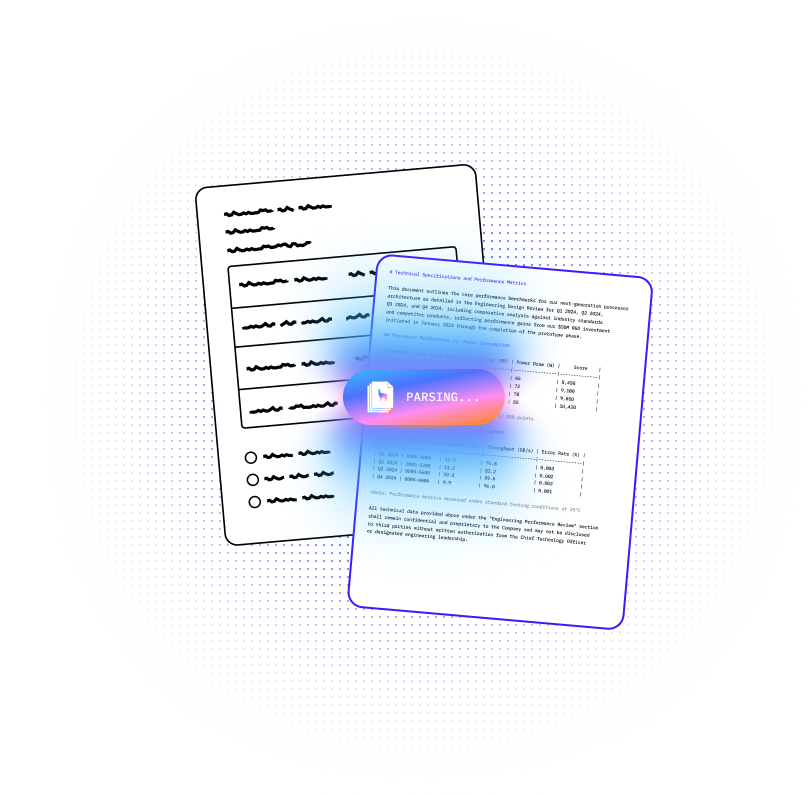
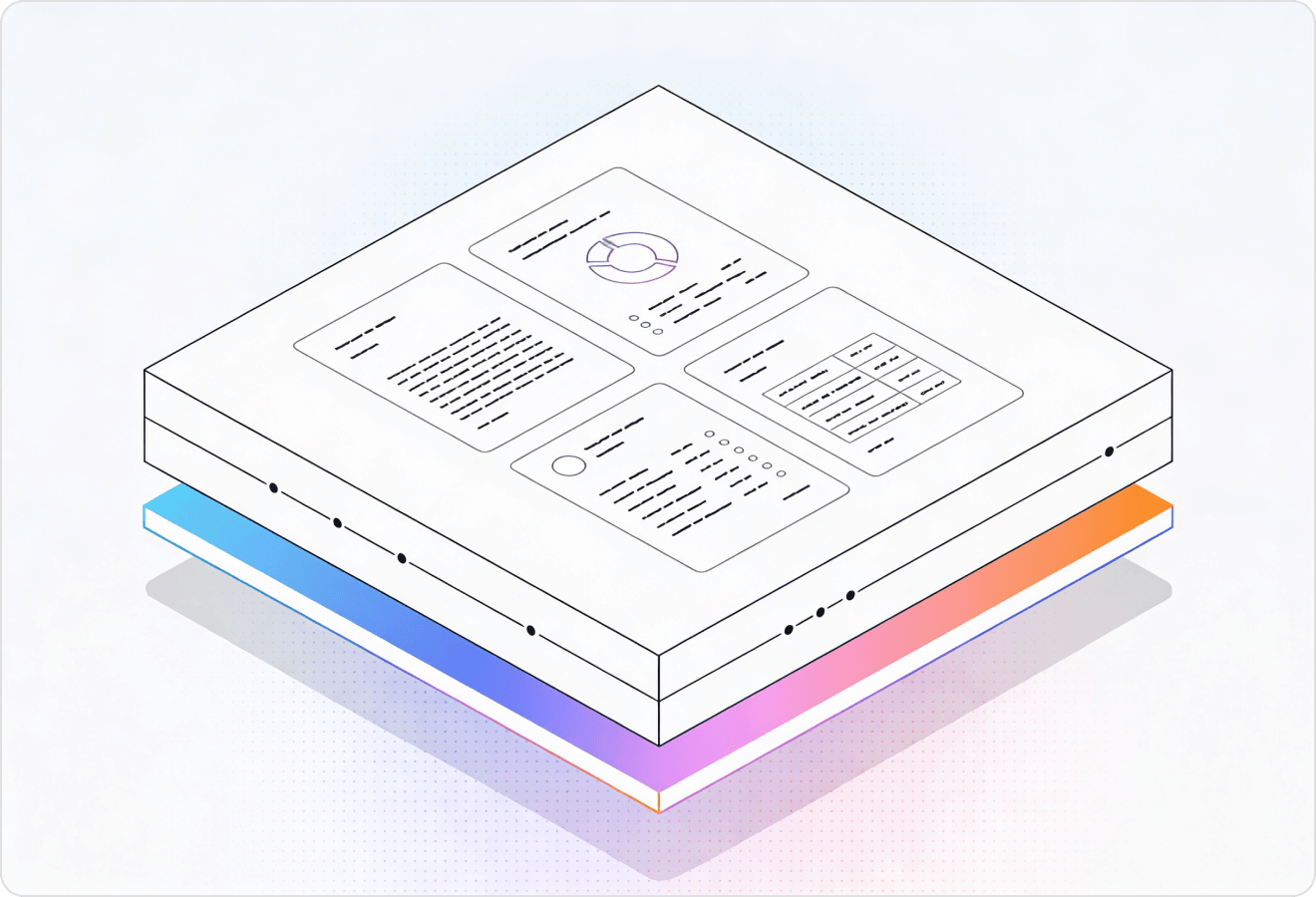

LlamaParse turns messy PDFs, scans, and slide decks into clean JSON or Markdown your Deep Extraction Agent can trust for downstream decisions. It understands layout, tables, and embedded visuals, then validates outputs with citations and confidence so you ship fewer manual reviews.
Best-in-Class Accuracy

Turn messy customer PDFs—bank statements, invoices, contracts, and screenshots—into clean JSON or Markdown without writing brittle parsing code. Use natural-language extraction instructions and tier-based processing to ship reliable onboarding, search, and analytics workflows fast while keeping inference spend predictable.

Extract structured fields from claim forms, adjuster notes, repair estimates, and multi-page photo-heavy PDFs while preserving layout, tables, and page-level citations for auditability. Auto-correction loops reduce rework from misreads and missing tables, increasing straight-through processing for high-volume claim intake.

Parse complex statements and borrower packets into consistent, schema-ready outputs—capturing table integrity, reading order, and key values like balances, income lines, and covenants. Granular metadata with confidence signals enables faster underwriting reviews and exception handling instead of manual document chasing.

Convert RFIs, submittals, change orders, and spec books into structured data while accurately reconstructing multi-column layouts, schedules, and nested tables. Multimodal parsing translates diagrams and marked-up visuals into machine-readable context so teams can search requirements, track scope changes, and reduce coordination delays.
The Solution
01
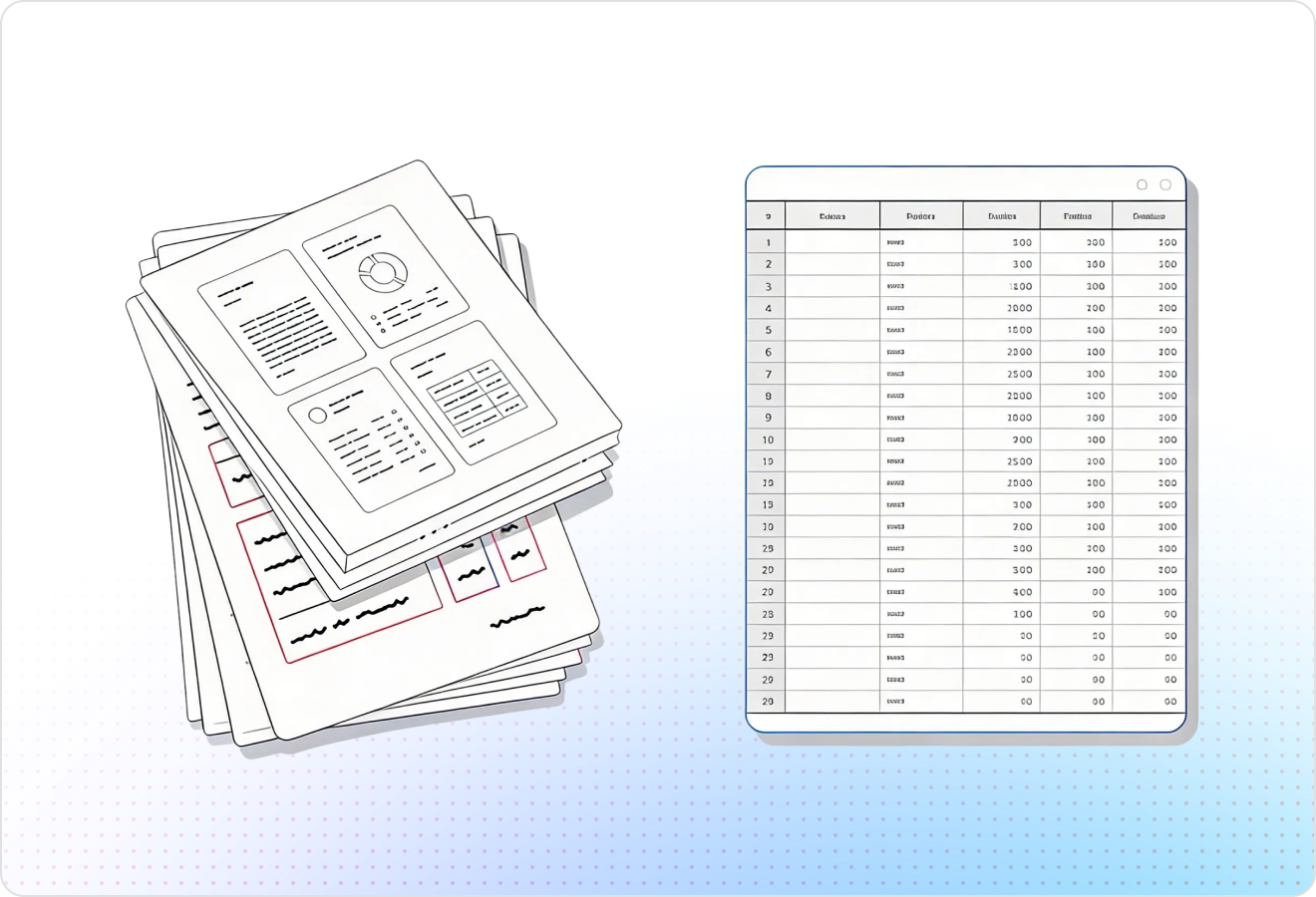
LlamaParse understands page structure—sections, headings, multi-column flows, and nested blocks—so “deep extraction” doesn’t collapse into scrambled text. Your agent can reliably pull the right fields from the right place, even when templates change or documents are messy.
02
LlamaParse extracts complex tables and forms while preserving row/column relationships and key-value associations. That gives your extraction agent clean, machine-usable structure for line items, totals, and repeating entities without brittle post-processing.
03
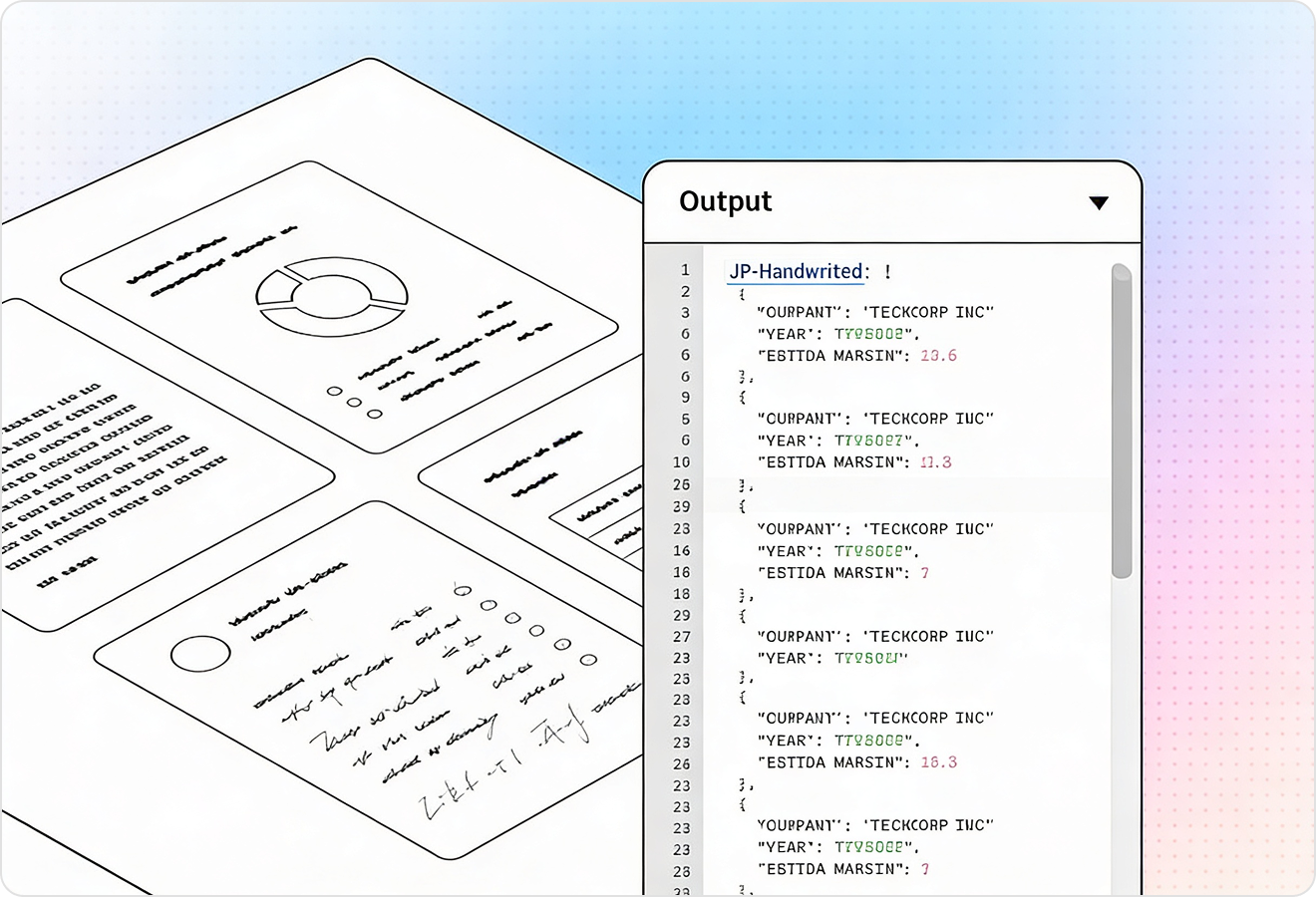
LlamaParse can interpret charts, embedded images, and visual elements and convert them into usable text representations (like Markdown tables) with traceable context. This lets a deep extraction agent capture insights that live outside plain text—think graphs, stamps, or annotated figures.
04
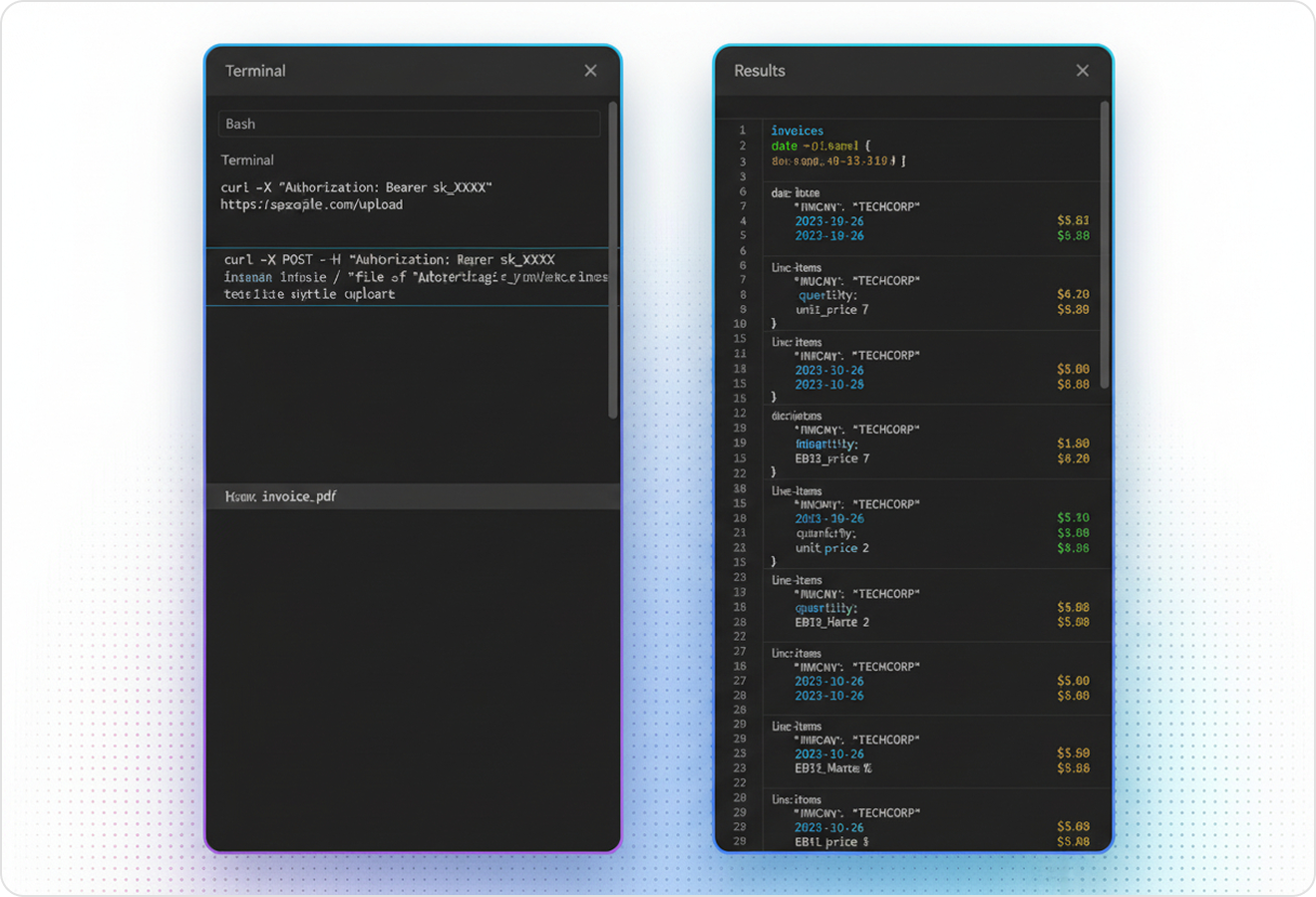
LlamaParse can emit structured JSON and attach granular metadata like page numbers, element types, and spatial coordinates. Your agent can validate extractions, cite exactly where each value came from, and route low-confidence items for review without slowing the whole pipeline.
Technical OCR documentation
Explore our developer guides to easily connect your document pipelines to LlamaParse.
Explore the documentation
Our AI catches the typos that tired eyes miss.

Export to Excel, JSON, XML, or directly via API.

SOC2 Type II compliant with end-to-end encryption.

Train the tool on your specific forms in minutes, not days.

Average processing time of <3 seconds per page.
LlamaParse’s support of a wide variety of filetypes and its accuracy of parsing made it the best tool we tested in our evaluations. The LlamaIndex team was very responsive and we were off to the races within a day.
Common FAQs
01
It’s layout-aware, meaning it understands headings, sections, multi-column reading order, and nested blocks instead of flattening everything into a single stream. That keeps fields tied to the right context even when documents are messy or the template changes.
02
Yes—tables and forms are extracted with row/column relationships and key-value pairs preserved, so line items stay aligned with the correct columns and totals. This reduces the need for fragile regex and post-processing, making downstream automation far more reliable.
03
The agent can interpret visual elements and convert them into usable text representations (for example, Markdown-style tables) with traceable context. This helps you capture insights that aren’t present in plain text—like chart values, embedded labels, or marked-up notes.
04
Do you provide structured JSON output, and can I trace each extracted value back to the source?
You can output clean, structured JSON and include provenance metadata such as page number, element type, and spatial coordinates. This makes audits, debugging, and compliance workflows easier because you can cite exactly where each value came from.
05
How does the agent handle changing templates or vendor-specific document formats?
Because extraction is driven by document structure rather than fixed coordinates, it remains stable across layout variations and version changes. You spend less time re-tuning rules when a supplier updates formatting or adds new sections.
06
Can I route low-confidence extractions to human review without slowing the rest of the pipeline?
Yes—the provenance and metadata enable confidence-based checks so only ambiguous fields are flagged for review. That keeps throughput high while still giving you a safe path to handle edge cases and maintain accuracy at scale.