Nov 14, 2025
Document AI: The Next Evolution of Intelligent Document ProcessingPersona
Industry
Use cases
Ocean Bill Of Lading OCR
[ Ocean Bill Of Lading OCR ]

Use LlamaParse to turn messy bills of lading into structured JSON your team can trust.
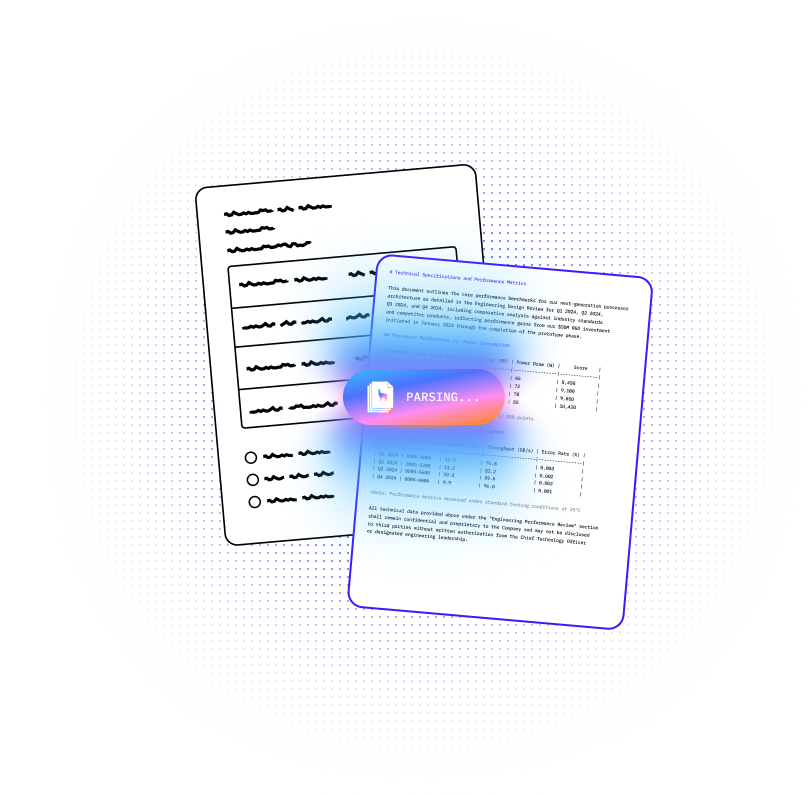
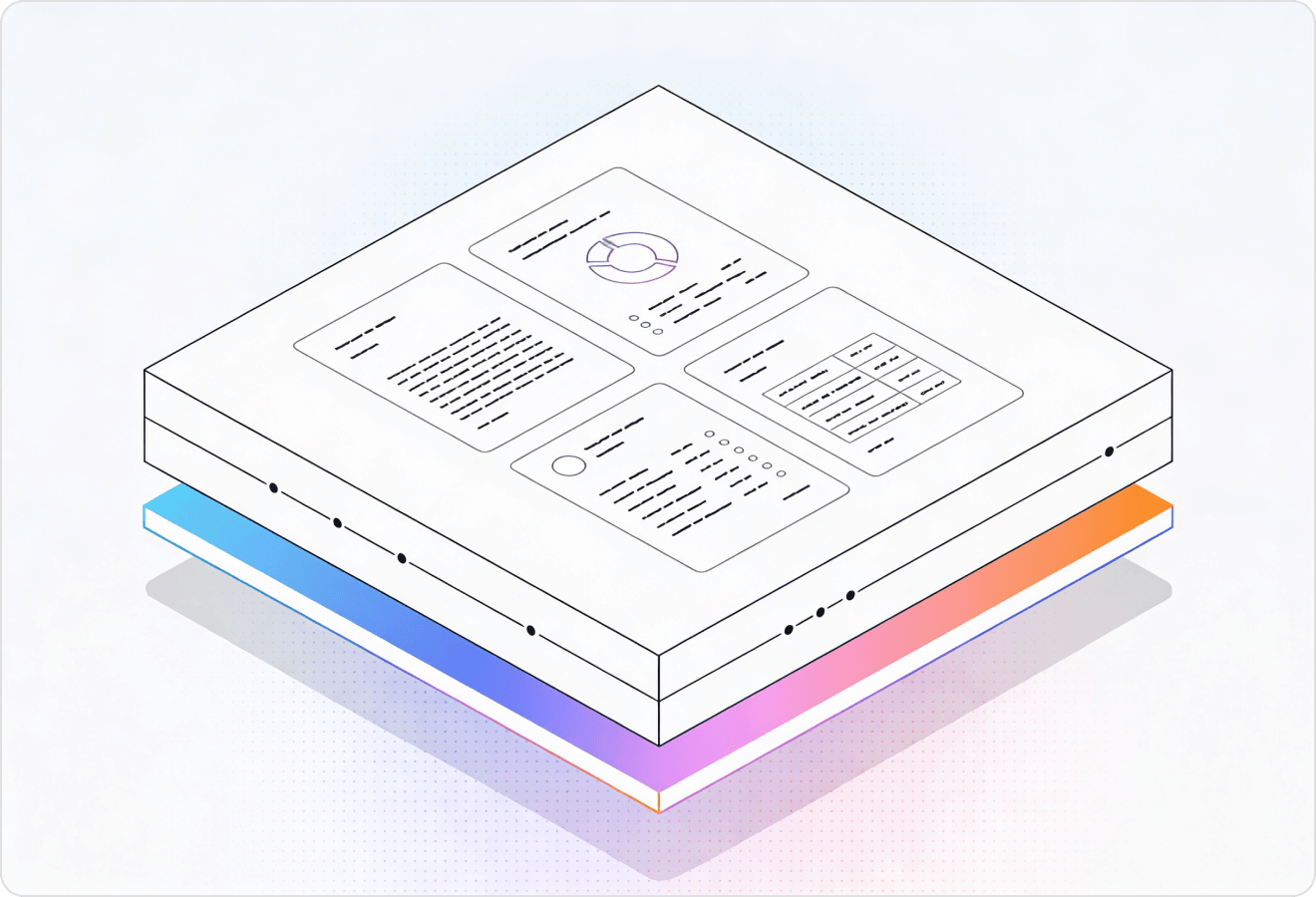

LlamaParse turns messy ocean bills of lading into clean, structured JSON or Markdown you can validate and push straight into operations systems. Agentic document parsing reads layouts, stamps, and tables with correction loops plus confidence metadata, so exceptions drop and audits get faster.
Best-in-Class Accuracy

Use LlamaParse inside LlamaCloud to parse ocean bills of lading into clean JSON with citations, extracting shipper/consignee, containers, seals, ports, and Incoterms even when layouts vary by carrier. This removes manual re-keying and reduces release holds by keeping your TMS and customer portals synced from first document receipt.

Automatically validate bills of lading against letters of credit by extracting structured fields and table line-items (vessel, ETD/ETA, notify party, goods description) and flagging mismatches with traceable evidence. Faster, more consistent document checks reduce turnaround time for issuance, discounting, and compliance review without relying on brittle template rules.

Convert multi-page, multi-column BLs into layout-faithful Markdown/JSON so brokers can reliably pull HS-relevant descriptions, package counts, weights, and container numbers for entry prep. Granular metadata and confidence scores make exceptions easy to route for human review, cutting mis-declarations and reducing exam risk.

Ship ocean BL ingestion in days by using natural-language parsing instructions to map messy carrier PDFs into your product’s schema without writing fragile regex or per-carrier templates. Tier-based agentic processing keeps unit economics predictable by spending premium compute only on the hardest scans while maintaining high straight-through processing.
The Solution
01
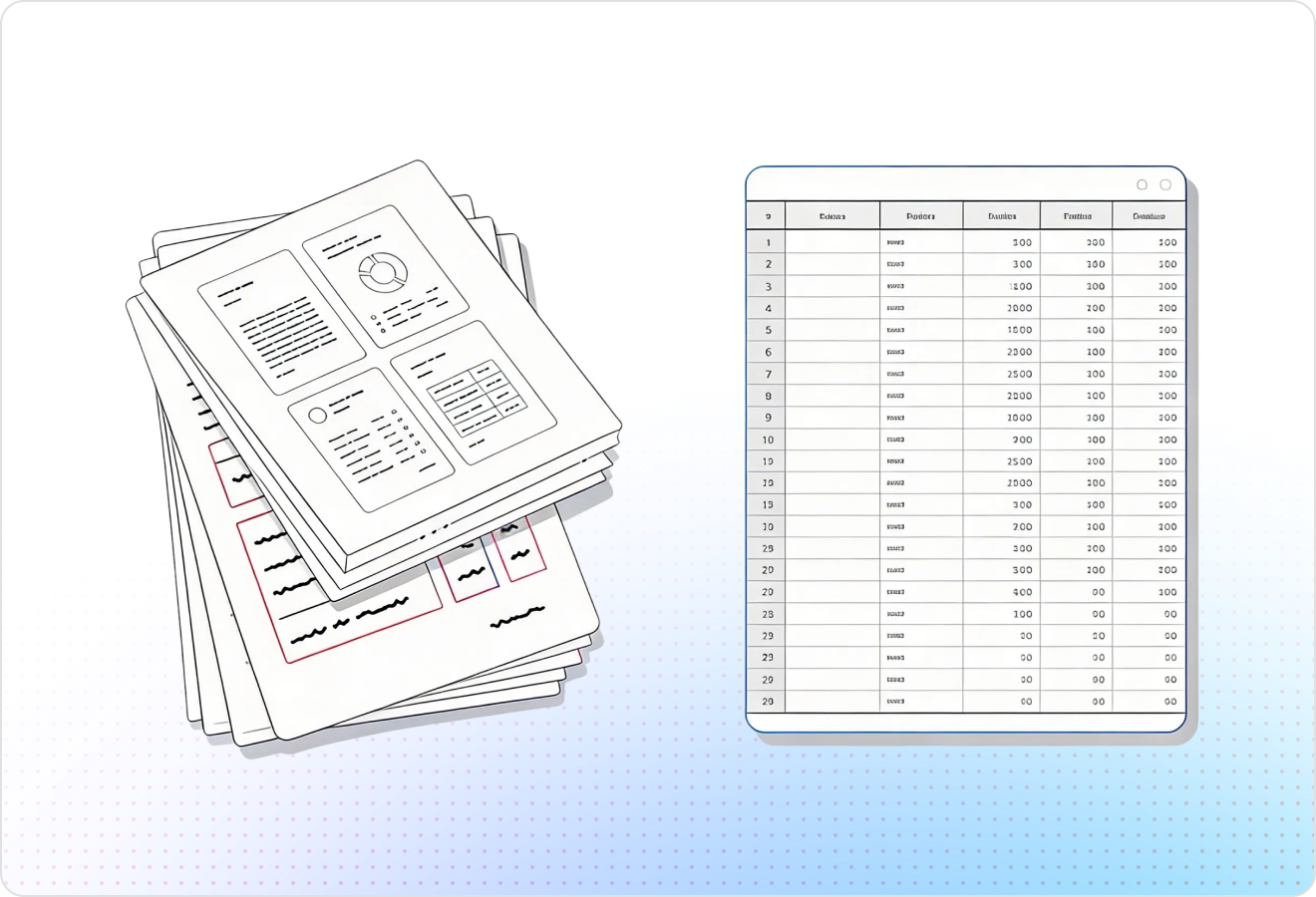
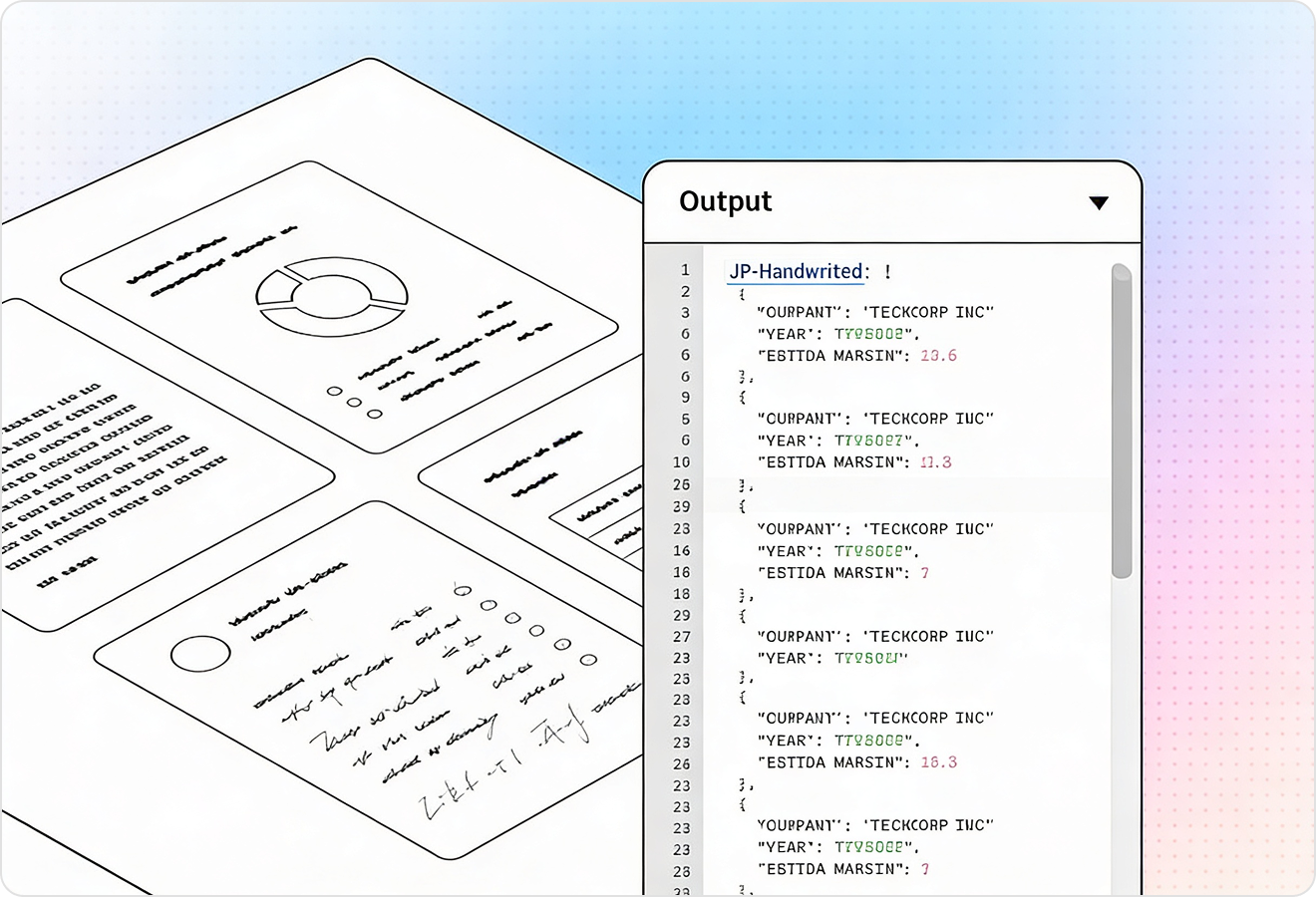
LlamaParse understands the structure of ocean bills of lading—shipper/consignee blocks, notify party, vessel/voyage, ports, and signature areas—so fields don’t get scrambled when layouts vary by carrier. That means more reliable extraction of critical B/L identifiers like B/L number, container numbers, and port pairs without brittle template rules.
02
LlamaParse accurately reconstructs multi-column tables for goods descriptions, package counts, weights/measurements, and marks & numbers, even when rows wrap or columns shift. You get clean, machine-readable output that’s ready to validate against booking data and feed into customs, finance, or ops systems.
03
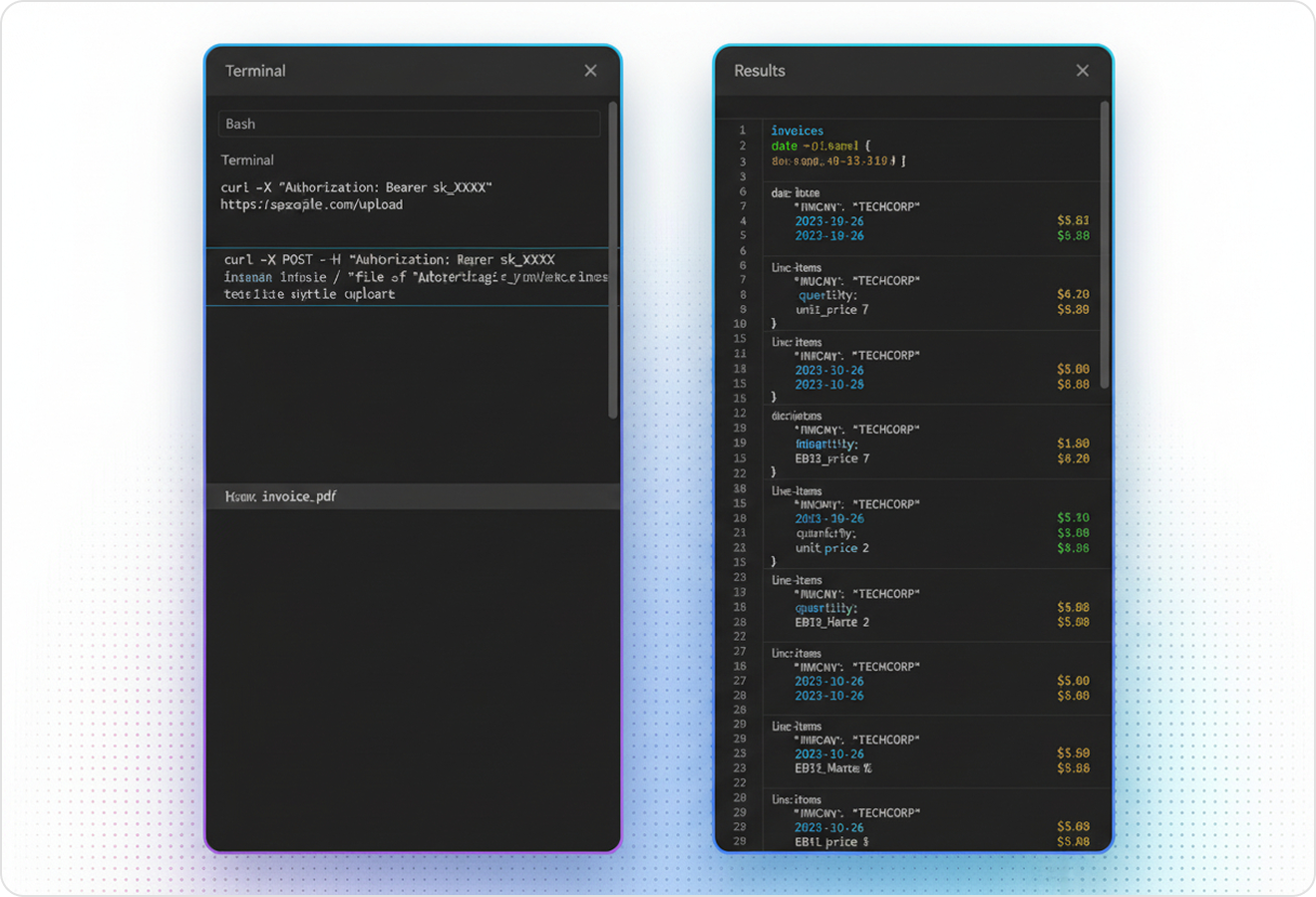
LlamaParse can return structured JSON for B/L data with granular metadata like page references and element coordinates for each extracted value. This makes exception handling practical: you can highlight the exact source region for “Freight Prepaid/Collect” or “Originals” terms and route low-confidence fields to review.
04
LlamaParse uses self-correction and validation steps to reduce common scan issues like missing digits in container numbers or misread port codes. For ocean B/L processing, this improves straight-through rates by catching inconsistencies early and returning outputs that are internally coherent before they hit your downstream workflow.
Technical OCR documentation
Explore our developer guides to easily connect your document pipelines to LlamaParse.
Explore the documentation
Our AI catches the typos that tired eyes miss.

Export to Excel, JSON, XML, or directly via API.

SOC2 Type II compliant with end-to-end encryption.

Train the tool on your specific forms in minutes, not days.

Average processing time of <3 seconds per page.
LlamaParse’s support of a wide variety of filetypes and its accuracy of parsing made it the best tool we tested in our evaluations. The LlamaIndex team was very responsive and we were off to the races within a day.
Common FAQs
01
Yes. The parser is layout-aware, so it recognizes common ocean B/L sections (shipper/consignee, notify party, vessel/voyage, ports, signatures) even when formats vary by carrier. That means key identifiers like B/L number, container numbers, and port pairs stay mapped correctly without brittle template maintenance.
02
It reconstructs multi-column tables and line items reliably, even when rows wrap, columns shift, or scans are slightly skewed. You get clean, machine-readable fields for marks & numbers, quantities, weights/measurements, and descriptions—ready for validation against booking and ops data.
03
Absolutely. You can receive normalized JSON for each B/L with consistent field names for downstream workflows like customs, finance, and operations. This reduces manual rekeying and makes it straightforward to map into your TMS, ERP, or internal APIs.
04
How do we handle exceptions and prove where a value came from in the document?
Every extracted value can include traceability metadata such as page references and coordinates back to the exact source region. That makes reviews fast—your team can instantly verify fields like “Freight Prepaid/Collect” or “No. of Originals” without hunting through the PDF.
05
What about messy scans—missing digits in container numbers or misread port codes?
The system runs validation and self-correction loops to catch common OCR failures before results reach your workflow. It flags inconsistencies early and returns internally coherent outputs, improving straight-through processing and reducing costly downstream fixes.
06
How quickly can we deploy, and what does a typical workflow look like?
Most teams start by sending PDFs or scanned images and receiving structured JSON back in the same workflow, then adding review only for low-confidence fields. Because it doesn’t depend on templates, you can expand to new carriers and lanes quickly without a long setup cycle.