Nov 14, 2025
Document AI: The Next Evolution of Intelligent Document ProcessingPersona
Industry
Use cases
Healthcare OCR
[ Healthcare OCR ]

Use LlamaParse to turn messy medical forms into structured JSON with citations and confidence scores.
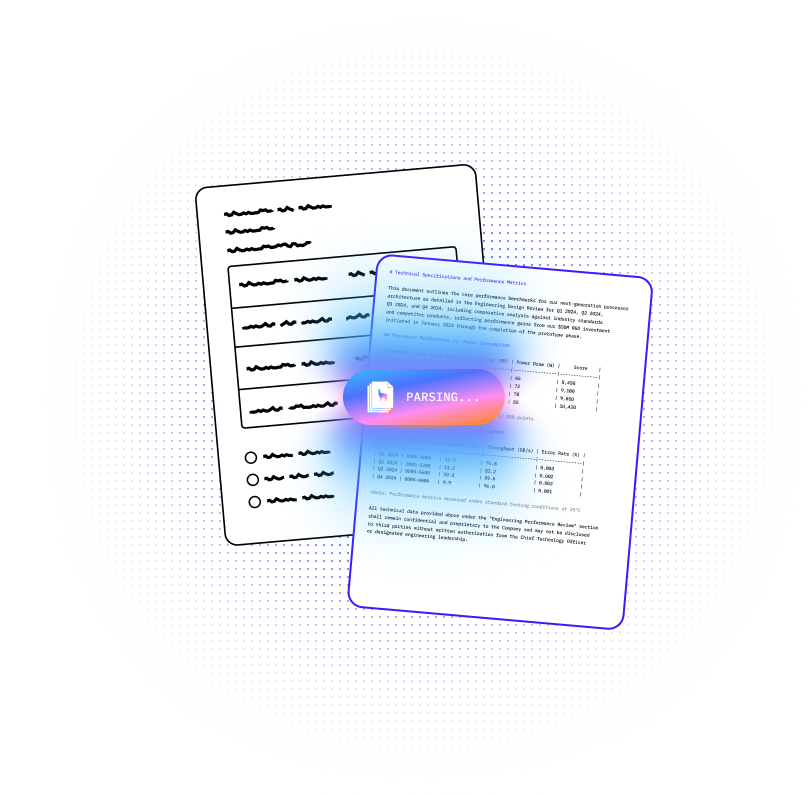
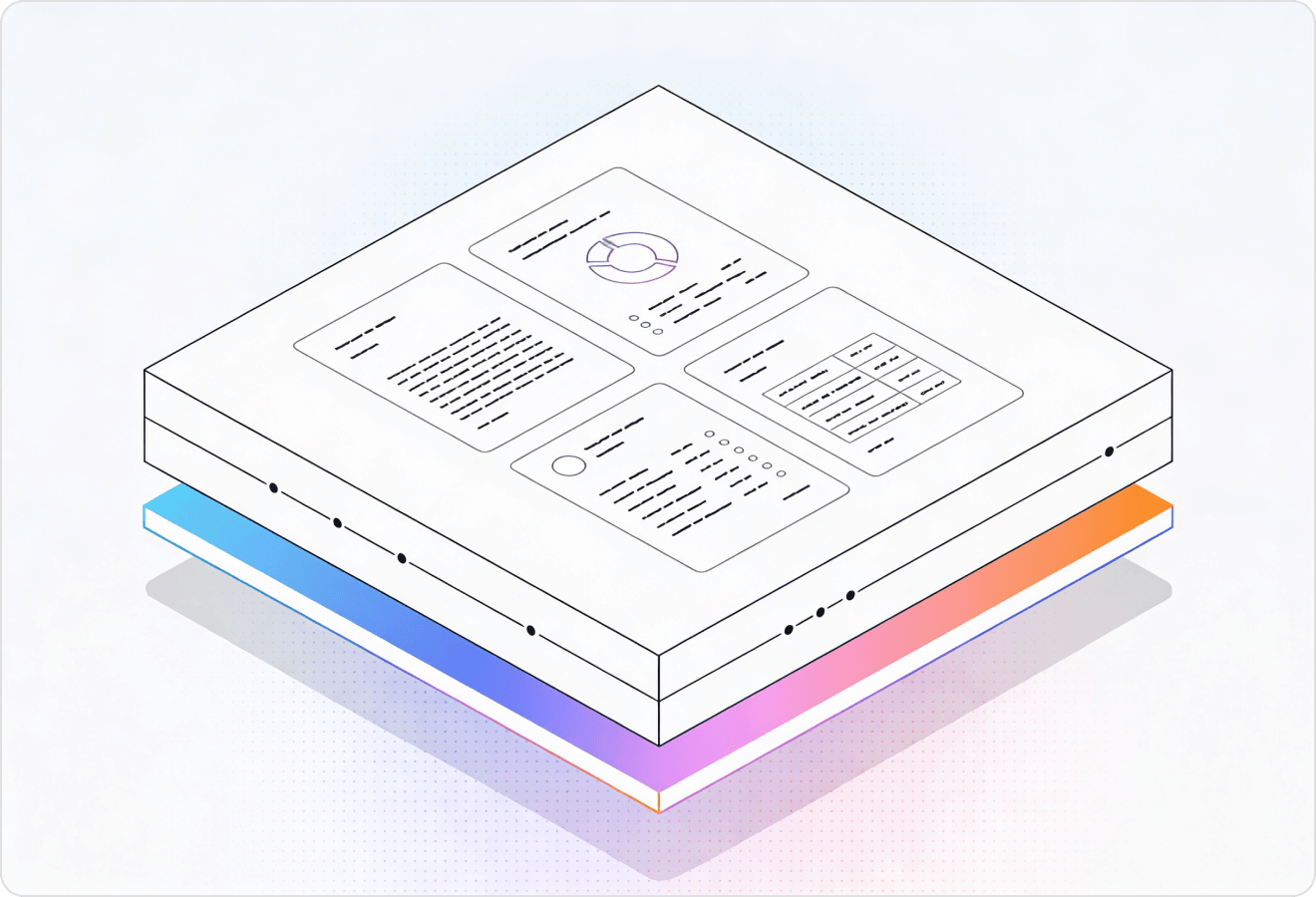
LlamaParse turns messy claims, EOBs, lab reports, and prior auth packets into clean, structured fields you can trust downstream. It uses layout-aware vision, agentic orchestration, and validation loops to reduce rework, surface citations, and boost straight-through processing.
Best-in-Class Accuracy

Use LlamaParse to turn scanned referrals, lab reports, and discharge summaries into clean Markdown/JSON while preserving sections, tables, and reading order—so clinical teams stop chasing missing fields and misfiled notes. Agentic parsing with validation loops reduces rework from messy faxes and multi-column forms and makes downstream triage, coding, and care coordination faster and more consistent.

Ingest EOBs, prior auth packets, and itemized bills with layout-aware table extraction so line items, modifiers, and totals don’t get scrambled into unusable text. JSON mode with granular metadata enables auditable, page-cited extraction for faster adjudication and fewer payment errors or appeals.

Parse protocols, informed consent forms, and site binders—including charts, figures, and scientific notation—so study data is captured reliably without custom parsing scripts for each sponsor template. Natural-language parsing instructions let ops teams standardize exactly what gets extracted (e.g., endpoints, visit schedules, inclusion/exclusion) to speed study startup and reduce monitoring findings.

Ship document ingestion for patient intake, medical records, and device reports in days by using LlamaParse APIs instead of building brittle OCR clean-up code and template rules. Tier-based processing and cost optimizer mode keep unit economics predictable as volumes spike, while still upgrading only the complex pages that need higher-accuracy agentic parsing.
The Solution
01
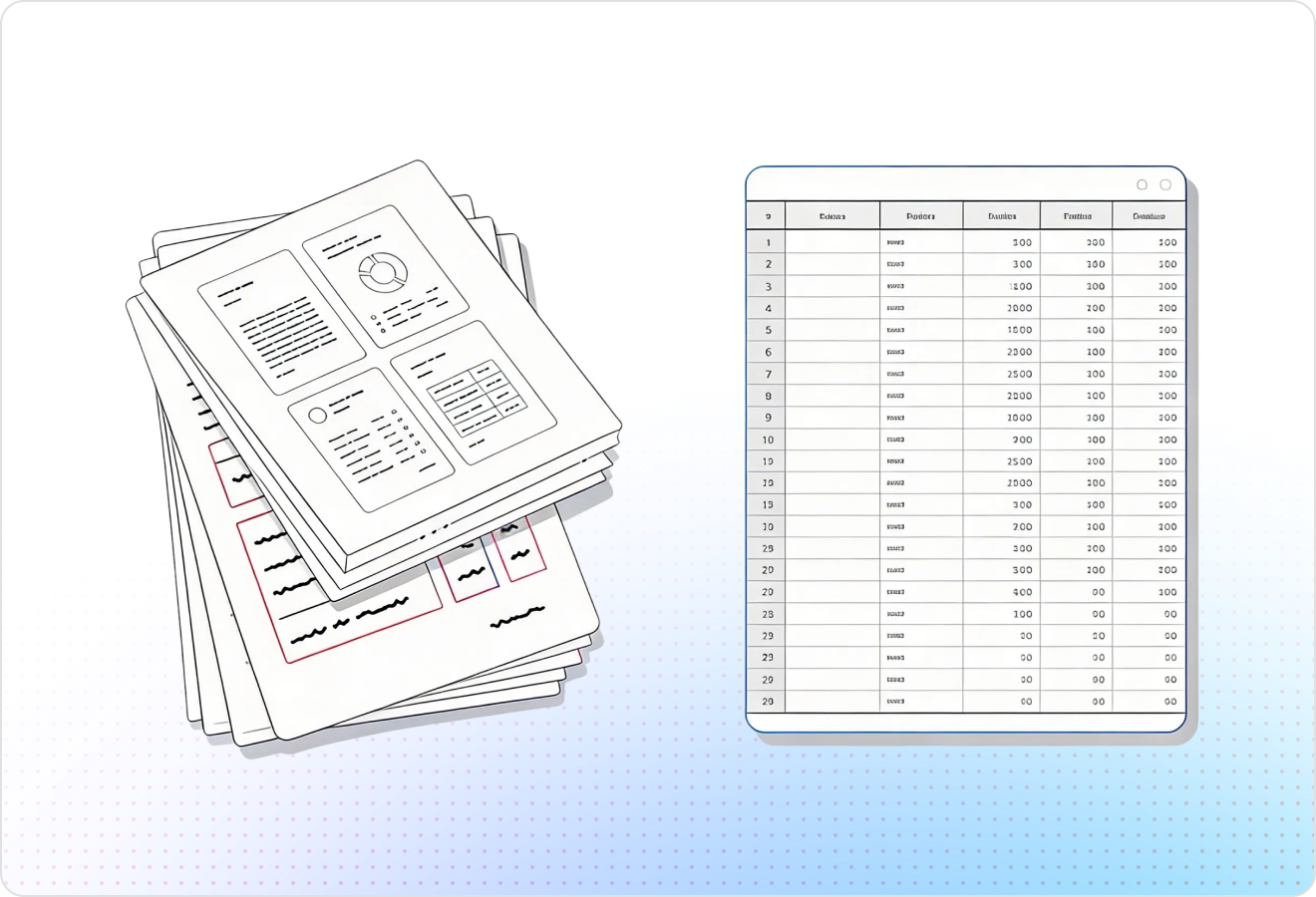
LlamaParse understands real page structure—multi-column text, headers/footers, checkboxes, and repeating form sections—so content doesn’t get scrambled. For healthcare documents like intake forms, EOBs, and referrals, this preserves the correct reading order and field grouping needed for reliable downstream extraction.
02
LlamaParse accurately captures complex tables and nested grids into clean, AI-ready formats like Markdown or structured JSON. This is critical for healthcare OCR workloads such as lab results, medication lists, CPT/ICD line items, and claim summaries where row/column integrity drives billing and clinical accuracy.
03
LlamaParse runs multiple self-check and validation passes to catch common scan errors and inconsistent outputs before returning results. In healthcare, this reduces the risk of propagating wrong patient identifiers, dates, dosages, or totals—boosting straight-through processing and minimizing manual review.
04
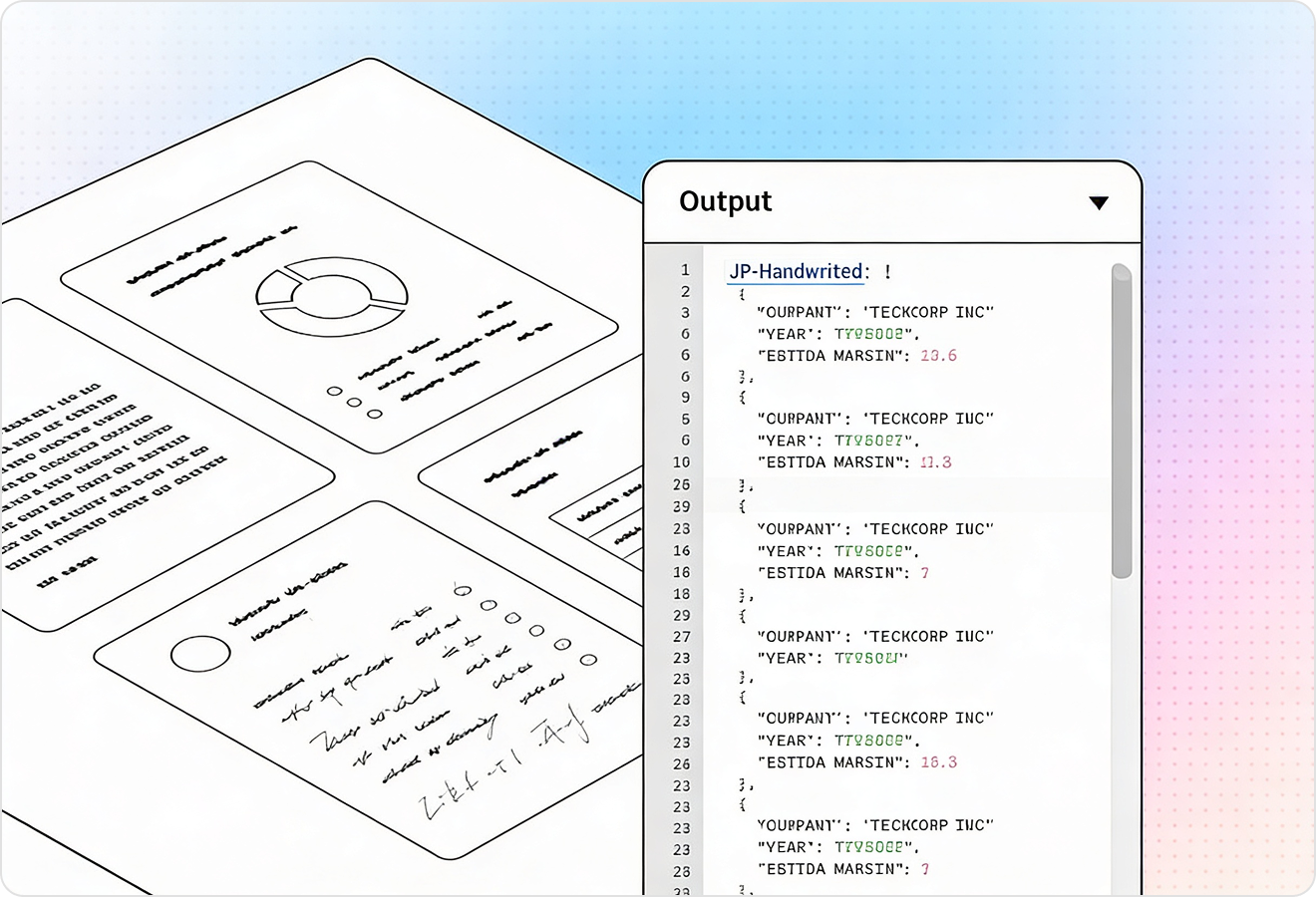
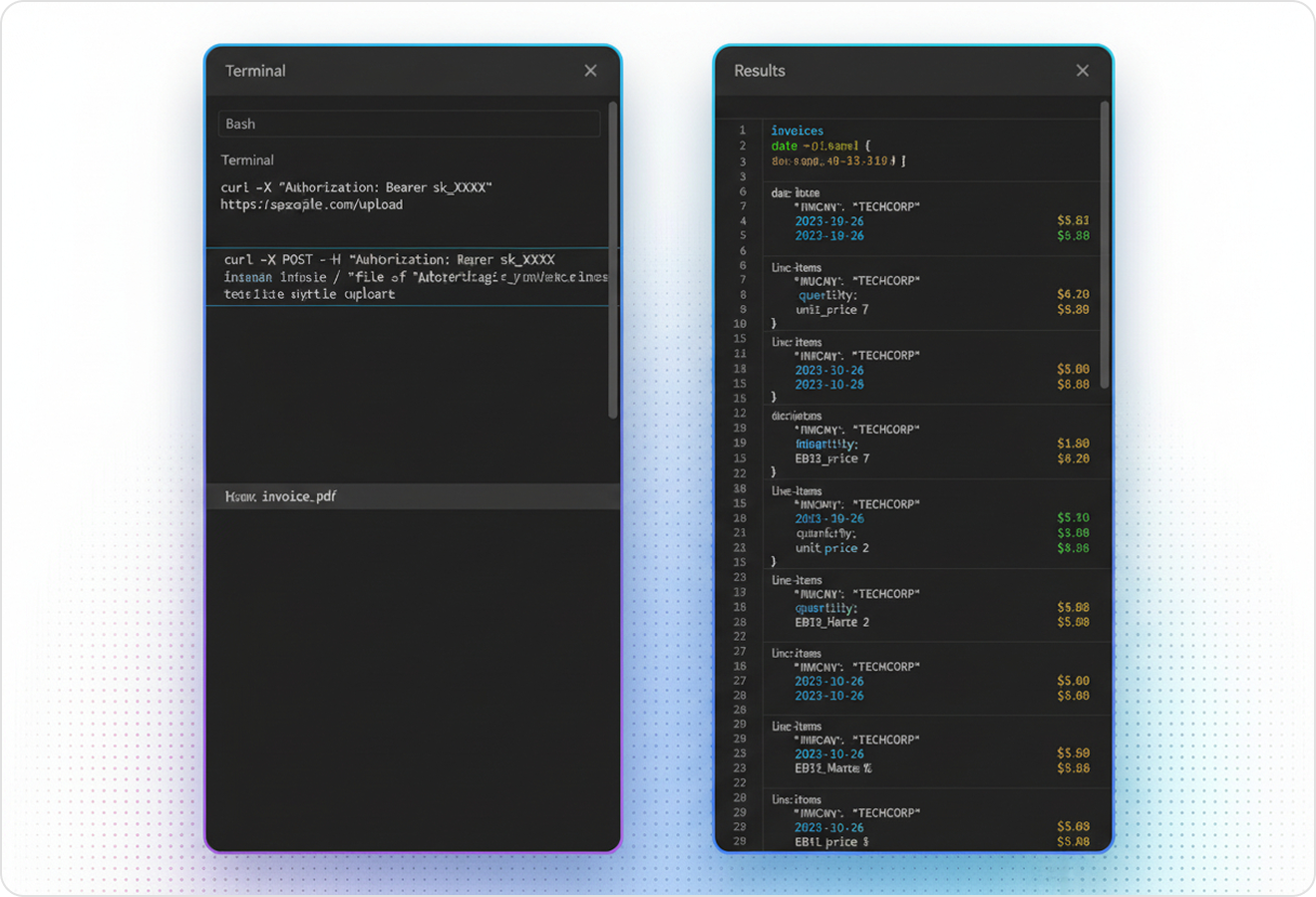
LlamaParse can emit structured JSON enriched with page-level citations and granular coordinates for each extracted element. That traceability supports audit-friendly healthcare workflows by letting teams verify exactly where a diagnosis code, provider NPI, or lab value came from in the source document.
Technical OCR documentation
Explore our developer guides to easily connect your document pipelines to LlamaParse.
Explore the documentation
Our AI catches the typos that tired eyes miss.

Export to Excel, JSON, XML, or directly via API.

SOC2 Type II compliant with end-to-end encryption.

Train the tool on your specific forms in minutes, not days.

Average processing time of <3 seconds per page.
LlamaParse’s support of a wide variety of filetypes and its accuracy of parsing made it the best tool we tested in our evaluations. The LlamaIndex team was very responsive and we were off to the races within a day.
Common FAQs
01
Yes—layout-aware parsing preserves the true reading order across multi-column text, headers/footers, checkboxes, and repeating form blocks. That means intake forms, referrals, and EOBs won’t get “scrambled,” so your downstream extraction and mapping stay reliable.
02
It captures tables and nested grids with strong row/column integrity and returns them in AI-ready formats like clean Markdown or structured JSON. This helps prevent common table errors that can impact clinical interpretation or billing accuracy.
03
Validation correction loops run multiple self-check passes to catch common OCR issues before results are returned. This reduces the risk of propagating incorrect patient IDs, dates, dosages, or totals—cutting manual review time without sacrificing confidence.
04
Do you provide citations so we can audit where each extracted value came from?
Yes—outputs can include page-level citations and precise coordinates for each extracted element. That traceability makes it easy to verify items like diagnosis codes, provider NPIs, and lab values directly against the source document for audit-ready workflows.
05
What output formats do we get, and how easy is it to integrate with our systems?
You can receive structured JSON (with optional citations) and table-friendly formats that are straightforward to feed into RPA, data pipelines, or EHR/claims workflows. This reduces custom parsing work and speeds up time-to-value in production.
06
Which healthcare document types does this work best for?
It’s well-suited for intake forms, EOBs, referrals, lab reports, medication lists, and claims documents where layout and tables are critical. If you have a niche template, you can validate accuracy quickly using citations and iterate with minimal effort.