Nov 14, 2025
Document AI: The Next Evolution of Intelligent Document ProcessingPersona
Industry
Use cases
Supply Request Form OCR
[ Supply Request Form OCR ]

Use LlamaParse to turn messy supply request forms into verified JSON your systems can trust.
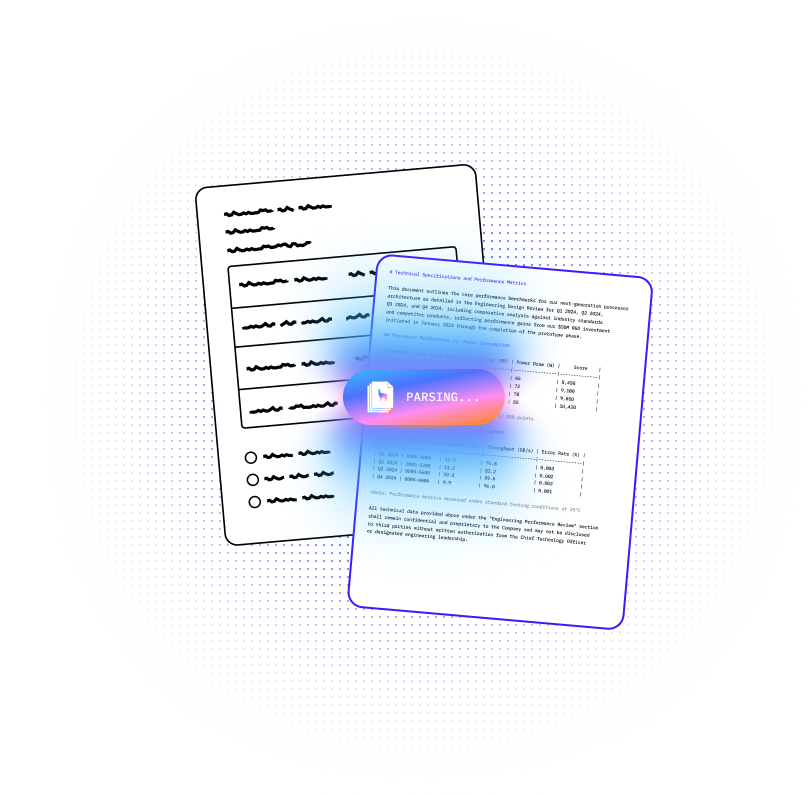


LlamaParse turns messy supply request forms into structured JSON by understanding layout, tables, and handwritten notes, not just raw text. Validation loops and traceable metadata cut rework and exceptions, so your intake pipeline stays fast, accurate, and audit-friendly at scale.
Best-in-Class Accuracy

Turn emailed or scanned supply request forms into clean JSON that maps directly to item codes, quantities, delivery dates, and plant locations—even when the form is multi-column or table-heavy. LlamaParse preserves table structure and reading order so ERP intake stops relying on manual re-keying and brittle template rules.

Extract line items, jobsite identifiers, and approval signatures from field-submitted supply requests where layouts change by subcontractor and scans are often low quality. With layout-aware parsing and correction loops, teams can auto-route requests for approval and generate POs without chasing missing details.

Convert clinical department supply request forms into structured records with item descriptions, SKUs, quantities, and cost centers while preserving supporting notes that are frequently embedded in sidebars or footers. Granular metadata and confidence scoring make it easy to flag only the exceptions for review, reducing delays that lead to stockouts.

Use LlamaParse as the ingestion layer to normalize customer-uploaded supply request PDFs into a consistent schema without building custom parsers per template. Tier-based processing keeps costs predictable in production by applying heavier agentic parsing only to the messy pages that need it.
The Solution
01
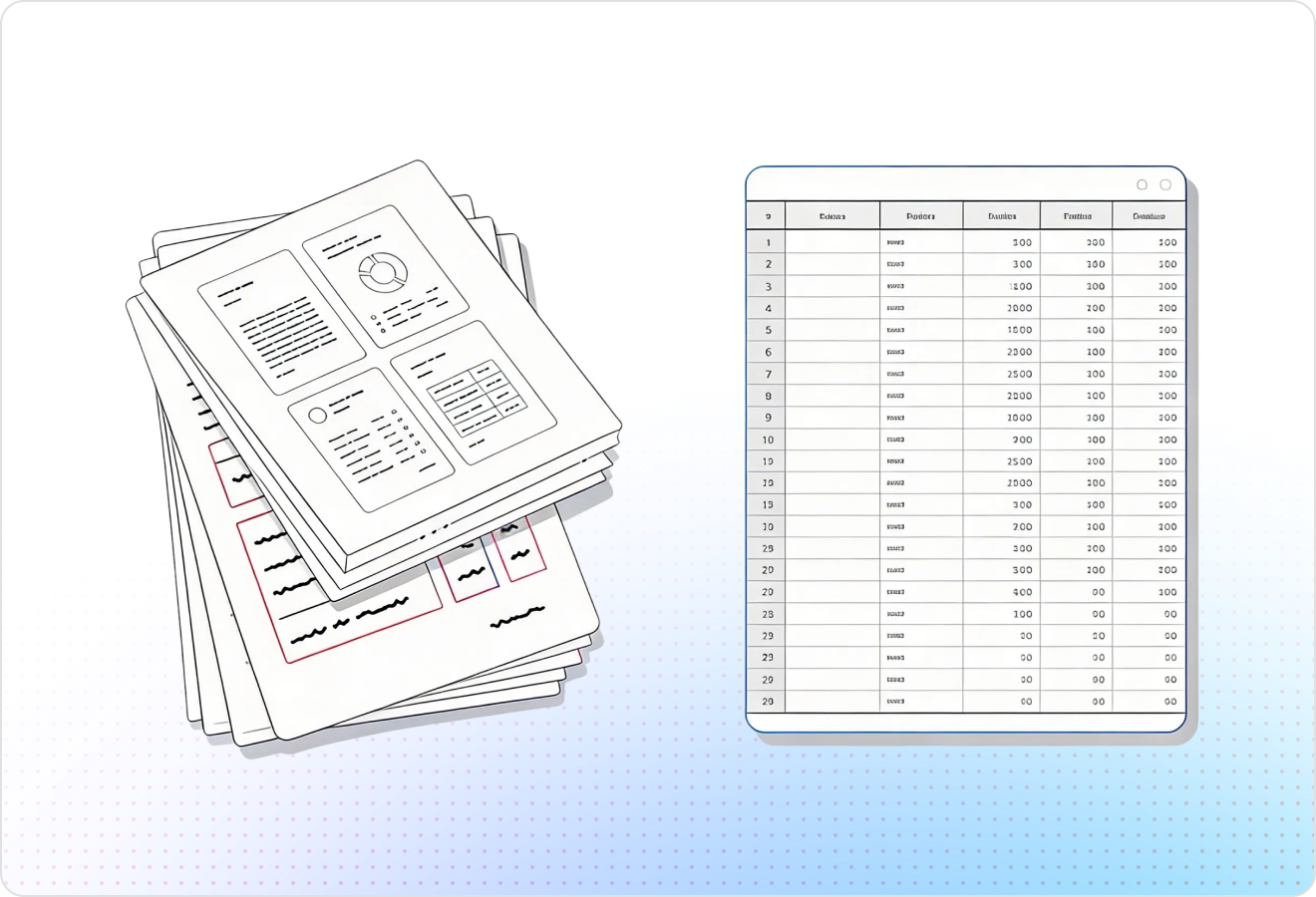
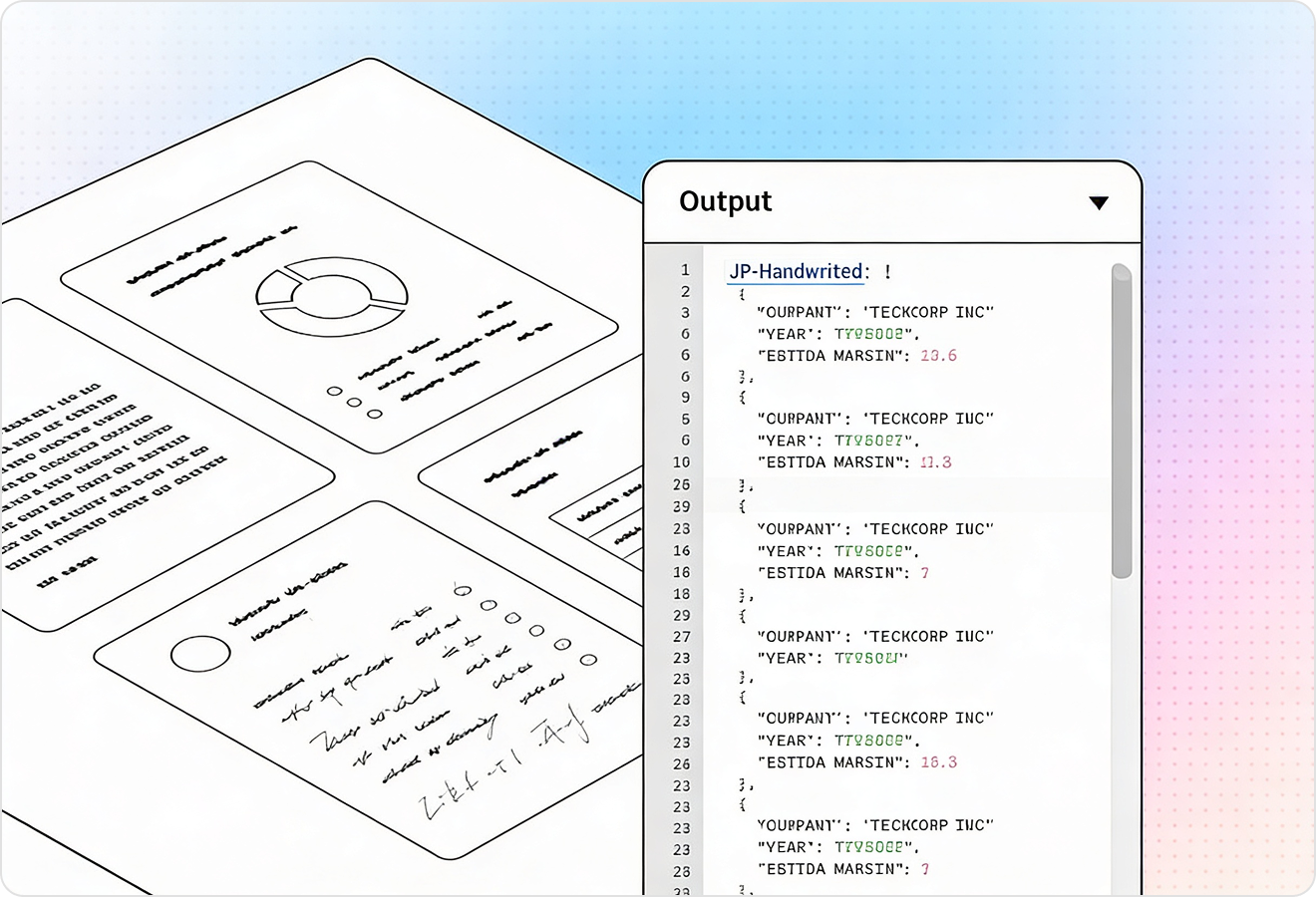
LlamaParse uses layout-aware vision to understand supply request forms as forms, preserving reading order across headers, line items, totals, and signature blocks. That means you reliably capture fields like requester, department, ship-to, and approval details even when the template or spacing changes.
02
It accurately extracts complex line-item tables—SKU, description, quantity, unit price, and need-by date—without scrambling columns or merging rows. This makes downstream validation and ERP ingest much easier because each row stays a row.
03
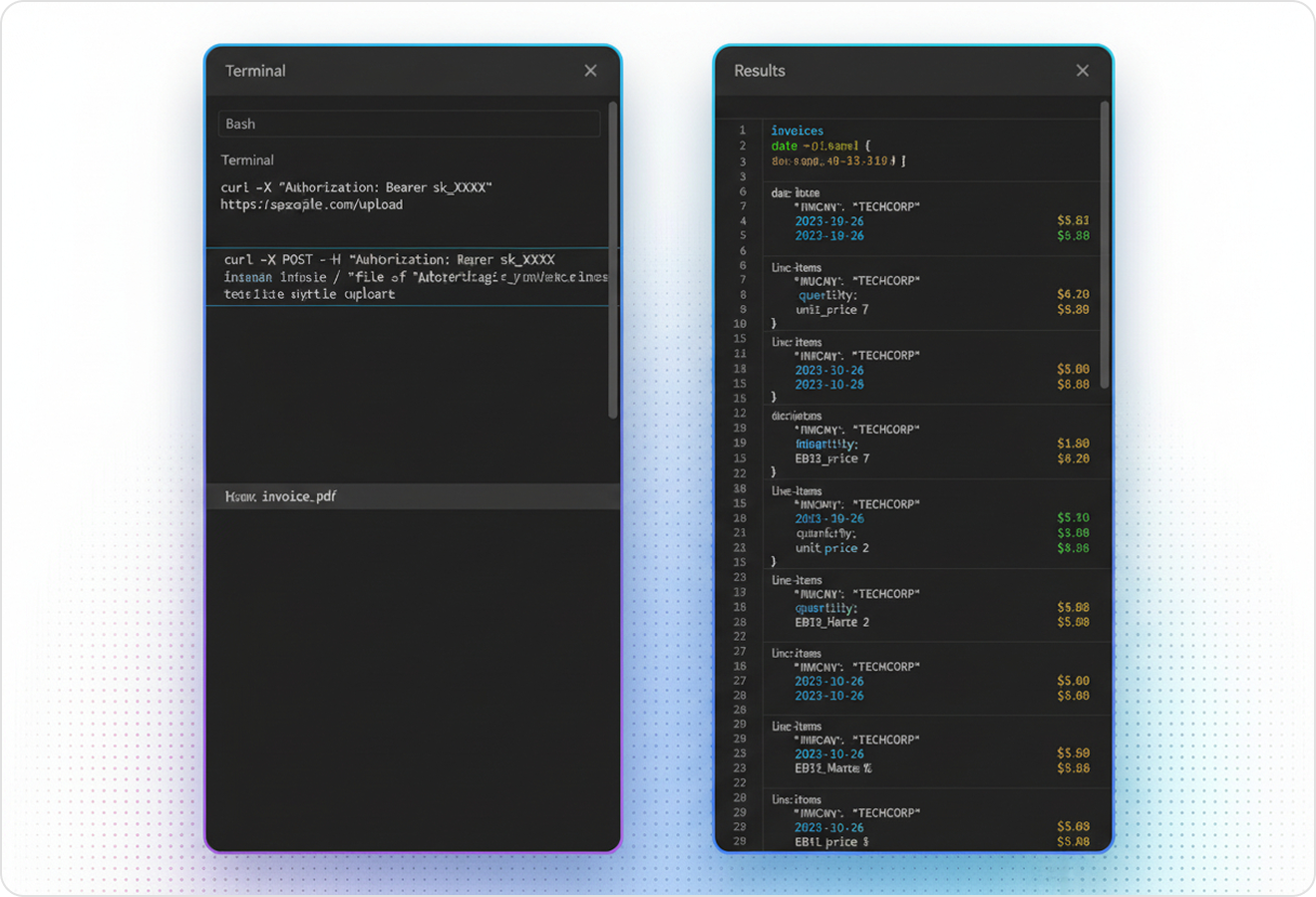
LlamaParse can return structured JSON tailored to your schema, so supply request forms become clean objects your workflow can route, approve, and reconcile. Every extracted value can include page-level metadata (like location and element type) to support fast spot-checking and human-in-the-loop review.
04
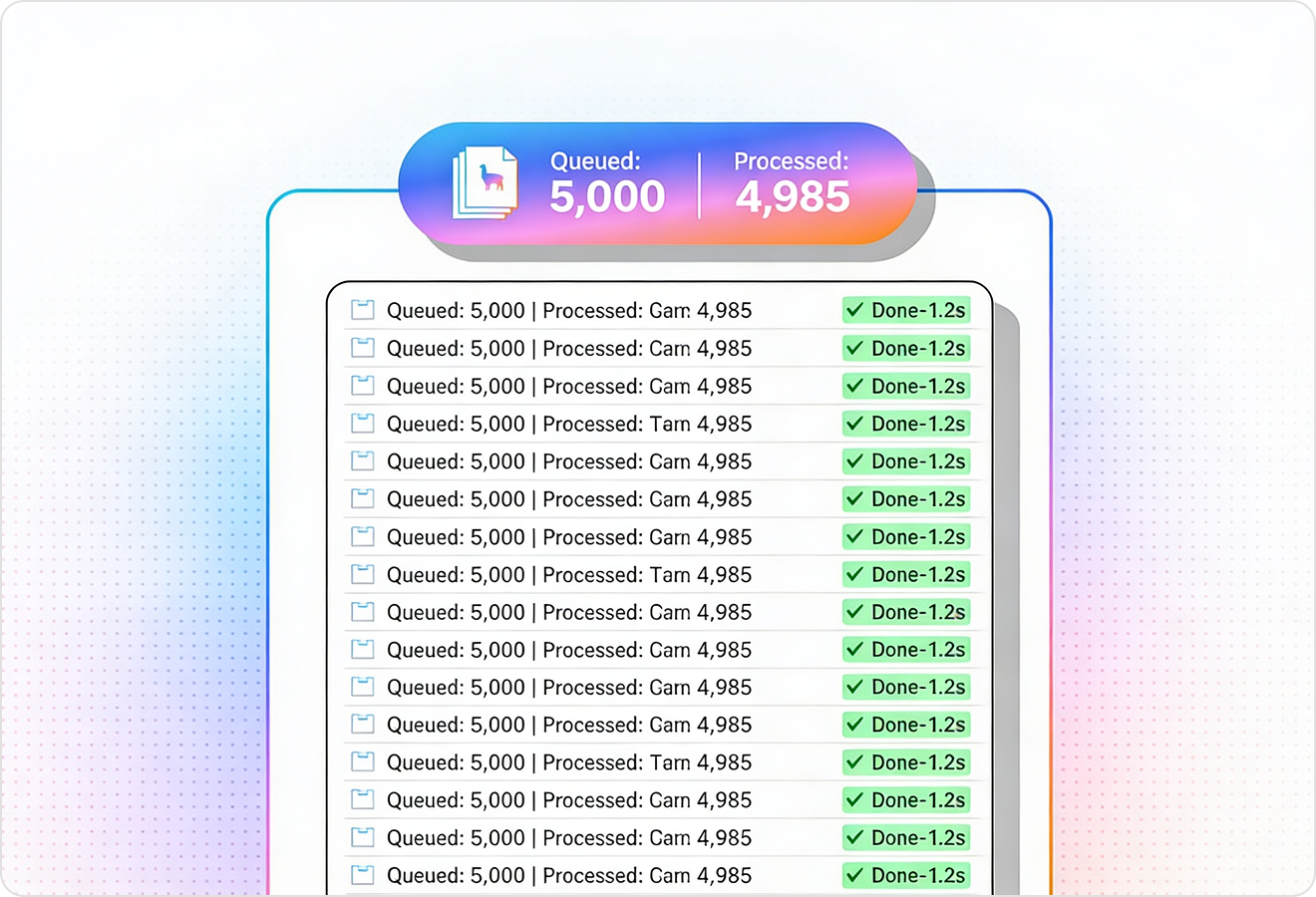
Agentic validation loops catch common extraction errors—misread part numbers, swapped quantities, or inconsistent totals—and retry with the right strategy before producing the final output. For supply requests, this increases straight-through processing by reducing the manual cleanup that usually follows brittle text extraction.
Technical OCR documentation
Explore our developer guides to easily connect your document pipelines to LlamaParse.
Explore the documentation
Our AI catches the typos that tired eyes miss.

Export to Excel, JSON, XML, or directly via API.

SOC2 Type II compliant with end-to-end encryption.

Train the tool on your specific forms in minutes, not days.

Average processing time of <3 seconds per page.
LlamaParse’s support of a wide variety of filetypes and its accuracy of parsing made it the best tool we tested in our evaluations. The LlamaIndex team was very responsive and we were off to the races within a day.
Common FAQs
01
Yes. Layout-aware parsing reads the document as a form—tracking headers, sections, and signature blocks—so fields like requester, department, ship-to, and approvals stay accurate even when spacing or templates change. This reduces rework when new vendors or internal teams use different versions.
02
It’s designed to keep tables intact, preserving columns and row boundaries so SKU, description, quantity, unit price, and need-by date don’t get scrambled. That means fewer downstream errors and much cleaner ERP or procurement system imports.
03
Yes. You can output structured JSON tailored to your schema, turning each form into a clean object your workflow can route for approval, validation, and reconciliation. This makes it straightforward to plug into your existing APIs, RPA, or integration layer.
04
How do we verify what was extracted without reviewing every form manually?
Each extracted value can include traceability metadata, such as page location and element type, so reviewers can spot-check quickly. This enables efficient human-in-the-loop review when needed while keeping most forms fully automated.
05
What happens when OCR misreads part numbers or totals don’t add up?
Auto validation loops catch common issues like misread part numbers, swapped quantities, and inconsistent totals, then retry with the appropriate strategy before finalizing output. This increases straight-through processing and reduces the manual cleanup typical of brittle text extraction.
06
How does this help us move faster from intake to approval and ERP posting?
By reliably extracting header fields, approvals, and line items into structured JSON, your team can automate routing, policy checks, and ERP ingest with minimal touch. The result is faster cycle times, fewer exceptions, and more confidence in the data that drives purchasing.