Nov 14, 2025
Document AI: The Next Evolution of Intelligent Document ProcessingPersona
Industry
Use cases
Azure Blob Document Parsing
[ Azure Blob Document Parsing ]

Use LlamaParse to turn Azure Blob files into clean JSON or Markdown with confidence scores.
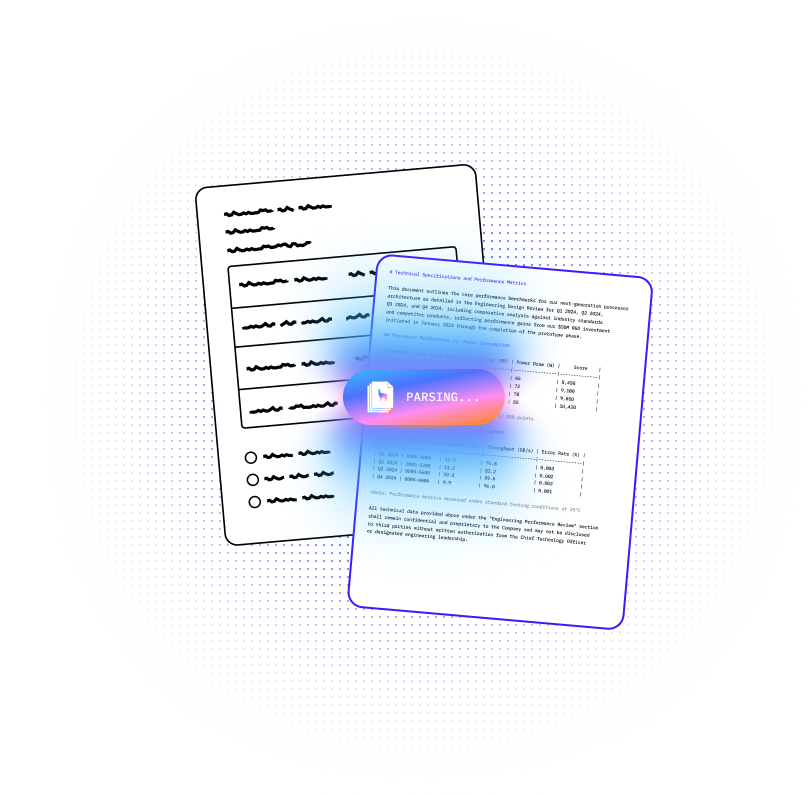
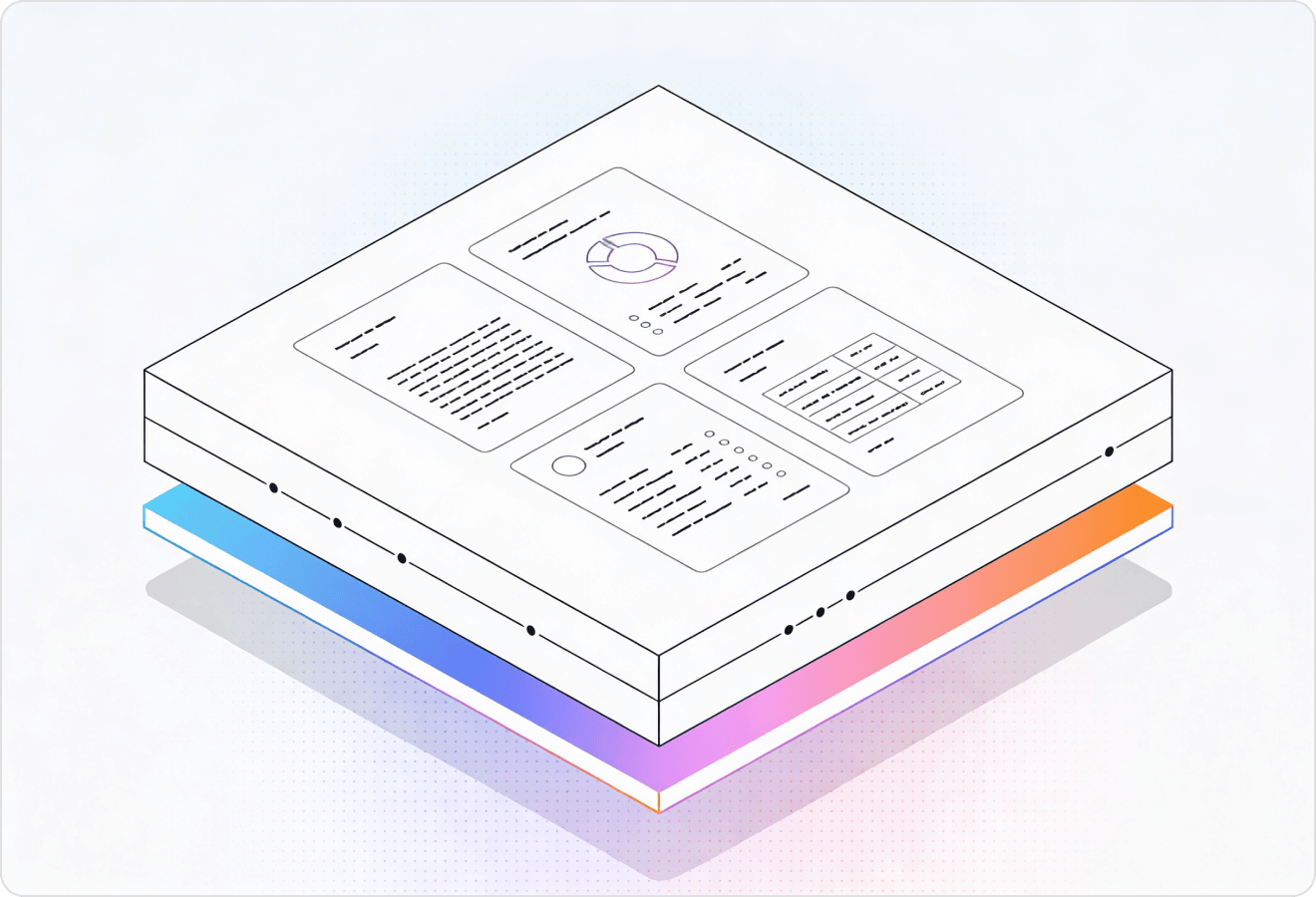
LlamaParse pulls files directly from Azure Blob Storage and converts messy PDFs, scans, and Office docs into clean, structured Markdown and JSON. Layout-aware parsing handles tables, charts, and multi-column pages with verification metadata, so downstream agents extract fields reliably with less cleanup.
Best-in-Class Accuracy

Parse customer-uploaded PDFs and scans from Azure Blob into clean JSON and Markdown with layout-aware tables, so your MVP doesn’t die on edge cases. Use natural-language parsing instructions to ship new extraction workflows in hours, not weeks of brittle regex and manual QA.

Turn adjuster photos, claim packets, and loss runs stored in Azure Blob into structured fields and traceable citations, reducing rework and accelerating settlement cycles. Multimodal parsing captures tables, damage estimates, and embedded images accurately, so downstream decisions aren’t based on incomplete extractions.

Convert bills of lading, commercial invoices, and packing lists in Azure Blob into reliable line-item tables while preserving reading order across multi-column and stamp-heavy documents. Output granular metadata for exception handling, so teams can route only the problematic pages to review instead of checking every shipment.

Ingest statements, tax forms, and covenant reports from Azure Blob and extract consistent, schema-ready JSON for underwriting and monitoring without building a fragile parsing pipeline per template. Auto-correction loops and validation reduce misreads that trigger false compliance alerts or slow down credit decisions.
The Solution
01
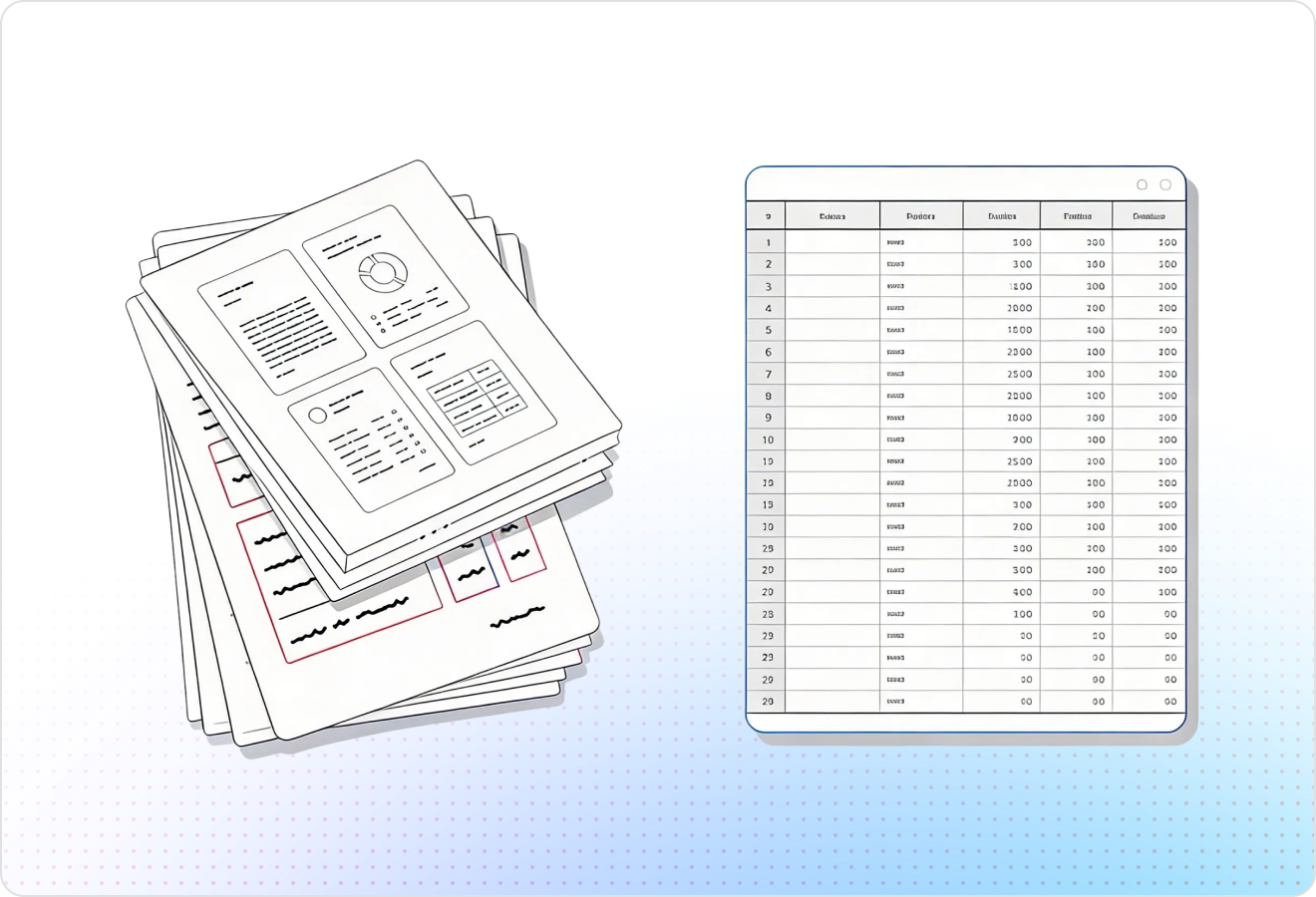
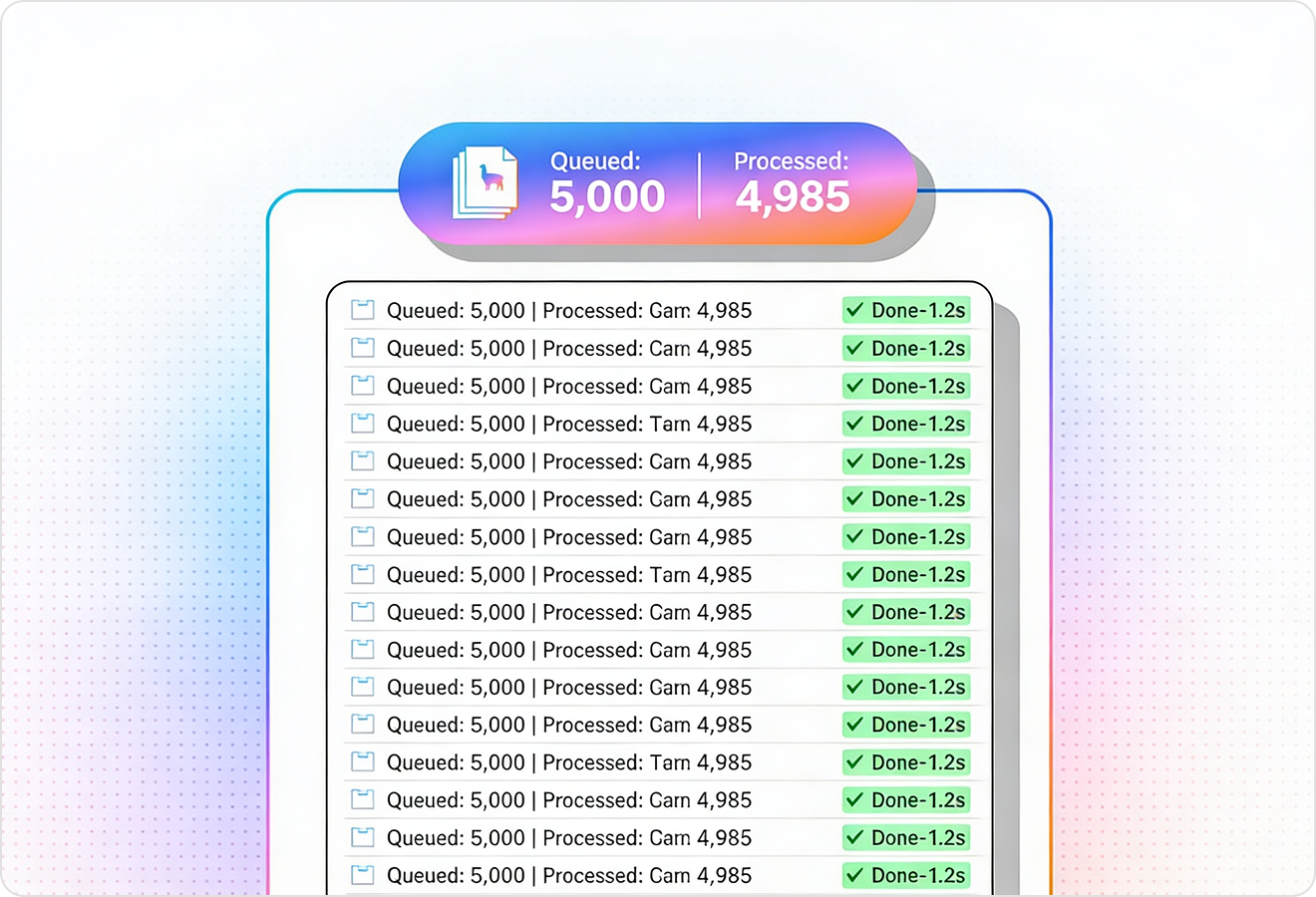
LlamaParse is built to parse large volumes of files without you writing brittle per-format handling for what shows up in Azure Blob Storage. That makes it practical to turn a container full of PDFs, scans, Word docs, and spreadsheets into consistent, AI-ready outputs on a predictable pipeline.
02
LlamaParse understands document layout so multi-column pages, headers/footers, and nested tables don’t get scrambled during parsing. When you’re pulling invoices, statements, or reports out of Blob Storage, it preserves reading order and table structure so downstream indexing and analytics don’t break.
03
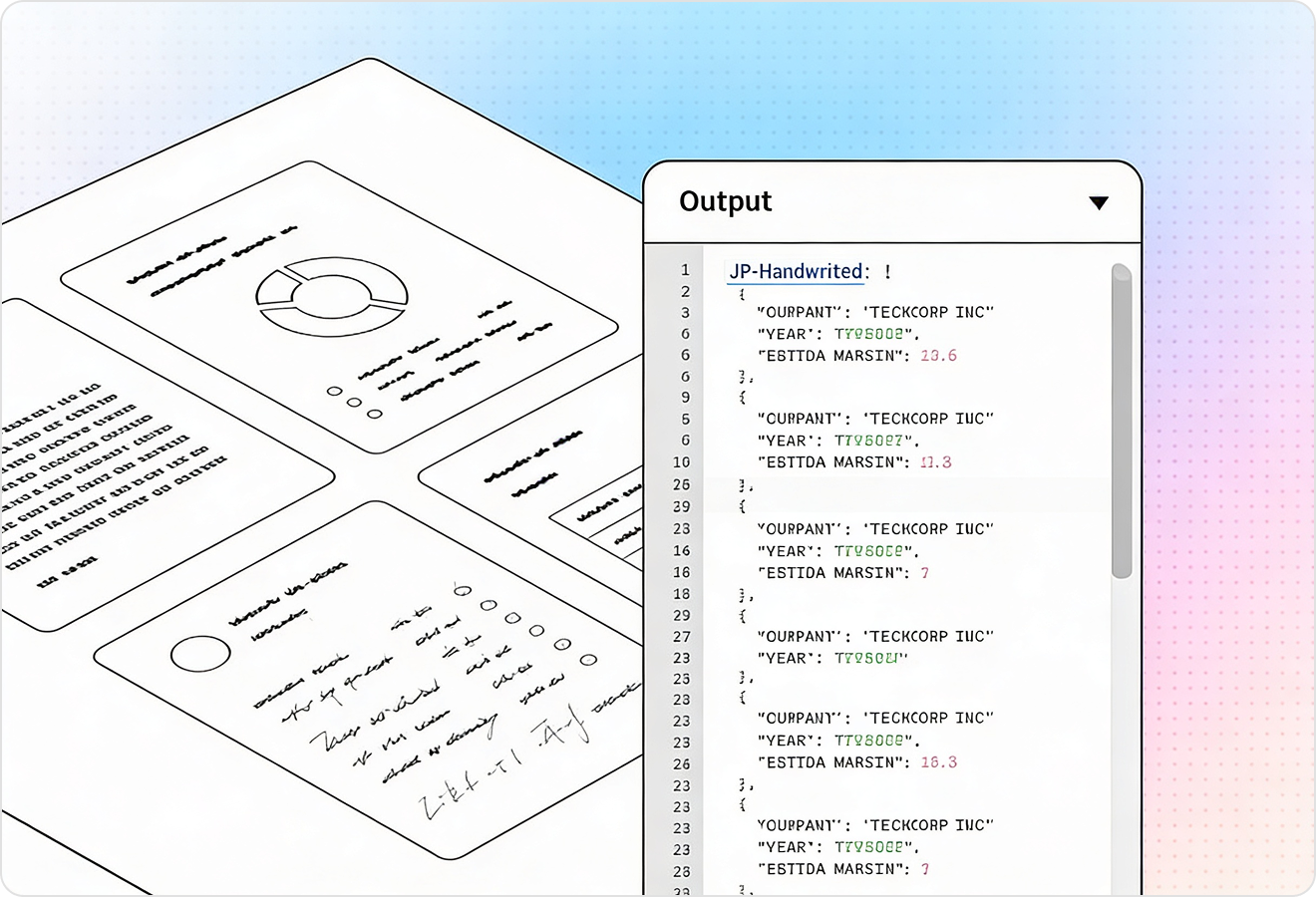
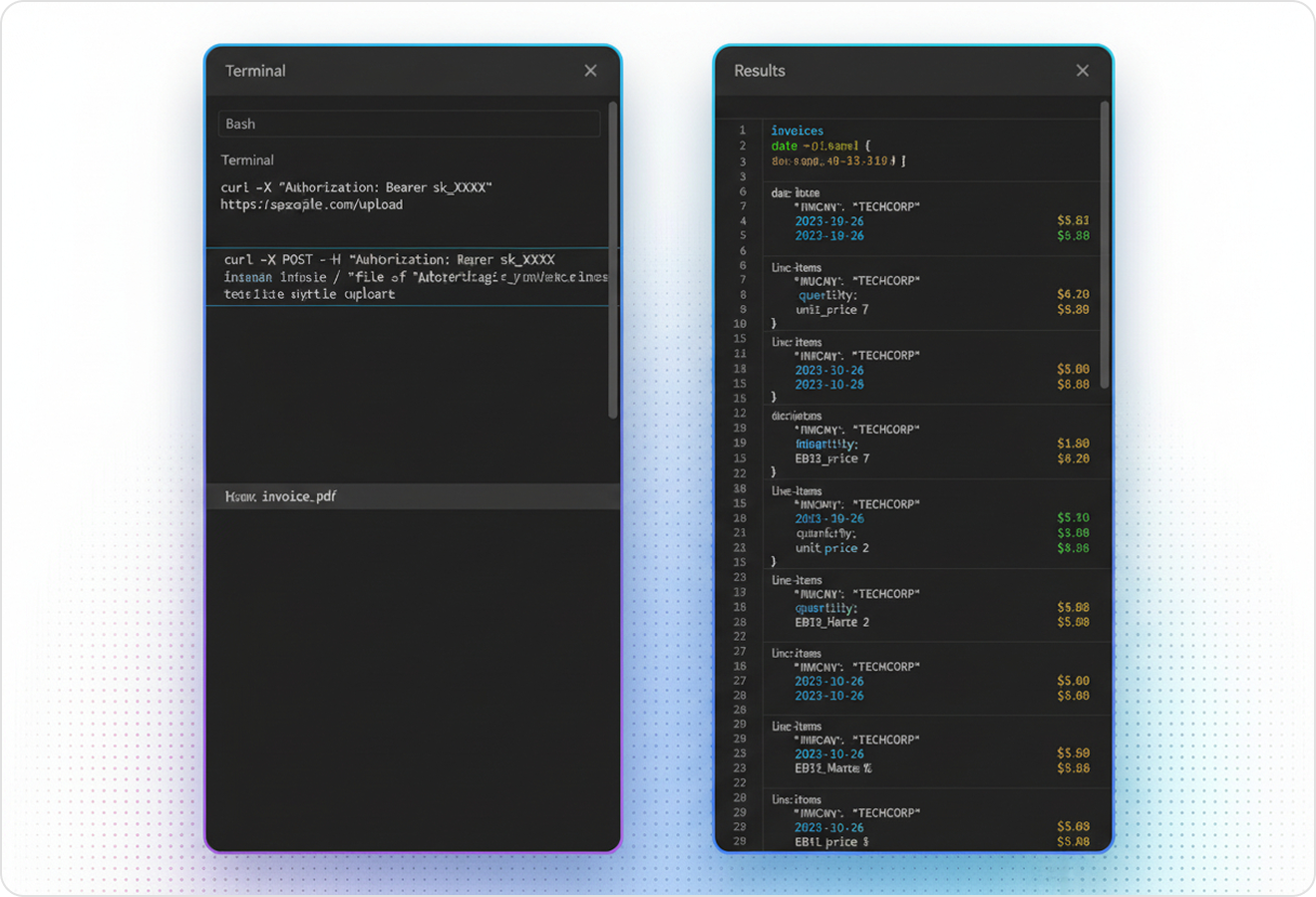
LlamaParse can emit structured JSON and attach granular metadata like page numbers, element types, and coordinates for traceability. In an Azure Blob workflow, that gives you reliable fields to store alongside each blob, validate extractions, and power precise filtering in your apps.
04
LlamaParse can automatically route easy pages through faster processing while escalating only the complex scans and dense layouts to more capable agentic parsing. This keeps Azure Blob ingestion costs stable when your containers include a mix of clean digital PDFs and messy real-world documents.
Technical OCR documentation
Explore our developer guides to easily connect your document pipelines to LlamaParse.
Explore the documentation
Our AI catches the typos that tired eyes miss.

Export to Excel, JSON, XML, or directly via API.

SOC2 Type II compliant with end-to-end encryption.

Train the tool on your specific forms in minutes, not days.

Average processing time of <3 seconds per page.
LlamaParse’s support of a wide variety of filetypes and its accuracy of parsing made it the best tool we tested in our evaluations. The LlamaIndex team was very responsive and we were off to the races within a day.
Common FAQs
01
Yes—LlamaParse is designed for blob-scale batch parsing across PDFs, scans, Word docs, and spreadsheets in one consistent pipeline. You don’t have to maintain brittle, per-format handlers as new document variations show up. The result is predictable, AI-ready outputs you can standardize across containers.
02
LlamaParse is layout-aware, so it preserves reading order across multi-column text, headers/footers, and nested tables. This is especially useful for invoices, statements, and reports pulled from Blob Storage where structure matters. Your downstream indexing, analytics, and RAG pipelines stay stable because the table structure remains intact.
03
Yes—LlamaParse can emit structured JSON and include granular metadata like page numbers, element types, and coordinates. That makes it easier to trace extractions back to the source, validate results, and power precise filtering in your application. It’s a clean handoff from Blob ingestion to search, analytics, or automation.
04
How do you keep processing costs predictable when my blobs include both clean PDFs and messy scans?
Auto Mode cost routing sends simpler pages through faster processing and escalates only complex scans or dense layouts when needed. This helps keep ingestion costs stable even when your container content varies widely. You get strong results without overpaying for heavyweight parsing on every page.
05
Will this work for high-volume ingestion jobs without slowing down our pipeline?
LlamaParse is built for batch workloads, making it practical to process large blob volumes on a predictable schedule. Because outputs are normalized across file types, you also reduce downstream cleanup work that often becomes the real bottleneck. Most teams see faster end-to-end throughput once the parsing step is standardized.
06
How do I verify extraction quality and troubleshoot issues when something looks off?
The attached metadata (like page references and coordinates) gives you traceability back to the exact location in the original document. That makes it straightforward to audit fields, spot where structure changed, and improve validation rules over time. You can start small with a subset of blobs, confirm accuracy, then scale confidently.