Nov 14, 2025
Document AI: The Next Evolution of Intelligent Document ProcessingPersona
Industry
Use cases
Master Bill Of Lading OCR
[ Master Bill Of Lading OCR ]

Use LlamaParse to turn messy master bills into structured, validated fields your systems can trust.
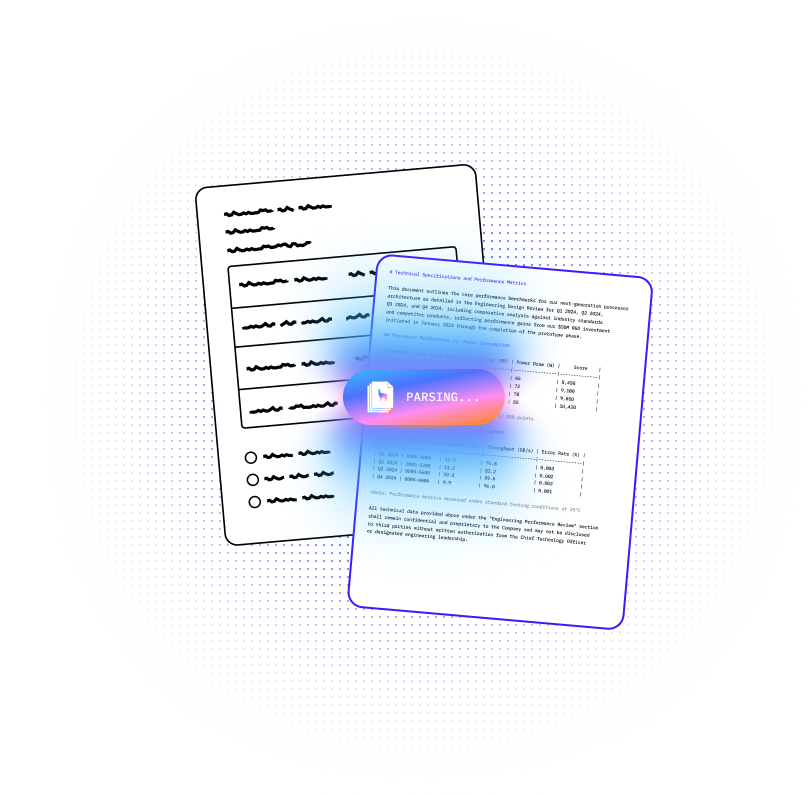


LlamaParse turns master bills of lading into clean, structured fields you can trust, even when layouts vary across carriers. It uses layout-aware vision and validation loops to reduce misses and rework, outputting JSON or Markdown with confidence metadata.
Best-in-Class Accuracy

Use LlamaParse to turn master bills of lading into clean JSON with line items, container details, and shipper/consignee fields preserved even when the layout changes across carriers. That data can flow straight into TMS/ERP for faster handoffs, fewer re-keying errors, and quicker exception resolution when mismatches happen.

Parse master bills of lading into verifiable, field-level outputs with citations and confidence so ops teams can validate document sets faster for letters of credit and documentary collections. Layout-aware table extraction reduces discrepancy rates by consistently capturing vessel/voyage, ports, and goods descriptions that legacy text extraction often scrambles.

Extract commodity tables, weights, package counts, and origin details from master bills of lading while preserving reading order across multi-column scans and stamped annotations. This enables quicker entry prep and audit-ready traceability by linking each extracted value back to page-level coordinates for review.

Ship a production-grade ingestion pipeline for master bills of lading in days by using LlamaParse’s API plus natural-language parsing instructions to match your internal schema without brittle regex. Tier-based agentic processing keeps unit costs predictable while still handling the messy edge cases that show up as you scale carrier and lane coverage.
The Solution
01
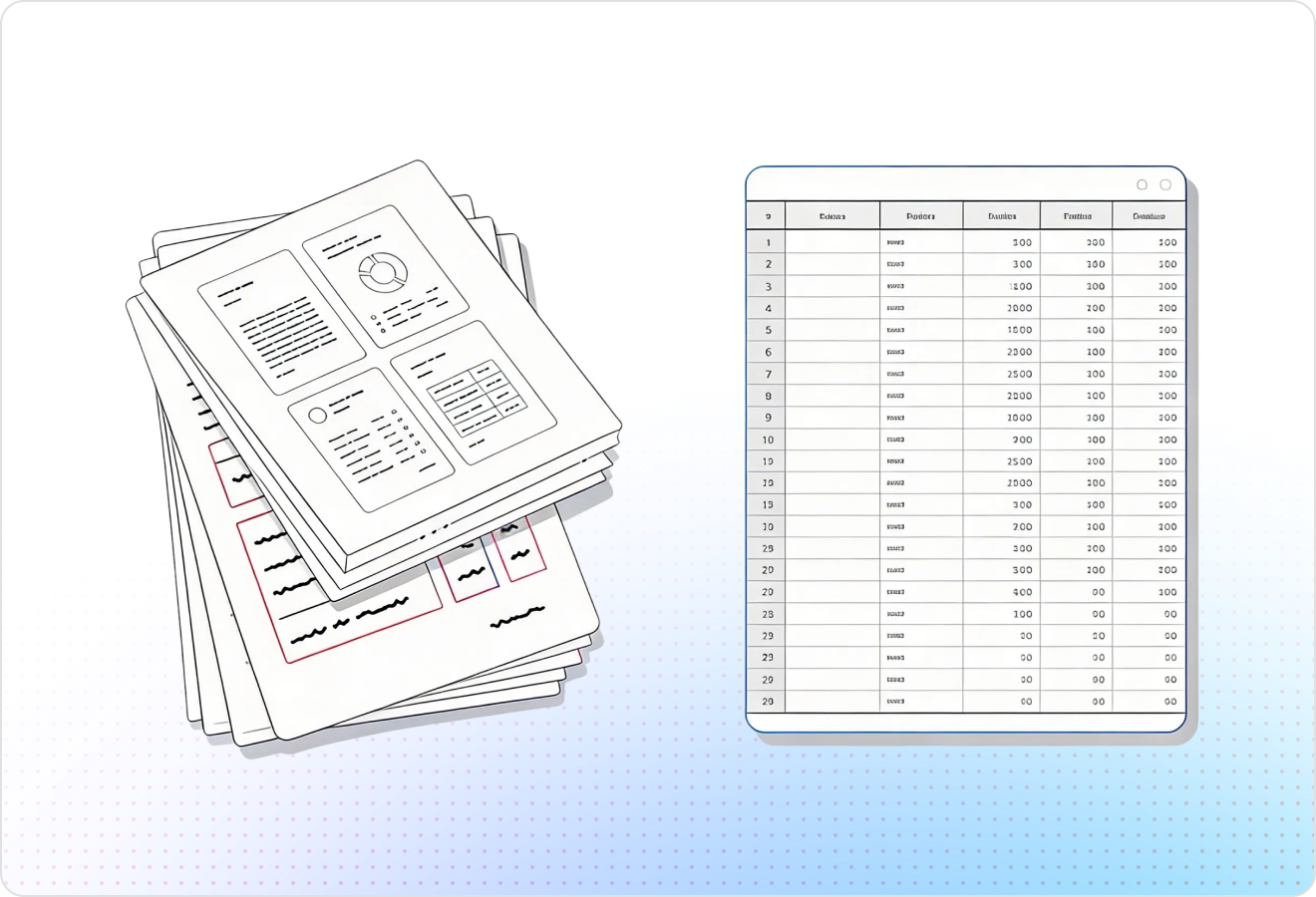
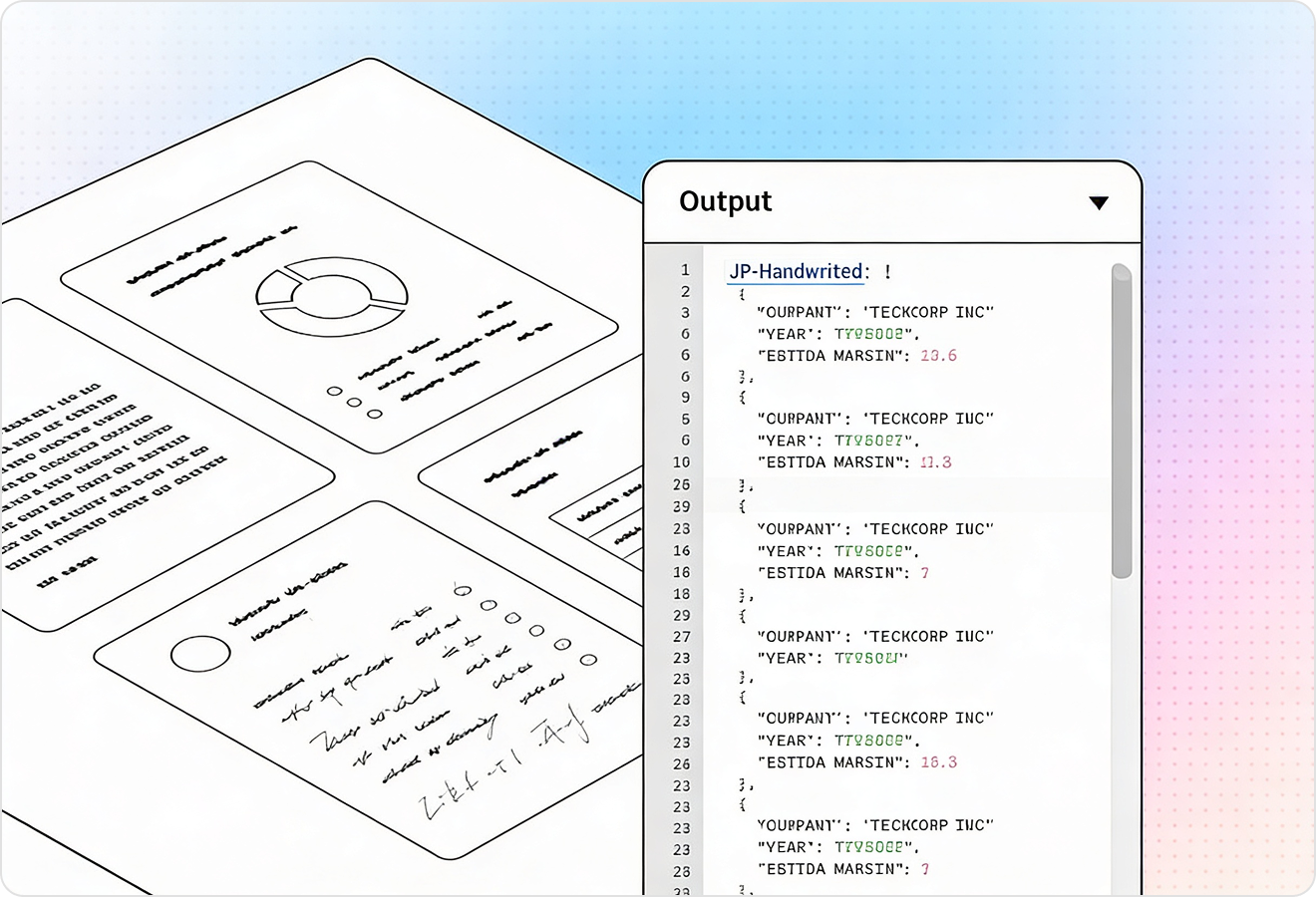
LlamaParse understands document layout so it can correctly read a Master Bill of Lading even when key fields are spread across multi-column sections, headers, and footers. That means consignee, shipper, notify party, vessel/voyage, and port details don’t get scrambled or merged during extraction.
02
LlamaParse reliably extracts structured tables for cargo descriptions, package counts, weights, measurements, and container details from dense shipping forms. You get clean, consistent outputs for downstream booking, customs, or TMS ingestion without writing brittle table-fixing code.
03
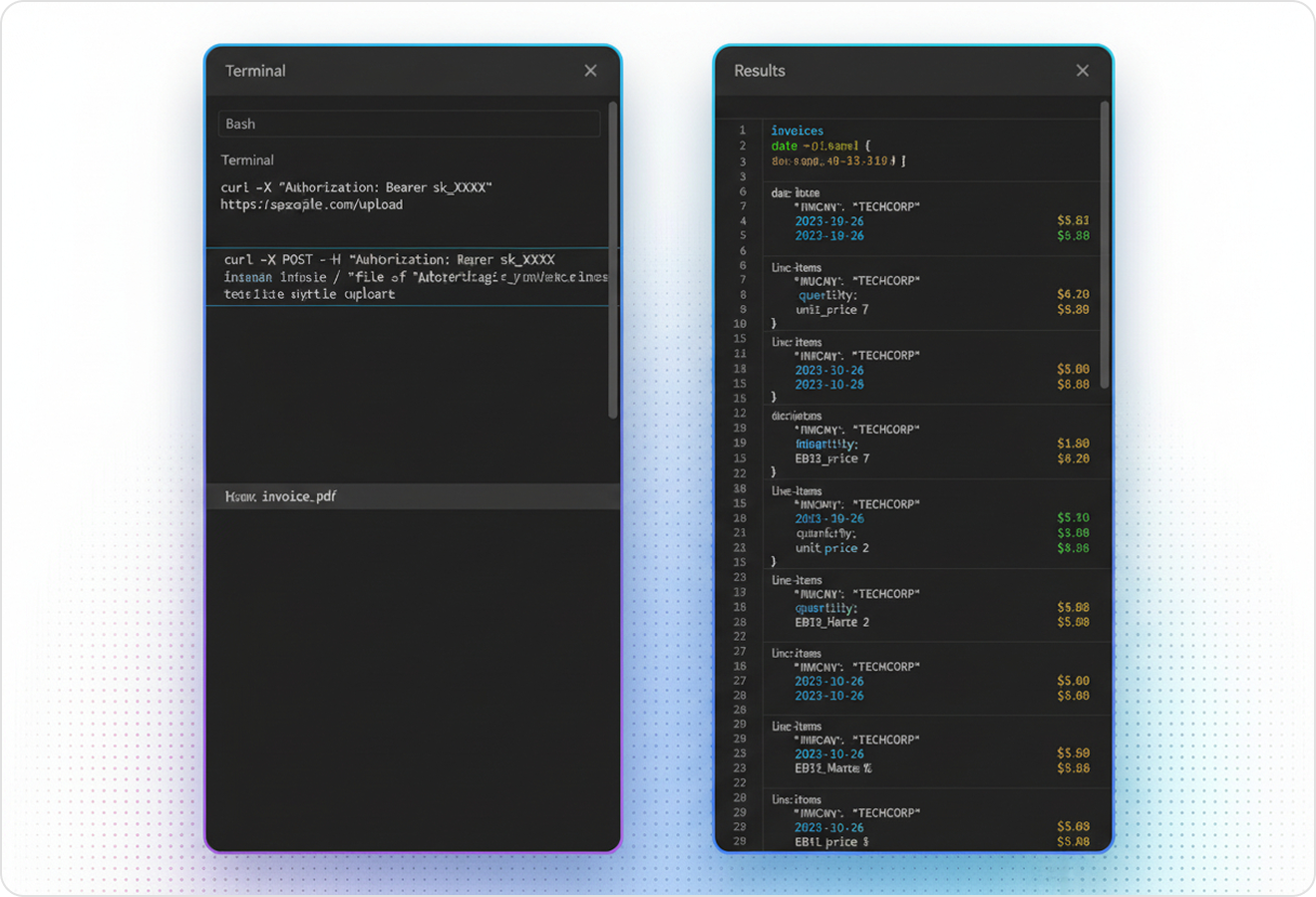
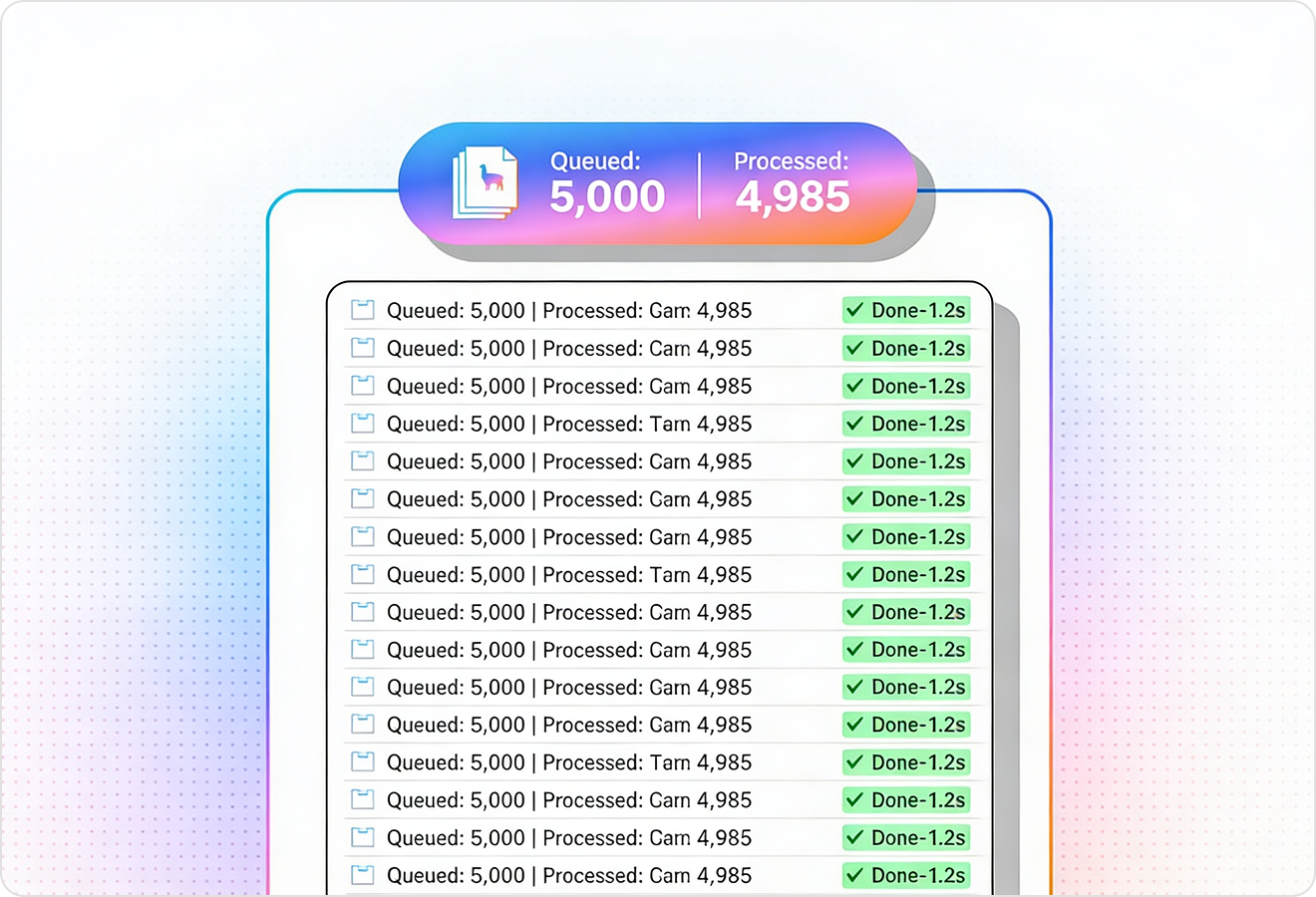
LlamaParse runs validation steps to catch common parsing failures like missing container numbers, inconsistent totals, or misread reference IDs on noisy scans. This reduces rework and increases straight-through processing for high-volume MBL intake.
04
LlamaParse can return structured JSON along with granular metadata such as page references and element-level traceability. For Master Bills of Lading, this makes it easy to audit extracted values (like B/L number or seal number) and route low-confidence fields to human review.
Technical OCR documentation
Explore our developer guides to easily connect your document pipelines to LlamaParse.
Explore the documentation
Our AI catches the typos that tired eyes miss.

Export to Excel, JSON, XML, or directly via API.

SOC2 Type II compliant with end-to-end encryption.

Train the tool on your specific forms in minutes, not days.

Average processing time of <3 seconds per page.
LlamaParse’s support of a wide variety of filetypes and its accuracy of parsing made it the best tool we tested in our evaluations. The LlamaIndex team was very responsive and we were off to the races within a day.
Common FAQs
01
Yes. Layout-aware extraction reads the document the way a person would, so fields like shipper, consignee, notify party, vessel/voyage, and ports are captured without getting merged or shuffled. This is especially reliable on carrier-specific templates where placement varies.
02
We extract tables and line items into clean, structured outputs for cargo description, package counts, weights, measurements, and container details. You get consistent data for downstream booking, customs, or TMS workflows without writing fragile table “fix-up” scripts.
03
Validation and self-correction checks catch common issues like missing container numbers, inconsistent totals, or misread reference IDs. When something looks off, the system flags it so your team can review only the exceptions—reducing rework and improving straight-through processing.
04
Do you provide JSON output, and can we audit where each value came from in the document?
Yes—results can be returned as structured JSON along with citations like page references and element-level traceability. That makes it easy to audit critical fields (e.g., B/L number or seal number) and route low-confidence values to human review with full context.
05
Will this work across different carriers and MBL templates, or do we need to train a model for each format?
It’s designed to generalize across variations in layout and formatting, so you don’t need a brittle template per carrier. You can start quickly, then tighten validation rules or review thresholds as you see real documents in production.
06
How can we use the extracted MBL data in our existing systems and workflows?
The structured output is built to plug into downstream processes like TMS ingestion, customs filing, and internal master data workflows. With consistent JSON and traceable citations, integration is faster—and your ops team can confidently approve or correct only what needs attention.