Nov 14, 2025
Document AI: The Next Evolution of Intelligent Document ProcessingPersona
Industry
Use cases
Dangerous Goods Declaration OCR
[ Dangerous Goods Declaration OCR ]

Use LlamaParse to capture every field accurately from DG forms, then validate and export structured data.
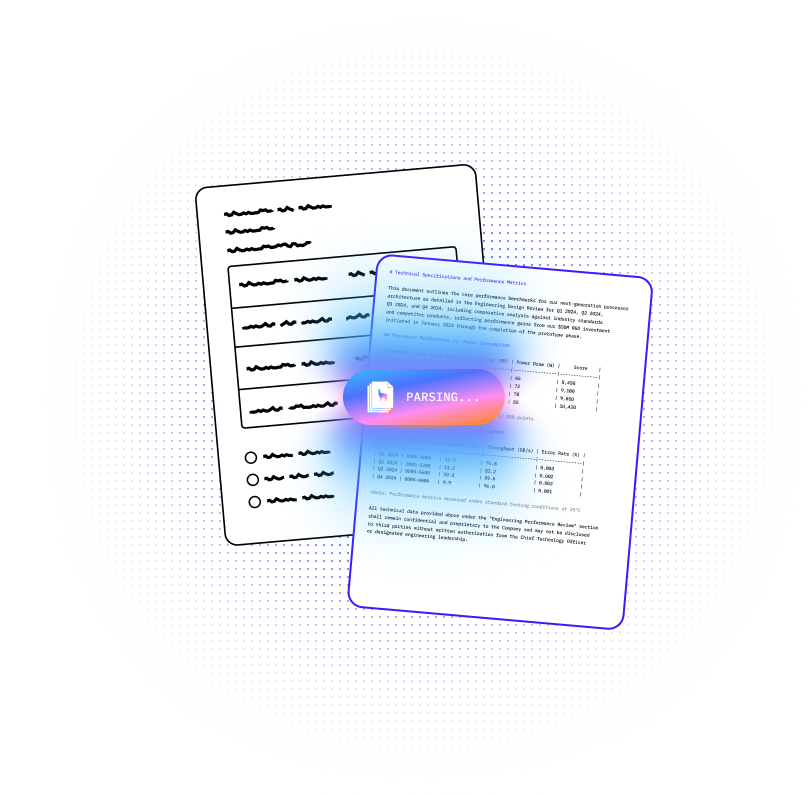


LlamaParse turns dangerous goods declarations into clean, structured JSON or Markdown, capturing UN numbers, packing groups, quantities, and handling instructions reliably. Agentic document parsing understands messy layouts and stamps, adds citations and confidence scores, and reduces manual checks so shipments clear faster.
Best-in-Class Accuracy

Use LlamaParse in LlamaCloud to parse Dangerous Goods Declarations into structured JSON with line-item UN numbers, packing groups, quantities, and signatures—without brittle template rules when shippers change layouts. Layout-aware table extraction plus metadata (page + coordinates) enables fast exception review and reduces customs holds caused by missing or inconsistent DG fields.

Automatically ingest supplier DG declarations and reconcile them against internal product master data so downstream shipping labels, SDS packets, and load plans are generated from the same source of truth. Multimodal parsing handles stamps, checkboxes, and dense multi-column tables, cutting manual QA time and preventing costly non-compliant shipments.

Parse DG paperwork at acceptance to validate critical fields (proper shipping name, hazard class, net quantity, aircraft limitations) before freight enters the network, even when scans are skewed or low quality. Auto-correction loops and confidence scores surface only the risky consignments for manual review, improving on-time departures while tightening compliance.

Ship a DG-declaration extraction feature quickly by calling LlamaParse APIs with natural-language parsing instructions to output the exact schema your app needs—no custom parsers to maintain. Tier-based agentic processing keeps unit economics predictable by reserving higher-accuracy parsing for complex pages while standard forms flow through cheaper modes.
The Solution
01
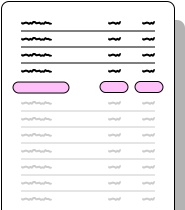
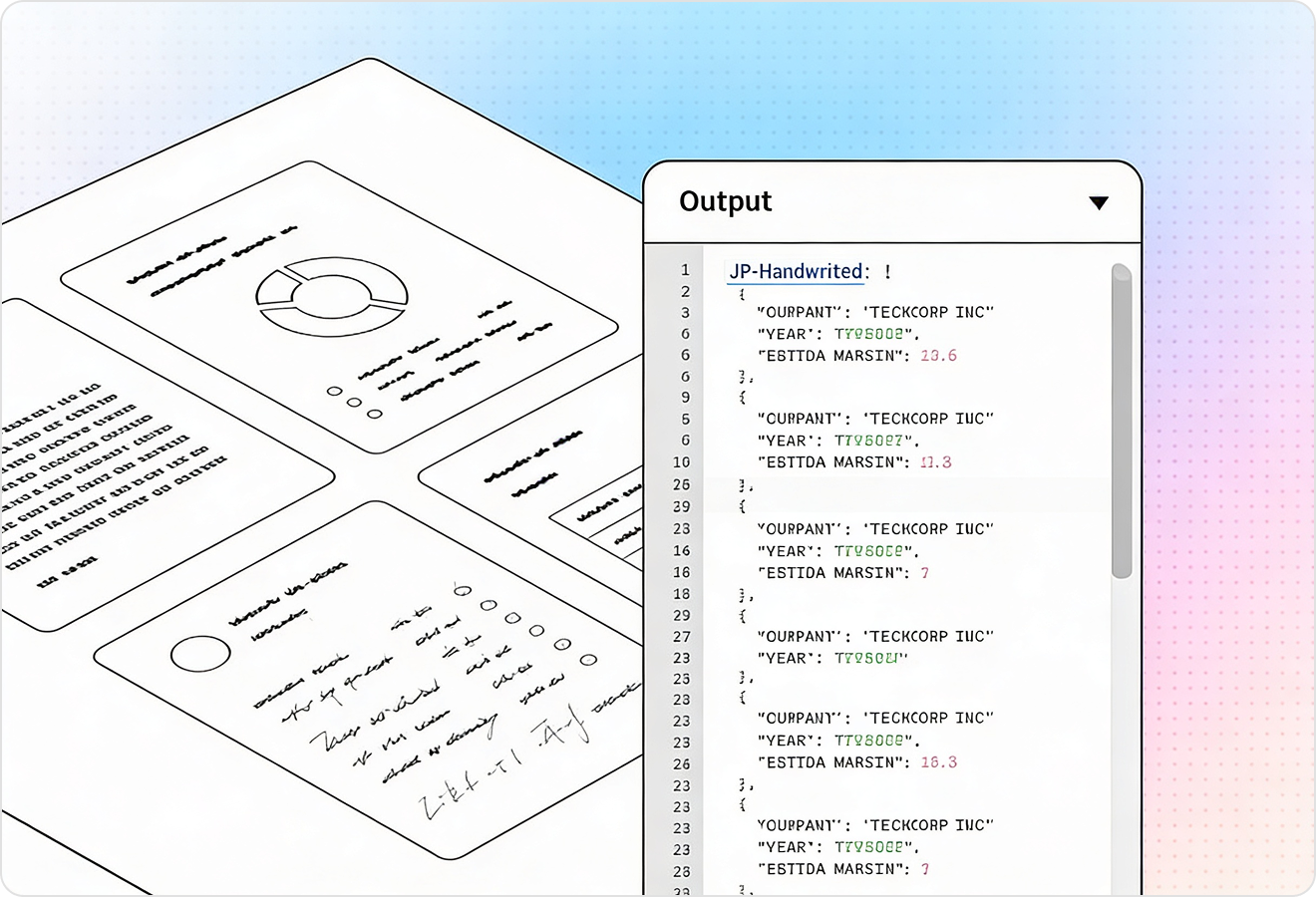
LlamaParse understands document layout so it can preserve reading order across headers, footers, multi-column sections, and stamped fields. For dangerous goods declarations, this keeps key fields like UN number, proper shipping name, hazard class, packing group, quantities, and signatures mapped to the right labels instead of getting scrambled.
02
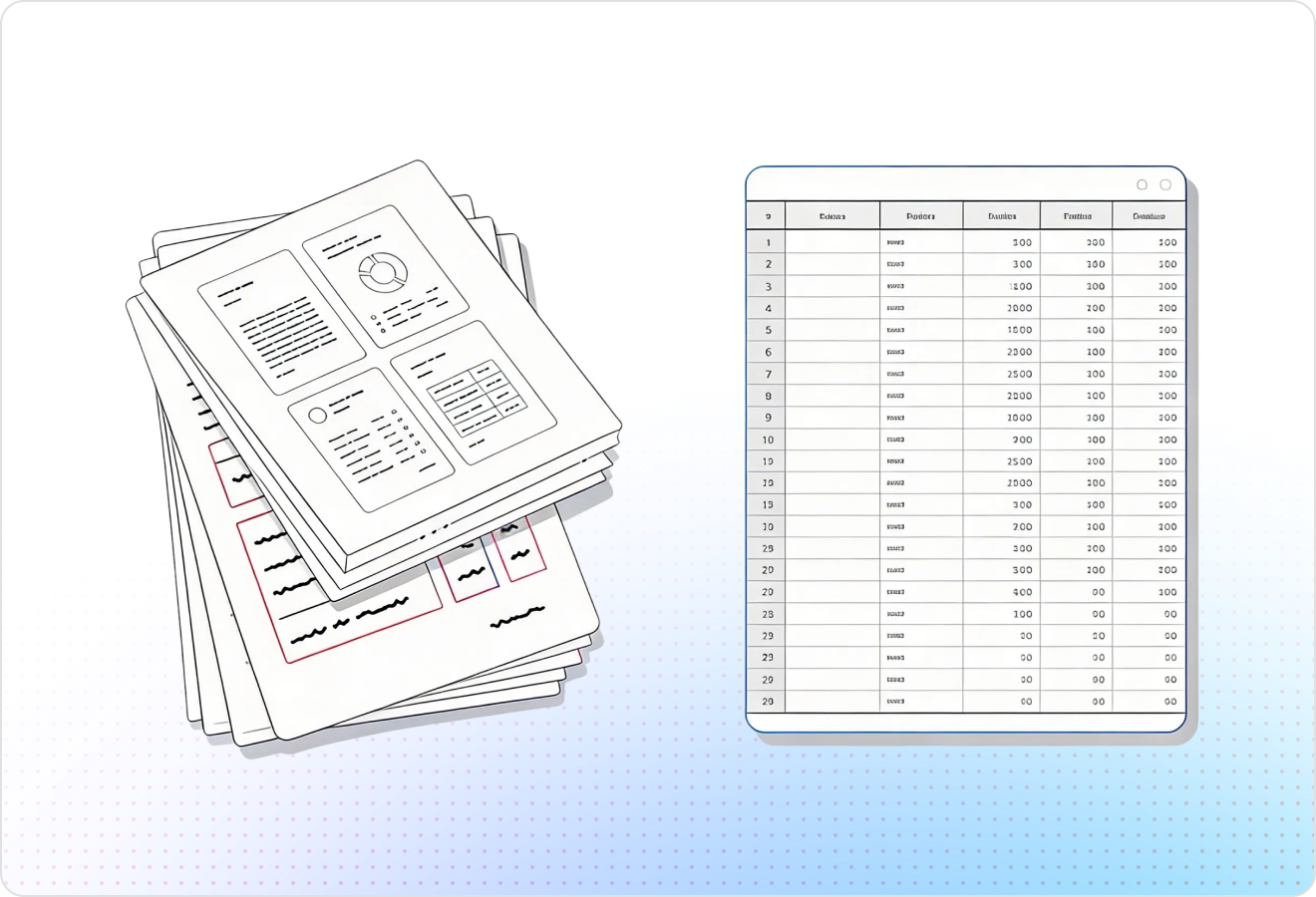
LlamaParse accurately reconstructs complex tables into clean, structured output rather than flattened text. That’s critical for dangerous goods declarations where line items, packaging details, and quantity units must stay aligned for downstream validation and filing.
03
LlamaParse runs validation steps and self-correction loops to reduce common extraction errors from poor scans, skewed pages, and noisy backgrounds. In dangerous goods workflows, this improves straight-through processing by catching inconsistencies like mismatched units, missing fields, or malformed UN identifiers before they hit your system.
04
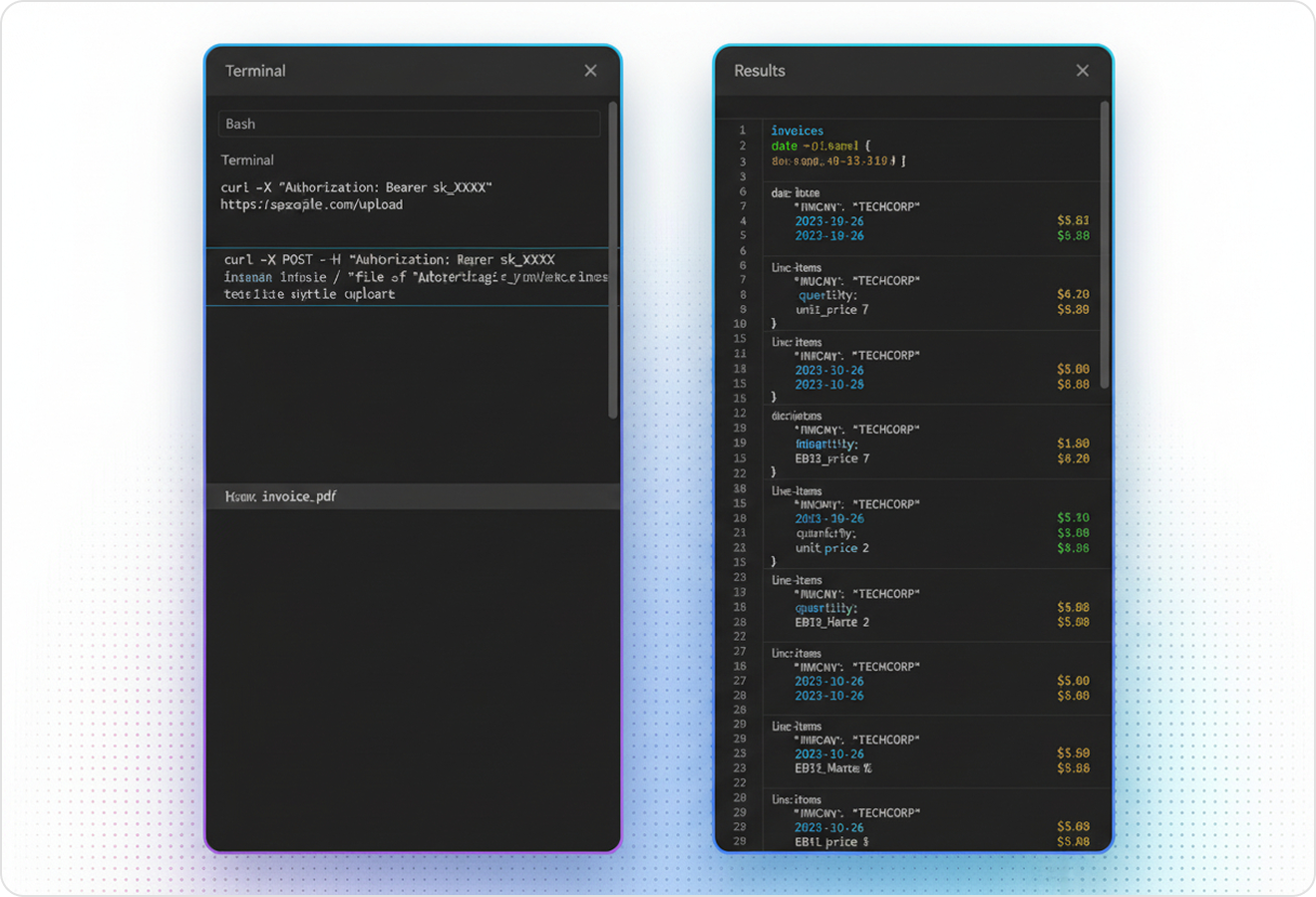
LlamaParse can emit structured JSON with granular metadata like page numbers and coordinates for each extracted field. For dangerous goods declarations, this makes it easy to populate compliance systems and provide auditable citations back to the exact spot on the document for human review.
Technical OCR documentation
Explore our developer guides to easily connect your document pipelines to LlamaParse.
Explore the documentation
Our AI catches the typos that tired eyes miss.

Export to Excel, JSON, XML, or directly via API.

SOC2 Type II compliant with end-to-end encryption.

Train the tool on your specific forms in minutes, not days.

Average processing time of <3 seconds per page.
LlamaParse’s support of a wide variety of filetypes and its accuracy of parsing made it the best tool we tested in our evaluations. The LlamaIndex team was very responsive and we were off to the races within a day.
Common FAQs
01
Yes—layout-aware parsing preserves reading order across headers, footers, multi-column sections, and stamped or handwritten fields. This helps ensure UN number, proper shipping name, hazard class, packing group, quantities, and signatures stay tied to the right labels instead of shifting or merging.
02
We reliably reconstruct complex tables into structured output, keeping rows, columns, and units aligned. That means your line items and packaging details remain consistent for downstream validation, filing, and integration with compliance workflows.
03
The system runs validation and self-correction loops to reduce common extraction errors caused by poor scans and distortions. It can flag or correct issues like malformed UN identifiers, missing required fields, or inconsistent units before they reach your operational systems.
04
Can I get structured JSON output that’s ready for my compliance or TMS systems?
Yes—output is available as clean, structured JSON designed for straightforward ingestion into compliance platforms, TMS/ERP tools, or internal databases. This minimizes manual rekeying and speeds up straight-through processing for dangerous goods documentation.
05
Do you provide auditability—can reviewers see exactly where each extracted value came from?
Yes—each extracted field can include citations such as page number and coordinates, so reviewers can jump directly to the source on the document. This supports audit trails and faster approvals without relying on guesswork.
06
How does this reduce manual review time without increasing compliance risk?
By preserving layout, accurately extracting tables, and validating key fields, the system reduces the most common causes of rework and exceptions. Your team reviews only what’s uncertain, with clear citations—so you move faster while keeping documentation defensible.