Nov 14, 2025
Document AI: The Next Evolution of Intelligent Document ProcessingPersona
Industry
Use cases
Word OCR PDF To Word
[ Word OCR PDF To Word ]

Use LlamaParse to keep tables, layouts, and images intact so you can edit fast.
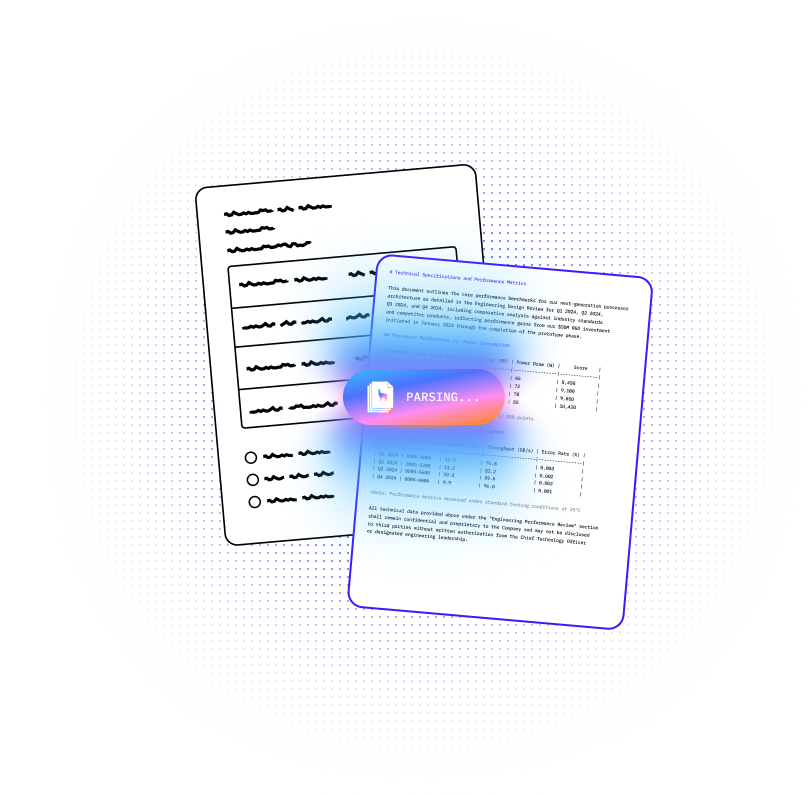
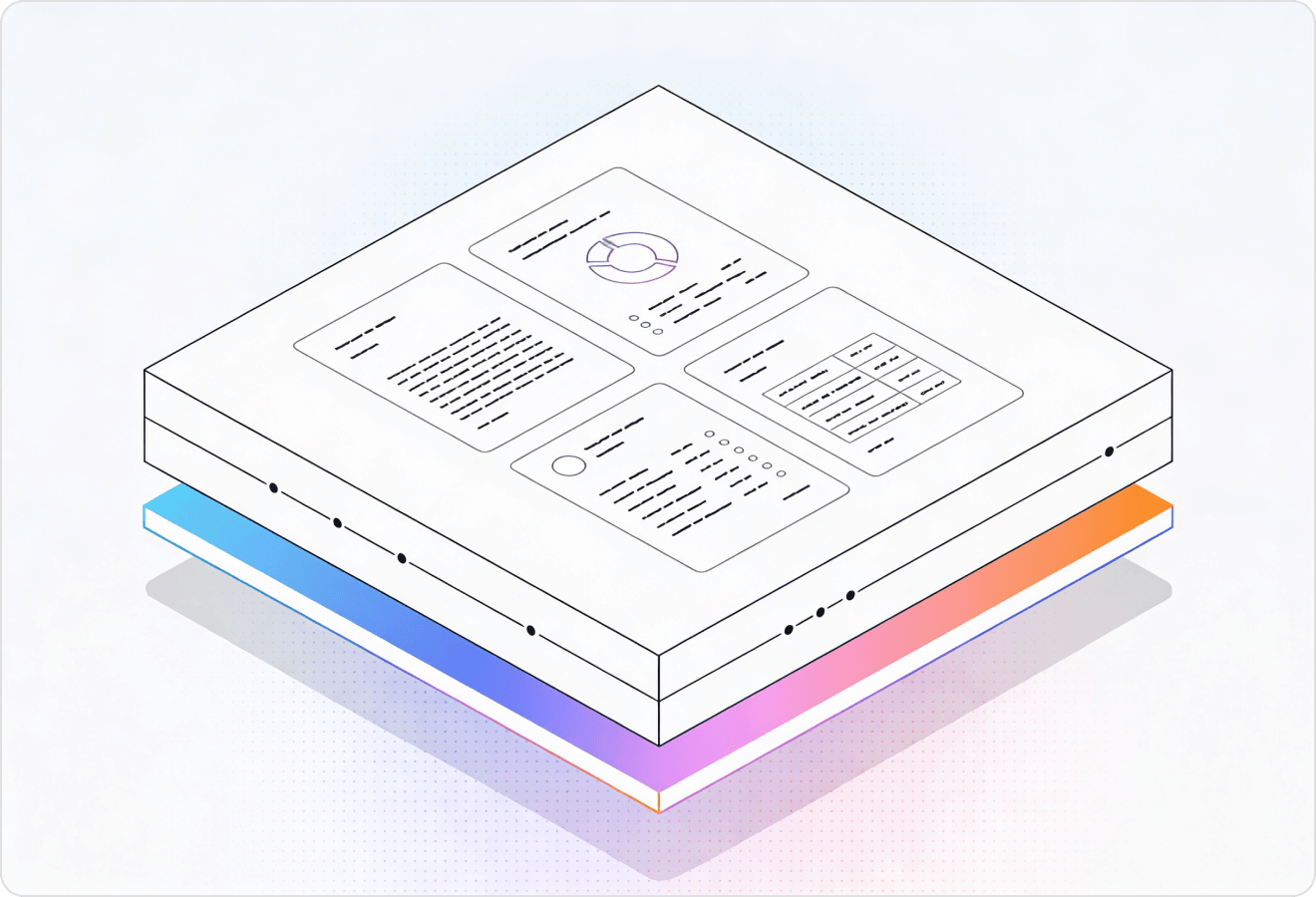
LlamaParse turns scanned PDFs into Word-ready documents you can actually edit, preserving headings, paragraphs, tables, and page structure without cleanup. Agentic document parsing uses layout-aware vision and validation loops to reduce errors, so your contracts and reports stay accurate at scale.
Best-in-Class Accuracy

Turn customer contracts, vendor PDFs, and investor reports into clean Word-ready drafts with layout-aware table extraction, so teams stop fixing scrambled formatting by hand. Use natural-language parsing instructions to standardize outputs into consistent sections (terms, pricing, obligations) that are easy to review, edit, and ship fast.

Convert scanned pleadings, exhibits, and multi-column agreements into structured Word documents while preserving reading order, headings, and clause tables. JSON mode with granular metadata enables citation-ready traceability back to page and coordinates, reducing review risk and accelerating drafting.

Extract tables and key fields from statements, loss runs, and policy PDFs into Word templates without breaking when layouts change across carriers or banks. Tier-based agentic processing routes only the messy pages to heavier models, keeping straight-through processing high while controlling per-document cost.

Parse spec books, RFIs, and change orders into Word documents that keep complex tables, part numbers, and section structure intact for faster subcontractor coordination. Multimodal parsing captures diagrams, schedules, and marked-up scans into usable text and structured tables, eliminating retyping and preventing scope errors.
The Solution
01
LlamaParse detects columns, headers/footers, lists, and section structure so extracted text keeps the same reading order as the PDF. That means your PDF-to-Word conversion doesn’t collapse into a single scrambled paragraph or lose document hierarchy.
02
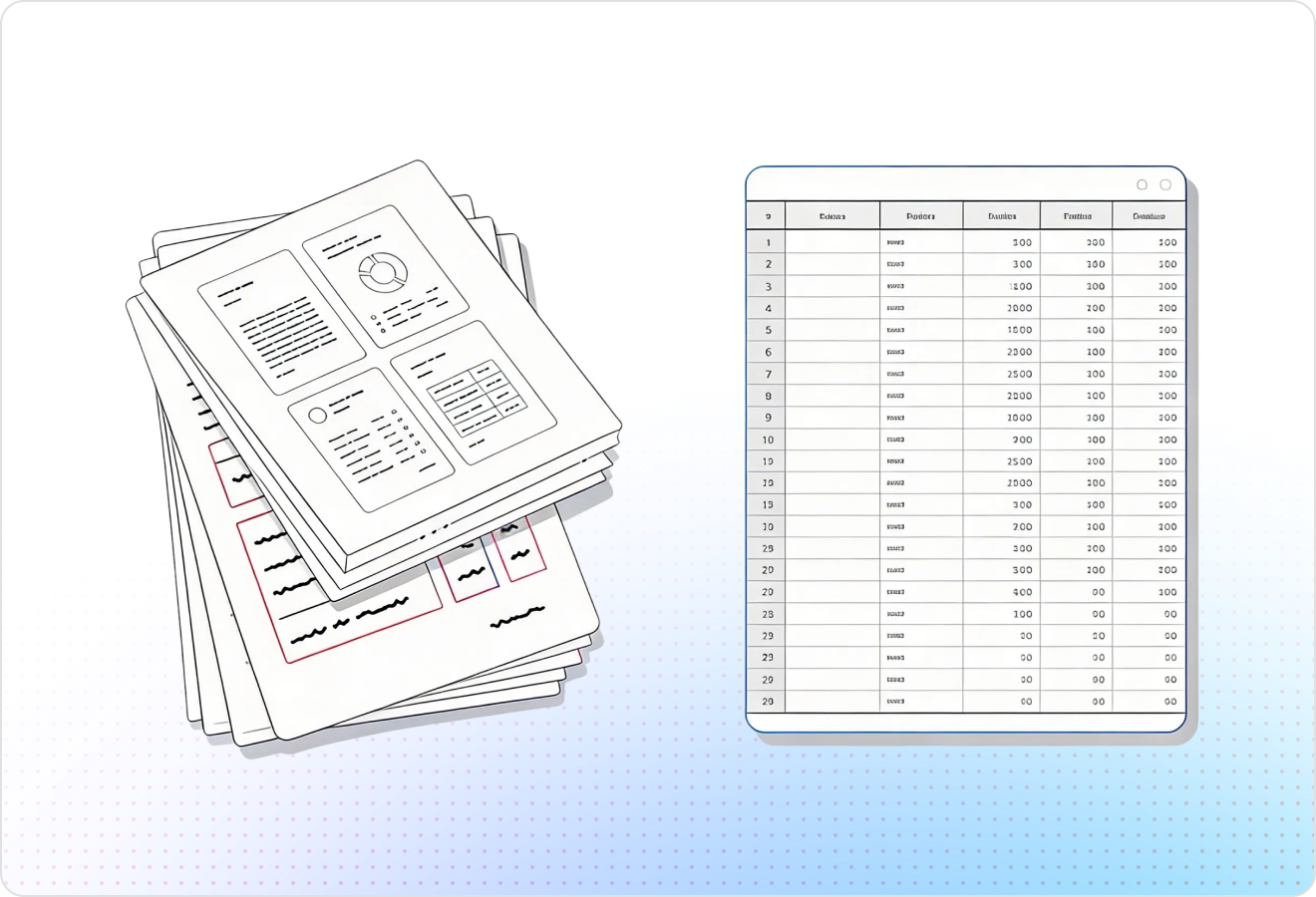
LlamaParse extracts tables as real structured elements instead of flattening them into lines of text. When you move content into Word, you can rebuild clean tables quickly without manually retyping rows, columns, and merged cells.
03
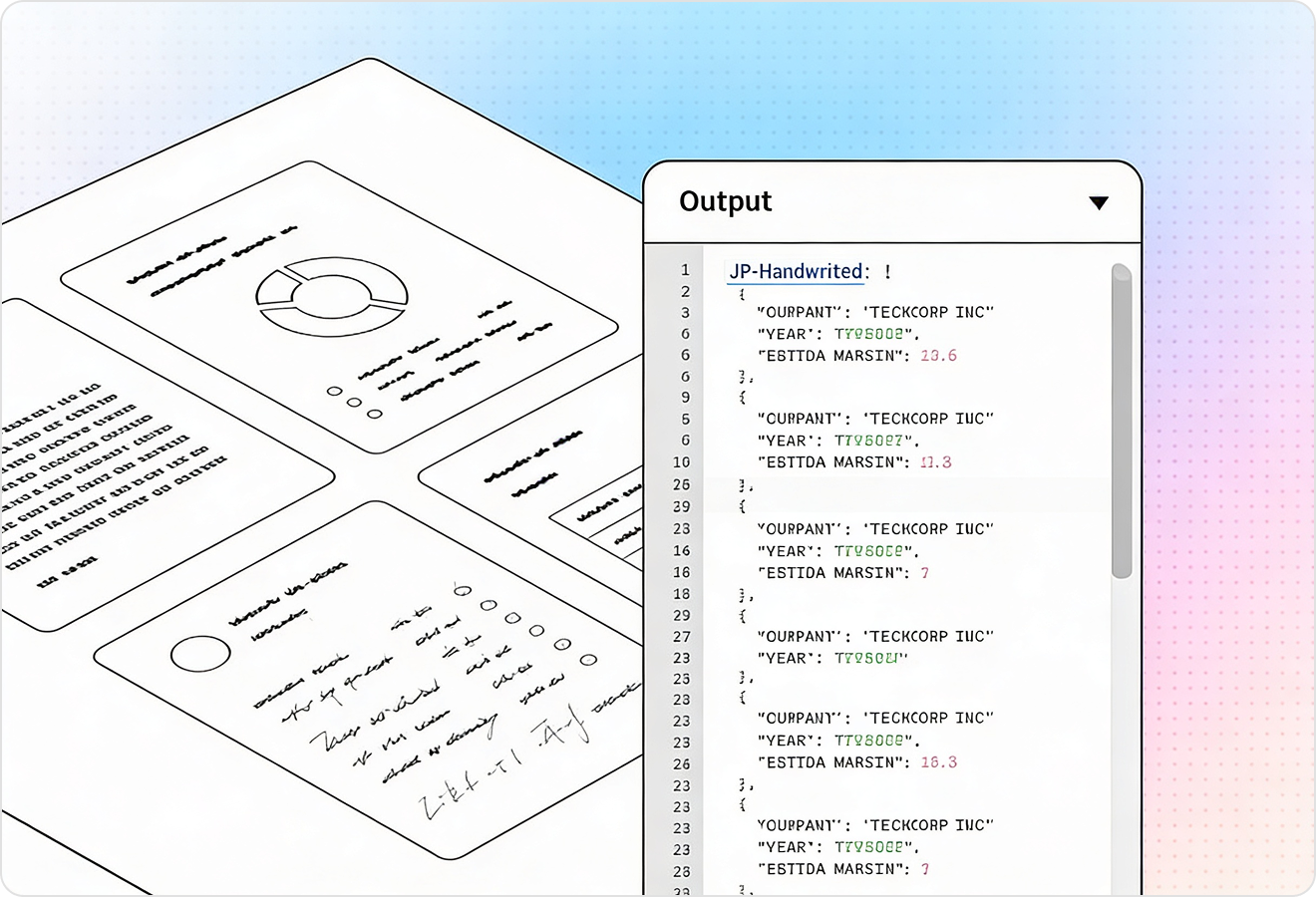
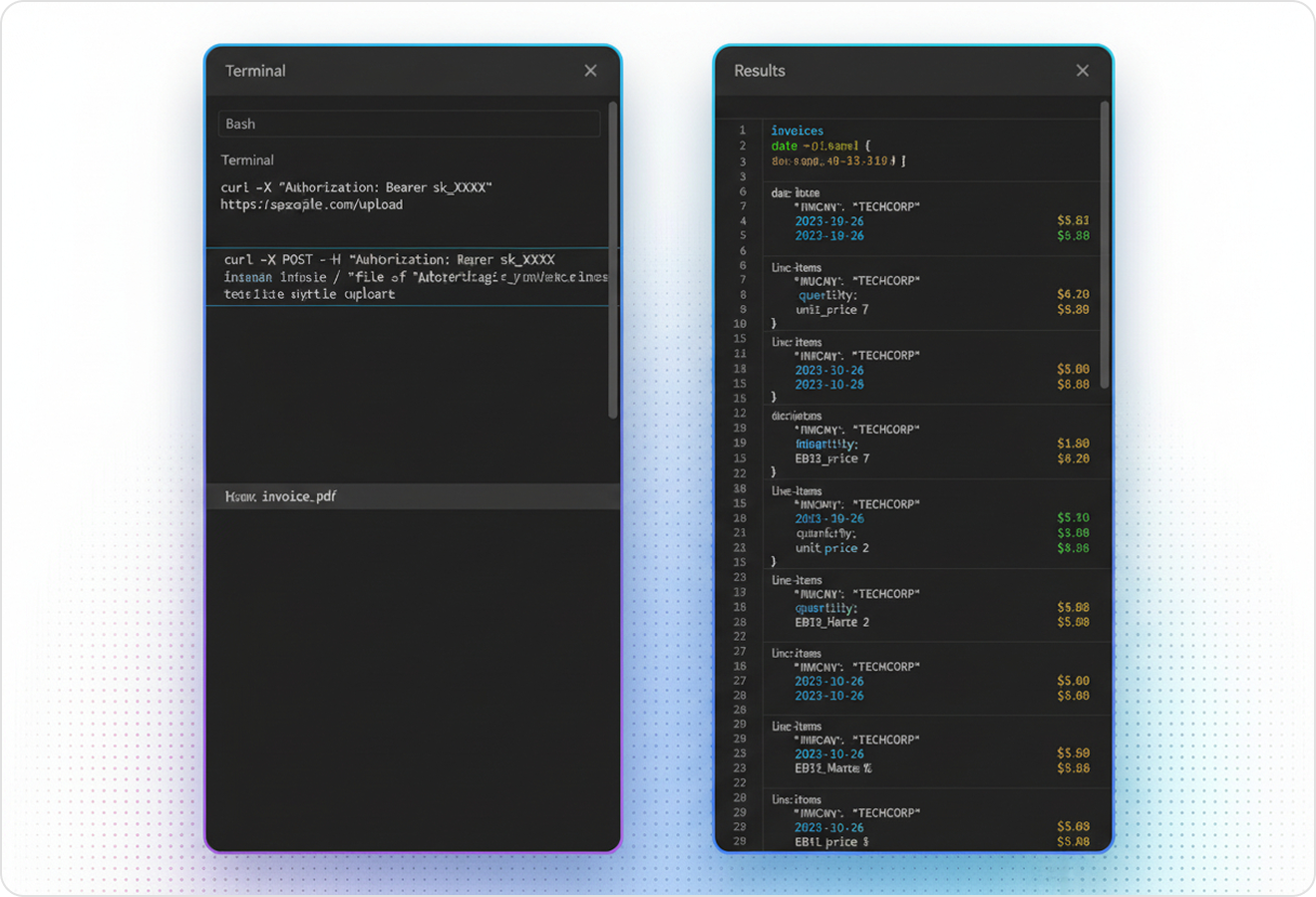
LlamaParse returns clean Markdown, HTML, or JSON that preserves structure, making it straightforward to map headings, paragraphs, and tables into Word styles. This gives you a deterministic path from PDF content to a .docx generator without brittle post-processing.
04
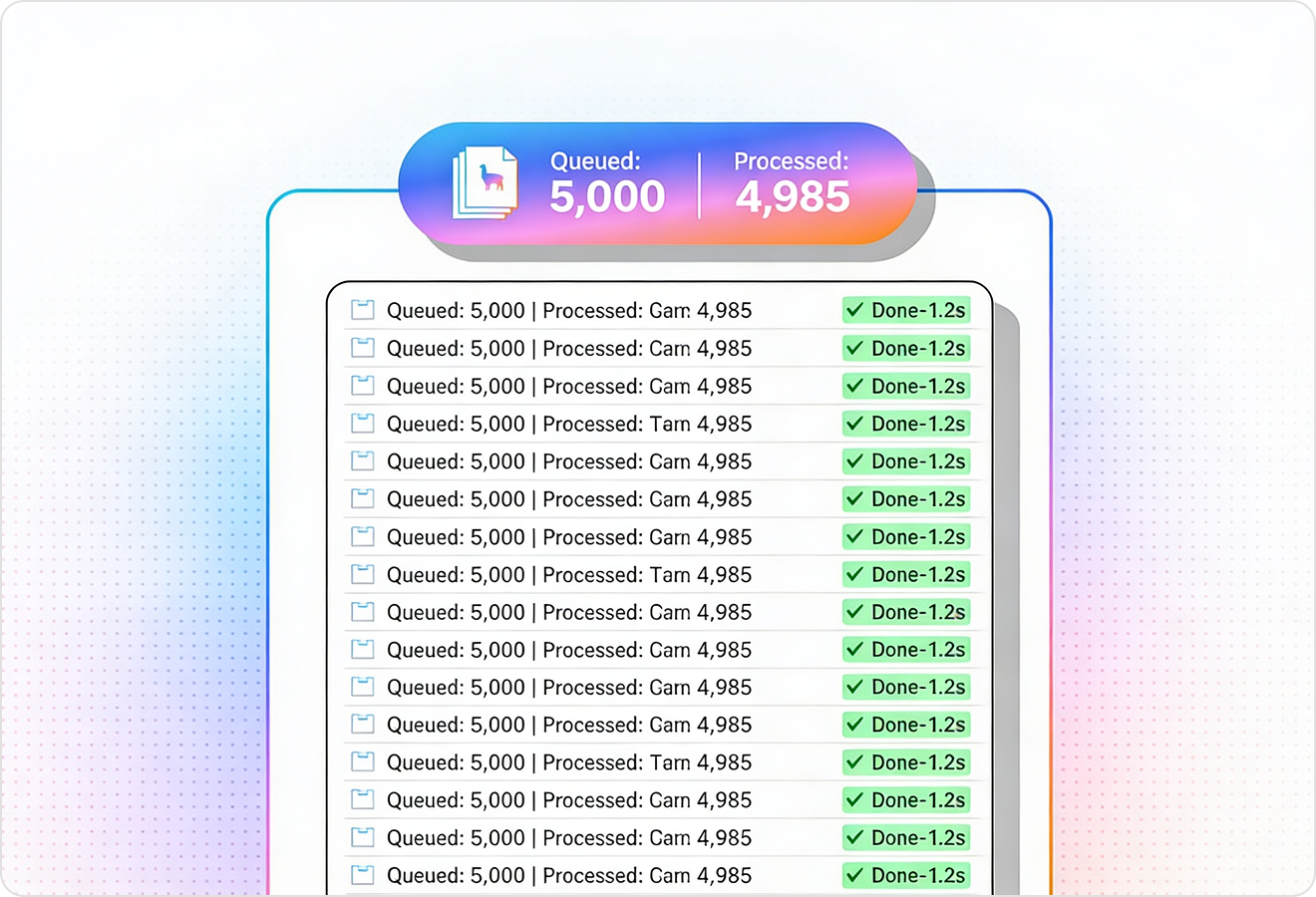
LlamaParse runs iterative checks to catch common extraction failures like missing lines, duplicated text, and inconsistent table geometry. This reduces manual QA when converting scanned PDFs into Word docs that need to be publication-ready.
Technical OCR documentation
Explore our developer guides to easily connect your document pipelines to LlamaParse.
Explore the documentation
Our AI catches the typos that tired eyes miss.

Export to Excel, JSON, XML, or directly via API.

SOC2 Type II compliant with end-to-end encryption.

Train the tool on your specific forms in minutes, not days.

Average processing time of <3 seconds per page.
LlamaParse’s support of a wide variety of filetypes and its accuracy of parsing made it the best tool we tested in our evaluations. The LlamaIndex team was very responsive and we were off to the races within a day.
Common FAQs
01
Yes—our layout-aware extraction detects columns, headers/footers, lists, and section structure so content flows in the right order. Instead of a single scrambled paragraph, you get a Word-ready structure that matches the original document hierarchy.
02
Tables are extracted as structured elements rather than flattened lines, so rows, columns, and merged cells are preserved for clean rebuilding in Word. This dramatically reduces the time you’d spend retyping or manually reconstructing tables.
03
You can export clean Markdown, HTML, or JSON that preserves headings, paragraphs, lists, and tables. These structured outputs map predictably into Word styles, making automated .docx generation far more reliable than brittle text-only OCR.
04
Is it reliable for scanned PDFs and imperfect documents?
Yes—built-in validation and auto-correction loops catch common OCR and extraction issues like missing lines, duplicated text, and inconsistent table geometry. That means fewer surprises and less manual QA before a document is ready to share or publish.
05
How much manual cleanup should I expect after converting PDF to Word?
Most users only do light formatting touch-ups, because structure (headings, lists, and tables) is preserved during extraction. The system is designed to minimize rework, especially on multi-column documents and table-heavy reports.
06
Can I integrate this into an automated workflow for repeated PDF-to-Word conversions?
Absolutely—the structured outputs are designed for Word pipelines, so you can programmatically map elements to templates and styles. This makes bulk conversion and document standardization consistent, saving time as your volume grows.