Nov 14, 2025
Document AI: The Next Evolution of Intelligent Document ProcessingPersona
Industry
Use cases
Cap Table OCR
[ Cap Table OCR ]

Use LlamaParse to turn messy cap table PDFs into verified, structured equity fields in minutes.
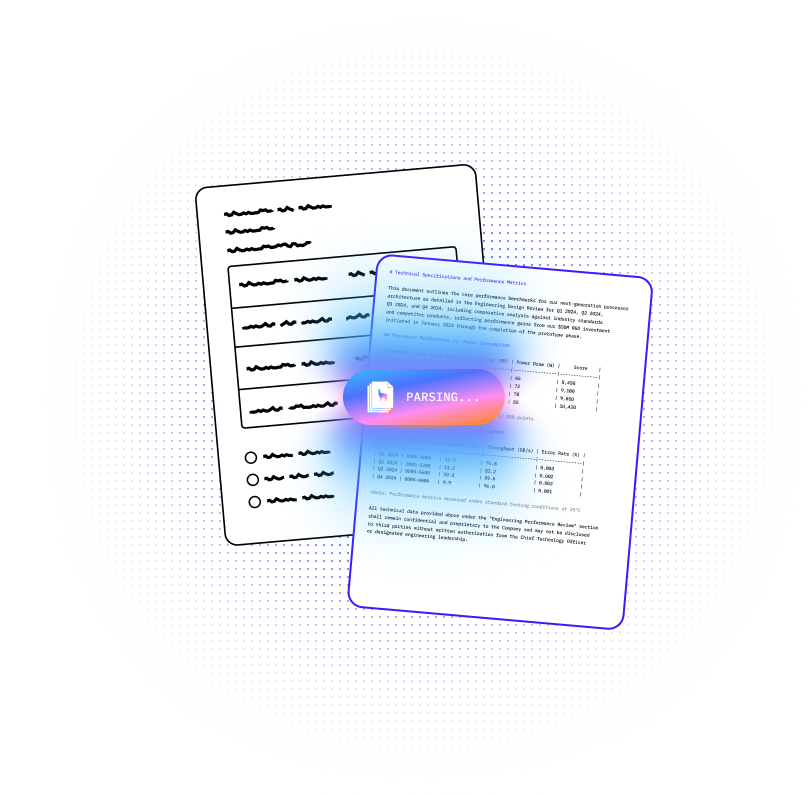
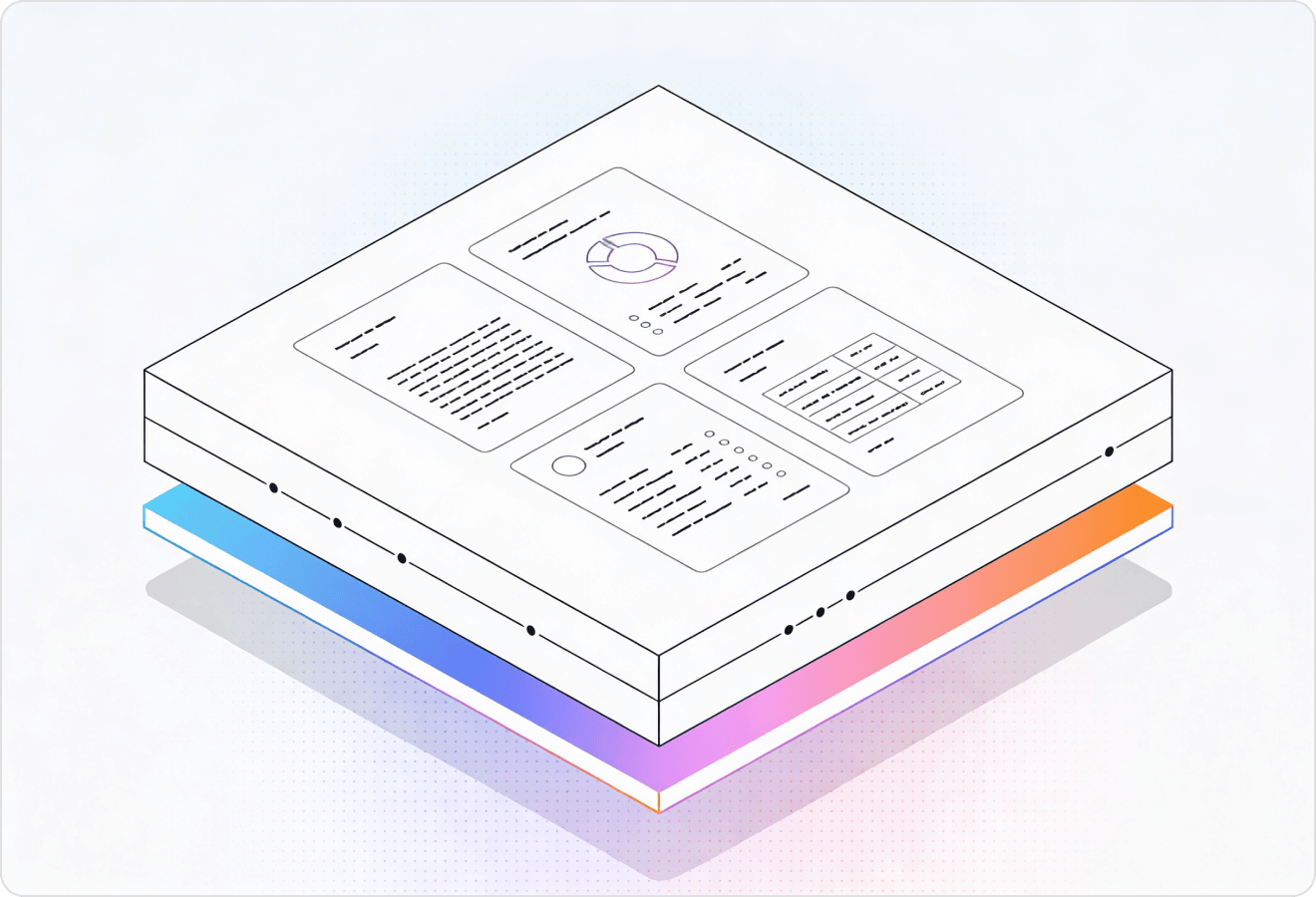
LlamaParse turns messy cap table PDFs and screenshots into consistent, structured outputs you can trust, without babysitting templates or rework. It stays layout-aware across tables, notes, and revisions, adds confidence metadata, and speeds downstream modeling, audits, and portfolio reporting.
Best-in-Class Accuracy

Turn messy cap tables from PDFs, emailed screenshots, and law-firm exports into clean, audit-ready JSON using LlamaParse’s layout-aware table extraction, so finance and ops stop reconciling versions by hand. Automatically validate share classes, option pools, and conversion terms with metadata-backed outputs to speed up fundraising, diligence, and board reporting.

Ingest cap tables at scale across a portfolio and normalize them into a consistent schema, even when formats vary by company, counsel, or country, enabling faster IC memos and ownership analytics. Use parsing instructions to extract only what matters—pro rata rights, liquidation preferences, fully diluted ownership—without building brittle cleanup pipelines.

Extract cap table data from term sheets, equity ledgers, and closing binders into structured outputs that preserve table integrity and reading order, reducing paralegal re-keying and late-night deal cleanup. Generate verifiable results with page-level citations and confidence signals so attorneys can review exceptions quickly instead of rereading entire packets.

Convert cap tables and equity award schedules into structured, system-ready data for 409A, ASC 718, and purchase price allocation workflows, including complex tables with footnotes and multi-column layouts. Route straightforward pages through lower-cost tiers and automatically escalate only the gnarly scans, keeping delivery timelines predictable without inflating processing spend.
The Solution
01
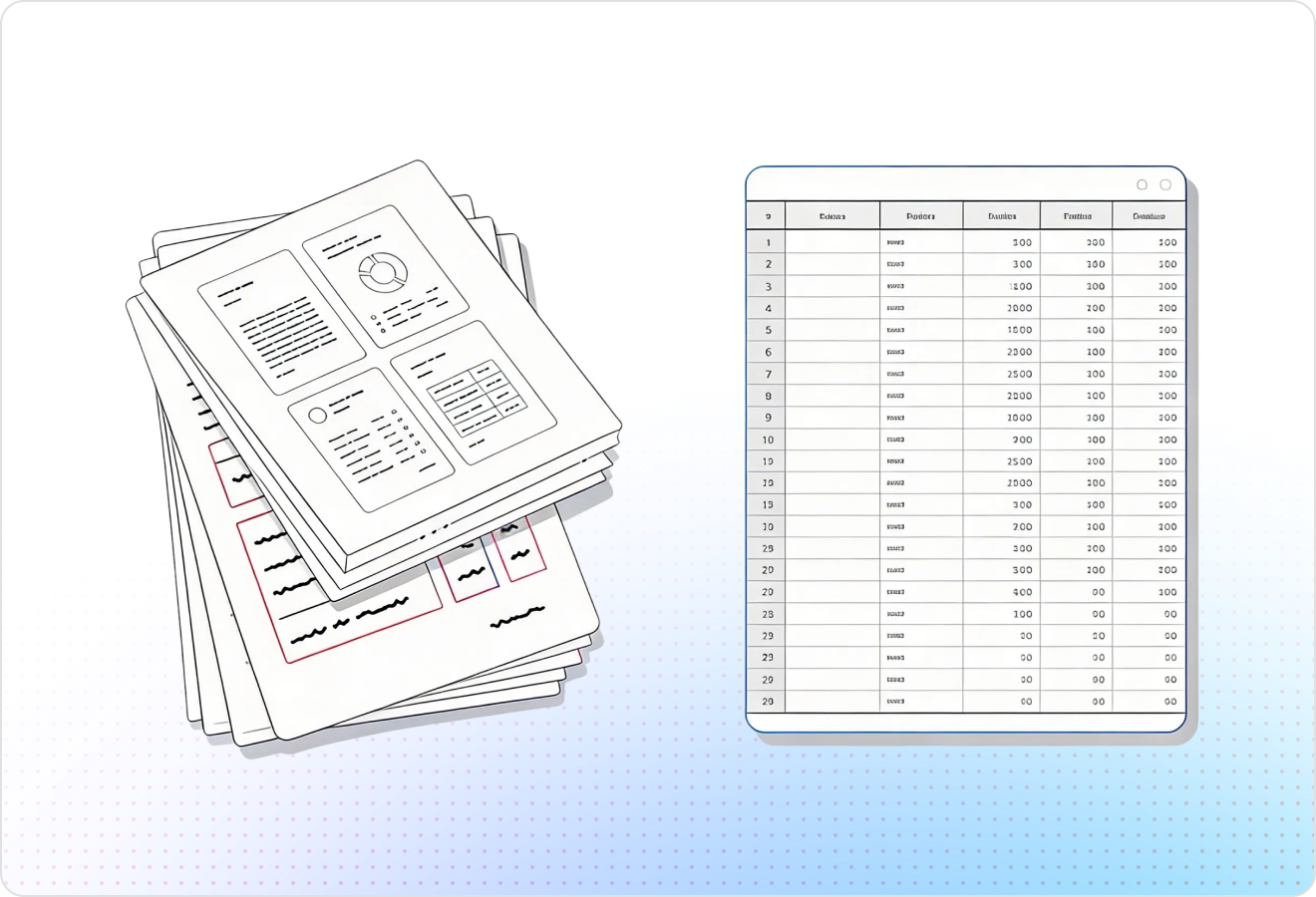
LlamaParse understands page layout and table structure, so cap table rows, columns, and merged headers don’t get scrambled during parsing. That means you can reliably extract stakeholder names, security classes, share counts, and pricing even when the cap table spans multiple sections or pages.
02
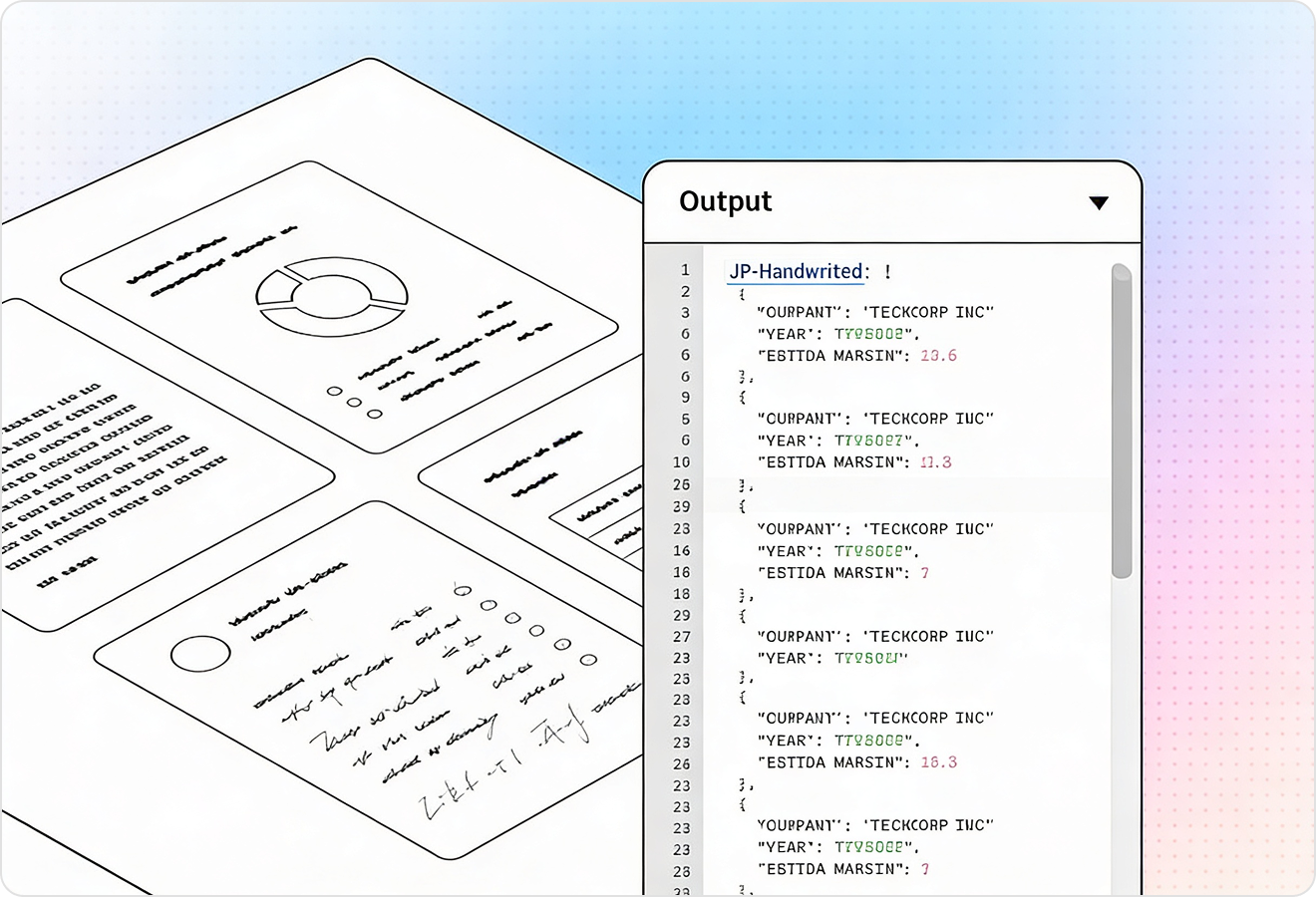
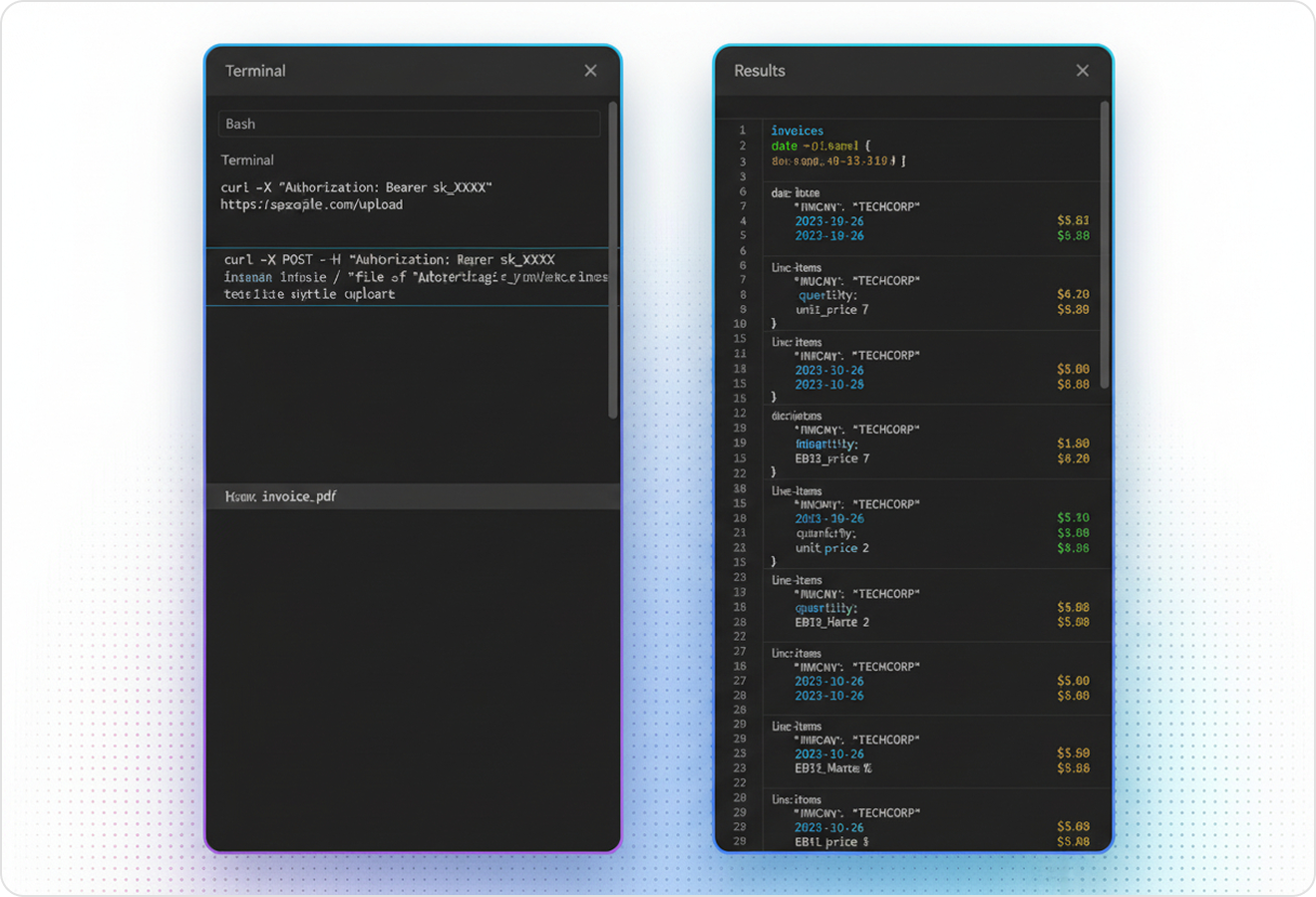
LlamaParse can return cap table data as structured JSON, making it easy to map directly into your cap table system, spreadsheet model, or downstream API. Each extracted field can include metadata like page references and coordinates, so reviewers can quickly verify totals and trace numbers back to the source document.
03
LlamaParse uses validation and self-correction loops to catch common extraction failures like dropped rows, misread digits, or column shifts that quietly break ownership math. This improves straight-through processing for cap tables where a single character error can change dilution, fully diluted counts, or liquidation preference outcomes.
04
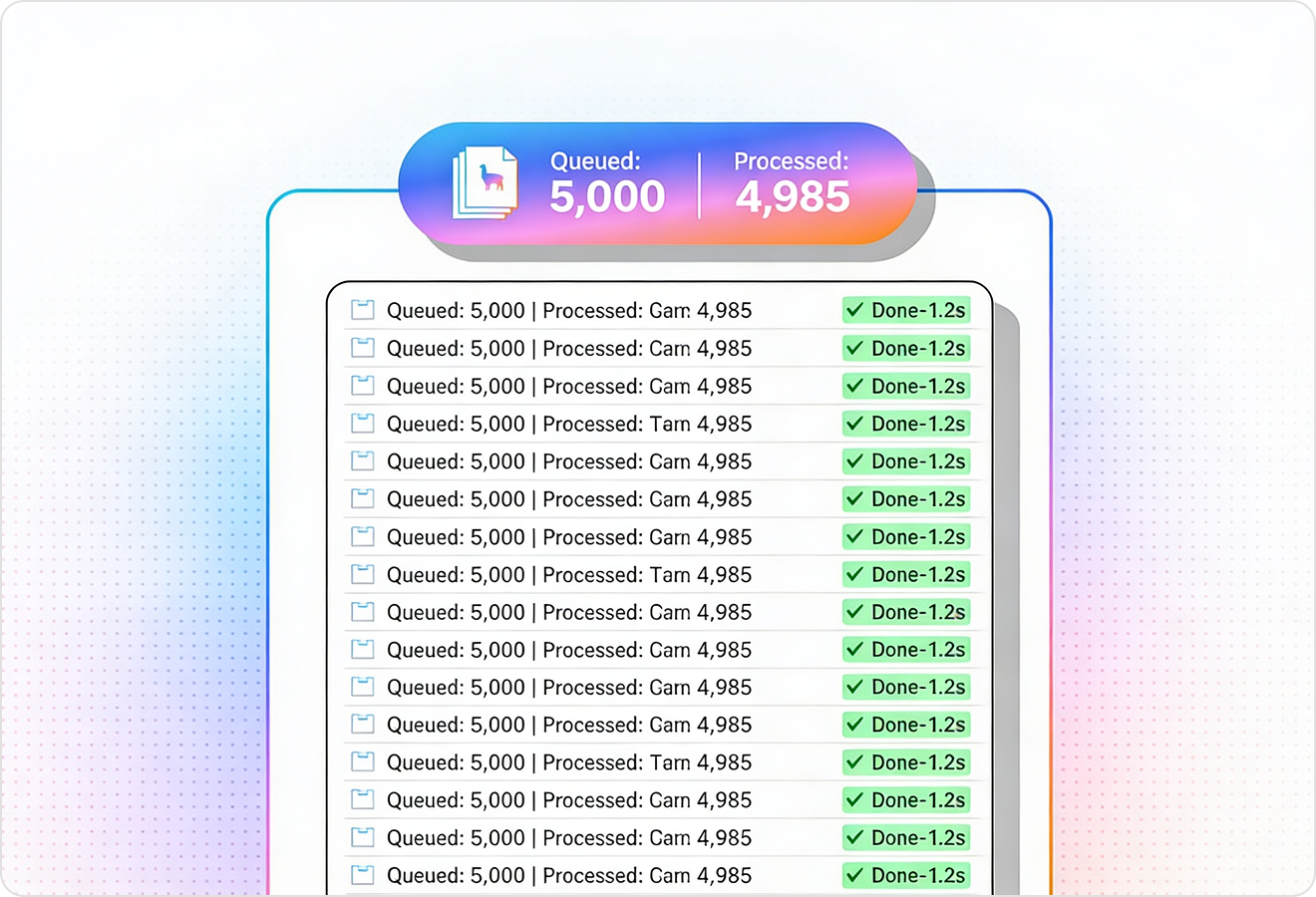
LlamaParse routes different parts of a document to the most appropriate model (text, vision, or higher-accuracy modes) based on complexity, rather than treating every page the same. For cap tables embedded in low-quality PDFs, screenshots, or investor decks, this keeps accuracy high without forcing you to always pay for the most expensive processing.
Technical OCR documentation
Explore our developer guides to easily connect your document pipelines to LlamaParse.
Explore the documentation
Our AI catches the typos that tired eyes miss.

Export to Excel, JSON, XML, or directly via API.

SOC2 Type II compliant with end-to-end encryption.

Train the tool on your specific forms in minutes, not days.

Average processing time of <3 seconds per page.
LlamaParse’s support of a wide variety of filetypes and its accuracy of parsing made it the best tool we tested in our evaluations. The LlamaIndex team was very responsive and we were off to the races within a day.
Common FAQs
01
Yes—layout-aware parsing preserves rows, columns, and merged headers so data doesn’t shift or get scrambled. It reliably extracts stakeholder names, security classes, share counts, and pricing even when the cap table is split across sections or pages.
02
You can export structured JSON designed for easy mapping into your cap table platform, spreadsheets, or downstream APIs. Each field can include citations like page references and coordinates, so reviewers can quickly trace values back to the source.
03
Agentic validation and self-correction loops catch common failure modes such as missing rows, digit misreads, and column shifts. That reduces manual QA and helps keep totals, fully diluted counts, and class-level ownership consistent.
04
Our cap tables are often embedded in scanned PDFs or investor decks—will this still be accurate?
Yes—model orchestration routes each page or region to the most suitable approach (text, vision, or higher-accuracy modes) based on quality and complexity. This improves accuracy on tough scans without forcing you to run everything in the highest-cost setting.
05
How fast can we verify extracted numbers when something looks off?
Citations make review fast by linking each extracted value to its exact location in the document. That means you can spot-check totals and quickly resolve discrepancies without hunting through pages manually.
06
Can we automate this end-to-end, or will our team still need to reformat data before it’s usable?
The output is structured for straight-through processing, so most teams can ingest it directly into workflows with minimal transformation. When edge cases appear, the built-in correction loops and field-level traceability keep exceptions manageable instead of becoming a full re-entry project.