Nov 14, 2025
Document AI: The Next Evolution of Intelligent Document ProcessingPersona
Industry
Use cases
Entity Extraction API
[ Entity Extraction API ]

Turn messy PDFs into structured JSON entities with LlamaParse’s layout-aware parsing and confidence metadata.
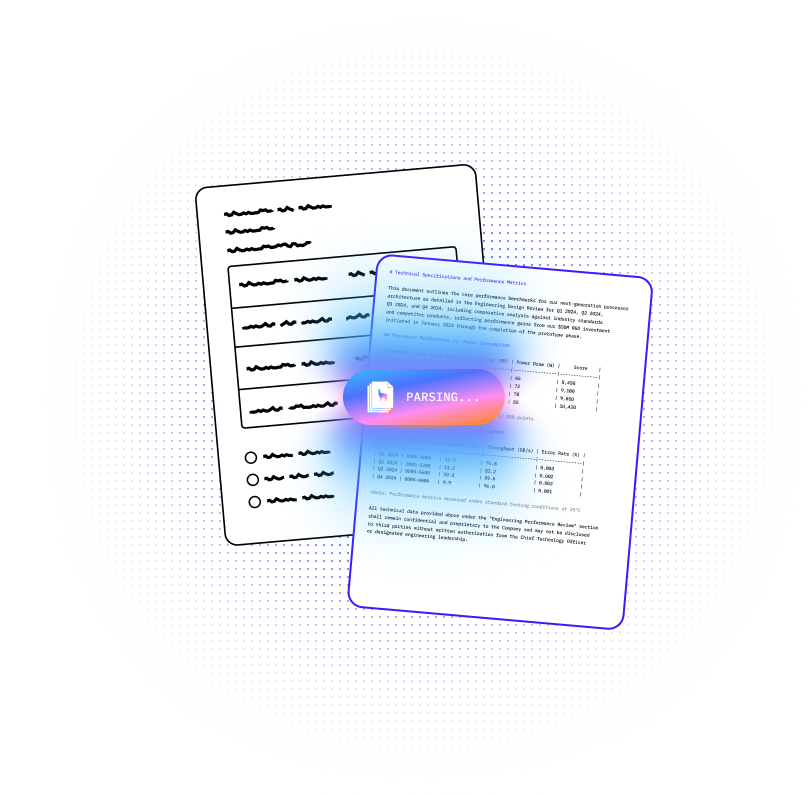


LlamaParse turns PDFs, scans, and messy forms into structured entity fields you can trust, delivered as clean, schema-ready JSON. Layout-aware parsing and validation loops catch tables, headers, and edge cases, so your Entity Extraction API ships with fewer exceptions.
Best-in-Class Accuracy

Extract entities from bank statements, pay stubs, and tax forms into structured JSON—capturing tables, multi-column layouts, and line items without brittle post-processing. Standardize names, addresses, employers, and income signals with citations and confidence scores to speed underwriting while reducing manual review queues.

Pull medications, diagnoses, lab values, and procedure codes from referrals, discharge summaries, and scanned PDFs—even when critical details live in tables, headers, or embedded images. Use page-level coordinates and metadata to route exceptions to staff quickly and keep patient intake and prior authorizations moving.

Convert SOWs, RFQs, change orders, and submittals into clean Markdown/JSON so teams can reliably extract part numbers, quantities, dates, and acceptance criteria from complex document layouts. Turn spec tables, marked-up drawings, and schedules into queryable entities that reduce rework and tighten bid-to-build handoffs.

Ship entity extraction from messy user-uploaded PDFs (invoices, contracts, receipts) with natural-language parsing instructions instead of months of custom rules and edge-case patches. Control burn with tier-based agentic processing and auto correction loops, so you get production-grade accuracy without enterprise headcount.
The Solution
01
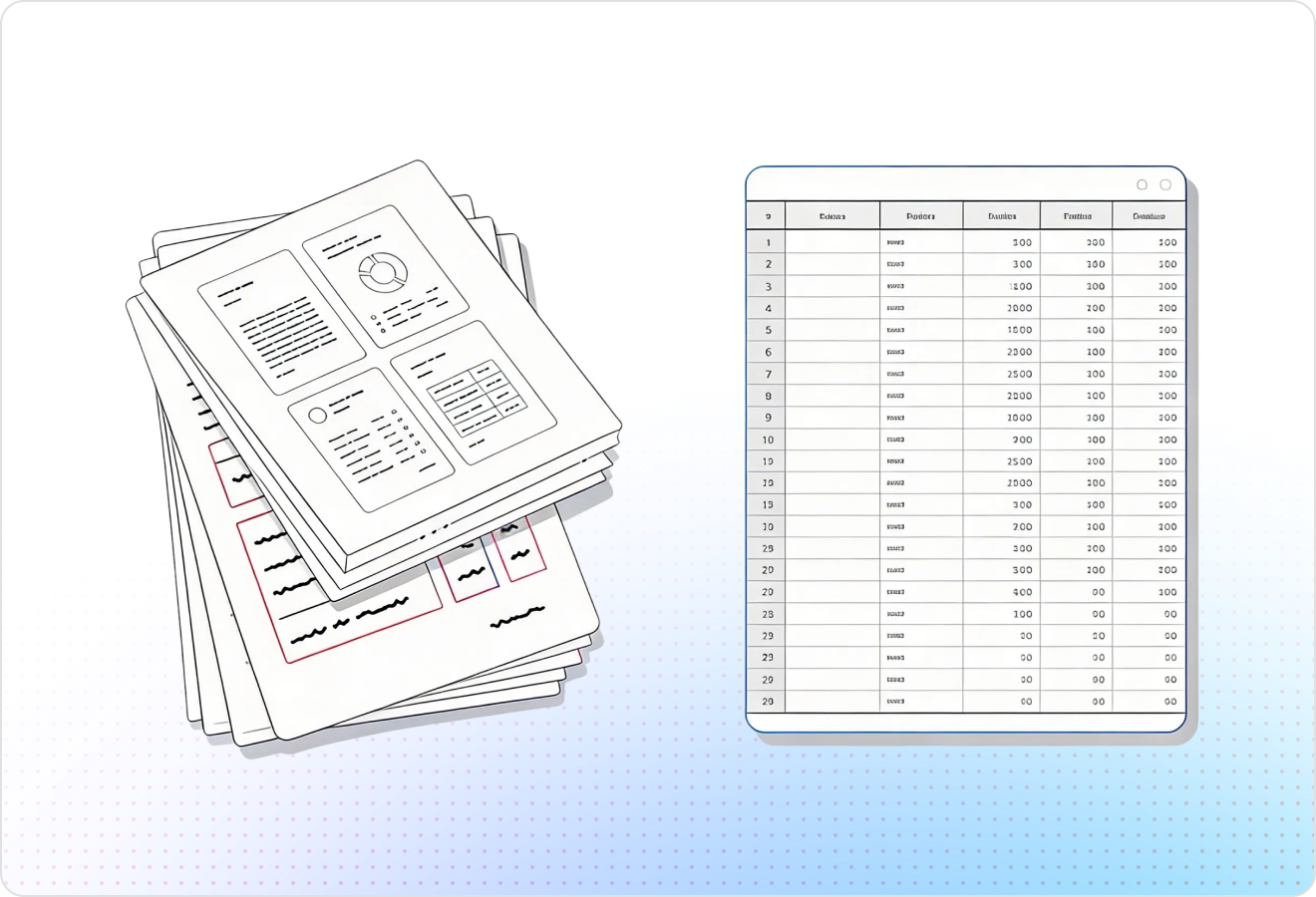
LlamaParse preserves reading order and document structure across multi-column pages, headers/footers, and dense forms. That structure keeps entities tied to the right section and label, so your Entity Extraction API returns the correct “who/what/when” instead of orphaned strings.
02
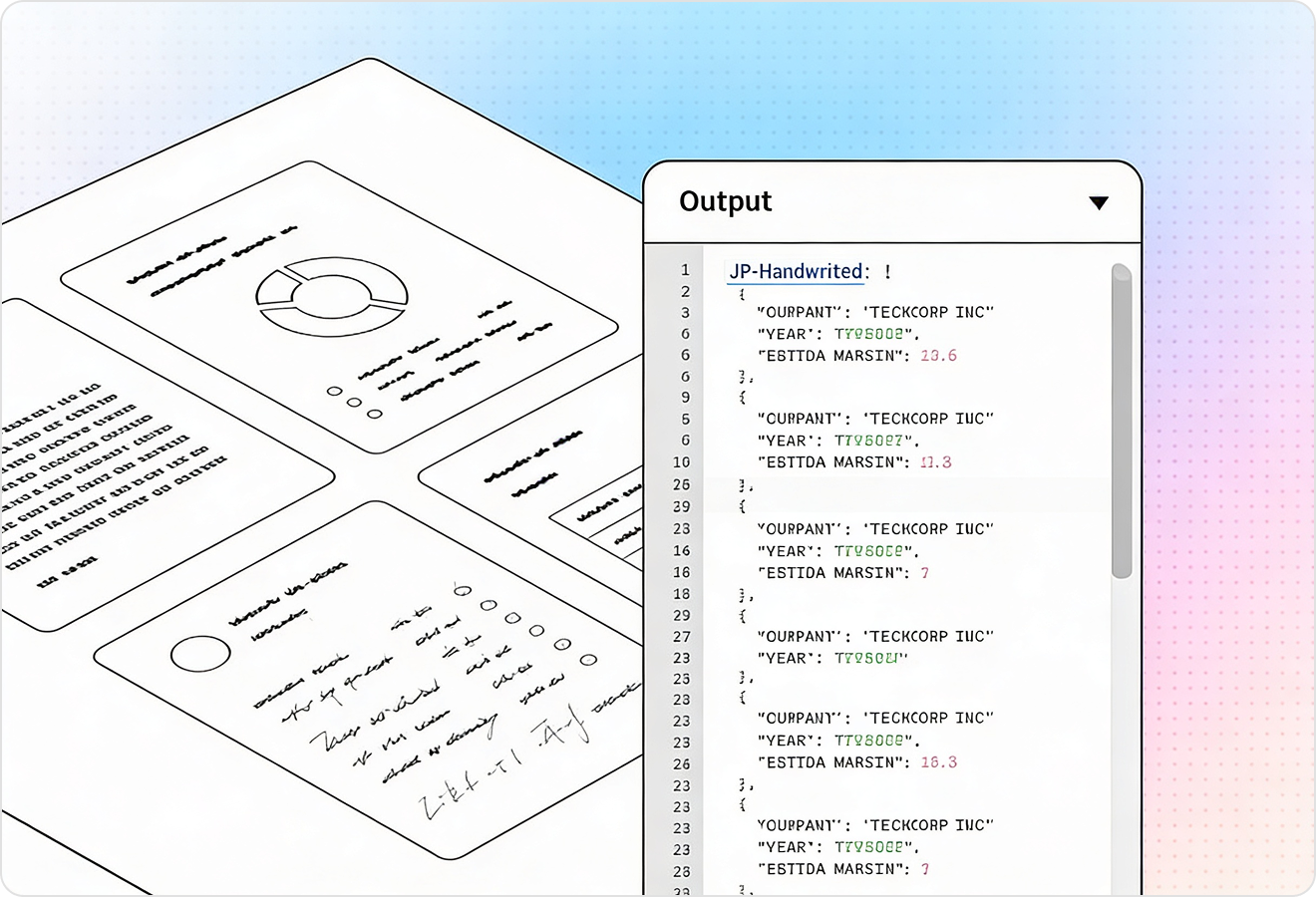
Return extraction-ready JSON that’s consistent enough to feed directly into your Entity Extraction API without fragile post-processing. Each field can include page references and element-level metadata, making it easy to trace an entity back to the exact source snippet.
03
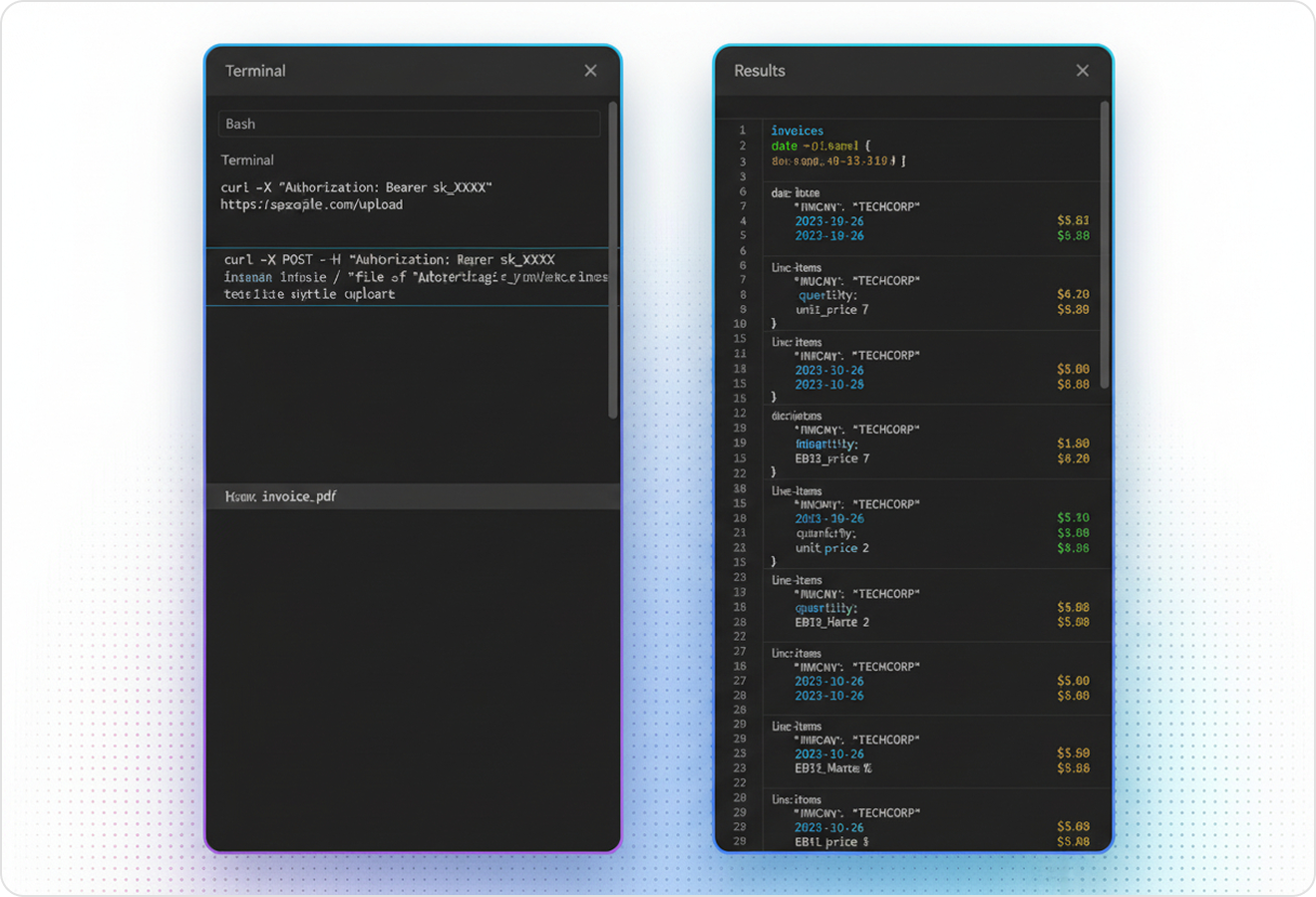
Use natural-language parsing instructions to specify the exact entities you care about (e.g., vendor name, invoice ID, dates, line-item totals) and the shape of the output. This reduces custom regex and template logic, so you can launch new entity types quickly and keep the API stable as documents change.
04
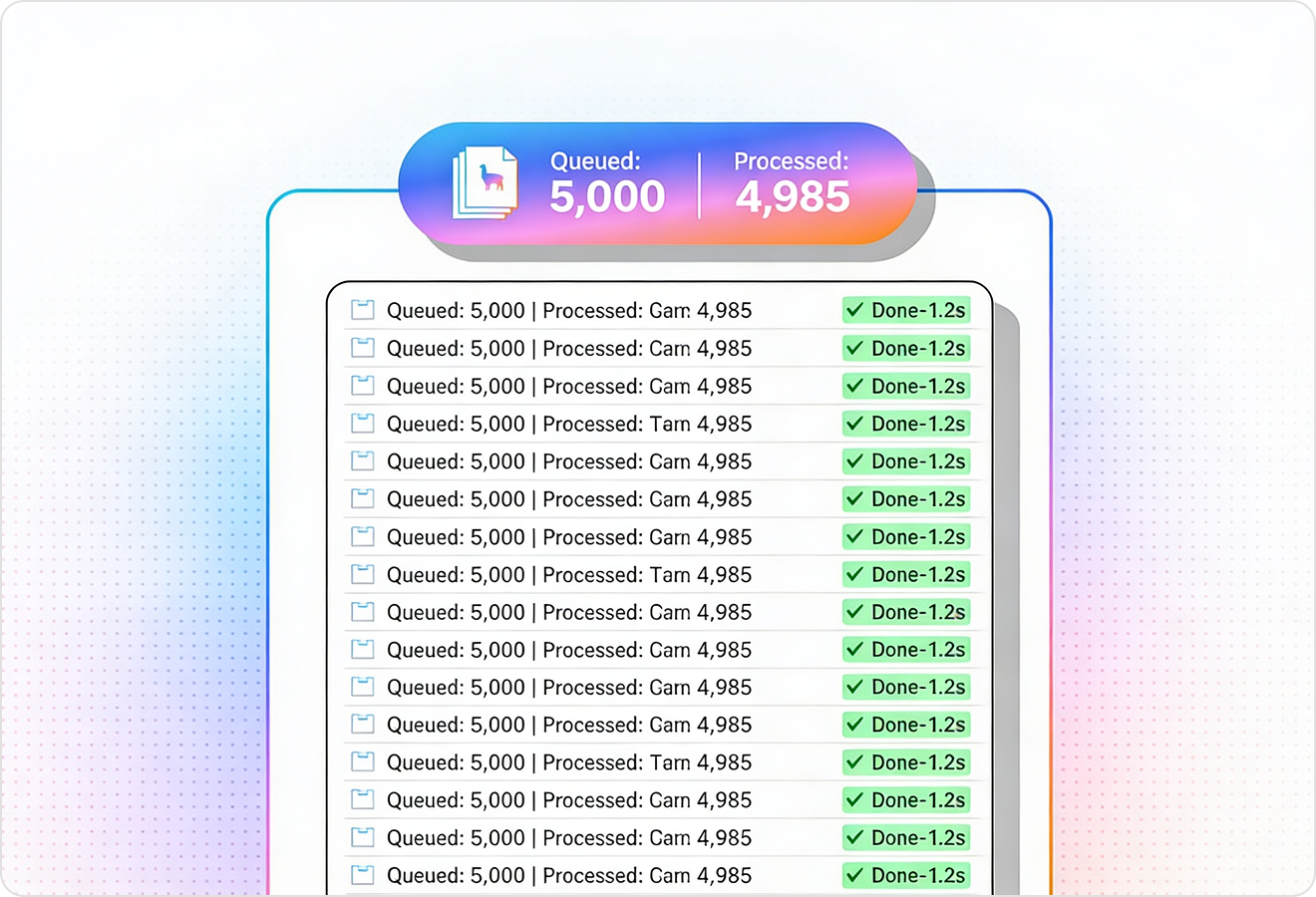
LlamaParse runs self-correction and validation steps to catch common extraction failures like swapped fields, missing totals, or inconsistent formats. That improves precision and straight-through processing, which is exactly what you want when your API is expected to return reliable entities at scale.
Technical OCR documentation
Explore our developer guides to easily connect your document pipelines to LlamaParse.
Explore the documentation
Our AI catches the typos that tired eyes miss.

Export to Excel, JSON, XML, or directly via API.

SOC2 Type II compliant with end-to-end encryption.

Train the tool on your specific forms in minutes, not days.

Average processing time of <3 seconds per page.
LlamaParse’s support of a wide variety of filetypes and its accuracy of parsing made it the best tool we tested in our evaluations. The LlamaIndex team was very responsive and we were off to the races within a day.
Common FAQs
01
Our layout-aware parsing preserves reading order and document structure across columns, headers/footers, and form sections. That keeps entities tied to the correct label and context, so you get “who/what/when” reliably instead of orphaned or swapped values.
02
Yes—Structured JSON Output Mode returns predictable fields that are easy to consume directly in your pipeline. You can also include page references and element-level metadata, making it straightforward to trace every extracted entity back to the exact source snippet.
03
Use natural-language extraction instructions to specify exactly which entities you want and the shape of the output. This reduces the need for regex and template logic, so you can add new entity types quickly as requirements change.
04
What prevents common extraction errors like missing totals, swapped fields, or inconsistent date formats?
Agentic validation loops run self-correction checks designed to catch and fix common failure modes before results are returned. That improves precision and increases straight-through processing, especially at scale where small error rates become operationally expensive.
05
How can my team audit results and resolve disputes when an extracted value looks wrong?
Each entity can include source metadata such as page references and element-level context, so reviewers can verify the exact origin in the document. This makes QA faster, supports compliance workflows, and builds confidence before you automate decisions downstream.
06
How fast can we onboard and keep the integration stable as document layouts change over time?
Because extraction behavior is driven by prompts and structured output rather than hard-coded templates, you can adapt to new layouts with minimal engineering effort. Most teams start with a small set of entities, validate results, and expand coverage without breaking the API contract.