Nov 14, 2025
Document AI: The Next Evolution of Intelligent Document ProcessingPersona
Industry
Use cases
Intelligent Document Automation
[ Intelligent Document Automation ]

Turn messy PDFs into accurate, structured data with LlamaParse, so your workflows run hands-free.
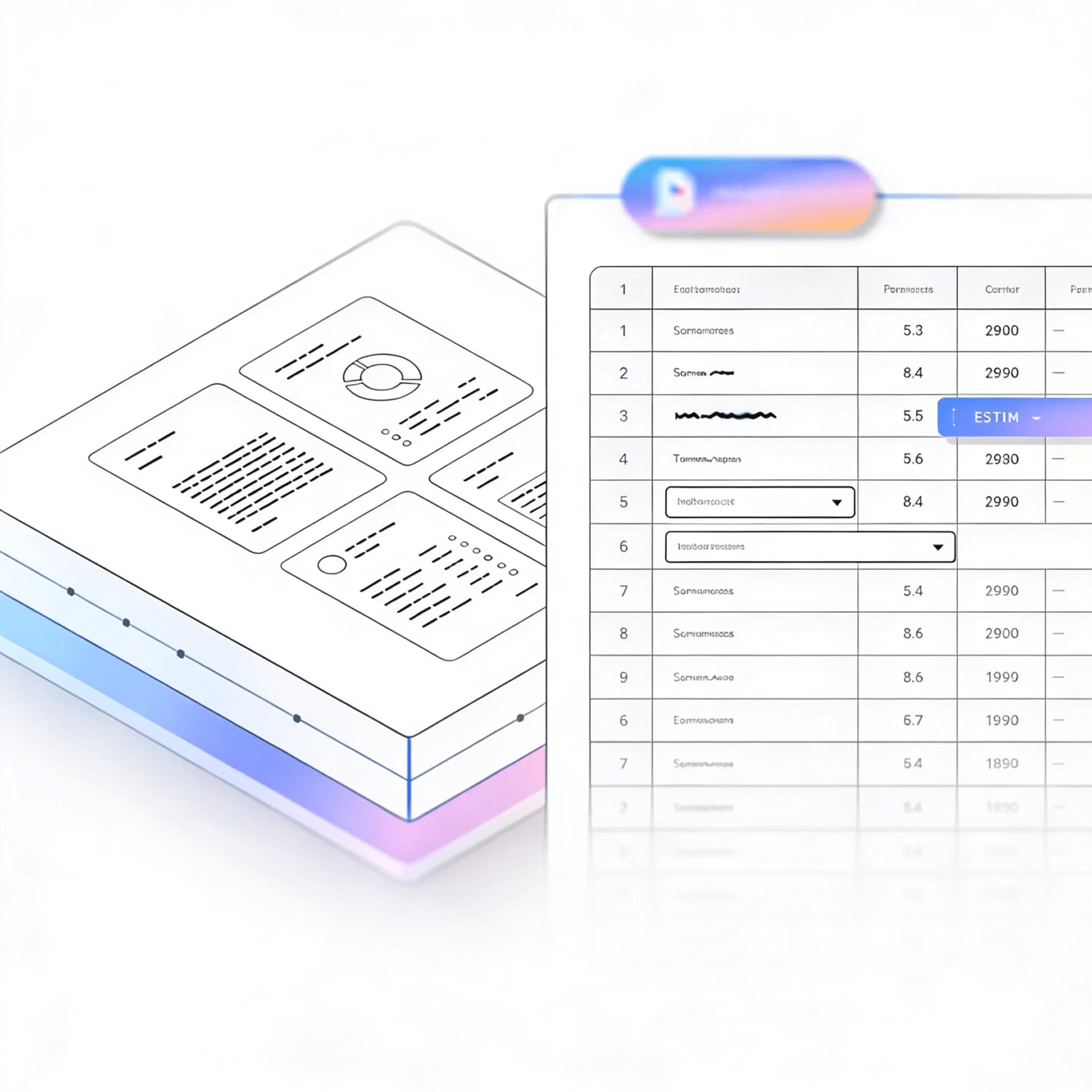


LlamaParse converts PDFs, scans, and weird layouts into clean, structured outputs your automation can trust, so downstream agents stop guessing. It uses layout-aware vision and validation loops to extract tables, charts, and fields into Markdown or JSON with citations for review.
Best-in-Class Accuracy

Parse FNOL packets, adjuster notes, invoices, and loss-run PDFs into clean JSON—even when tables, multi-column layouts, and scanned forms would normally break legacy extraction. Use citations, confidence scores, and auto-correction loops to accelerate straight-through processing while flagging the few claims that actually need human review.

Turn bills of lading, commercial invoices, packing lists, and customs documents into structured records with layout-aware table extraction so SKU lines, quantities, and HS codes don’t get scrambled. Add natural-language parsing instructions to validate required fields and exceptions at ingest, reducing chargebacks, delays, and manual back-office work.

Convert messy contracts, exhibits, and scanned amendments into Markdown that preserves headings, numbering, and clause hierarchy, making downstream review and search reliable. Extract key terms into a schema with page-level traceability so teams can answer audit and negotiation questions without re-reading entire PDFs.

Ship an ingestion pipeline that turns user-uploaded PDFs and spreadsheets into AI-ready Markdown or JSON without writing brittle cleanup code for every new template. Use tier-based agentic processing and cost-optimizer mode to keep unit economics predictable while you scale from prototype to production volumes.
The Solution
01
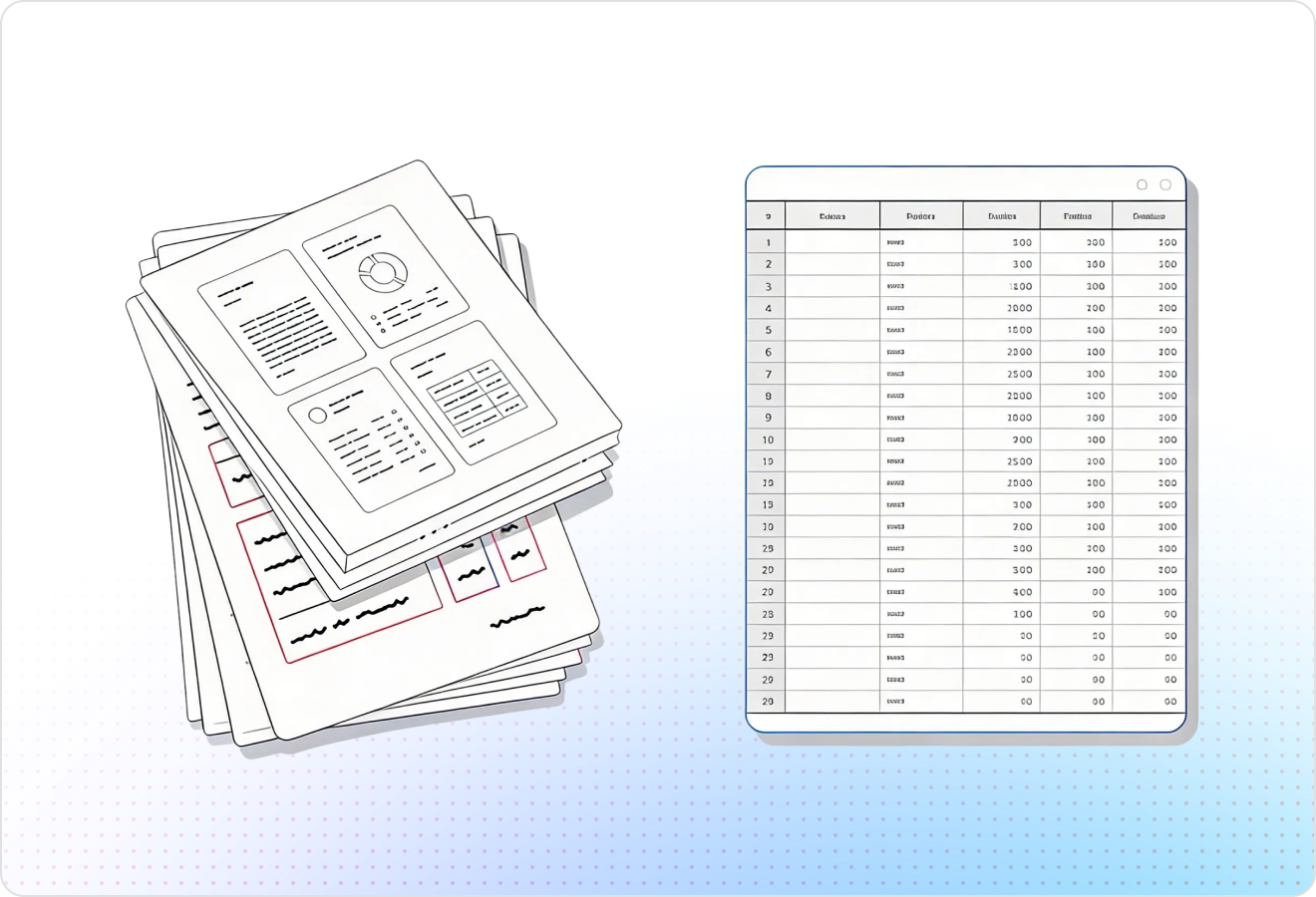
LlamaParse detects document structure—sections, columns, headers/footers, and reading order—so downstream automations work on clean, logically organized text. This prevents brittle rules and reduces exceptions when invoices, forms, and reports change layout over time.
02
LlamaParse accurately reconstructs complex tables (merged cells, nested headers, multi-page tables) instead of returning scrambled rows and columns. That makes it practical to automate approvals, reconciliations, and system-of-record updates directly from extracted line items.
03
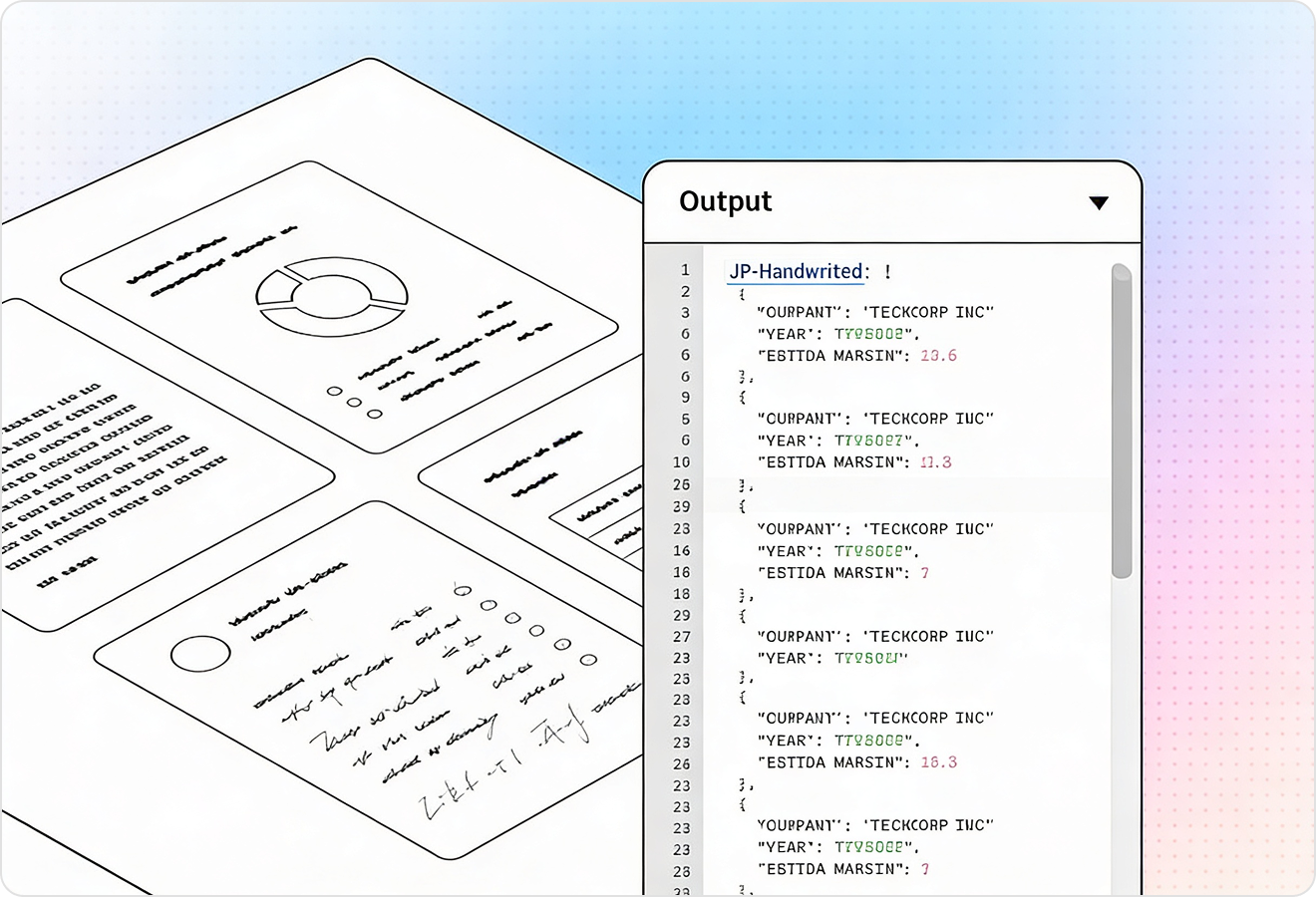
LlamaParse runs validation loops to catch common extraction errors and inconsistencies and then corrects them before output is finalized. For intelligent document automation, this improves straight-through processing by reducing manual review and rework on edge cases.
04
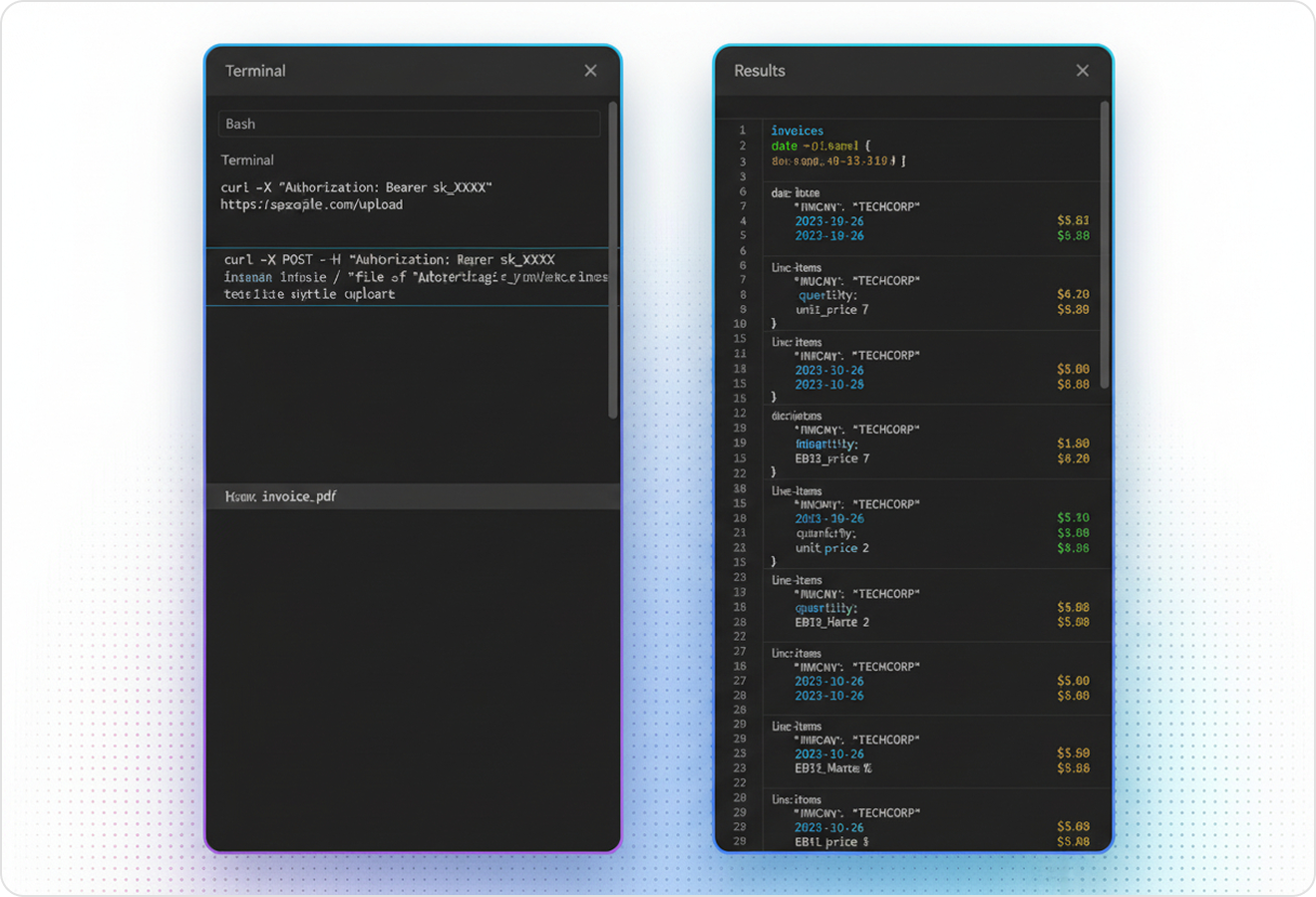
LlamaParse can emit structured JSON tailored to your workflow, with granular metadata like page numbers and source citations for each extracted field. This enables auditable automation—your pipeline can route low-confidence fields to human review while confidently auto-processing the rest.
Technical OCR documentation
Explore our developer guides to easily connect your document pipelines to LlamaParse.

Our AI catches the typos that tired eyes miss.

Export to Excel, JSON, XML, or directly via API.

SOC2 Type II compliant with end-to-end encryption.

Train the tool on your specific forms in minutes, not days.

Average processing time of <3 seconds per page.
LlamaParse’s support of a wide variety of filetypes and its accuracy of parsing made it the best tool we tested in our evaluations. The LlamaIndex team was very responsive and we were off to the races within a day.
Common FAQs
01
Layout-aware parsing detects structure like sections, columns, headers/footers, and reading order—so your automations rely on logical document meaning, not brittle coordinates. When vendors update invoice templates or forms shift over time, extraction stays consistent and exceptions drop.
02
Yes—reliable table extraction reconstructs tables with merged cells, nested headers, and multi-page continuations so rows and columns remain intact. That means you can automate downstream workflows like approvals, reconciliations, and ERP updates directly from clean line-item data.
03
Validation and self-correction loops automatically check for common inconsistencies and fix them before results are finalized. This reduces manual review on edge cases and increases straight-through processing for high-volume document flows.
04
Can I get structured JSON output that matches my schema, not a generic format?
Yes—outputs can be tailored to your workflow so you receive JSON shaped for your specific fields and downstream systems. This makes integration faster and reduces the transformation code you need to maintain.
05
How do we audit extracted fields and prove where each value came from?
Each extracted field can include citations such as page numbers and source references, making results traceable and review-friendly. That auditability helps with compliance, internal controls, and building trust with stakeholders.
06
How can we safely automate while still handling low-confidence or ambiguous fields?
Granular metadata and citations let you route uncertain fields to human review while auto-processing high-confidence values. This hybrid approach minimizes risk without sacrificing speed, so you can automate more documents sooner.