Nov 14, 2025
Document AI: The Next Evolution of Intelligent Document ProcessingPersona
Industry
Use cases
941 Form OCR
[ 941 Form OCR ]

Use LlamaParse to turn Form 941 PDFs into validated JSON your payroll systems can trust.
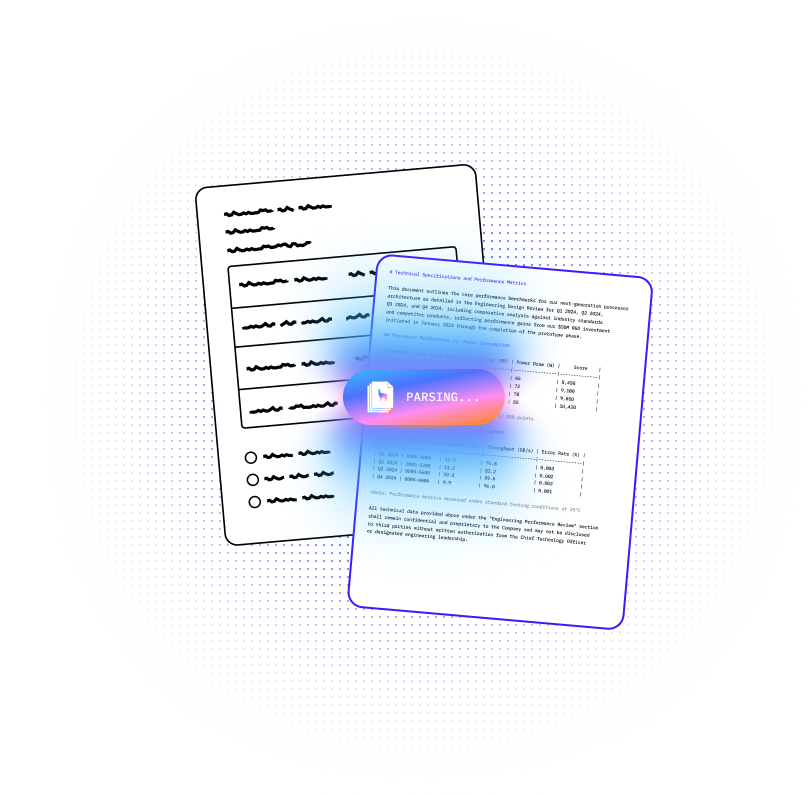


LlamaParse turns IRS 941 PDFs and scans into clean, structured fields automatically, so totals, wages, and deposits land in your system fast. Its agentic document parsing understands layouts, validates numbers, and returns JSON with confidence and citations, reducing rework and speeding close.
Best-in-Class Accuracy

Use LlamaParse to turn IRS Form 941 PDFs into clean, layout-faithful JSON—capturing line items, quarter totals, and employer details without tables getting scrambled. This reduces manual keying and accelerates compliance workflows by attaching confidence scores and traceable citations for faster review and exception handling.

Parse client-uploaded 941s into structured outputs that map directly into your workpapers and reconciliation templates, even when forms are scanned, skewed, or annotated. Natural-language parsing instructions let your team extract only what matters (e.g., taxable wages, deposits, balance due) and standardize results across hundreds of clients.

Automatically ingest Form 941s during underwriting to verify payroll consistency and detect gaps in remittances, without analysts hunting through multi-page PDFs. LlamaParse preserves reading order and totals so your risk checks can run deterministically, and metadata enables audit-ready tracebacks to the exact page and field.

Build a “941-to-dashboard” workflow in days by using LlamaParse as the ingestion layer that converts messy form scans into AI-ready Markdown/JSON for your product. Tier-based agentic processing and cost controls let you scale from a few pilot customers to high-volume batches while keeping extraction accuracy stable as form quality varies.
The Solution
01
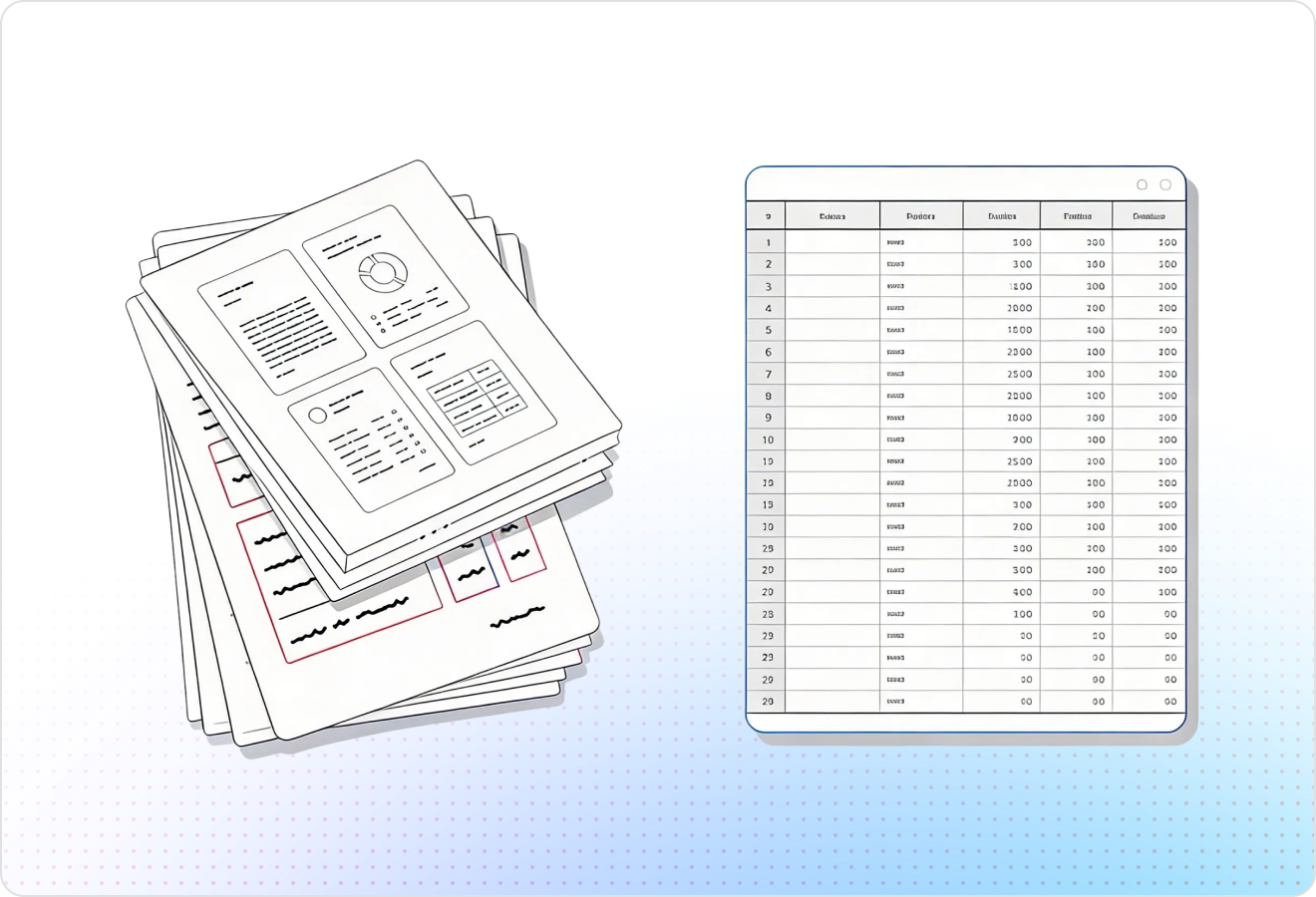
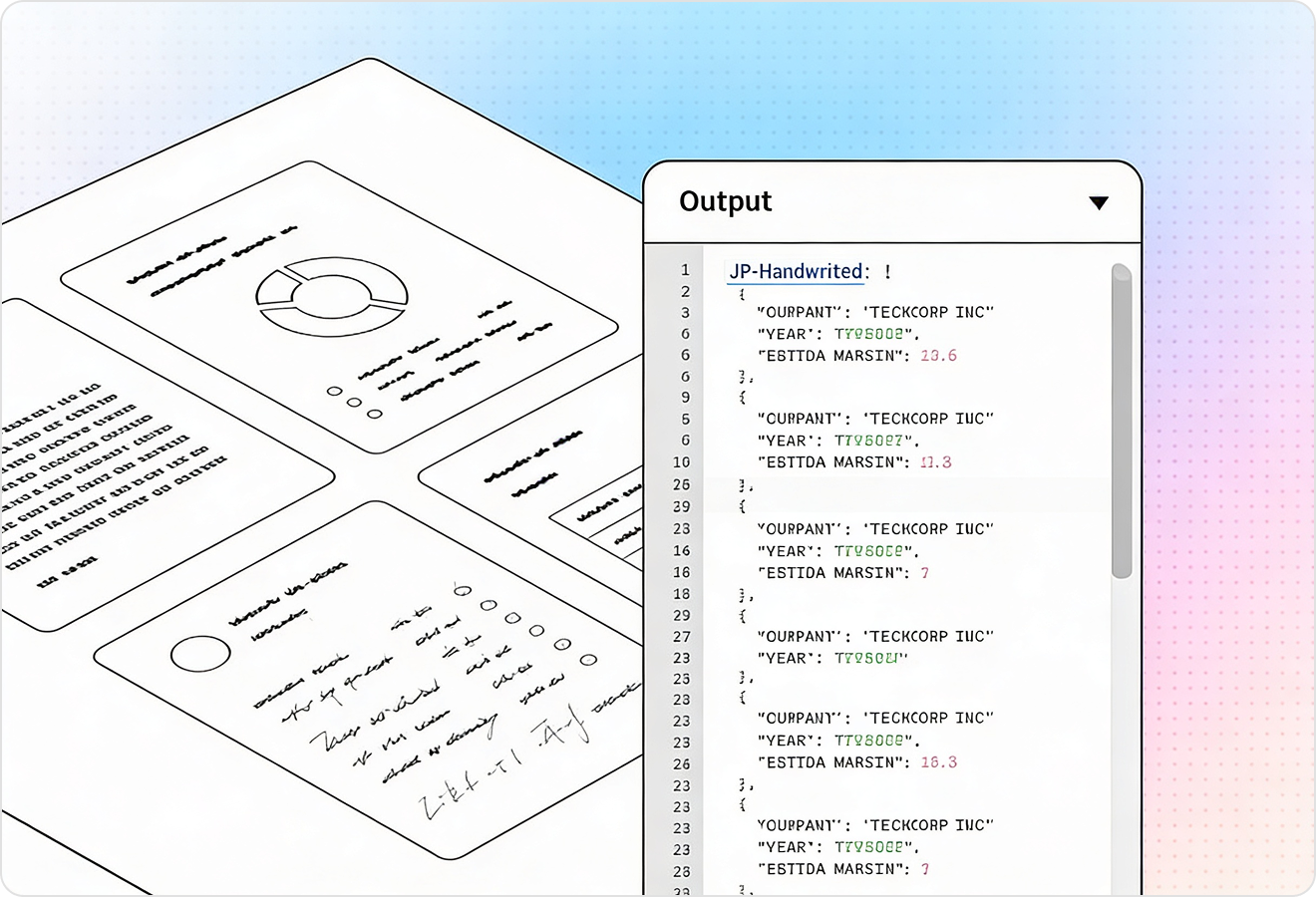
LlamaParse reads the 941 like a form, not a wall of text, preserving boxes, labels, and the intended reading order. That means fields like EIN, quarter, and totals don’t get scrambled when the layout changes between IRS revisions or scan templates.
02
LlamaParse reliably captures structured line items and table-like sections, even when they’re visually aligned with spacing instead of explicit table borders. For 941 processing, this helps you pull wages, tax amounts, and adjustments into clean rows/columns without brittle post-processing.
03
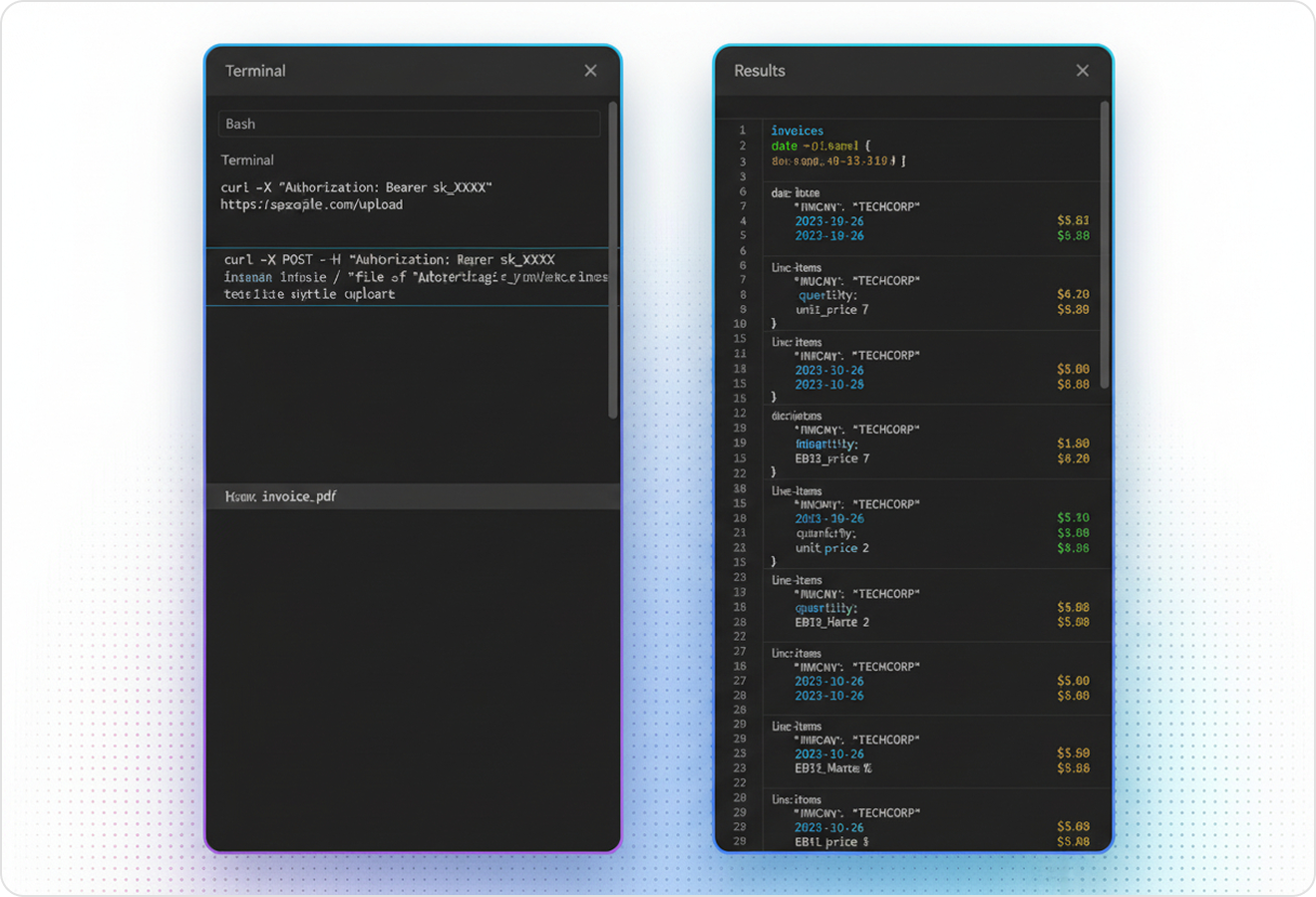
LlamaParse can return a structured JSON representation of the form alongside granular metadata like page location and element type. For 941 form automation, you can validate each extracted value against its source region and route exceptions to review instead of guessing what went wrong.
04
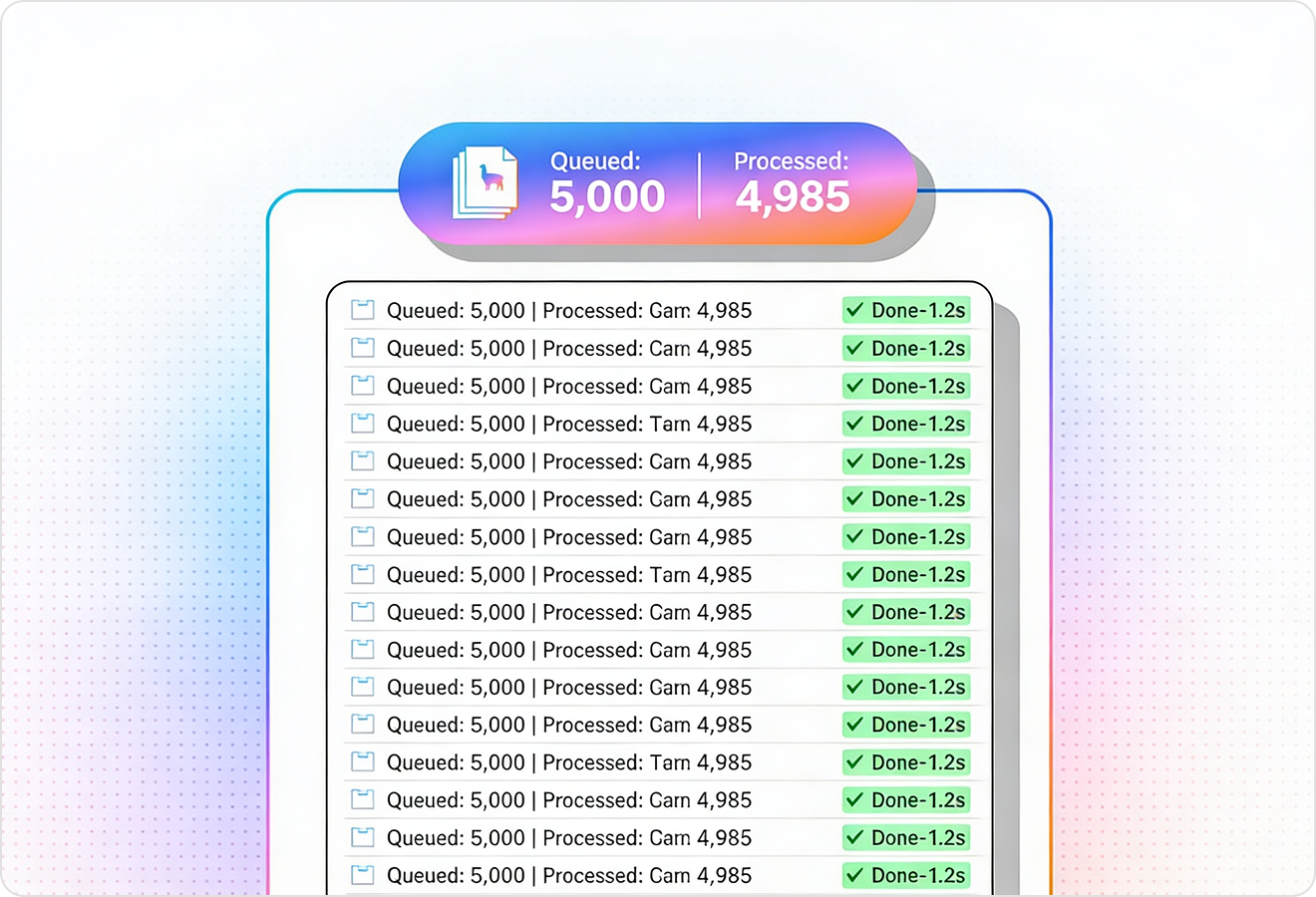
LlamaParse runs multi-step checks to catch common extraction errors and fixes inconsistencies before you ingest the data. On 941s, this reduces downstream reconciliation work by preventing mismatched totals and misread numbers from quietly entering your payroll or compliance pipeline.
Technical OCR documentation
Explore our developer guides to easily connect your document pipelines to LlamaParse.
Explore the documentation
Our AI catches the typos that tired eyes miss.

Export to Excel, JSON, XML, or directly via API.

SOC2 Type II compliant with end-to-end encryption.

Train the tool on your specific forms in minutes, not days.

Average processing time of <3 seconds per page.
LlamaParse’s support of a wide variety of filetypes and its accuracy of parsing made it the best tool we tested in our evaluations. The LlamaIndex team was very responsive and we were off to the races within a day.
Common FAQs
01
Yes. Layout-aware parsing reads the 941 as a form—using boxes, labels, and reading order—so key fields like EIN, quarter, and totals don’t get scrambled when layouts shift between revisions or scan styles. This reduces rework and keeps your extraction stable over time.
02
LlamaParse is built for table and line-item extraction, even when values are aligned by spacing instead of visible table borders. You get clean rows and columns for 941 amounts without brittle, template-specific post-processing.
03
Yes—outputs can be returned as structured JSON designed for automation workflows. You can map fields directly to your data model and keep your pipeline consistent across batches and quarters.
04
How can my team verify OCR results and troubleshoot issues quickly?
Every extracted value can include traceability metadata such as page location and element type. That makes it easy to validate numbers against the exact source region and route only the exceptions to review instead of manually checking every form.
05
What happens when OCR misreads a number or totals don’t reconcile?
Validation and auto-correction loops catch common extraction errors and inconsistencies before the data hits your system. This helps prevent mismatched totals and misread digits from quietly creating downstream reconciliation and compliance headaches.
06
Can it handle low-quality scans, faxed copies, or slightly skewed 941s?
It’s designed to be resilient to real-world document quality, including skew, noise, and variable scan clarity. When confidence is low, traceability and validation help you identify exactly what needs review so you can keep throughput high without sacrificing accuracy.