Nov 14, 2025
Document AI: The Next Evolution of Intelligent Document ProcessingPersona
Industry
Use cases
Invoice OCR
[ Invoice OCR ]

Use LlamaParse to turn messy invoices into structured, verifiable fields your workflows can trust.
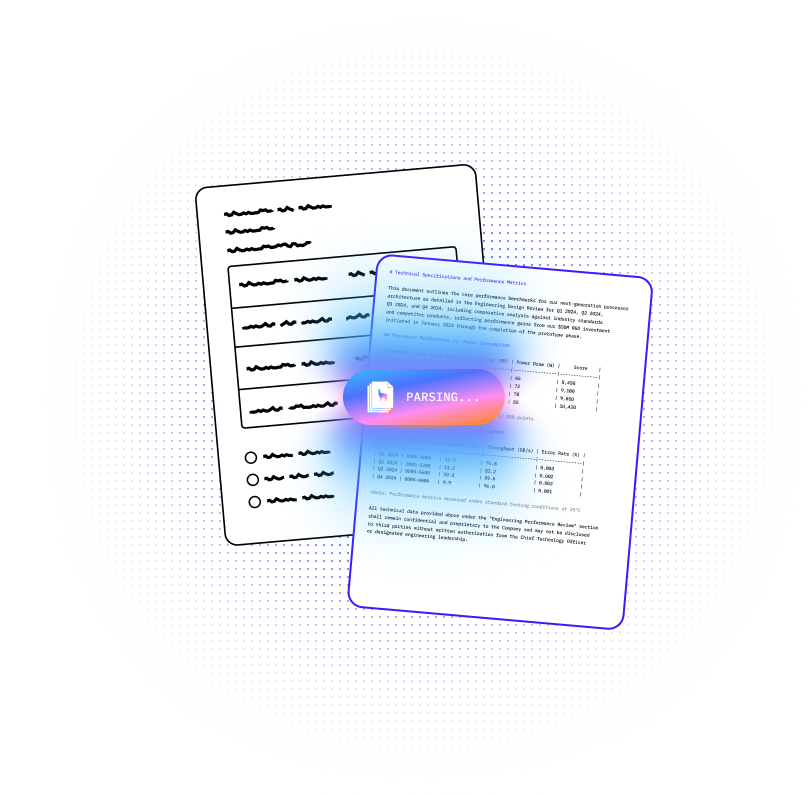

LlamaParse turns messy invoices and scanned PDFs into clean, schema-ready JSON, with line-level citations that show exactly where each field came from. It uses agentic document parsing with layout understanding and validation loops, so you spend less time fixing extraction errors and exceptions.
Best-in-Class Accuracy

Turn vendor invoices (PDFs, scans, emailed attachments) into clean JSON that automatically maps to your billing model, cost centers, and reporting schema without brittle regex or manual cleanup. Use confidence scores and citations to route only the exceptions to review, so a lean finance team can close the books faster without adding headcount.

Extract line items from messy, multi-page supplier invoices with nested tables, change-order references, and job codes while preserving reading order across columns and addenda. Auto-route the hard pages to agentic parsing and post to project accounting so you can reconcile against POs and track job-level profitability without disputes and rework.

Parse medical supplier and service invoices that include codes, modifiers, and bundled charges—even when they’re embedded in tables, footers, or scanned forms—and output audit-ready structured data with source citations. Reduce payment errors and speed AP approvals by validating extracted totals and key fields before they hit your ERP.

Convert carrier invoices with accessorials, zone-based pricing, and multi-stop charges into normalized line items so you can automatically match bills to shipments and contracted rates. Capture metadata (page, coordinates) for fast dispute workflows, letting ops teams pinpoint the exact evidence behind every charge without digging through PDFs.
The Solution
01
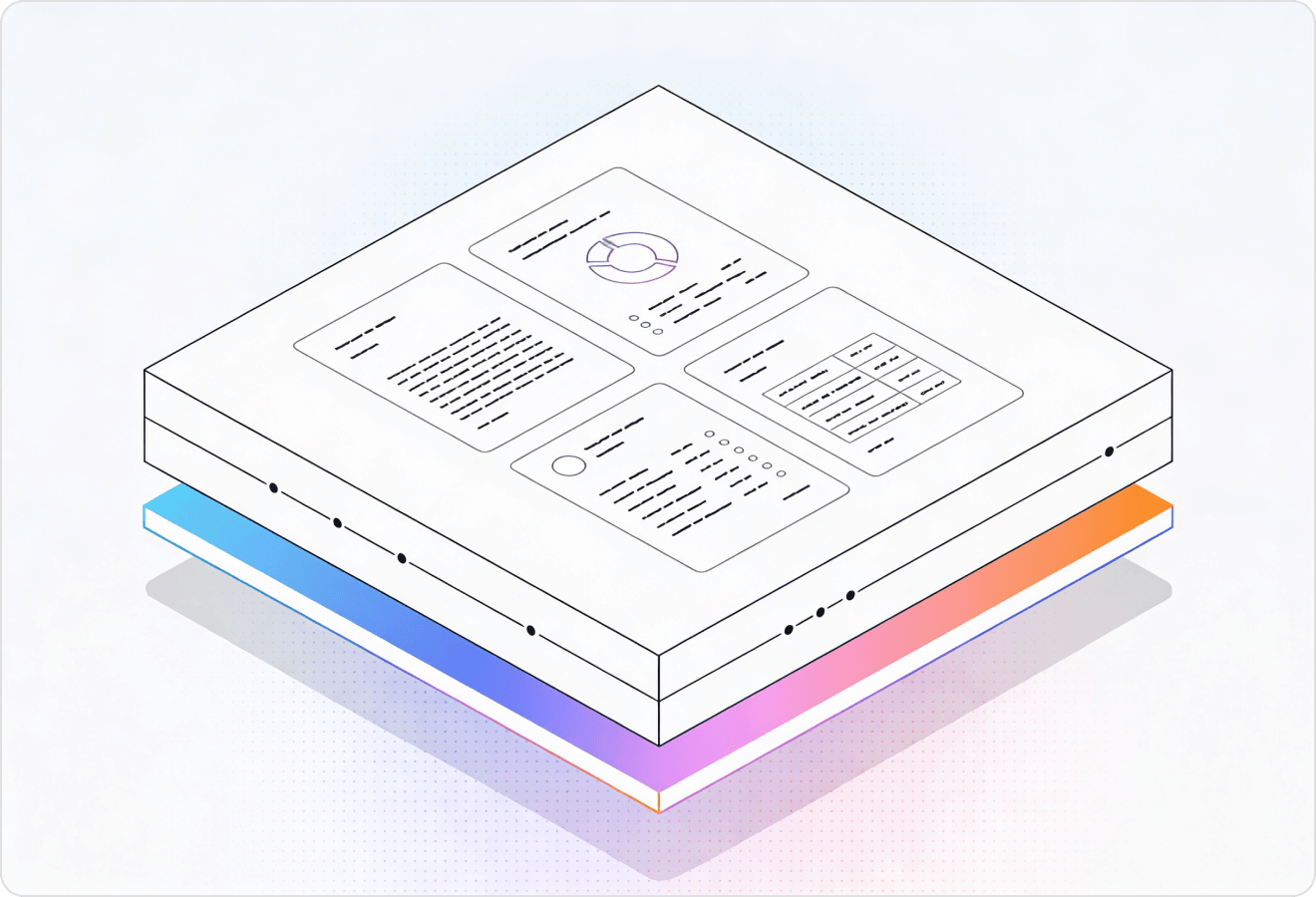
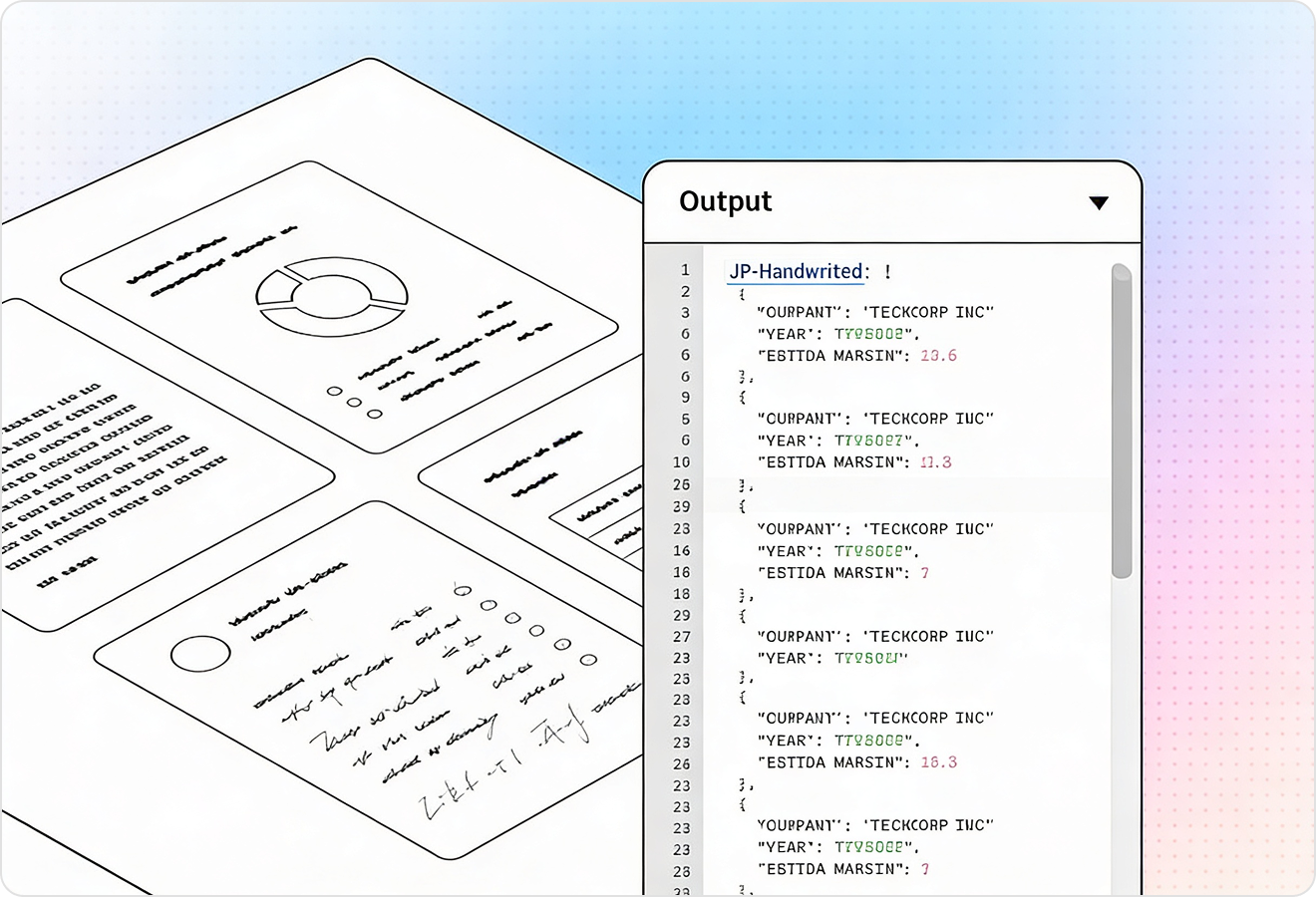
LlamaParse uses layout-aware vision to preserve reading order and correctly separate headers, footers, totals, and payment terms. That means fewer broken extractions when vendors change templates, and more consistent capture of invoice number, dates, and amounts.
02
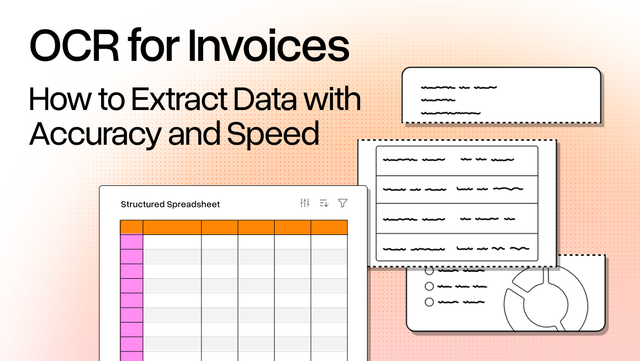
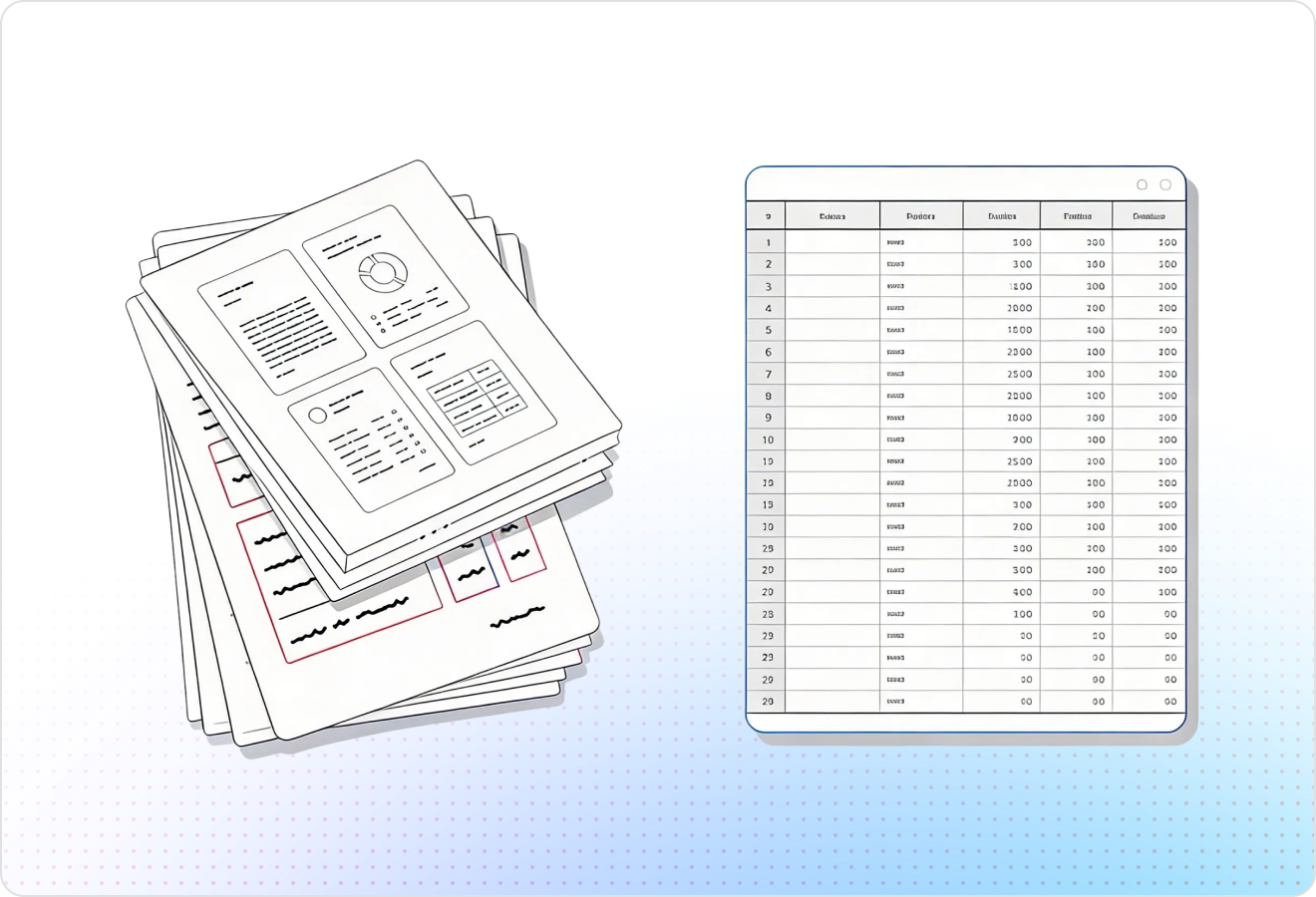
LlamaParse reliably pulls line-item tables into structured, AI-ready output without scrambling columns like quantity, unit price, tax, and SKU. This makes it straightforward to reconcile invoices against POs and detect mismatches at the row level.
03
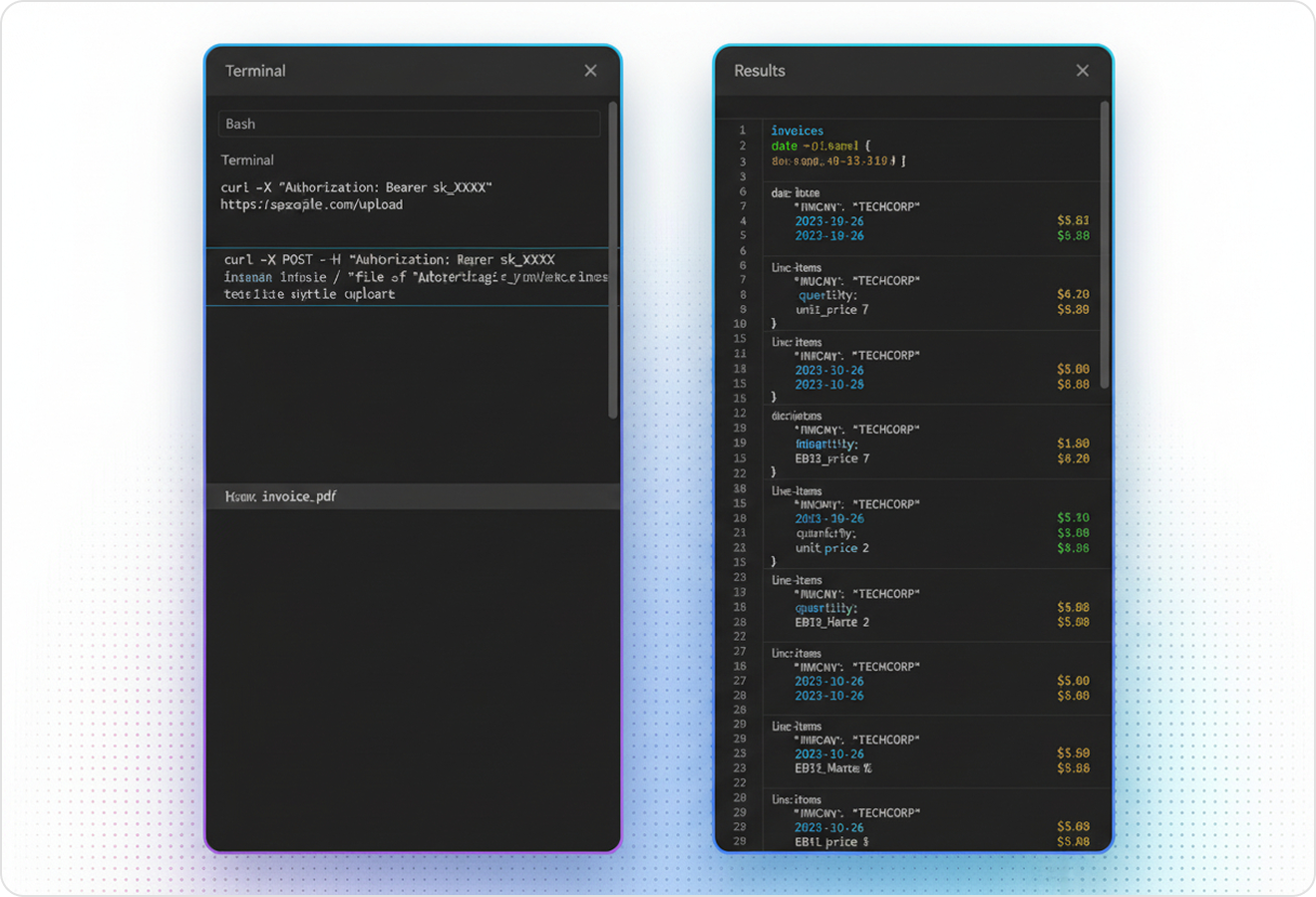
LlamaParse can return invoice data as clean JSON with granular metadata like page references and element coordinates for each field. You can validate every extracted total and tax value back to the source region, which is critical for auditability and human review.
04
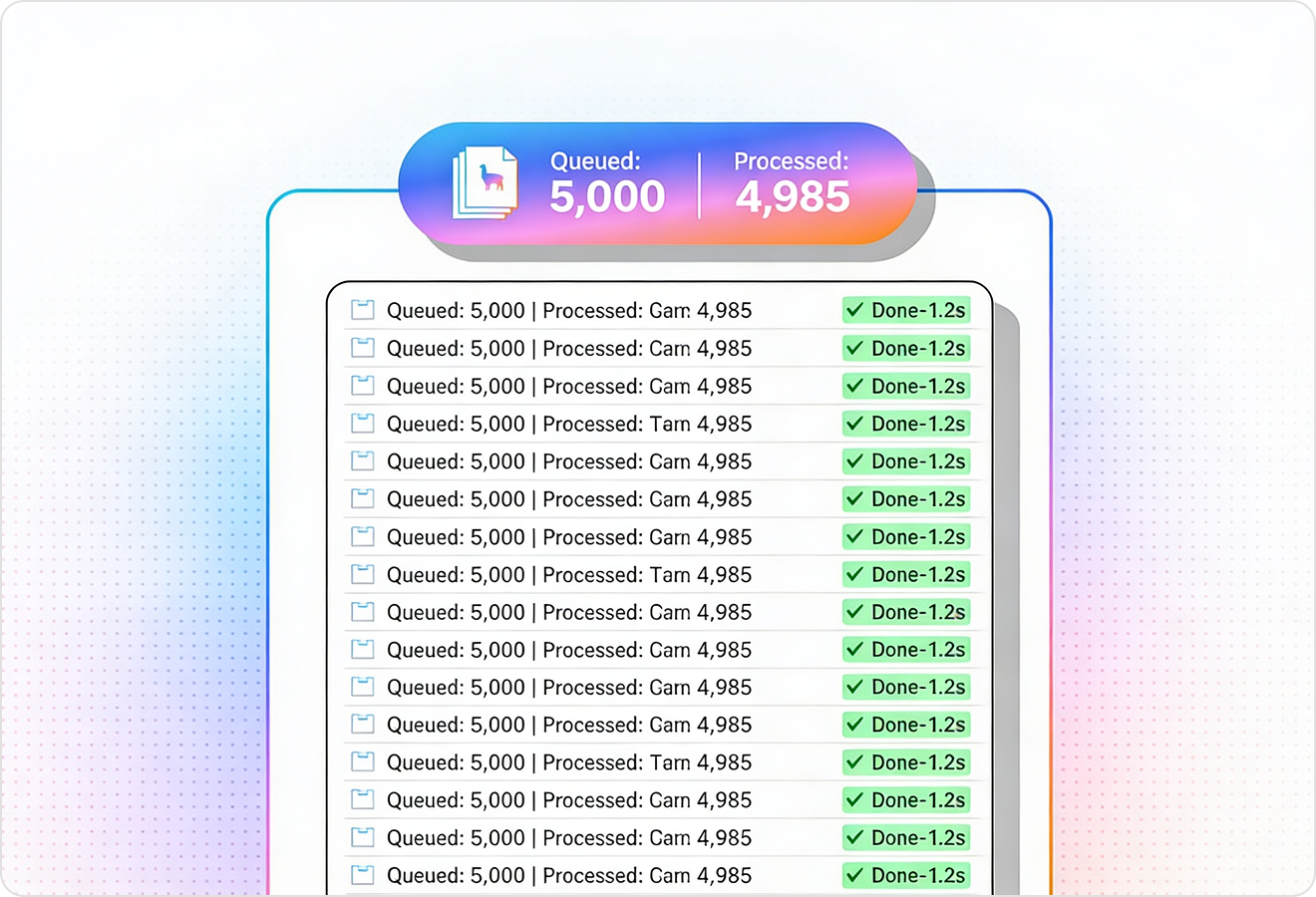
LlamaParse runs multiple validation loops to catch common invoice extraction failures like swapped digits, missing decimals, or misread currency symbols. The result is higher straight-through processing for AP automation without building a brittle post-processing rules engine.
Technical OCR documentation
Explore our developer guides to easily connect your document pipelines to LlamaParse.
Explore the documentation
Our AI catches the typos that tired eyes miss.

Export to Excel, JSON, XML, or directly via API.

SOC2 Type II compliant with end-to-end encryption.

Train the tool on your specific forms in minutes, not days.

Average processing time of <3 seconds per page.
LlamaParse’s support of a wide variety of filetypes and its accuracy of parsing made it the best tool we tested in our evaluations. The LlamaIndex team was very responsive and we were off to the races within a day.
Common FAQs
01
Our layout-aware OCR preserves reading order and separates headers, footers, totals, and payment terms so fields don’t “jump” when a template changes. That means more consistent capture of invoice numbers, dates, and amounts without constant re-training or manual mapping.
02
Yes—line items are extracted into structured output while keeping columns aligned (e.g., SKU, description, quantity, unit price, tax, and totals). This makes it easy to match invoices to POs and spot row-level discrepancies before they hit your ledger.
03
We return clean JSON and include granular citations such as page references and element coordinates for each extracted field. Your team can verify any total, tax value, or date directly against the source region for faster reviews and stronger auditability.
04
What if the OCR misreads a digit, decimal, or currency symbol—do we need complex post-processing rules?
The system runs validation and self-correction loops to catch common failures like swapped digits, missing decimals, and incorrect currency symbols. This reduces exceptions and helps you achieve higher straight-through processing without maintaining a brittle rules engine.
05
How accurate is it on multi-page invoices with totals, subtotals, and payment terms in different sections?
Layout understanding helps distinguish repeated headers/footers from the actual content and correctly identify totals, subtotals, and payment terms across pages. You’ll see fewer broken extractions and cleaner downstream automation, even on complex invoice packs.
06
How quickly can we get started, and what does integration typically look like?
You can start by sending invoice PDFs or images and receiving structured JSON back—ready for your AP workflow, ERP, or RPA tools. Most teams integrate in days, then expand coverage confidently using citations and validation to streamline review and exception handling.