Nov 14, 2025
Document AI: The Next Evolution of Intelligent Document ProcessingPersona
Industry
Use cases
RFQ OCR Extraction
[ RFQ OCR Extraction ]

Use LlamaParse to extract line items and terms from messy RFQs with verifiable accuracy.
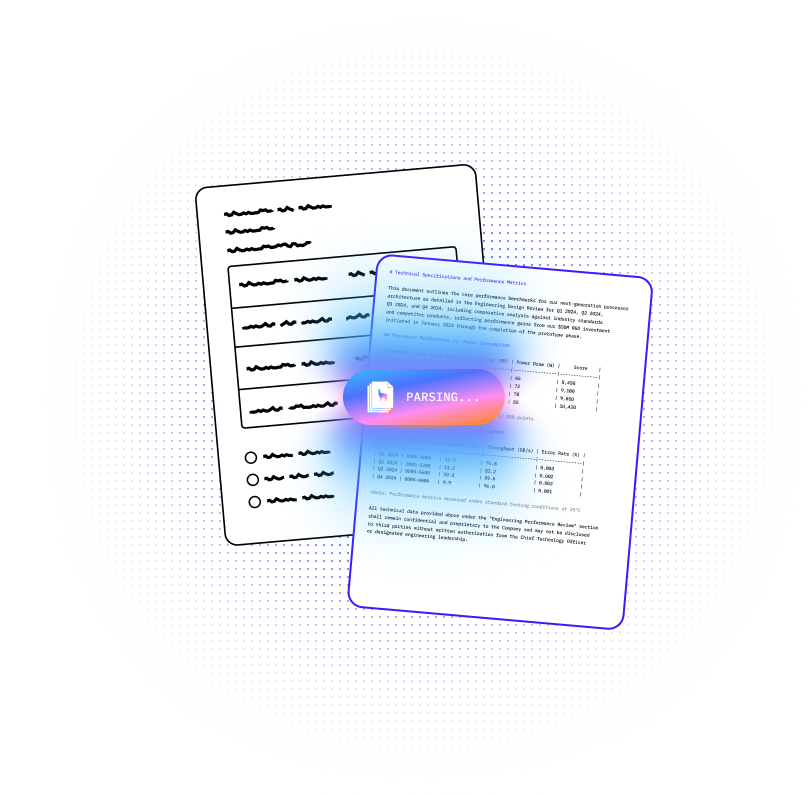

LlamaParse turns messy RFQs into clean, line-item JSON you can trust, capturing part numbers, quantities, pricing, and delivery terms across layouts. Agentic document parsing uses layout-aware vision and validation loops to reduce rework, with citations and confidence scores for fast human review.
Best-in-Class Accuracy

Use LlamaParse to turn messy supplier RFQs—PDFs with multi-column specs, tolerance tables, and line-item pricing—into clean JSON that maps directly into your ERP and sourcing templates. Layout-aware table extraction and validation loops reduce rework from scrambled part numbers and units, so buyers can compare quotes faster and award with confidence.

Parse subcontractor and materials RFQs that include scope tables, alternates, and schedule requirements into structured Markdown/JSON for bid leveling and estimating systems. Natural-language parsing instructions let teams reliably capture exclusions, lead times, and compliance notes from inconsistent formats without writing brittle rules.

Extract equipment, service-rate, and mobilization details from RFQs that embed spec sheets, diagrams, and scanned field documents, preserving reading order and critical table context. Tier-based agentic processing routes only the complex pages to heavier models, keeping per-RFQ costs predictable while improving straight-through processing for high-volume tenders.

Ship RFQ ingestion in days by using LlamaParse as the document processing layer, returning AI-ready structured outputs with citations and confidence scores for review workflows. JSON mode plus granular metadata makes it straightforward to build searchable quote repositories and automated quote-comparison experiences without spending months on extraction edge cases.
The Solution
01
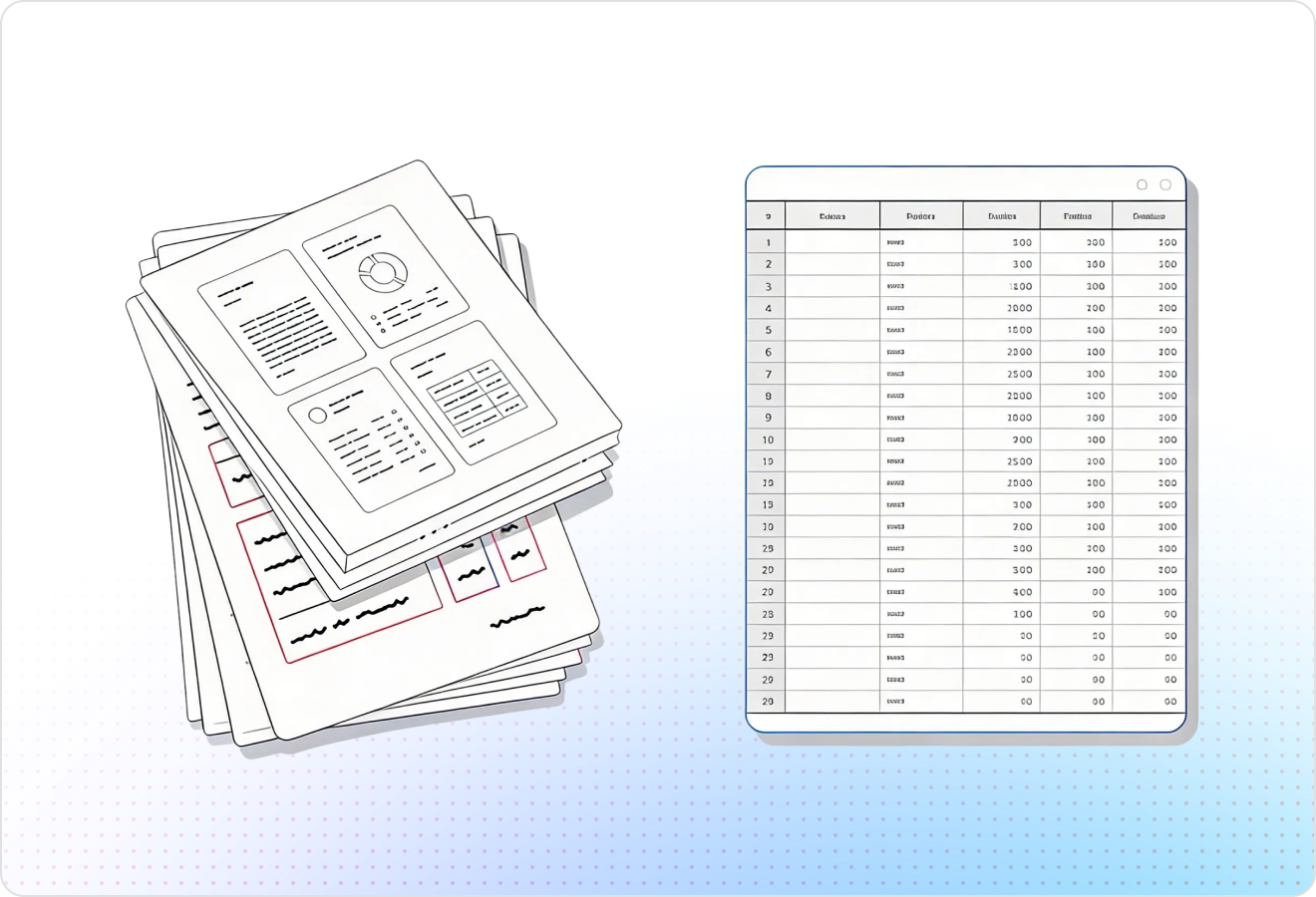
LlamaParse detects page structure and reliably extracts multi-column sections and nested RFQ tables without scrambling line items. This keeps part numbers, quantities, units, and terms aligned so downstream pricing and quoting logic doesn’t break.
02
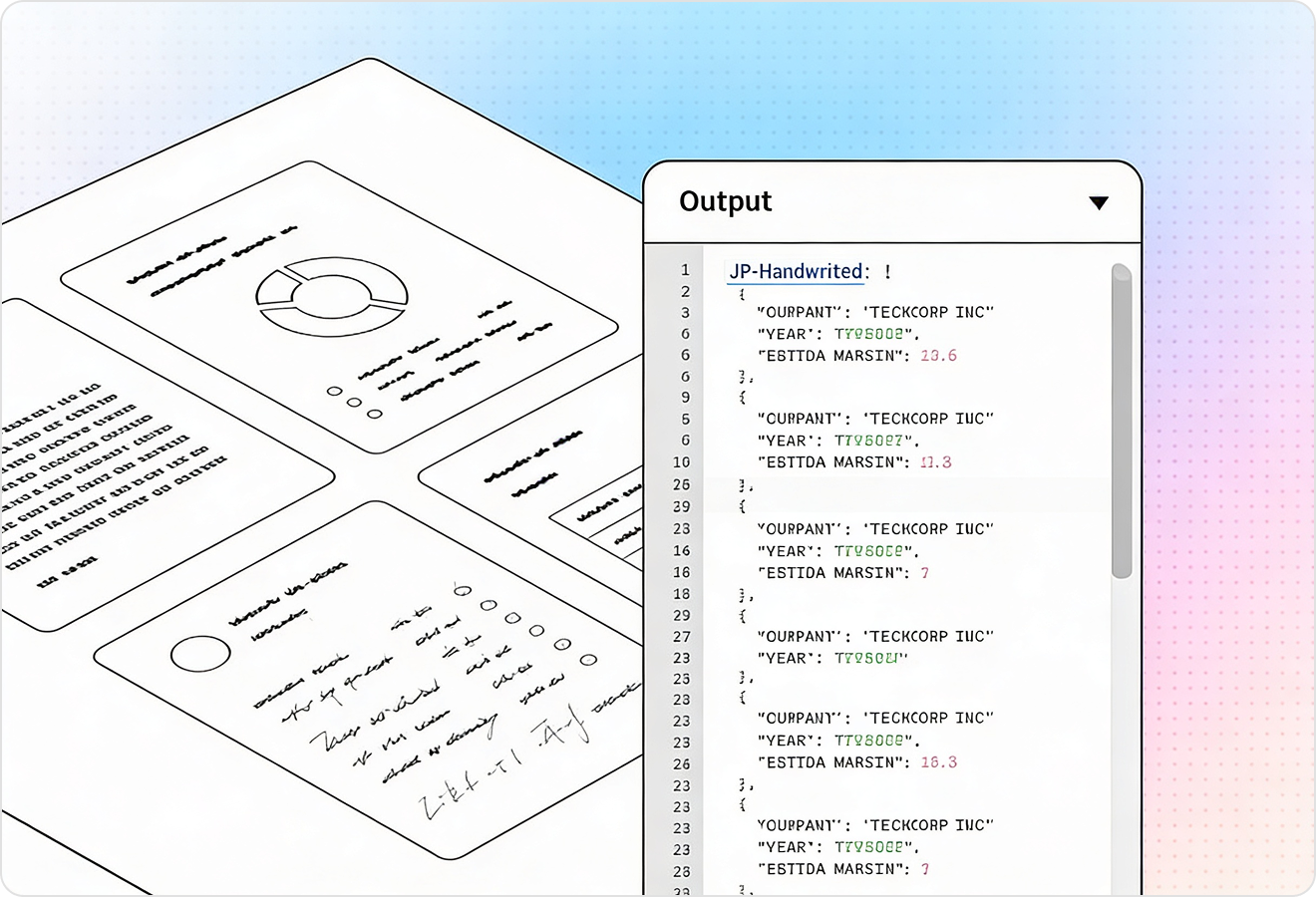
LlamaParse reads diagrams, charts, and embedded images that often carry critical RFQ requirements, not just plain text blocks. That means you can pull tolerances, performance curves, and annotated drawings into AI-ready text instead of losing context in a “text-only” pass.
03
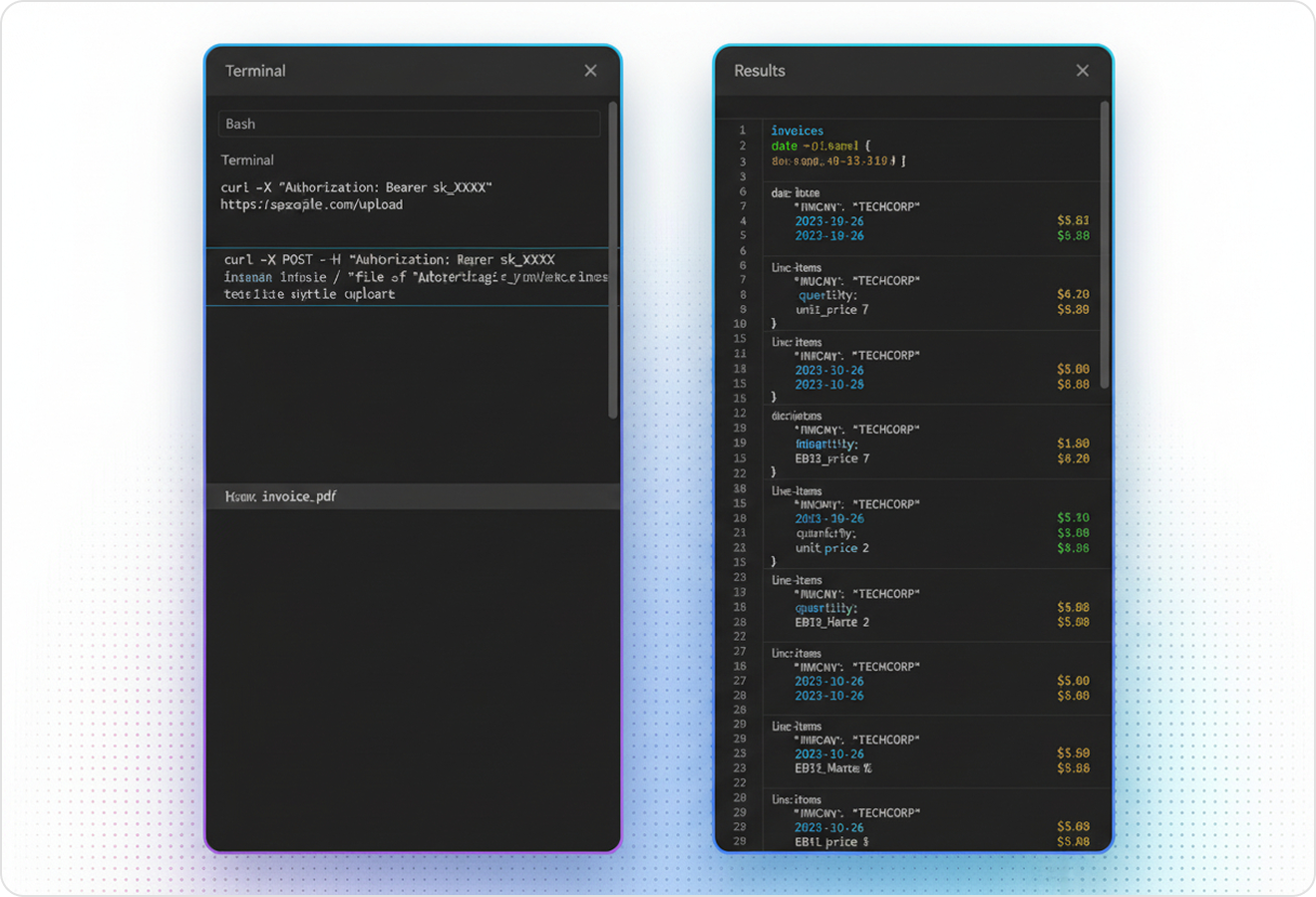
You can give LlamaParse natural-language instructions to extract exactly what an RFQ needs—ship-to, incoterms, due dates, approved manufacturers, and compliance notes—without writing brittle regex pipelines. This makes it easy to standardize outputs across wildly different customer templates.
04
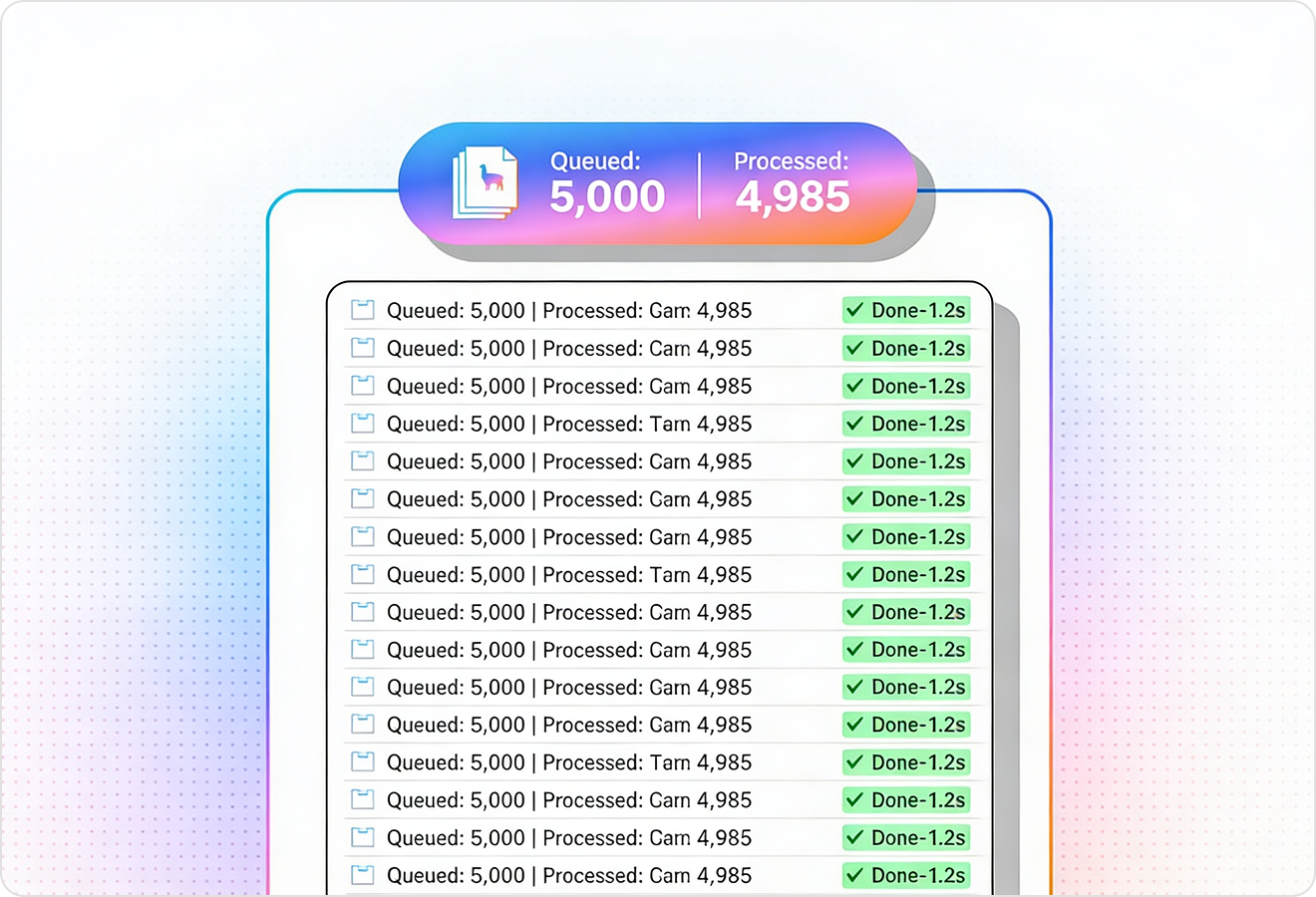
LlamaParse can return structured JSON plus granular metadata like page references and element-level traceability for each extracted field. For RFQ intake, this enables quick QA, confidence-based routing to human review, and audit-ready links back to the source document.
Technical OCR documentation
Explore our developer guides to easily connect your document pipelines to LlamaParse.
Explore the documentation
Our AI catches the typos that tired eyes miss.

Export to Excel, JSON, XML, or directly via API.

SOC2 Type II compliant with end-to-end encryption.

Train the tool on your specific forms in minutes, not days.

Average processing time of <3 seconds per page.
LlamaParse’s support of a wide variety of filetypes and its accuracy of parsing made it the best tool we tested in our evaluations. The LlamaIndex team was very responsive and we were off to the races within a day.
Common FAQs
01
It’s layout-aware, so multi-column sections and nested tables are extracted without mixing rows or shifting columns. Part numbers, quantities, units, and terms stay aligned, which helps your pricing and quoting workflows run reliably.
02
Yes—multimodal spec capture reads more than plain text, including charts, annotated drawings, and image-based callouts. You get key details like tolerances and performance curves converted into AI-ready text so you don’t miss critical requirements.
03
You can use natural-language prompts to pull exactly the fields you care about, even when customers use different templates. This avoids brittle regex rules and helps you standardize outputs across suppliers and regions.
04
What does the output look like, and can we tie each value back to the source for QA?
Outputs can be delivered as structured JSON, with citations like page references and element-level traceability. That makes it easy to review questionable fields, route low-confidence items to a human, and keep an audit trail.
05
How accurate is it across different customer RFQ templates and formats?
Because it uses page structure plus prompted extraction, it adapts well to varied layouts, wording, and document styles. You can also refine prompts over time to improve consistency without rebuilding your pipeline.
06
How fast can we integrate this into our RFQ intake workflow?
You can start with JSON outputs that map directly into your quoting system or ERP intake step, then expand to additional fields as needed. The built-in citations simplify validation, so teams typically move from pilot to production faster with less manual rework.