Nov 14, 2025
Document AI: The Next Evolution of Intelligent Document ProcessingPersona
Industry
Use cases
JSON Schema Extraction API
[ JSON Schema Extraction API ]

Turn messy PDFs and scans into schema-ready JSON with LlamaParse’s layout-aware, validated parsing.
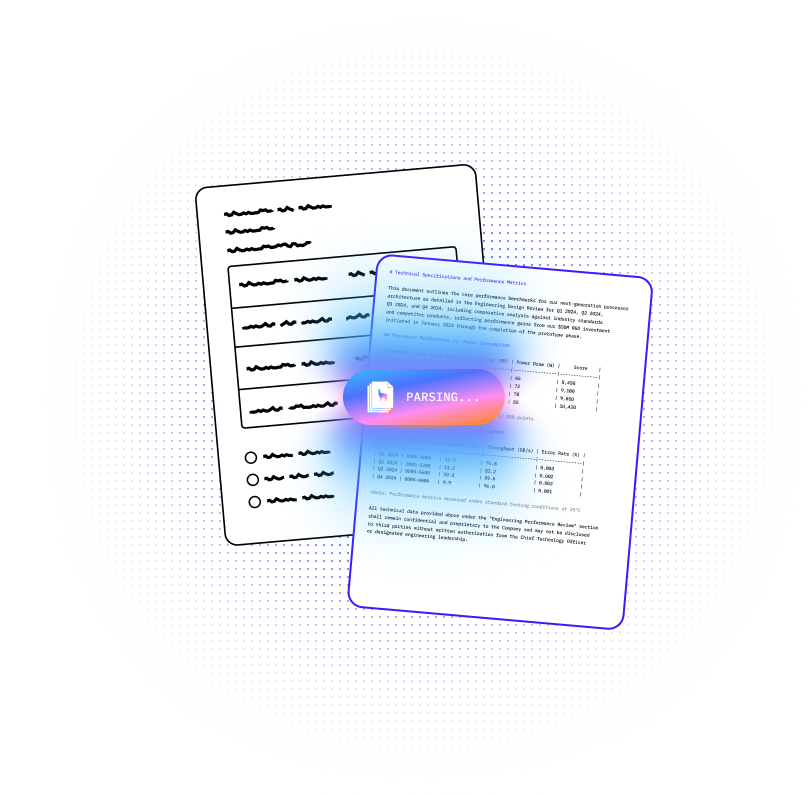

LlamaParse turns PDFs, scans, and inconsistent forms into clean JSON Schemas you can validate, version, and ship directly into your extraction API. Its agentic document parsing understands layout, tables, and embedded visuals, then self-checks outputs with metadata so downstream code breaks less.
Best-in-Class Accuracy

Use LlamaParse to turn messy customer PDFs and vendor docs into strict JSON schemas your API can trust, without writing brittle regex or hand-built parsers. Ship faster by standardizing ingestion across invoices, contracts, and onboarding forms while keeping traceability via page-level metadata for quick debugging.

Extract tables and multi-column statements from bank records, pay stubs, and tax forms into clean Markdown/JSON so underwriting rules and downstream systems stop breaking on layout drift. Add confidence scores and citations to support audit-ready decisions and reduce manual review time on exceptions.

Parse bid packages, change orders, and spec books where tables, diagrams, and mixed formatting usually scramble conventional extraction, then output structured JSON for cost codes, quantities, and compliance fields. Convert visual content like schedules and charts into machine-readable artifacts so teams can automate submittal tracking and risk checks.

Convert long agreements and exhibits into schema-aligned JSON with section-aware structure, so clause libraries, obligation tracking, and playbook checks can run reliably. Use natural-language parsing instructions to target only the fields you need—terms, parties, renewal dates—without rebuilding pipelines when templates change.
The Solution
01
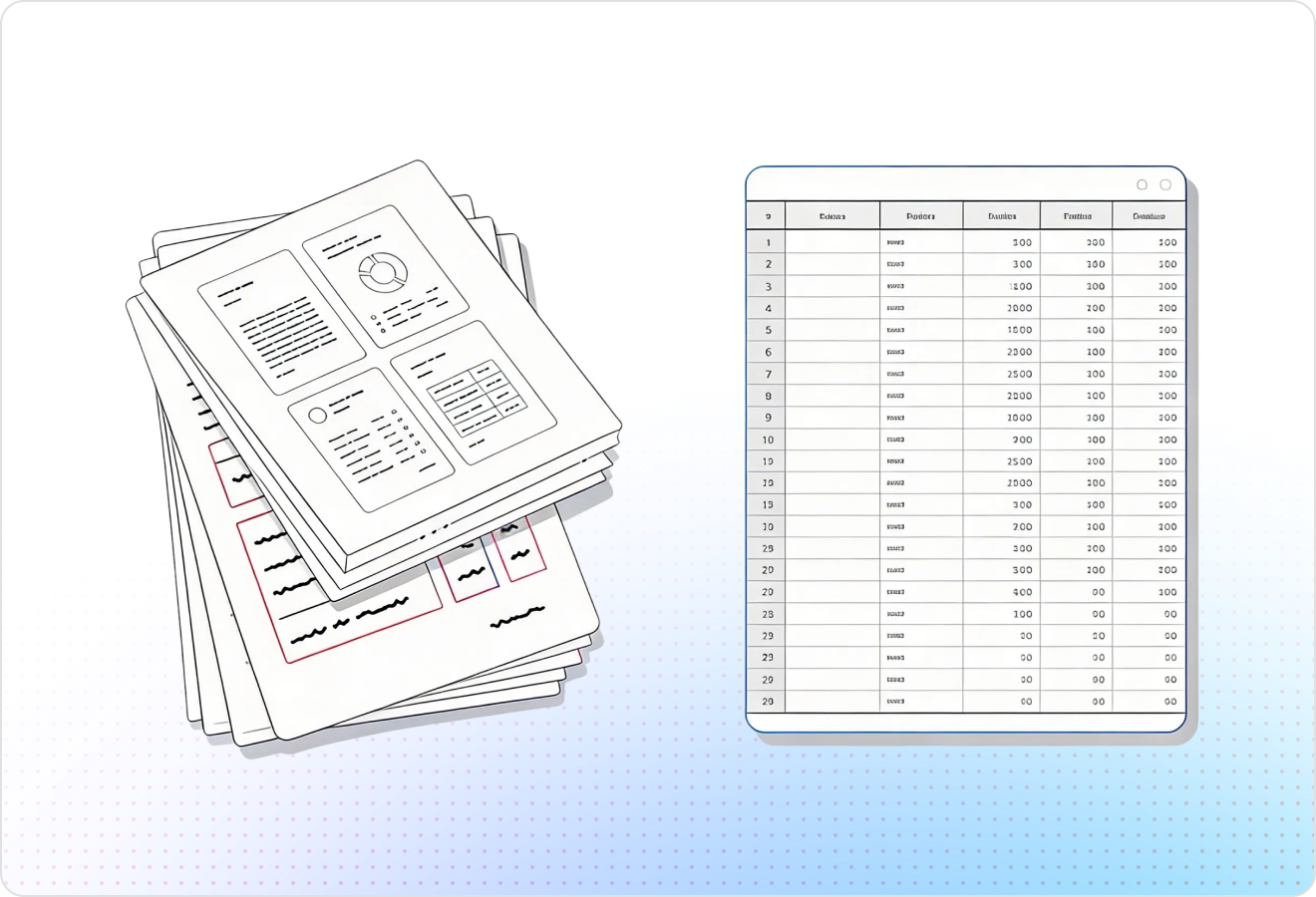
LlamaParse can return clean, structured JSON instead of a blob of text, so your extraction API can emit predictable keys and nested objects. This reduces downstream normalization work and makes it easier to validate payloads against a JSON Schema before you store or route data.
02
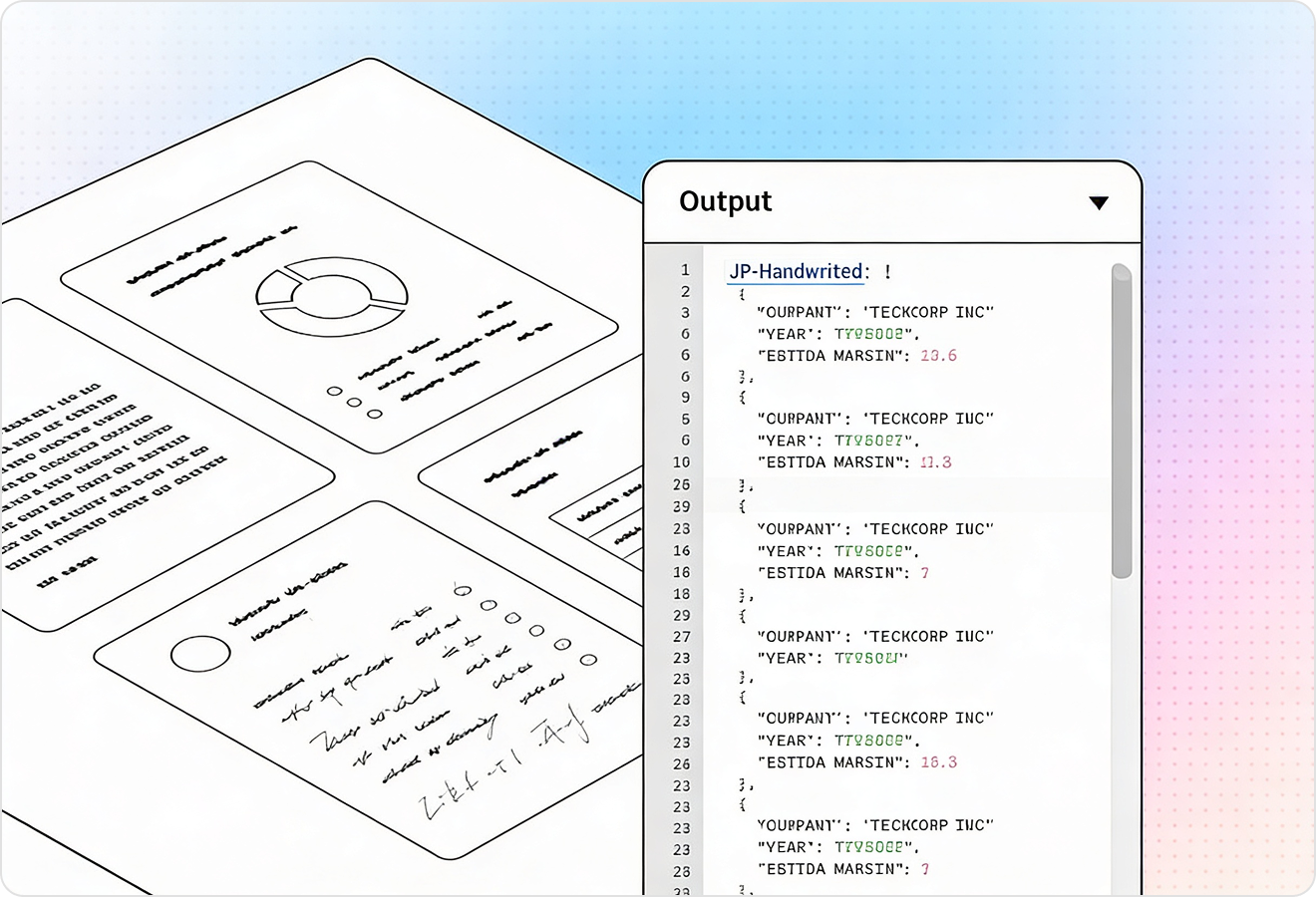
LlamaParse uses layout-aware parsing to preserve reading order and correctly segment headings, sections, and multi-column content. For schema extraction, this keeps fields from being misassigned when documents change templates, preventing subtle errors that break strict schemas.
03
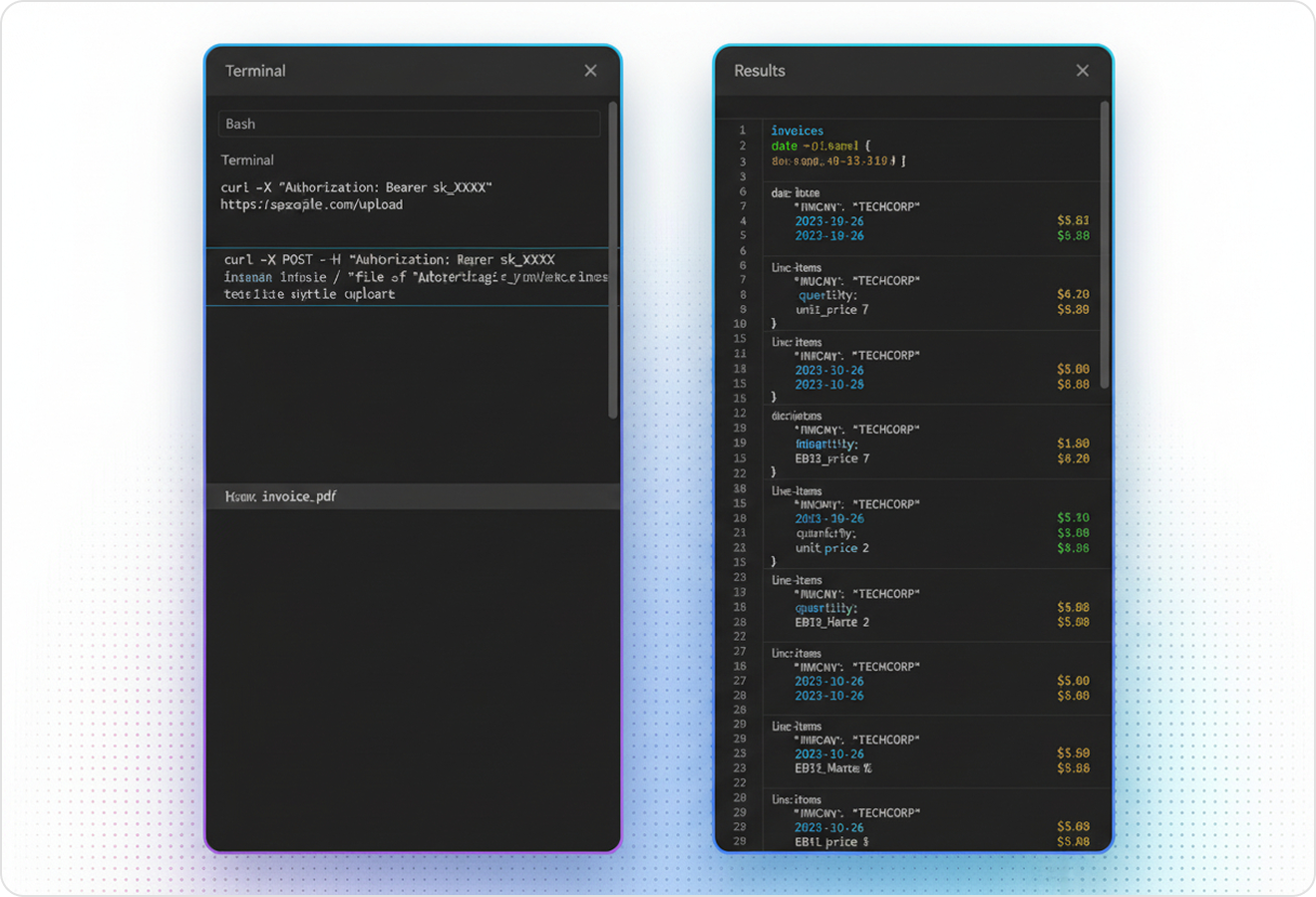
You can guide LlamaParse with plain-English parsing instructions to target the exact fields and output shape your JSON Schema requires. This lets you iterate on schema mappings without brittle regex pipelines, even when vendors label the same concept differently across documents.
04
LlamaParse attaches granular metadata like page numbers, element types, and coordinates to extracted values for traceability. That provenance makes your JSON Schema Extraction API debuggable and auditable, so you can flag low-confidence fields and power human-in-the-loop review when needed.
Technical OCR documentation
Explore our developer guides to easily connect your document pipelines to LlamaParse.
Explore the documentation
Our AI catches the typos that tired eyes miss.

Export to Excel, JSON, XML, or directly via API.

SOC2 Type II compliant with end-to-end encryption.

Train the tool on your specific forms in minutes, not days.

Average processing time of <3 seconds per page.
LlamaParse’s support of a wide variety of filetypes and its accuracy of parsing made it the best tool we tested in our evaluations. The LlamaIndex team was very responsive and we were off to the races within a day.
Common FAQs
01
The API returns JSON-ready structured output with predictable keys and nested objects, making it straightforward to validate against your JSON Schema. You can catch mismatches early and reduce downstream normalization and rework before data is stored or routed.
02
Layout-aware field detection preserves reading order and correctly segments headings, sections, and columns, so fields are less likely to drift when templates change. This helps prevent subtle misassignments that can cause strict schema validations to fail.
03
Yes—use natural-language extraction rules to describe the fields you want and the exact output shape your schema requires. This makes it faster to iterate when labels vary across vendors, without rebuilding your pipeline.
04
How do I audit where a value came from in the source document?
Every extracted value can include verifiable metadata such as page number, element type, and coordinates for traceability. This provenance makes it easier to debug, support audits, and build reliable human-in-the-loop review flows.
05
What happens when a field is ambiguous or the document quality is poor?
You can flag low-confidence or hard-to-locate fields using the attached metadata and citations, then route them for review instead of silently producing incorrect JSON. This helps you maintain schema integrity while keeping the pipeline moving.
06
How quickly can we get to production with our specific schema and documents?
Most teams start by specifying their target schema and writing plain-English extraction instructions for the required fields. Because the API emits clean, structured JSON with traceable citations, you can validate, test, and refine quickly until the output is production-ready.