Nov 14, 2025
Document AI: The Next Evolution of Intelligent Document ProcessingPersona
Industry
Use cases
High Volume Document Processing API
[ High Volume Document Processing API ]

Use LlamaParse to turn messy scans into structured JSON with layout-aware accuracy at scale.
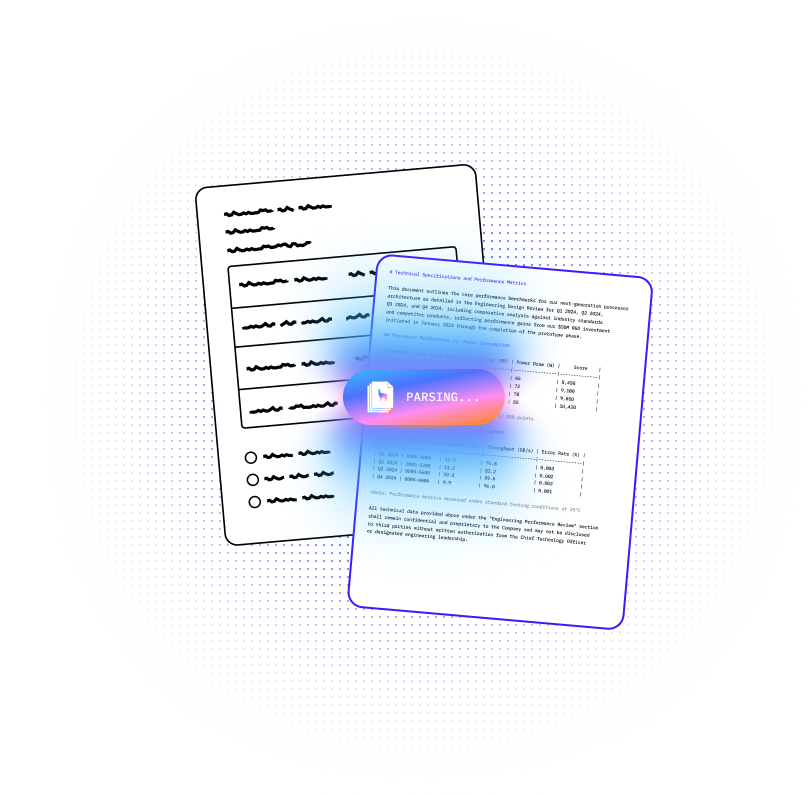
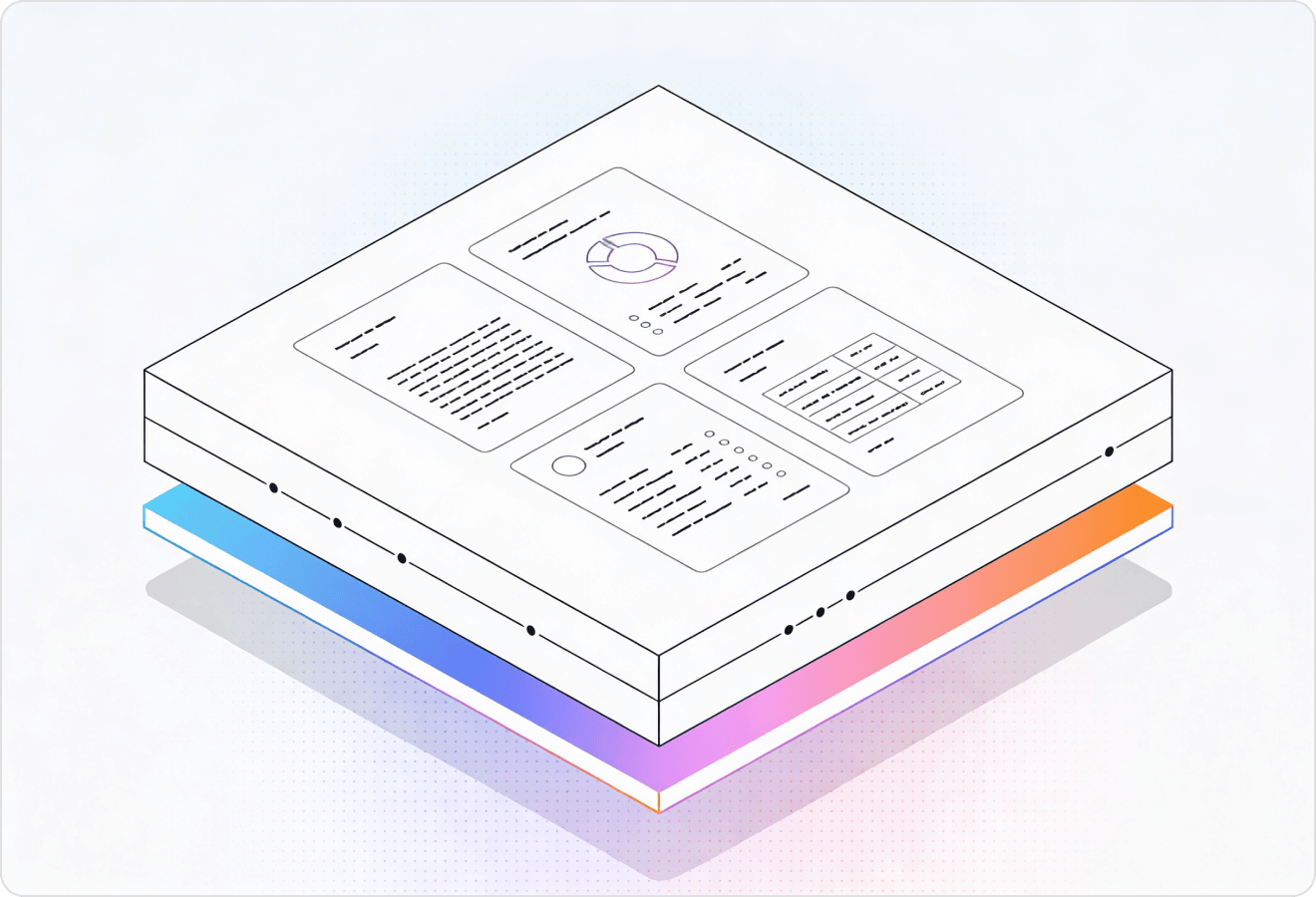

LlamaParse turns thousands of messy PDFs, scans, and forms into clean, structured JSON in minutes, so your pipeline stays fast and predictable. Its agentic document parsing understands layout, tables, and images, then validates outputs with citations and confidence scores for safer automation at scale.
Best-in-Class Accuracy

Turn messy customer PDFs (invoices, contracts, statements) into clean JSON or Markdown via LlamaParse so your product can ship reliable document features without building brittle parsing code. Use natural-language parsing instructions to evolve extraction requirements weekly—without retraining models or rewriting regex every time a template changes.

Automate intake for loan packets by extracting tables, multi-column text, and supporting evidence from bank statements, pay stubs, and tax forms while preserving reading order for audit trails. Return structured outputs with page-level metadata so analysts can verify fields fast and reduce exceptions in underwriting queues.

Parse high-volume bills of lading, customs forms, proof-of-delivery scans, and packing lists where layout shifts constantly across carriers and geographies. Convert embedded tables and stamps into structured records that reconcile shipments faster and cut chargebacks caused by missed line items.

Ingest large sets of contracts, exhibits, and scanned filings and extract clauses, defined terms, and key dates with layout-aware structure that keeps citations anchored to the right page. Use auto-correction loops and verifiable outputs to reduce manual review time while maintaining defensible traceability for client and court workflows.
The Solution
01
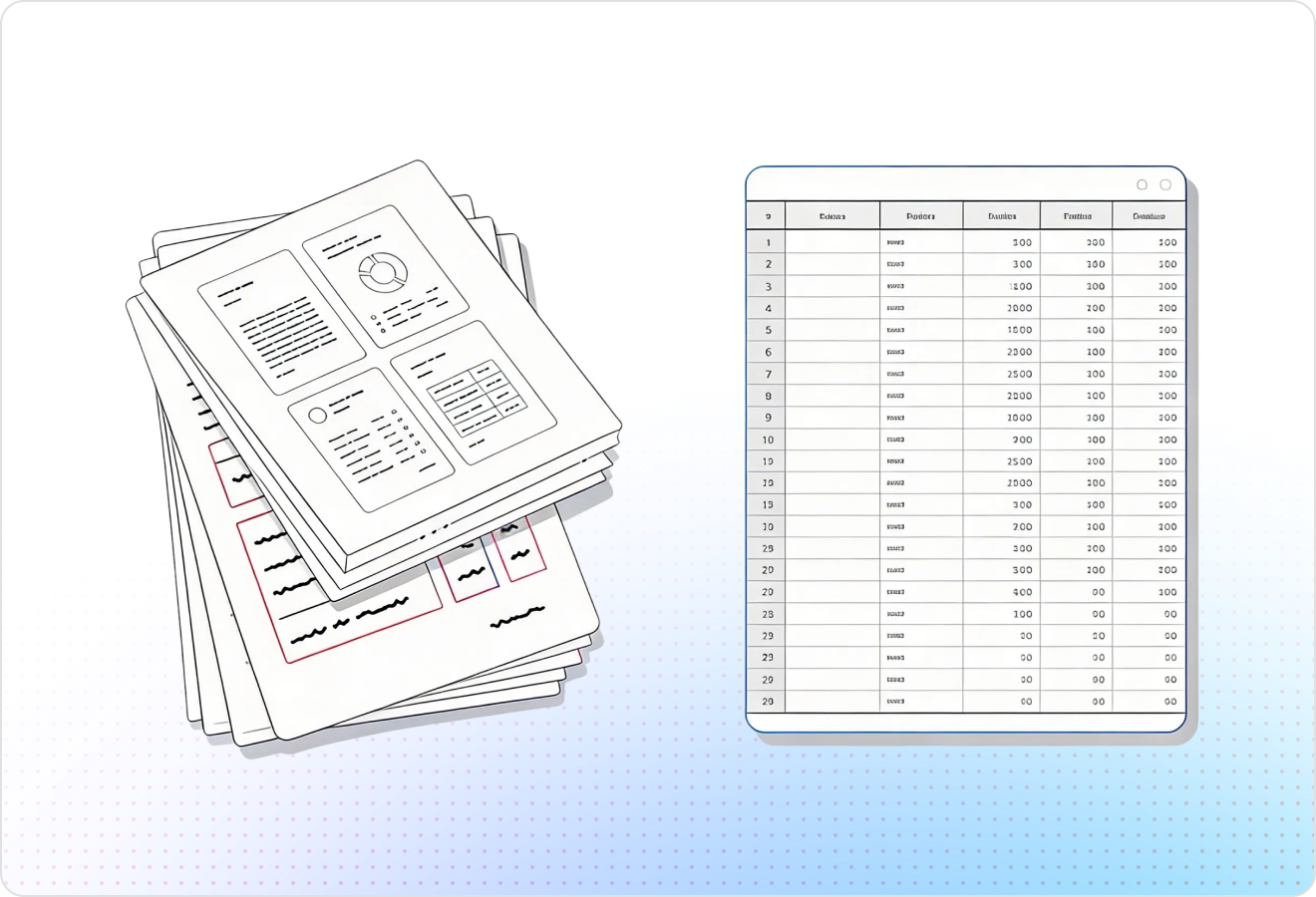
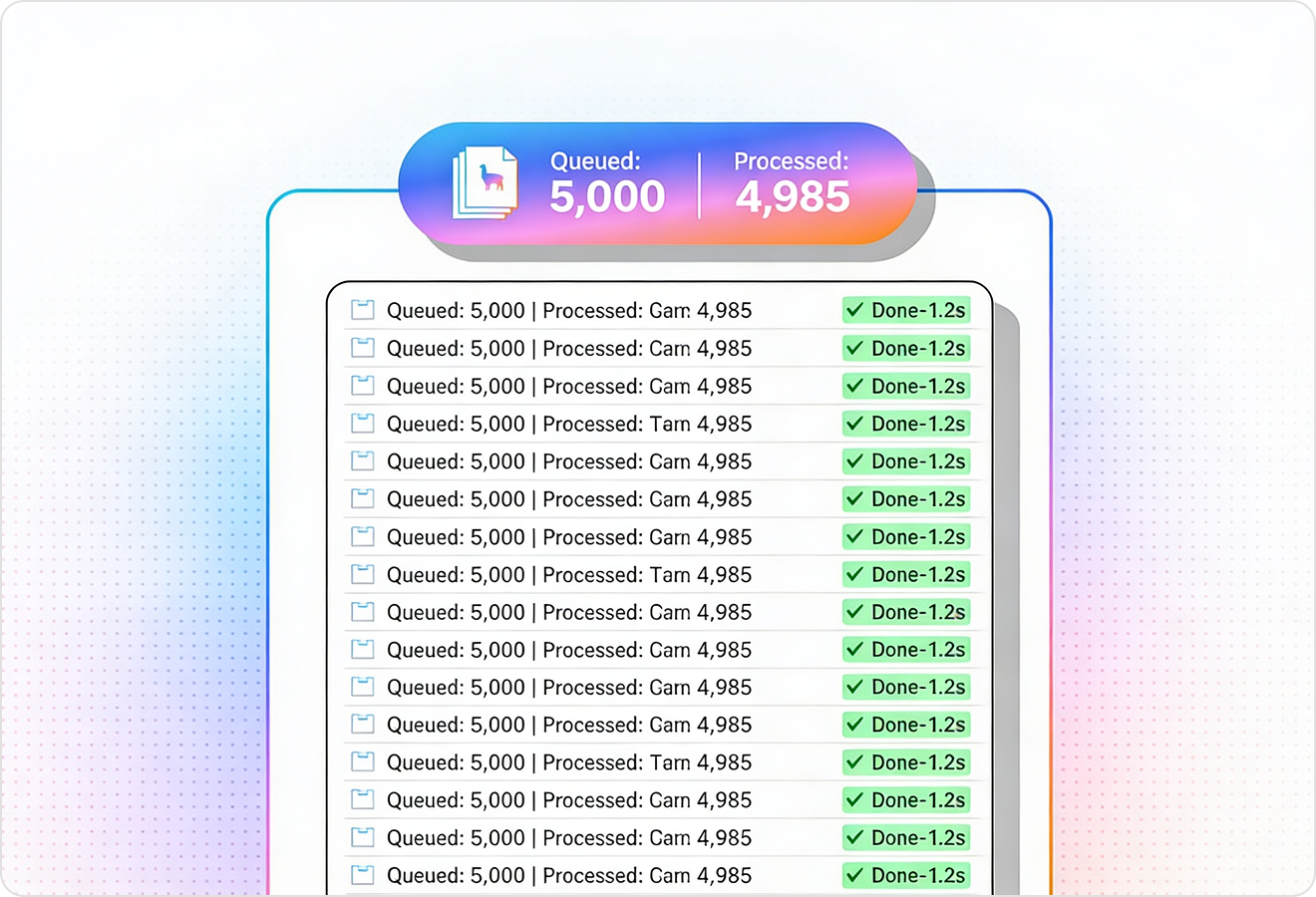
Submit large batches of PDFs and office docs to LlamaParse via a developer-friendly API that’s designed for production ingestion. This keeps high-volume pipelines moving without building a fragile, file-type-specific parsing stack in-house.
02
LlamaParse can automatically route simple pages through faster, lower-cost processing while escalating only the tricky pages to more capable vision and language models. That means you can sustain high volume throughput while keeping per-document costs predictable.
03
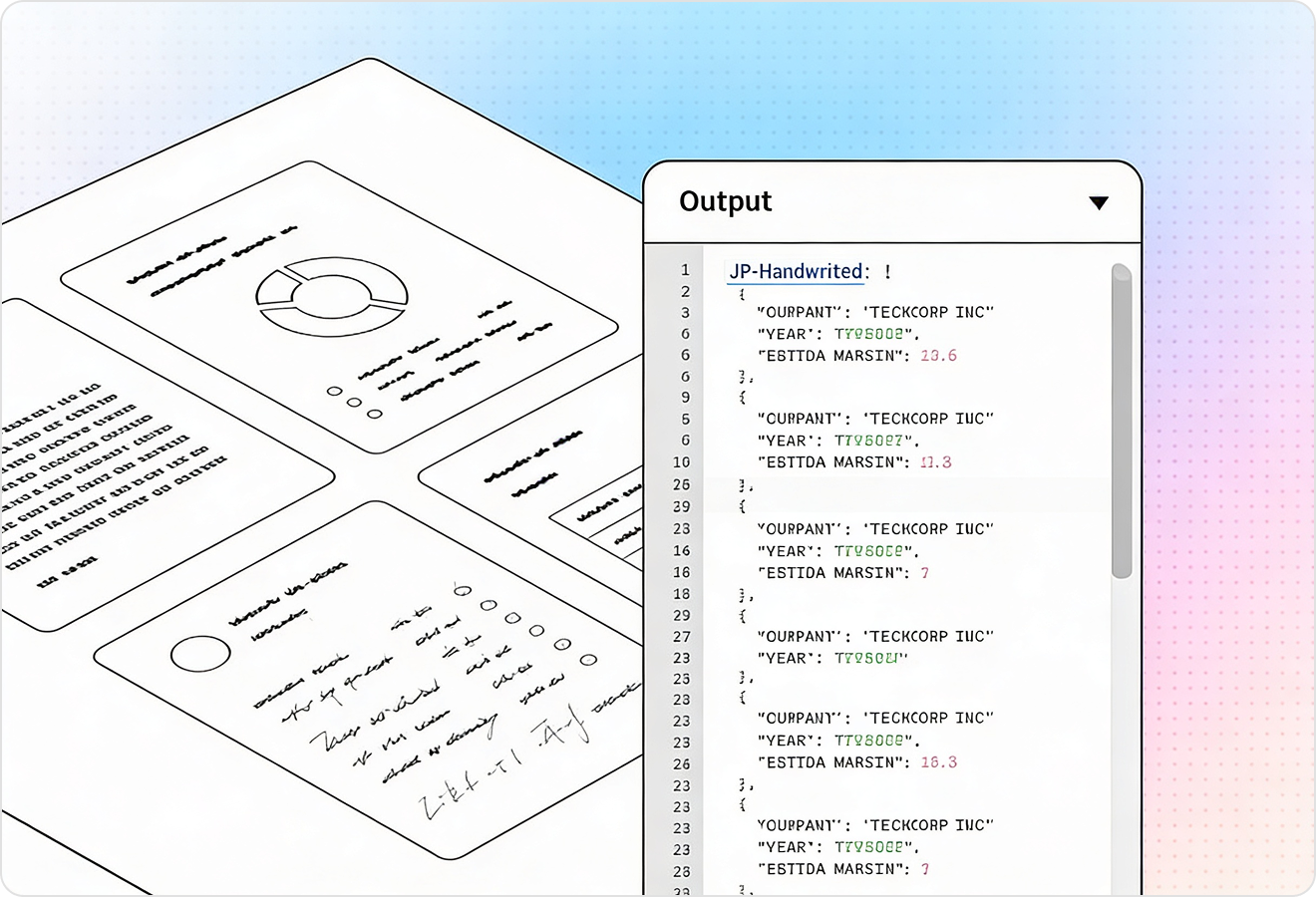
LlamaParse understands page structure—tables, multi-column text, headers/footers—and reconstructs content in a reliable reading order. At scale, this prevents the downstream cleanup work that usually explodes when traditional OCR outputs get scrambled.
04
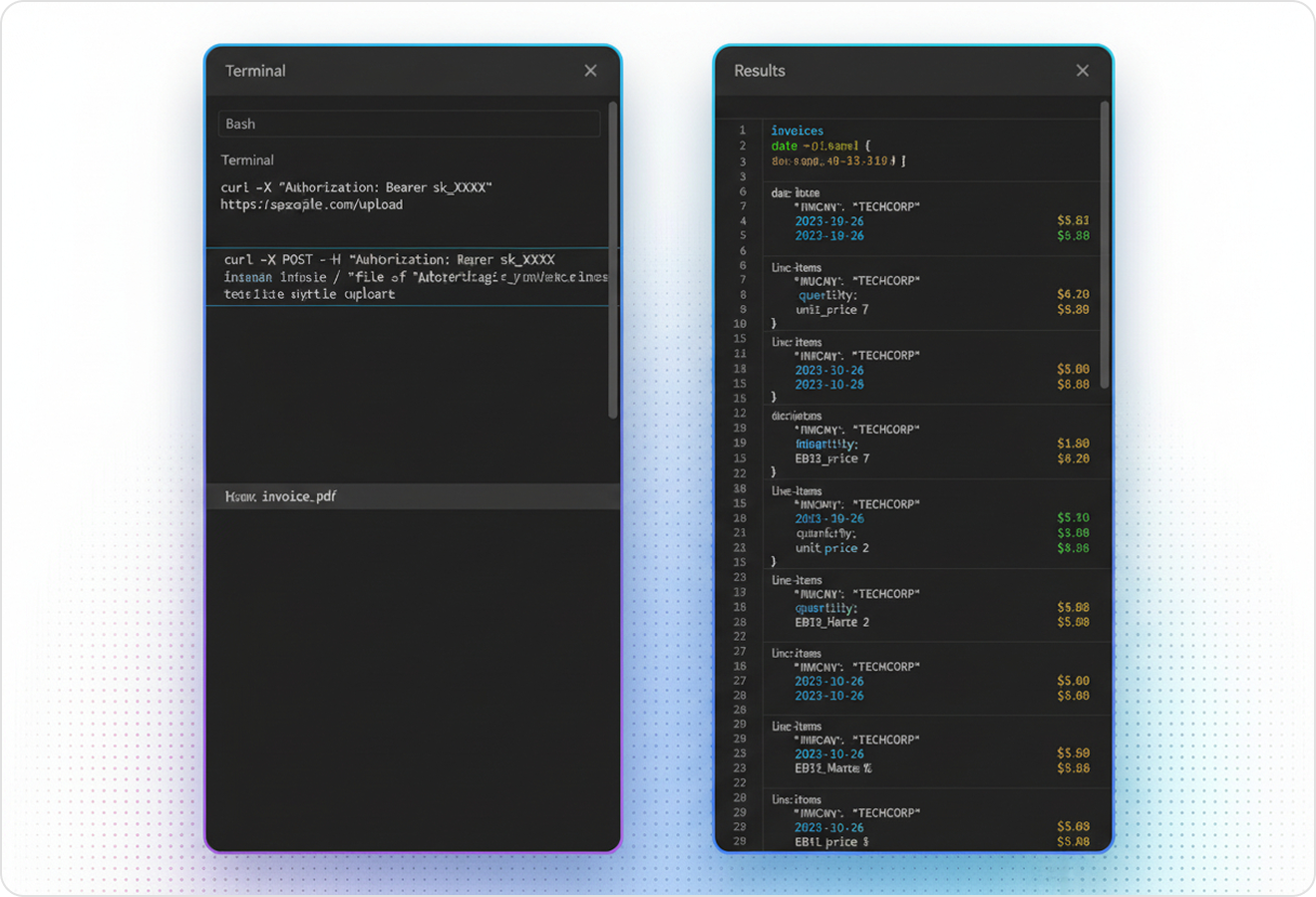
Return structured JSON with rich metadata like page numbers, element types, and coordinates for each extracted chunk. This makes high-volume processing auditable and easy to route into databases, queues, and validation workflows without guesswork.
Technical OCR documentation
Explore our developer guides to easily connect your document pipelines to LlamaParse.
Explore the documentation
Our AI catches the typos that tired eyes miss.

Export to Excel, JSON, XML, or directly via API.

SOC2 Type II compliant with end-to-end encryption.

Train the tool on your specific forms in minutes, not days.

Average processing time of <3 seconds per page.
LlamaParse’s support of a wide variety of filetypes and its accuracy of parsing made it the best tool we tested in our evaluations. The LlamaIndex team was very responsive and we were off to the races within a day.
Common FAQs
01
You can submit large batches of PDFs and office documents through a production-ready API built for sustained throughput. It’s designed to keep pipelines moving reliably so you don’t have to maintain a brittle, file-type-specific parsing stack in-house.
02
The API is built to ingest common document formats like PDFs and office docs through a single consistent interface. That means fewer edge-case workflows and less time spent maintaining format-specific parsing logic.
03
Auto Tier Model Routing sends straightforward pages through faster, lower-cost processing and escalates only complex pages to more capable vision and language models. You get high throughput without paying premium rates on every page.
04
How accurate is table extraction for multi-column layouts and complex page structure?
Layout-aware parsing detects tables, headers/footers, and multi-column text and reconstructs content in a reliable reading order. This reduces the “scrambled OCR” problem that often creates expensive downstream cleanup and rework.
05
What does the output look like, and can we audit what was extracted?
You receive structured JSON enriched with metadata such as page numbers, element types, and coordinates for each extracted chunk. That makes results easier to verify, trace back to the source, and route into validation or review workflows.
06
Can we plug this into our existing data stack (queues, databases, and review tools)?
Yes—JSON output with consistent metadata is designed for straightforward ingestion into databases, message queues, and downstream processors. Teams typically integrate it quickly without writing custom glue code for every document type or layout.