Nov 14, 2025
Document AI: The Next Evolution of Intelligent Document ProcessingPersona
Industry
Use cases
Certificate Of Free Sale OCR
[ Certificate Of Free Sale OCR ]

Use LlamaParse to capture fields, tables, and stamps into clean JSON you can trust.
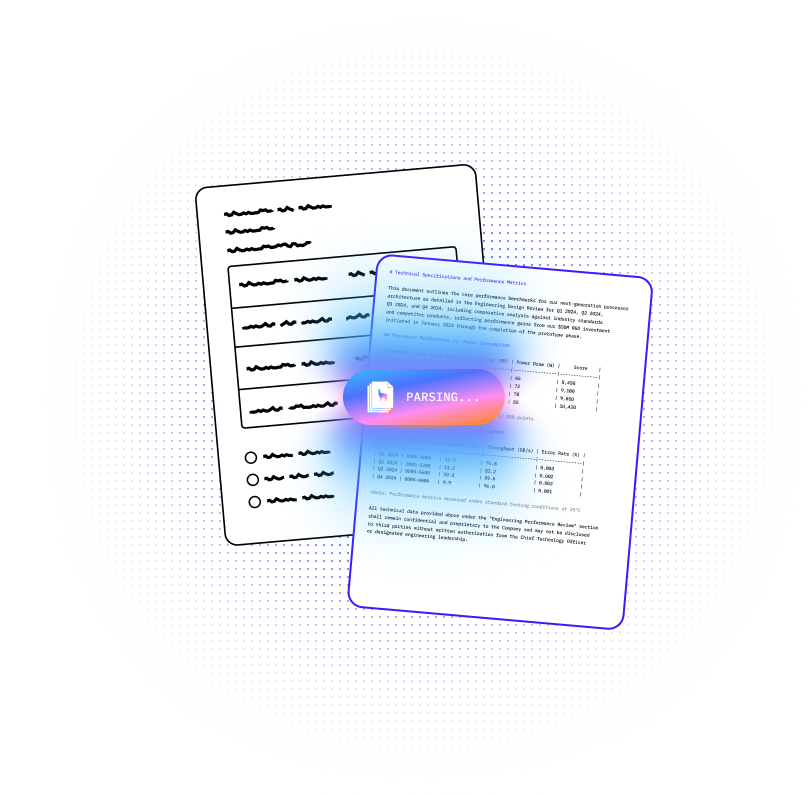


LlamaParse turns messy certificates of free sale into clean, structured JSON or Markdown, capturing key fields like product, manufacturer, and issuing authority. Agentic document parsing stays layout-aware, validates outputs with confidence metadata, and reduces rework when templates change across countries or agencies.
Best-in-Class Accuracy

Parse Certificates of Free Sale into structured JSON with page-level citations so brokers can auto-populate customs entries, HS documentation packets, and destination-country checklists without manual rekeying. LlamaParse preserves stamps, headers, and multi-column regulatory tables, reducing clearance delays caused by missing fields or misread lot/manufacturer details.

Extract product names, manufacturing sites, batch/lot identifiers, and authority signatures from Certificates of Free Sale to automatically assemble export dossiers and customer-required compliance bundles. With layout-aware table extraction, LlamaParse keeps ingredient and SKU matrices intact, preventing shipment holds triggered by scrambled line items or incomplete supporting docs.

Convert Certificates of Free Sale into audit-ready records by capturing issuing authority data, device/drug identifiers, and validity dates with confidence metadata for rapid QA review. LlamaParse handles poor scans, seals, and embedded annex tables, enabling faster market-entry documentation and fewer QA exceptions during partner onboarding.

Ship a production-grade ingestion layer for Certificates of Free Sale using LlamaParse APIs, turning messy PDFs into clean Markdown/JSON that plugs directly into document agents and workflow automation. Use natural-language parsing instructions and tier-based processing to hit accuracy targets on hard pages while keeping unit economics predictable as volumes scale.
The Solution
01
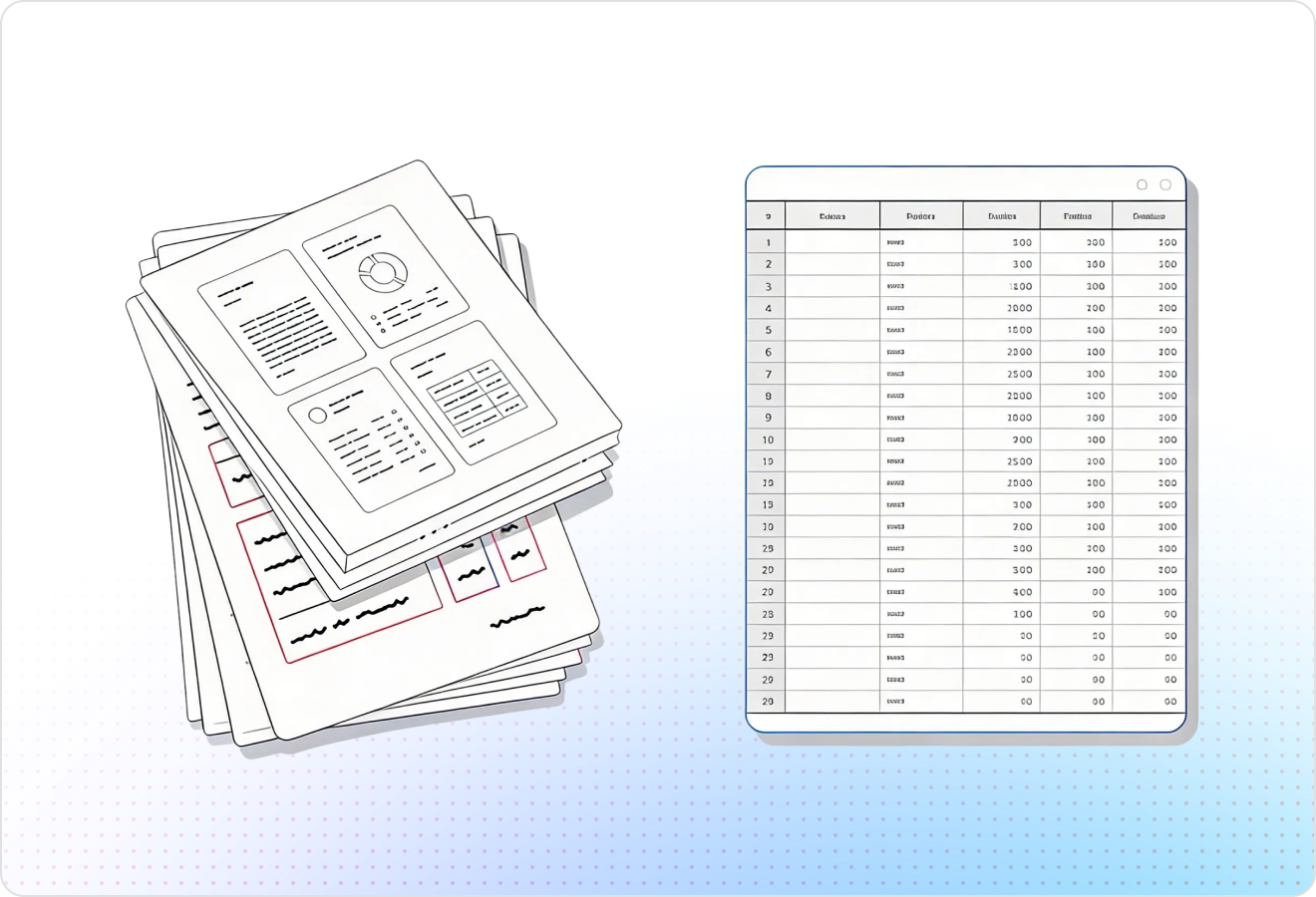
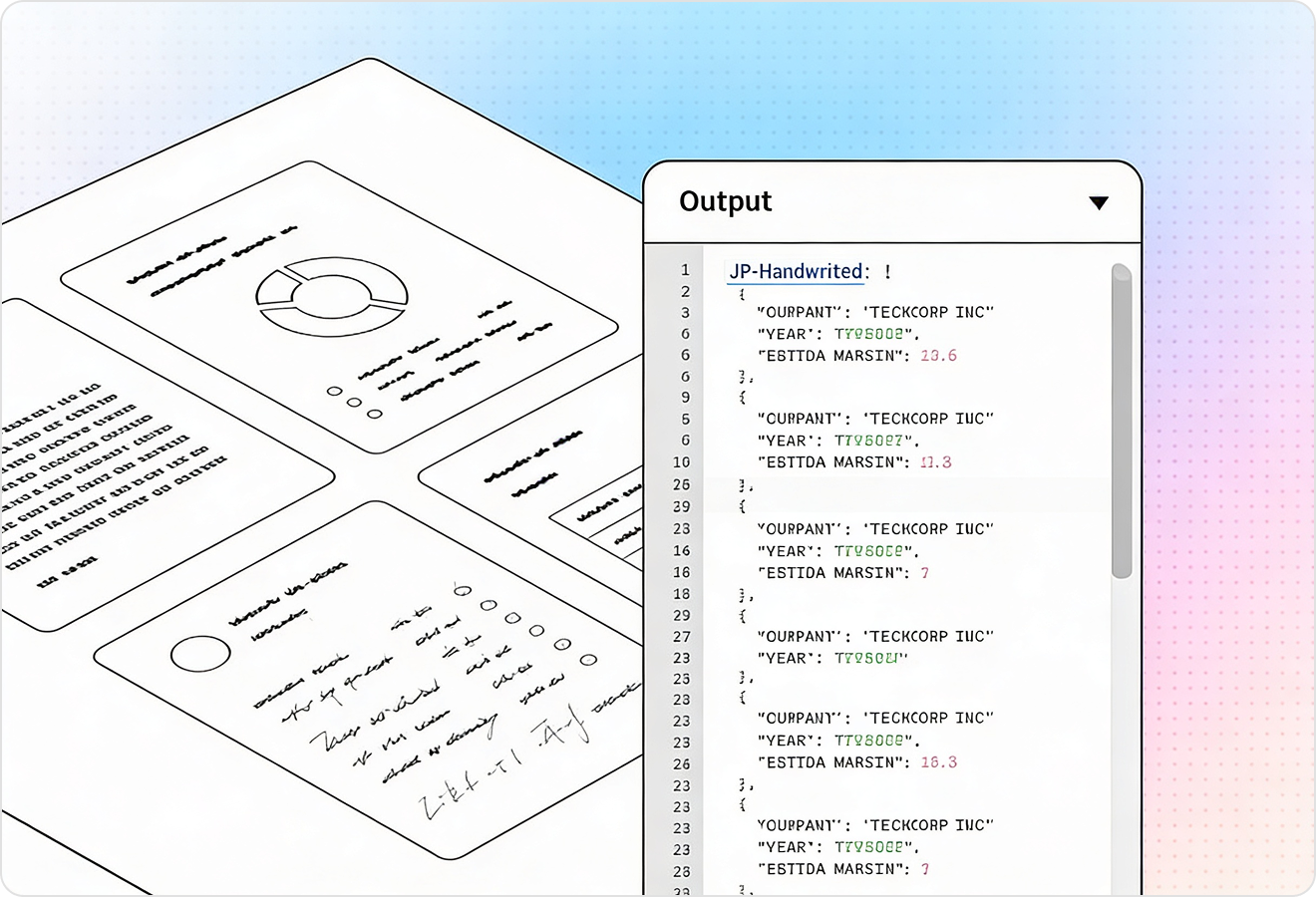
LlamaParse detects layout elements like headers, stamps, footers, and multi-column blocks so text stays in the correct reading order. For Certificates of Free Sale, this prevents common OCR-style scrambling and helps you reliably capture issuer details, product names, certificate numbers, and dates from inconsistent templates.
02
LlamaParse extracts tables and structured sections without flattening rows or dropping cells, then reconstructs them into clean Markdown or structured output. This is useful when a Certificate of Free Sale includes product line items, HS codes, manufacturer addresses, or batch/lot listings that need to land correctly in downstream compliance systems.
03
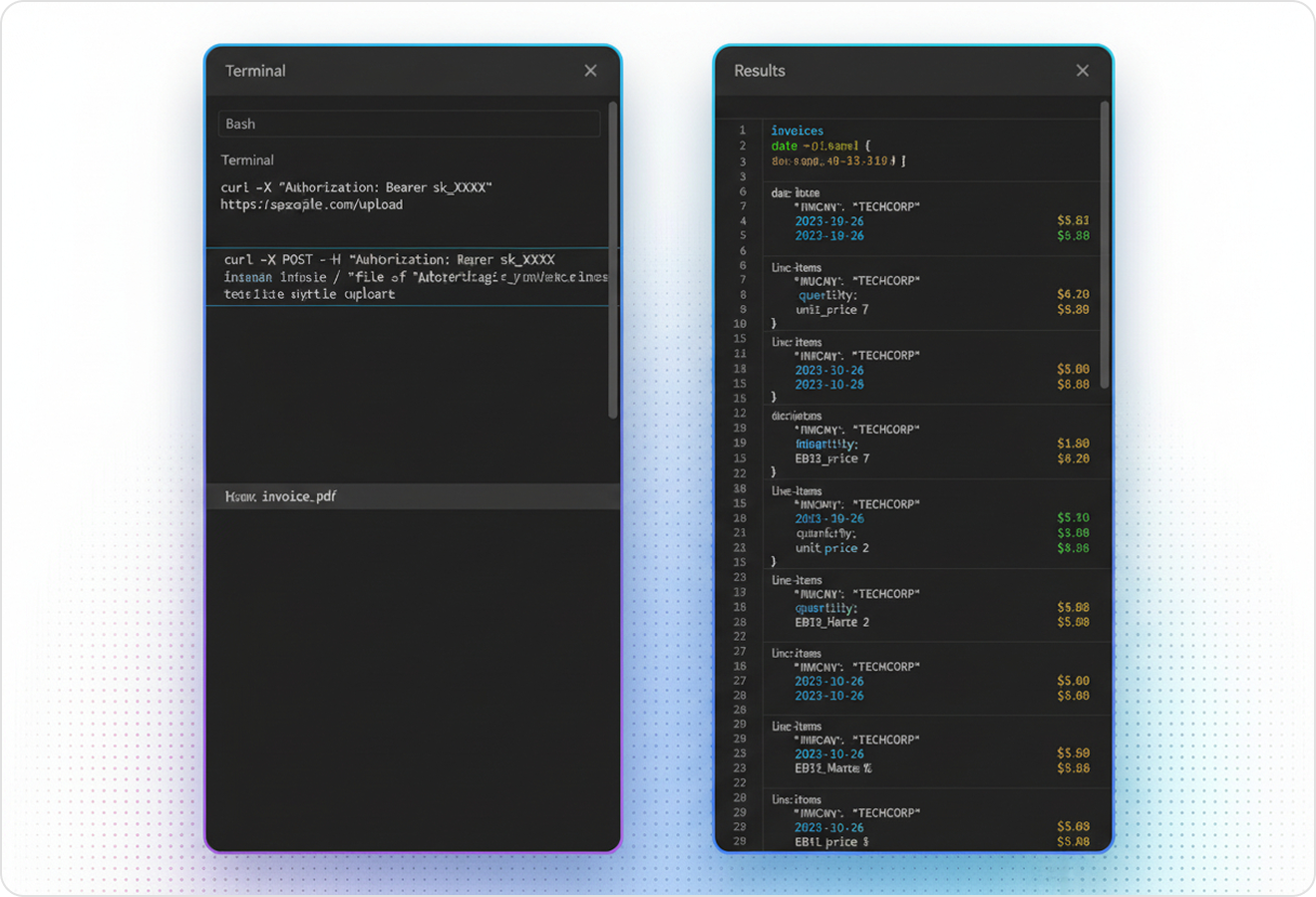
LlamaParse can return structured JSON alongside granular metadata like page number and element coordinates for traceability. For Certificate of Free Sale processing, you can map extracted values into your schema and keep citations for audit-friendly review when a regulator or QA team asks where a specific field came from.
04
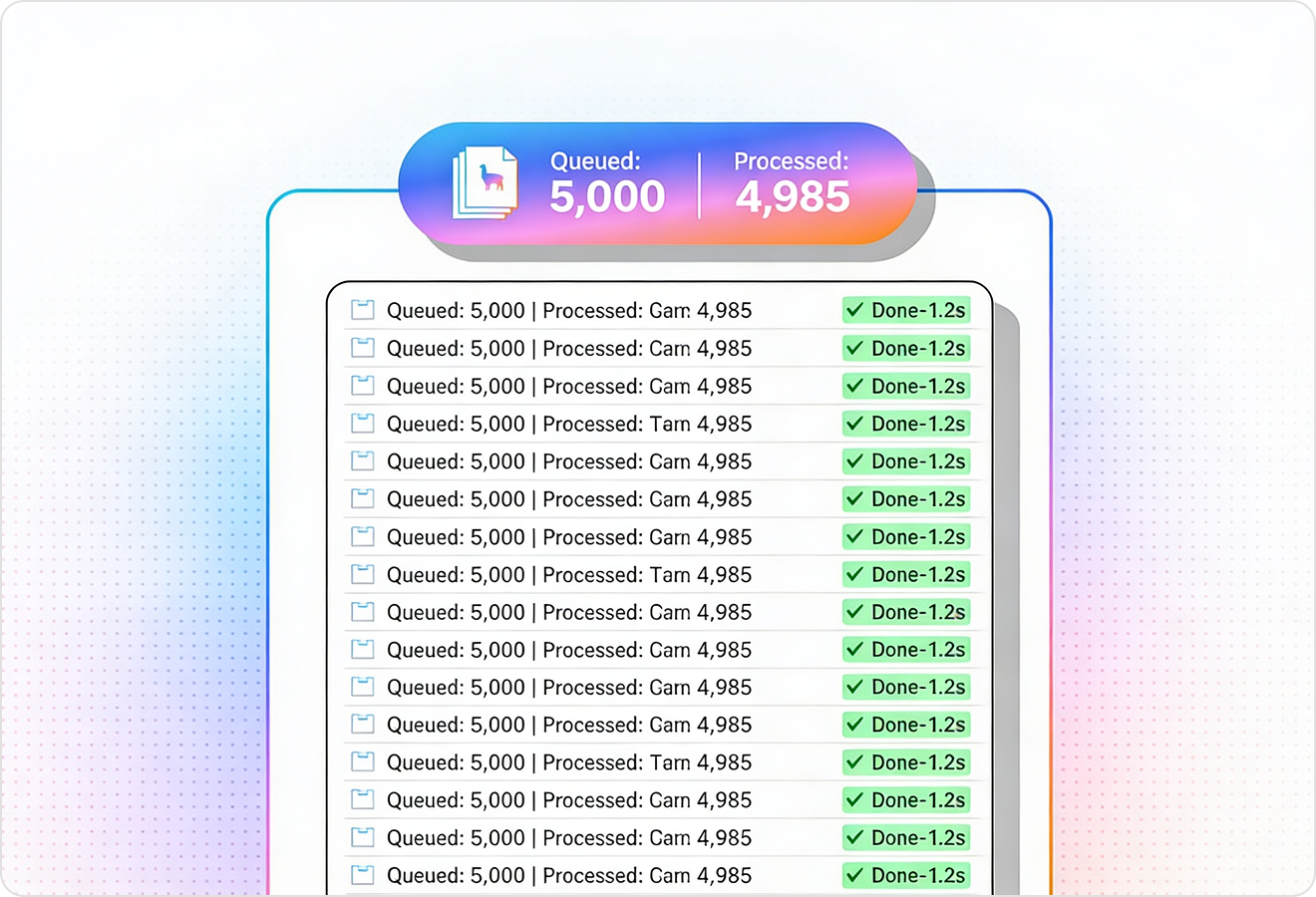
LlamaParse uses self-correction and validation passes to catch extraction errors and reconcile conflicts before returning results. On scanned Certificates of Free Sale with faint seals, skew, or low resolution, this reduces manual rework and improves straight-through processing for high-volume intake.
Technical OCR documentation
Explore our developer guides to easily connect your document pipelines to LlamaParse.
Explore the documentation
Our AI catches the typos that tired eyes miss.

Export to Excel, JSON, XML, or directly via API.

SOC2 Type II compliant with end-to-end encryption.

Train the tool on your specific forms in minutes, not days.

Average processing time of <3 seconds per page.
LlamaParse’s support of a wide variety of filetypes and its accuracy of parsing made it the best tool we tested in our evaluations. The LlamaIndex team was very responsive and we were off to the races within a day.
Common FAQs
01
Our layout-aware capture preserves reading order across headers, stamps, footers, and multi-column sections, so fields don’t get mixed together. That means you can reliably extract issuer details, certificate numbers, product names, and dates even when templates vary by country or agency.
02
Yes—tables and structured blocks are extracted without collapsing rows or dropping cells, then reconstructed into clean Markdown or structured output. This makes it easy to pass line items, HS codes, and address details into your compliance, ERP, or trade documentation systems.
03
You can output structured JSON that fits your schema, making downstream automation straightforward. This is ideal for consistently populating fields like certificate number, issuer, product list, country of origin, and issue/expiry dates.
04
How do citations work for audits or regulator questions?
Each extracted value can include traceable citations like page number and element coordinates, so reviewers can quickly verify where the data came from. This reduces back-and-forth during QA and supports audit-friendly documentation when regulators request proof.
05
What if the certificate scan is low-quality—faint seals, skewed pages, or low resolution?
Auto validation loops run self-correction and reconciliation passes to catch common extraction errors before results are returned. That typically means fewer manual fixes and higher straight-through processing rates for high-volume intake.
06
How quickly can we integrate this into our existing intake workflow?
Most teams start by sending PDFs or images and receiving structured output (JSON/Markdown) to plug into existing review or compliance steps. Because the output is consistent and traceable, you can begin with a pilot on a few templates and scale once accuracy meets your acceptance criteria.