Nov 14, 2025
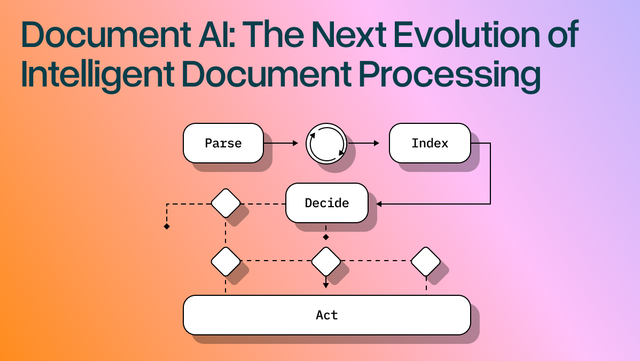
Document AI: The Next Evolution of Intelligent Document ProcessingPersona
Industry
Use cases
Go Document Parser
[ Go Document Parser ]

Turn messy PDFs into clean JSON with LlamaParse, so your Go pipeline stays reliable.
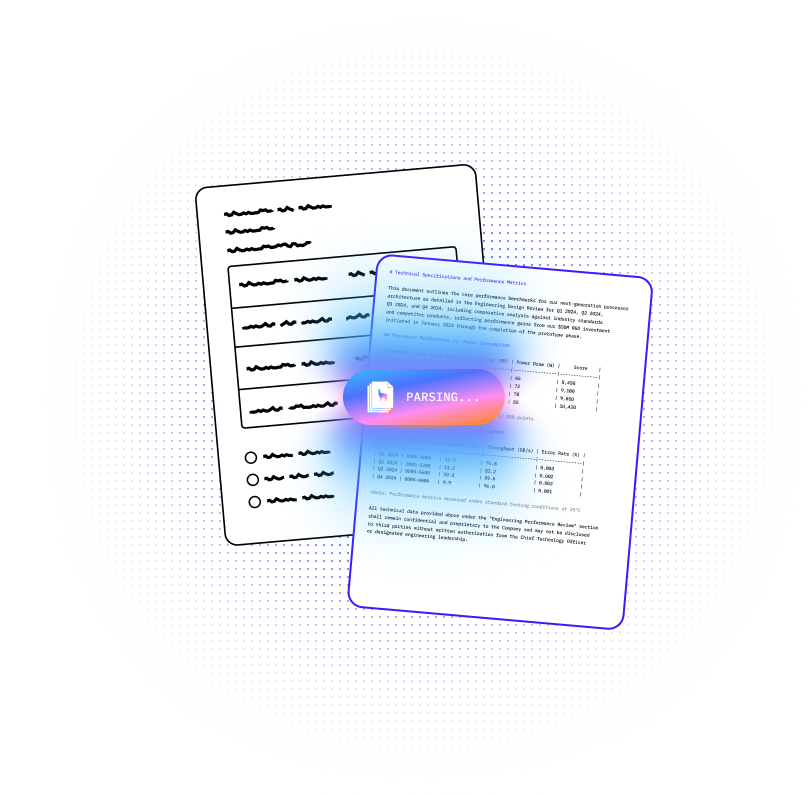
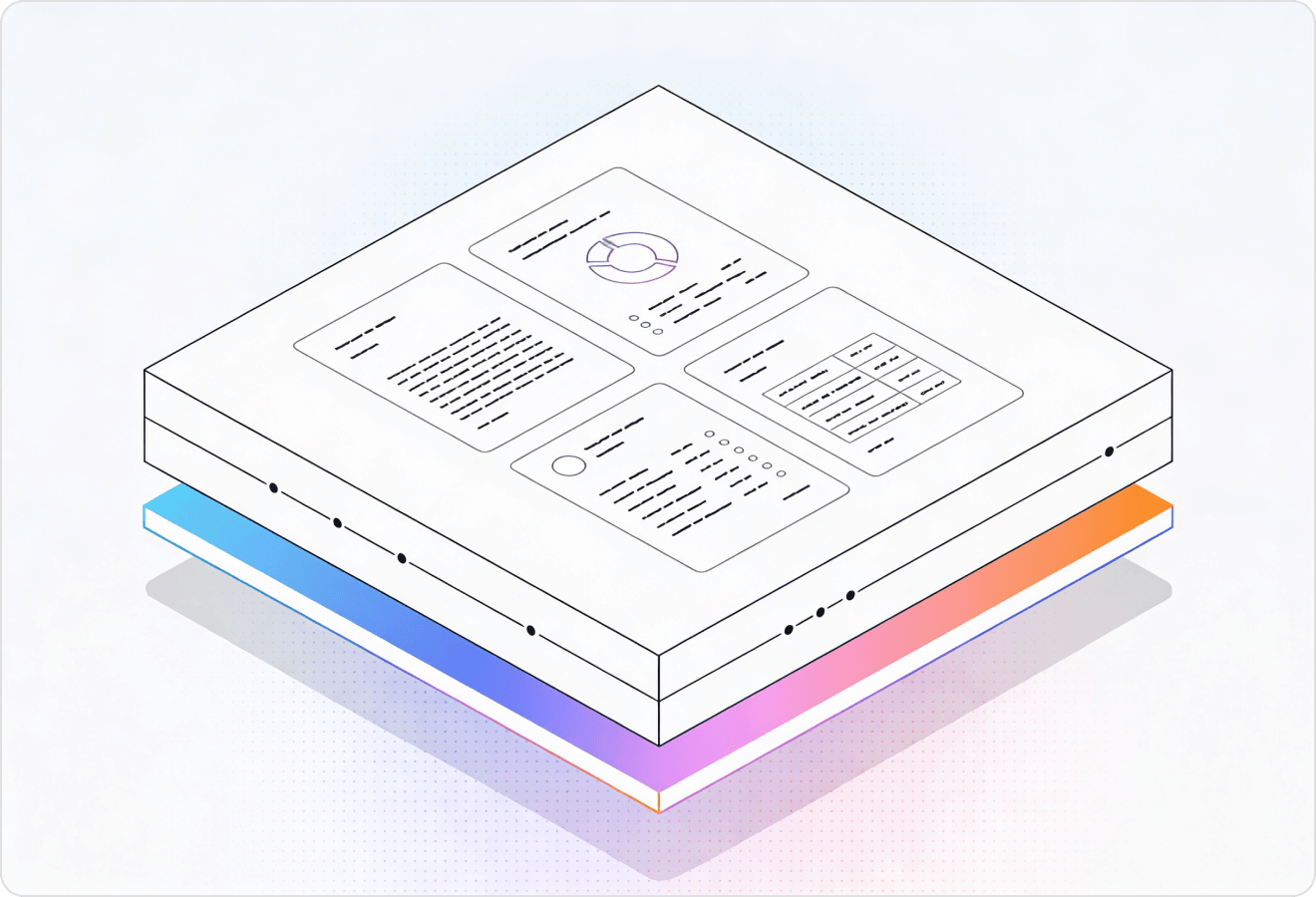

LlamaParse turns messy PDFs, scans, and multi-column reports into clean AI-ready Markdown and JSON your Go services can trust. It uses agentic document parsing to understand layout, tables, and charts, returning verifiable structured outputs that reduce brittle post-processing.
Best-in-Class Accuracy

Turn messy customer PDFs, inbound forms, and contract packets into clean Markdown/JSON in days, not weeks, so your team can ship product without building brittle parsing code. Natural-language parsing instructions and tier-based routing keep extraction flexible as formats change while controlling spend as volume spikes.

Parse borrower packages—bank statements, tax returns, pay stubs, and multi-page applications—into structured fields while preserving table integrity and reading order for underwriting workflows. JSON mode with page-level metadata and confidence scores enables faster exception handling and audit-ready traceability when regulators ask “where did this number come from?”

Extract line items and totals from invoices, packing lists, and bills of lading that include multi-column tables, stamps, and inconsistent templates, reducing manual keying in AP and receiving. Layout-aware structure plus auto-correction loops prevent scrambled SKUs and quantities that cause shipment holds, chargebacks, and reconciliation delays.

Convert adjuster reports, loss runs, medical bills, and photographed damage estimates into consistent, AI-ready outputs that capture both text and visual context like diagrams and tables. Multimodal parsing and cost-optimized routing help teams triage claims faster and reserve heavier processing only for the hardest documents.
The Solution
01
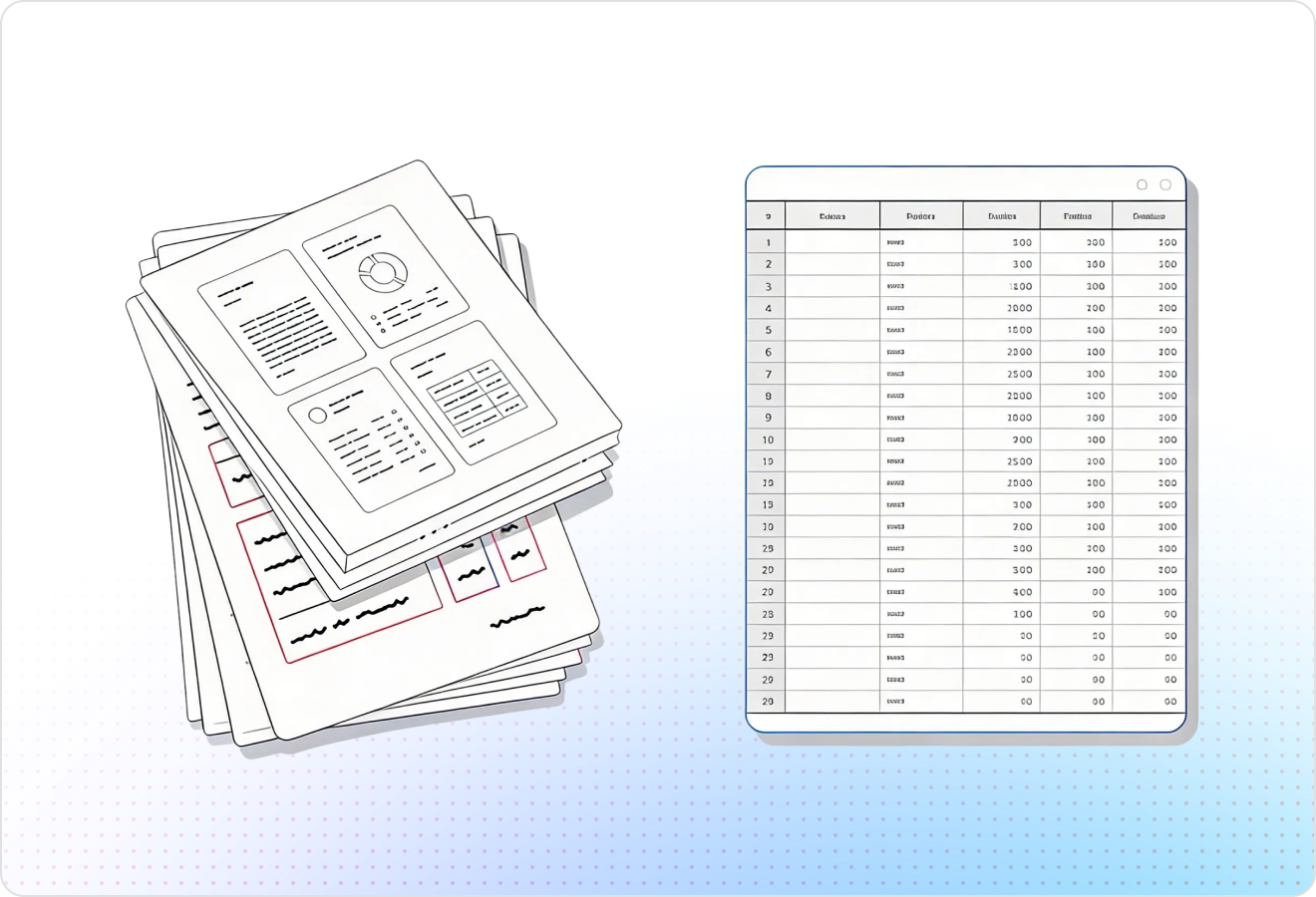
LlamaParse understands page layout so multi-column PDFs, headers/footers, and section breaks come back in the right reading order. For a Go document parser, this means you can safely ingest specs and design docs without writing brittle cleanup code to un-scramble text.
02
LlamaParse pulls tables as real structured content instead of flattened lines, preserving rows, columns, and cell boundaries. That makes it practical to parse price lists, reports, and requirements matrices in Go and feed clean tables into your downstream services.
03
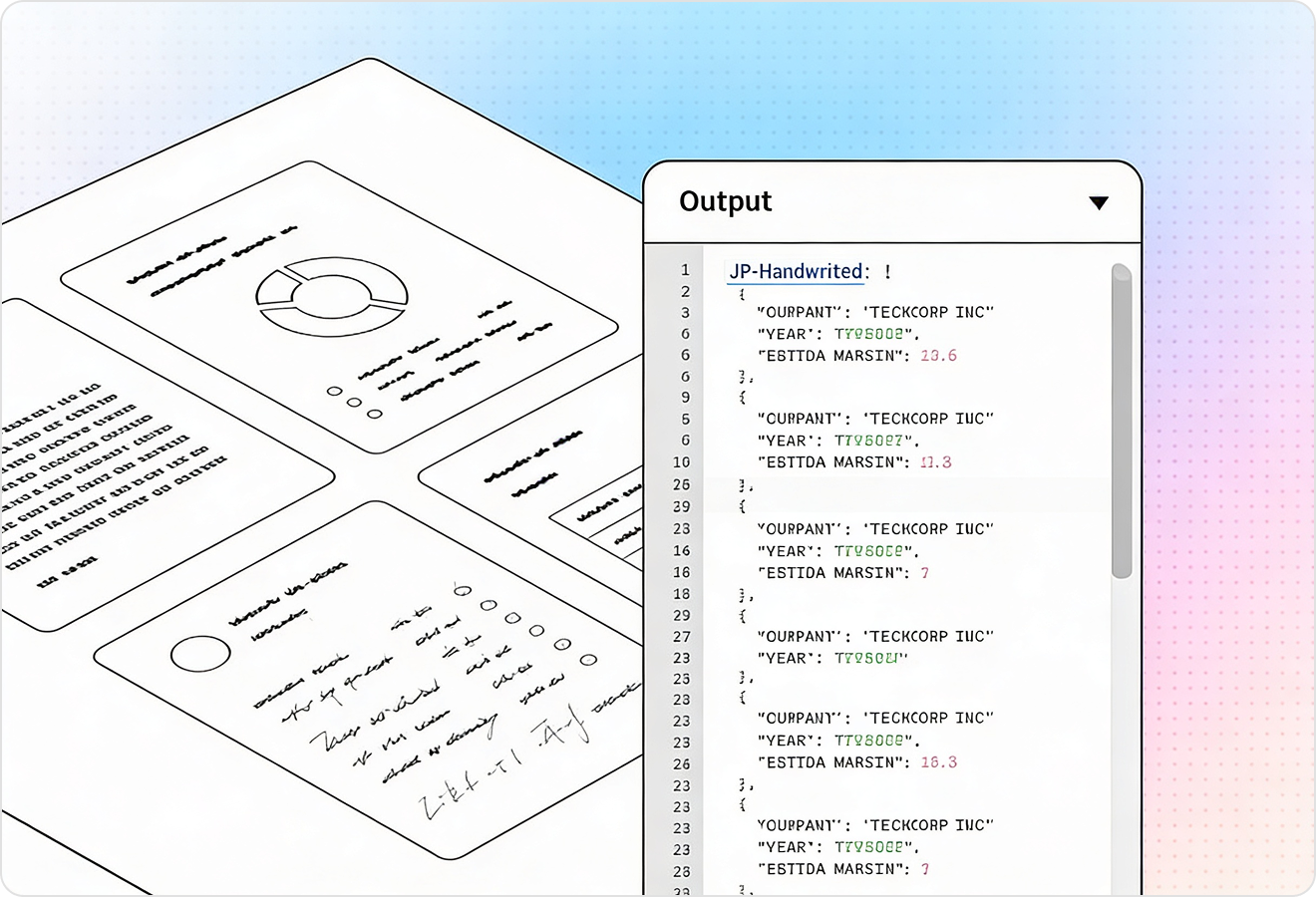
LlamaParse can emit structured JSON with rich metadata like page numbers, element types, and spatial coordinates for each extracted block. In a Go pipeline, this gives you predictable schemas for APIs and the traceability needed to debug or validate extractions against the source document.
04
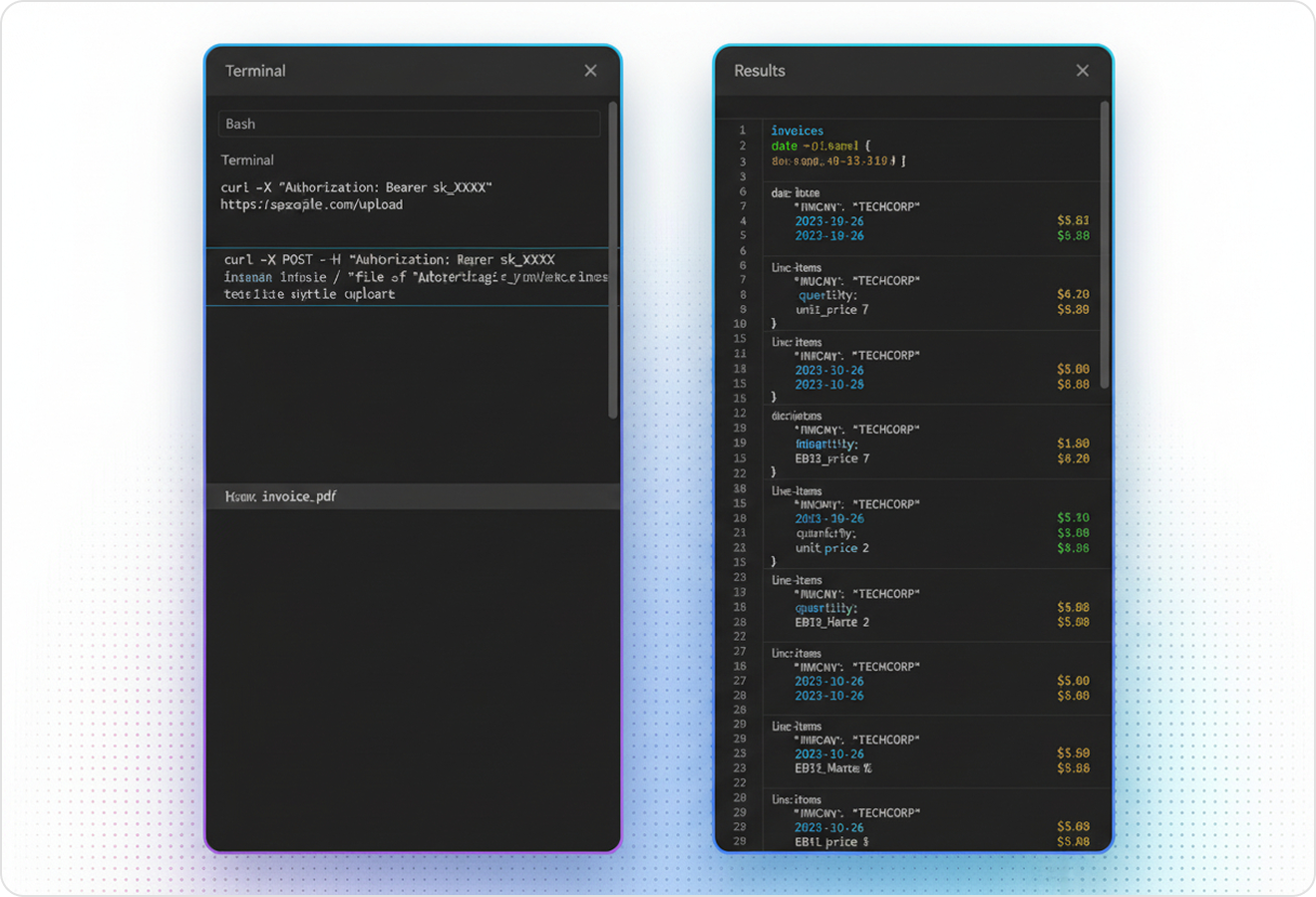
LlamaParse exposes simple REST endpoints so you can call it directly from Go without adopting a new framework. This keeps your document parser architecture straightforward: upload files, poll for results, and stream parsed outputs into your storage and processing jobs.
Technical OCR documentation
Explore our developer guides to easily connect your document pipelines to LlamaParse.
Explore the documentation
Our AI catches the typos that tired eyes miss.

Export to Excel, JSON, XML, or directly via API.

SOC2 Type II compliant with end-to-end encryption.

Train the tool on your specific forms in minutes, not days.

Average processing time of <3 seconds per page.
LlamaParse’s support of a wide variety of filetypes and its accuracy of parsing made it the best tool we tested in our evaluations. The LlamaIndex team was very responsive and we were off to the races within a day.
Common FAQs
01
It’s layout-aware, so it reconstructs the correct reading order across columns, headers/footers, and section breaks. That means your Go pipeline can ingest specs and design docs without brittle post-processing to fix scrambled text.
02
Tables are extracted as real structured content with rows, columns, and cell boundaries preserved. You can reliably turn price lists, reports, and requirement matrices into clean data structures for downstream services.
03
Yes—JSON mode includes rich metadata like page numbers, element types, and spatial coordinates for each block. This gives your Go services predictable schemas and the traceability to validate results against the original document.
04
How do I integrate it into an existing Go service without changing my architecture?
You call simple REST endpoints: upload a file, poll for completion, then fetch the parsed output. It fits neatly into common Go patterns (workers, queues, and storage pipelines) without adding a new framework.
05
How reliable is parsing across different document types like specs, reports, and scanned PDFs?
It’s designed to handle real-world PDFs, including complex formatting and table-heavy reports, while keeping content in the right order. For scanned documents, results depend on source quality—using clearer scans improves accuracy and reduces manual cleanup.
06
What does the typical processing flow look like for production workloads in Go?
Most teams upload documents asynchronously, poll for status, and stream results into storage or indexing jobs once ready. This approach keeps latency off your request path and makes it easy to scale parsing with your existing Go workers.