Nov 14, 2025
Document AI: The Next Evolution of Intelligent Document ProcessingPersona
Industry
Use cases
Price List OCR
[ Price List OCR ]

Use LlamaParse to turn messy price lists into validated, layout-aware JSON your systems can trust.
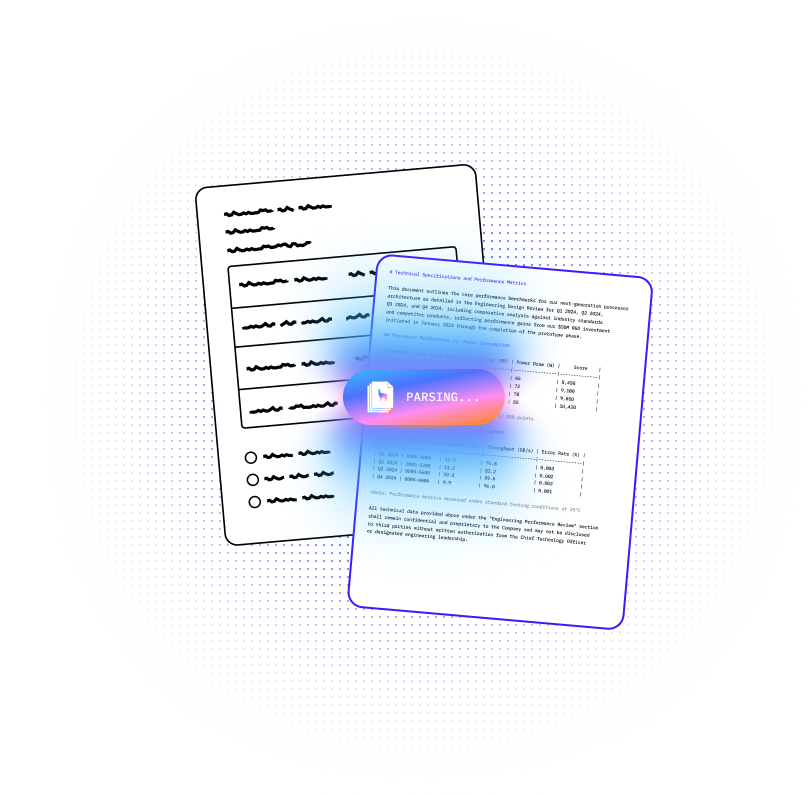

LlamaParse turns messy supplier price lists and PDFs into clean, structured line items your systems can actually ingest, without brittle templates. Its agentic document parsing understands tables, SKUs, units, and tiered pricing, then returns verifiable JSON or Markdown for faster updates.
Best-in-Class Accuracy

Use LlamaParse to turn multi-page supplier price lists into clean, layout-faithful JSON and Markdown, including nested tables, SKUs, unit breaks, and MOQ tiers that traditional OCR scrambles. Automatically feed the extracted data into ERP and purchasing workflows so buyers can compare vendors, detect price changes, and create POs without manual re-keying.

Parse vendor catalogs and seasonal price sheets into structured product and cost data, even when discounts are embedded in complex tables with footnotes and multi-column layouts. Keep item costs, promo rules, and pack sizes synced to POS and eCommerce systems to prevent margin erosion and reduce pricing exceptions at checkout.

Convert subcontractor and supplier price books into normalized line-item data (material, labor, alternates, and escalation clauses) while preserving table structure and reading order. Push the output into estimating and bid platforms to speed takeoffs, improve quote accuracy, and reduce change-order disputes caused by missed pricing details.

Stand up a price-intelligence pipeline in days by using LlamaParse with natural-language parsing instructions to extract competitor pricing tiers, add-ons, and usage limits into a schema your app can query. Build automated monitoring and alerts for pricing changes without writing brittle regex or constantly fixing broken traditional OCR when layouts shift.
The Solution
01
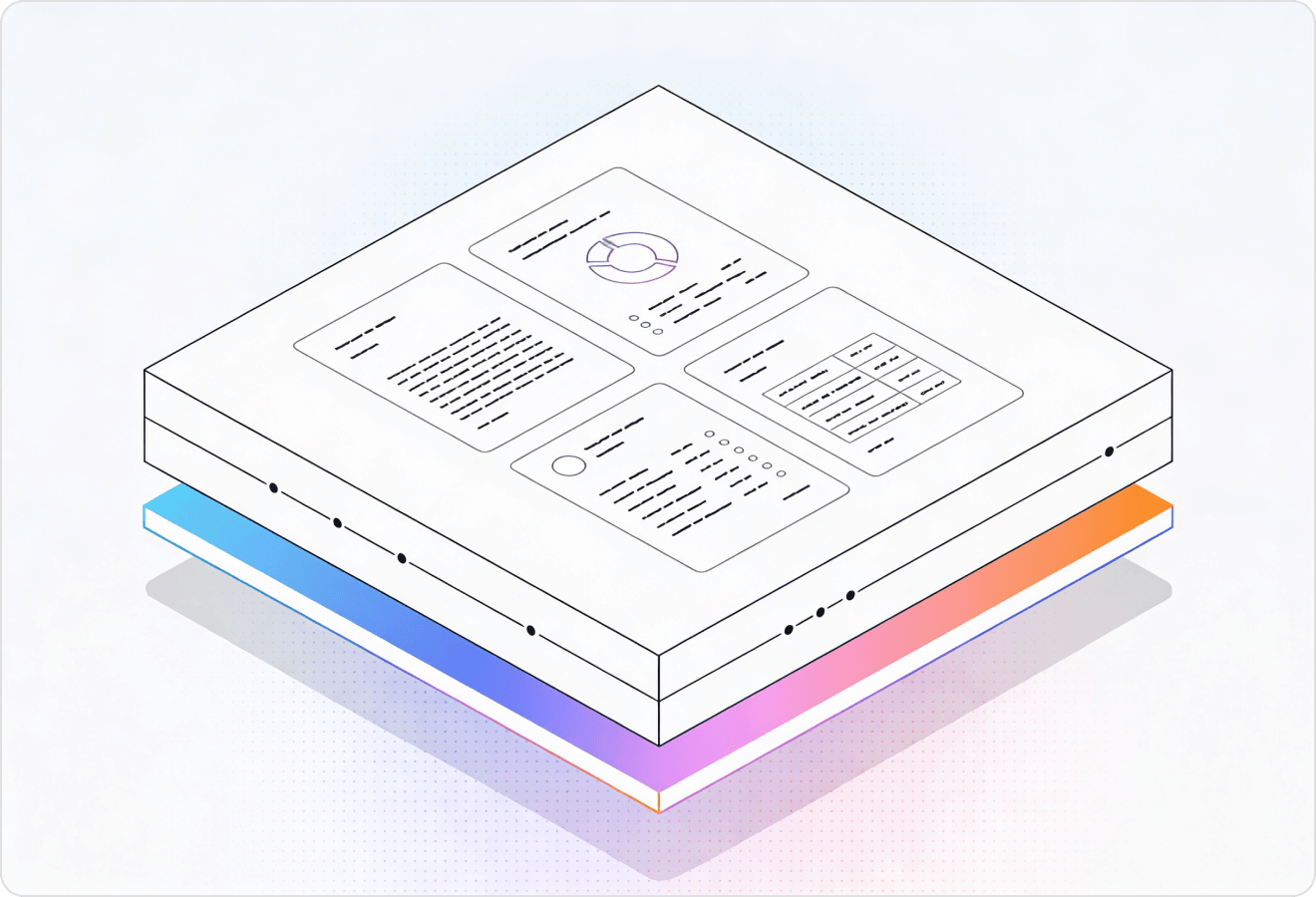
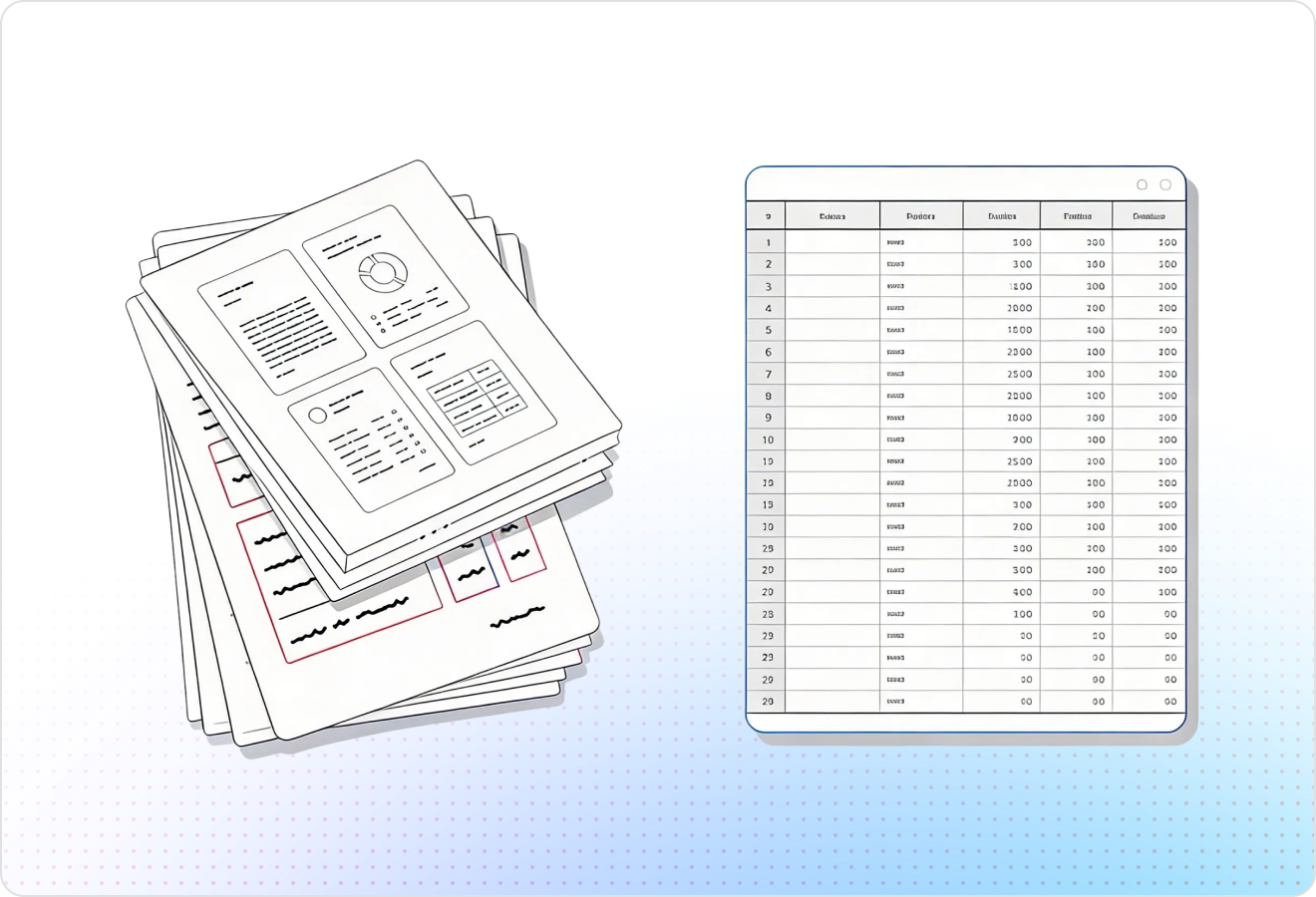
LlamaParse detects columns, headers, and nested tables so price lists don’t get scrambled into unusable text. You get clean line items with the right product-to-price alignment, even when layouts change across vendors and versions.
02
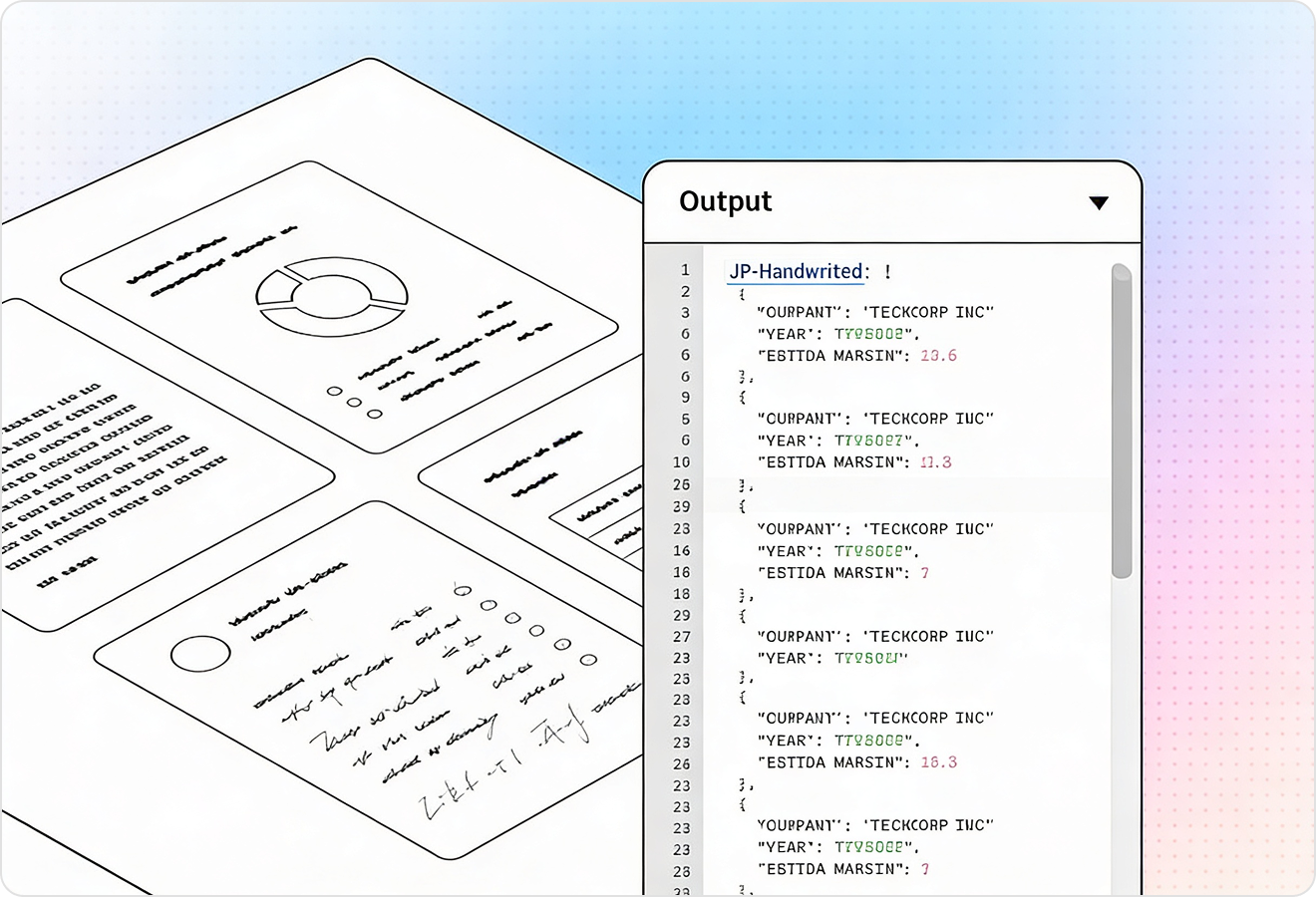
Return structured JSON that maps each row into fields like SKU, description, unit, currency, and tiered pricing. This makes it straightforward to load price lists into ERP/procurement systems without a brittle post-processing pipeline.
03
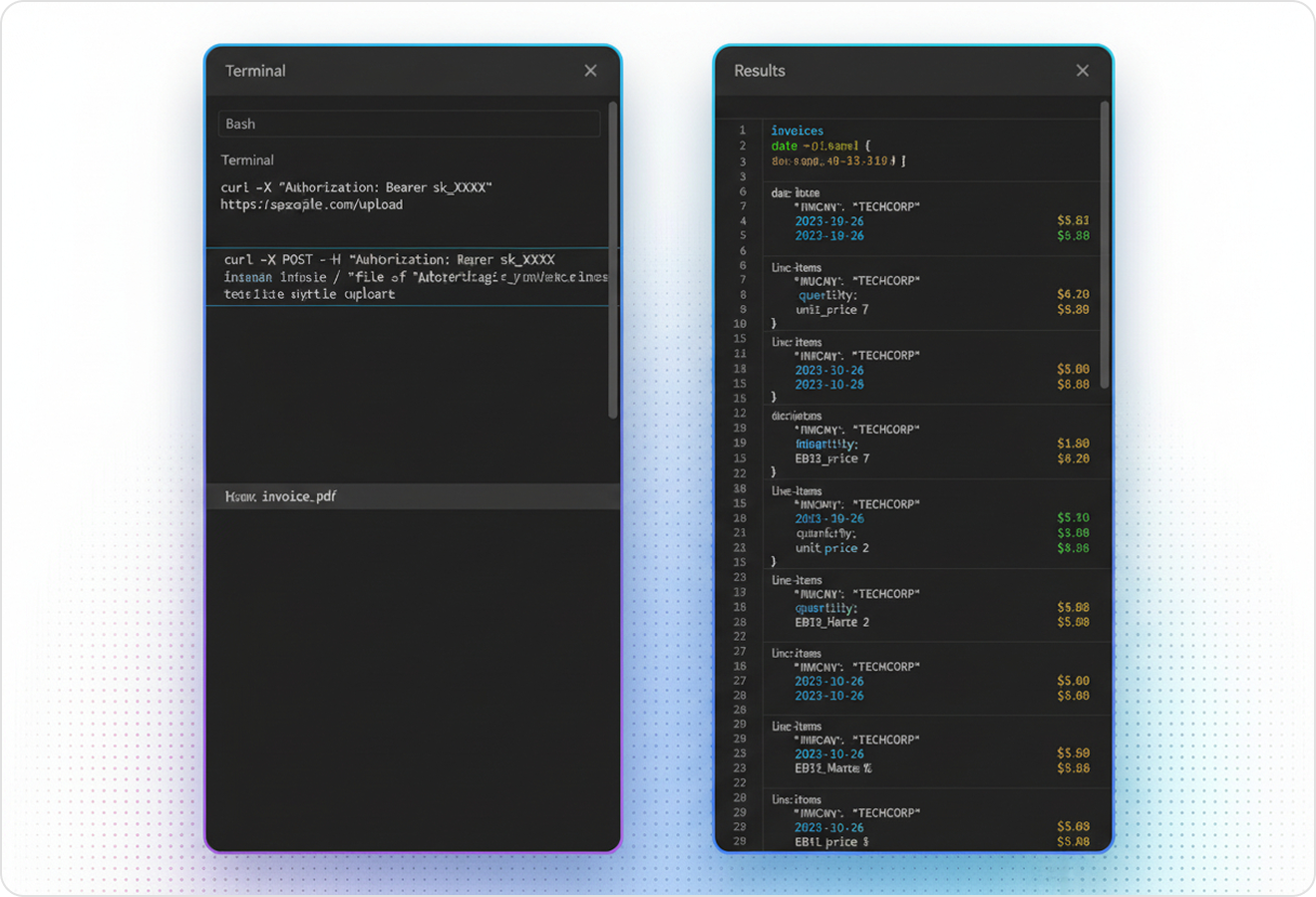
Use natural-language instructions to tell LlamaParse exactly what to extract and how to format it for your pricing schema. This is ideal for handling quirks like “per case” vs “per unit,” discounts, or multi-tier price breaks without regex-heavy cleanup.
04
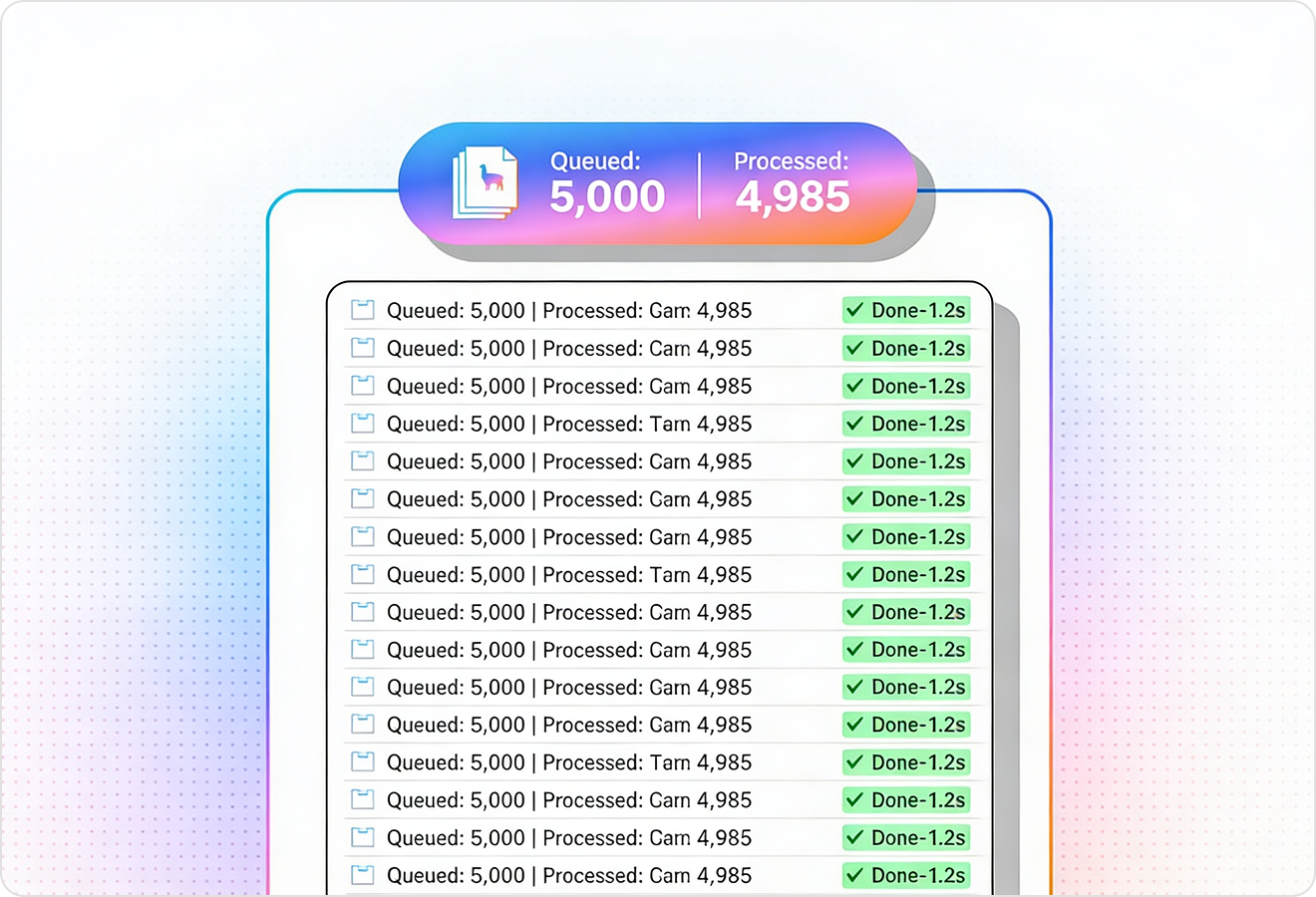
Every extracted value can include page-level provenance and granular coordinates, so you can trace a price back to the exact spot it came from. That audit trail makes approvals and exception handling safer when a single misread number can impact margins.
Technical OCR documentation
Explore our developer guides to easily connect your document pipelines to LlamaParse.
Explore the documentation
Our AI catches the typos that tired eyes miss.

Export to Excel, JSON, XML, or directly via API.

SOC2 Type II compliant with end-to-end encryption.

Train the tool on your specific forms in minutes, not days.

Average processing time of <3 seconds per page.
LlamaParse’s support of a wide variety of filetypes and its accuracy of parsing made it the best tool we tested in our evaluations. The LlamaIndex team was very responsive and we were off to the races within a day.
Common FAQs
01
Yes—our layout-aware table extraction detects columns, headers, and nested tables so SKUs, descriptions, and prices stay correctly aligned. It’s built for real-world price lists where formats change across vendors and revisions, so you get clean line items instead of scrambled text.
02
Absolutely. We output JSON where each row maps into fields like SKU, description, unit, currency, and tiered pricing, making imports straightforward. This reduces manual cleanup and avoids brittle post-processing that breaks when a template changes.
03
You can provide simple parsing instructions that tell the system exactly what to extract and how to format it for your schema. That makes it easy to normalize units, capture discounts, and represent multi-tier pricing without regex-heavy workflows.
04
How can my team verify a price is correct before approving it?
Every extracted value can include metadata and citations that point back to the exact page and location it came from. This creates an audit trail your team can review quickly, reducing the risk of costly misreads and improving approval confidence.
05
What happens when a price list includes multiple tables, notes, or nested sections on the same page?
The parser is designed to recognize complex layouts, including multiple or nested tables, so related data stays grouped correctly. You’ll receive structured line items without losing context, which makes exception handling and downstream validation much easier.
06
How quickly can we go from raw PDFs to usable line-item data in production?
Most teams can start extracting structured line items in hours, not weeks, because the output is already formatted for integration. Once you define your schema and instructions, you can reuse them across vendors and versions to keep processing consistent as volume grows.