Nov 14, 2025
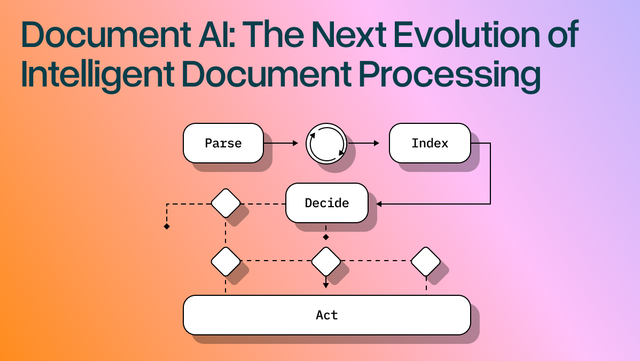
Document AI: The Next Evolution of Intelligent Document ProcessingPersona
Industry
Use cases
Bill Of Lading OCR
[ Bill Of Lading OCR ]

Use LlamaParse to turn messy bills of lading into clean JSON with confidence scores.
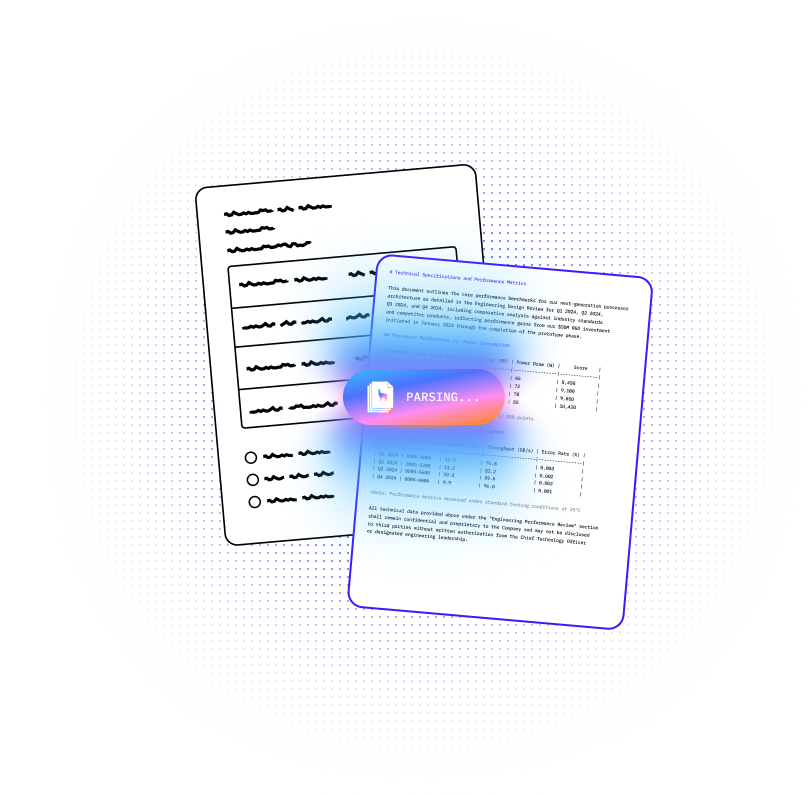


LlamaParse turns messy bills of lading into clean, consistent JSON automatically, so your team stops rekeying fields and chasing formatting edge cases. It uses layout-aware vision and agentic validation to extract shippers, consignees, items, and totals with citations you can audit.
Best-in-Class Accuracy

Turn bills of lading into reliable, structured JSON by preserving table integrity and reading order across carriers, ports, and multi-page shipments—no brittle template rules. LlamaParse reduces exception queues by extracting container numbers, piece counts, weights, and consignee details with traceable metadata for audit-ready handoffs to TMS and customs workflows.

Validate bill of lading fields against letters of credit by extracting shipper/consignee, vessel, ports, and dates from complex layouts and stamped scans, then attaching citations and confidence for quick review. LlamaParse helps teams catch discrepancies earlier and move document checking from manual re-keying to straight-through processing that integrates cleanly into underwriting and compliance systems.

Automate ingestion of bills of lading for cargo claims by extracting itemized shipment details and packaging tables that legacy OCR often scrambles, even when documents include annotations or low-quality scans. LlamaParse outputs structured data plus coordinates for fast adjuster verification, enabling quicker coverage decisions and more consistent loss documentation.

Ship a bill-of-lading automation feature without building a fragile parsing pipeline by using LlamaParse’s layout-aware extraction and natural-language instructions to produce the exact schema your product needs. Tier-based agentic processing lets you keep unit costs predictable while still handling the messy long tail of carrier formats your earliest customers will upload.
The Solution
01
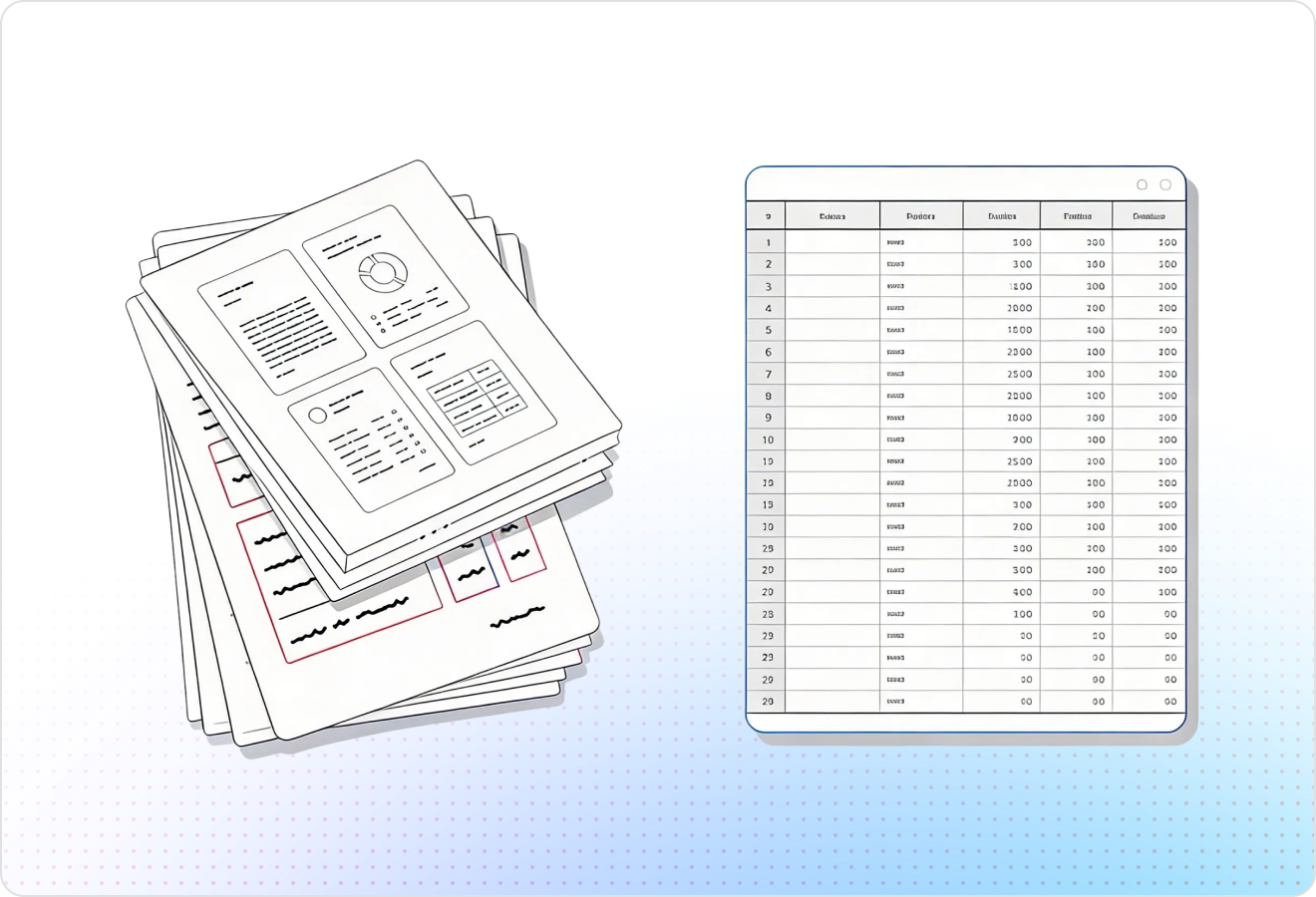
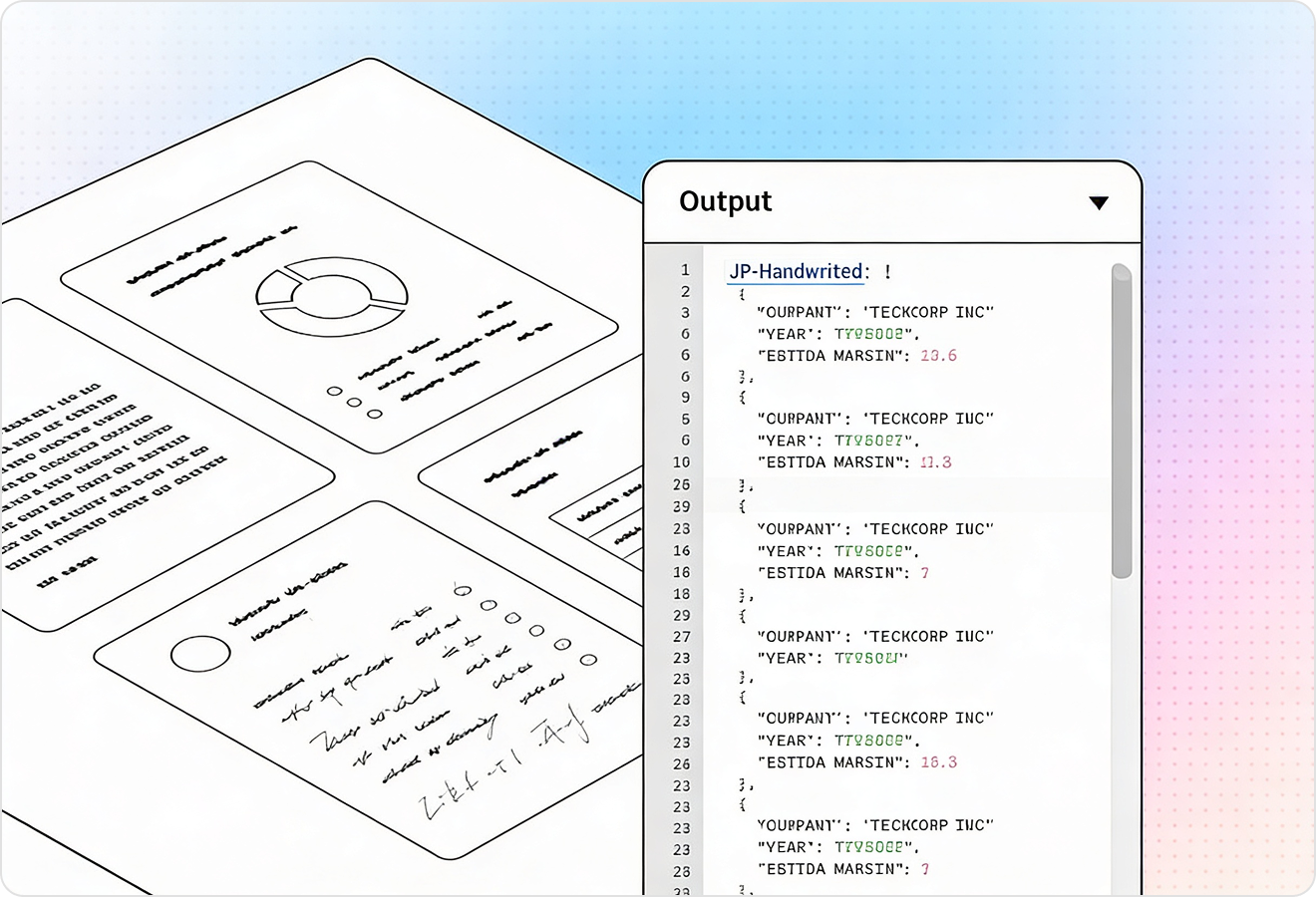
LlamaParse understands bill of lading layout and reading order, so it reliably captures key fields like shipper, consignee, vessel/voyage, ports, and dates even when the template changes. You get clean, structured text instead of scrambled blocks that break downstream validation.
02
Bills of lading often hide the critical data in dense tables (packages, marks, weights, dimensions, and container details), and LlamaParse extracts those tables without losing row/column integrity. That makes it practical to reconcile line items against booking data and automate exceptions.
03
LlamaParse runs self-checks during parsing to catch common scan issues like swapped digits, missing quantities, or inconsistent totals across sections of the bill. This reduces manual review and improves straight-through processing for high-volume shipping workflows.
04
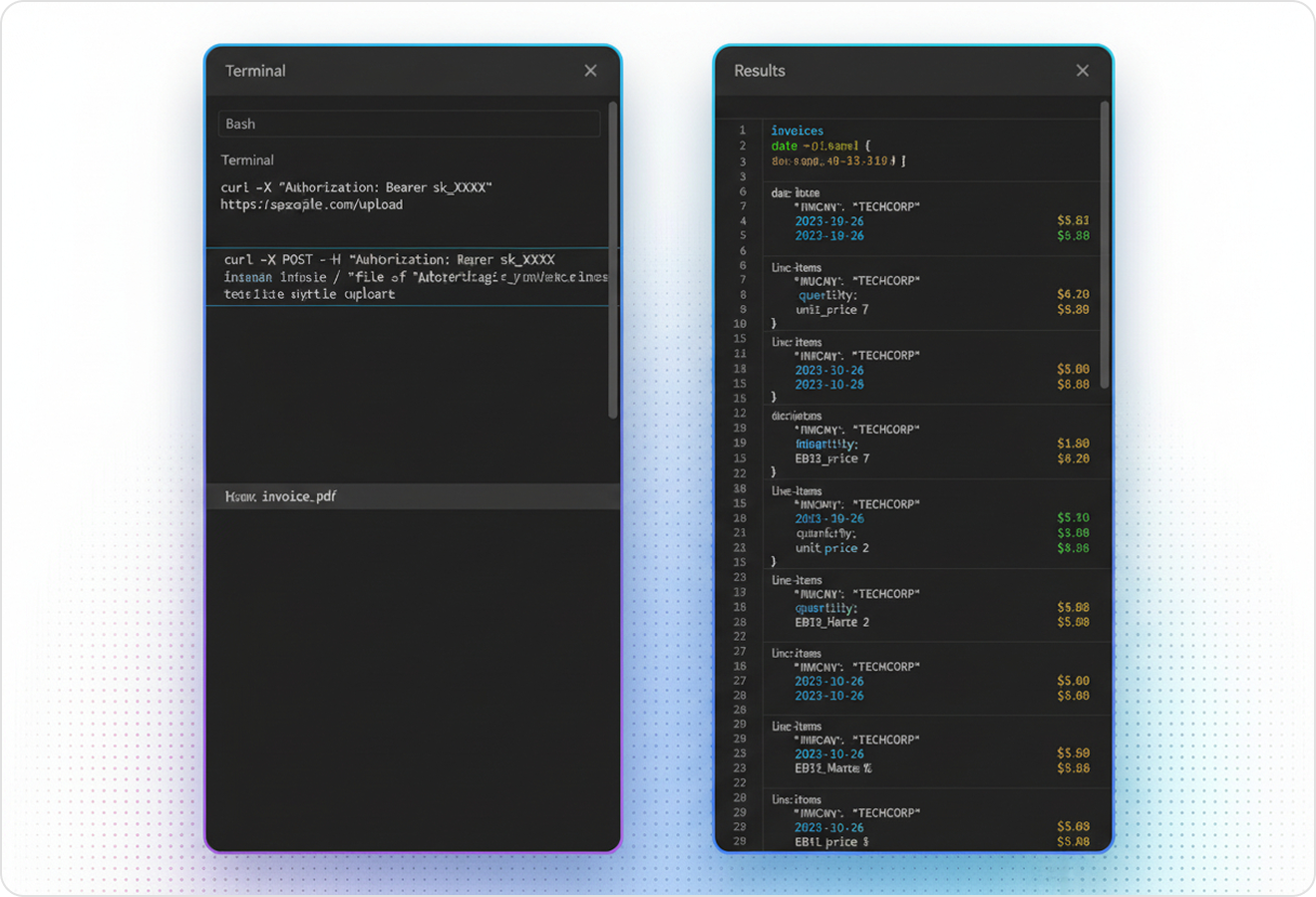
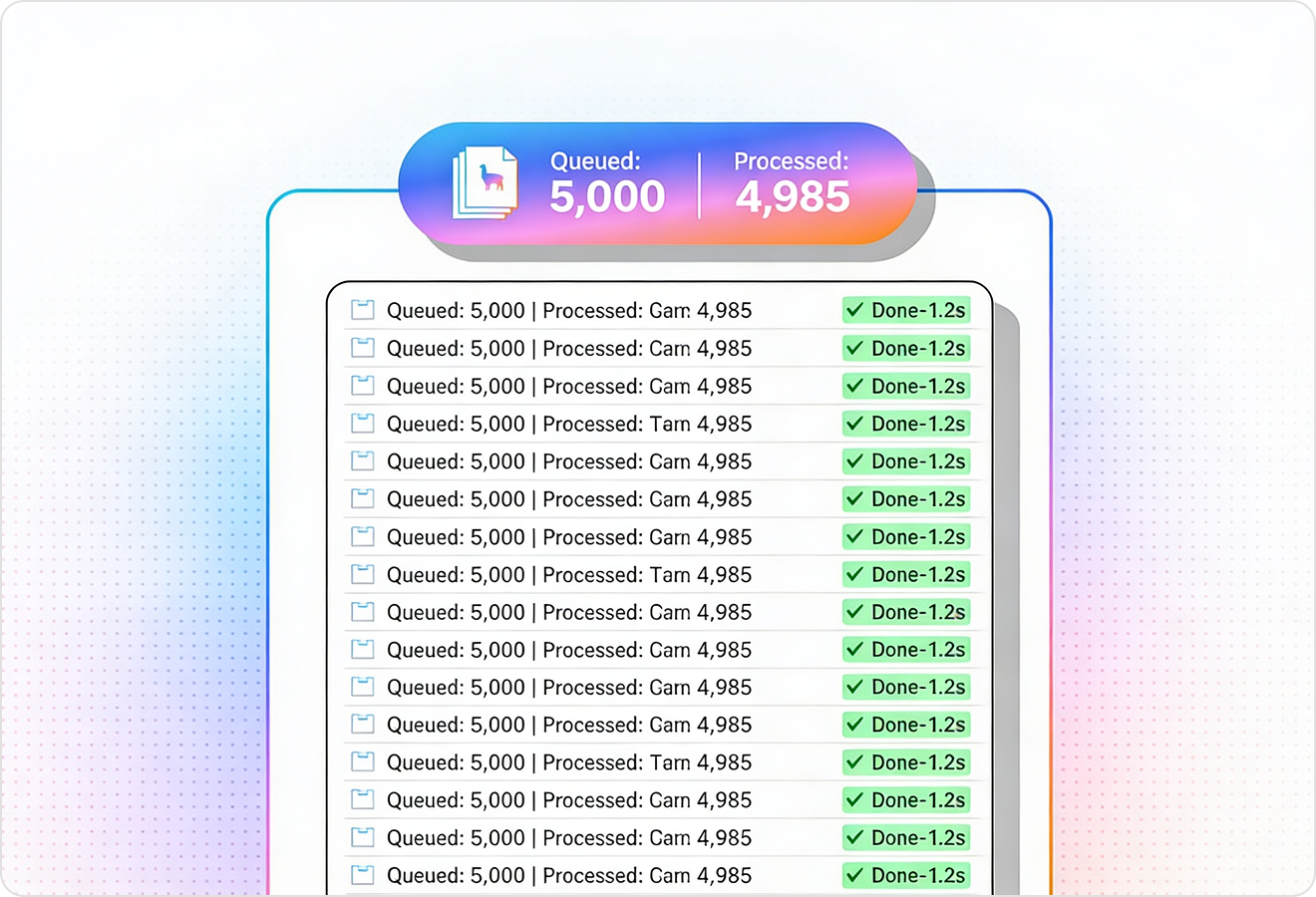
LlamaParse can return AI-ready JSON with granular metadata like page references and element coordinates for every extracted value. That lets you build auditable bill of lading workflows where each field can be verified quickly and routed to human review only when confidence is low.
Technical OCR documentation
Explore our developer guides to easily connect your document pipelines to LlamaParse.
Explore the documentation
Our AI catches the typos that tired eyes miss.

Export to Excel, JSON, XML, or directly via API.

SOC2 Type II compliant with end-to-end encryption.

Train the tool on your specific forms in minutes, not days.

Average processing time of <3 seconds per page.
LlamaParse’s support of a wide variety of filetypes and its accuracy of parsing made it the best tool we tested in our evaluations. The LlamaIndex team was very responsive and we were off to the races within a day.
Common FAQs
01
Yes. Layout-aware capture follows the document’s reading order and structure, so it reliably pulls fields like shipper, consignee, vessel/voyage, ports, and dates even when the template changes. You get consistent, structured output instead of scrambled text that breaks validation
02
Bills of lading often bury the most important data in tables, and the parser preserves row/column integrity during extraction. That makes it easy to reconcile packages, weights, dimensions, marks, and container numbers against bookings and trigger exceptions only when something doesn’t match.
03
Auto-correction validation loops run checks during parsing to flag or correct issues such as digit swaps, missing counts, and mismatched totals across sections. This reduces manual rekeying and improves straight-through processing for high-volume workflows.
04
Do you output clean JSON that our systems can ingest, and can we audit where each value came from?
Yes—output is structured JSON and can include traceability metadata like page references and element coordinates for each extracted value. That makes audits faster and supports confidence-based routing, so only low-confidence fields go to human review.
05
What happens when a field is ambiguous or missing—will it silently guess?
No. When the document is unclear, the system can surface confidence signals and the source location for review rather than hiding uncertainty. This helps your team resolve exceptions quickly while keeping downstream data dependable.
06
How quickly can we integrate this into our existing shipping workflow or TMS/ERP pipeline?
You can plug the JSON output directly into your current ingestion and validation steps, and use traceability metadata to power review screens or audit logs. Most teams start with a small set of fields, confirm accuracy on real documents, then expand to full automation as confidence grows.