Nov 14, 2025
Document AI: The Next Evolution of Intelligent Document ProcessingPersona
Industry
Use cases
Python PDF Parser
[ Python PDF Parser ]

Use LlamaParse to turn messy PDFs into accurate, layout-aware Markdown or JSON in seconds.
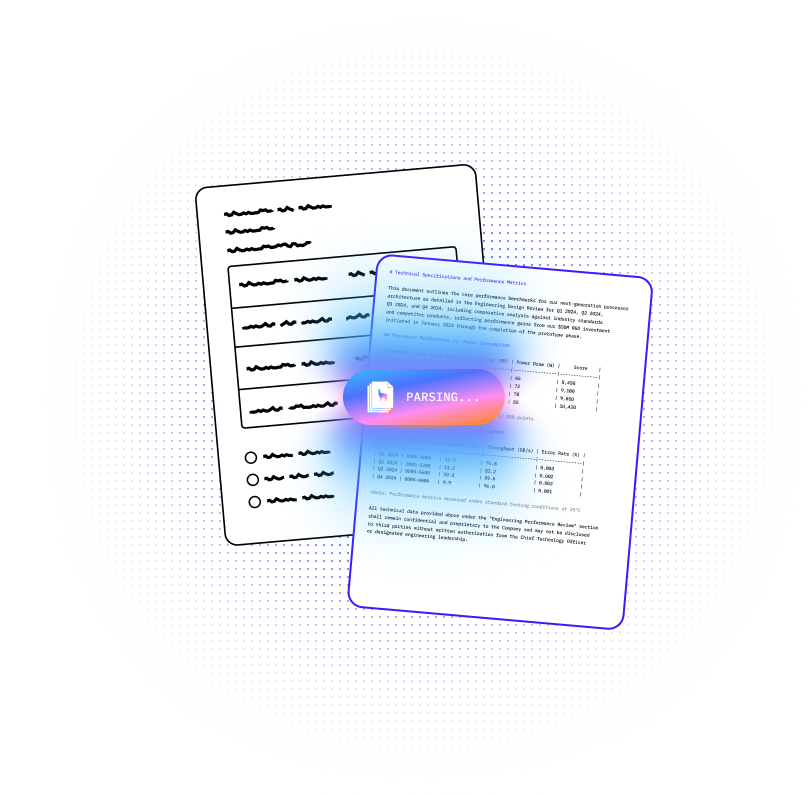
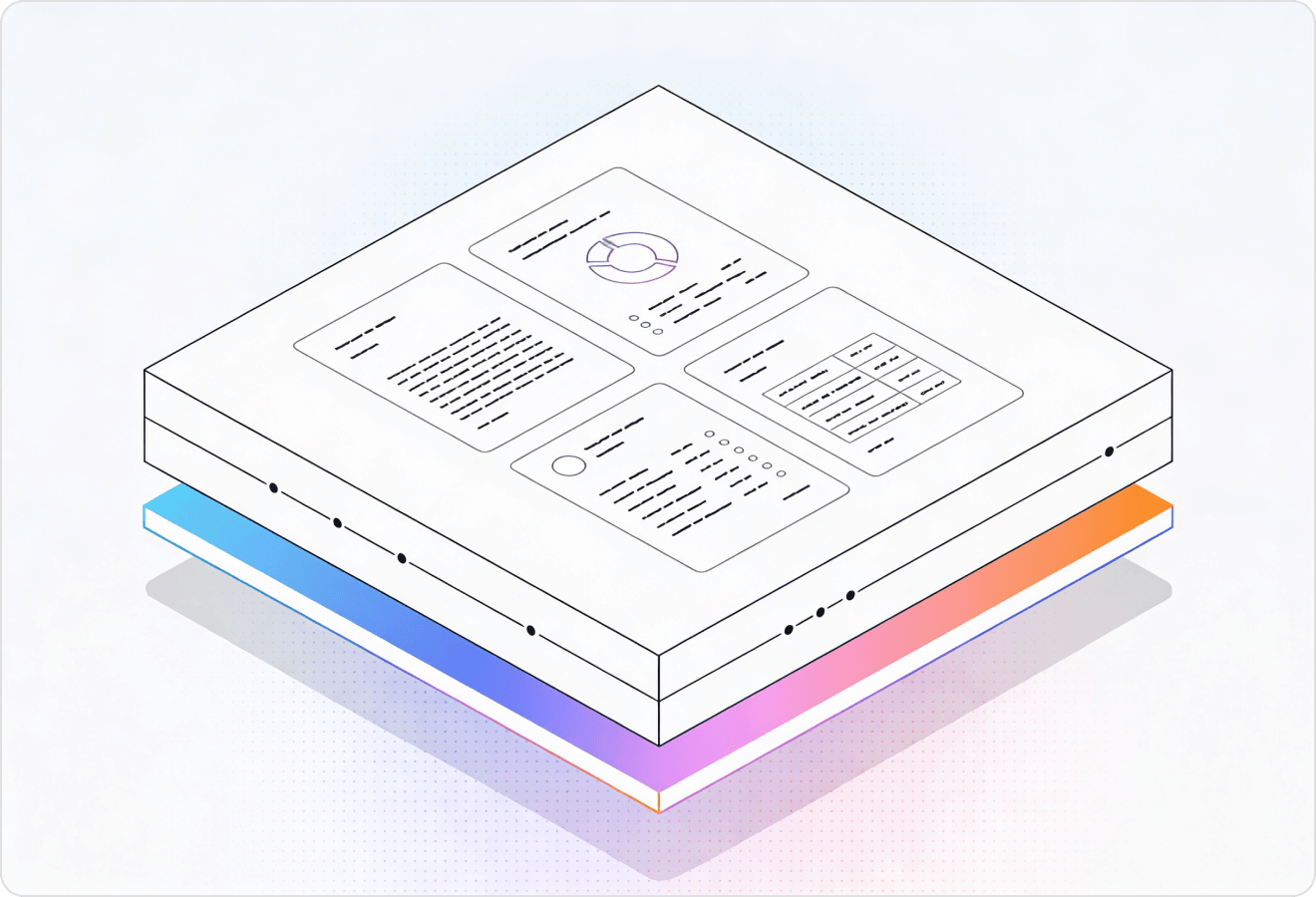

LlamaParse turns messy PDFs into clean, structured Markdown and JSON in Python, preserving layout, tables, and meaning so downstream code stays simple. Agentic document parsing adds validation loops and citations with confidence scores, reducing manual cleanup and improving extraction accuracy at scale.
Best-in-Class Accuracy

Turn messy inbound PDFs—pitch decks, invoices, support attachments, and contracts—into clean Markdown/JSON so your product can ship reliable document features without weeks of brittle parsing code. Use natural-language parsing instructions to extract exactly the fields you need and iterate fast as customer document formats change.

Automate intake for statements, pay stubs, tax forms, and loan packets by extracting layout-heavy tables and multi-column text in the correct reading order for faster underwriting decisions. Capture verifiable outputs with page-level metadata to speed audits, exception handling, and downstream reconciliation.

Parse contracts, exhibits, and scanned filings with agentic document parsing that preserves clause structure, headings, and tables so attorneys can search and review without missing critical context. Output citation-ready snippets and structured fields (dates, parties, obligations) to reduce manual review time and improve matter-level reporting.

Convert spec sheets, certificates of analysis, inspection reports, and maintenance manuals into structured data—even when they include diagrams, tables, and mixed formatting—so teams can standardize quality records across suppliers. Automatically extract tolerances, batch numbers, and test results into JSON to power faster CAPA triage and traceability.
The Solution
01
LlamaParse understands PDF layout (columns, headers/footers, sections) so extracted text keeps the correct reading order. That means your Python PDF parser doesn’t need brittle heuristics to fix scrambled output before you can search, chunk, or analyze it.
02
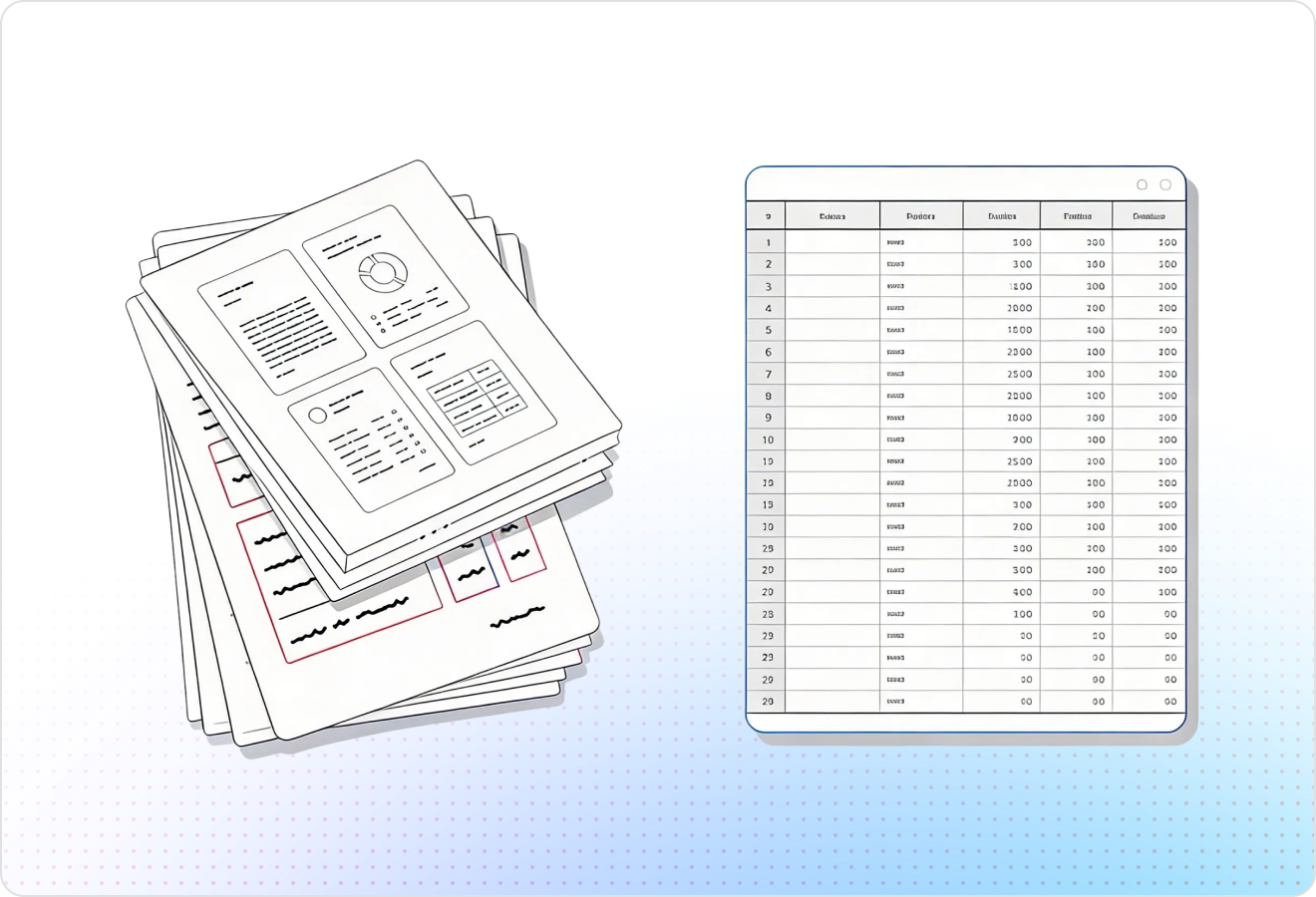
LlamaParse pulls tables out of PDFs as real structured data instead of flattened text, even when cells are merged or nested. In Python, this saves you from hand-tuning rules per template and makes it straightforward to load results into Pandas or downstream pipelines.
03
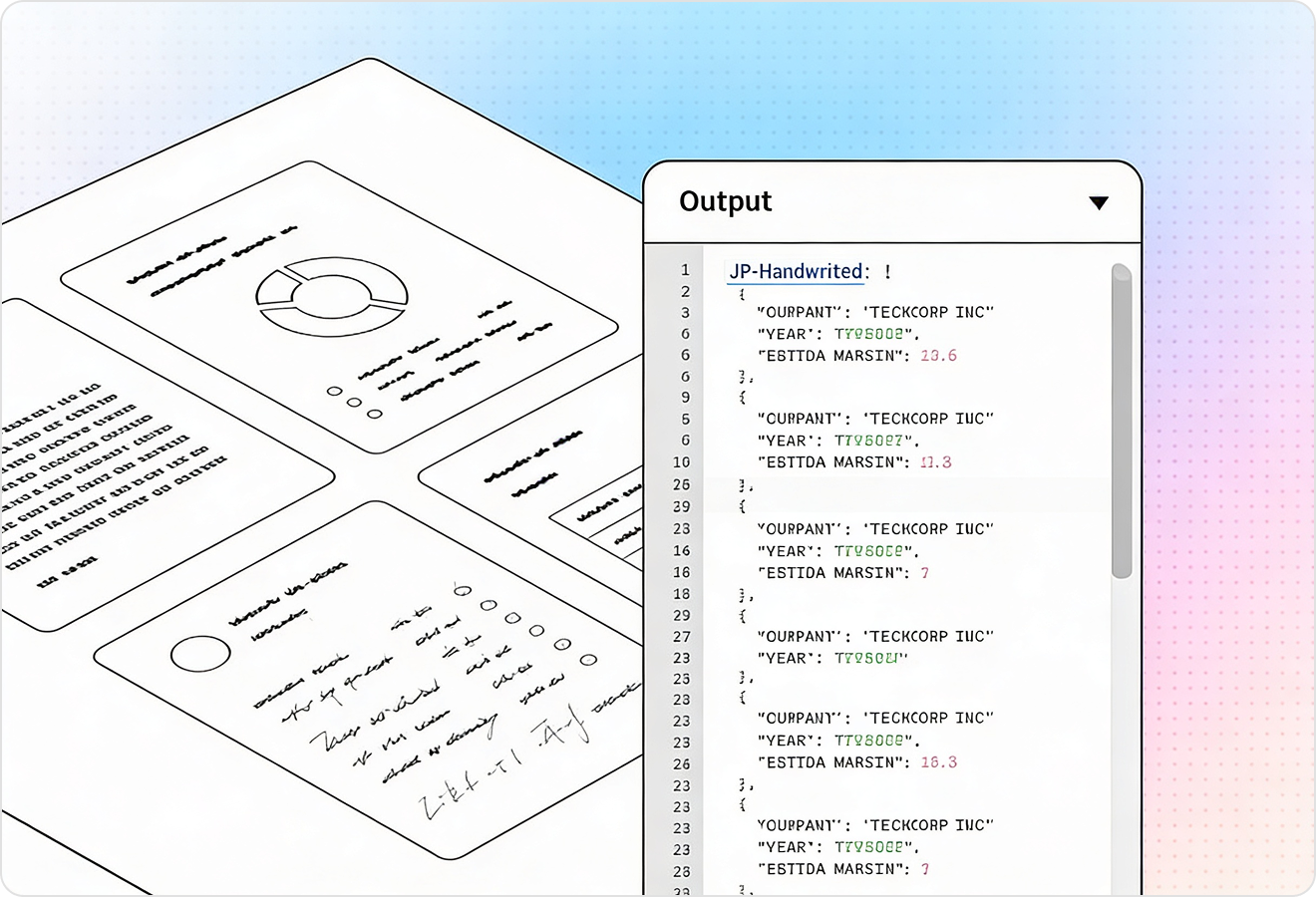
JSON mode returns structured elements with page numbers, node types, and spatial coordinates so you can programmatically trace every field back to the source. For Python PDF parsing, this makes validation, debugging, and targeted re-processing deterministic instead of guesswork.
04
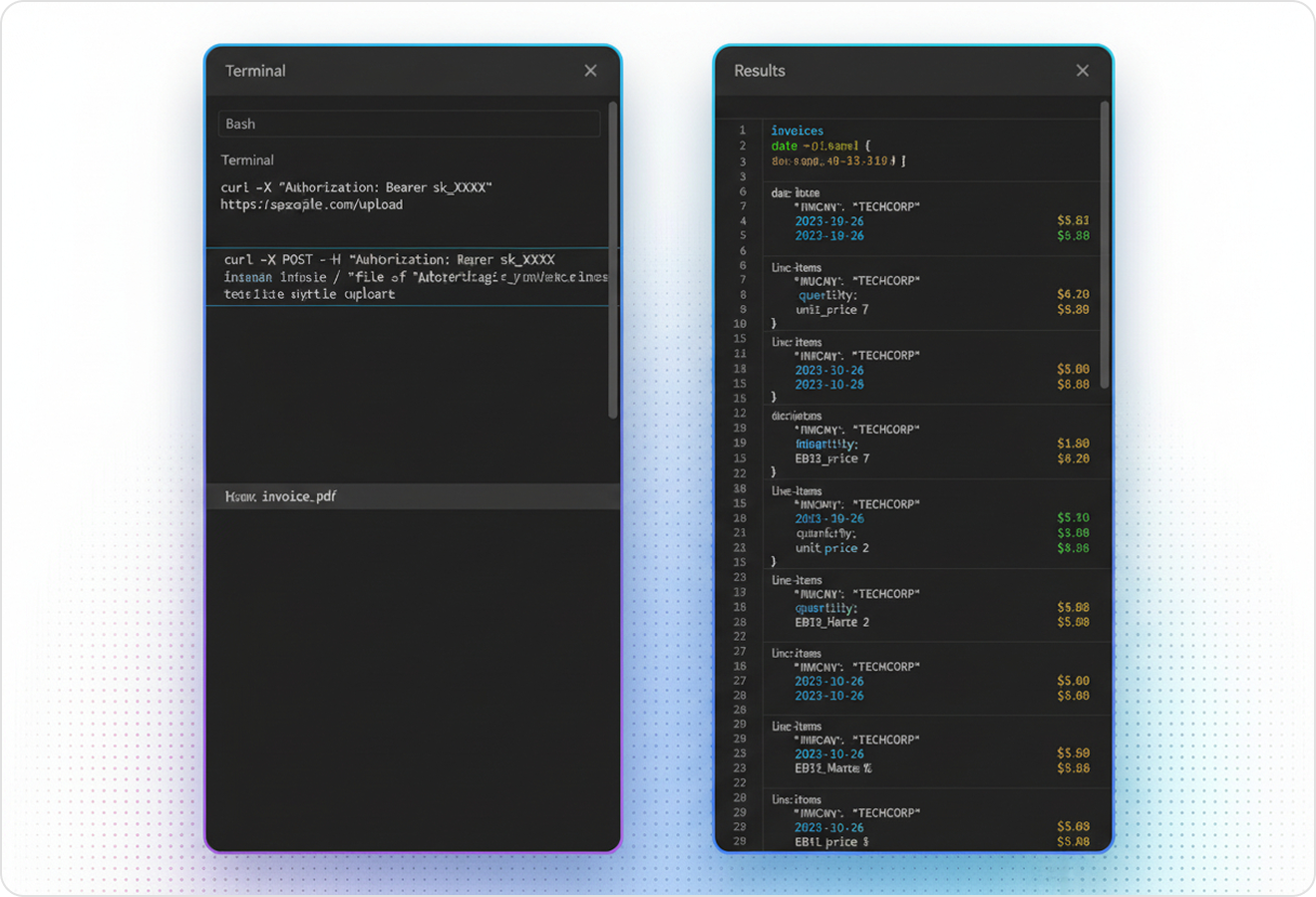
LlamaParse can interpret charts, images, and equations during parsing, not just plain text, using vision-capable models when needed. This helps your Python parser capture the actual meaning of reports and technical PDFs where key data lives in visuals, tables, and math.
Technical OCR documentation
Explore our developer guides to easily connect your document pipelines to LlamaParse.
Explore the documentation
Our AI catches the typos that tired eyes miss.

Export to Excel, JSON, XML, or directly via API.

SOC2 Type II compliant with end-to-end encryption.

Train the tool on your specific forms in minutes, not days.

Average processing time of <3 seconds per page.
LlamaParse’s support of a wide variety of filetypes and its accuracy of parsing made it the best tool we tested in our evaluations. The LlamaIndex team was very responsive and we were off to the races within a day.
Common FAQs
01
Most parsers read PDFs in raw drawing order, so multi-column layouts, headers/footers, and sidebars get interleaved. LlamaParse is layout-aware and preserves the intended reading order, so your downstream search, chunking, and LLM workflows start clean without brittle heuristics.
02
Yes—LlamaParse returns tables as real structured output, even with merged or nested cells. That means you can load results directly into Pandas and pipelines without hand-tuning rules for every new PDF template.
03
JSON mode includes page numbers, element types, and spatial coordinates so you can trace any field back to its exact location in the source PDF. This makes validation and debugging deterministic, and it’s easy to re-process only the pages or sections that changed.
04
How does it handle PDFs where key information is in charts, images, or equations?
LlamaParse supports multimodal understanding, using vision-capable models when needed to interpret charts, figures, and math—not just plain text. This helps you capture the meaning of technical reports where the most important data isn’t in paragraphs.
05
Will this reduce the amount of custom post-processing code I need to maintain?
In most cases, yes—layout-aware parsing plus structured tables and metadata eliminates the need for many template-specific cleanup rules. You’ll spend less time chasing edge cases and more time building reliable search, analytics, or RAG features on top of consistent output.
06
How do I know the results are trustworthy enough for production workflows?
The metadata-rich JSON output makes it easy to audit and verify extractions against the original PDF, down to the page and region. That transparency reduces risk in production and gives you a clear path to targeted fixes when a document is unusually complex.