Nov 14, 2025
Document AI: The Next Evolution of Intelligent Document ProcessingPersona
Industry
Use cases
Closing Statement OCR
[ Closing Statement OCR ]

Use LlamaParse to turn closing statements into verified, structured JSON your team can trust.
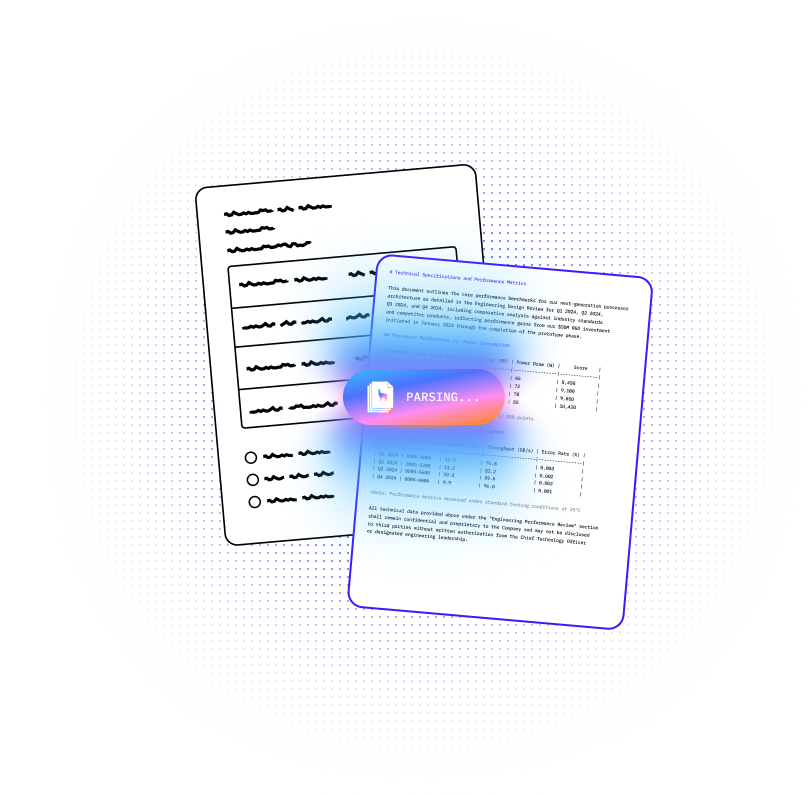
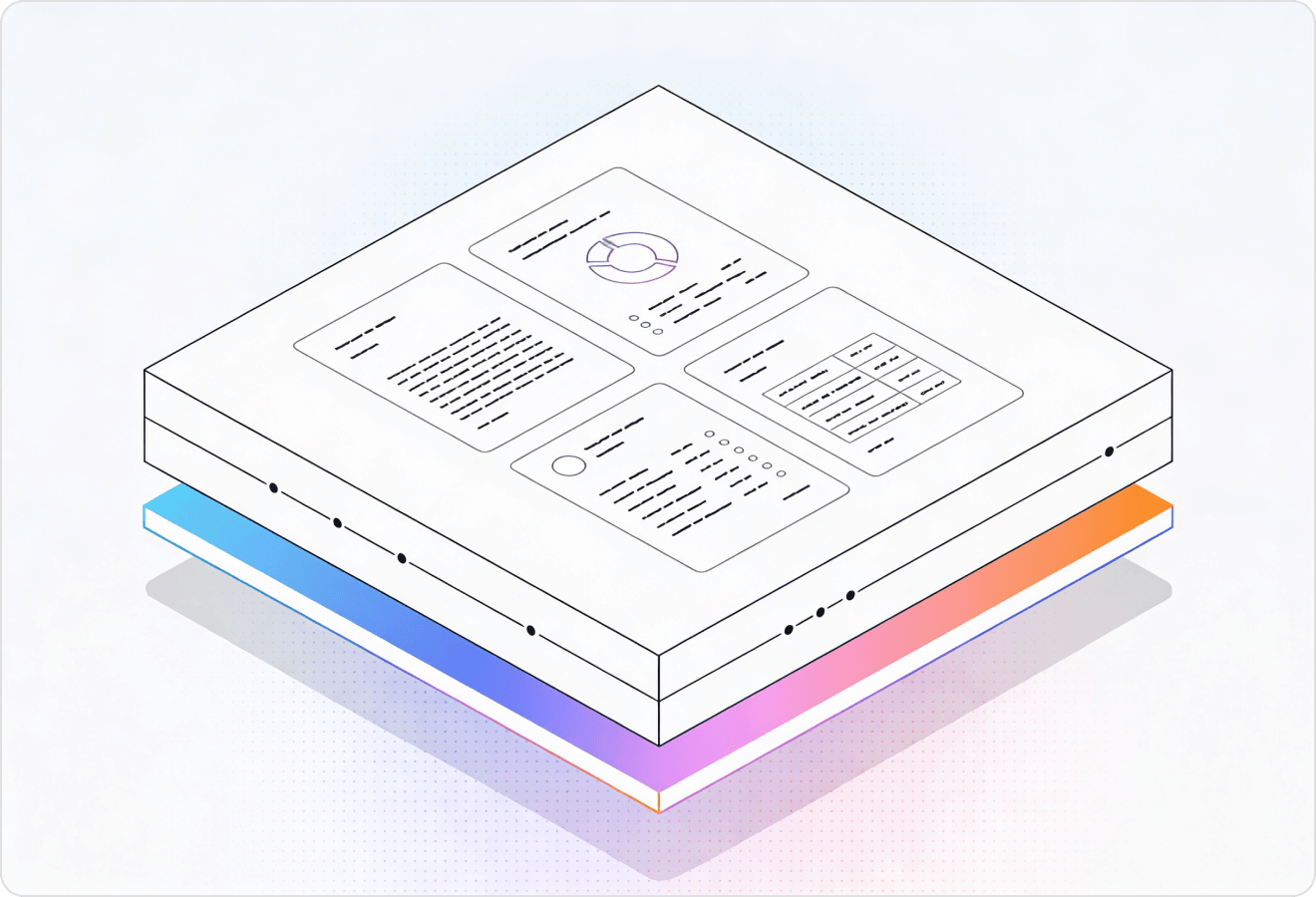

LlamaParse turns messy closing statements into clean, structured outputs your systems can trust, capturing tables, line items, and totals with layout-aware understanding. Agentic parsing adds validation loops and citations so teams reconcile faster, reduce manual review, and ship AI workflows on consistent JSON or Markdown.
Best-in-Class Accuracy

Parse closing statements into structured JSON—fees, credits, payoffs, prorations, and cash-to-close—without brittle rules that break when forms or layouts change. LlamaParse preserves table structure and line-item relationships so lenders can auto-reconcile disclosures, flag tolerance issues, and cut post-close conditions.

Extract payee details, wire instructions, tax lines, and disbursement schedules from scanned closing packages while keeping multi-column tables and addenda in the right reading order. Use citations and confidence scores to route only exceptions to escrow teams, reducing funding delays and rework.

Ingest settlement statements from claim files and reliably capture lien payoffs, attorney fees, medical payments, and claimant allocations even when documents include stamps, handwriting, or low-quality scans. Convert the output into claim-ready line items to accelerate subrogation recovery and prevent leakage from missed deductions.

Ship a production-grade closing statement ingestion flow fast by using natural-language parsing instructions to return the exact schema your product needs—borrower, property, lender, and itemized charges—without maintaining regex-heavy pipelines. Route simple pages through cost-efficient tiers and automatically upgrade only complex layouts, keeping unit economics predictable as volume scales.
The Solution
01
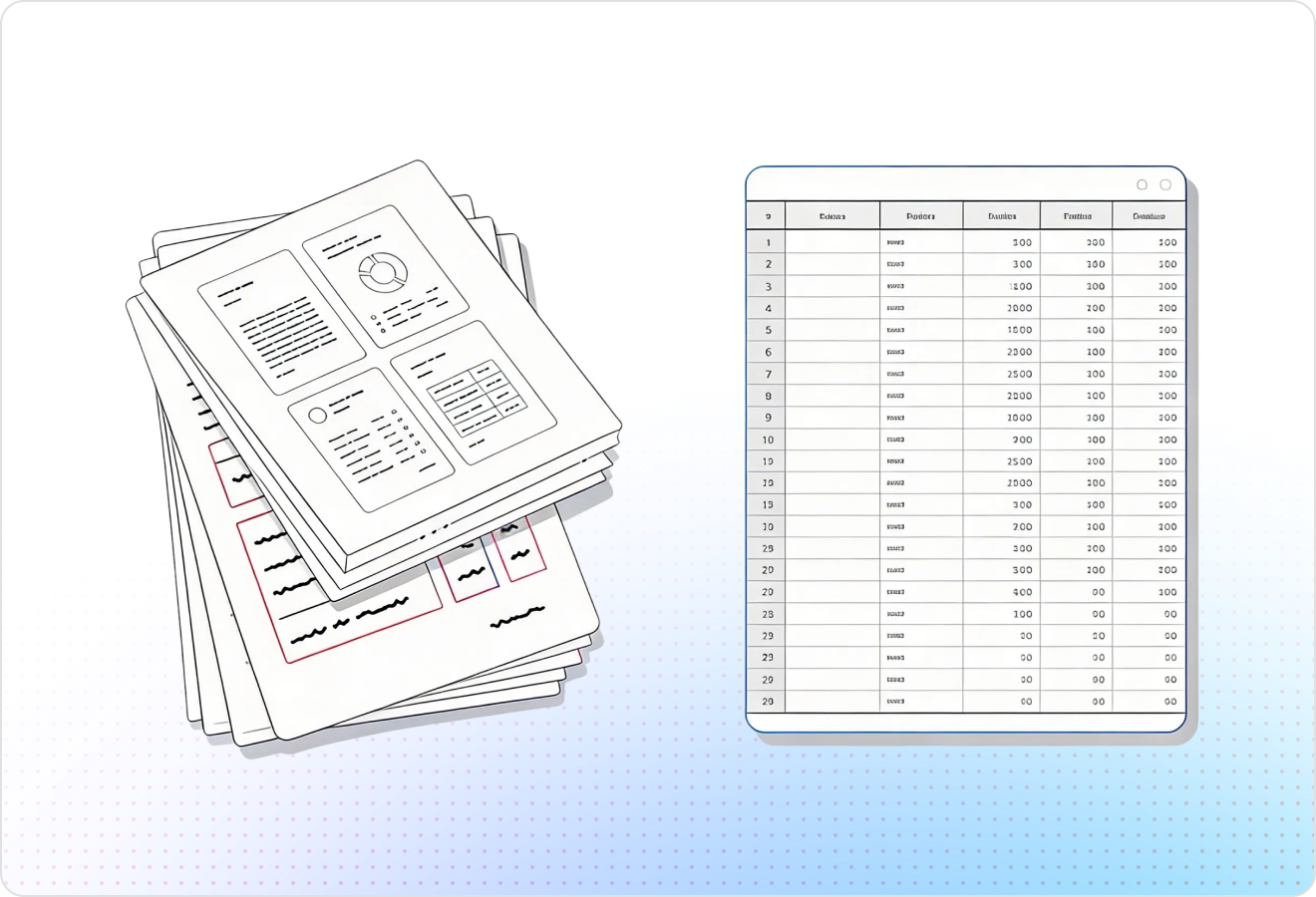
LlamaParse understands page structure—columns, headers/footers, footnotes, and signature blocks—so closing statements come out in the right sequence. That prevents the classic “scrambled paragraph” problem that breaks downstream extraction of key terms and final totals.
02
It reliably pulls fee tables, cost breakdowns, and settlement line items into clean, structured representations instead of flattened text. For closing statements, this makes it easy to capture amounts (e.g., borrower/ seller paid, escrow, prepaid items) without manual re-keying.
03
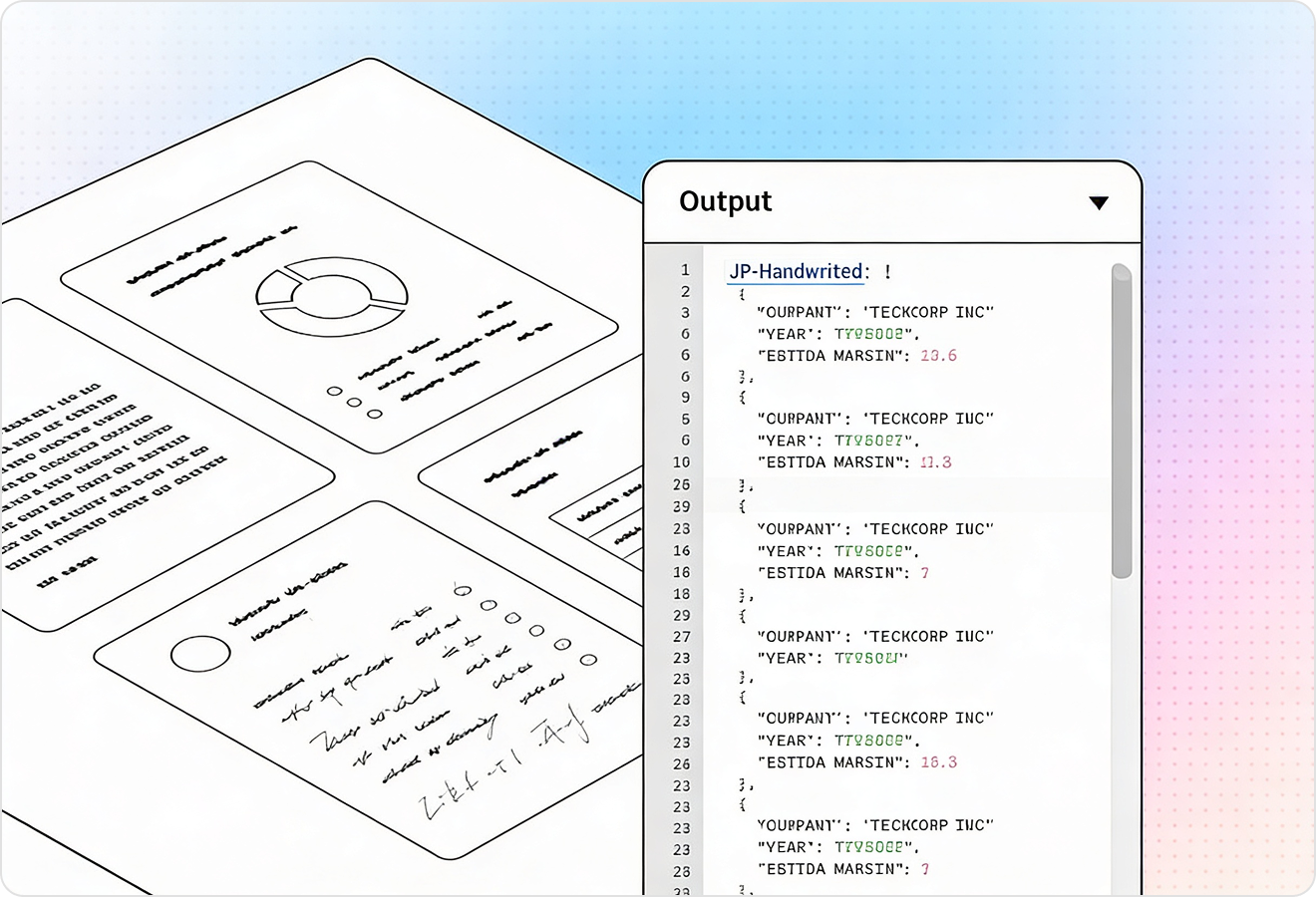
Agentic parsing runs self-checks to catch common scan issues like dropped digits, misread decimals, and inconsistent totals. That reduces exceptions when you’re reconciling closing numbers and helps improve straight-through processing for high-volume statement intake.
04
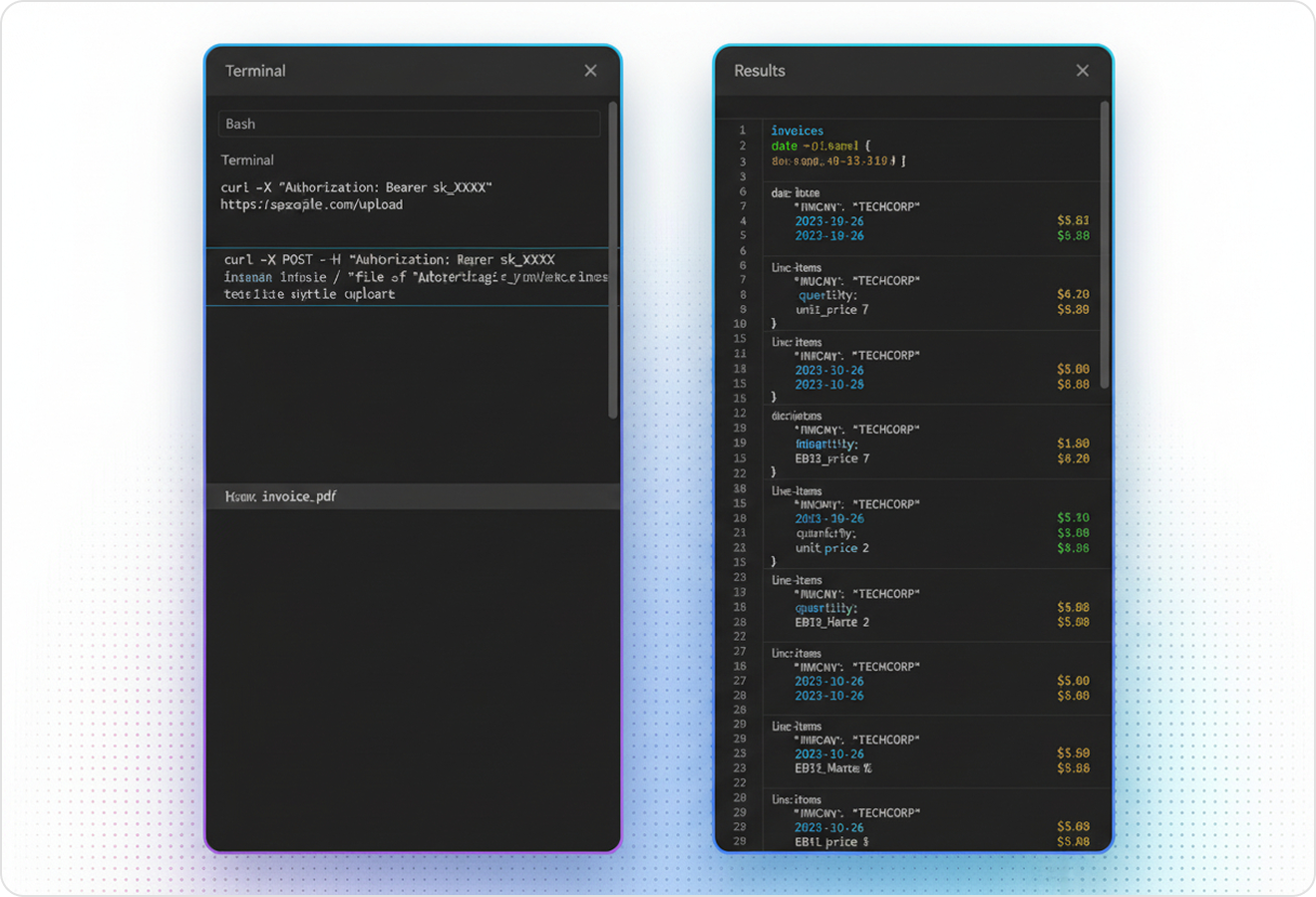
LlamaParse can return structured JSON enriched with page references and element metadata, so every extracted field is traceable back to its source location. For closing statements, that enables fast audits, dispute resolution, and human review workflows without hunting through PDFs.
Technical OCR documentation
Explore our developer guides to easily connect your document pipelines to LlamaParse.
Explore the documentation
Our AI catches the typos that tired eyes miss.

Export to Excel, JSON, XML, or directly via API.

SOC2 Type II compliant with end-to-end encryption.

Train the tool on your specific forms in minutes, not days.

Average processing time of <3 seconds per page.
LlamaParse’s support of a wide variety of filetypes and its accuracy of parsing made it the best tool we tested in our evaluations. The LlamaIndex team was very responsive and we were off to the races within a day.
Common FAQs
01
Yes—layout-aware reading order preserves the document’s structure, including columns, headers/footers, footnotes, and signature areas. That prevents the “scrambled paragraph” issue that can break downstream extraction and reconciliation.
02
It pulls tables and settlement line items into clean, structured data so fees, credits, and payoffs don’t get flattened or merged. This makes it much easier to capture borrower/seller-paid amounts, escrow, and prepaid items without manual re-keying.
03
Auto-correction and validation run self-checks to detect dropped digits, misread decimals, and inconsistent totals before the data reaches your system. That reduces exceptions and helps improve straight-through processing for high-volume statement intake.
04
Can I get the extracted data as JSON, and can I trace each field back to the source PDF?
Yes—outputs can be returned as structured JSON with page references and element metadata. Each field is traceable to its source location, which speeds audits, dispute resolution, and human review without hunting through the PDF.
05
What if my closing statements have multiple formats or variations across lenders, title companies, or states?
The parser is designed to understand page structure and line-item patterns across varied layouts, not just one template. That means you can standardize extraction into consistent JSON even when document formats change.
06
How quickly can my team implement this into an existing intake or LOS workflow?
You can integrate via JSON output that maps cleanly to your existing data model and review tools, with citations for fast verification. Most teams start with a small pilot, confirm accuracy on real statements, then scale confidently as exception rates drop.