Nov 14, 2025
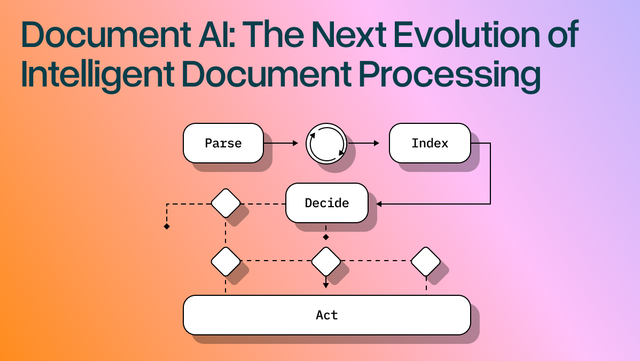
Document AI: The Next Evolution of Intelligent Document ProcessingPersona
Industry
Use cases
Tax Statement OCR
[ Tax Statement OCR ]

Use LlamaParse to turn tax statements into clean JSON with citations and fewer manual checks.
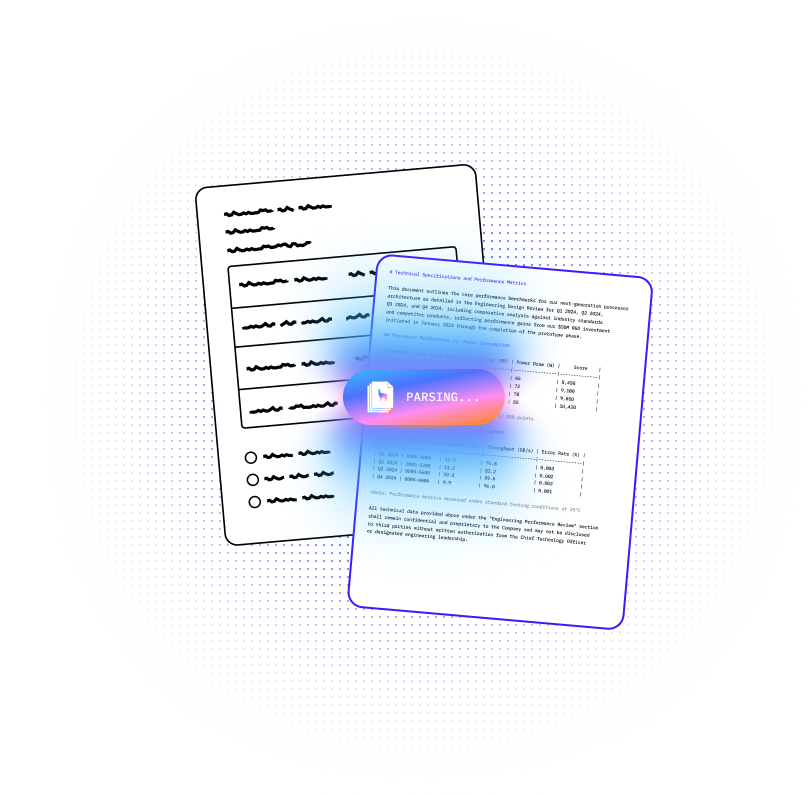


LlamaParse turns messy tax statements into clean, schema-ready JSON, with line-level citations so every field ties back to the source page. Agentic parsing understands layouts, tables, and footnotes, then runs validation loops to cut exceptions and speed downstream review workflows.
Best-in-Class Accuracy

Use LlamaParse to turn client tax statements (1099s, K-1s, brokerage summaries) into clean, schema-ready JSON with citations, so prep and review teams stop re-keying numbers. Layout-aware table extraction preserves multi-page totals and footnotes, reducing reconciliation time and cutting costly review cycles during peak season.

Automate income and liability analysis by parsing tax statements into structured fields that feed underwriting models and policy checks, even when forms are scanned, skewed, or inconsistent. Metadata and confidence scores make exceptions easy to route to human review, increasing straight-through processing without compromising auditability.

Parse applicant tax statements into standardized income and self-employment breakdowns, including tables and attachments that typically get scrambled by legacy OCR. Natural-language parsing instructions let teams extract exactly what they need for qualification rules, speeding approvals while reducing fraud and manual back-and-forth.

Ship tax-statement ingestion in days by using LlamaParse as the agentic document parsing layer for your onboarding flow, outputting reliable JSON that maps directly into your product database. Auto Mode and tier-based processing keep compute costs predictable while handling the messy, real-world variety of user-uploaded documents.
The Solution
01
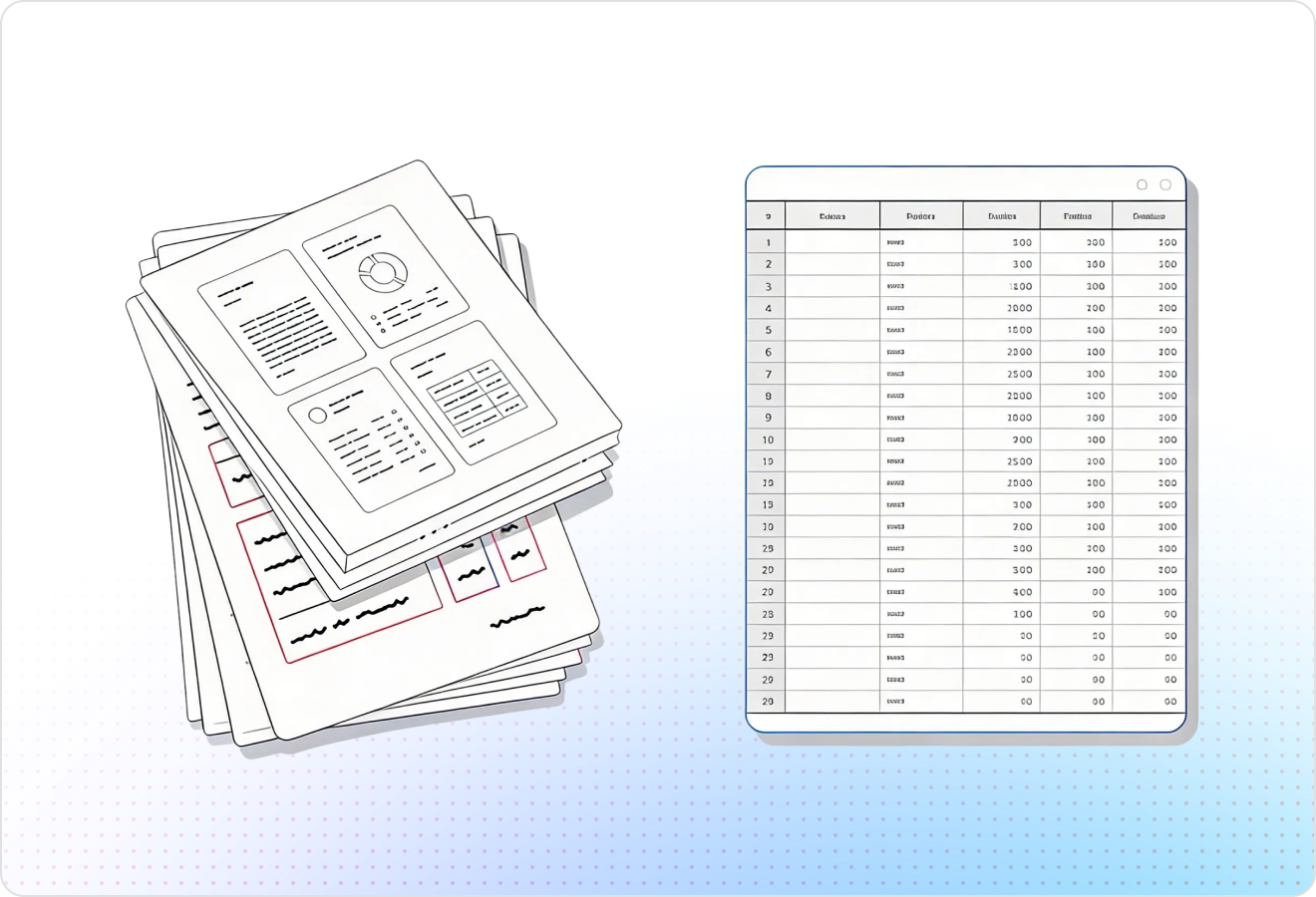
LlamaParse understands tax-statement layouts (boxes, line items, multi-column sections) and preserves the correct reading order instead of returning scrambled text. That means fields like payer name, account numbers, and totals stay aligned to the right labels for reliable downstream mapping.
02
LlamaParse accurately extracts dense tables like transaction histories, withholding breakdowns, and year-to-date summaries into clean structured representations. This prevents common spreadsheet-style errors—shifted columns, merged cells, and missing headers—that break tax reconciliation.
03
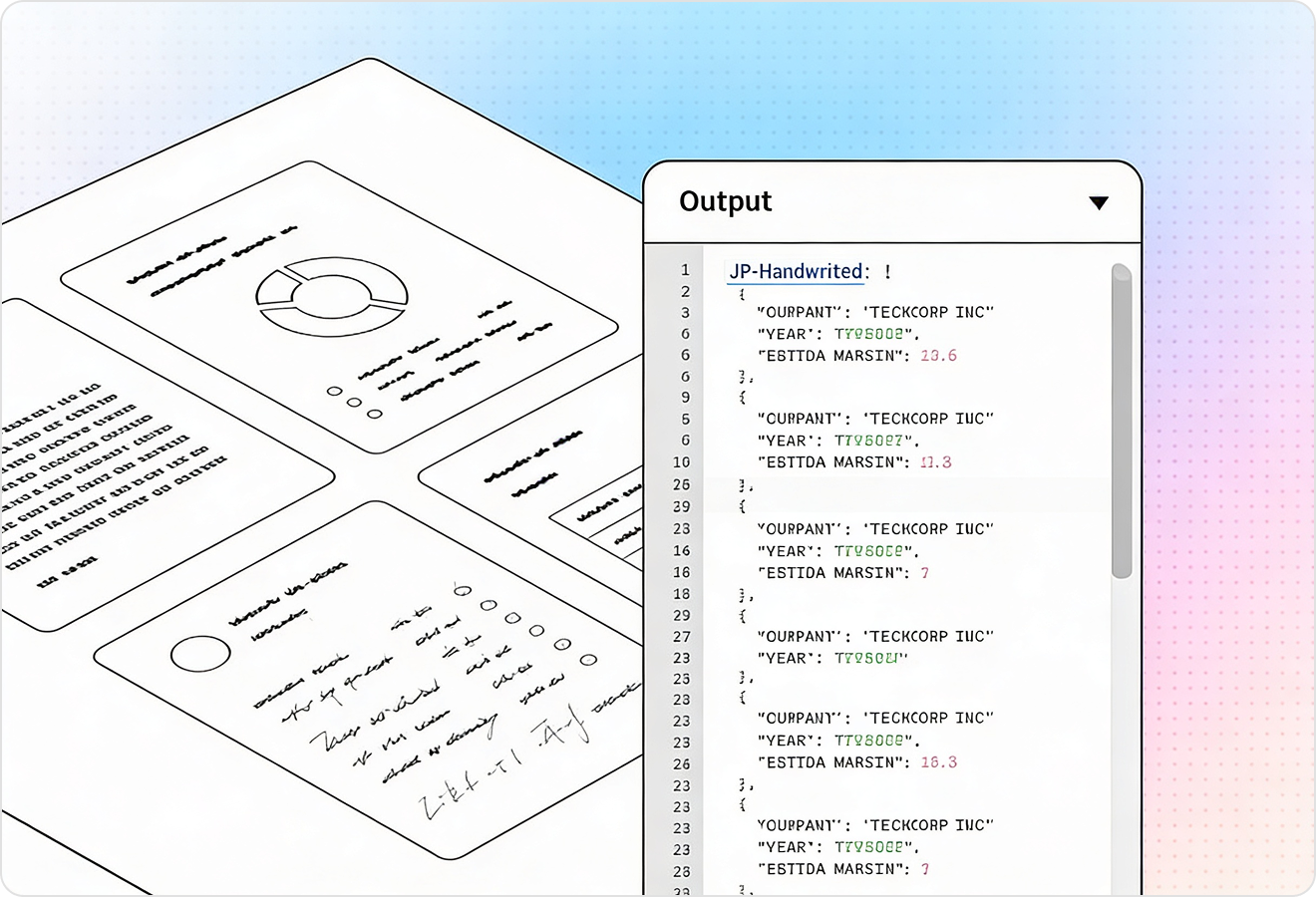
LlamaParse can return structured JSON along with granular metadata like page numbers and coordinates for each extracted value. For tax statements, this makes every number auditable and easy to review, with a direct pointer back to the exact source region on the document.
04
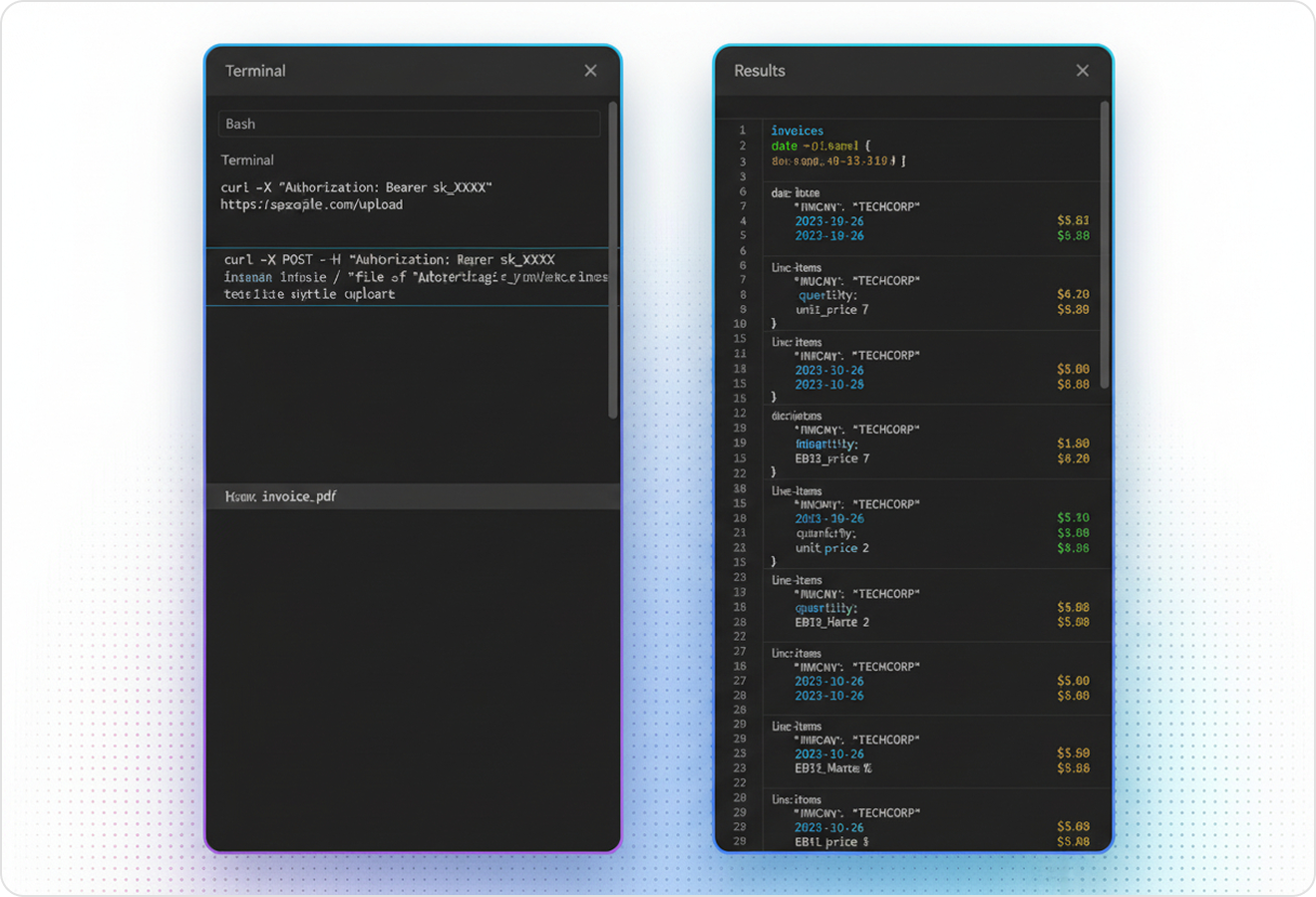
LlamaParse uses self-correction and validation steps to catch inconsistencies during parsing rather than pushing errors into your ETL code. This is especially useful on low-quality scans of tax statements where a single digit error can change reported income or withholding.
Technical OCR documentation
Explore our developer guides to easily connect your document pipelines to LlamaParse.
Explore the documentation
Our AI catches the typos that tired eyes miss.

Export to Excel, JSON, XML, or directly via API.

SOC2 Type II compliant with end-to-end encryption.

Train the tool on your specific forms in minutes, not days.

Average processing time of <3 seconds per page.
LlamaParse’s support of a wide variety of filetypes and its accuracy of parsing made it the best tool we tested in our evaluations. The LlamaIndex team was very responsive and we were off to the races within a day.
Common FAQs
01
Our layout-aware extraction reads tax statements the way a human would—respecting boxes, line items, and multi-column sections—so values don’t get scrambled. That means payer names, account numbers, and totals stay tied to the correct labels for dependable downstream mapping.
02
Yes—high-fidelity table parsing converts complex tables into clean structured data while preserving headers and column alignment. This reduces common reconciliation issues like shifted columns, merged cells, and missing totals that can derail audits.
03
You get structured JSON plus citations like page numbers and coordinates for each extracted field. That makes every number auditable and easy to review, with a direct pointer to the exact source region in the statement.
04
How do you handle low-quality scans or statements with faint text and smudges?
Agentic validation loops automatically self-check and correct inconsistencies during parsing, instead of passing errors into your pipeline. This is especially valuable on noisy scans where a single digit mistake can materially change reported income or withholding.
05
What happens if a statement layout is unusual or varies by institution and year?
The parser is designed to generalize across layout variations by using document structure—sections, labels, and reading order—rather than relying on brittle templates. You’ll get consistent JSON keys and reliable extraction even as formats change over time.
06
How quickly can we integrate this into our existing tax workflow or ETL pipeline?
It’s built to plug into modern workflows by returning clean JSON that your mapping and reconciliation steps can consume directly. With citations and built-in validation, you’ll spend less time on manual review and exception handling, so you can move from pilot to production faster.