Nov 14, 2025
Document AI: The Next Evolution of Intelligent Document ProcessingPersona
Industry
Use cases
Distributor Application OCR
[ Distributor Application OCR ]

Turn messy distributor forms into verified, structured data your team can approve in minutes.
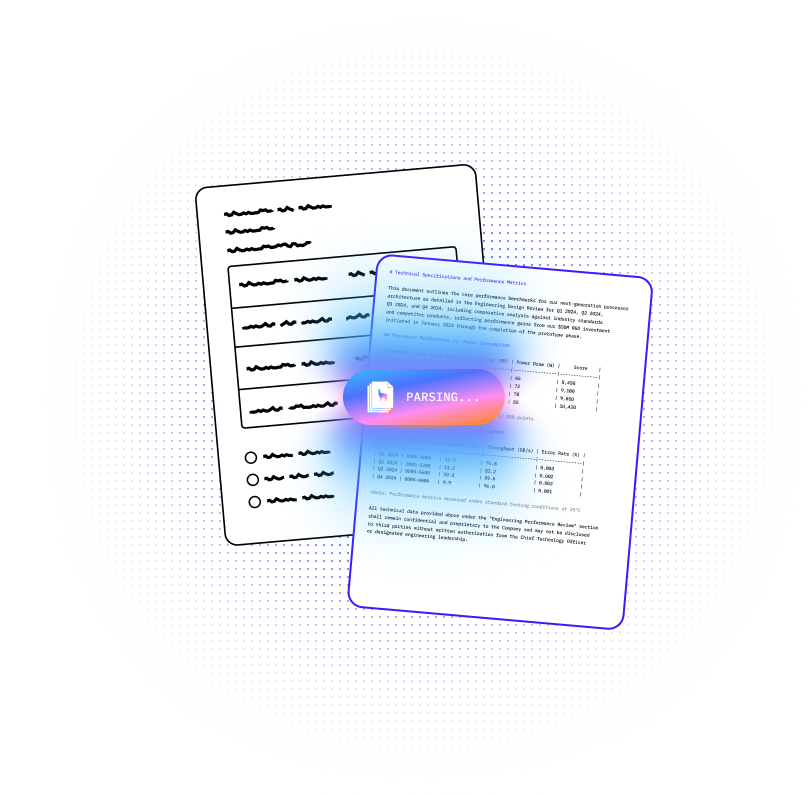


LlamaParse turns messy distributor applications into clean, structured records by understanding layouts, checkboxes, tables, and handwritten notes, not just text. Built on agentic document parsing, it validates fields with confidence metadata and outputs JSON or Markdown your workflows can trust.
Best-in-Class Accuracy

Turn inbound distributor applications, W-9s, resale certificates, and credit forms into validated JSON so your team can approve new accounts without rekeying messy PDFs. LlamaParse’s layout-aware extraction preserves tables and line items (terms, limits, ship-to/bill-to) and adds traceable metadata so exceptions get routed to the right reviewer fast.

Automate intake for distributor credit applications by extracting financial tables, ownership details, and references into a consistent schema your underwriting systems can consume. Natural-language parsing instructions and auto-correction loops reduce back-and-forth with applicants by catching missing fields and reconciling conflicting values before a human ever reviews it.

Standardize dealer/distributor onboarding across regions by parsing multi-format packets (PDF scans, emails, spreadsheets) into clean Markdown and structured records for ERP/CRM creation. Multimodal parsing converts embedded product catalogs, pricing charts, and compliance images into usable data so channel ops can enforce program rules and accelerate time-to-first-order.

Ship distributor onboarding workflows in weeks by using LlamaParse as the ingestion layer that converts real-world application packets into API-ready objects with citations and confidence scores. Tier-based processing keeps unit economics predictable by routing simple pages to low-cost modes while automatically escalating only the complex scans that typically break legacy OCR.
The Solution
01
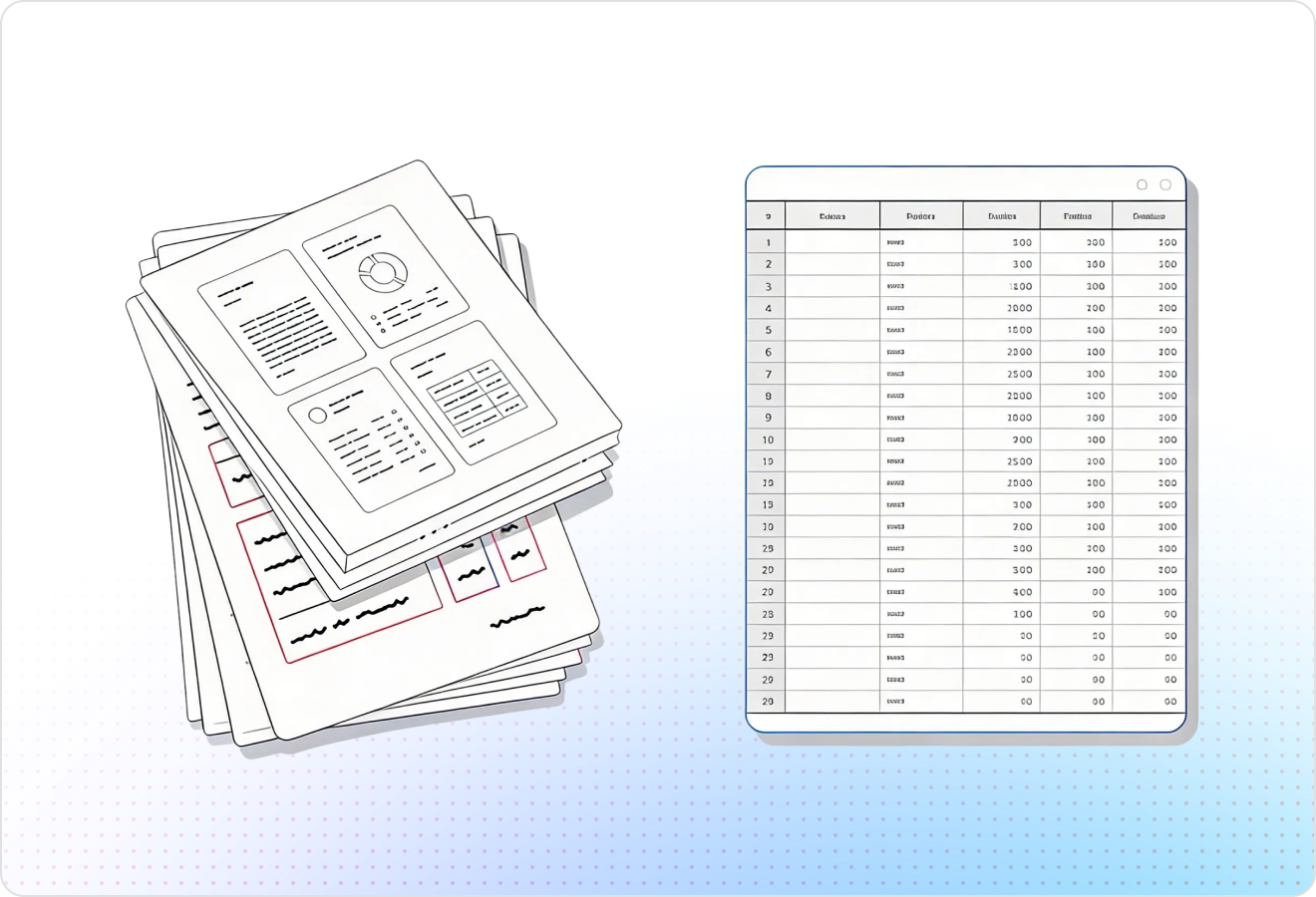
LlamaParse understands real application layouts—multi-column sections, checkboxes, headers/footers, and repeated fields—so distributor applications don’t get scrambled during parsing. You get consistent reading order and clean structure even when applicants use different versions of the same form.
02
It accurately extracts dense tables like product lines, territory coverage, pricing tiers, bank details, and trade references without losing rows or mixing columns. This turns distributor application tables into usable data you can validate, score, and load into your CRM or ERP.
03
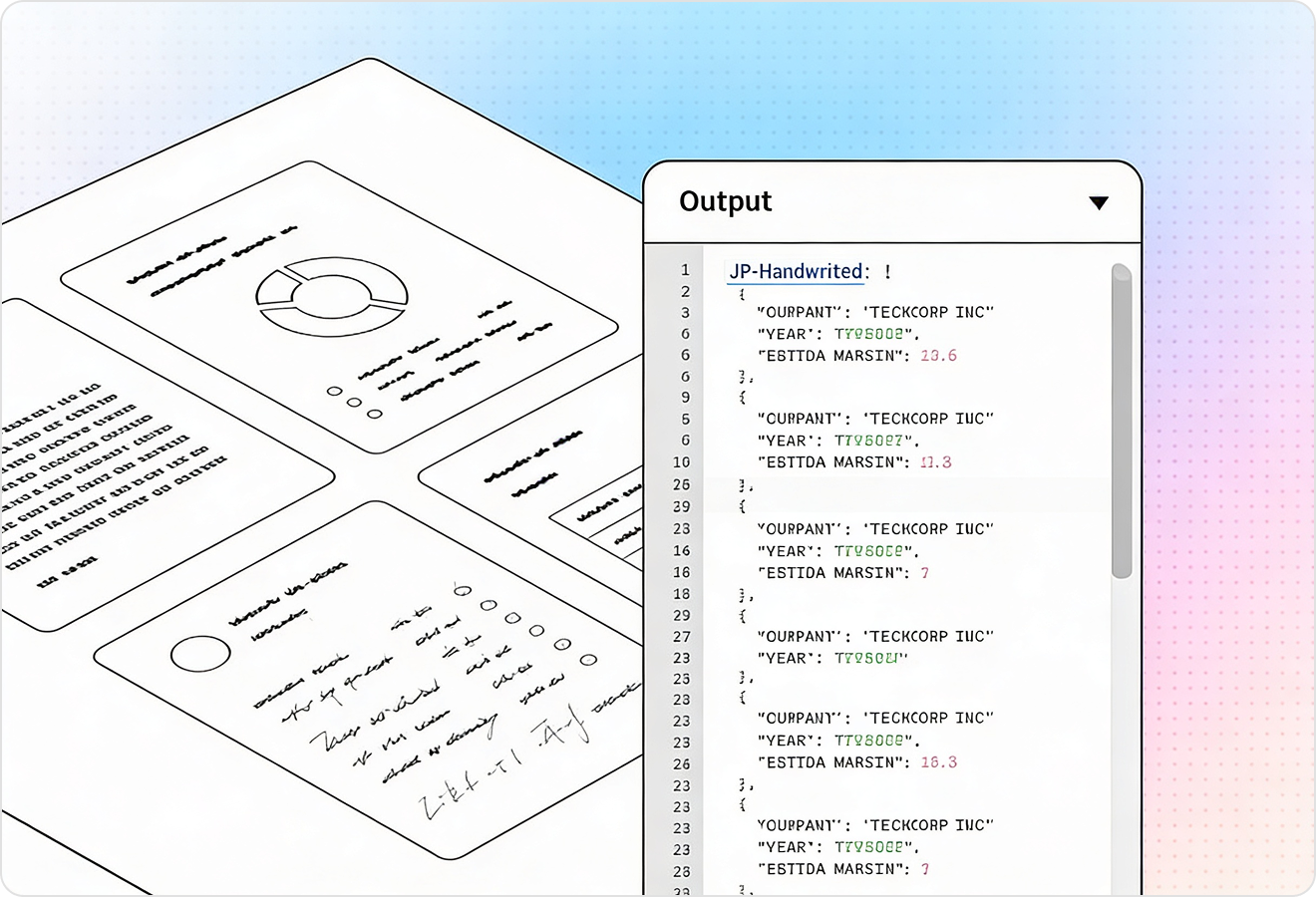
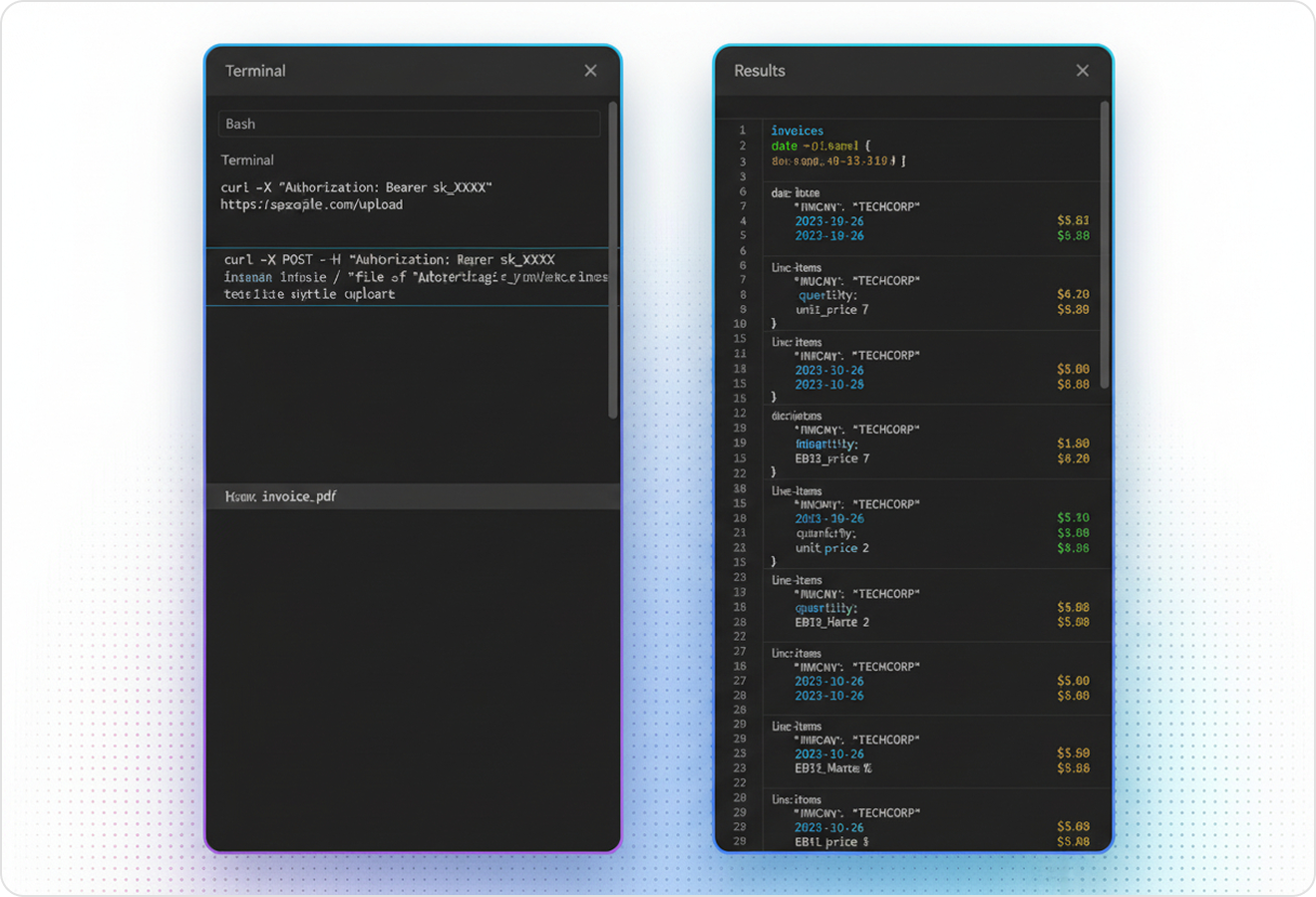
Use natural-language instructions to map messy applications into a stable JSON schema (e.g., legal entity, tax ID, address, insurance dates, warehouse capabilities, brand authorizations). That makes downstream automation simpler—no brittle regex, and fewer manual fixes when fields move around.
04
Every extracted value can include page-level traceability and confidence signals, so reviewers can instantly verify critical fields like licenses, signatures, and credit terms. This supports faster distributor onboarding with a clear audit trail for compliance and exception handling.
Technical OCR documentation
Explore our developer guides to easily connect your document pipelines to LlamaParse.
Explore the documentation
Our AI catches the typos that tired eyes miss.

Export to Excel, JSON, XML, or directly via API.

SOC2 Type II compliant with end-to-end encryption.

Train the tool on your specific forms in minutes, not days.

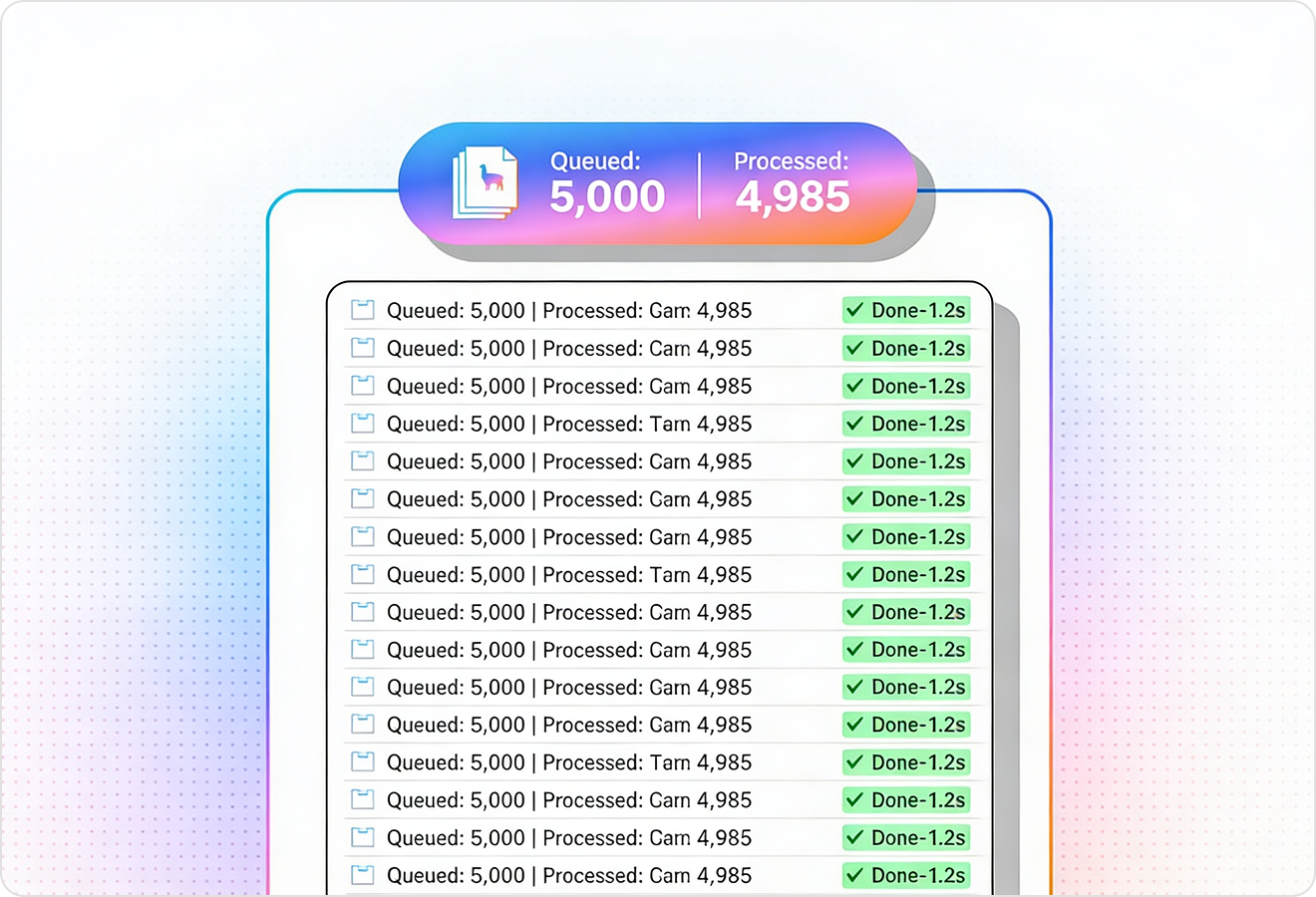
Average processing time of <3 seconds per page.
LlamaParse’s support of a wide variety of filetypes and its accuracy of parsing made it the best tool we tested in our evaluations. The LlamaIndex team was very responsive and we were off to the races within a day.
Common FAQs
01
Yes—our layout-aware extraction preserves reading order across multi-column sections, headers/footers, checkboxes, and repeated fields. Even if applicants submit different versions of the “same” form, you get a consistent structure you can rely on.
02
It’s built to reliably parse dense tables without dropping rows or mixing columns. That means product lines, territory coverage, trade references, and banking details come out as clean, usable data ready for validation and onboarding workflows.
03
Yes—use simple natural-language instructions to map messy documents into a stable JSON schema (e.g., legal entity, tax ID, addresses, insurance dates, warehouse capabilities). This reduces manual cleanup and avoids brittle regex rules when form fields shift.
04
Can reviewers verify where each extracted value came from for compliance and audits?
Every extracted field can include page-level citations and confidence signals, making it easy to confirm licenses, signatures, credit terms, and other high-risk fields. This creates a clear audit trail and speeds up exception handling without guesswork.
05
Does it support checkboxes, signatures, and repeated fields that appear in multiple places?
Yes—the parser understands form elements like checkboxes and repeated fields and keeps them tied to the correct section. This helps prevent “orphaned” answers and ensures critical acknowledgments and terms are captured consistently.
06
How does this reduce manual onboarding time without sacrificing data quality?
By extracting clean structure, reliable tables, and schema-ready JSON, your team spends less time retyping and fixing misaligned fields. Reviewers can quickly spot-check with citations, so you move faster while maintaining confidence in the data.