Nov 14, 2025
Document AI: The Next Evolution of Intelligent Document ProcessingPersona
Industry
Use cases
Vehicle Registration OCR
[ Vehicle Registration OCR ]

Use LlamaParse to capture plate, VIN, and owner details accurately, then fill forms automatically.
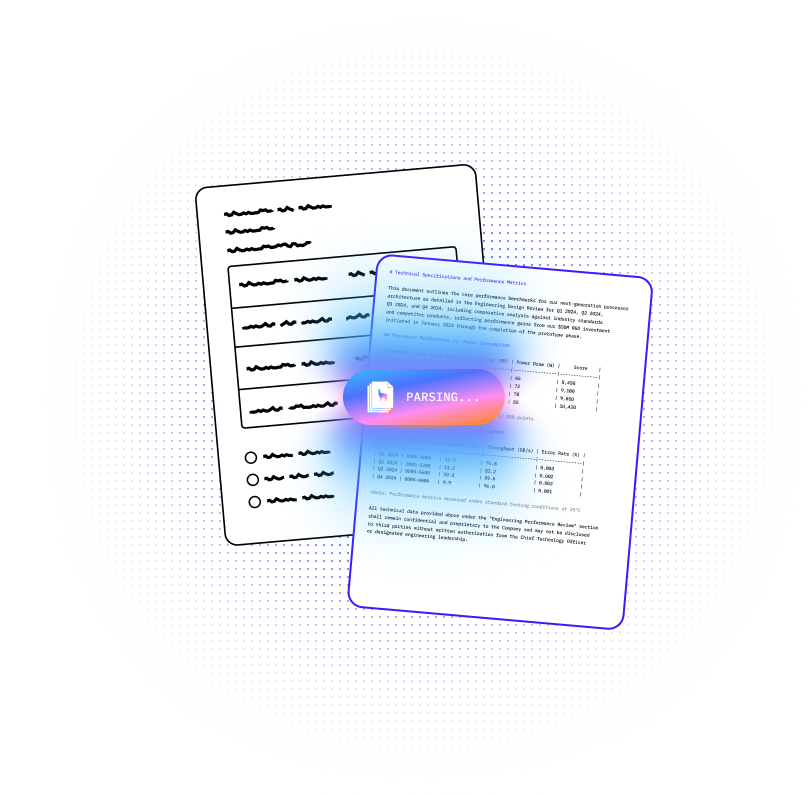

LlamaParse turns scanned vehicle registrations into clean, structured fields like VIN, plate number, owner, address, and expiration date, reliably. Layout-aware parsing and validation loops reduce manual review, and you still get citations and confidence metadata for fast, auditable approvals.
Best-in-Class Accuracy

Use LlamaParse to turn uploaded vehicle registration scans into clean JSON (VIN, plate, owner, address, effective dates) with citations and confidence scores, reducing re-keying and bad binds from misread fields. Layout-aware parsing handles multi-section registrations and state-specific templates without brittle rules, so adjuster and underwriting workflows stay straight-through even as forms change.

Automatically ingest registrations across thousands of vehicles and jurisdictions, extracting renewal dates, registered owners, weights, and plate details into your fleet system to prevent compliance gaps and unexpected downtime. Tier-based agentic processing routes easy documents cheaply while escalating messy photos or stamped scans to higher-accuracy parsing, keeping per-vehicle processing costs predictable at scale.

Digitize incoming registration paperwork into standardized, verifiable records with page-level traceability, enabling faster intake, fewer data-entry errors, and cleaner downstream audits. Natural-language parsing instructions let teams enforce agency-specific schemas and validations (e.g., required fields by transaction type) without maintaining fragile template code.

Ship vehicle ownership verification in days by parsing user-submitted registrations into normalized JSON and returning structured evidence your app can use for risk checks and onboarding decisions. Multimodal parsing reads seals, stamps, and non-text elements that break traditional OCR, reducing manual review queues and improving conversion in high-variance real-world uploads.
The Solution
01
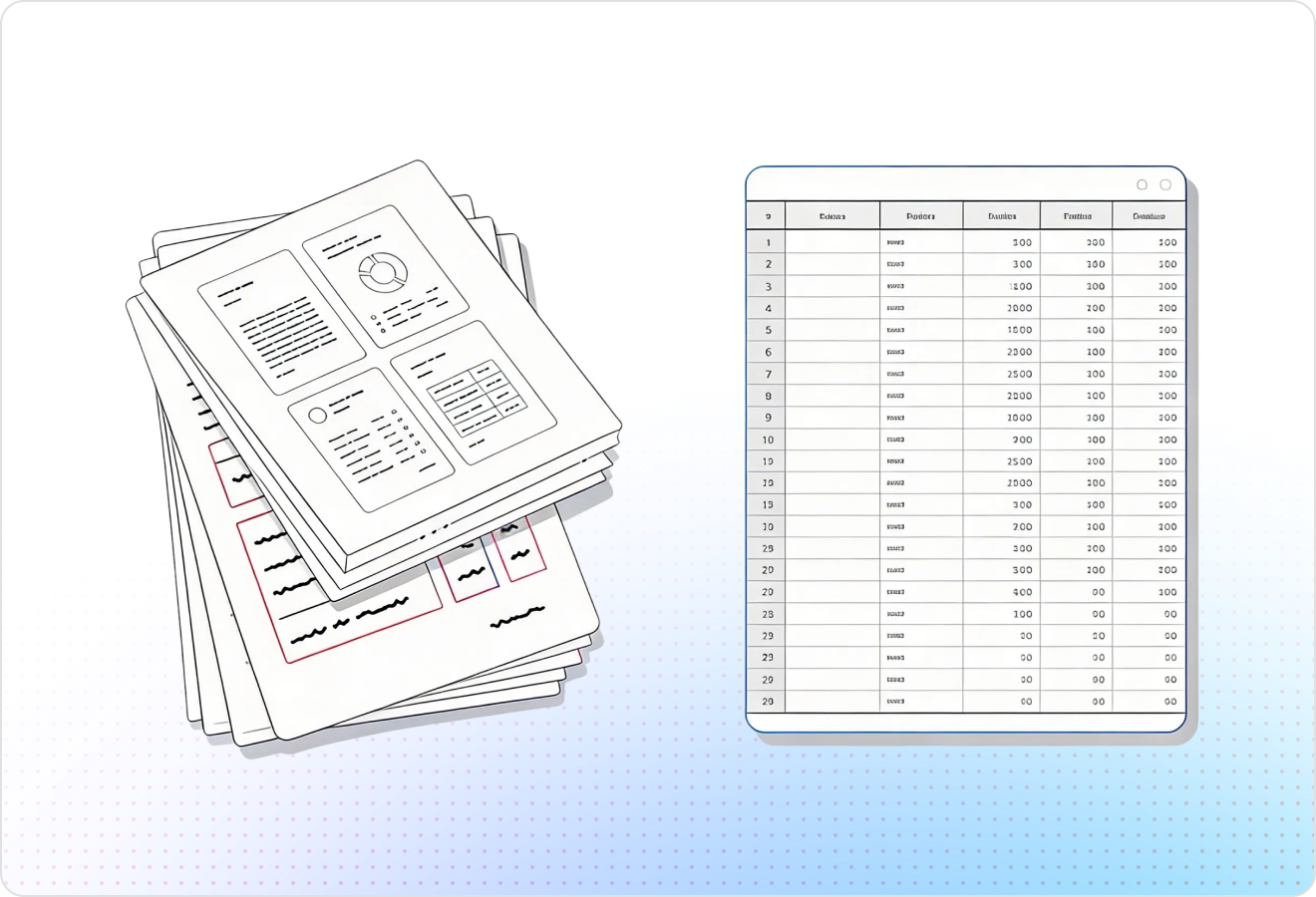
LlamaParse uses layout-aware vision to preserve reading order and correctly associate labels with values across multi-section registration forms. That means VIN, plate number, owner name, and address don’t get scrambled when states, templates, or print layouts change.
02
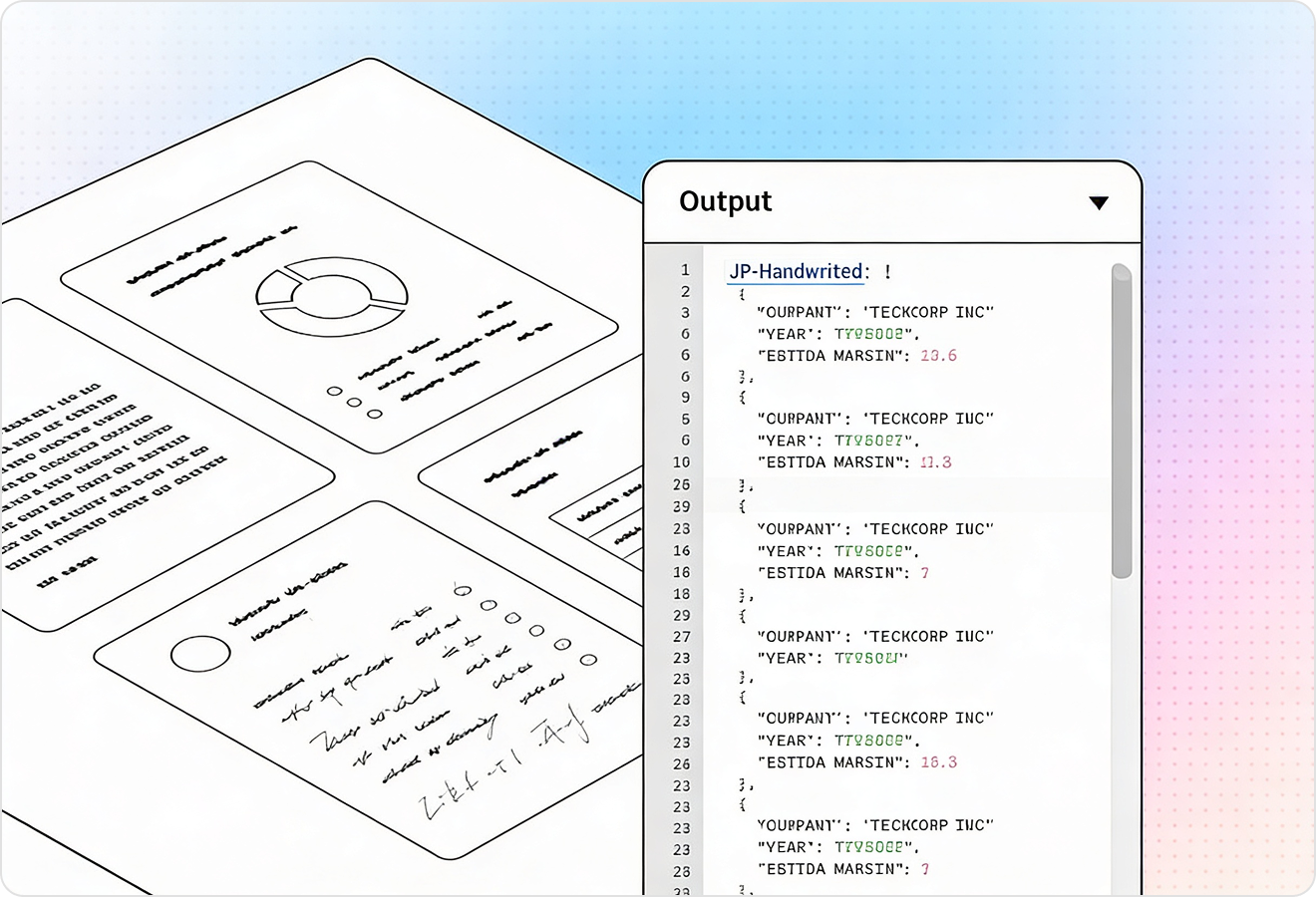
You can instruct LlamaParse to return a strict JSON schema for vehicle registration data (e.g., vin, plate, make, model, year, expiry_date). This makes downstream validation and database ingestion predictable, without building brittle regex and post-processing pipelines.
03
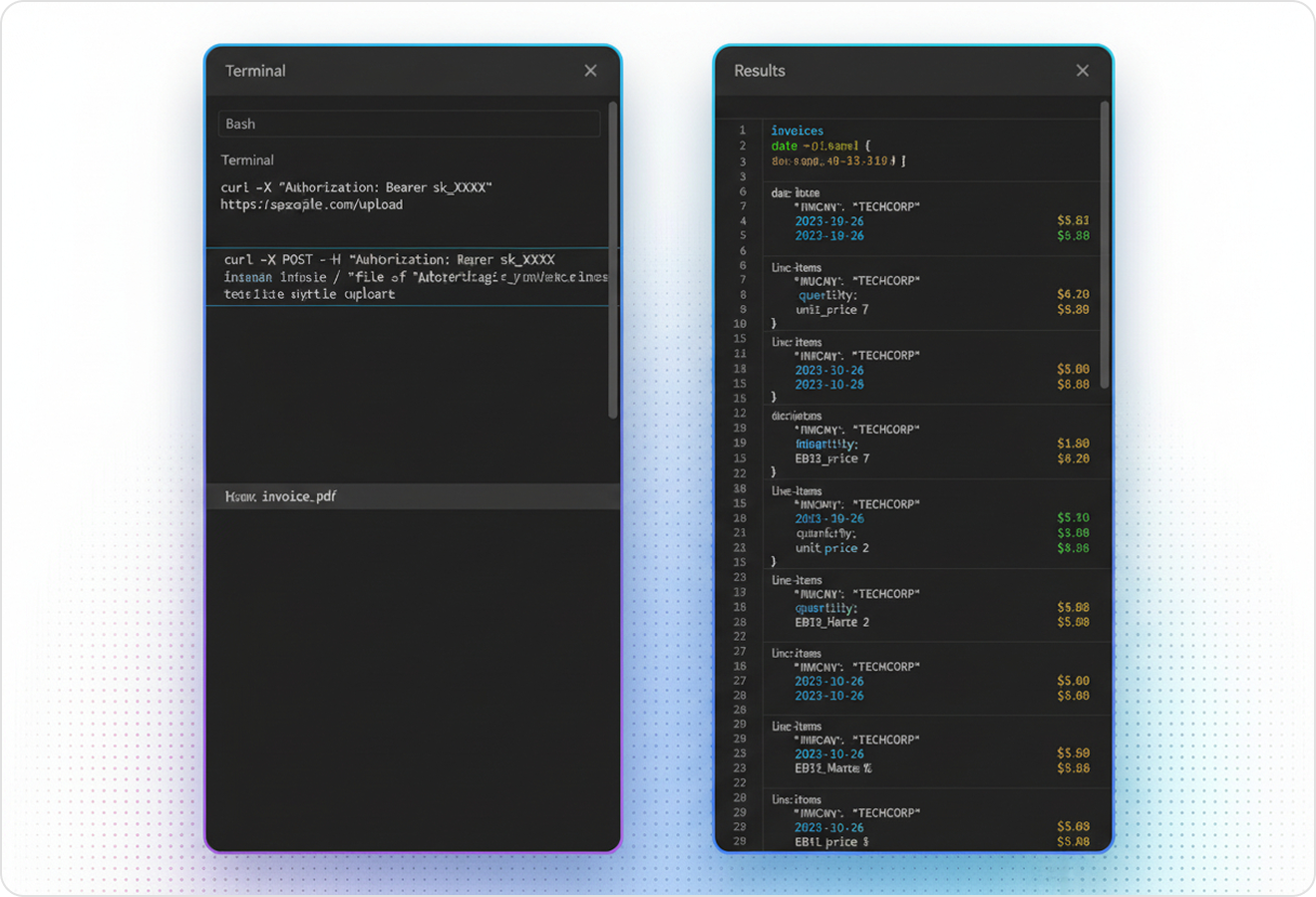
Every extracted field can include page references and positional metadata, so you can trace exactly where each value came from on the registration. This is ideal for audits and human review workflows when a VIN digit or expiry date needs quick confirmation.
04
LlamaParse runs validation and self-correction loops to catch common scan issues like misread characters (e.g., O vs 0) and inconsistent formatting across fields. In vehicle registration workflows, this boosts straight-through processing and reduces manual rework on low-quality uploads.
Technical OCR documentation
Explore our developer guides to easily connect your document pipelines to LlamaParse.
Explore the documentation
Our AI catches the typos that tired eyes miss.

Export to Excel, JSON, XML, or directly via API.

SOC2 Type II compliant with end-to-end encryption.

Train the tool on your specific forms in minutes, not days.

Average processing time of <3 seconds per page.
LlamaParse’s support of a wide variety of filetypes and its accuracy of parsing made it the best tool we tested in our evaluations. The LlamaIndex team was very responsive and we were off to the races within a day.
Common FAQs
01
Our layout-aware field capture preserves reading order and understands label-to-value relationships, even on multi-section forms. That means VINs, plate numbers, names, and addresses stay correctly paired when templates, states, or print formats change.
02
Yes—schema-guided JSON output lets you define exactly which fields you want and how they should be structured. You get consistent, predictable data for validation and ingestion without relying on brittle regex or heavy post-processing.
03
Each extracted field can include verifiable citations like page references and positional metadata. Reviewers can jump straight to the exact spot on the registration where the value came from, speeding up audits and exception handling.
04
What happens with low-quality scans or photos where characters are often misread (like O vs 0)?
Auto-correction validation loops detect common OCR errors and re-check questionable fields against context and formatting rules. This improves accuracy on imperfect uploads and reduces the amount of manual rework required.
05
Will this work reliably when we receive many different registration templates and updates over time?
Because extraction is layout-aware rather than template-brittle, it adapts well as forms evolve or vary by state and issuer. You’ll spend less time maintaining extraction rules and more time processing registrations end-to-end.
06
How does this reduce operational costs and improve straight-through processing for registration intake?
Cleaner structured JSON and built-in validation reduce downstream exceptions, so more registrations can be processed automatically. When edge cases occur, citations make review fast—helping you scale throughput without scaling headcount.