Nov 14, 2025
Document AI: The Next Evolution of Intelligent Document ProcessingPersona
Industry
Use cases
S-1 Filing OCR
[ S-1 Filing OCR ]

Turn messy S-1 PDFs into reliable JSON tables and fields using LlamaParse’s layout-aware parsing.
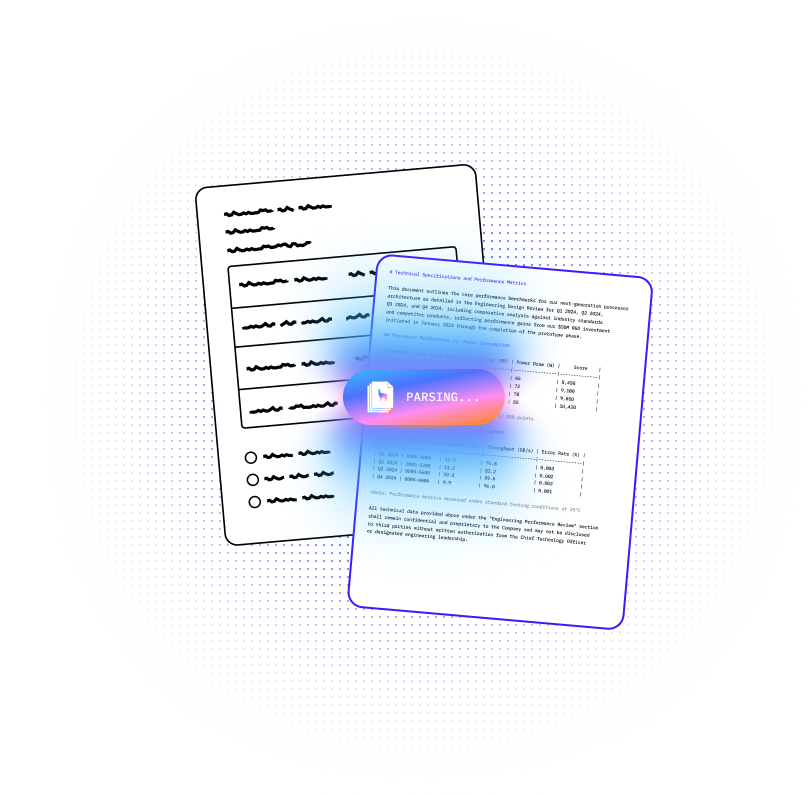
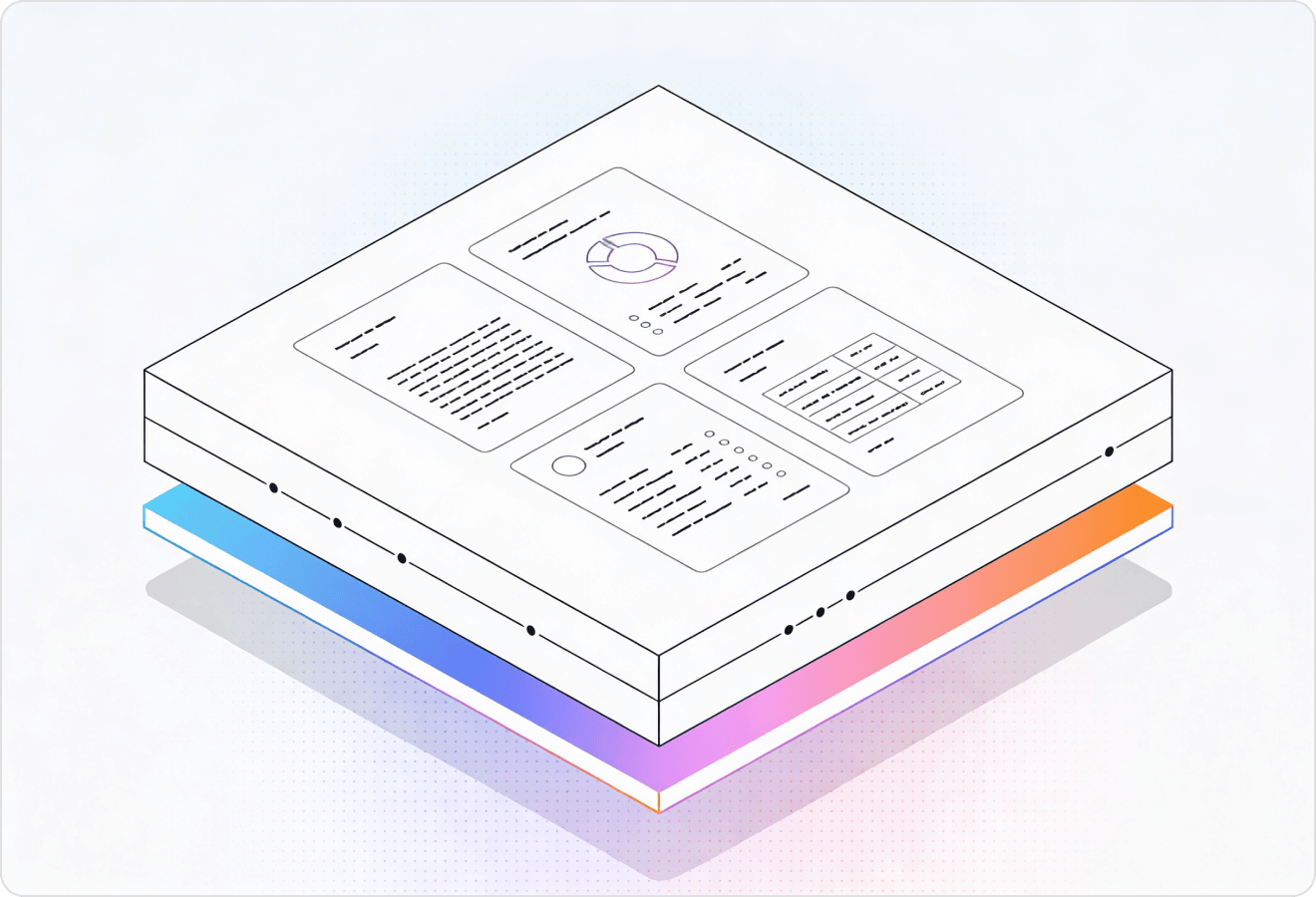

LlamaParse turns messy S-1 PDFs into clean, structured outputs you can trust, so analysts and systems can query sections, tables, and exhibits. It uses agentic document parsing with layout-aware vision, validation loops, and citations to reduce manual cleanup and speed downstream extraction.
Best-in-Class Accuracy

Use LlamaParse to turn S-1 PDFs into clean, comparable JSON/Markdown so analysts can track revenue mix, risk factors, and dilution language across deals without manual copy-paste. Layout-aware table extraction preserves complex cap table and financial footnote structure, so comps and IC memos update fast even when filings change format.

Parse newly filed S-1s into structured outputs with citations, enabling faster KPI normalization, segment pull-through, and model-ready tables directly from the prospectus. Multimodal parsing captures charts and embedded tables accurately, reducing overnight rush errors and rework when bankers build IPO narratives and valuation materials.

Convert S-1 sections like risk factors, related-party transactions, and use-of-proceeds into a traceable structured dataset to support review workflows and exception queues. Granular metadata with page-level coordinates and confidence scoring makes it practical to audit extractions and route only low-confidence clauses for human review.

Ingest high volumes of S-1 filings and reliably publish normalized fields—financial statements, ownership tables, and business descriptions—into downstream APIs and dashboards. Tier-based agentic processing and cost optimizer mode keep unit economics predictable by reserving heavier reasoning for the messy pages that break traditional OCR.
The Solution
01
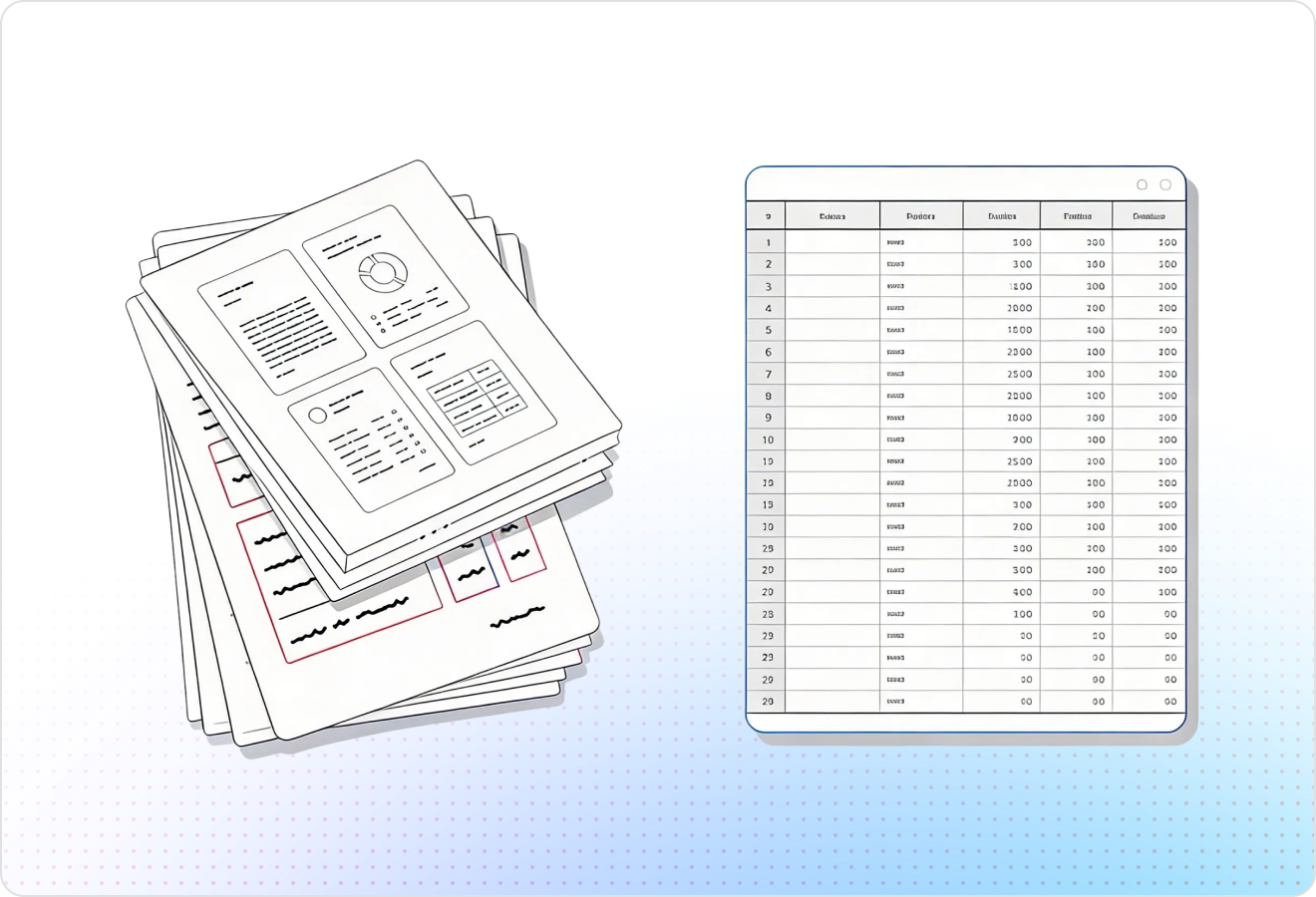
LlamaParse understands multi-column layouts, headers, footnotes, and dense legal formatting, then reconstructs the correct reading order. For S-1 filings, this keeps risk factors, MD&A, and footnote-heavy sections intact so downstream extraction doesn’t mix lines or lose context.
02
LlamaParse extracts complex tables without flattening rows/columns or scrambling values, even when tables span pages. That’s critical for S-1 financial statements and capitalization tables where a single shifted cell can break your metrics and comparisons.
03
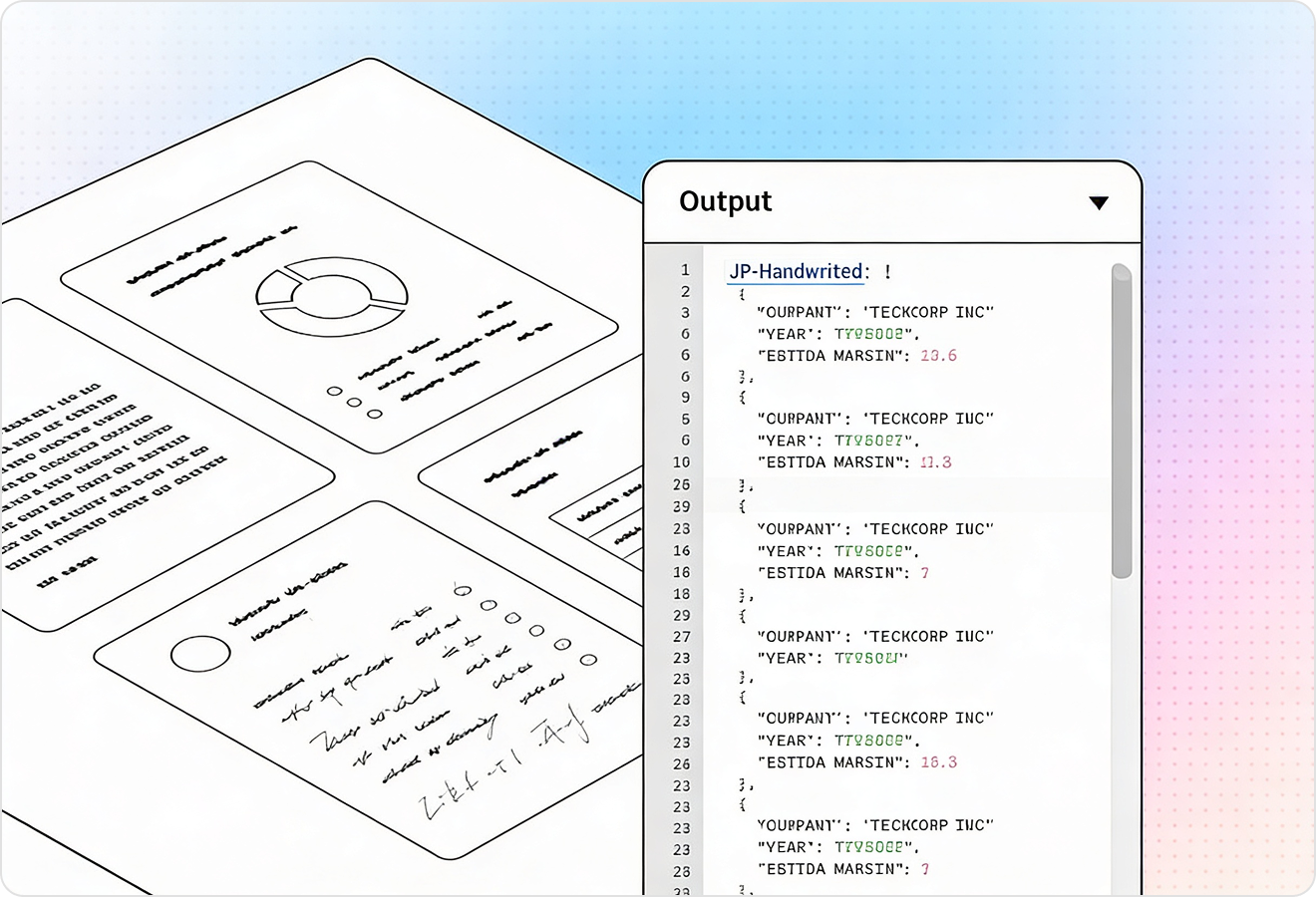
LlamaParse uses validation and self-correction loops to catch common scan and formatting errors before returning results. When you’re processing S-1s at scale, this reduces manual QA on edge cases like faint text, broken lines, and inconsistent numbering across amendments.
04
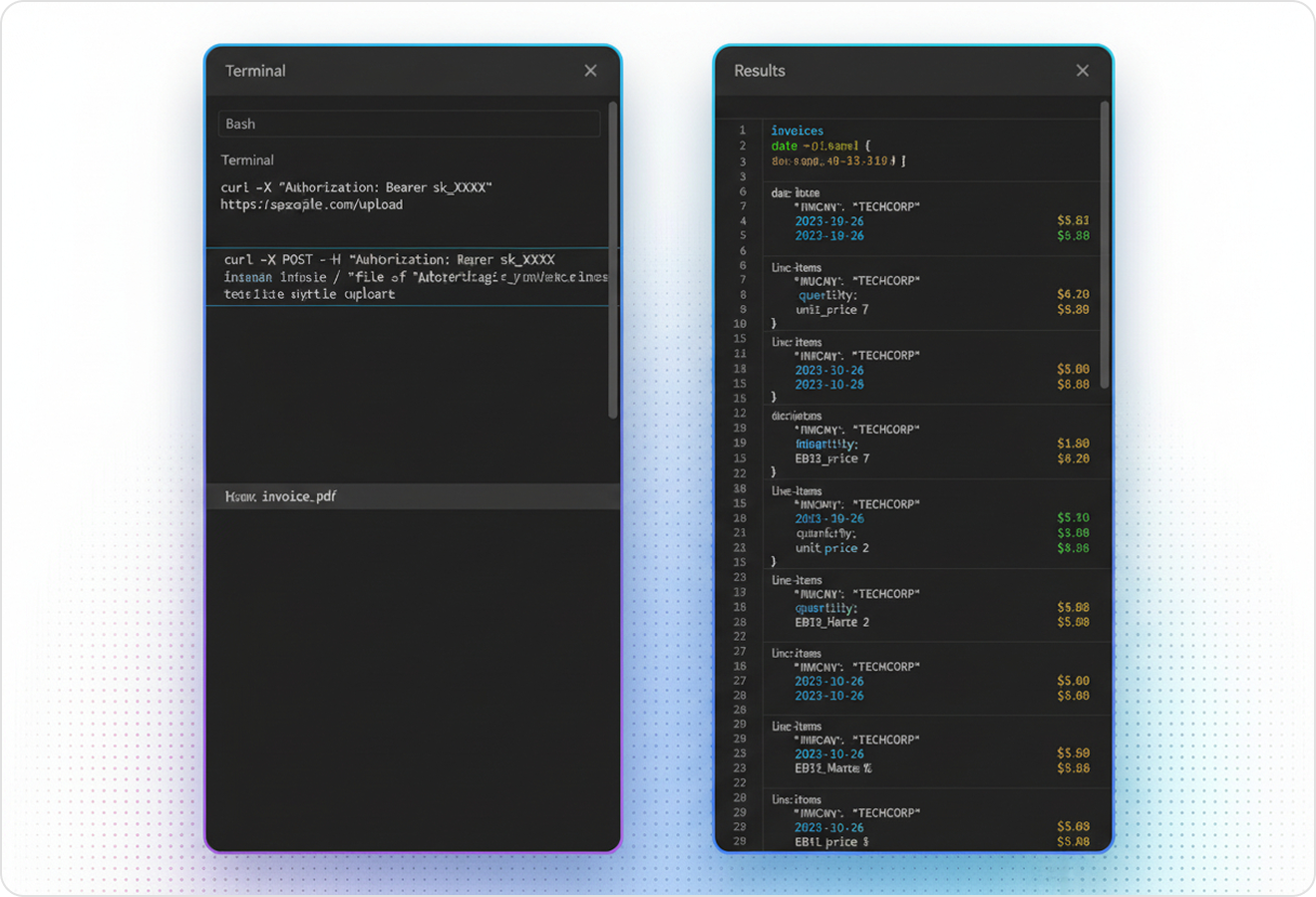
LlamaParse can emit structured JSON with granular metadata like page numbers and coordinates for each extracted element. For S-1 workflows, you can trace every extracted KPI or disclosure back to the exact location in the filing for auditability and human review.
Technical OCR documentation
Explore our developer guides to easily connect your document pipelines to LlamaParse.
Explore the documentation
Our AI catches the typos that tired eyes miss.

Export to Excel, JSON, XML, or directly via API.

SOC2 Type II compliant with end-to-end encryption.

Train the tool on your specific forms in minutes, not days.

Average processing time of <3 seconds per page.
LlamaParse’s support of a wide variety of filetypes and its accuracy of parsing made it the best tool we tested in our evaluations. The LlamaIndex team was very responsive and we were off to the races within a day.
Common FAQs
01
Our layout-aware parsing detects columns, headers, footnotes, and dense legal formatting, then reconstructs the intended reading order. That means paragraphs don’t get interleaved across columns, so your downstream extraction stays accurate and context-safe.
02
Yes—high-fidelity table extraction preserves rows, columns, and spanning headers even when tables break across pages. This prevents subtle cell shifts that can corrupt metrics, ratios, and period-over-period comparisons.
03
Agentic parsing auto-corrections run validation and self-checks to catch common OCR and formatting failures before results are returned. You get cleaner output with fewer edge cases, reducing manual QA and reprocessing time.
04
Do you provide structured output I can feed directly into pipelines and LLM workflows?
We can emit structured JSON instead of just raw text, making it easy to map sections, tables, and key disclosures into your data model. This cuts time spent on custom post-processing and helps you scale S-1 ingestion reliably.
05
How can I verify extracted KPIs or disclosures for audit and review?
Each extracted element can include citations like page numbers and coordinates, so reviewers can jump straight to the source location in the filing. This improves auditability and builds confidence when results are used in research, compliance, or investor workflows.
06
Will this reduce the time my team spends manually checking OCR outputs for S-1s at scale?
Yes—the combination of layout-aware parsing, accurate tables, and auto-corrections significantly reduces the typical cleanup work. Teams usually move from manual spot-fixing to quick citation-based review, accelerating throughput without sacrificing trust.