Nov 14, 2025
Document AI: The Next Evolution of Intelligent Document ProcessingPersona
Industry
Use cases
Medical Insurance Verification OCR
[ Medical Insurance Verification OCR ]

Use LlamaParse to extract eligibility and coverage data with citations, reducing rework and manual checks.
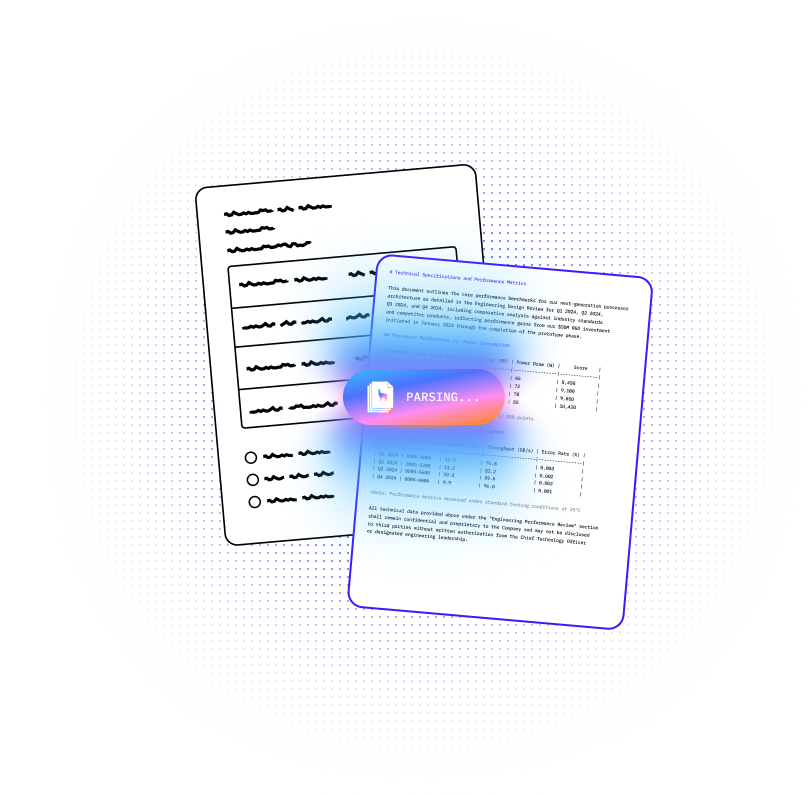


LlamaParse turns messy insurance cards, eligibility letters, EOBs, and prior auth forms into clean, structured data you can trust. Agentic parsing understands layouts and tables, cross-checks key fields like member ID and coverage dates, and returns verifiable outputs for faster decisions.
Best-in-Class Accuracy

Use LlamaParse in LlamaCloud to parse insurance cards and benefit documents into structured JSON so eligibility, member IDs, and plan rules auto-populate intake and pre-auth workflows. Layout-aware extraction and validation loops reduce manual callbacks caused by misread group numbers, cropped photos, or multi-line copay tables.

Automate ingestion of provider-submitted eligibility proofs, COB forms, and coverage letters by converting messy PDFs and faxes into verifiable, citation-backed fields for adjudication and audit. Tier-based processing routes simple pages cheaply while escalating only complex scans, cutting review queues without sacrificing accuracy.

Standardize insurance verification across thousands of practices by extracting deductible, coinsurance, and prior-authorization requirements from inconsistent payer docs into clean Markdown/JSON that downstream systems can consume. Natural-language parsing instructions let ops teams update extraction rules in plain English when a payer changes formats, avoiding brittle regex pipelines.

Ship an insurance verification feature fast by plugging LlamaParse APIs into your onboarding flow to turn user-uploaded card photos and PDFs into structured eligibility data with coordinates and confidence for quick QA. Auto Mode and cost optimizer controls keep unit economics predictable while scaling from pilot volumes to production.
The Solution
01
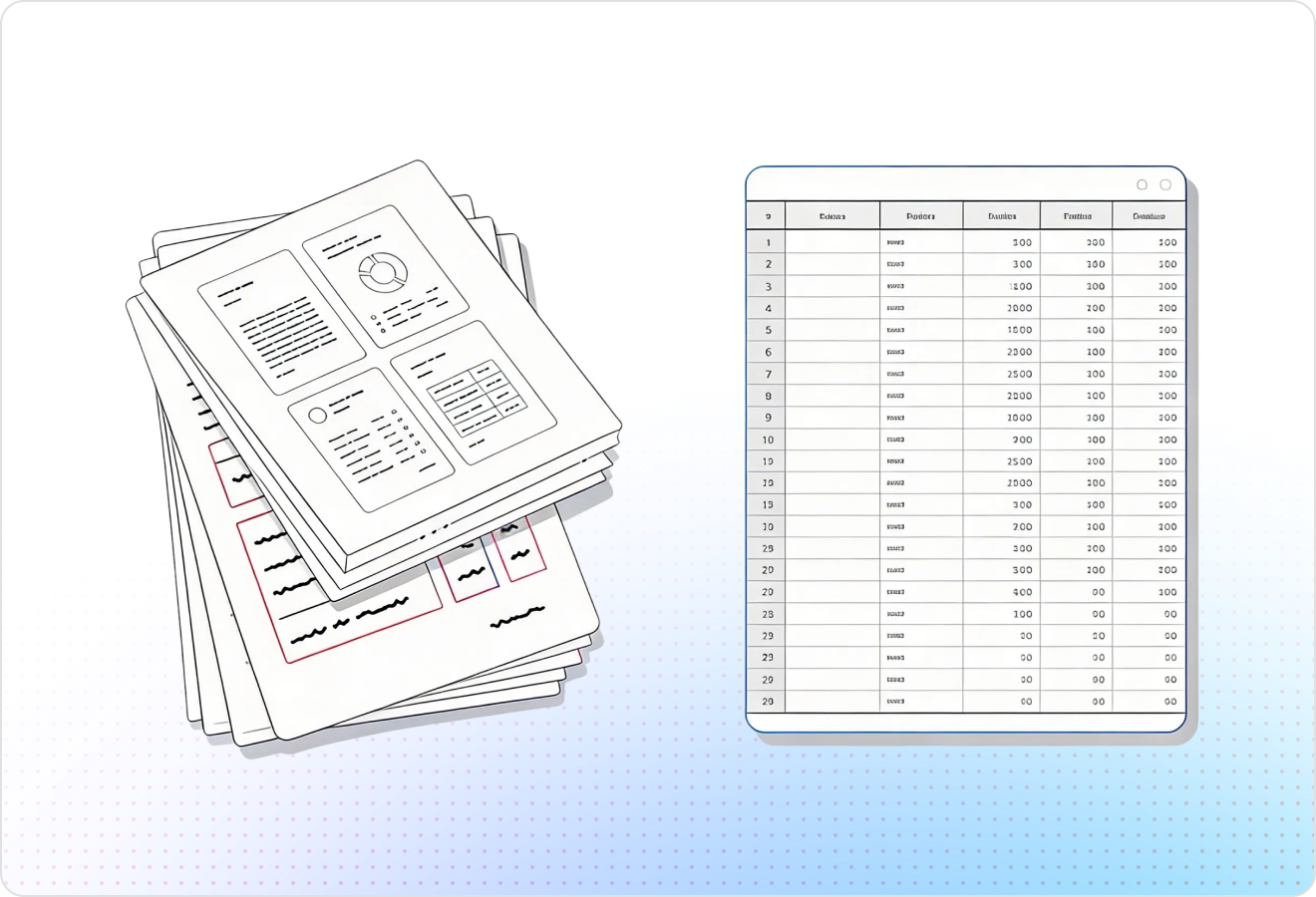
LlamaParse understands real insurance card and verification form layouts—multi-column text, header blocks, and field groupings—so member demographics and plan details don’t get scrambled. This keeps payer name, member ID, group number, and plan type mapped to the right fields for reliable eligibility checks.
02
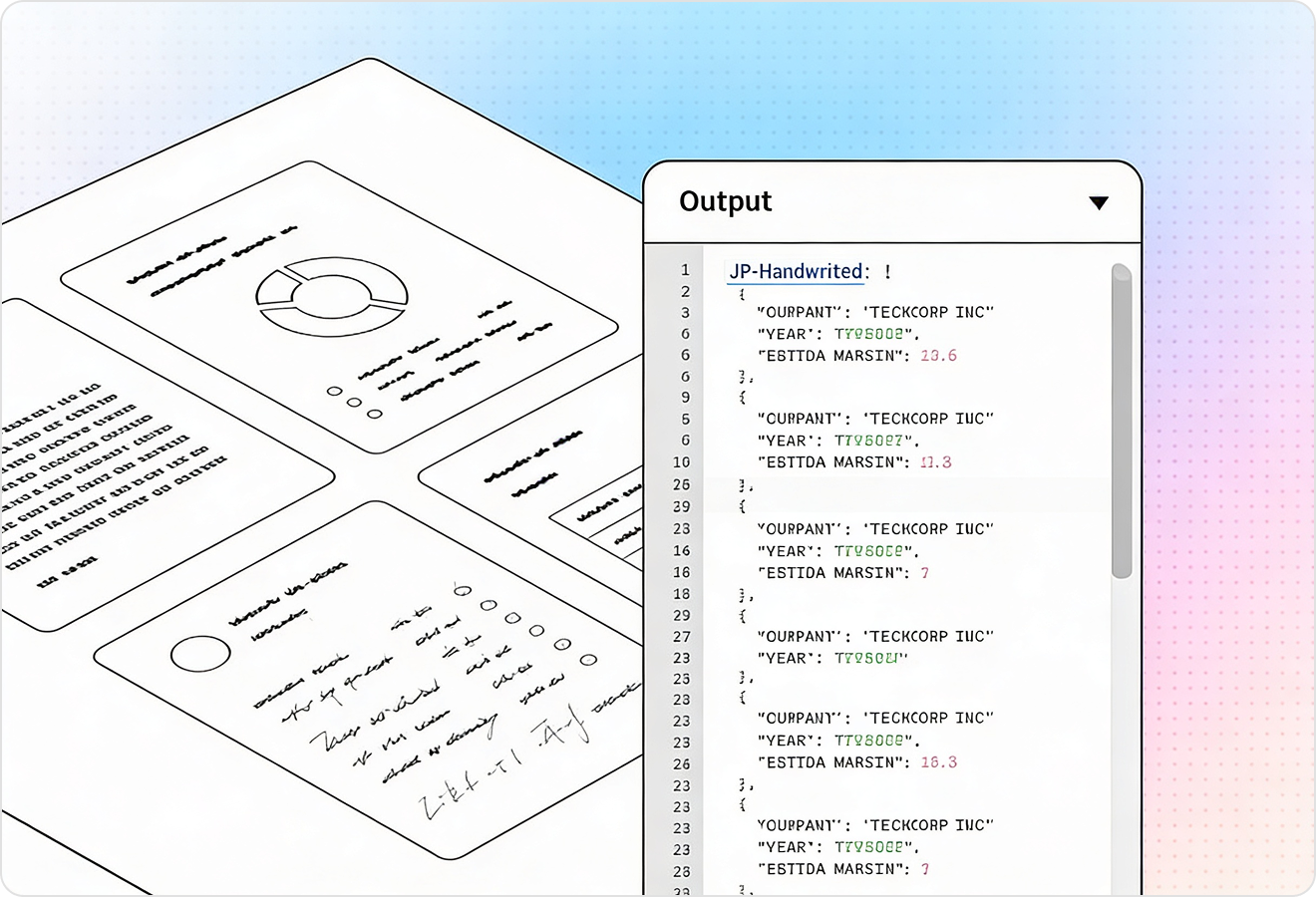
LlamaParse runs self-correction and validation steps during parsing to catch common extraction failures like swapped digits, missing characters, or misread plan codes. For insurance verification, that means fewer downstream denials caused by bad IDs, incorrect payer info, or incomplete coverage fields.
03
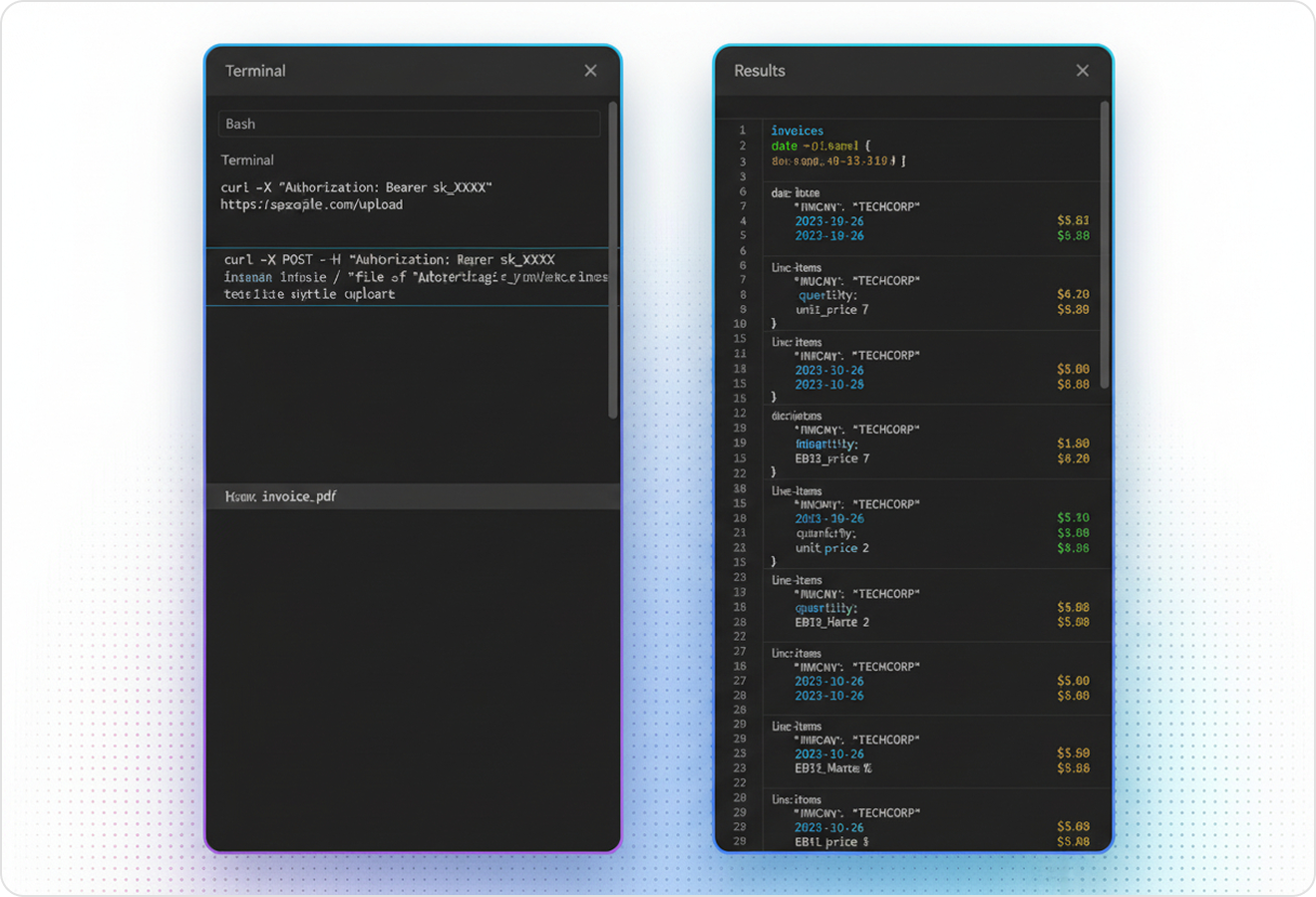
LlamaParse can return clean JSON plus granular metadata (page, coordinates, and element types) for every extracted value. In a verification workflow, you can audit exactly where the member ID or copay came from and route low-confidence fields to human review instead of guessing.
04
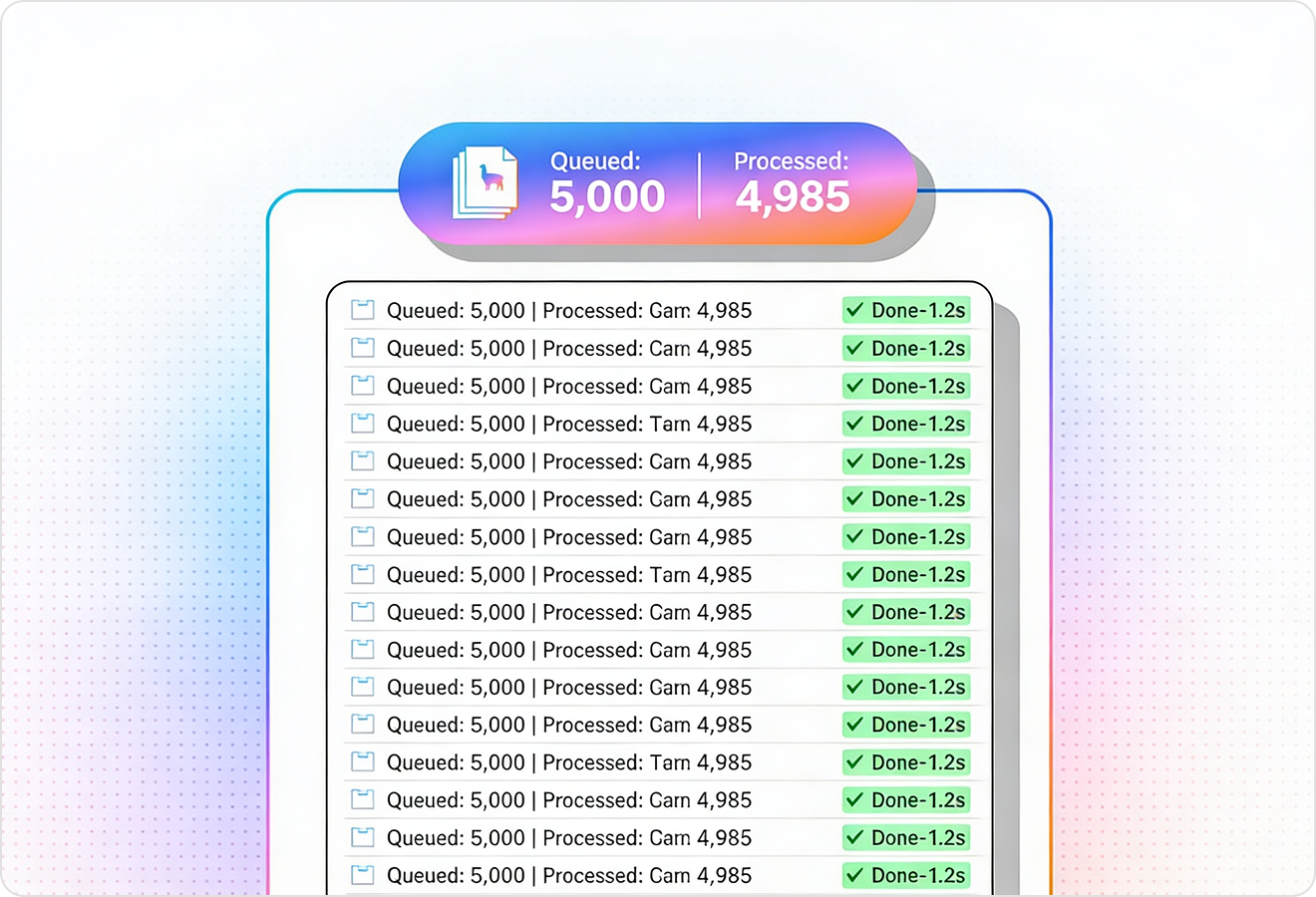
LlamaParse automatically routes simple pages through faster, cheaper processing while escalating messy scans or low-quality card photos to more capable multimodal models. This keeps per-verification costs predictable without sacrificing accuracy when you hit real-world edge cases.
Technical OCR documentation
Explore our developer guides to easily connect your document pipelines to LlamaParse.
Explore the documentation
Our AI catches the typos that tired eyes miss.

Export to Excel, JSON, XML, or directly via API.

SOC2 Type II compliant with end-to-end encryption.

Train the tool on your specific forms in minutes, not days.

Average processing time of <3 seconds per page.
LlamaParse’s support of a wide variety of filetypes and its accuracy of parsing made it the best tool we tested in our evaluations. The LlamaIndex team was very responsive and we were off to the races within a day.
Common FAQs
01
Our layout-aware parsing reads insurance cards and forms the way humans do—respecting columns, headers, and grouped fields—so key details don’t get scrambled. That means payer name, member ID, group number, and plan type are consistently mapped to the correct fields for reliable eligibility checks.
02
Tiered agentic processing automatically escalates messy scans and low-quality photos to more capable multimodal models while keeping clean documents on faster, lower-cost paths. You get predictable per-verification costs without sacrificing accuracy on real-world edge cases.
03
Agentic accuracy validation loops run self-correction checks during extraction to catch issues like digit swaps, dropped characters, and misread plan codes. This reduces downstream denials and rework caused by inaccurate IDs, payer info, or incomplete coverage fields.
04
Can we audit where each extracted value came from for compliance and QA?
Yes—results can include structured JSON plus traceability metadata like page number, coordinates, and element type for every field. That makes it easy to verify exactly where a member ID, copay, or plan detail was captured and to support audits with confidence.
05
How should we handle low-confidence fields without slowing down the whole workflow?
Instead of forcing manual review for every document, you can route only the questionable fields to a human-in-the-loop based on confidence and traceability signals. This keeps verification fast while ensuring high-stakes fields are confirmed before they impact billing or eligibility.
06
What format do we get back, and how easily can it integrate with our eligibility or RCM systems?
You receive clean, structured JSON designed for downstream automation, with consistent field mapping for member demographics and plan details. That makes it straightforward to feed your eligibility checks, RCM workflows, or data warehouse while preserving traceability when you need it.