Nov 14, 2025
Document AI: The Next Evolution of Intelligent Document ProcessingPersona
Industry
Use cases
Delivery Order OCR
[ Delivery Order OCR ]

Use LlamaParse to turn messy delivery orders into verified JSON with layout-aware accuracy.
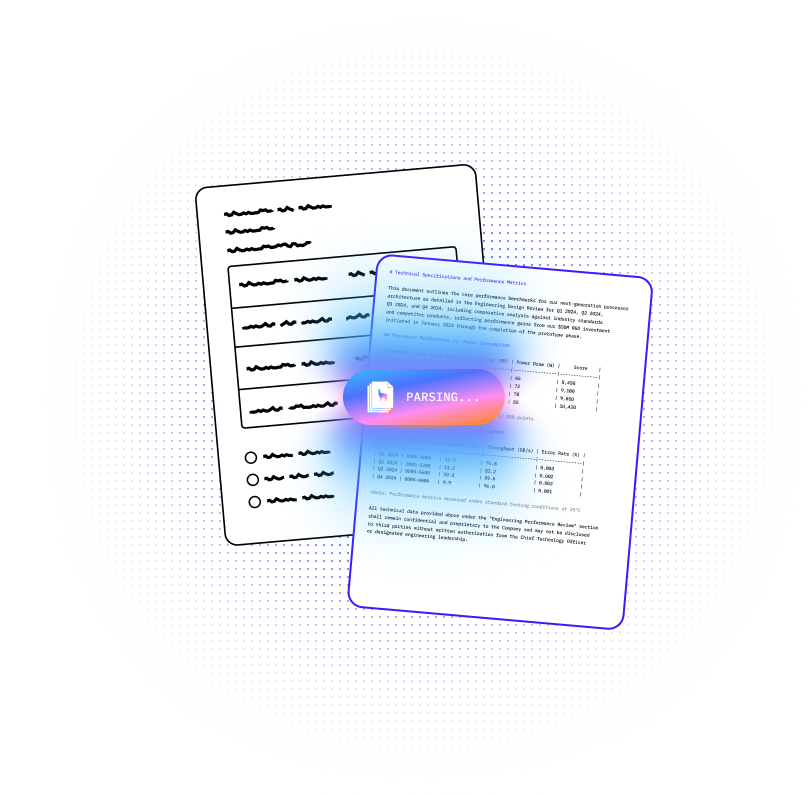


LlamaParse turns messy delivery orders into clean JSON or Markdown you can trust, capturing line items, dates, quantities, and totals with layout awareness. It validates extractions with citations and confidence metadata, so your team can automate downstream workflows while still auditing edge cases fast.
Best-in-Class Accuracy

Use LlamaParse to turn delivery orders into structured JSON that reconciles SKUs, quantities, and unit prices against POs and invoices—even when the document has multi-column layouts and messy tables. This reduces short-ship disputes and speeds up receiving by pushing clean line items straight into your WMS/ERP with traceable citations for audit.

Parse delivery orders to automatically confirm part numbers, lot/batch IDs, and quantities, even when details are embedded in dense tables or mixed with stamps and handwritten notes. Teams use the extracted data to flag shortages and nonconforming shipments early, preventing production line delays and reducing manual QA paperwork.

Convert delivery orders into normalized shipment records with consistent reading order, so operators can reliably capture consignee, dock appointment details, carton counts, and accessorials from varied carrier formats. This enables faster exception handling and proof-of-delivery workflows while keeping a clear metadata trail for claims and chargebacks.

Startups use LlamaParse as the ingestion layer to turn customer-uploaded delivery orders into clean Markdown/JSON without writing brittle layout-fixing code or maintaining custom templates. Natural-language parsing instructions let you ship customer-specific schemas quickly, while tier-based processing controls cost as volumes scale.
The Solution
01
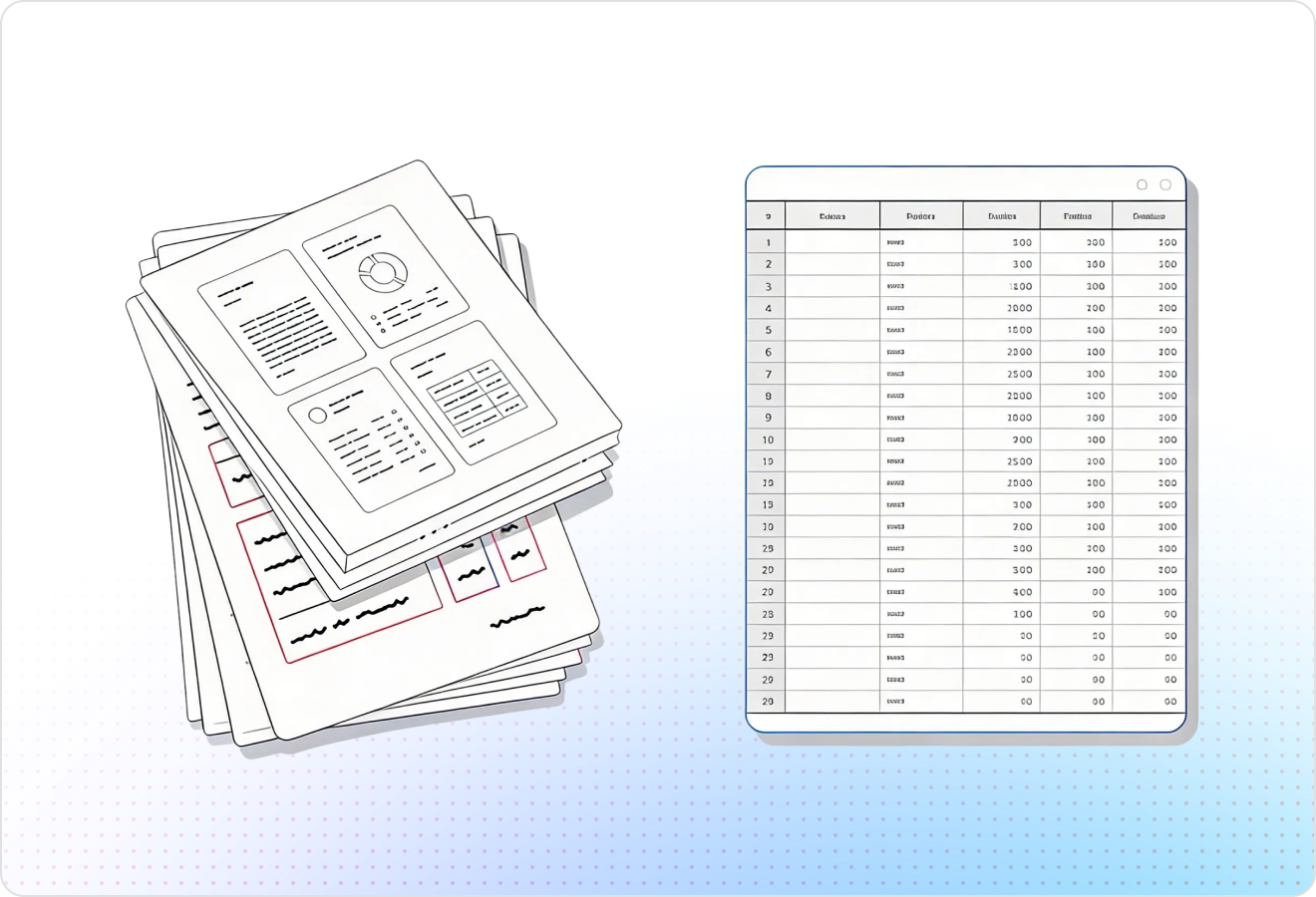
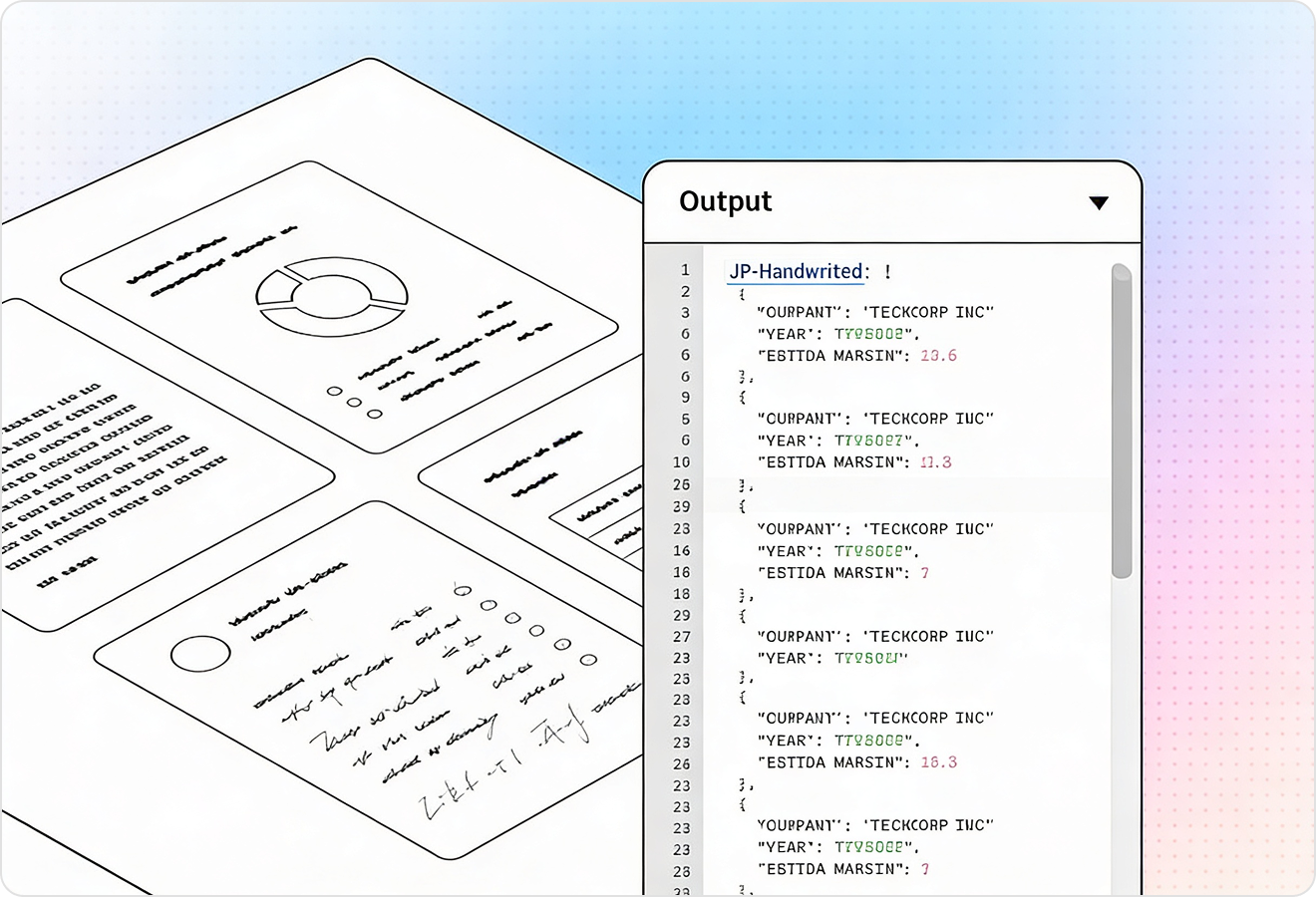
LlamaParse understands delivery order layouts, preserving reading order across headers, line items, and footer totals even when templates vary by carrier or warehouse. That means you can reliably extract PO/DO numbers, ship-to details, dates, and totals without brittle coordinate rules
02
It accurately pulls item tables into clean Markdown or structured data, keeping columns like SKU, description, quantity, UOM, and remarks aligned. This turns delivery order line items into database-ready records for receiving, matching, and discrepancy checks.
03
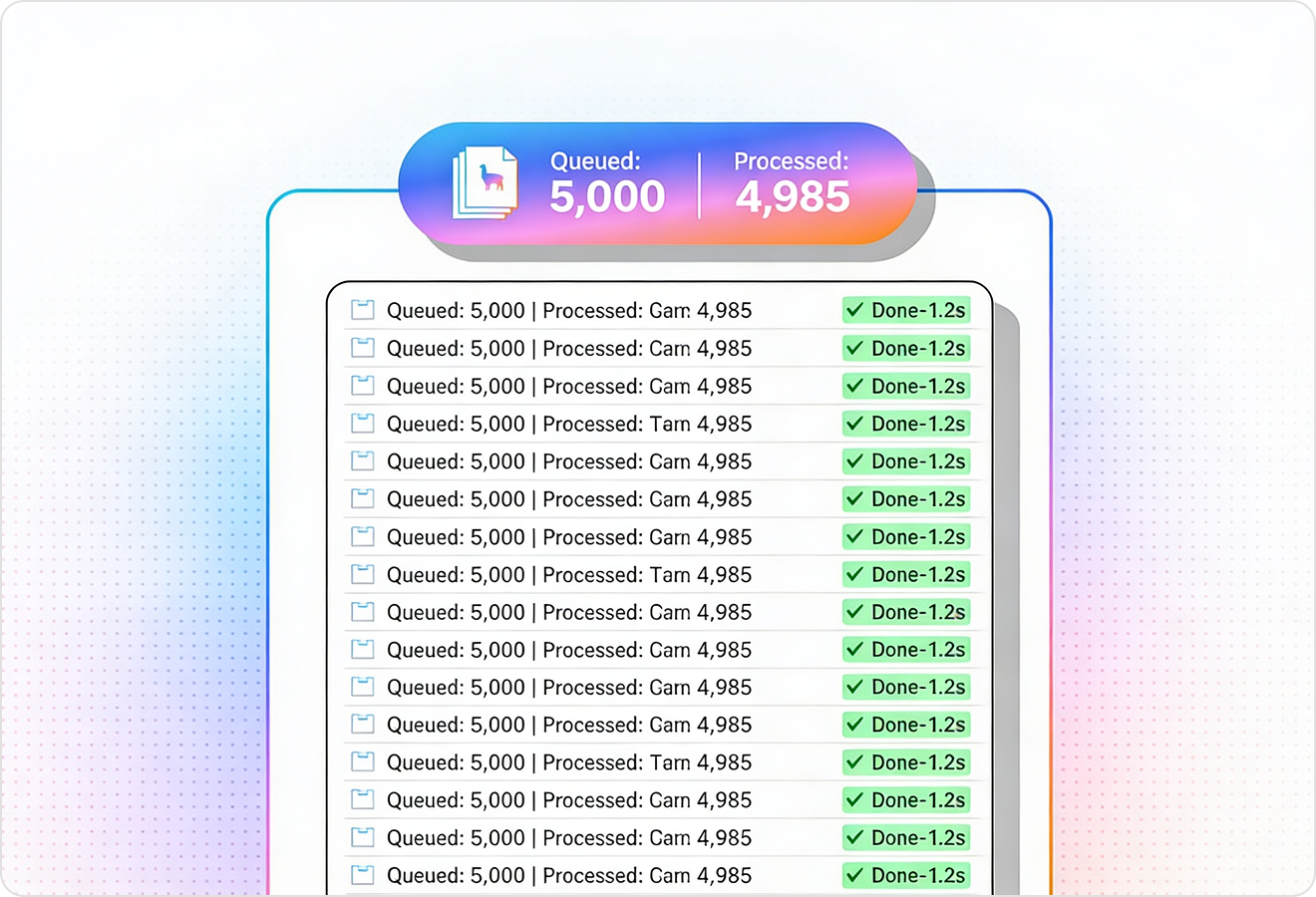
LlamaParse runs self-checks to catch common scan issues—missing digits, swapped columns, or inconsistent totals—then corrects them before returning output. You get higher straight-through processing for delivery orders, with fewer manual exceptions in AP/warehouse workflows.
04
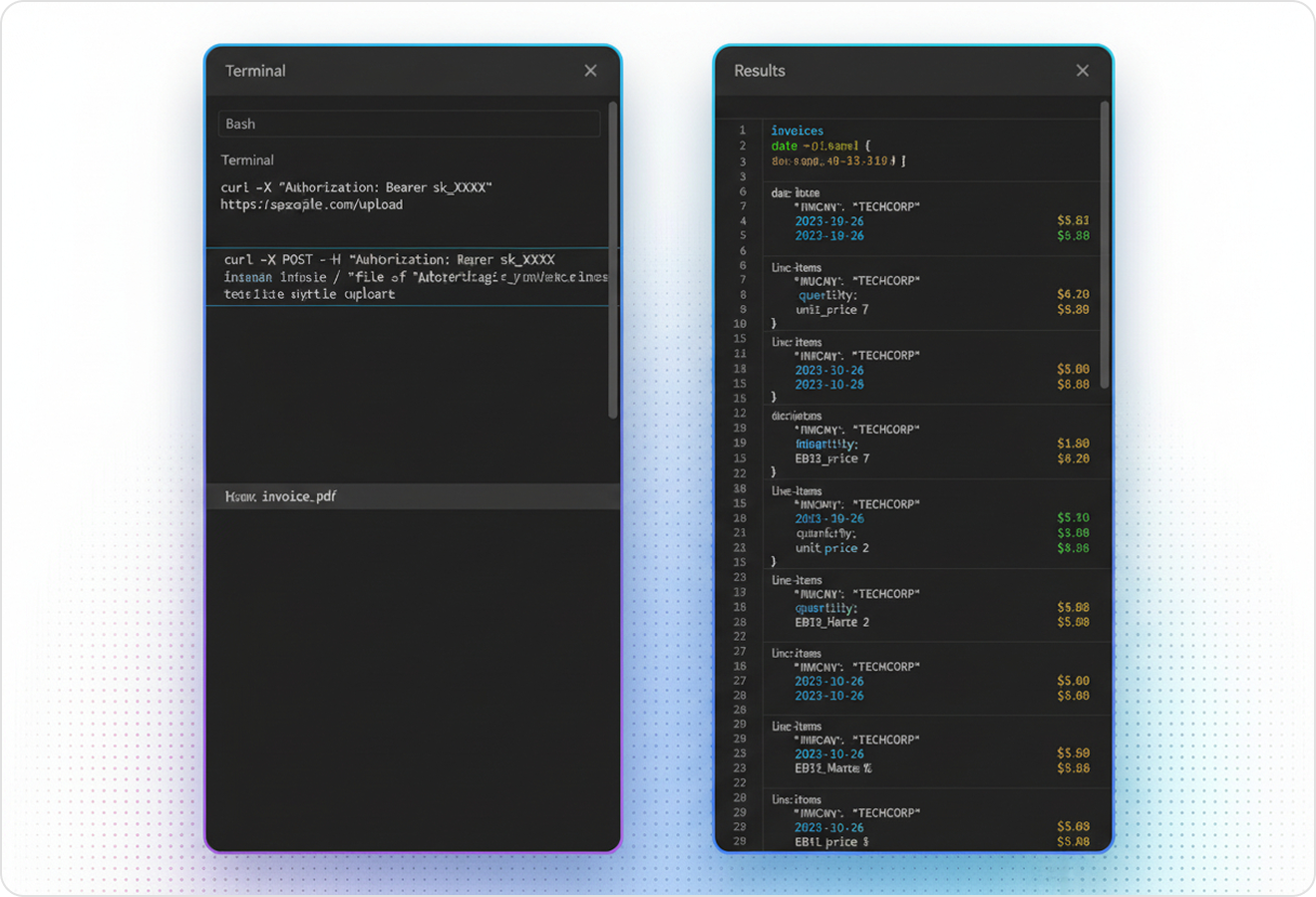
JSON mode returns structured fields alongside page numbers and spatial metadata so each extracted value is traceable back to the source. For delivery order OCR workflows, this makes approvals and audits faster because reviewers can verify any field against its exact location on the document.
Technical OCR documentation
Explore our developer guides to easily connect your document pipelines to LlamaParse.
Explore the documentation
Our AI catches the typos that tired eyes miss.

Export to Excel, JSON, XML, or directly via API.

SOC2 Type II compliant with end-to-end encryption.

Train the tool on your specific forms in minutes, not days.

Average processing time of <3 seconds per page.
LlamaParse’s support of a wide variety of filetypes and its accuracy of parsing made it the best tool we tested in our evaluations. The LlamaIndex team was very responsive and we were off to the races within a day.
Common FAQs
01
Yes. Layout-aware field capture preserves reading order across headers, line items, and totals even when formats vary by carrier, warehouse, or branch. You can reliably extract PO/DO numbers, ship-to details, dates, and totals without maintaining brittle coordinate-based rules.
02
It pulls line-item tables into clean structured output while keeping columns like SKU, description, quantity, UOM, and remarks aligned. This reduces rework during receiving and matching, and helps you catch discrepancies faster because each row is database-ready.
03
Auto-correction validation loops run self-checks to detect common OCR failures like missing digits, swapped columns, and inconsistent totals, then fix them before returning results. That means fewer manual exceptions and higher straight-through processing in warehouse and AP workflows.
04
Can I trace every extracted value back to the exact spot on the delivery order for audits and approvals?
Yes. JSON output includes page numbers and spatial metadata so each field is traceable to its source location on the document. Reviewers can quickly verify any value, speeding up approvals and strengthening audit readiness.
05
What output formats do you support for integrating into our WMS/ERP or matching system?
You can export structured JSON for direct ingestion, and you can also get clean Markdown for human-readable review and debugging. Most teams start with JSON for automation and keep Markdown as an easy fallback for exceptions and QA.
06
How quickly can we start seeing results without a long setup or template-training project?
Because it’s layout-aware, you can begin extracting key header fields and line items without building per-vendor templates. Many teams start with a small batch of real delivery orders, validate the outputs with traceability, then scale confidently once accuracy meets their workflow needs.