Nov 14, 2025
Document AI: The Next Evolution of Intelligent Document ProcessingPersona
Industry
Use cases
Typescript Document Parser
[ Typescript Document Parser ]

Feed PDFs into LlamaParse and get layout-aware Markdown or JSON you can trust in TypeScript.
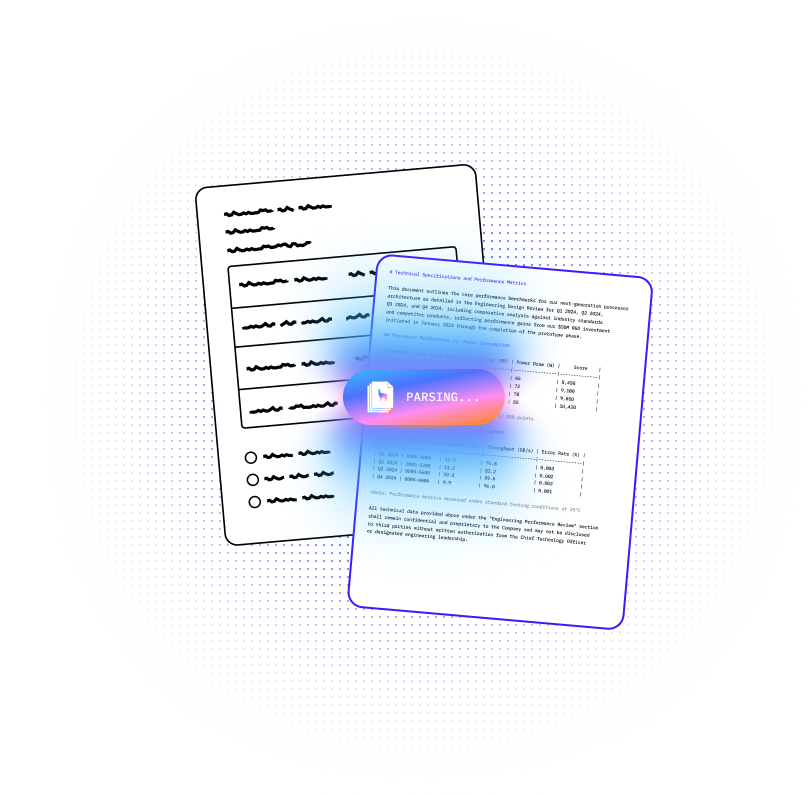
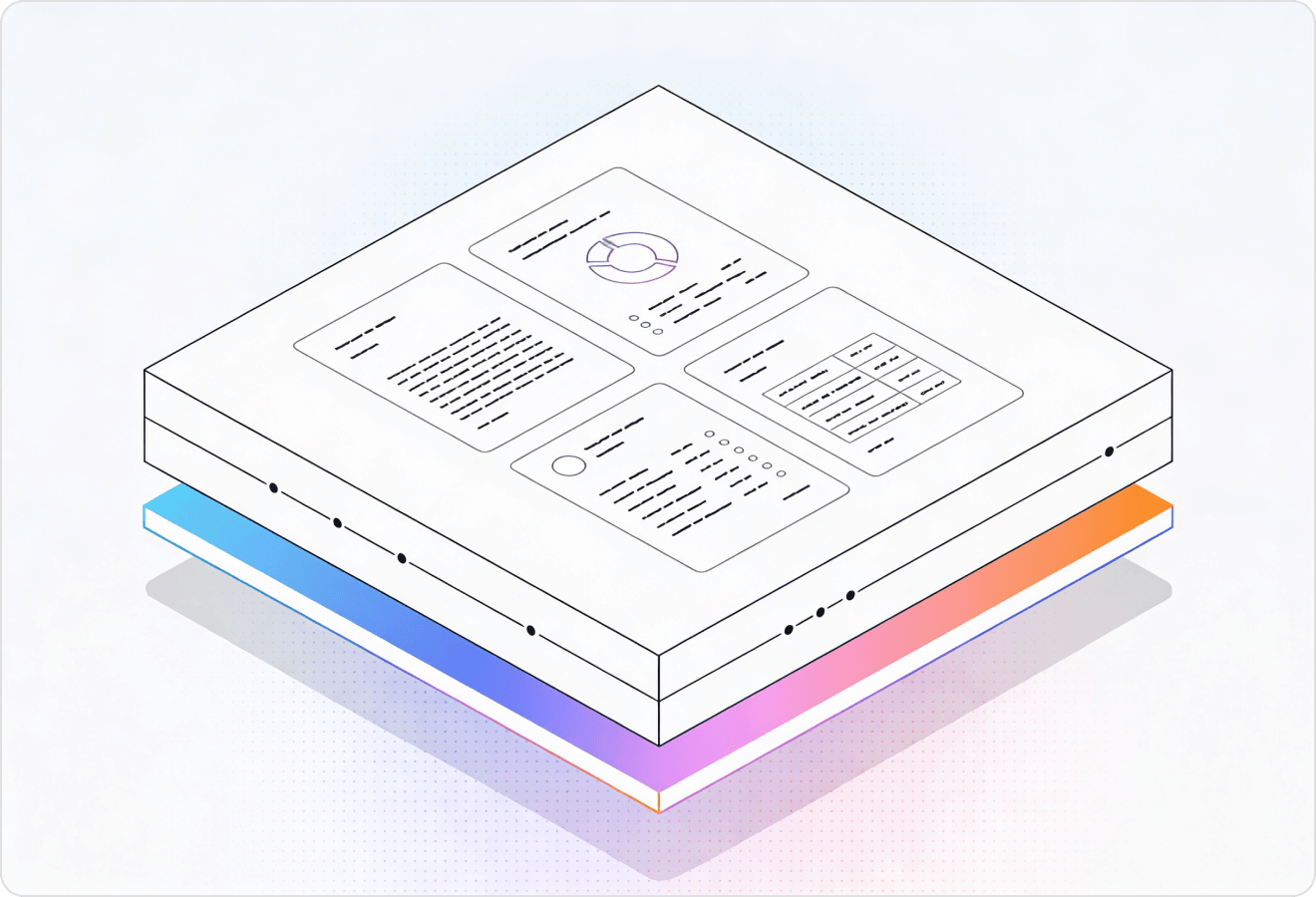
LlamaParse turns messy PDFs, scans, and docs into clean, structured Markdown and JSON your TypeScript pipeline can consume immediately. It uses agentic document parsing to preserve layout, tables, and visuals with confidence metadata, reducing brittle post-processing and manual checks.
Best-in-Class Accuracy

Ship a TypeScript-first ingestion pipeline that turns user-uploaded PDFs and decks into clean Markdown/JSON with minimal glue code, so your product works on day one instead of breaking on edge cases. LlamaParse preserves tables, reading order, and layout structure, which prevents “scrambled OCR” incidents that quietly destroy demo quality and retention.

Parse statements, claims packets, and loan files into auditable JSON with page-level citations and confidence signals, making exceptions reviewable instead of disputed. LlamaParse’s layout-aware table extraction keeps line items and schedules intact, so downstream reconciliation and underwriting rules don’t fail on multi-column forms.

Convert contracts, pleadings, and exhibits into structured text that preserves headings, clauses, and footnotes, enabling reliable clause extraction and search without manual reformatting. LlamaParse captures tables and embedded figures cleanly, so litigators don’t miss critical evidence buried in scans and attachments.

Extract BOMs, spec sheets, and supplier quotes into normalized JSON so procurement systems can compare parts, pricing tiers, and lead times without spreadsheet rework. LlamaParse handles dense tables and mixed layouts from varied vendors, reducing PO errors caused by misread units, columns, and revision blocks.
The Solution
01
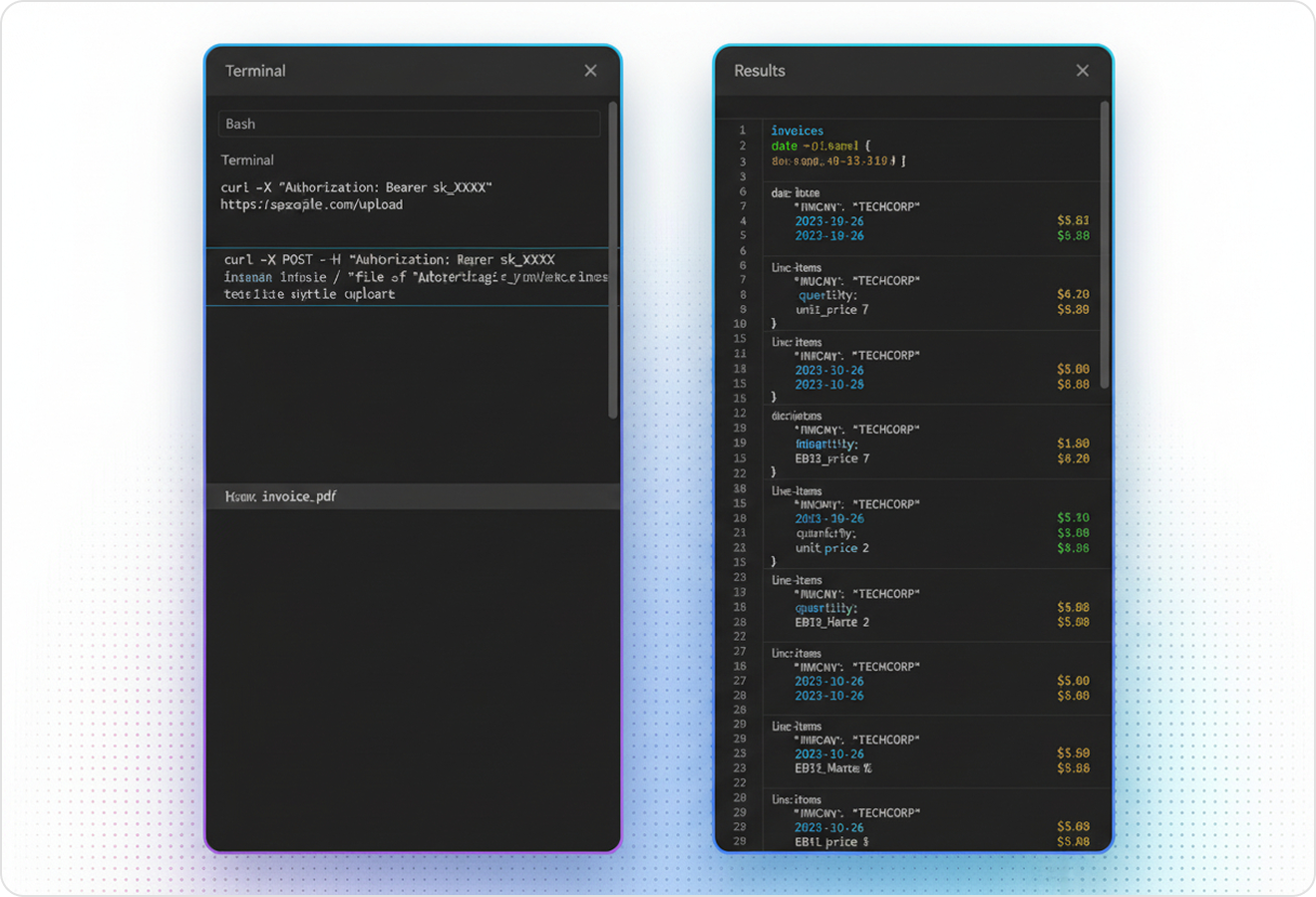
LlamaParse ships with a developer-friendly TypeScript library and straightforward REST endpoints, so you can parse documents directly inside Node/TS services without glue code. That makes it easy to turn user uploads (PDFs, scans, docs) into AI-ready outputs in the same TypeScript pipeline that powers your app.
02
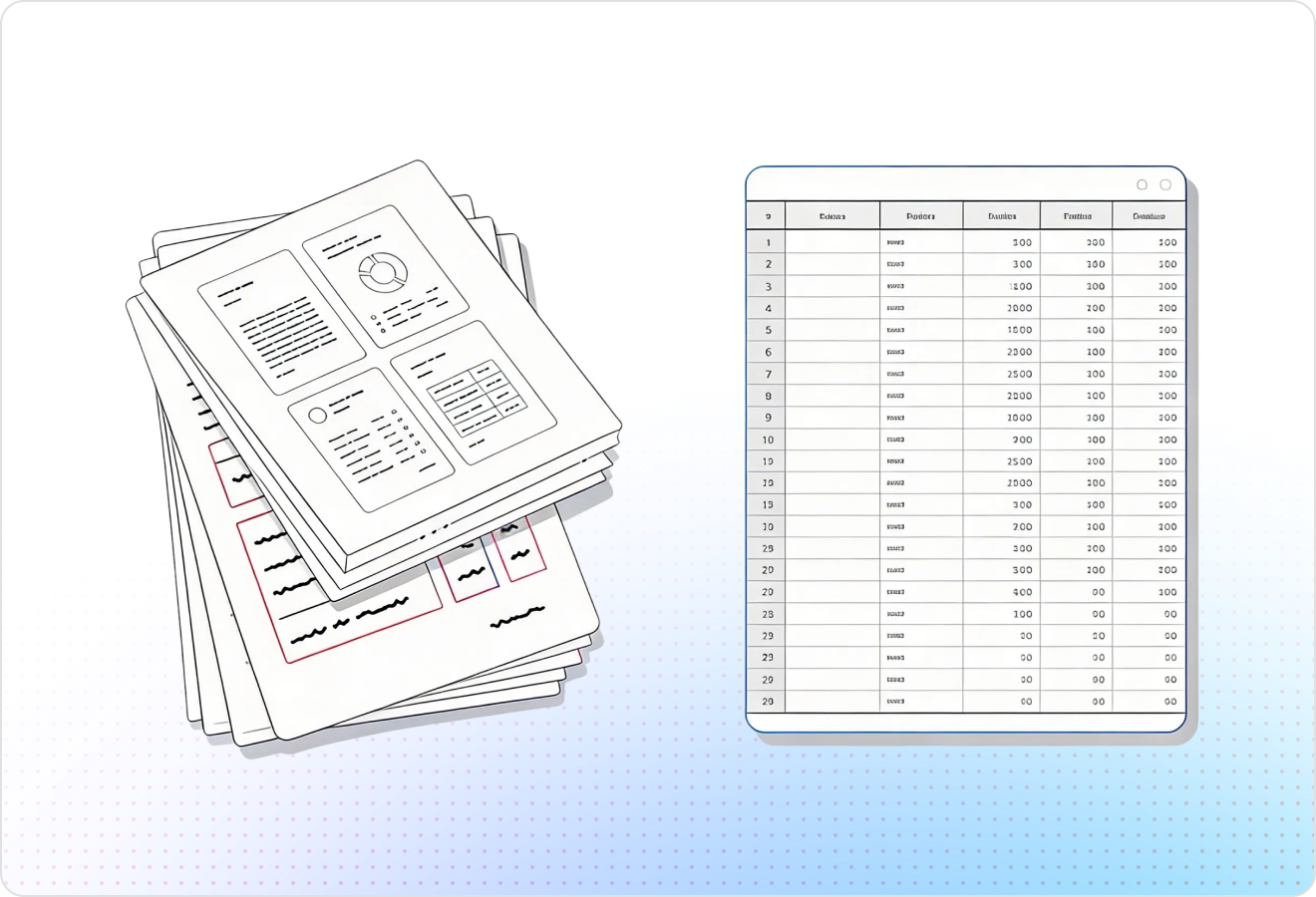
LlamaParse understands real page structure—columns, headings, footers, and tables—then reconstructs it into clean Markdown. For a TypeScript document parser, this means you can preserve reading order and section boundaries without building brittle heuristics to un-scramble extracted text.
03
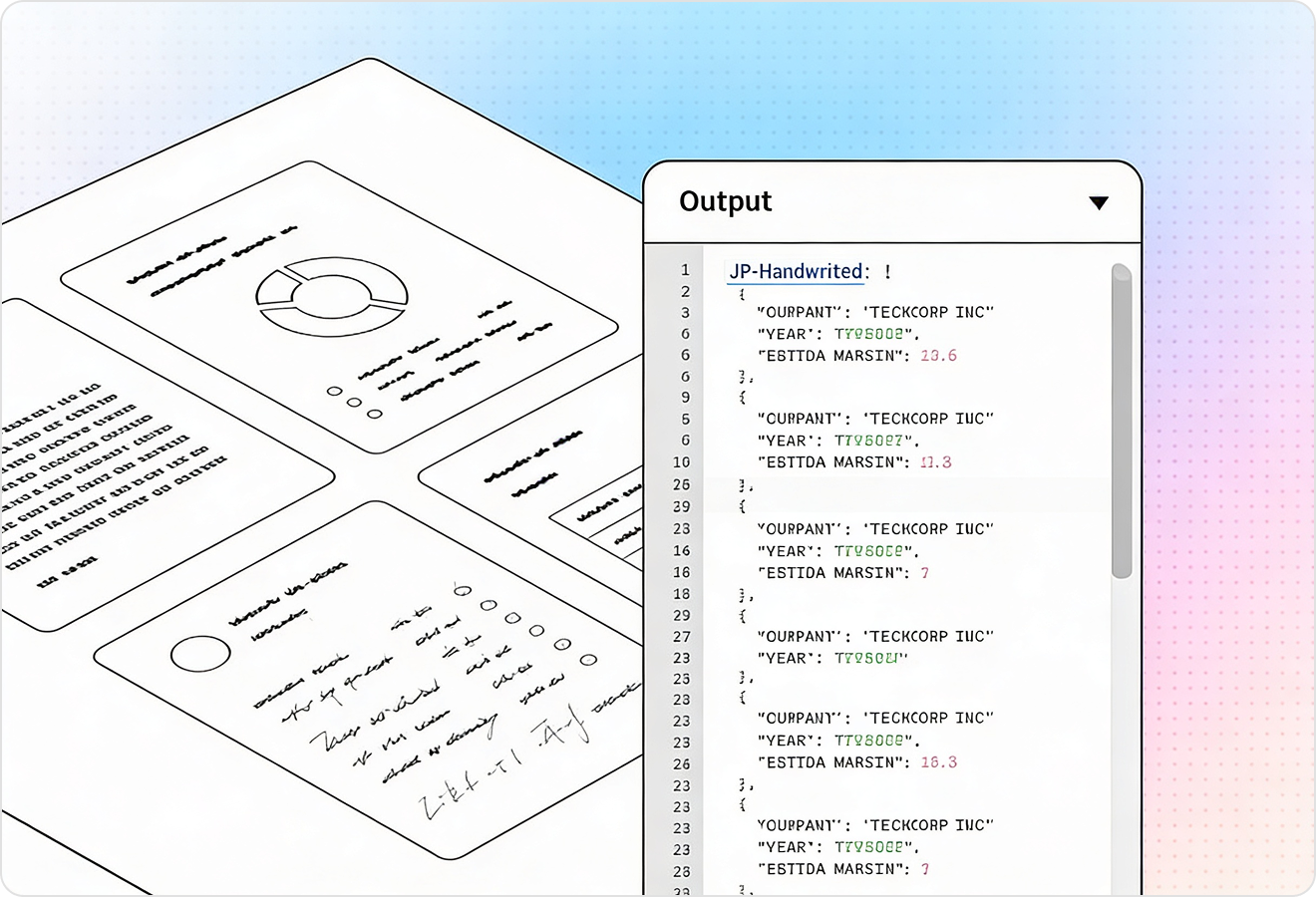
JSON mode returns structured objects with rich metadata like page numbers, element types, and spatial coordinates. In TypeScript, that maps cleanly to typed interfaces, lets you validate outputs, and enables precise downstream logic like “only parse tables from page 3” or “attach citations to extracted fields.”
04
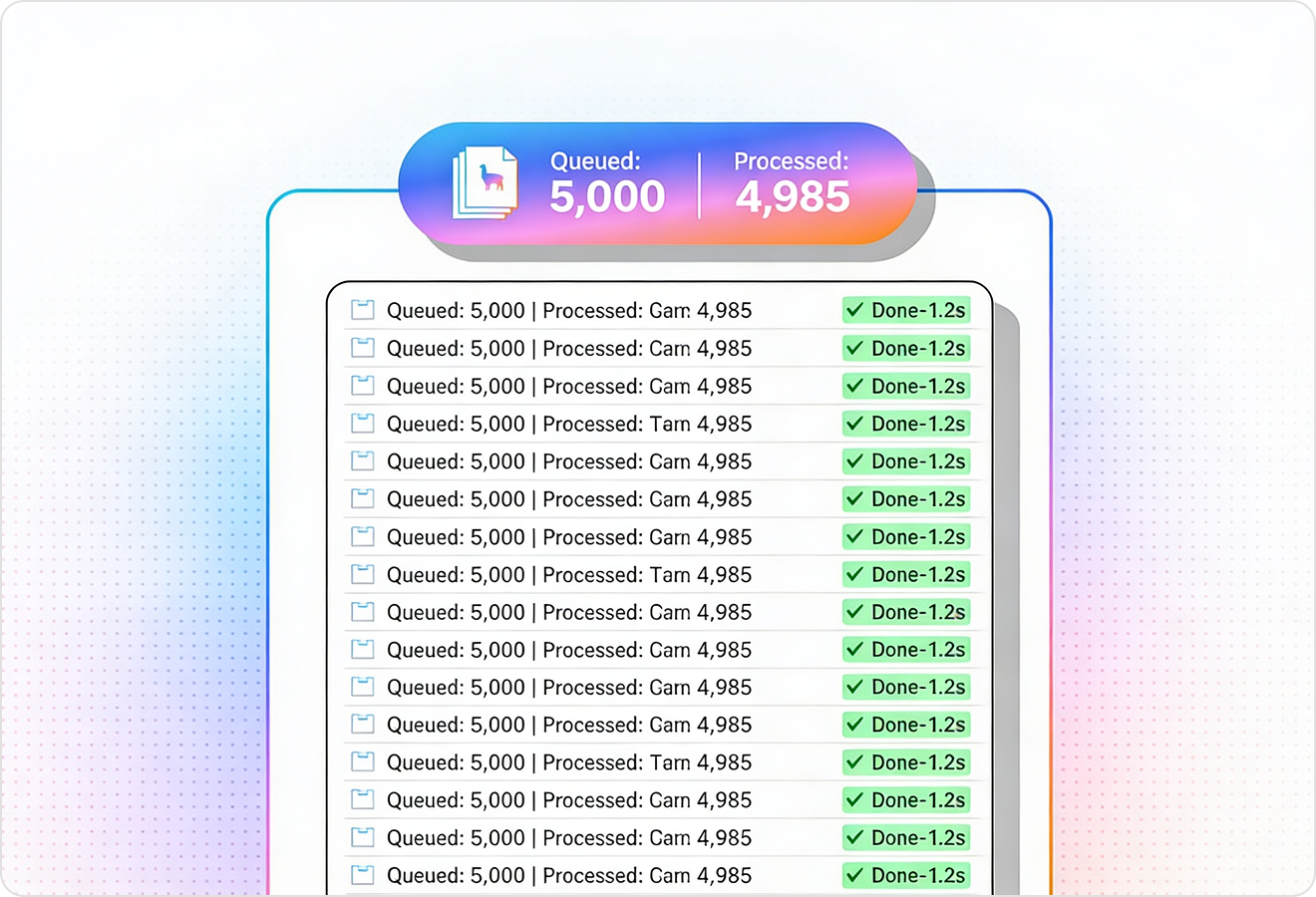
LlamaParse uses multiple validation and self-correction steps to catch common extraction failures and formatting inconsistencies before you receive results. That reduces the amount of post-processing you need to write in TypeScript and improves reliability when parsing messy scans or shifting templates at scale.
Technical OCR documentation
Explore our developer guides to easily connect your document pipelines to LlamaParse.
Explore the documentation
Our AI catches the typos that tired eyes miss.

Export to Excel, JSON, XML, or directly via API.

SOC2 Type II compliant with end-to-end encryption.

Train the tool on your specific forms in minutes, not days.

Average processing time of <3 seconds per page.
LlamaParse’s support of a wide variety of filetypes and its accuracy of parsing made it the best tool we tested in our evaluations. The LlamaIndex team was very responsive and we were off to the races within a day.
Common FAQs
01
You can call the REST API directly or use the TypeScript SDK to parse uploads inside the same Node/TypeScript service that handles your app logic. Responses are designed to drop into your existing pipeline, so you spend less time on wrappers and more time shipping features.
02
It’s layout-aware and reconstructs real page structure into clean Markdown, including reading order across columns and consistent section boundaries. That means fewer broken paragraphs and less manual cleanup compared to basic OCR/text extraction.
03
Yes—JSON mode returns structured elements plus metadata like page numbers, element types, and spatial coordinates. This makes it easy to define typed interfaces, validate outputs, and write precise logic like extracting only tables from specific pages.
04
How reliable is it on messy scans or documents with changing templates?
The parser uses agentic validation loops to detect common extraction errors and self-correct formatting issues before results are returned. In practice, that reduces brittle post-processing code and improves consistency when you’re parsing at scale.
05
Can I target specific parts of a document—like only page 3 tables—or add citations back to the source?
Yes, the metadata enables selective parsing and traceability, so you can filter by page, element type, or location. You can also attach citations to extracted fields using page references and coordinates for auditability and better UX.
06
How quickly can I go from user upload (PDF/DOC/scan) to AI-ready output in my app?
Most teams integrate in a few hours: accept the upload, send it to the API/SDK, and store the returned Markdown or JSON for downstream search, RAG, or automation. Because outputs are already structured and layout-aware, you avoid weeks of building and maintaining custom parsing heuristics.