Nov 14, 2025
Document AI: The Next Evolution of Intelligent Document ProcessingPersona
Industry
Use cases
Document Splitting Software
[ Document Splitting Software ]

Use LlamaParse to automatically split complex PDFs into clean, structured sections your team can trust.
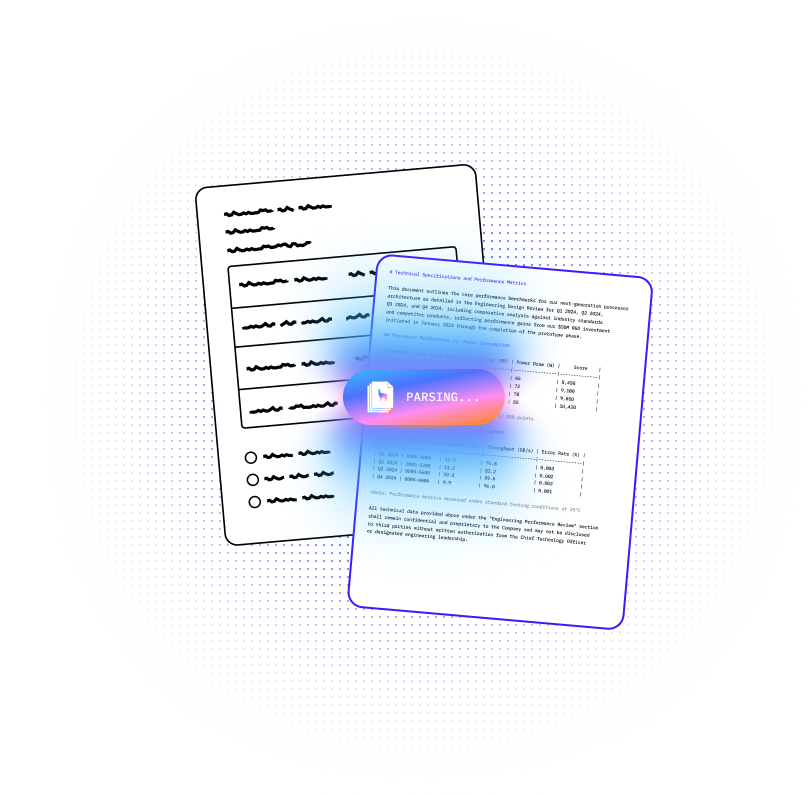
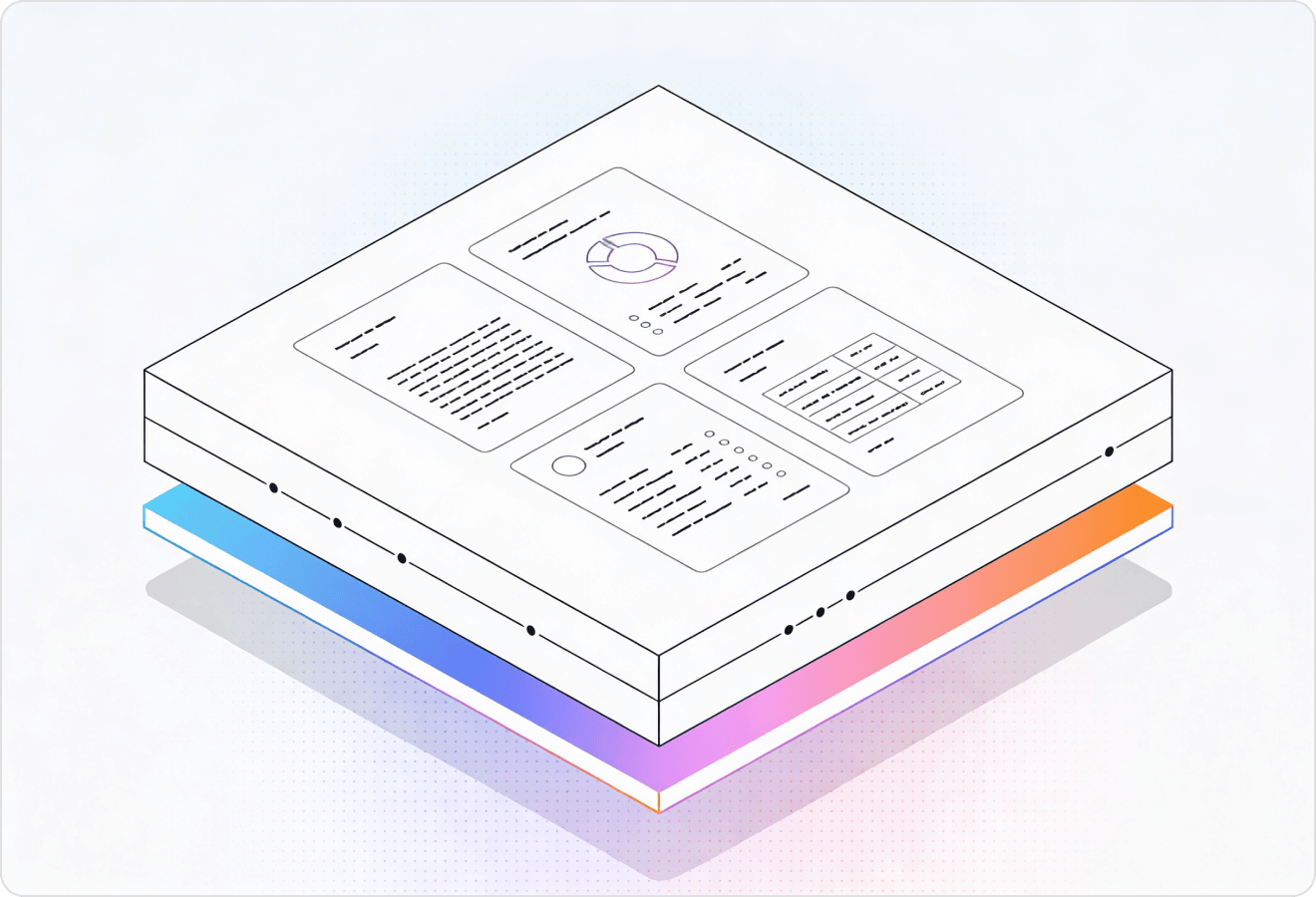

LlamaParse splits messy PDFs and scans into reliable, layout-aware chunks that preserve headings, tables, and context for downstream AI. Agentic parsing with vision models and validation loops reduces rework, so your pipelines ingest cleaner JSON, Markdown, or HTML with confidence.
Best-in-Class Accuracy

Use LlamaParse to turn investor decks, customer PDFs, and inbound contracts into clean Markdown/JSON so your product can ship reliable document features without a brittle parsing codebase. Auto Mode routes only the messy pages to heavier processing, keeping costs predictable while you scale from prototype to production.

Split and parse multi-hundred-page statements, claims packets, and loan files into page-cited JSON with tables preserved, so downstream systems can reconcile line items and validate figures without manual re-keying. Granular metadata and confidence signals support audit-ready review queues and reduce exceptions caused by misread forms and fragmented attachments.

Break large matters into logically ordered sections while preserving headers, footers, and exhibits, so attorneys can search and summarize without losing context or mixing columns. Natural-language parsing instructions extract defined terms, obligations, and clause variants into a consistent schema for faster review and playbook enforcement.

Convert spec sheets, test reports, and quality documentation into structured outputs that keep complex tables, math, and diagrams intact for downstream analysis and knowledge bases. Multimodal parsing turns charts into Markdown tables and equations into LaTeX, enabling faster root-cause investigations and reducing time spent rewriting data from PDFs.
The Solution
01
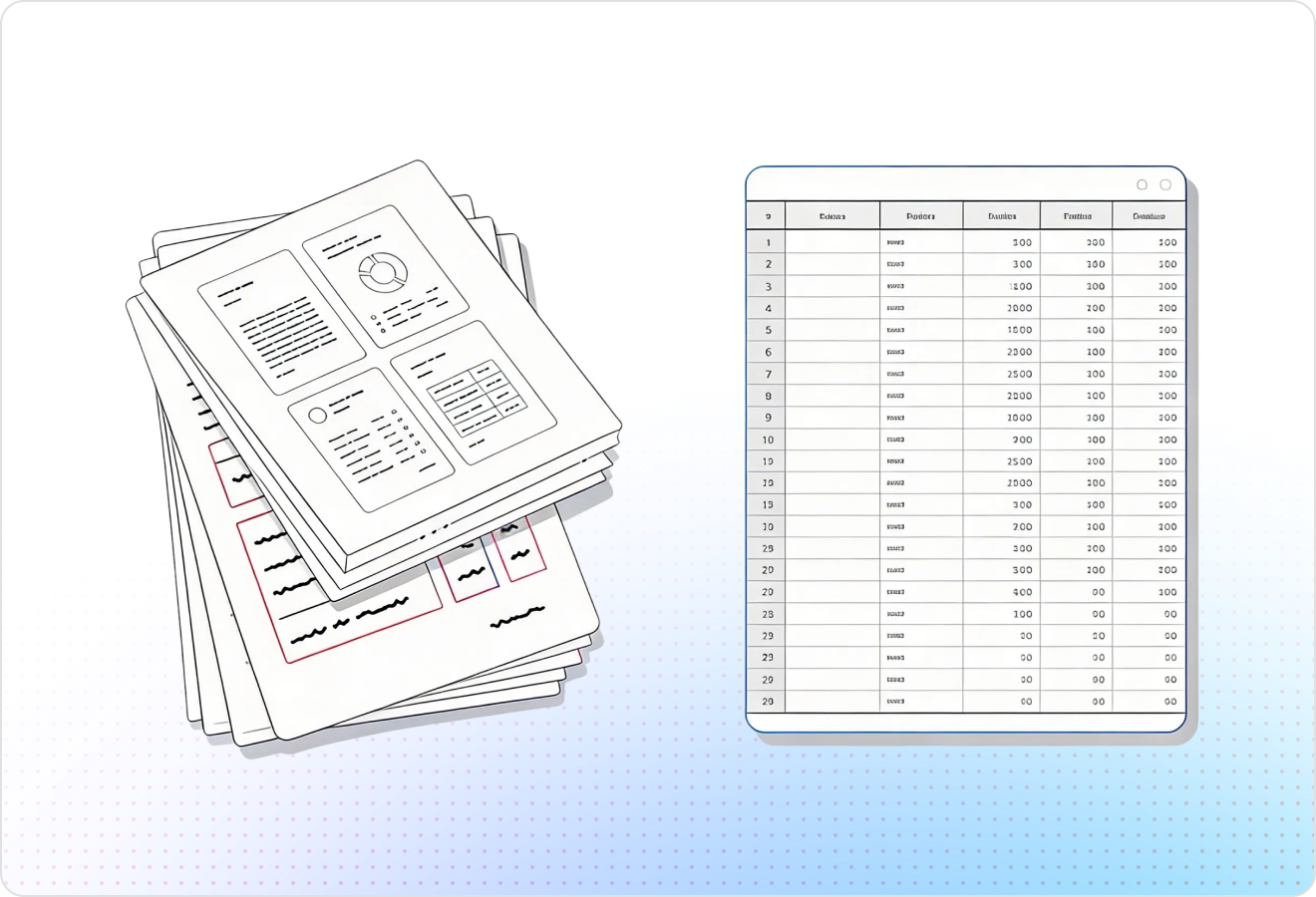
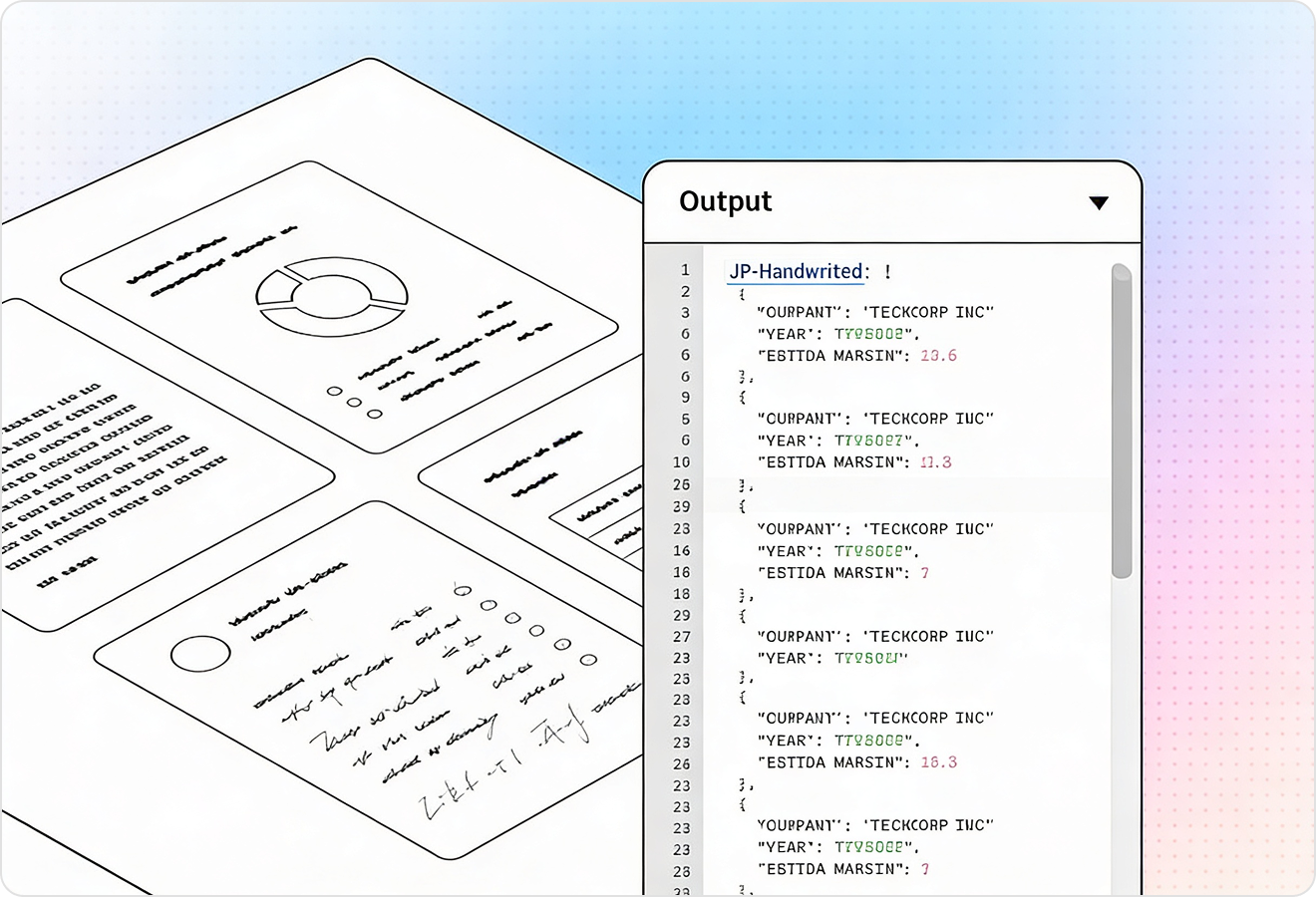
LlamaParse uses layout-aware vision to detect sections, columns, headers, and page components so splits happen where the document actually changes topics. That means your “split” output keeps reading order intact instead of producing scrambled chunks that break downstream search and summarization.
02
LlamaParse extracts tables and nested layouts without collapsing rows, merging columns, or scattering cell text across chunks. For document splitting software, this prevents tables from being split mid-structure and keeps each chunk self-contained and usable.
03
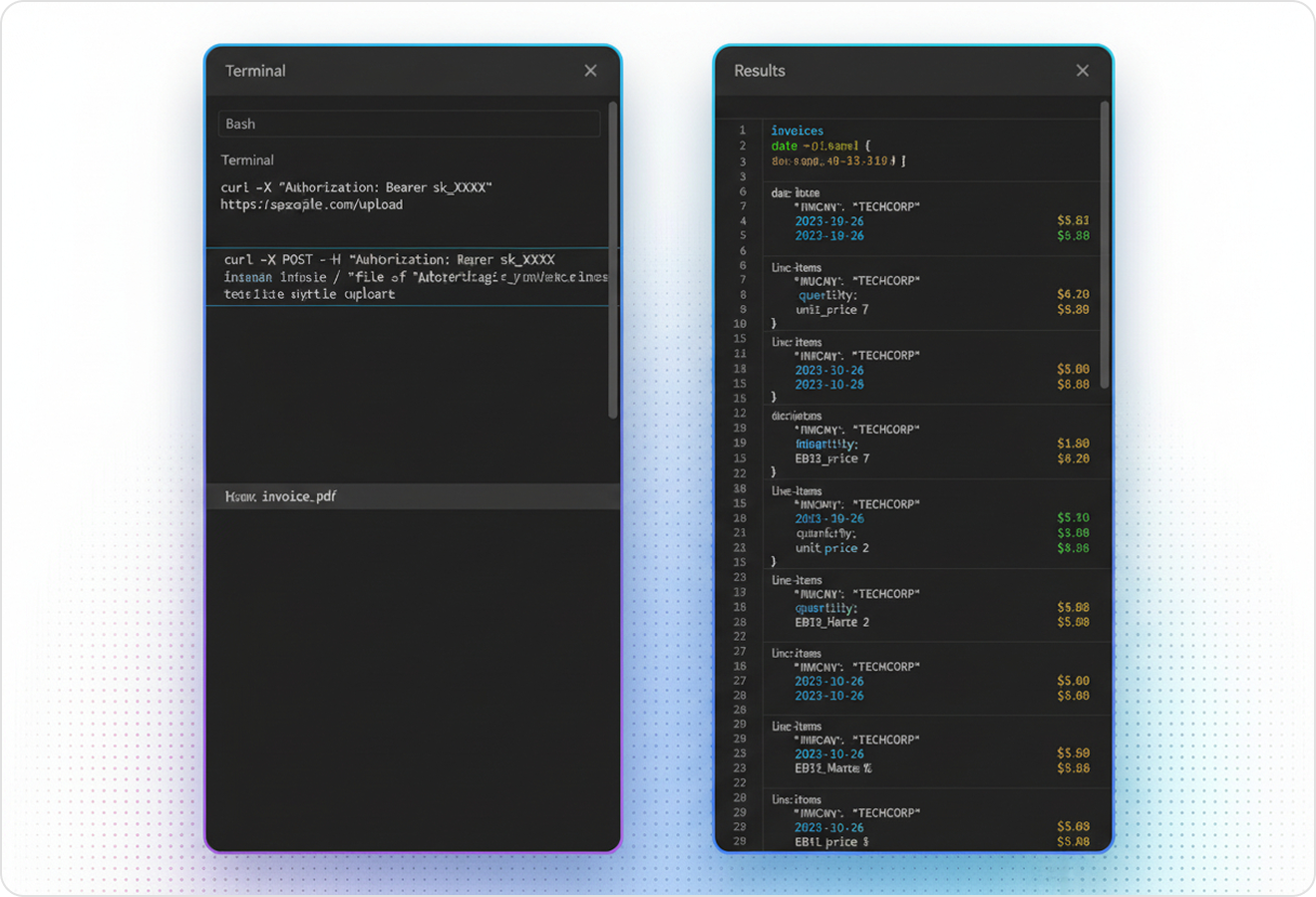
LlamaParse reconstructs documents into clean Markdown or HTML with headings, lists, and block boundaries preserved. Those structural cues give you reliable, semantic breakpoints for splitting by section, subsection, or component rather than arbitrary character counts.
04
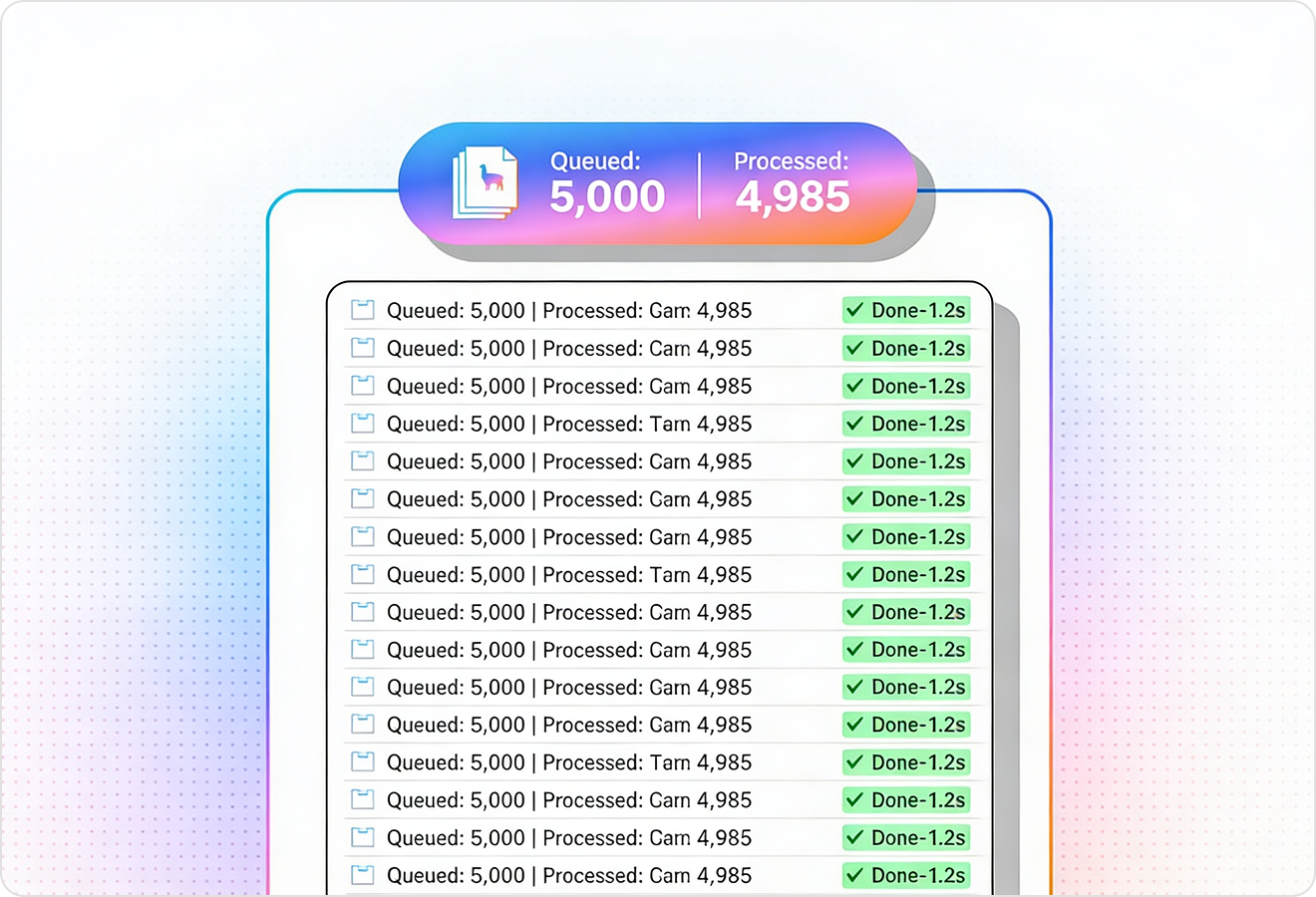
LlamaParse can return structured JSON with page numbers, element types, and spatial coordinates for each extracted block. That metadata lets you implement deterministic splitting rules (e.g., split on H2 headings, keep footnotes attached, group by page region) and still trace every chunk back to its source.
Technical OCR documentation
Explore our developer guides to easily connect your document pipelines to LlamaParse.
Explore the documentation
Our AI catches the typos that tired eyes miss.

Export to Excel, JSON, XML, or directly via API.

SOC2 Type II compliant with end-to-end encryption.

Train the tool on your specific forms in minutes, not days.

Average processing time of <3 seconds per page.
LlamaParse’s support of a wide variety of filetypes and its accuracy of parsing made it the best tool we tested in our evaluations. The LlamaIndex team was very responsive and we were off to the races within a day.
Common FAQs
01
It uses layout-aware split points that detect real document structure—sections, columns, headers, and components—so chunks align with topic changes. This keeps reading order intact and prevents the scrambled excerpts that hurt search, summarization, and RAG pipelines.
02
Tables are extracted with structure preserved, including nested layouts, so rows and columns don’t collapse or scatter across chunks. That means you can keep tables self-contained and avoid mid-table splits that make data unusable downstream.
03
You can export clean Markdown or HTML with headings, lists, and block boundaries preserved. Those semantic markers give you reliable breakpoints for splitting by section or component instead of arbitrary character counts.
04
Can I enforce deterministic splitting rules (e.g., split on H2, keep footnotes attached)?
Yes—JSON mode includes metadata like page numbers, element types, and spatial coordinates for each block. With that, you can implement consistent rules (split on headings, group by page region, keep footnotes with their references) and get repeatable results.
05
How do I trace a chunk back to the original document for auditing or citations?
Each extracted block can include page-level and positional metadata, so every chunk is traceable to its source location. This makes it easy to debug retrieval issues, support compliance reviews, and generate accurate citations.
06
Will this work well on complex PDFs like multi-column reports and scanned layouts?
The layout-aware vision approach is designed for real-world documents with columns, headers, and mixed page components. You’ll get cleaner, more coherent chunks that reflect what a reader sees—reducing manual cleanup and speeding time to production.