Nov 14, 2025
Document AI: The Next Evolution of Intelligent Document ProcessingPersona
Industry
Use cases
Real-Time Document Extraction API
[ Real-Time Document Extraction API ]

Use LlamaParse to extract tables, fields, and citations instantly with verifiable JSON output.
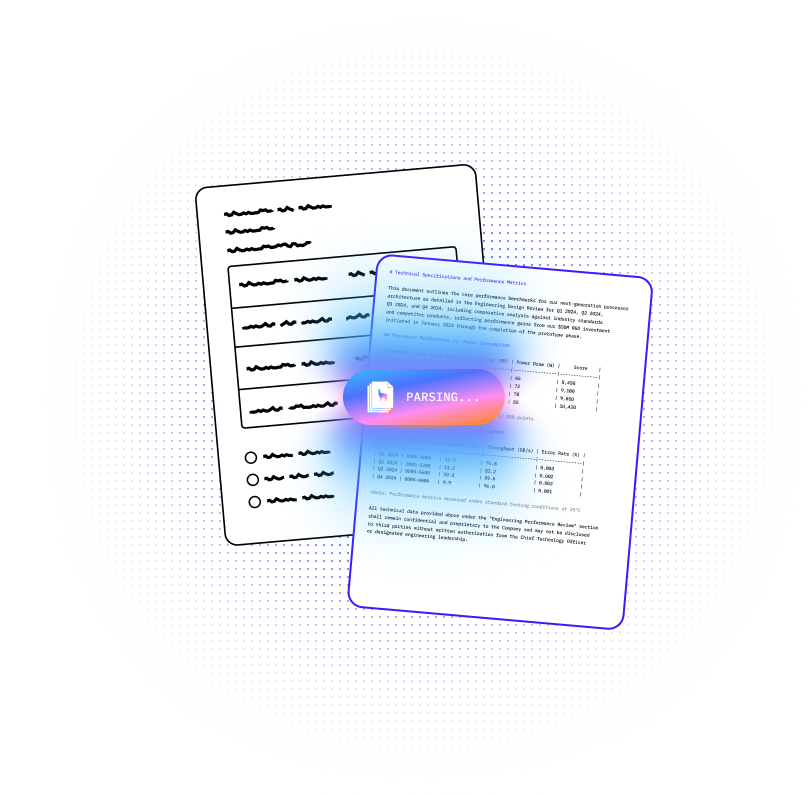
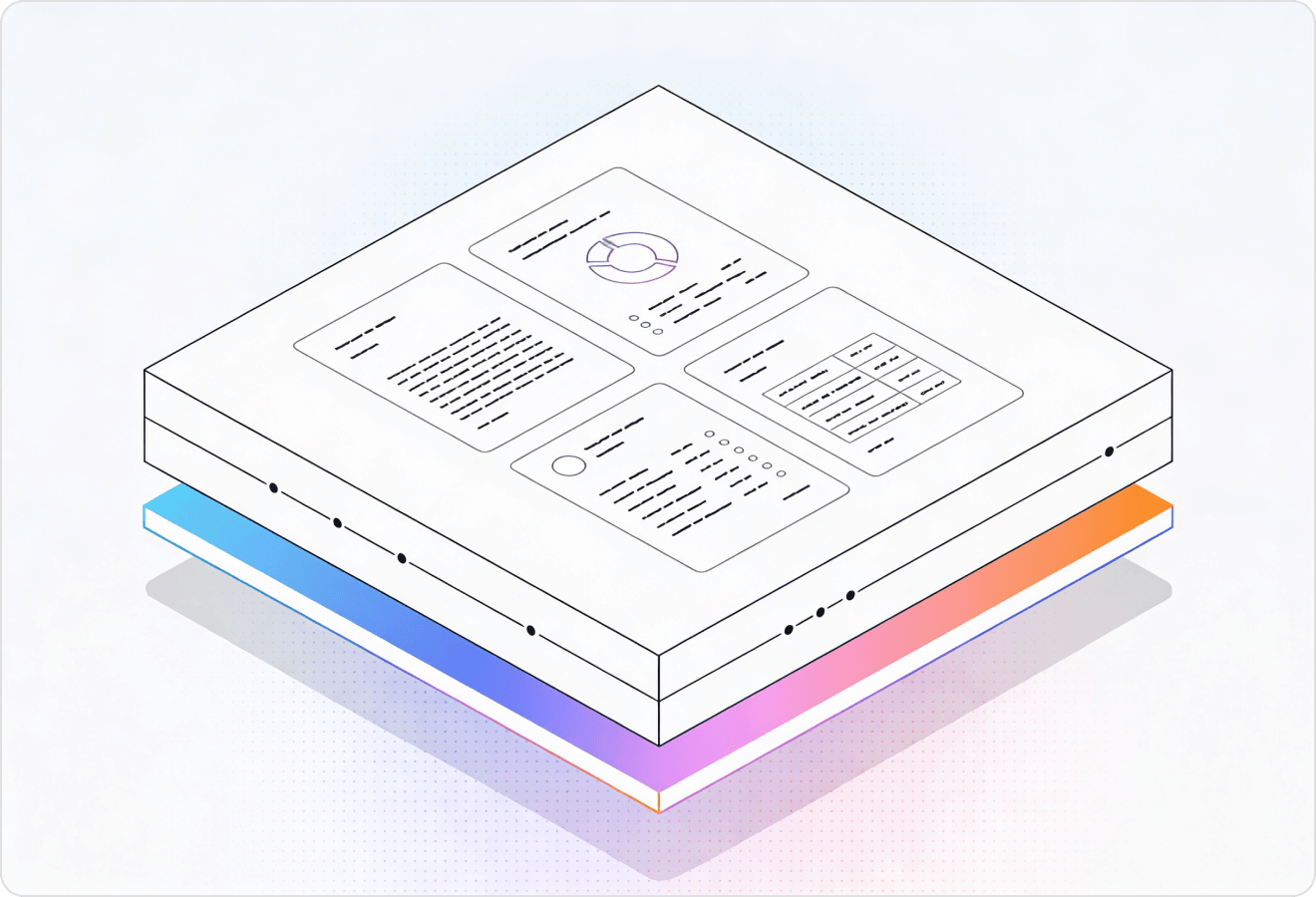
LlamaParse streams messy PDFs, scans, and forms into clean, structured JSON or Markdown in seconds, so your app can act immediately. Layout-aware vision plus agentic validation loops keep tables, charts, and fields consistent, reducing exceptions and speeding straight-through processing.
Best-in-Class Accuracy

Ship a real-time document extraction API with LlamaParse to turn user-uploaded PDFs, scans, and emails into clean JSON and Markdown—without building a brittle parsing pipeline in-house. Use natural-language parsing instructions plus tier-based agentic processing to keep accuracy high on messy edge cases while controlling cost as volume spikes.

Extract structured fields from bank statements, pay stubs, tax forms, and KYC packets with layout-aware table capture that preserves line items and reading order for underwriting decisions. Return verifiable outputs with citations, confidence scores, and page coordinates so reviewers can audit exceptions fast instead of re-keying data.

Parse referrals, EOBs, superbills, lab reports, and prior authorizations into standardized JSON while preserving key tables and multi-column sections that typically break traditional OCR. Automate validation with auto-correction loops to reduce claim delays and minimize manual chart abstraction for billing and coding teams.

Convert bills of lading, commercial invoices, packing lists, and customs forms into structured data in real time, including tables and shipment line items needed for reconciliation and status updates. Use multimodal parsing to interpret stamps, signatures, and embedded images, then push clean outputs directly into TMS/ERP workflows to cut processing time at the dock.
The Solution
01
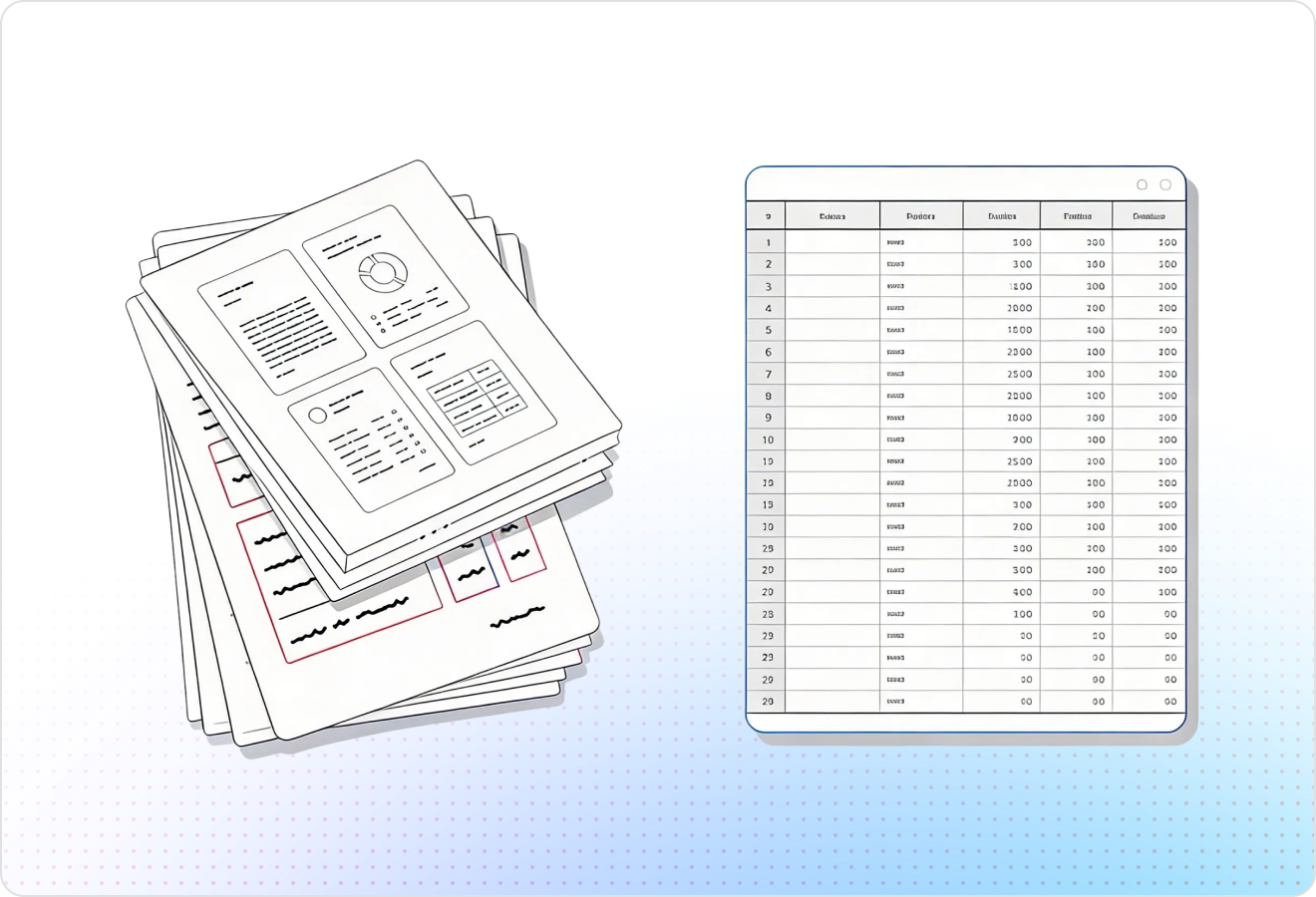
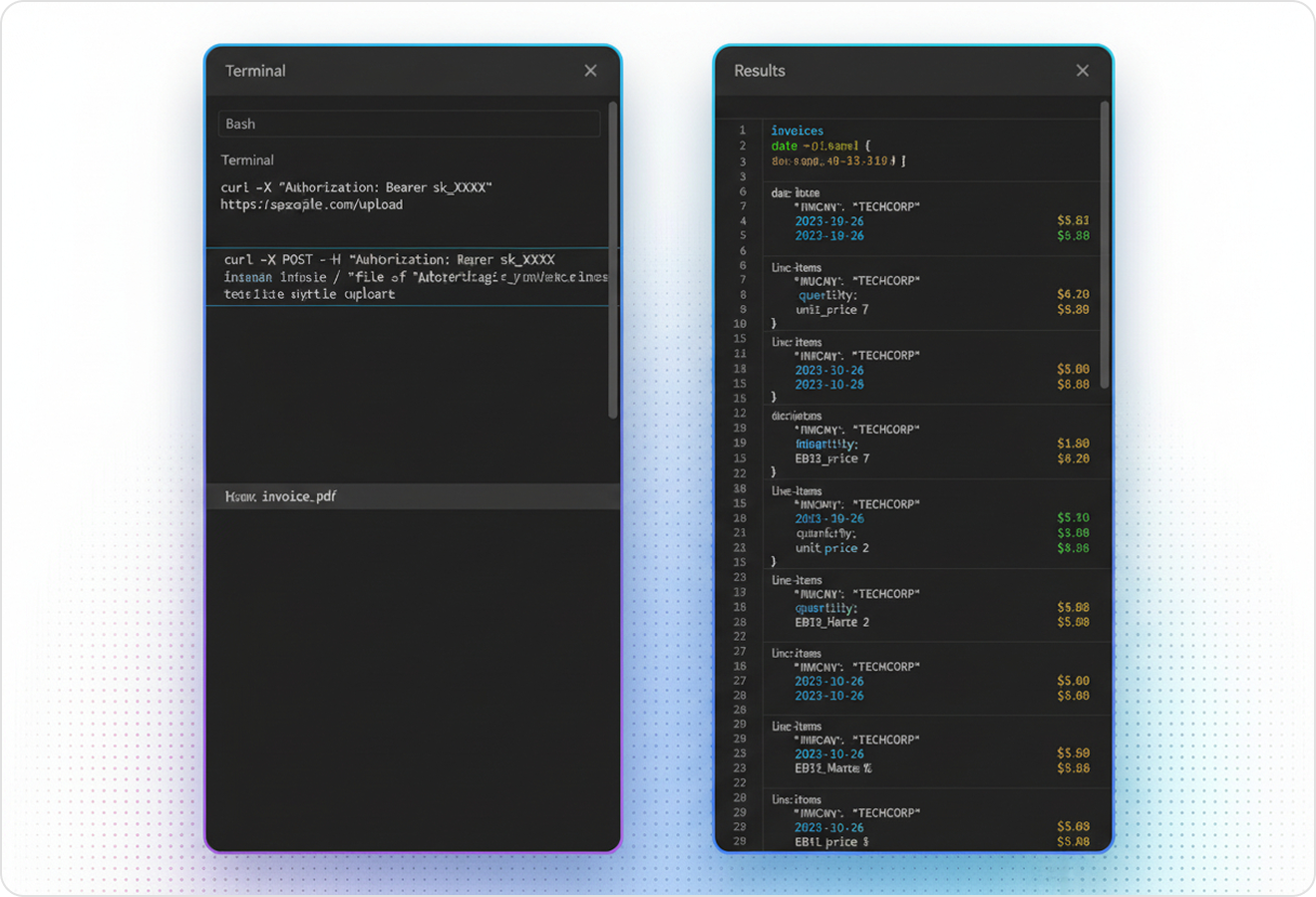
Send documents to LlamaParse via a developer-friendly API and get back clean, AI-ready outputs without building your own extraction pipeline. This is ideal for real-time document extraction APIs where users upload files and you need a reliable response quickly enough to drive product flows.
02
LlamaParse understands page structure, so it preserves reading order across multi-column layouts and accurately pulls tables without scrambling rows and headers. For real-time extraction, that means fewer downstream fixes and more consistent JSON/Markdown you can return directly to your API consumers.
03
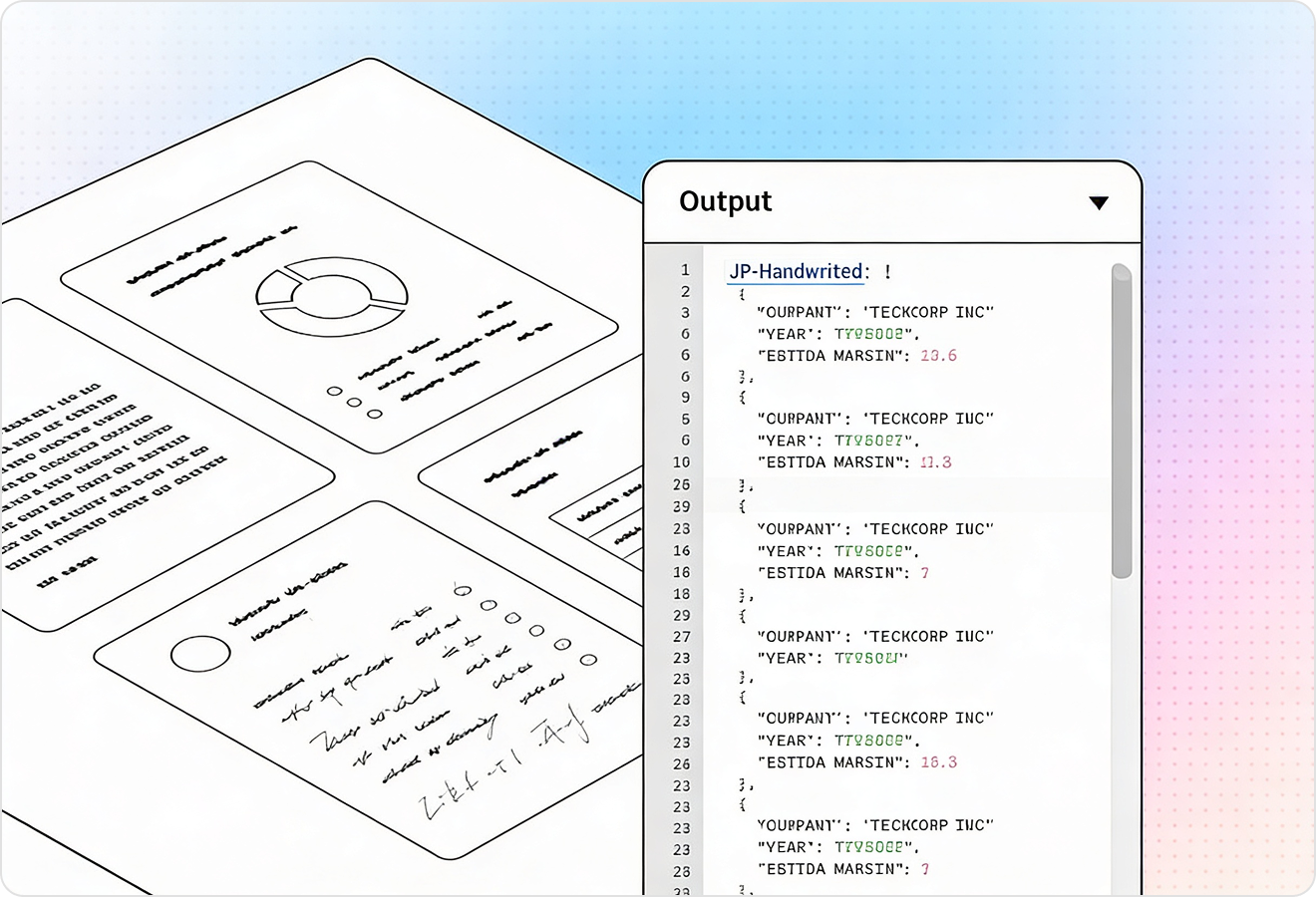
Return structured JSON that’s easy to validate, store, and pipe into downstream services, while keeping rich metadata like page references and element types. In a real-time API, this makes responses more debuggable and trustworthy because clients can trace every extracted field back to where it came from.
04
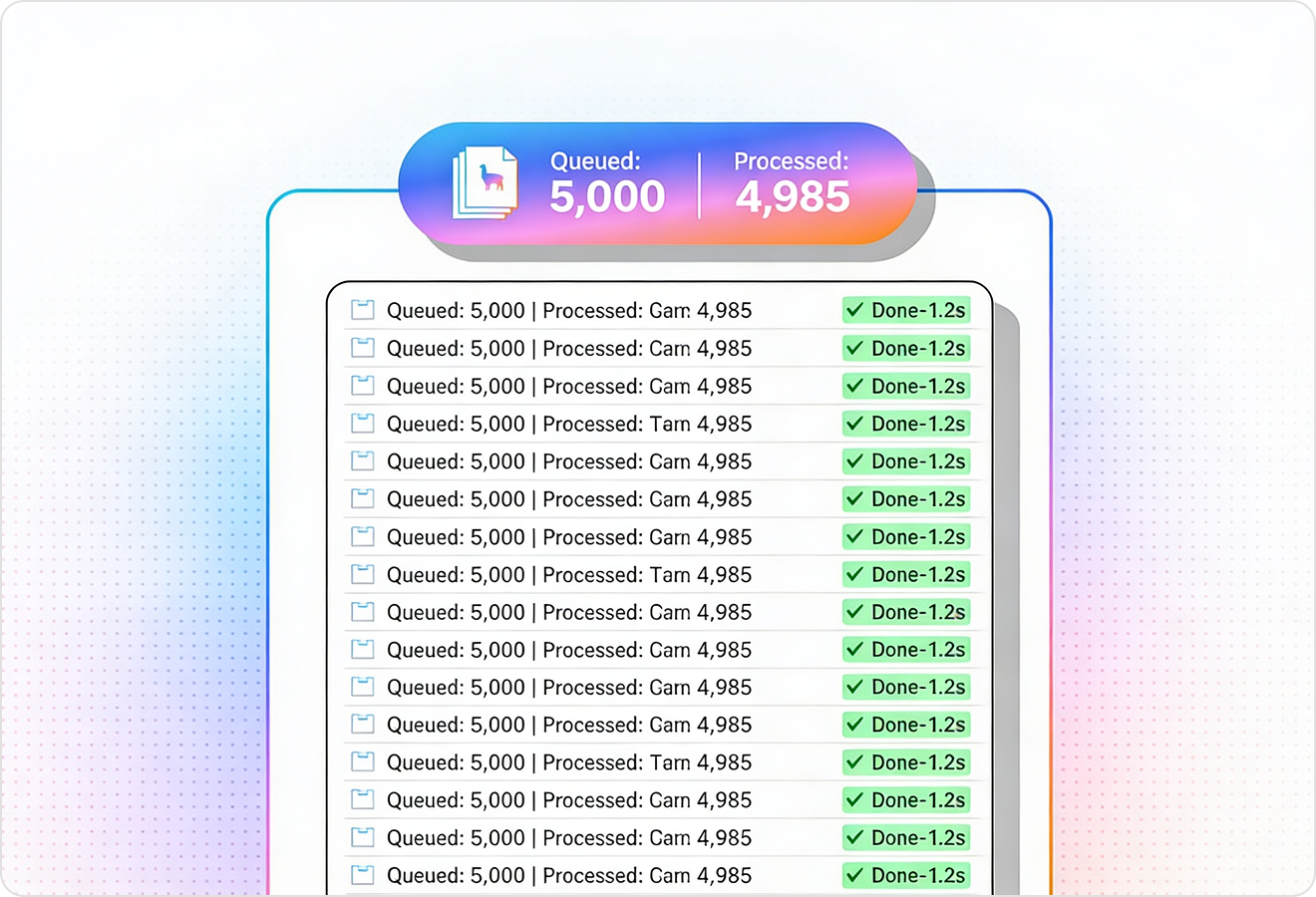
LlamaParse routes each page to the right mix of LLMs/VLMs and parsing strategies so you get strong results on scans, forms, and complex layouts without manual tuning. For a real-time extraction endpoint, this helps maintain quality while keeping latency and cost under control through tiered processing modes.
Technical OCR documentation
Explore our developer guides to easily connect your document pipelines to LlamaParse.
Explore the documentation
Our AI catches the typos that tired eyes miss.

Export to Excel, JSON, XML, or directly via API.

SOC2 Type II compliant with end-to-end encryption.

Train the tool on your specific forms in minutes, not days.

Average processing time of <3 seconds per page.
LlamaParse’s support of a wide variety of filetypes and its accuracy of parsing made it the best tool we tested in our evaluations. The LlamaIndex team was very responsive and we were off to the races within a day.
Common FAQs
01
The Low-Latency Parse API is built for interactive workflows where users upload a file and your product needs a response quickly. You get clean, AI-ready output without standing up your own extraction pipeline, so you can keep product flows moving with predictable performance.
02
Yes—layout awareness is a core feature, so content is extracted in the correct reading order across multi-column pages. That means fewer downstream heuristics and less manual cleanup when you turn results into JSON or Markdown for your customers.
03
LlamaParse pulls tables with structure intact, reducing common issues like swapped headers or scrambled rows. This leads to more reliable structured outputs you can return directly from your API and trust in automated pipelines.
04
What does the JSON output include, and can I trace fields back to the source?
You get structured JSON that’s easy to validate and store, plus rich metadata like page references and element types. This makes responses more debuggable and auditable because clients can trace extracted fields to where they appeared in the original document.
05
How does it handle scanned documents, forms, and mixed-quality inputs without manual tuning?
Agentic model orchestration routes each page to the best mix of LLMs/VLMs and parsing strategies automatically. You get strong results across scans, forms, and messy layouts without spending time maintaining custom rules per document type.
06
Can I control cost and latency for different use cases?
Yes—tiered processing modes help balance quality, speed, and spend depending on the document type and your SLA. You can keep fast paths for real-time endpoints while reserving deeper processing for the few cases that need it.