Nov 14, 2025
Document AI: The Next Evolution of Intelligent Document ProcessingPersona
Industry
Use cases
Document OCR Automation
[ Document OCR Automation ]

Use LlamaParse to turn messy PDFs into clean JSON with citations and confidence scores.
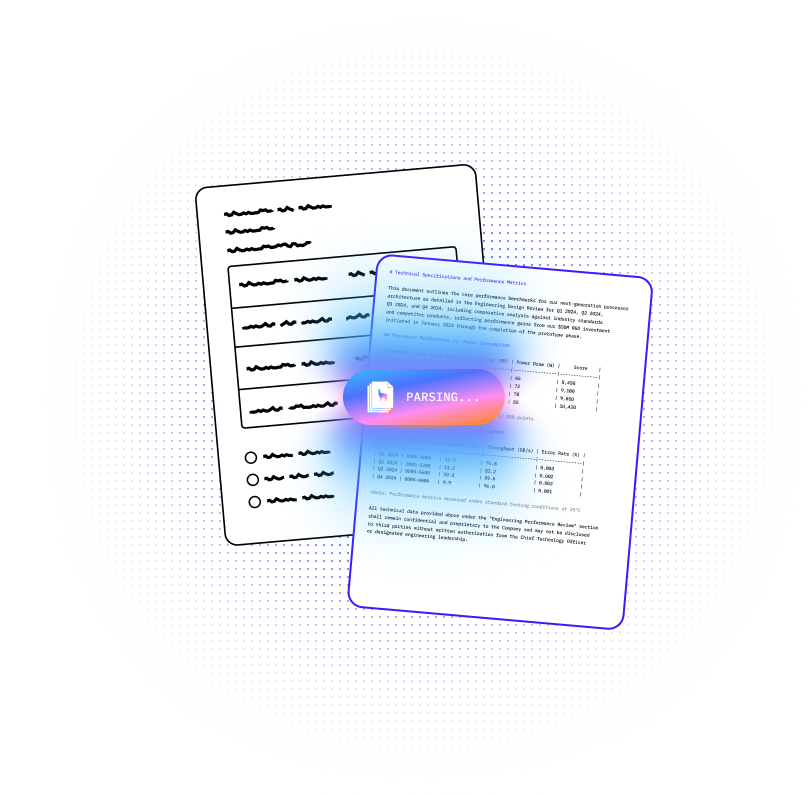
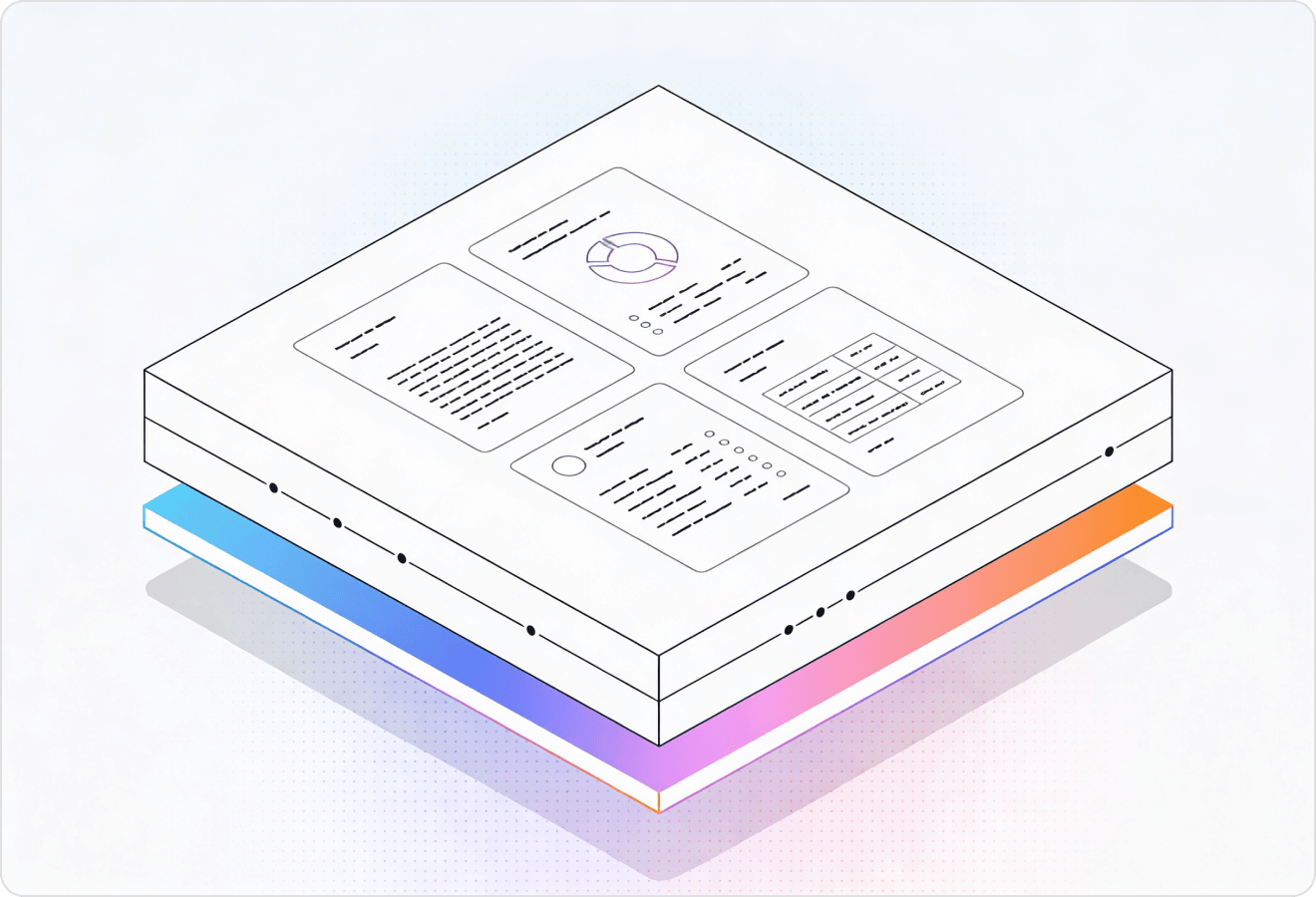

LlamaParse turns messy PDFs, scans, and forms into clean, layout-aware JSON, Markdown, or HTML so your automation starts with reliable structure. Agentic parsing understands tables, charts, and multi-column pages, then validates outputs with metadata so you can ship higher straight-through processing.
Best-in-Class Accuracy

Parse bank statements, tax forms, and underwriting packages into clean JSON with page-level citations so analysts can verify every number without manual rekeying. LlamaParse preserves table structure and reading order across messy scans, reducing exceptions in KYC/AML and credit workflows.

Convert EOBs, prior authorizations, and referral packets into structured fields that map directly into billing and claims systems, even when documents arrive as low-quality faxes with multi-column layouts. Multimodal parsing pulls totals and line items from tables and embedded images to cut denials caused by missing or misread documentation.

Extract part specs, certificates of analysis, and inspection reports—including embedded charts and tolerances—into normalized records for faster supplier qualification and audit readiness. Natural-language parsing instructions let teams standardize outputs across vendors without building brittle post-processing code for every new document template.

Turn user-uploaded PDFs into AI-ready Markdown or JSON so teams can ship search, onboarding automation, and document agents without spending weeks on custom parsing pipelines. Tier-based agentic processing routes only the hard pages to heavier models, keeping unit economics predictable as volume scales.
The Solution
01
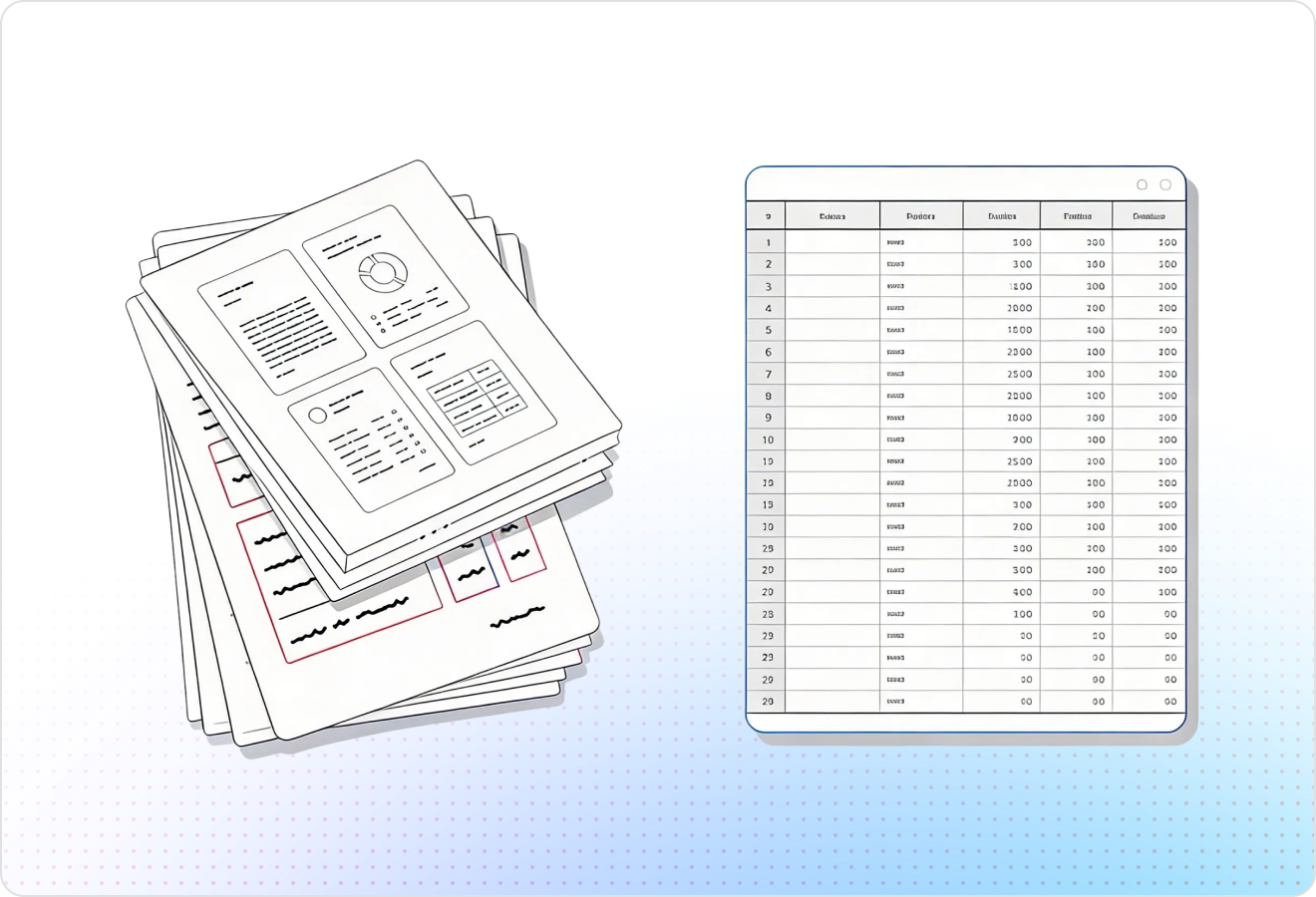
LlamaParse analyzes page structure to preserve reading order across multi-column layouts, headers/footers, and dense tables. That means OCR automation doesn’t break when formats change—your pipeline reliably returns clean, usable text and tables without brittle post-processing.
02
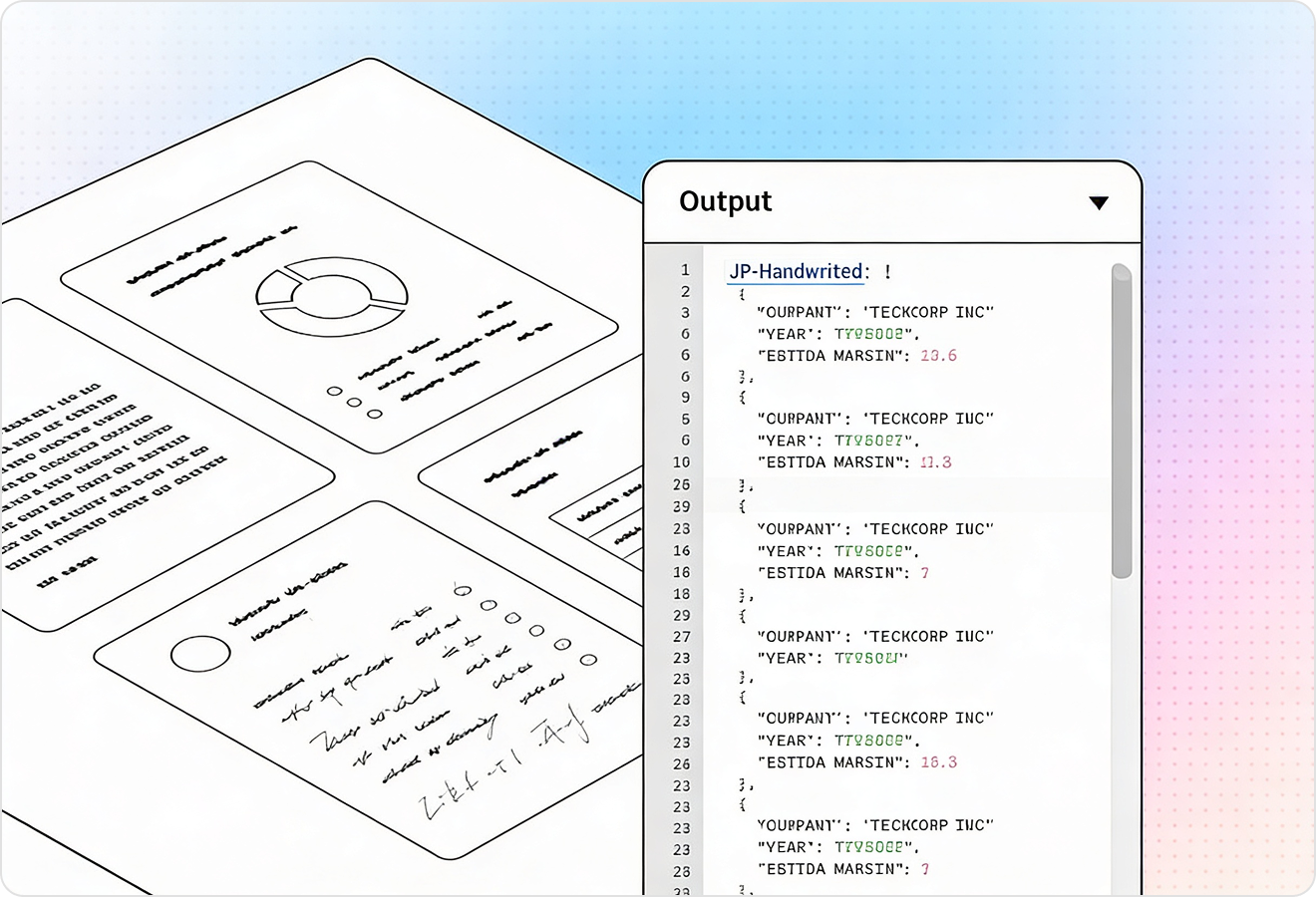
LlamaParse routes each page to the right level of vision + language processing so simple pages stay fast while messy scans get deeper treatment. This automates quality control and cost control in the same pass, keeping high throughput without sacrificing accuracy on edge cases.
03
LlamaParse runs iterative checks to detect extraction errors, inconsistencies, and common model mistakes before results are returned. For document OCR automation, this reduces manual review and increases straight-through processing on real-world documents.
04
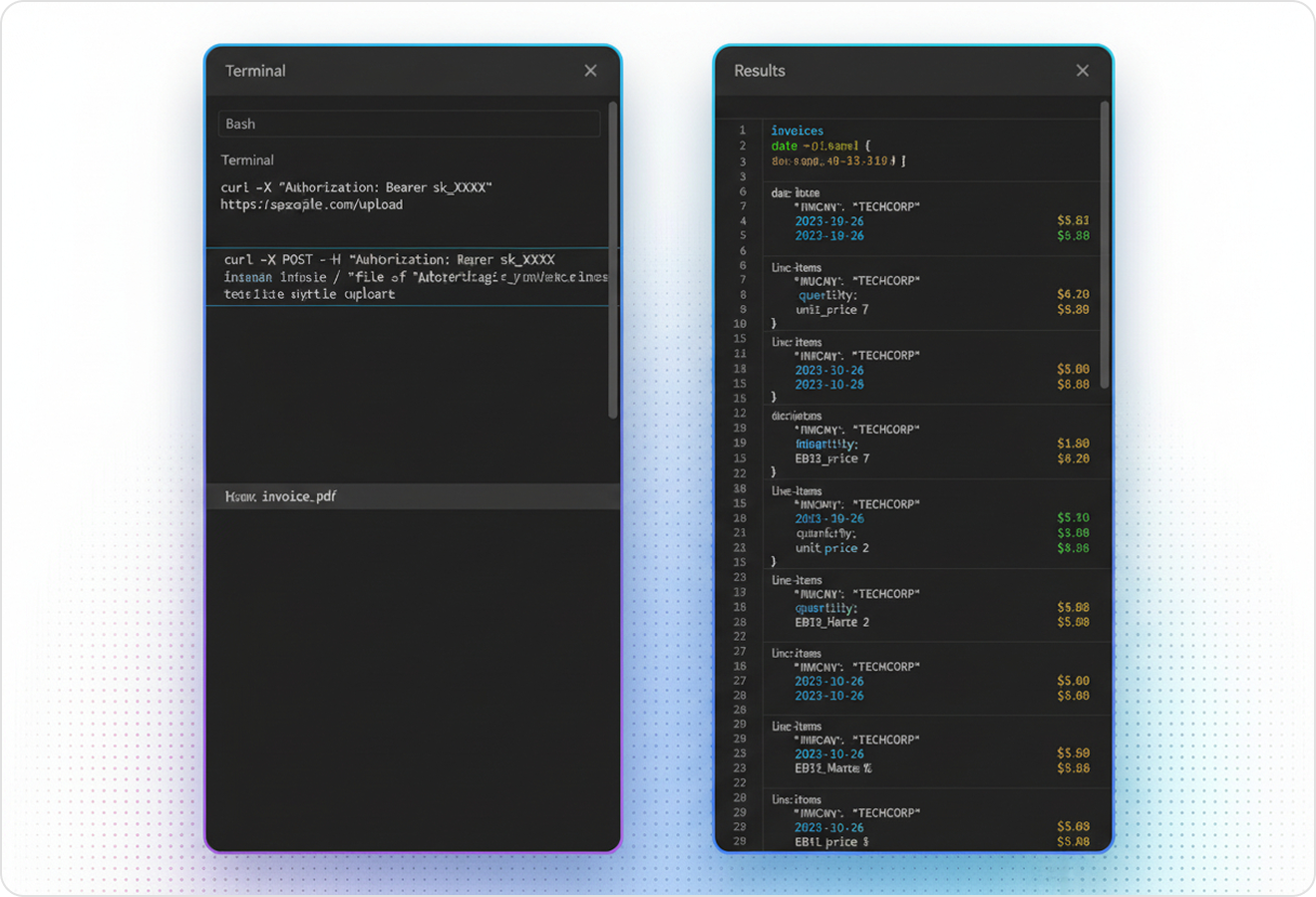
LlamaParse can emit structured JSON alongside rich metadata like page numbers, node types, and bounding boxes for extracted elements. This makes automated downstream steps—like field mapping, exception routing, and audit trails—deterministic and verifiable instead of guesswork.
Technical OCR documentation
Explore our developer guides to easily connect your document pipelines to LlamaParse.
Explore the documentation
Our AI catches the typos that tired eyes miss.

Export to Excel, JSON, XML, or directly via API.

SOC2 Type II compliant with end-to-end encryption.

Train the tool on your specific forms in minutes, not days.

Average processing time of <3 seconds per page.
LlamaParse’s support of a wide variety of filetypes and its accuracy of parsing made it the best tool we tested in our evaluations. The LlamaIndex team was very responsive and we were off to the races within a day.
Common FAQs
01
Yes—layout-aware parsing preserves reading order and understands page structure, even across multi-column PDFs and dense tables. That means fewer broken extractions when templates change and far less brittle post-processing to “fix” the output.
02
Agentic Parsing Auto Mode automatically applies lightweight processing for simple pages and deeper vision+language analysis only when needed. You get fast throughput on the easy stuff while still maintaining high accuracy on noisy scans and edge cases.
03
Self-correction validation loops run iterative checks to spot inconsistencies, missing fields, and common extraction errors before results are returned. This increases straight-through processing and helps your team focus only on true exceptions.
04
Can I get structured JSON output that’s easy to map into my database or workflow tools?
Yes—results can be emitted as clean, structured JSON designed for deterministic field mapping and automation. This makes downstream steps like routing, reconciliation, and integrations far more reliable than parsing raw text.
05
Do you provide traceability for audit trails (page numbers, bounding boxes, and where each value came from)?
Absolutely—each extracted element can include metadata like page numbers, node types, and bounding boxes. That gives you verifiable provenance for audits, QA, and quick human review when something looks off.
06
What’s the fastest way to prove this will work on our real documents before committing?
Start with a small batch of your toughest samples—messy scans, varied templates, and table-heavy pages—and compare the structured output against your current process. You’ll quickly see accuracy, exception rates, and how much manual cleanup is eliminated before scaling up.