Nov 14, 2025
Document AI: The Next Evolution of Intelligent Document ProcessingPersona
Industry
Use cases
AWS S3 Document Parsing
[ AWS S3 Document Parsing ]

Use LlamaParse to turn S3 PDFs into structured JSON with layout-aware accuracy and citations.
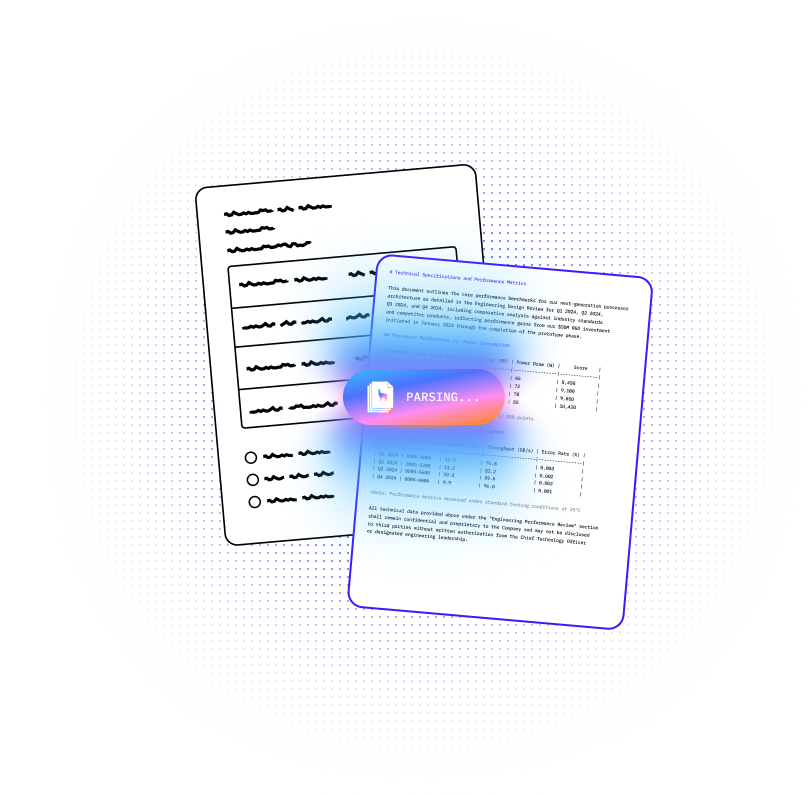
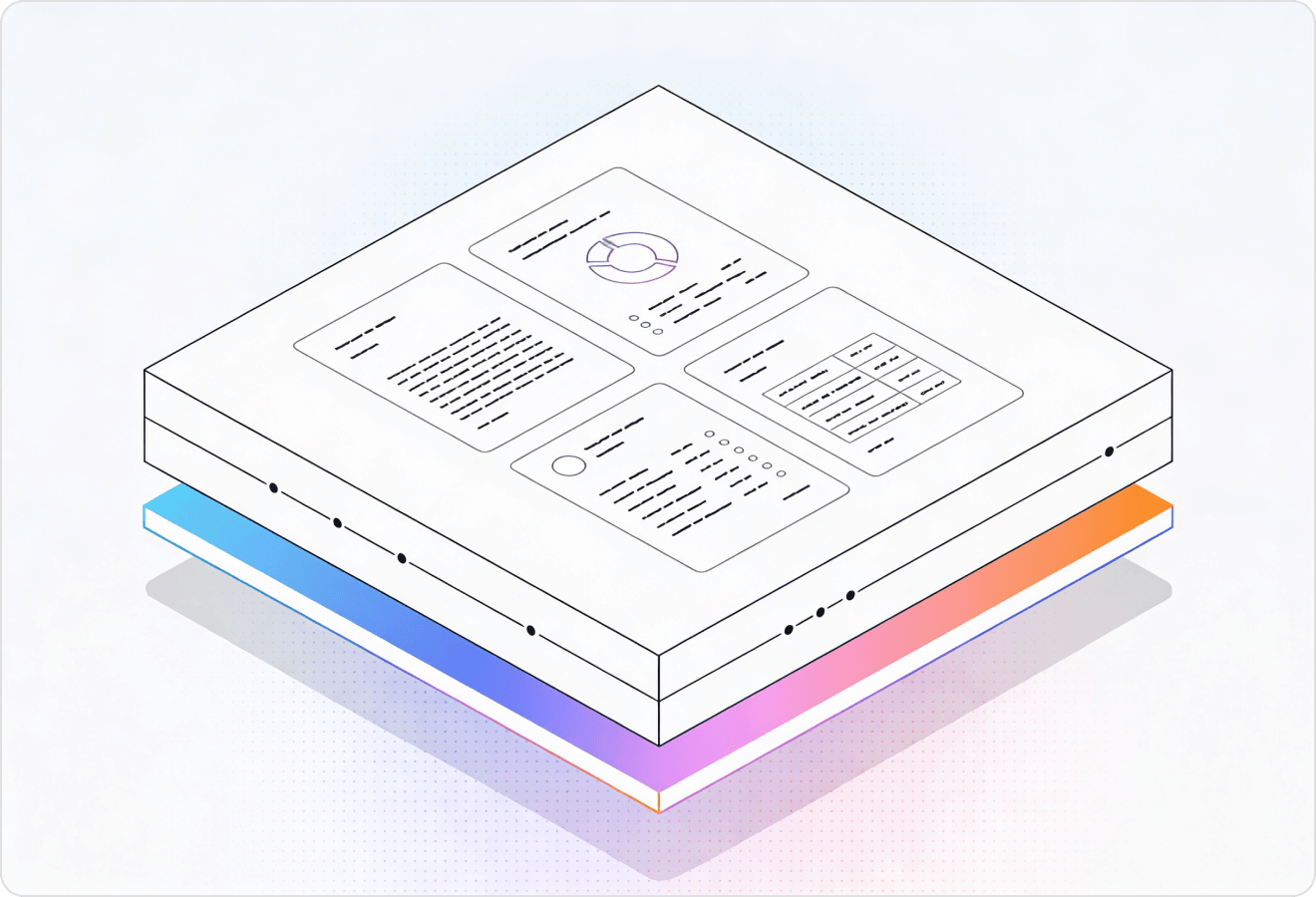

LlamaParse pulls PDFs, scans, and reports straight from S3 and converts them into clean, structured Markdown and JSON your apps can trust. Agentic document parsing understands layout, tables, and embedded visuals, then adds metadata for verification so downstream automation breaks less often.
Best-in-Class Accuracy

Turn user-uploaded PDFs in S3 into clean Markdown/JSON with LlamaParse so your product can ship search, copilots, and workflow automation without building a brittle parsing pipeline. Use Auto Mode and tier-based processing to keep unit economics predictable while still handling messy scans, multi-column docs, and tables that break traditional OCR.

Parse FNOL packets, estimates, medical bills, and adjuster notes stored in S3 into structured JSON with page-level citations, so claims teams can automate data capture and exception handling. LlamaParse preserves table integrity and reading order, reducing rework from scrambled line items and enabling faster cycle times from intake to settlement.

Extract shipment details from bills of lading, packing lists, commercial invoices, and customs forms in S3, even when key fields are embedded in dense tables or multi-part layouts. With natural-language parsing instructions, operations teams can standardize outputs across carriers and formats to automate reconciliation, exception alerts, and downstream ERP updates.

Convert plansets, specifications, bids, and pay apps stored in S3 into AI-ready Markdown that preserves sections, headers, and schedules, so teams can query project documents without manual indexing. Multimodal parsing captures charts and quantities cleanly, enabling faster takeoffs, contract compliance checks, and change-order validation.
The Solution
01
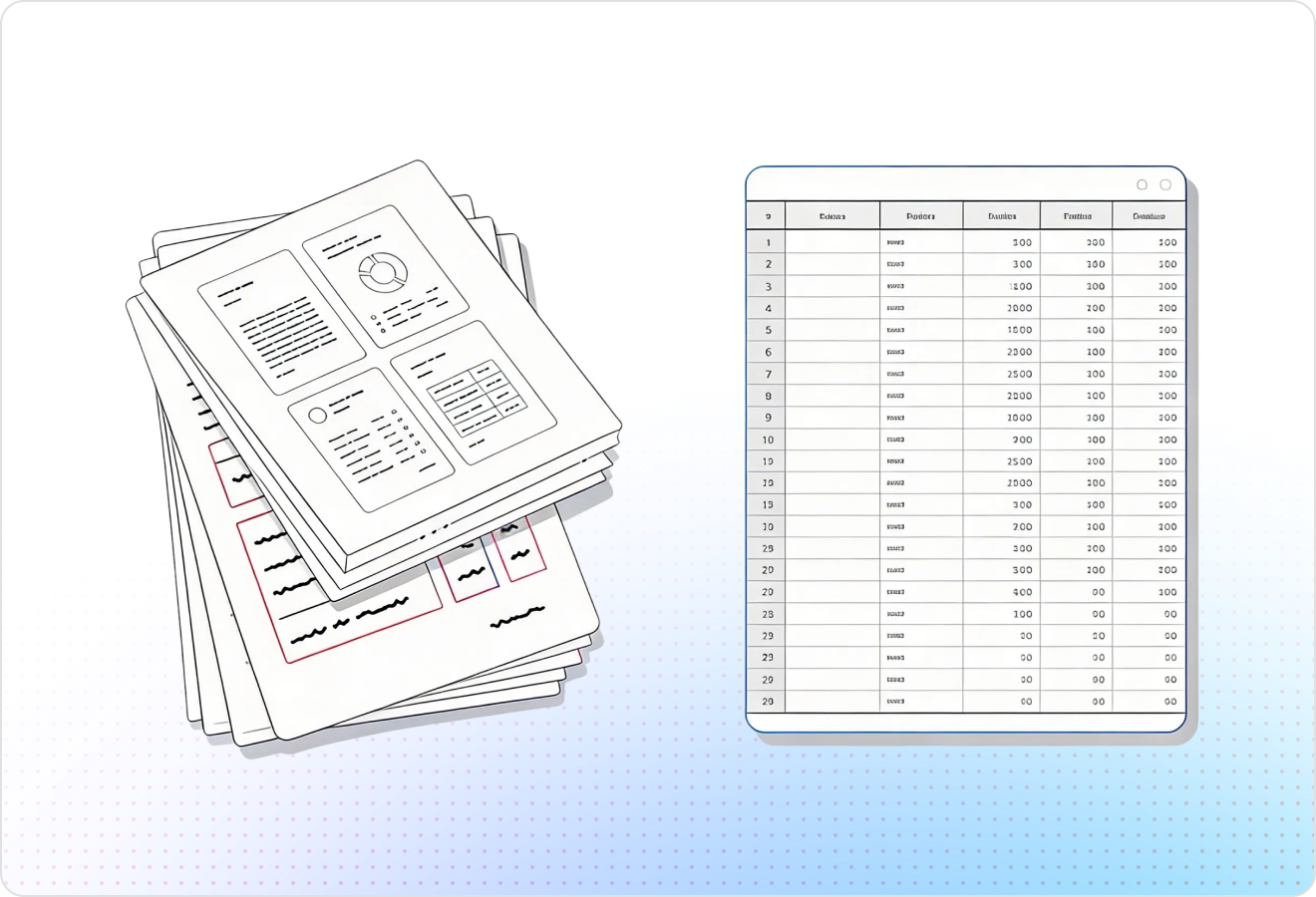
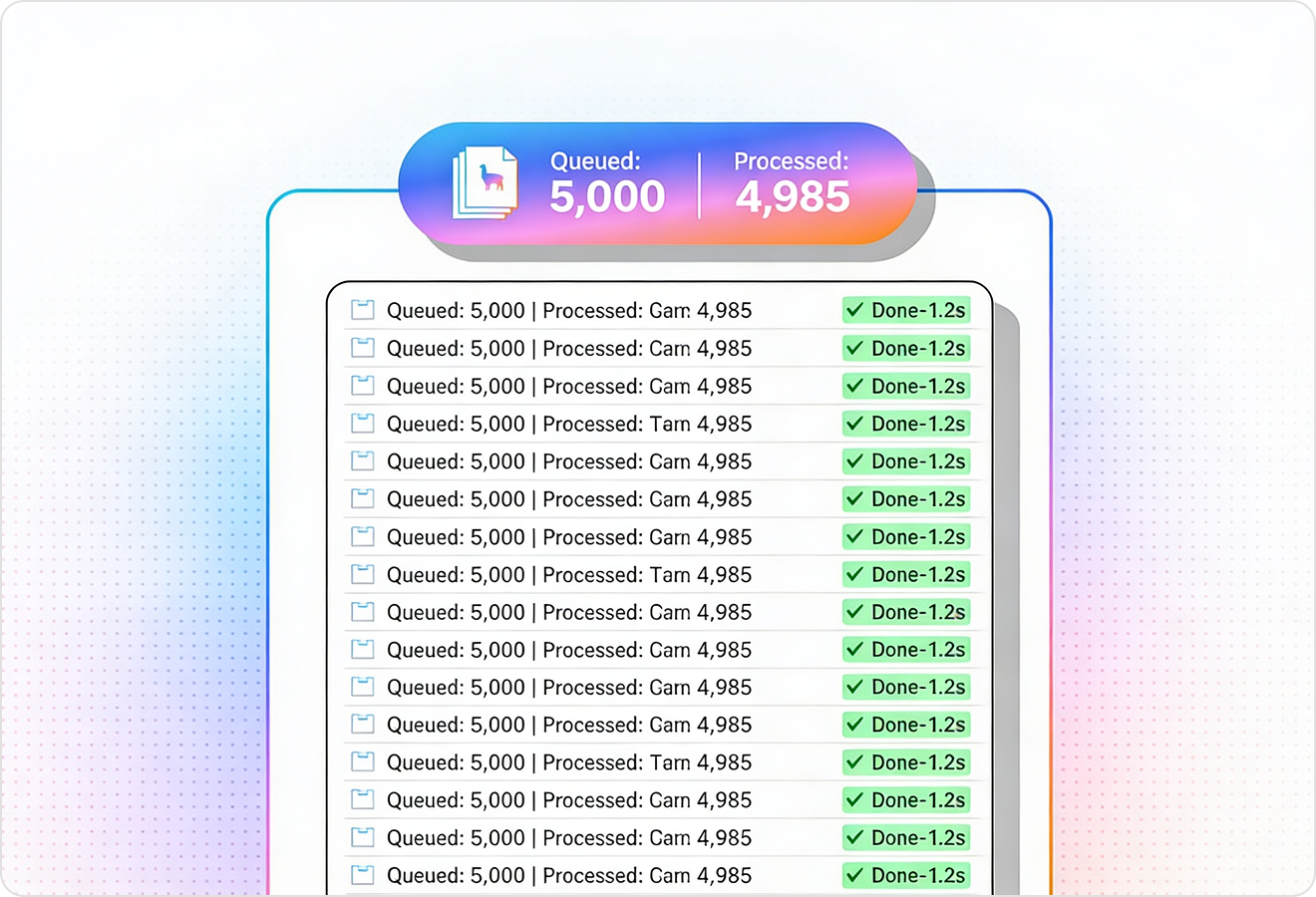
LlamaParse is built to process large document batches reliably, which is exactly what you need when your source of truth is an S3 bucket full of PDFs, scans, and office files. You can turn messy, unstructured S3 archives into consistent, AI-ready outputs without building your own brittle parsing pipeline.
02
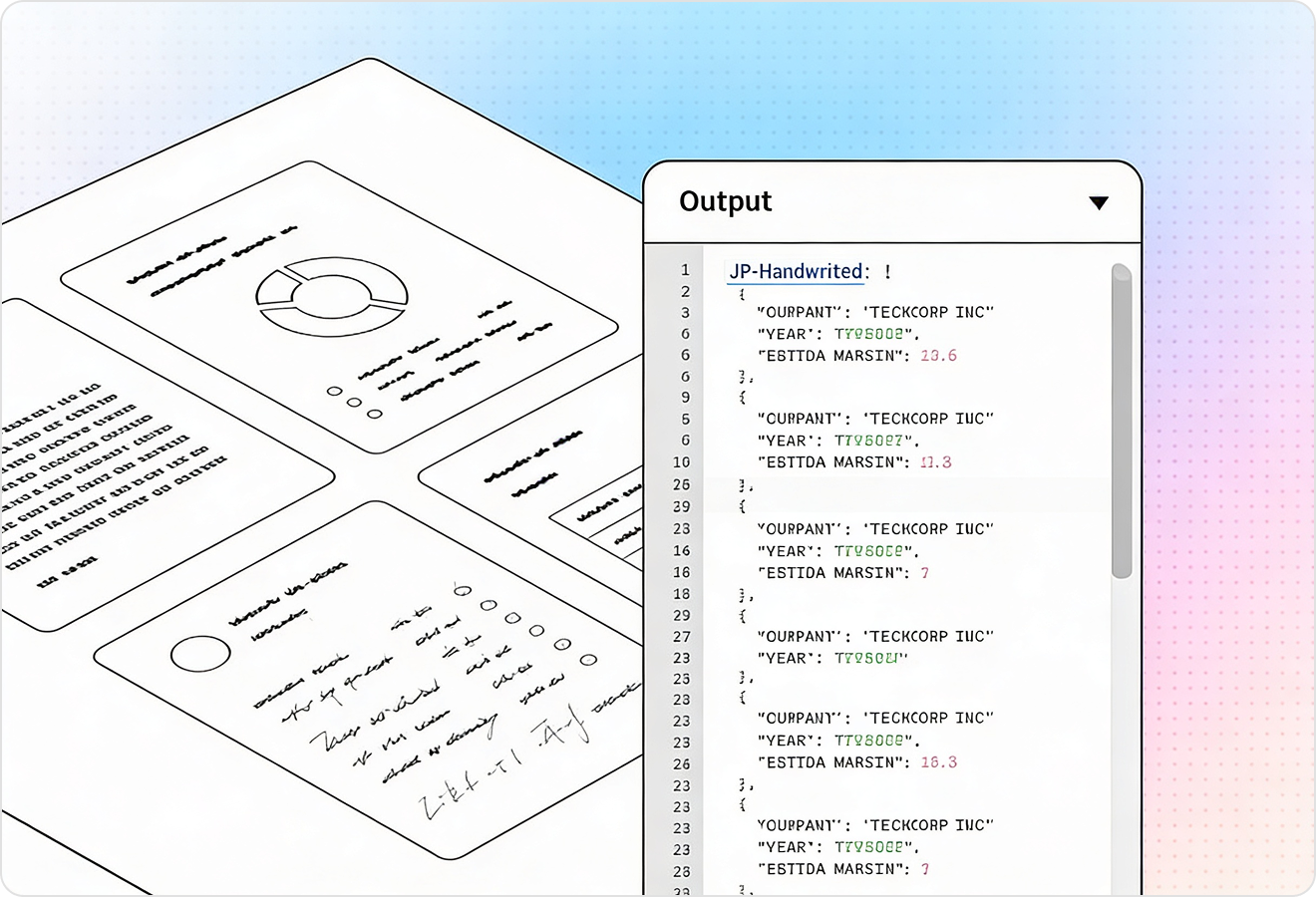
LlamaParse preserves reading order and layout structure across multi-column pages, headers/footers, and dense tables. When you parse documents pulled from S3, you get clean tables and correctly ordered sections instead of scrambled text that breaks downstream analytics and automation.
03
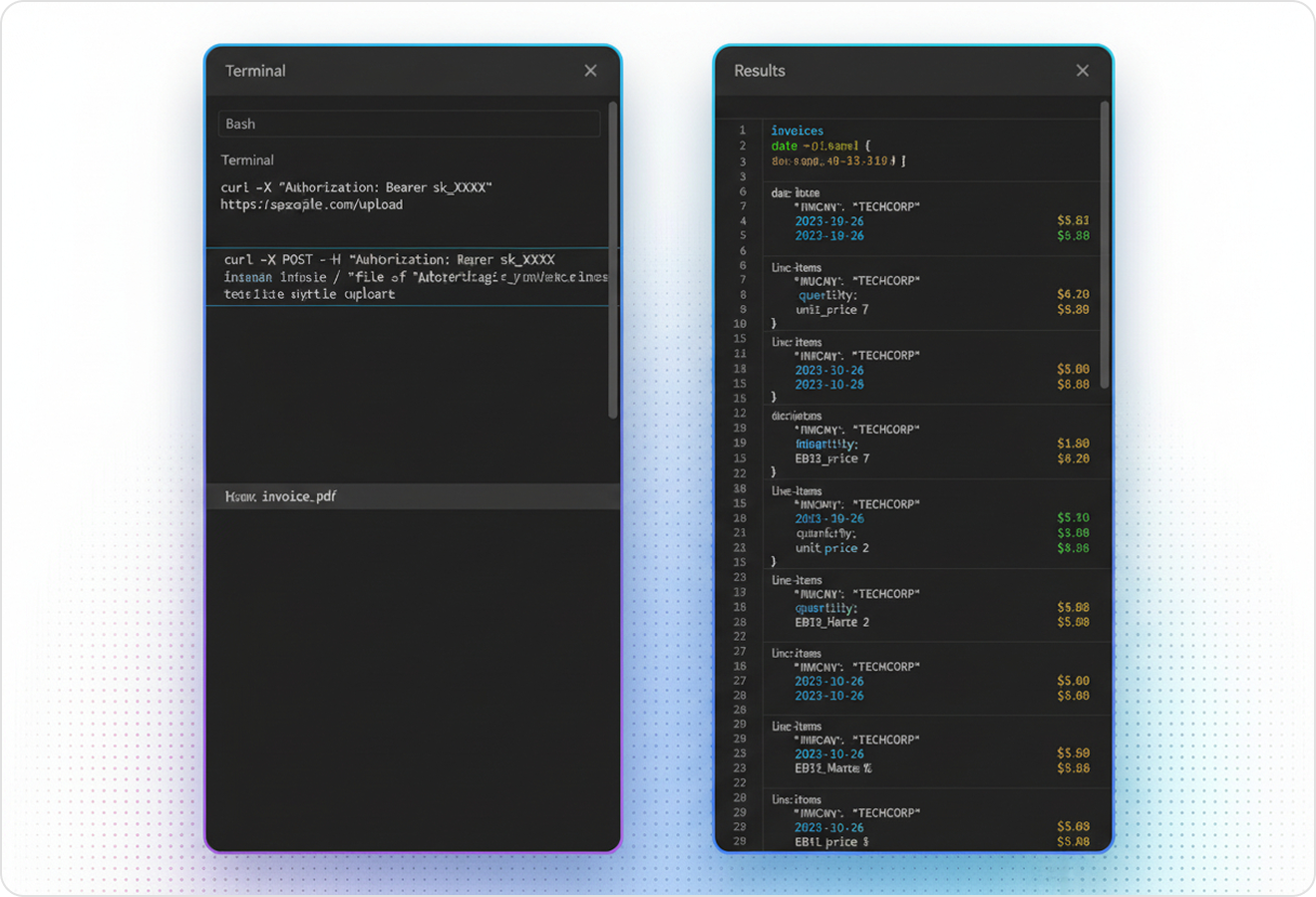
LlamaParse can return structured JSON annotated with page numbers, element types, and spatial coordinates for traceability. That makes S3 document parsing auditable and easy to wire into downstream systems, where you often need to map extracted fields back to the exact source location.
04
LlamaParse routes each page through the right level of document understanding, using heavier vision-language reasoning only when the page is complex. For S3 workloads with unpredictable document quality, this keeps accuracy high without paying premium compute on every single file.
Technical OCR documentation
Explore our developer guides to easily connect your document pipelines to LlamaParse.
Explore the documentation
Our AI catches the typos that tired eyes miss.

Export to Excel, JSON, XML, or directly via API.

SOC2 Type II compliant with end-to-end encryption.

Train the tool on your specific forms in minutes, not days.

Average processing time of <3 seconds per page.
LlamaParse’s support of a wide variety of filetypes and its accuracy of parsing made it the best tool we tested in our evaluations. The LlamaIndex team was very responsive and we were off to the races within a day.
Common FAQs
01
LlamaParse is built for S3-scale batch parsing, so you can process thousands (or millions) of PDFs, scans, and Office files reliably. It turns messy archives into consistent, AI-ready outputs without you maintaining a brittle parsing pipeline.
02
Yes—LlamaParse is layout-aware, preserving reading order across multi-column pages, headers/footers, and section structure. This prevents scrambled text that can break search, analytics, and downstream automation.
03
LlamaParse is designed to extract dense tables while keeping rows, columns, and surrounding context intact. You get clean table outputs that are ready for pipelines and BI tools instead of manual cleanup.
04
What does the output look like, and can I trace extracted fields back to the source document?
You can return structured JSON annotated with metadata like page numbers, element types, and spatial coordinates. That makes results auditable and lets you map any extracted value back to the exact location in the original S3 document.
05
How do you balance accuracy and cost when document quality varies across an S3 archive?
LlamaParse uses tiered agentic processing, routing each page through the right level of understanding. Complex pages get deeper vision-language reasoning, while simpler pages stay lightweight—so you maintain accuracy without paying premium compute for every file.
06
Is this suitable for compliance-heavy workflows where we need repeatability and reviewability?
Yes—the structured JSON plus source-linked metadata supports repeatable processing and straightforward review. It’s easier to validate outputs, spot issues quickly, and prove where each extracted field came from when auditors or stakeholders ask.