Nov 14, 2025
Document AI: The Next Evolution of Intelligent Document ProcessingPersona
Industry
Use cases
File Parsing OCR Python
[ File Parsing OCR Python ]

Parse PDFs and scans with LlamaParse, returning clean JSON with citations your Python code can trust.
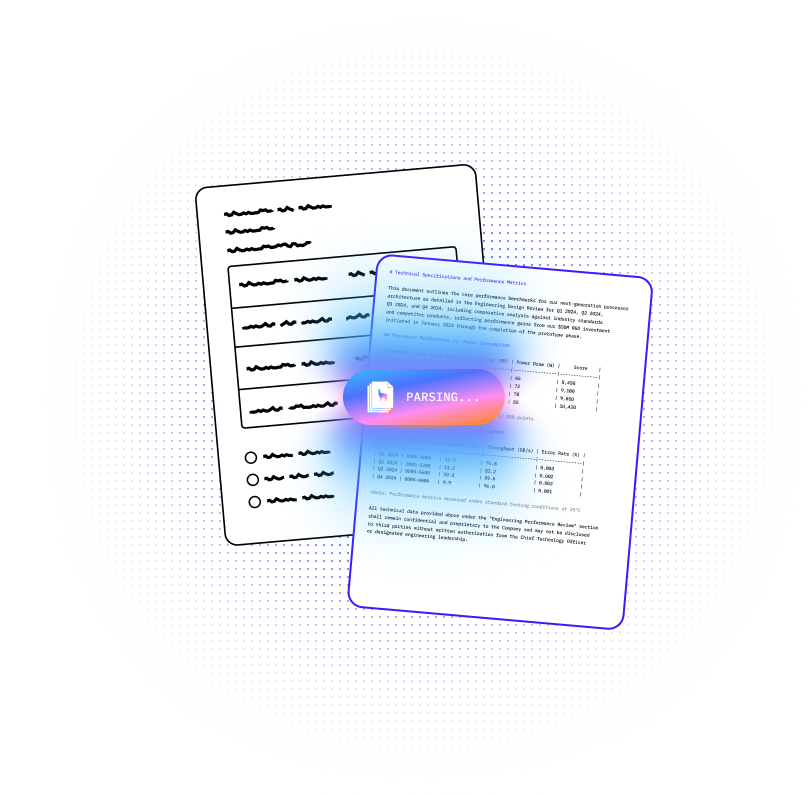
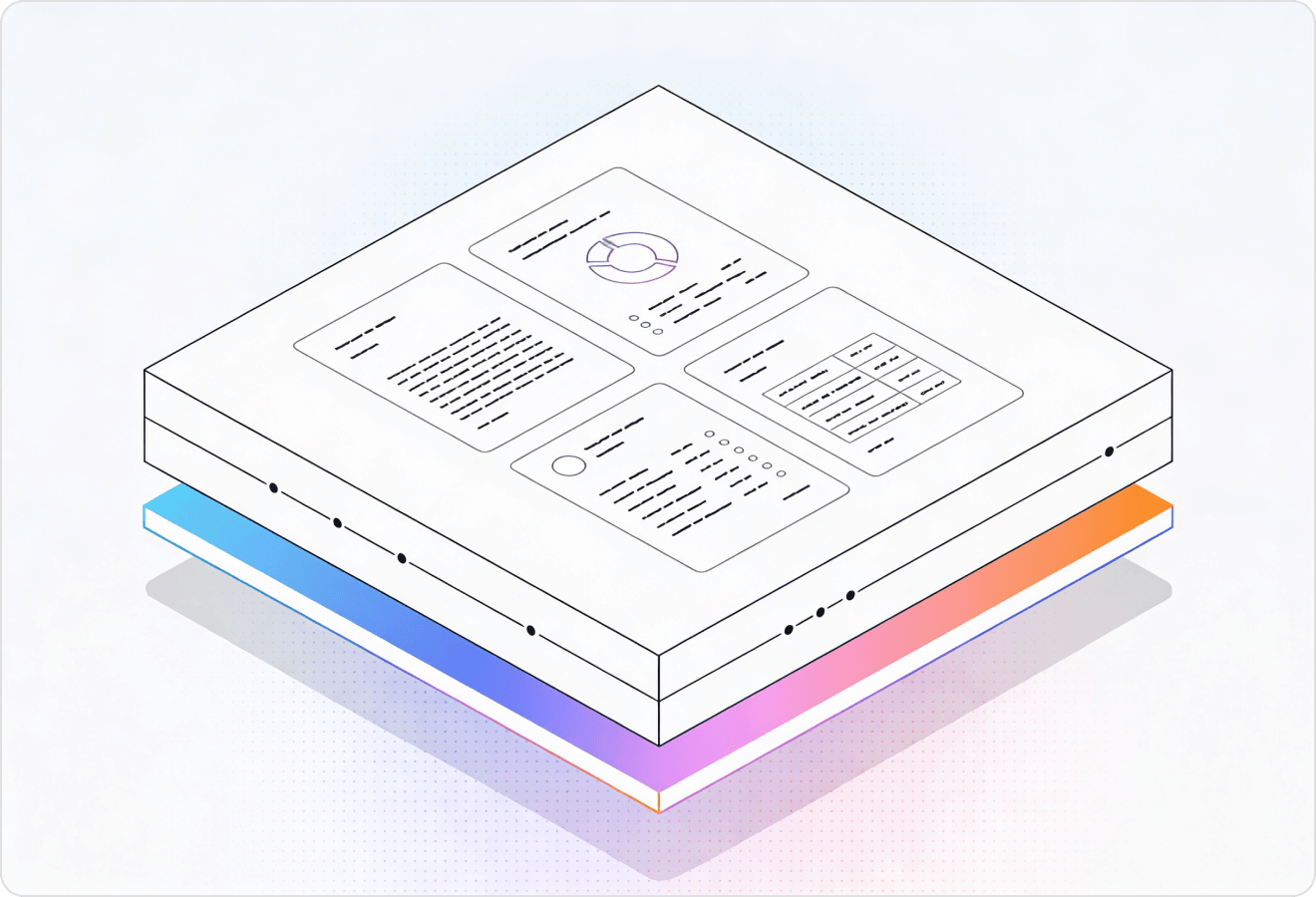
LlamaParse turns messy PDFs, scans, and forms into clean, structured JSON or Markdown in Python, even when layouts shift. It uses layout-aware vision and validation loops to reduce extraction errors, so your downstream workflows run with fewer exceptions.
Best-in-Class Accuracy

Parse borrower PDFs like bank statements, pay stubs, and tax forms into clean JSON with page-level citations so underwriters can verify key fields fast. LlamaParse preserves table structure and reading order across messy multi-column statements, reducing rework and speeding up decisioning in Python pipelines.

Turn adjuster reports, estimates, invoices, and loss runs into structured outputs that keep line items and totals intact, even when tables are nested or scanned at odd angles. Agentic correction loops and confidence metadata surface exceptions early, cutting manual QA time and preventing downstream payout errors.

Convert contracts, pleadings, and scanned exhibits into layout-faithful Markdown so clause text doesn’t get scrambled across columns, headers, and footers. Teams can extract defined terms, obligations, and dates with traceable citations, making review workflows faster without sacrificing defensibility.

Ship a production-grade file parsing layer in Python that handles real-world PDFs, images, and spreadsheets without writing brittle regex or custom table-fix code. With tiered processing and structured JSON/Markdown outputs, startups can control cost while scaling ingestion from a weekend prototype to customer-grade volumes.
The Solution
01
LlamaParse understands page structure—columns, headers/footers, and section boundaries—so extracted text keeps its intended reading order. In Python file parsing pipelines, this prevents the classic “scrambled OCR” problem that breaks downstream chunking and extraction.
02
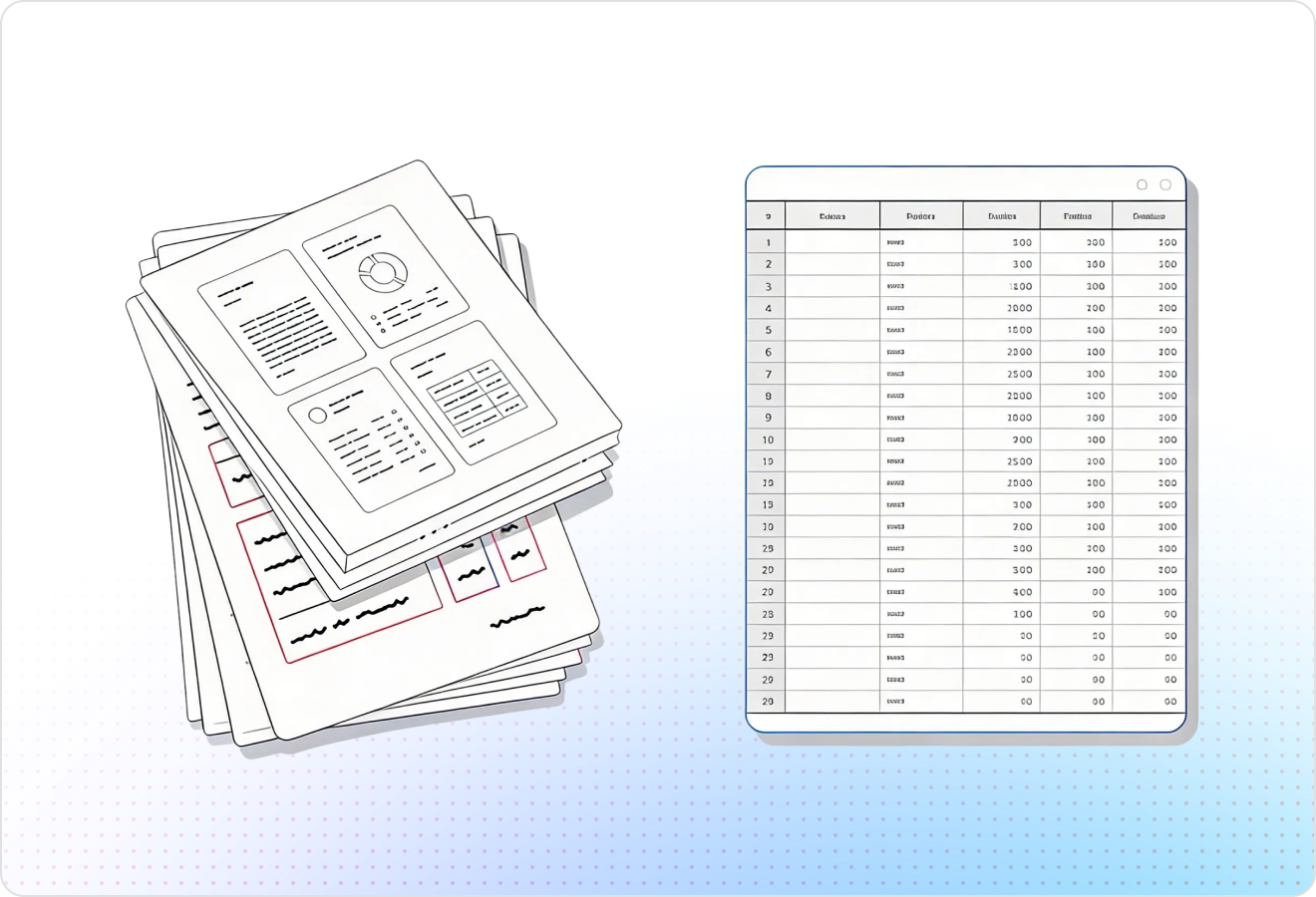
LlamaParse pulls complex tables (merged cells, nested tables, multi-page continuations) into clean, consistent structures instead of flat text blobs. That means your Python code can load reliable rows/columns directly into pandas or databases without brittle cleanup logic.
03
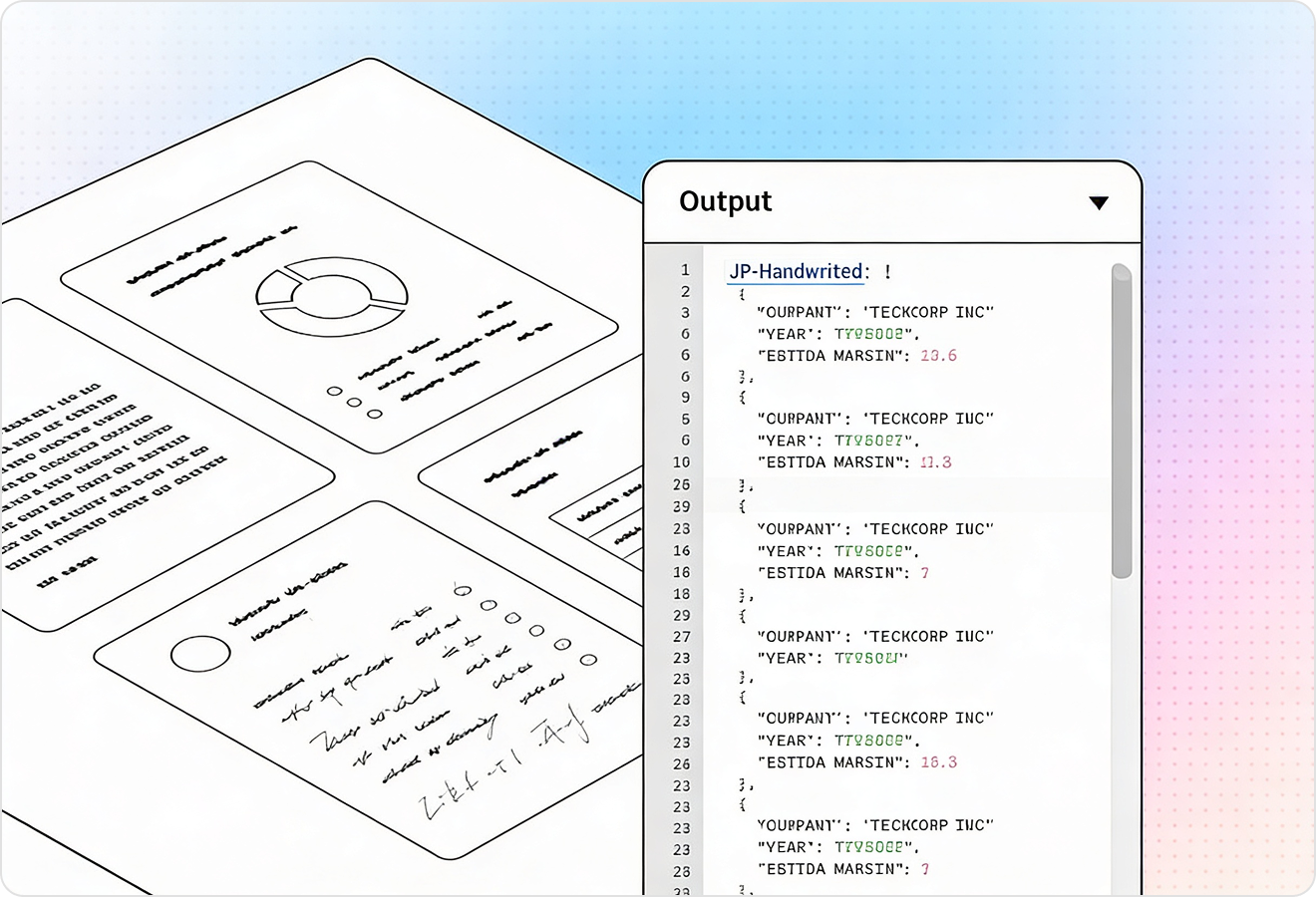
LlamaParse uses agentic document parsing with state-of-the-art OCR and validation loops to catch hallucinations, missing fields, and low-quality scan errors. For Python-based ingestion, this increases straight-through processing so you spend less time writing post-parse QA scripts.
04
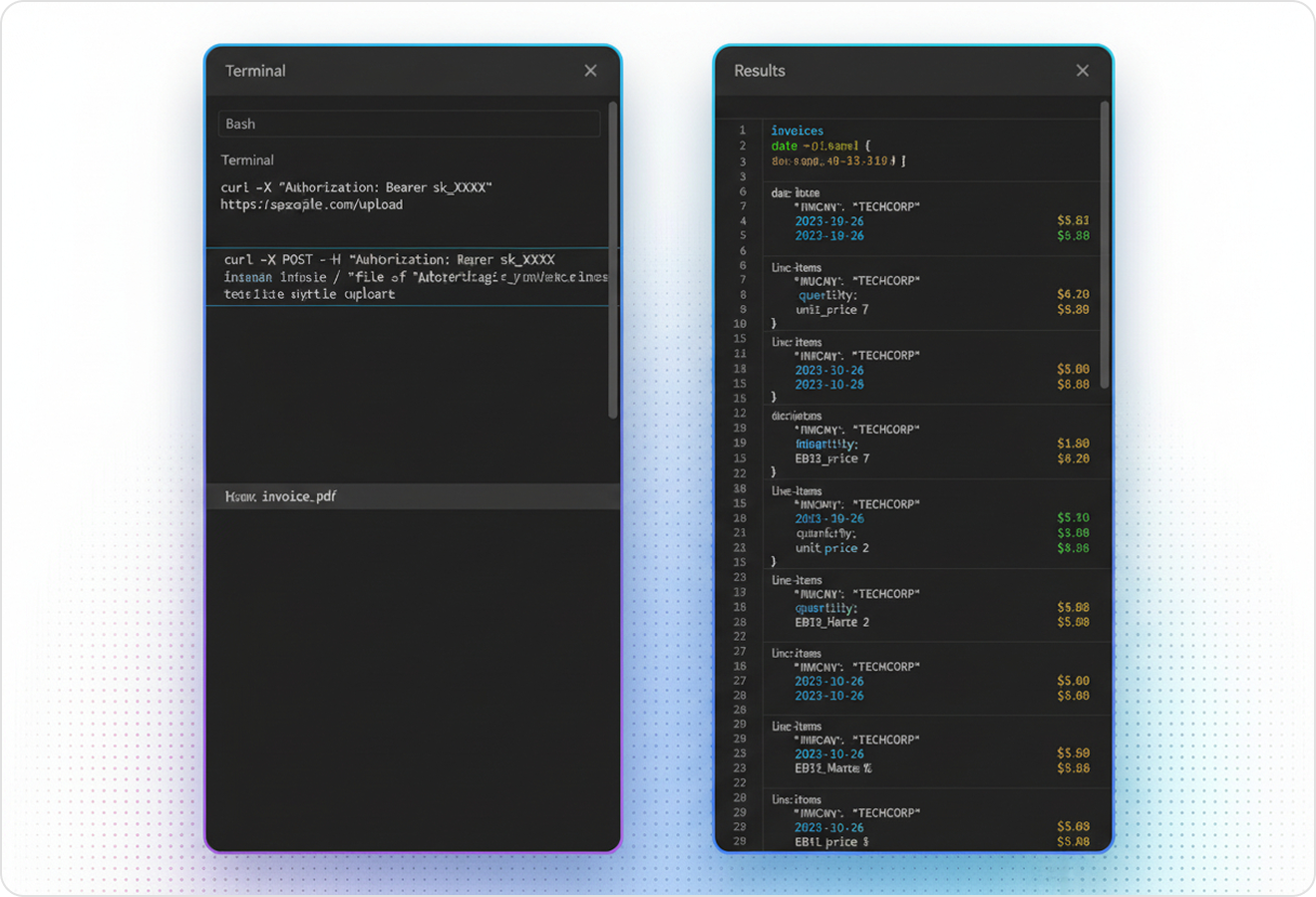
LlamaParse can return structured JSON plus granular metadata like page numbers, element types, and bounding boxes for traceability. In Python, that makes it easy to build deterministic extractors, route edge cases to review, and link every value back to its source location.
Technical OCR documentation
Explore our developer guides to easily connect your document pipelines to LlamaParse.
Explore the documentation
Our AI catches the typos that tired eyes miss.

Export to Excel, JSON, XML, or directly via API.

SOC2 Type II compliant with end-to-end encryption.

Train the tool on your specific forms in minutes, not days.

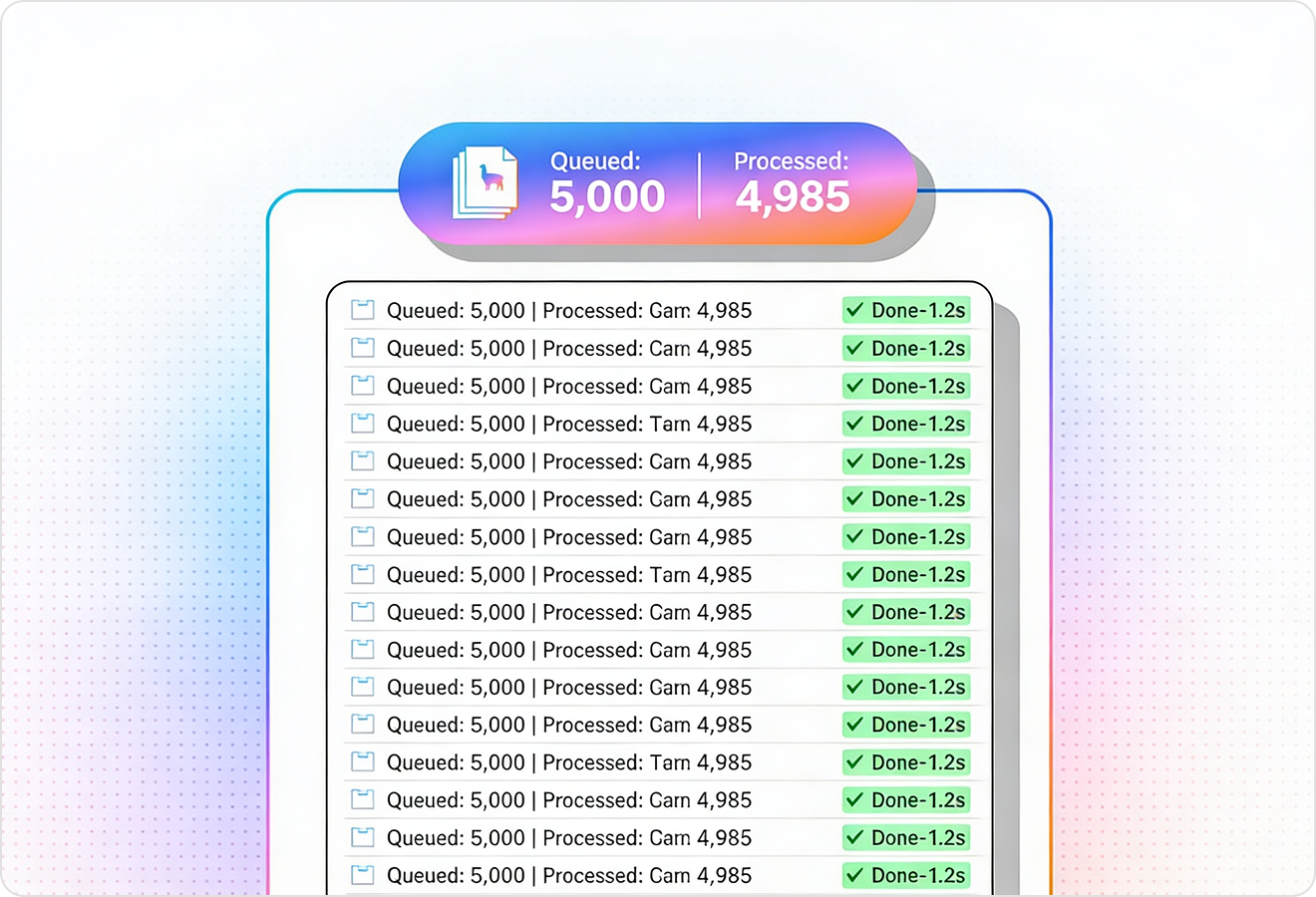
Average processing time of <3 seconds per page.
LlamaParse’s support of a wide variety of filetypes and its accuracy of parsing made it the best tool we tested in our evaluations. The LlamaIndex team was very responsive and we were off to the races within a day.
Common FAQs
01
Layout-aware parsing preserves the intended reading order by understanding columns, headers/footers, and section boundaries. That means your downstream chunking, search indexing, and LLM extraction won’t break due to jumbled OCR output. You get cleaner text with fewer custom heuristics in your Python pipeline.
02
Yes—tables with merged cells, nested structures, and multi-page continuations are returned as consistent rows and columns instead of flattened text. This makes it straightforward to convert results into DataFrames or write to a database without brittle, table-specific cleanup code. You spend time analyzing data, not fixing OCR artifacts.
03
Agentic OCR uses validation and auto-correction loops to reduce common scan issues like dropped characters, missing fields, and inconsistent formatting. When confidence is low, the output can be flagged so you can route exceptions for review rather than silently ingesting bad data. This increases straight-through processing while keeping quality under control.
04
Do you provide JSON output with enough metadata to trace every value back to the source PDF?
Yes—outputs can include structured JSON plus metadata such as page numbers, element types, and bounding boxes. That makes audits and debugging easier because you can pinpoint exactly where each extracted field came from. It also enables deterministic post-processing in Python, including rule-based validation and targeted re-checks.
05
Will this reduce the amount of post-processing code I maintain for OCR and parsing?
In most workflows, yes—layout awareness and table fidelity eliminate many of the custom regexes and document-specific fixes teams end up maintaining. Cleaner structure at the source means simpler chunking, fewer edge-case handlers, and more reliable extraction. Your pipeline becomes easier to test, monitor, and scale.
06
How easy is it to integrate into an existing Python ingestion pipeline?
It’s designed to plug into common Python workflows, returning structured outputs you can pass directly into pandas, vector stores, or ETL jobs. With JSON + metadata, you can quickly build routing for edge cases and keep provenance for compliance and QA. Most teams can prototype an end-to-end parser in hours, not weeks.