Nov 14, 2025
Document AI: The Next Evolution of Intelligent Document ProcessingPersona
Industry
Use cases
ACH Authorization Form OCR
[ ACH Authorization Form OCR ]

Use LlamaParse to pull routing and account details accurately from messy forms, no retraining needed.
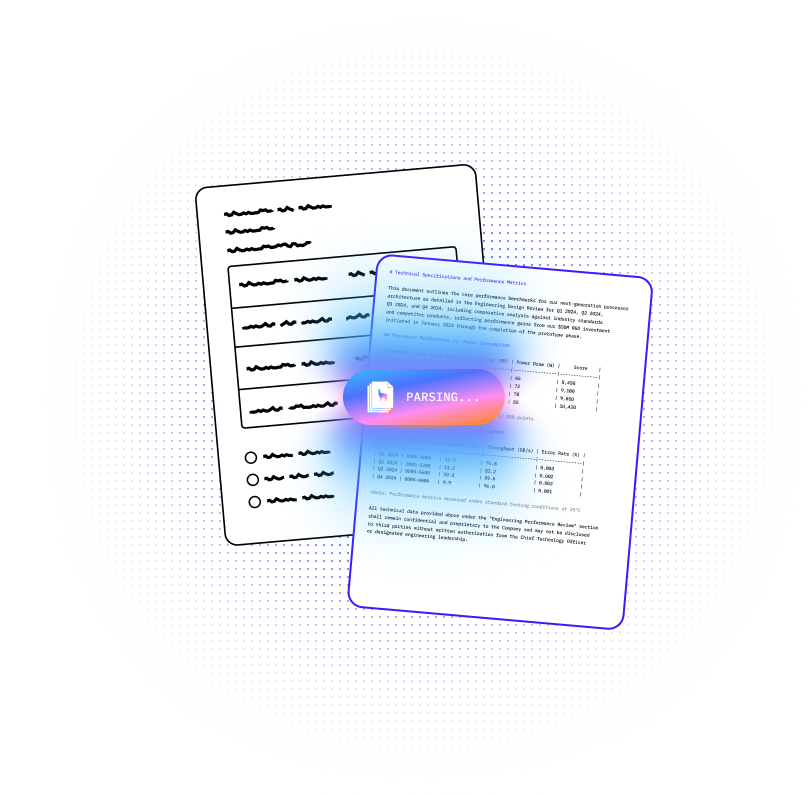
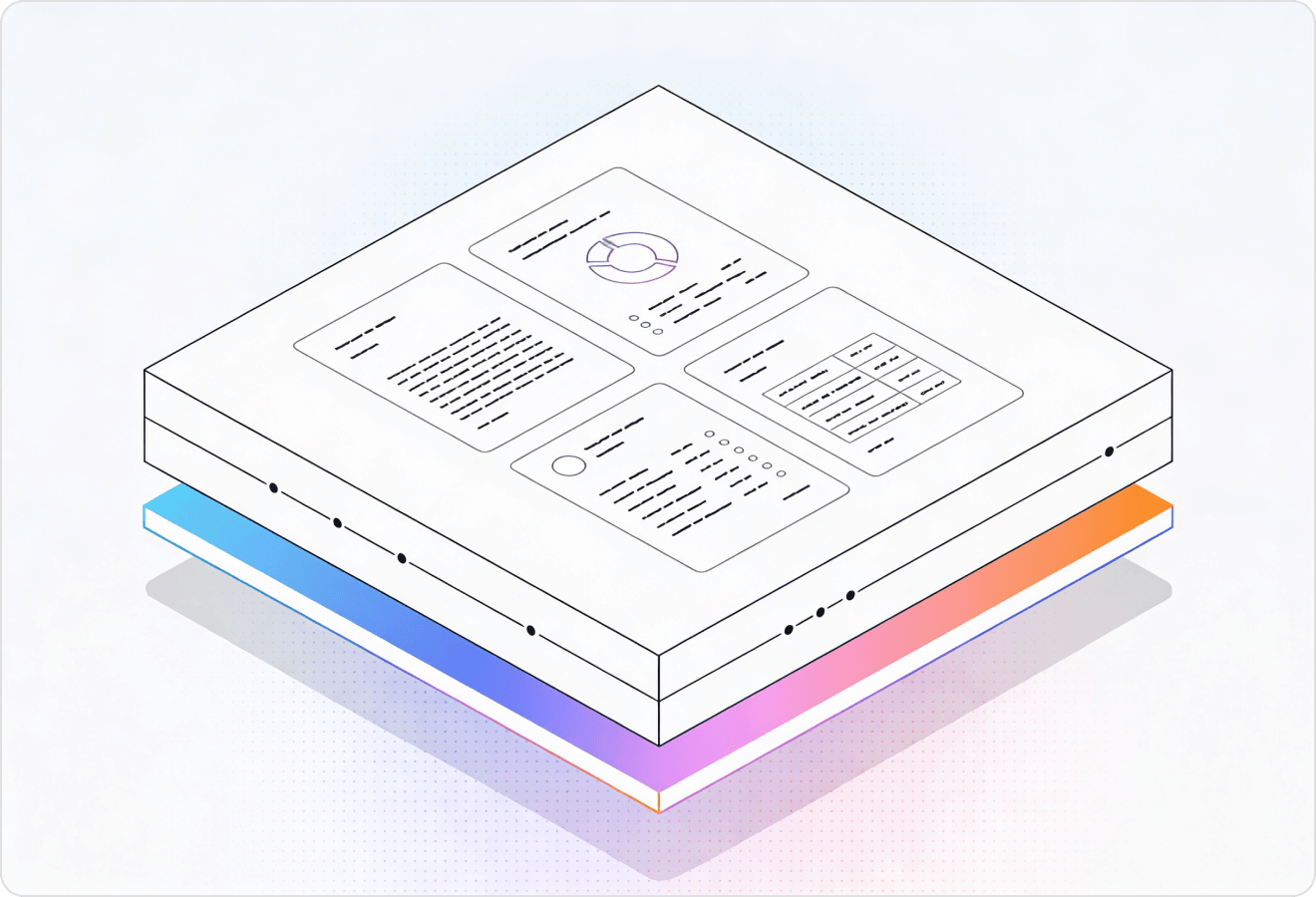
LlamaParse turns ACH authorization forms into clean, structured fields like account details, routing numbers, signer info, and consent language. Layout-aware parsing and validation loops reduce exceptions, so your team spends less time fixing bad extractions and chasing missing data.
Best-in-Class Accuracy

Turn ACH authorization forms (PDFs, scans, and photos) into verified JSON—routing account/routing numbers, signer identity fields, and effective dates into your core and fraud controls without manual keying. LlamaParse’s layout-aware extraction and correction loops reduce exceptions from messy multi-column forms and stamped edits, improving straight-through processing for onboarding and payment changes.

Automate rent autopay enrollment by extracting tenant ACH authorizations and mapping them into your payment processor and ledger, even when forms are bundled with leases and addenda. LlamaParse preserves reading order and signature blocks across varied templates, so your team stops chasing missing fields and can activate autopay faster.

Parse patient and payer ACH authorization forms to set up EFT for claims, refunds, and recurring payments, outputting structured data with traceable metadata for compliance review. LlamaParse handles low-quality fax scans and form variants without brittle template rules, reducing rework that delays reimbursements.

Ship ACH-enabled onboarding quickly by using LlamaParse to ingest user-uploaded authorization forms and return clean, schema-ready JSON for KYC/KYB workflows and payment setup. Natural-language parsing instructions let you iterate on required fields and validation logic without rewriting fragile regex pipelines as your product and form formats evolve.
The Solution
01
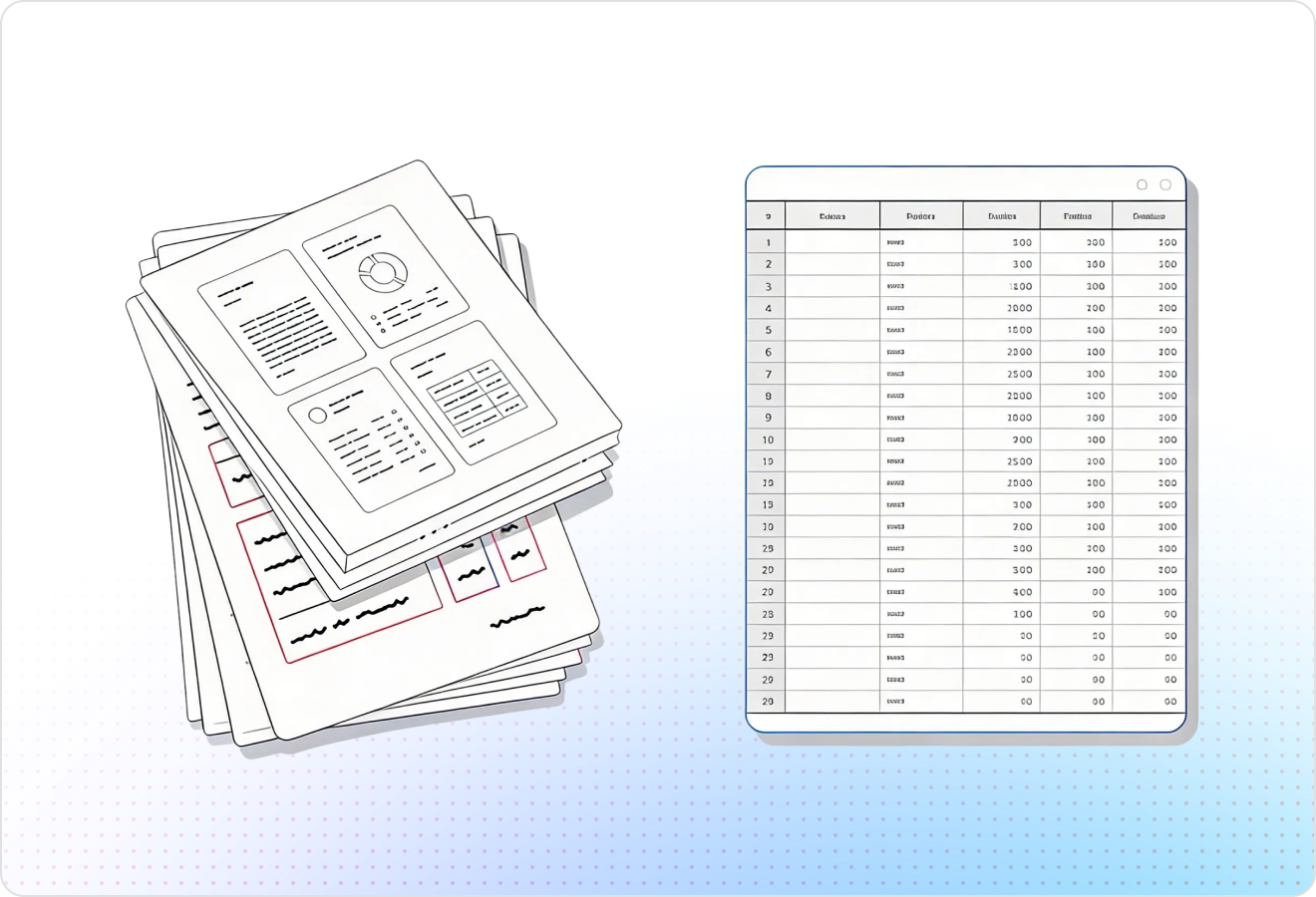
LlamaParse understands form layout, keeping labels, checkboxes, and adjacent values correctly paired instead of producing scrambled text. For ACH authorization forms, this reliably captures routing number, account number, account type, and authorization language even when the scan quality or template changes.
02
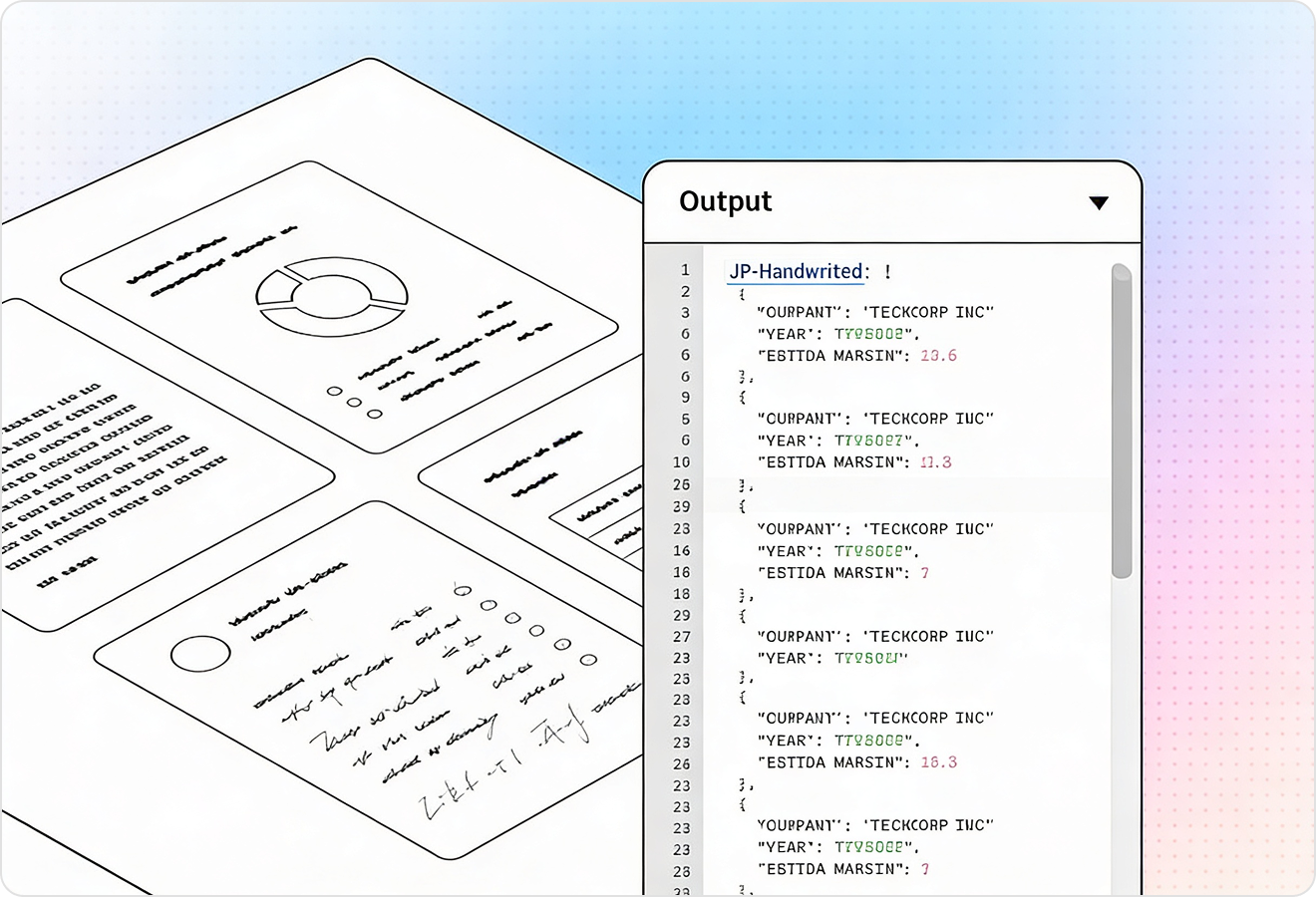
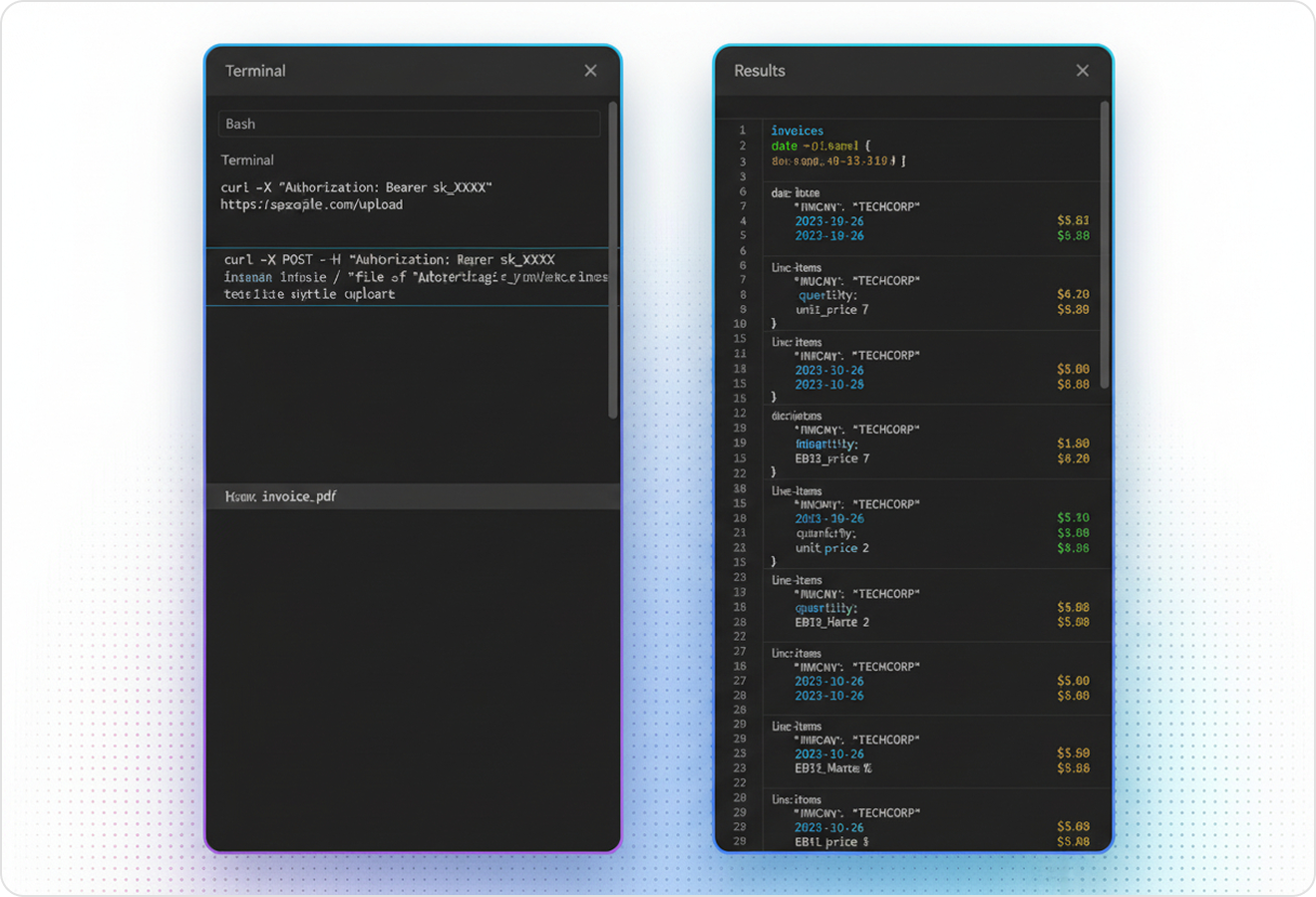
LlamaParse can return clean, machine-ready JSON so extracted ACH fields map directly into your onboarding, payments, or compliance systems. This reduces brittle post-processing and makes it easy to validate required fields like account holder name, bank details, and authorization date.
03
Every extracted value can include traceable metadata such as page reference and spatial coordinates for quick review. For ACH authorization, that means auditors and operations teams can confirm exactly where the routing/account numbers and signature/date were found before submission.
04
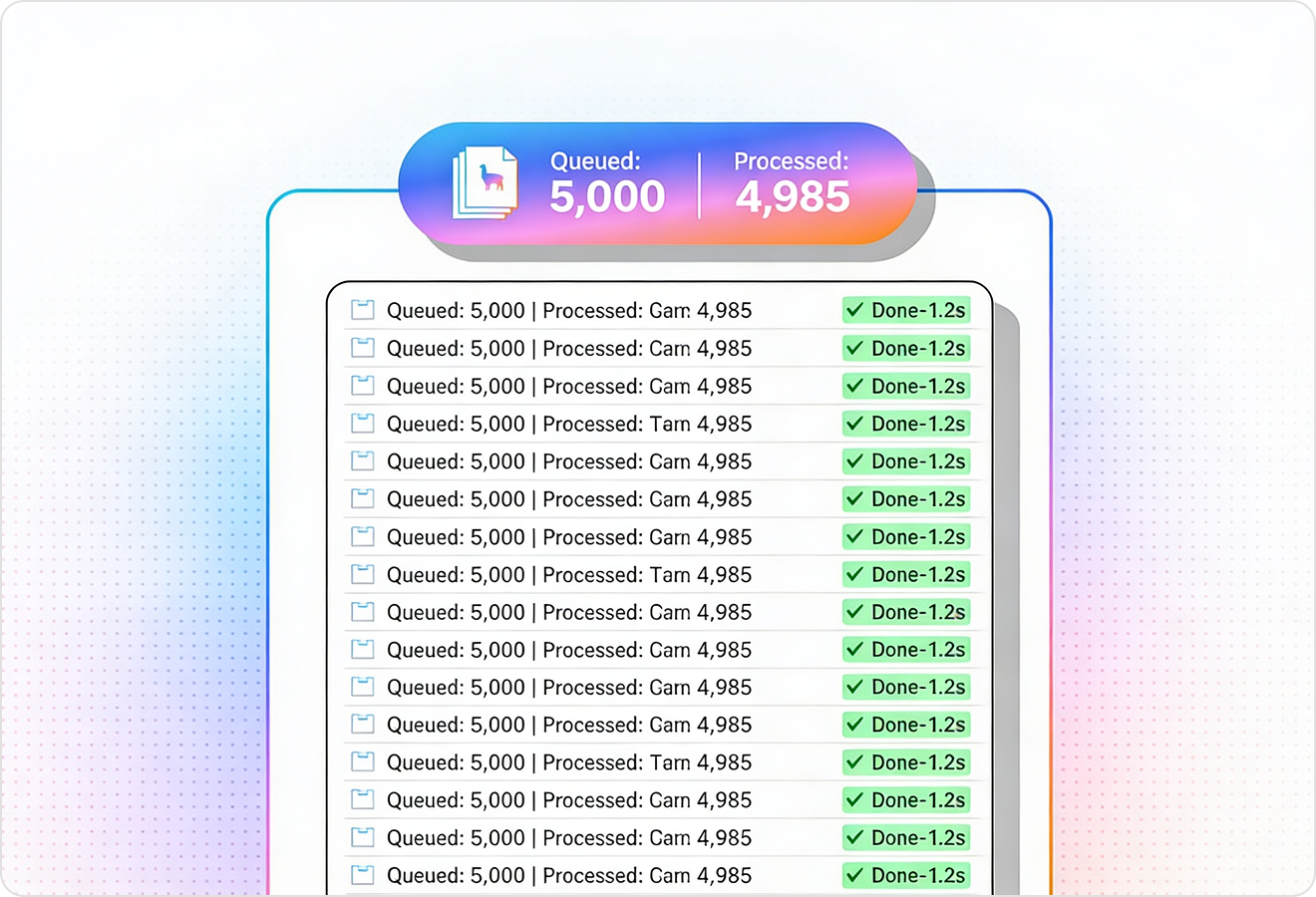
LlamaParse applies agentic validation and self-correction steps to catch common extraction errors and formatting inconsistencies. On ACH forms, this helps reduce downstream rejects by tightening accuracy on high-stakes fields like routing numbers, account numbers, and signer details.
Technical OCR documentation
Explore our developer guides to easily connect your document pipelines to LlamaParse.
Explore the documentation
Our AI catches the typos that tired eyes miss.

Export to Excel, JSON, XML, or directly via API.

SOC2 Type II compliant with end-to-end encryption.

Train the tool on your specific forms in minutes, not days.

Average processing time of <3 seconds per page.
LlamaParse’s support of a wide variety of filetypes and its accuracy of parsing made it the best tool we tested in our evaluations. The LlamaIndex team was very responsive and we were off to the races within a day.
Common FAQs
01
Our layout-aware extraction preserves the relationship between labels, checkboxes, and nearby values, so fields don’t get “scrambled” during capture. That means routing number, account number, account type, and authorization language are reliably paired even when scans are skewed or templates vary.
02
You can capture key fields like account holder name, routing number, account number, account type (checking/savings), authorization text, signature presence, and signature/date. The goal is to produce data you can trust for onboarding, payment setup, and compliance workflows.
03
Yes—extracted data is returned as clean, machine-ready JSON so each ACH field maps directly into your onboarding, payments, or compliance tools. This reduces brittle post-processing and makes it easy to enforce required fields and validation rules.
04
How can our team verify extracted routing/account numbers before submission?
Each extracted value can include verifiable metadata such as page references and spatial coordinates, so reviewers can quickly confirm where it came from on the document. This speeds up QA and supports audits without requiring full manual re-keying.
05
What happens when the scan quality is poor or the form template changes?
The parser is designed to handle real-world variation—blur, skew, low contrast, and different layouts—by reading the form structure rather than relying on a single template. This helps maintain consistent capture of high-stakes ACH fields across vendors and versions.
06
How do you reduce errors that lead to downstream ACH rejects?
We use automated validation and self-correction loops to catch common mistakes like digit swaps, missing dates, and formatting inconsistencies. That extra check is especially valuable for routing numbers, account numbers, and signer details, helping you reduce exceptions and rework.