Nov 14, 2025
Document AI: The Next Evolution of Intelligent Document ProcessingPersona
Industry
Use cases
React Document Upload OCR
[ React Document Upload OCR ]

Ship a React upload flow that turns messy PDFs into clean JSON using LlamaParse.
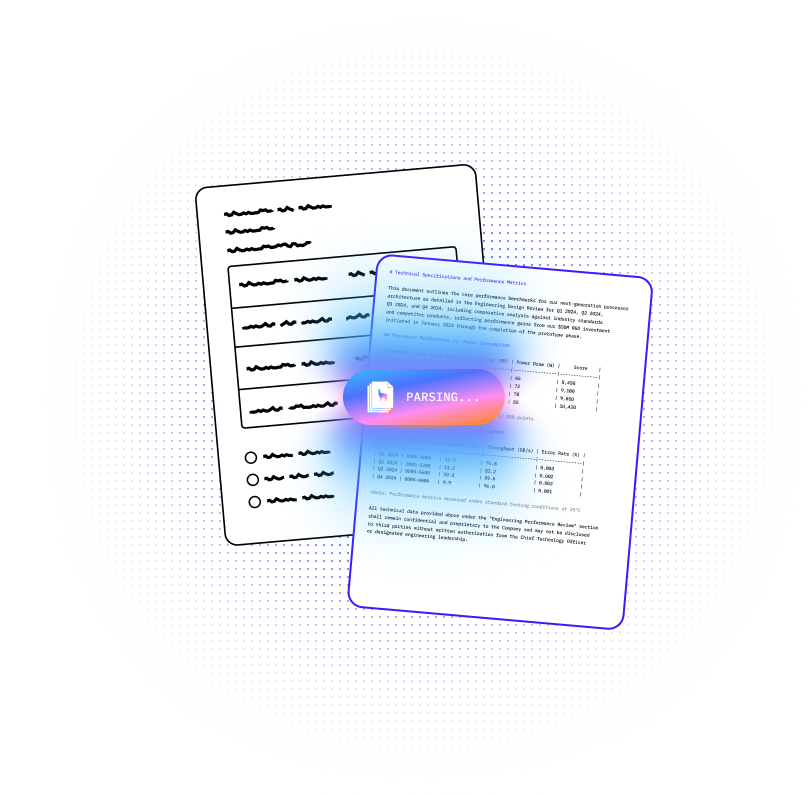
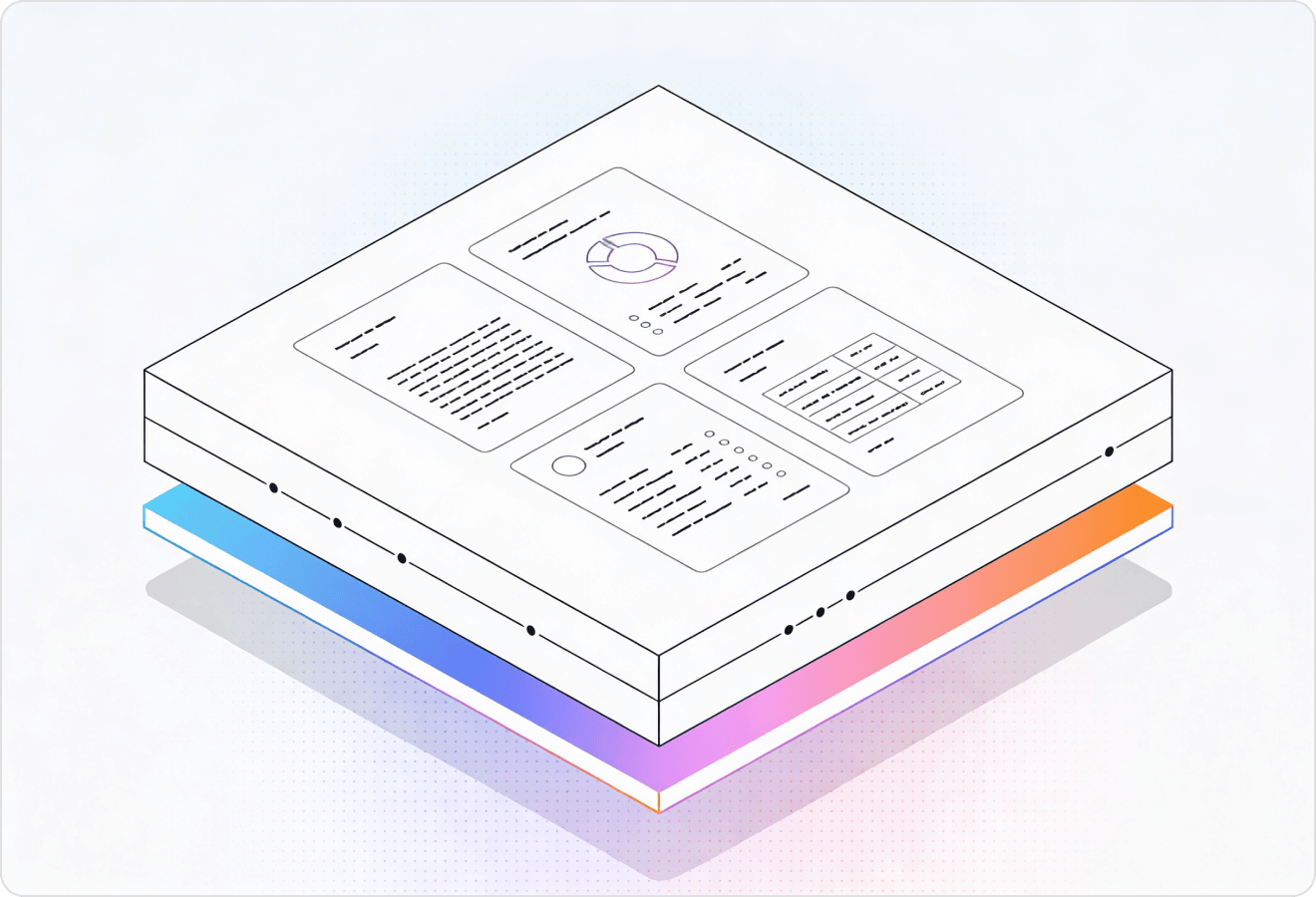

Drop a PDF or image into your React upload flow and let LlamaParse convert it into clean, structured Markdown or JSON your app can trust. Agentic document parsing understands layout, tables, and embedded visuals, then validates outputs with citations and confidence to reduce manual fixes.
Best-in-Class Accuracy

Ship self-serve document upload → structured JSON in days by using LlamaParse with natural-language extraction instructions, instead of building brittle regex and PDF heuristics. Auto Mode routes only the hard pages to agentic parsing, so you can hit accuracy targets without blowing your credit budget as volume ramps.

Ingest bank statements, tax returns, and complex multi-page PDFs with layout-aware table extraction that preserves reading order, so underwriting rules run on clean, consistent data. Verifiable metadata (page citations and confidence) supports audit-ready decisions and faster exception handling when reviewers need to confirm a figure.

Parse loss runs, repair estimates, and claim packets that include photos, charts, and scanned forms by converting tables and visuals into AI-ready Markdown/JSON for downstream triage. Auto-correction loops reduce rework by catching inconsistent fields and fixing common extraction errors before adjusters ever see the file.

Turn submittals, change orders, and equipment spec sheets into structured outputs that keep tables intact and eliminate the scrambled columns that break traditional OCR pipelines. Multimodal parsing converts diagrams and technical math into usable text/LaTeX, enabling searchable project knowledge and faster RFIs without manual re-entry.
The Solution
01
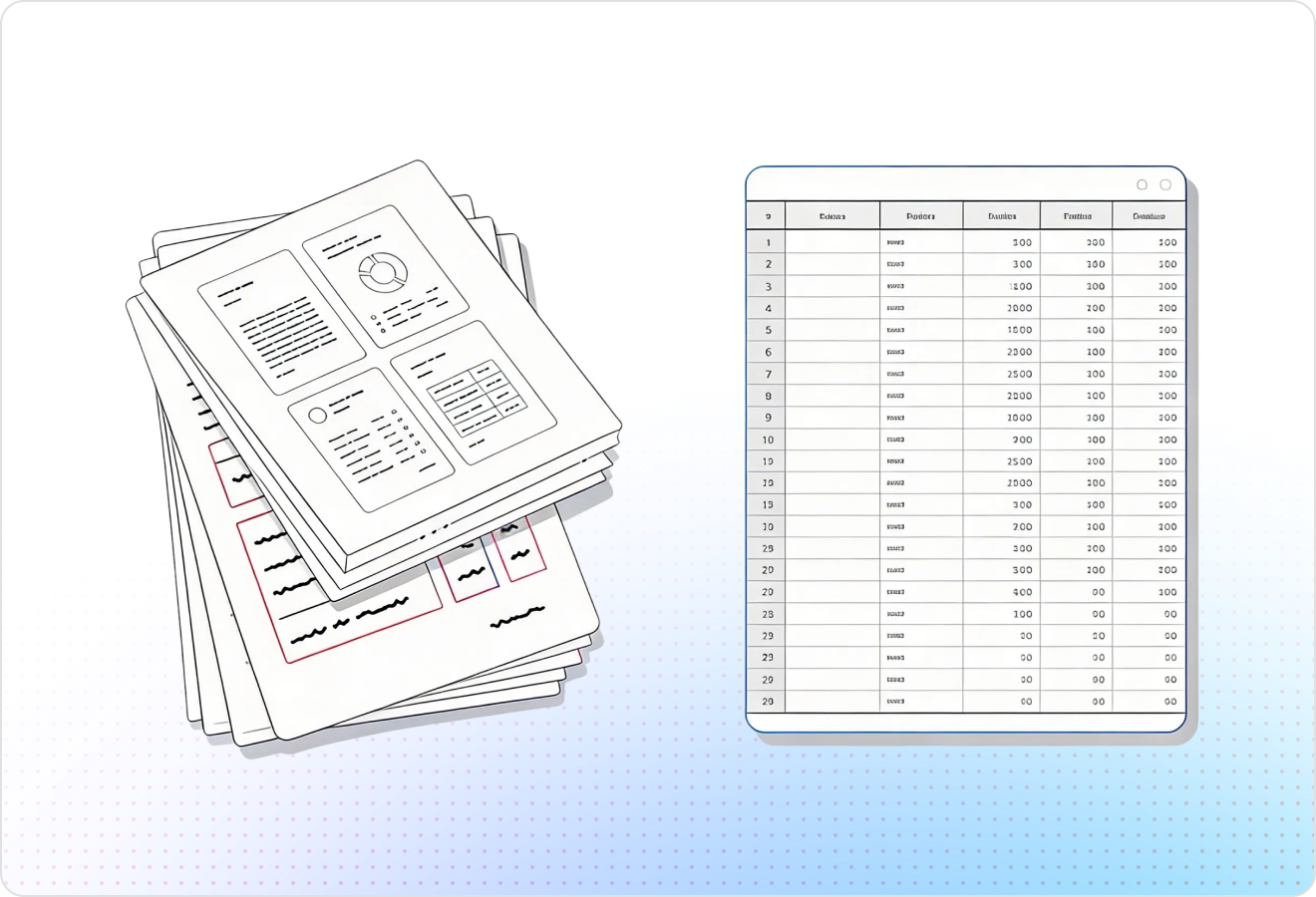
LlamaParse accepts common user-uploaded files (PDFs, images, DOCX) via a clean API, so your React document upload can hand off parsing without building a fragile text-extraction pipeline. You get consistent, AI-ready output back, which makes it straightforward to drive previews, search, or downstream extraction the moment the upload completes.
02
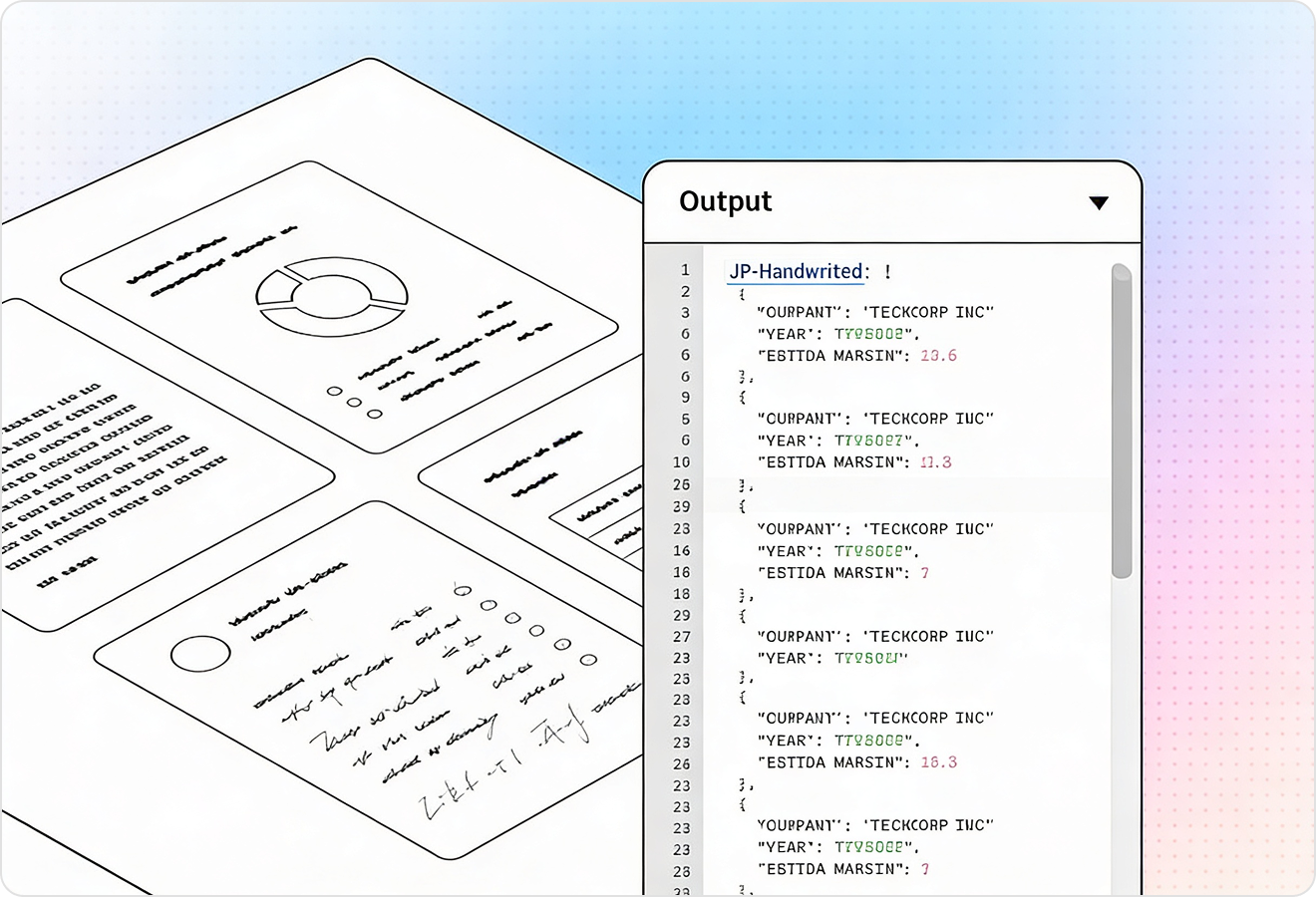
LlamaParse uses layout-aware vision to preserve reading order and accurately reconstruct multi-column pages, headers/footers, and complex tables. For React upload workflows, that means the “parsed text” users see (and your app indexes) matches the document’s structure instead of scrambled OCR output.
03
LlamaParse doesn’t stop at plain text—it interprets charts, embedded images, and math so scanned reports and slide-like PDFs don’t lose critical meaning. This is especially useful after a React upload when users expect graphs, tables, and formulas to be captured as usable content, not ignored blobs.
04
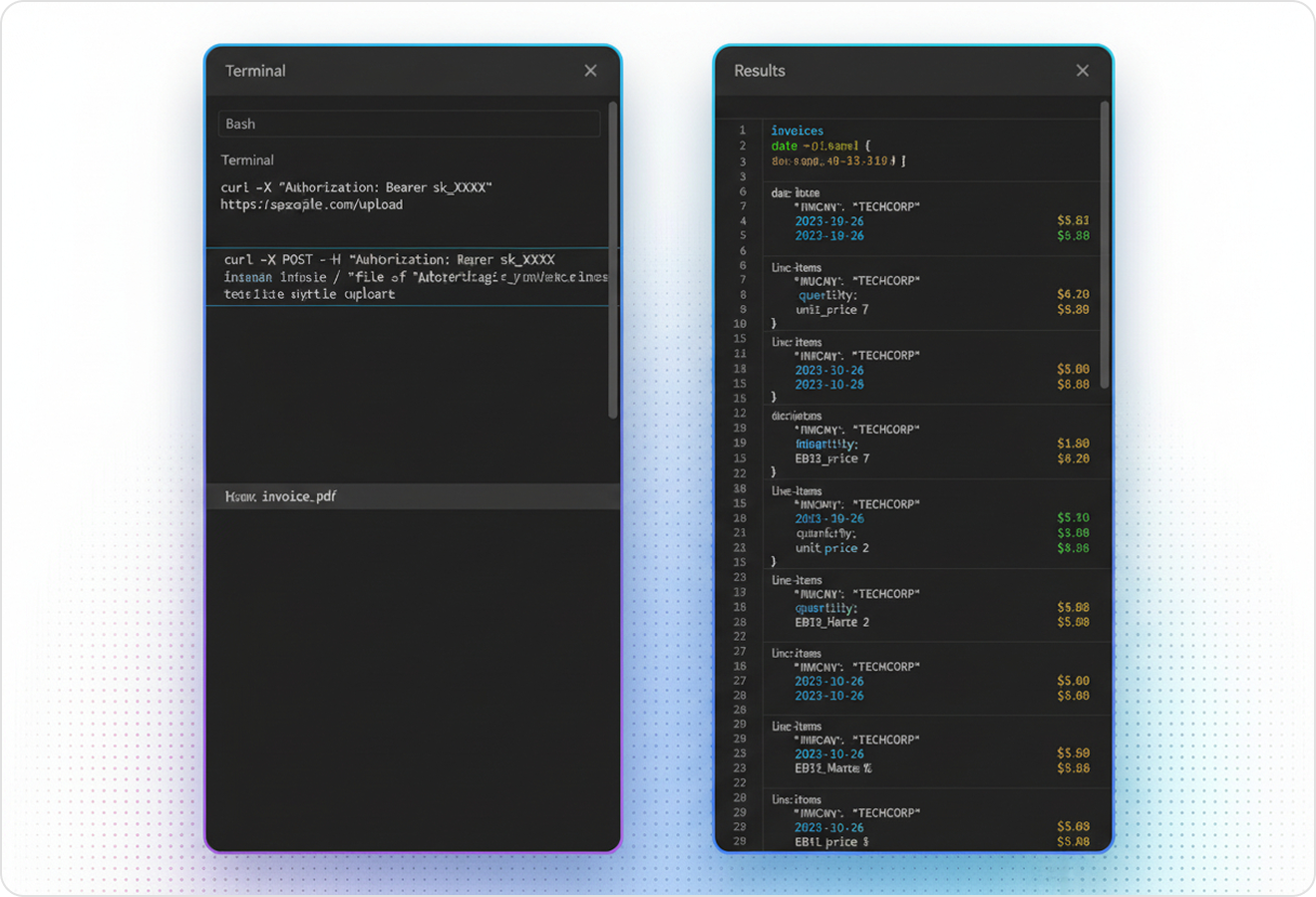
LlamaParse can return structured JSON enriched with page numbers, element types, and coordinates for traceability. In a React document upload OCR-style experience, this lets you highlight extracted fields on the original page, attach citations, and debug user issues without guessing where the data came from.
Technical OCR documentation
Explore our developer guides to easily connect your document pipelines to LlamaParse.
Explore the documentation
Our AI catches the typos that tired eyes miss.

Export to Excel, JSON, XML, or directly via API.

SOC2 Type II compliant with end-to-end encryption.

Train the tool on your specific forms in minutes, not days.

Average processing time of <3 seconds per page.
LlamaParse’s support of a wide variety of filetypes and its accuracy of parsing made it the best tool we tested in our evaluations. The LlamaIndex team was very responsive and we were off to the races within a day.
Common FAQs
01
No. You upload PDFs, images, or DOCX from your React app and hand them off to the Upload-to-Parse API, which returns clean, AI-ready output. This avoids brittle OCR glue code and lets you ship previews, search, and extraction as soon as the upload finishes.
02
It’s layout-aware, so reading order and page structure are preserved instead of flattened into confusing text. Multi-column documents, repeated headers/footers, and complex tables are reconstructed so what users see (and what you index) matches the source.
03
Yes—scanned documents and camera images are supported, making it a strong fit for OCR-style React upload experiences. You still get structured output you can use for search, review screens, and downstream automation.
04
Do you extract information from charts, embedded images, or math-heavy documents?
Yes. Multimodal understanding helps capture meaning from visuals like charts and diagrams, as well as formulas, so key content isn’t lost during parsing. This is especially helpful for reports, slide-like PDFs, and technical documents.
05
Can I get structured JSON with page references so I can highlight results back on the original document?
Absolutely. The API can return structured JSON with metadata like page numbers, element types, and coordinates, making it easy to add citations, build “click-to-source” highlights, and debug extraction issues. This traceability builds user trust and reduces support back-and-forth.
06
How quickly can I go from upload to parsed results, and is it reliable at scale?
The flow is designed to be straightforward: upload, parse, and receive consistent output you can immediately use in your app. Because the heavy lifting happens server-side via API, you can scale without maintaining a fragile, custom extraction stack.