Nov 14, 2025
Document AI: The Next Evolution of Intelligent Document ProcessingPersona
Industry
Use cases
Knowledge Agent Platform
[ Knowledge Agent Platform ]

Parse complex docs with LlamaParse, then ask questions and get cited, accurate responses instantly.
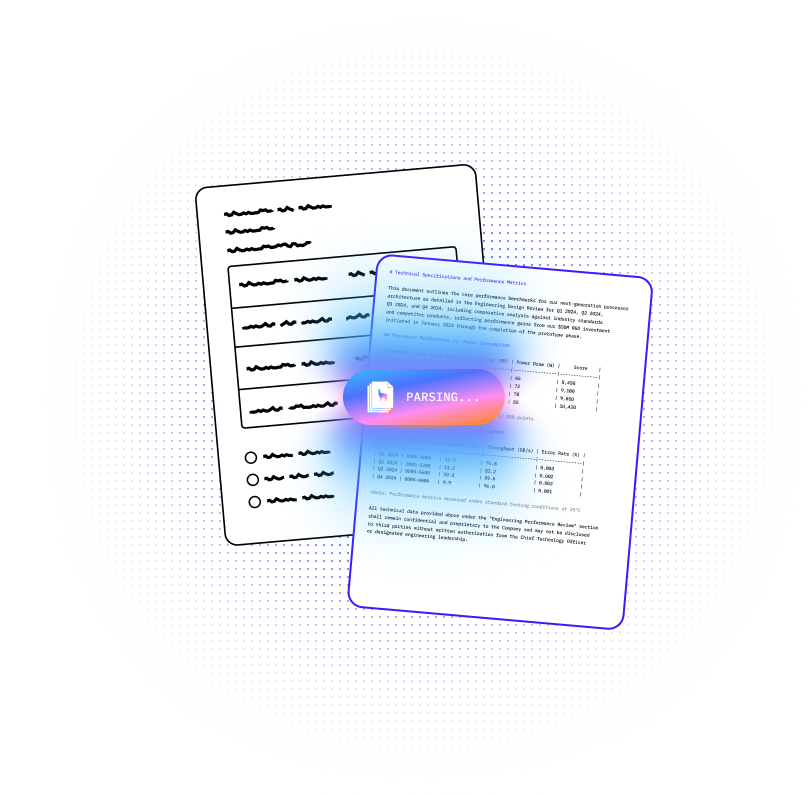
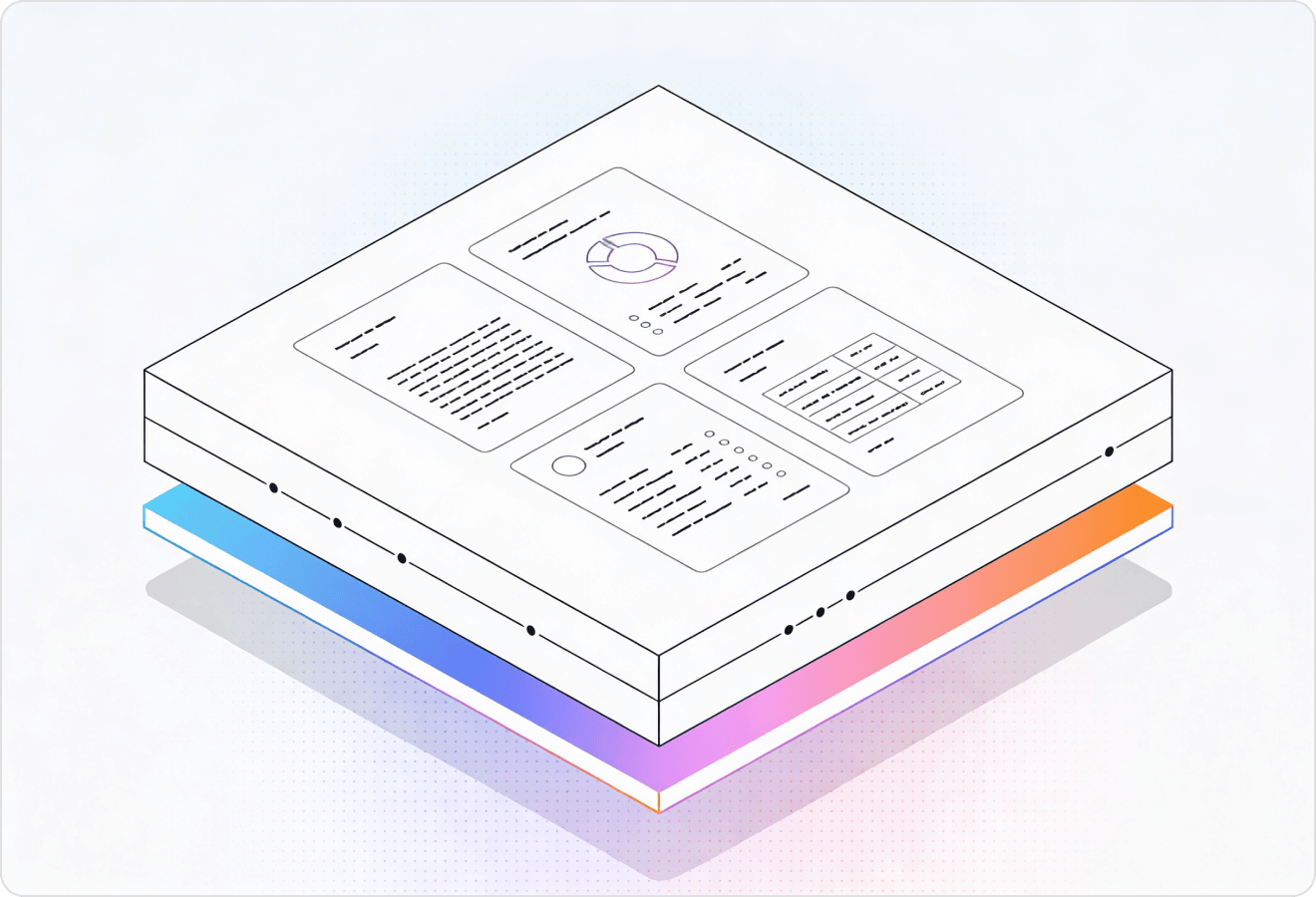

LlamaParse turns messy PDFs, scans, and slide decks into clean, AI-ready Markdown or JSON so your knowledge agents can act fast. It uses layout-aware vision and agentic validation loops to cut extraction errors, add citations, and boost straight-through automation.
Best-in-Class Accuracy

Turn messy customer PDFs (contracts, invoices, RFPs, support attachments) into clean JSON or Markdown via LlamaParse so your knowledge agent can actually answer with citations instead of guesswork. Use natural-language parsing instructions to ship new extraction logic in hours, not weeks, without building brittle post-processing pipelines.

Parse loss runs, adjuster reports, medical bills, and photo-heavy claim packets with layout-aware structure and multimodal understanding so tables, totals, and evidence aren’t scrambled or dropped. Auto correction loops and granular metadata reduce manual review and enable straight-through decisions with traceable page-level references.

Extract clauses, defined terms, exhibits, and multi-column filings into structured outputs that preserve reading order, footnotes, and section hierarchy for reliable contract analysis. Feed verifiable, citation-backed chunks into a knowledge agent that can answer “where is this stated?” without manual document spelunking.

Convert spec sheets, certificates of analysis, packing lists, and quality audit PDFs into normalized tables and fields that match your ERP/QMS schema, even when scans are inconsistent across suppliers. Tier-based agentic processing routes only the hard pages to heavier models, keeping ingestion costs predictable while maintaining accuracy on complex layouts.
The Solution
01
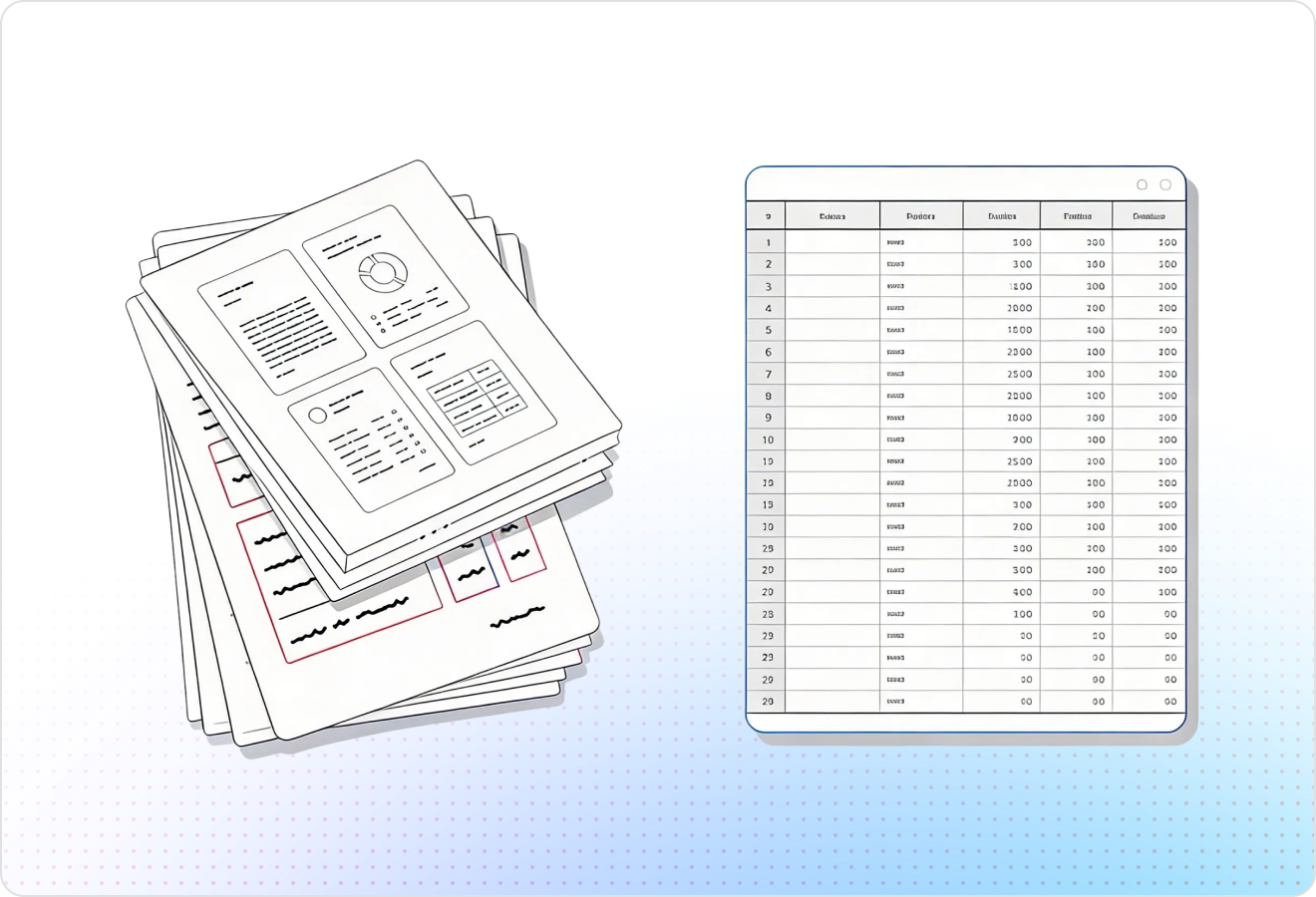
LlamaParse understands real page structure—sections, headers, multi-column text, and footnotes—so your knowledge agent ingests documents in the right reading order. That means fewer broken chunks and more reliable answers when the agent navigates long manuals, policies, and internal wikis.
02
LlamaParse extracts complex tables without scrambling rows, merged cells, or nested headers and reconstructs them into clean Markdown your LLM can reason over. Knowledge agents can then accurately answer questions that depend on specs, pricing grids, SLAs, or comparison matrices.
03
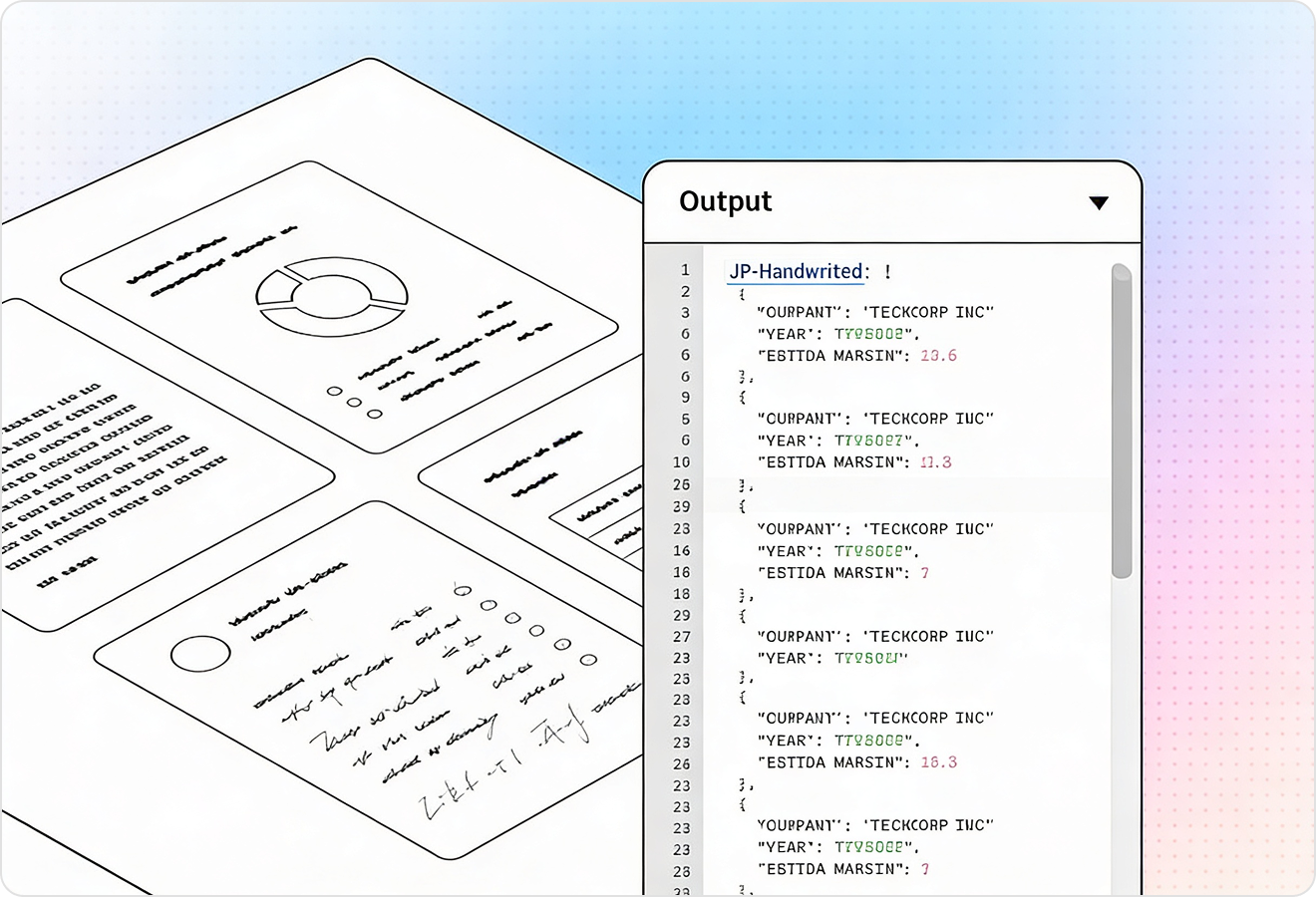
LlamaParse converts charts, diagrams, and embedded visuals into structured text (and when useful, Markdown tables) instead of treating them as opaque images. This lets your knowledge agent reference the actual information in figures—trends, thresholds, and labeled components—rather than ignoring critical context.
04
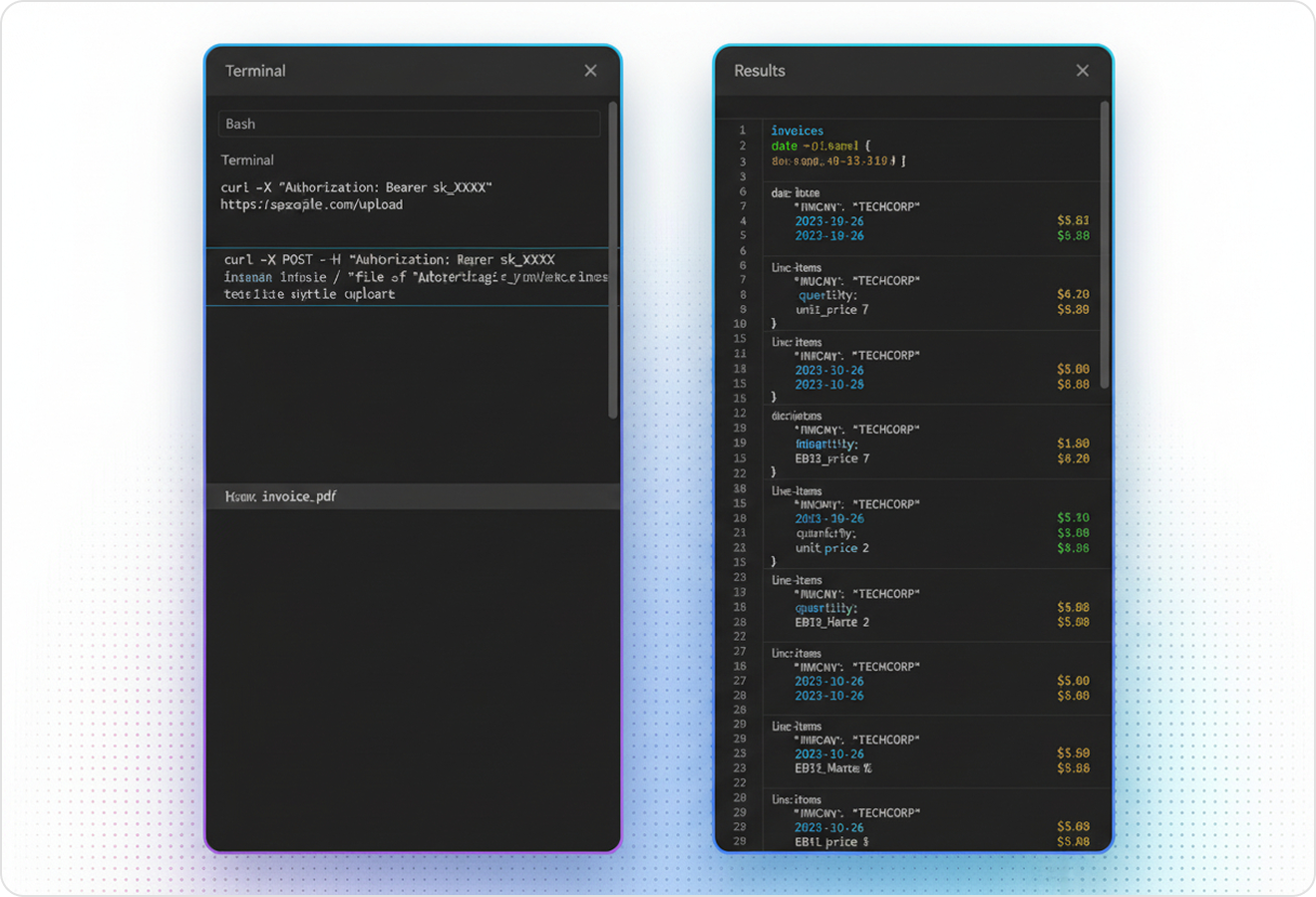
LlamaParse can emit JSON with granular metadata like page numbers, element types, and coordinates for each extracted node. A knowledge agent platform can use that traceability to show citations, route uncertain facts to review, and keep responses grounded in the source document.
Technical OCR documentation
Explore our developer guides to easily connect your document pipelines to LlamaParse.
Explore the documentation
Our AI catches the typos that tired eyes miss.

Export to Excel, JSON, XML, or directly via API.

SOC2 Type II compliant with end-to-end encryption.

Train the tool on your specific forms in minutes, not days.

Average processing time of <3 seconds per page.
LlamaParse’s support of a wide variety of filetypes and its accuracy of parsing made it the best tool we tested in our evaluations. The LlamaIndex team was very responsive and we were off to the races within a day.
Common FAQs
01
Yes. Layout-aware capture preserves real page structure (headers, sections, multi-column text, and footnotes) so content is ingested in the right order. That reduces broken chunks and improves answer quality on long policies, manuals, and internal wikis.
02
Tables are extracted without scrambling rows, merged cells, or nested headers and are reconstructed into clean Markdown. This gives your agent a format it can reliably reason over, so answers that depend on exact table values stay accurate.
03
The platform converts charts and figures into structured text and, when helpful, Markdown tables. That means your agent can reference trends, thresholds, and labeled components from visuals instead of skipping critical context.
04
Can I get citations and traceability back to the original document?
Yes—extraction can emit structured JSON with granular metadata like page numbers, element types, and coordinates. This makes it easy to show citations in responses, audit where an answer came from, and keep outputs grounded in source material.
05
What happens when the agent is unsure or the source content is ambiguous?
Because every extracted node can include traceable metadata, you can route low-confidence facts to human review and prompt the agent to reference exact passages. This reduces hallucinations and makes it clear to end users what is known versus inferred.
06
How quickly can we get value—do we need to reformat documents before ingesting them?
In most cases, no. Layout-aware parsing and table-true extraction are designed to work with the documents you already have, minimizing manual cleanup. You can start ingesting existing manuals, policies, and wikis immediately and iterate as you see results.