Nov 14, 2025
Document AI: The Next Evolution of Intelligent Document ProcessingPersona
Industry
Use cases
Form 1120 OCR
[ Form 1120 OCR ]

Use LlamaParse to capture every line item and table from 1120s, with citations and confidence.
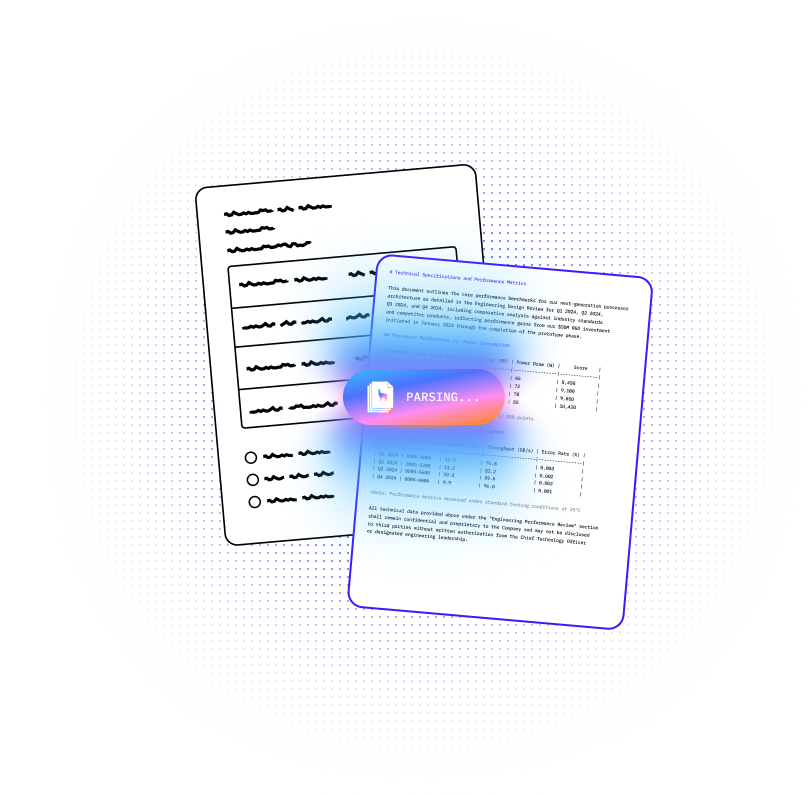
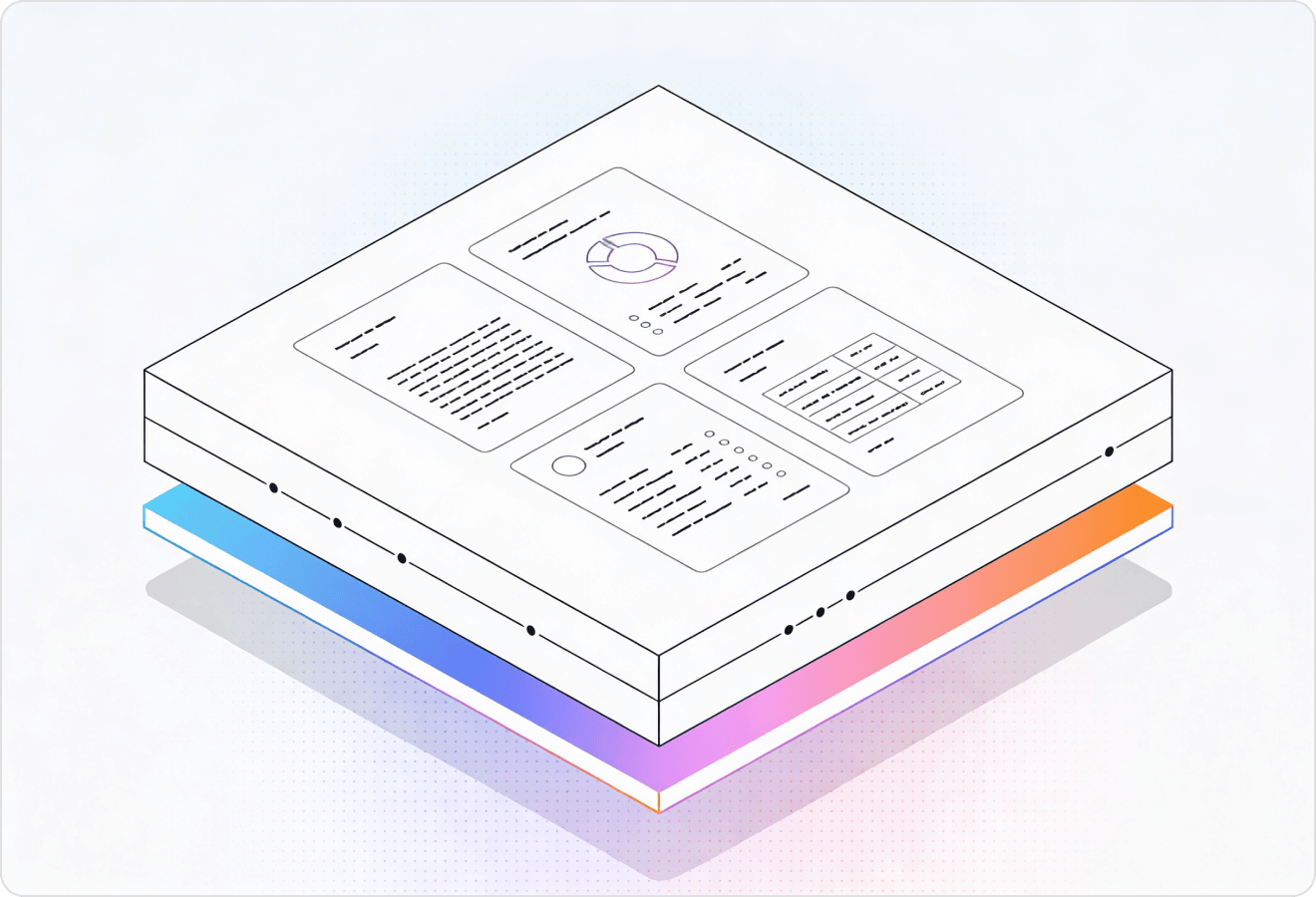

LlamaParse turns messy IRS Form 1120 PDFs and scans into clean, fielded JSON you can validate, map, and push downstream automatically. It’s layout-aware and agentic, handling tables and attachments with confidence metadata so your tax workflow scales without brittle templates.
Best-in-Class Accuracy

Parse client Form 1120 PDFs into clean, structured JSON with line-item traceability so reviewers can validate every figure back to page coordinates and citations. Layout-aware table extraction prevents scrambled schedules and multi-column sections, cutting rekeying time during peak filing season.

Automate business financial onboarding by extracting Form 1120 revenue, deductions, and balance-sheet signals into a normalized schema that feeds underwriting and KYB checks. Tier-based agentic processing routes simple pages cheaply while escalating only messy scans, keeping unit economics predictable as volumes scale.

Standardize inbound subsidiary and acquired-entity Form 1120s into a consistent Markdown/JSON format for faster consolidation, variance analysis, and audit-ready workpapers. Natural language parsing instructions let teams enforce org-specific rules (e.g., capture specific schedules and ignore boilerplate) without maintaining brittle regex pipelines.

Convert borrower Form 1120 packages into decision-ready data by reliably extracting key lines and supporting schedules, even when embedded tables and scanned attachments vary by preparer. Auto-correction loops reduce exception queues by catching mismatches and formatting errors before data hits credit models and LOS workflows.
The Solution
01
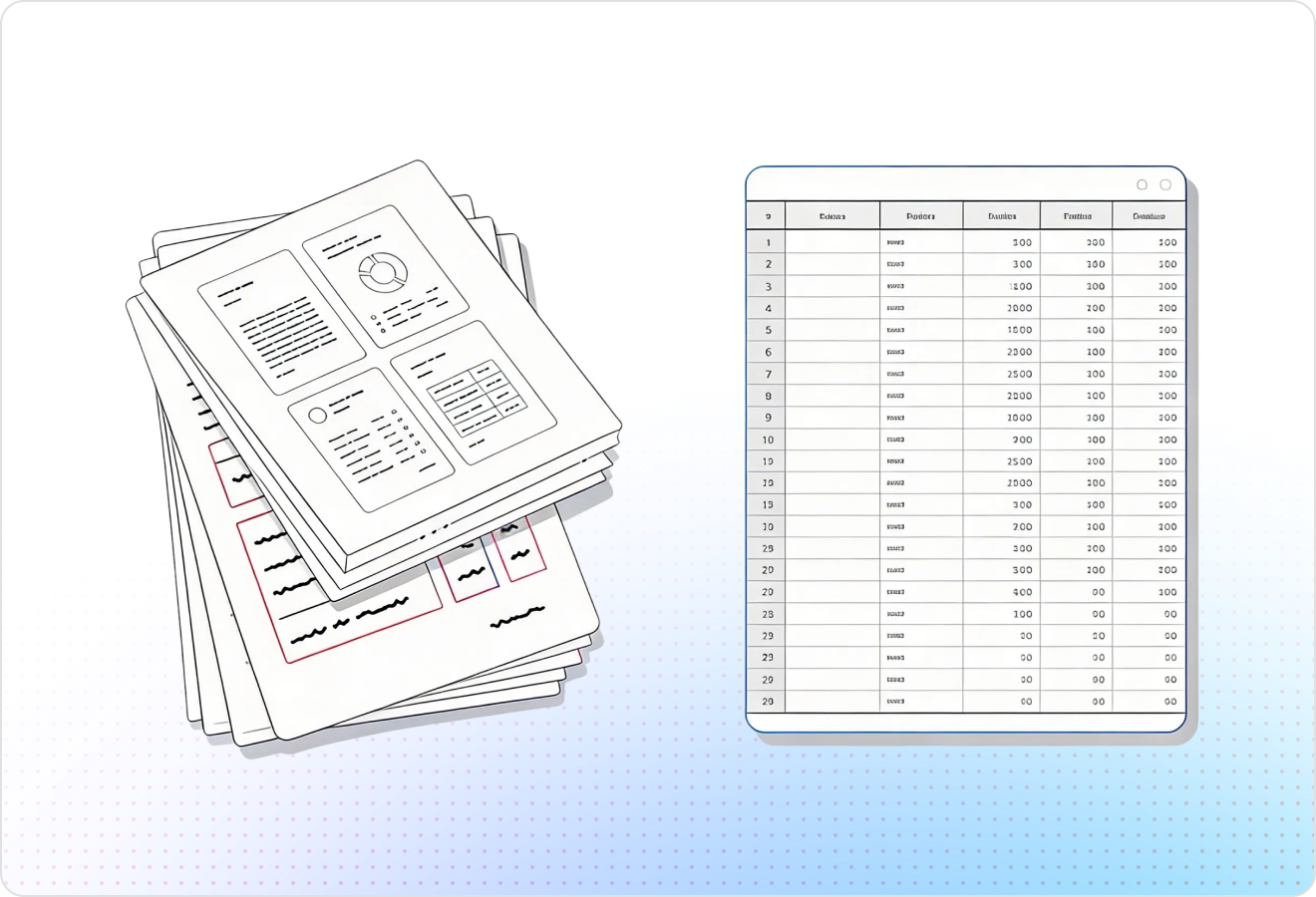
LlamaParse understands IRS Form 1120 page structure—boxes, line numbers, headers, and multi-column sections—so extracted values don’t get scrambled. That means you can reliably map amounts (e.g., income, deductions, tax) to the right lines even when scans are skewed or the layout shifts across versions.
02
LlamaParse pulls schedules and tabular sections into clean, structured outputs instead of a blob of text. This is critical for Form 1120 workflows where numeric columns, subtotals, and row labels must stay aligned for downstream validation and filing.
03
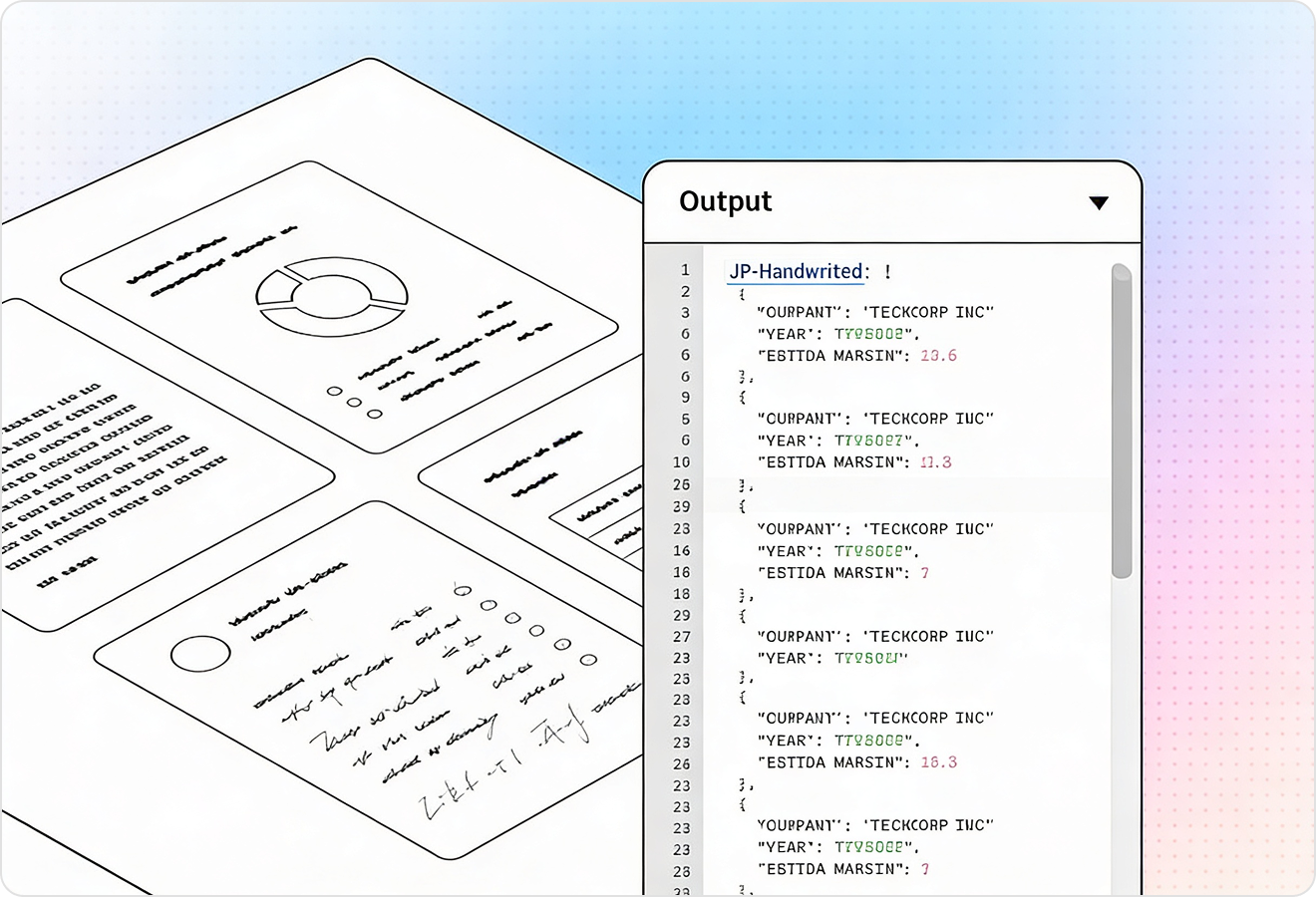
LlamaParse can return structured JSON with granular metadata like page references and coordinates per extracted field. For Form 1120, that gives you traceability for audits and fast human review—every number can be tied back to the exact location it came from.
04
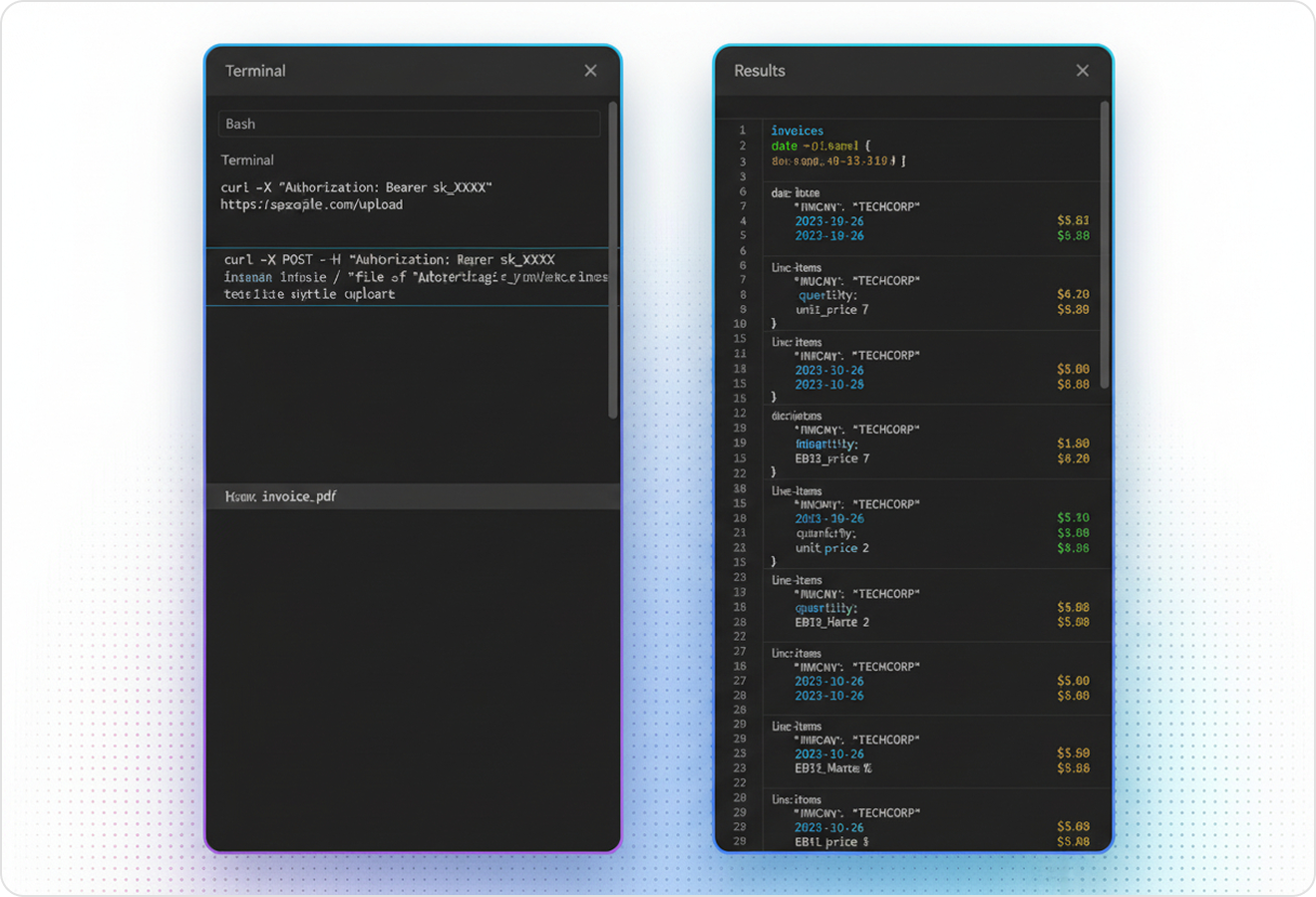
LlamaParse uses built-in correction and validation steps to reduce common extraction errors and inconsistencies on real-world scans. In Form 1120 processing, this improves straight-through rates by catching issues like misread digits, broken line items, or totals that don’t reconcile before the data hits your pipeline.
Technical OCR documentation
Explore our developer guides to easily connect your document pipelines to LlamaParse.
Explore the documentation
Our AI catches the typos that tired eyes miss.

Export to Excel, JSON, XML, or directly via API.

SOC2 Type II compliant with end-to-end encryption.

Train the tool on your specific forms in minutes, not days.

Average processing time of <3 seconds per page.
LlamaParse’s support of a wide variety of filetypes and its accuracy of parsing made it the best tool we tested in our evaluations. The LlamaIndex team was very responsive and we were off to the races within a day.
Common FAQs
01
Our layout-aware parsing reads Form 1120 the way a human does—by line numbers, boxes, headers, and multi-column sections—so values don’t shift when the scan is skewed or the format changes. That means income, deductions, and tax amounts reliably land on the correct lines for downstream workflows.
02
Yes. We convert tabular sections into structured outputs that preserve row labels, numeric columns, and subtotals—rather than dumping everything into a single text block. This makes validation and filing far faster because the data stays organized and machine-readable.
03
You can receive clean JSON output with citations, including page references and coordinates for each extracted field. This gives you audit-ready traceability and speeds up review because your team can jump straight to the exact spot on the form where a value came from.
04
How does the system handle messy scans, faint text, or common OCR misreads on Form 1120?
Auto validation loops catch and correct common issues like misread digits, broken line items, and totals that don’t reconcile. You get higher straight-through processing rates and fewer manual fixes before data enters your pipeline.
05
Will this work across different versions of Form 1120 and slight layout changes year to year?
Yes. The parser is designed to understand the form’s structure (line numbers, sections, and boxes) so it remains stable when layouts shift across versions. That reduces rework and keeps your mapping consistent even as the IRS updates formatting.
06
How quickly can we integrate Form 1120 OCR into our existing tax workflow or document pipeline?
Because the output is structured JSON, it’s straightforward to map fields into your database, validation rules, or filing system. Most teams start with a pilot on real 1120 samples, confirm accuracy with citations, and then scale confidently to production.