Nov 14, 2025
Document AI: The Next Evolution of Intelligent Document ProcessingPersona
Industry
Use cases
Image To Structured Data Software
[ Image To Structured Data Software ]

Use LlamaParse to extract tables, fields, and layouts into clean JSON with fewer fixes.
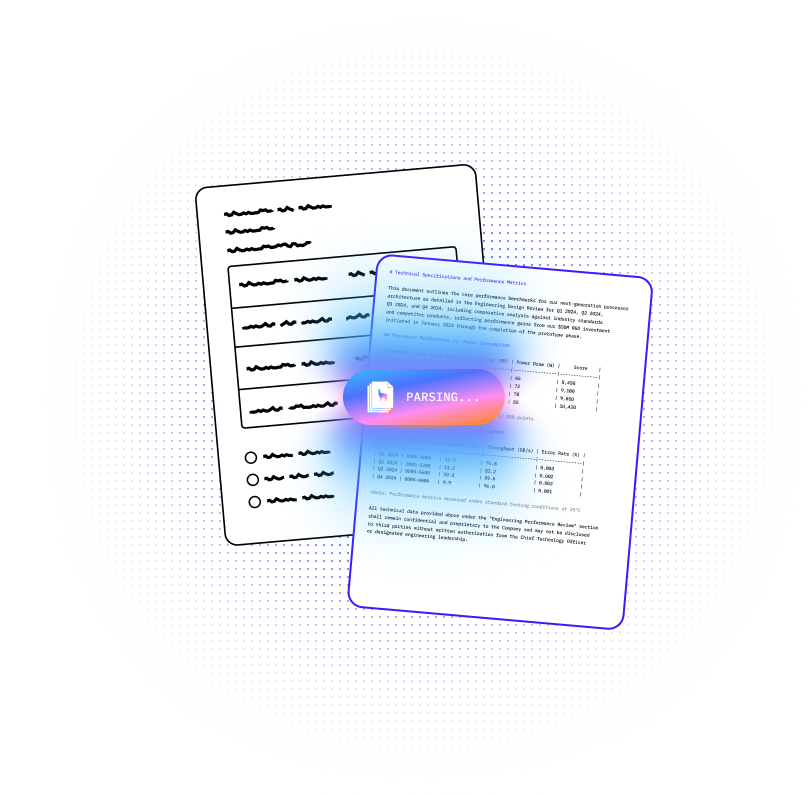
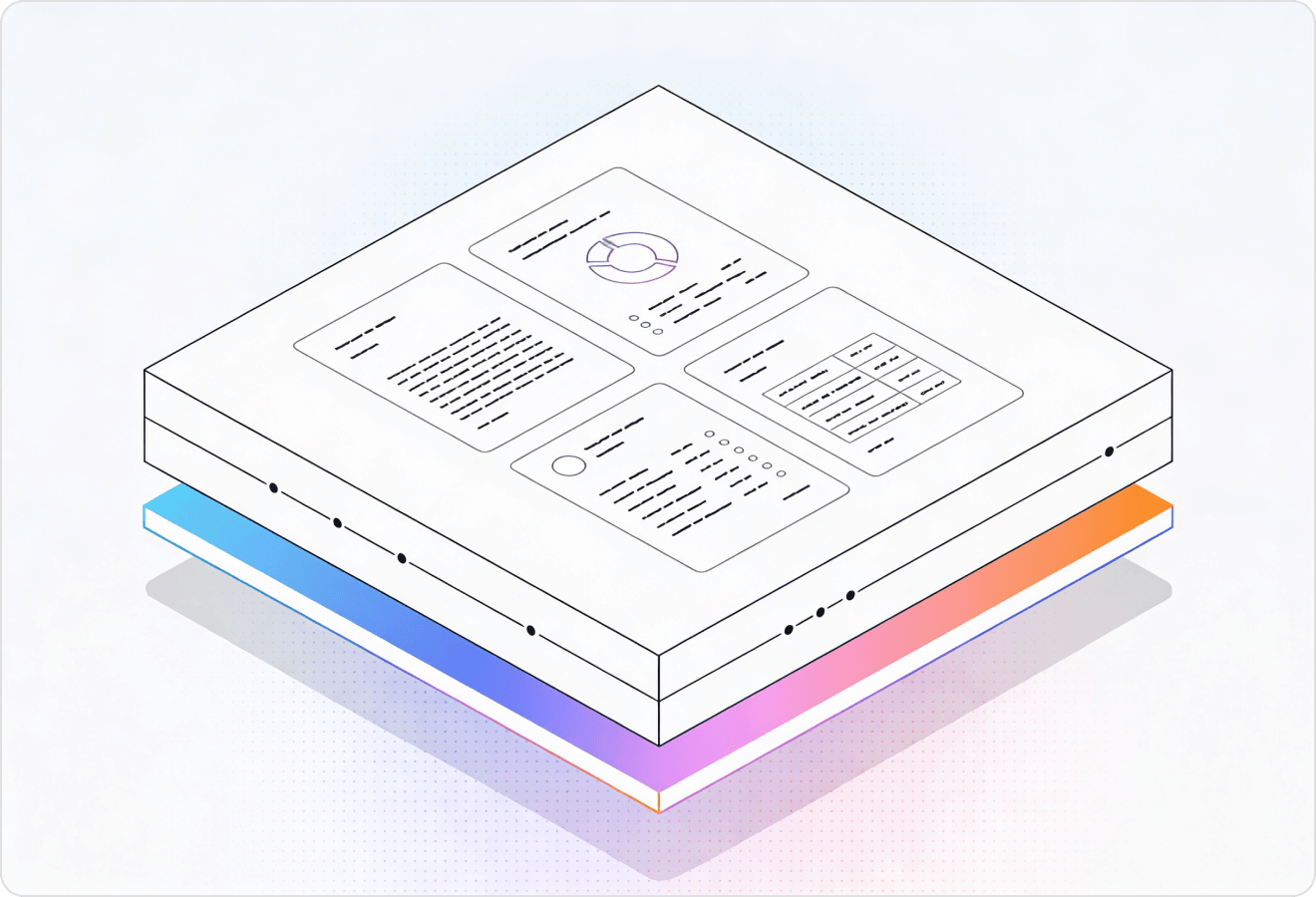

LlamaParse turns screenshots and scanned pages into clean, structured JSON by understanding layout, tables, and visual cues, not just raw text. Agentic parsing adds validation loops and confidence metadata, so your pipelines ship fewer exceptions and scale without constant retuning.
Best-in-Class Accuracy

Use LlamaParse as the ingestion layer to turn messy customer PDFs and screenshots into clean JSON/Markdown with citations, so your product can ship “document understanding” features fast without building a brittle parsing stack. Auto Mode and tier-based routing keep unit economics predictable while you scale from pilot volumes to production ingestion.

Parse bank statements, KYC packets, loan files, and investment reports into structured fields and validated tables, even when layouts vary across institutions and scans are low quality. Granular metadata (page coordinates, confidence, citations) enables straight-through processing with targeted human review only when thresholds fail.

Convert plan sets, submittals, change orders, and inspection reports into structured records by preserving multi-column reading order and extracting complex tables without scrambled text. Multimodal parsing turns charts and technical diagrams into usable Markdown/code so teams can query project risk, schedule impacts, and compliance issues across document sets.

Transform contracts, exhibits, and scanned filings into clause- and section-aware Markdown/JSON to power review workflows and obligation tracking without manual re-keying. Natural language parsing instructions let teams standardize extraction for specific schemas (e.g., parties, dates, indemnities) across inconsistent templates and jurisdictions.
The Solution
01
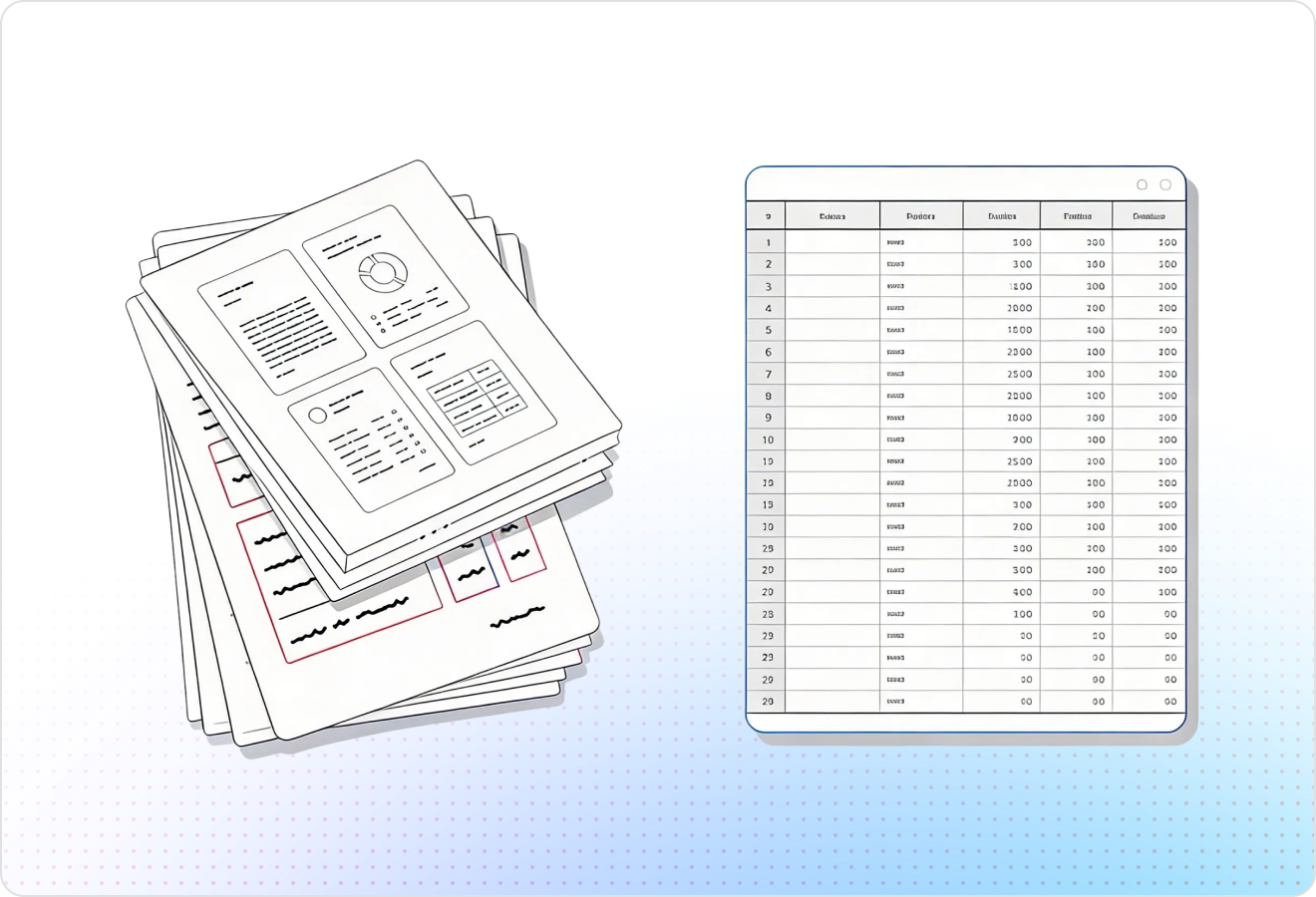
LlamaParse understands page structure (columns, headers/footers, and sections) so extracted fields keep their correct reading order. That means images of forms, invoices, and reports turn into structured data without the usual scrambled text cleanup.
02
LlamaParse pulls tables out of scanned images and PDFs while preserving rows, columns, and nested headers. You get clean, database-ready outputs instead of brittle heuristics to rebuild tables after the fact.
03
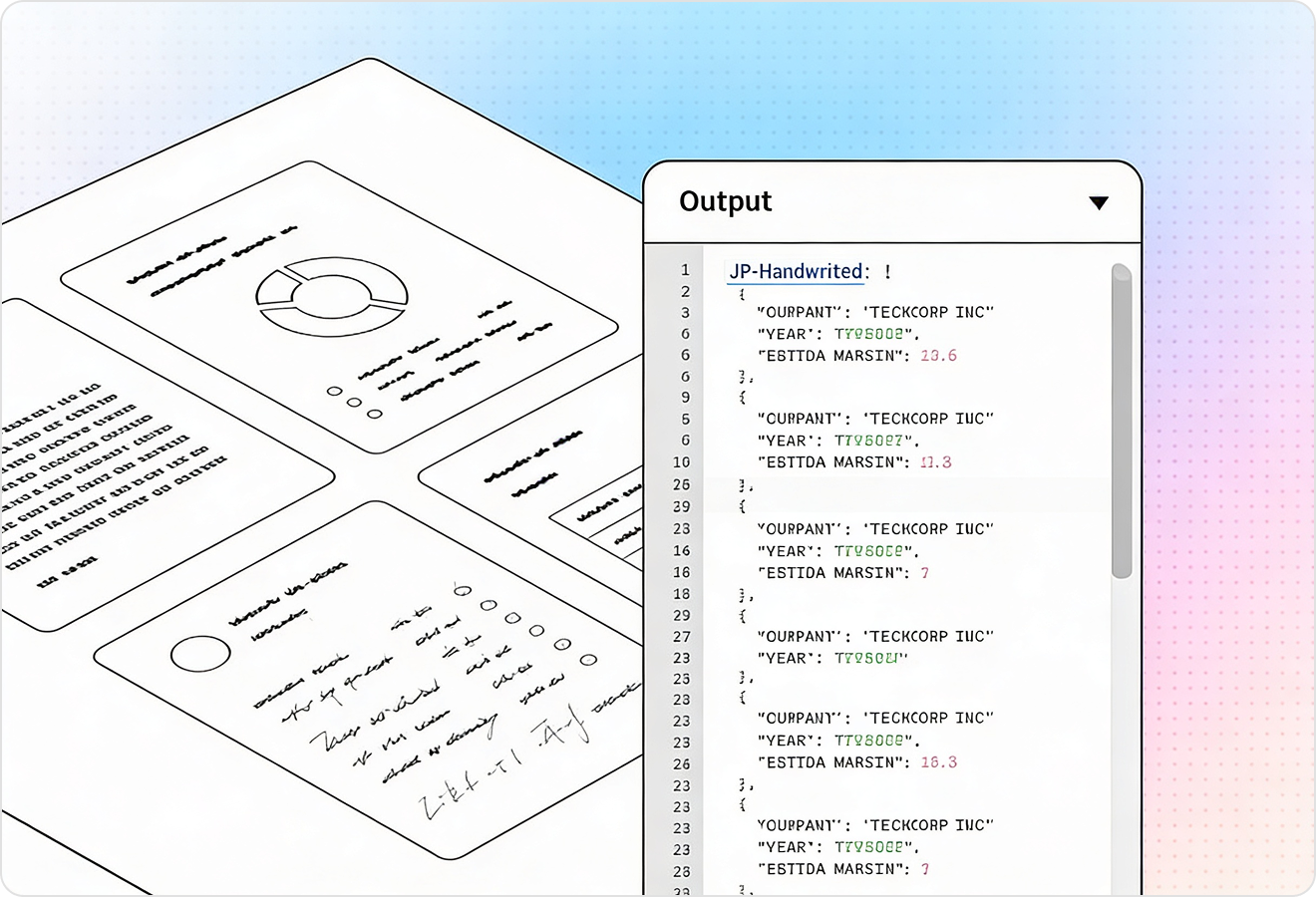
LlamaParse can interpret charts, figures, and other visual elements and convert them into structured representations like tables or annotated text. This lets you extract the actual values and relationships from images, not just the surrounding captions.
04
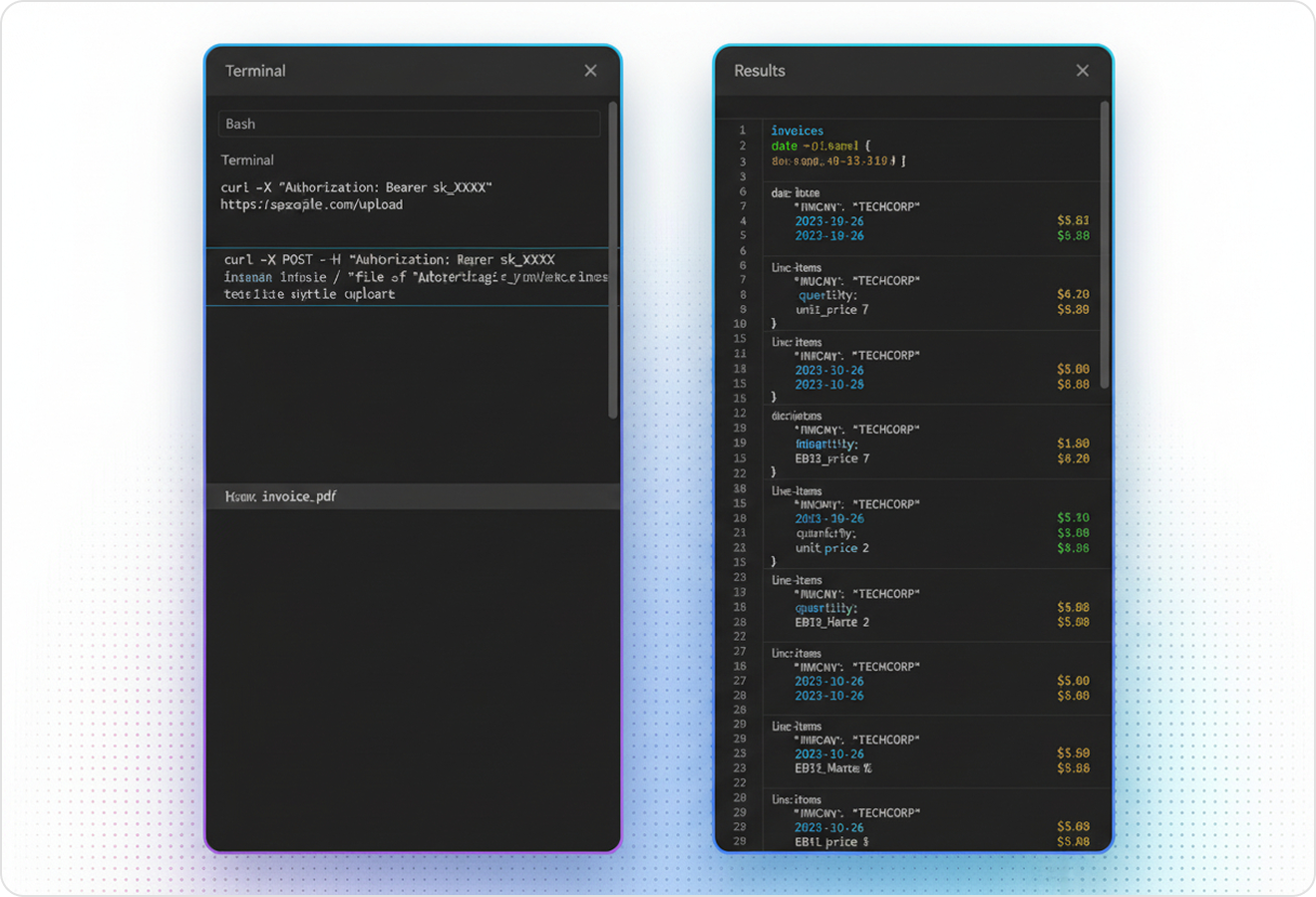
LlamaParse returns AI-ready JSON along with granular metadata like page numbers and element locations for traceability. It makes it straightforward to validate extracted values, map them to a schema, and drive downstream automation from image-derived data.
Technical OCR documentation
Explore our developer guides to easily connect your document pipelines to LlamaParse.
Explore the documentation
Our AI catches the typos that tired eyes miss.

Export to Excel, JSON, XML, or directly via API.

SOC2 Type II compliant with end-to-end encryption.

Train the tool on your specific forms in minutes, not days.

Average processing time of <3 seconds per page.
LlamaParse’s support of a wide variety of filetypes and its accuracy of parsing made it the best tool we tested in our evaluations. The LlamaIndex team was very responsive and we were off to the races within a day.
Common FAQs
01
Yes—layout-aware capture detects columns, sections, and headers/footers so fields stay in the right sequence. That means fewer manual fixes and far less “scrambled text” cleanup when converting images into structured data.
02
LlamaParse preserves rows, columns, and even nested headers to produce clean, database-ready tables. You get structured outputs you can trust without rebuilding tables using fragile post-processing rules.
03
Yes—multimodal understanding interprets charts and visual elements and converts them into structured representations like tables or annotated text. This helps you capture the underlying numbers and relationships for analysis and automation.
04
What format do I get back, and can I trace results to the original image?
You receive structured JSON plus metadata such as page numbers and element locations for traceability. That makes it easy to validate outputs, audit results, and map fields directly into your schema with confidence.
05
How much manual review will my team still need after extraction?
Most teams see a significant reduction because layout-aware parsing and robust table handling minimize common failure cases. You can use the returned metadata to quickly spot-check high-impact fields instead of re-reading entire documents.
06
Can I integrate the output into my existing pipeline (databases, ETL, or downstream automation)?
Yes—structured JSON is designed to plug into ETL jobs, databases, and workflow tools with minimal transformation. Metadata also helps route extracted values to the right destination and troubleshoot issues faster during deployment.