Nov 14, 2025
Document AI: The Next Evolution of Intelligent Document ProcessingPersona
Industry
Use cases
Node.js PDF Parsing
[ Node.js PDF Parsing ]

Use LlamaParse to turn complex PDFs into structured Markdown or JSON your app can trust.
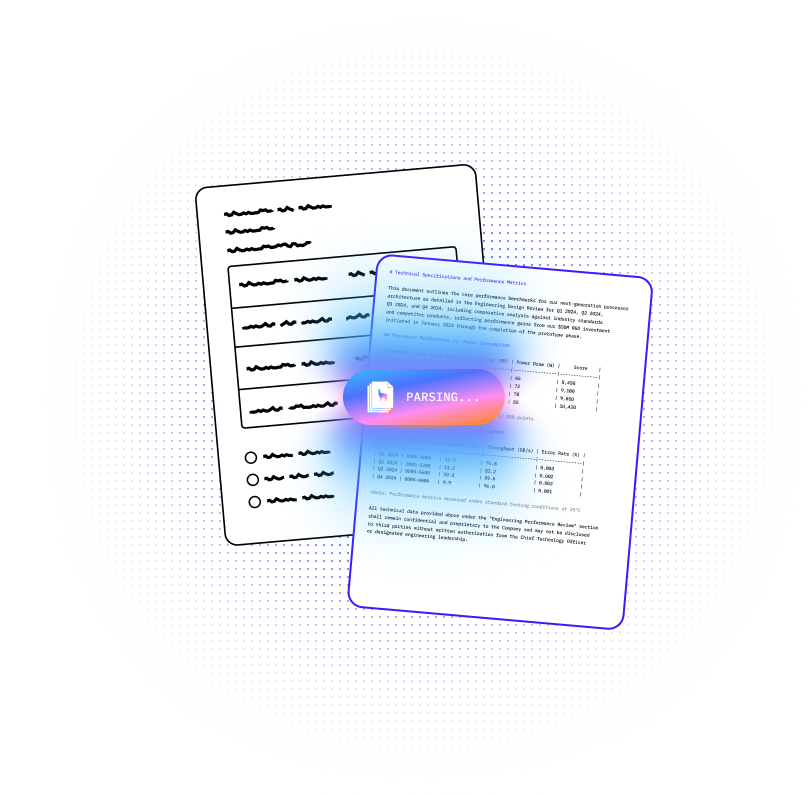
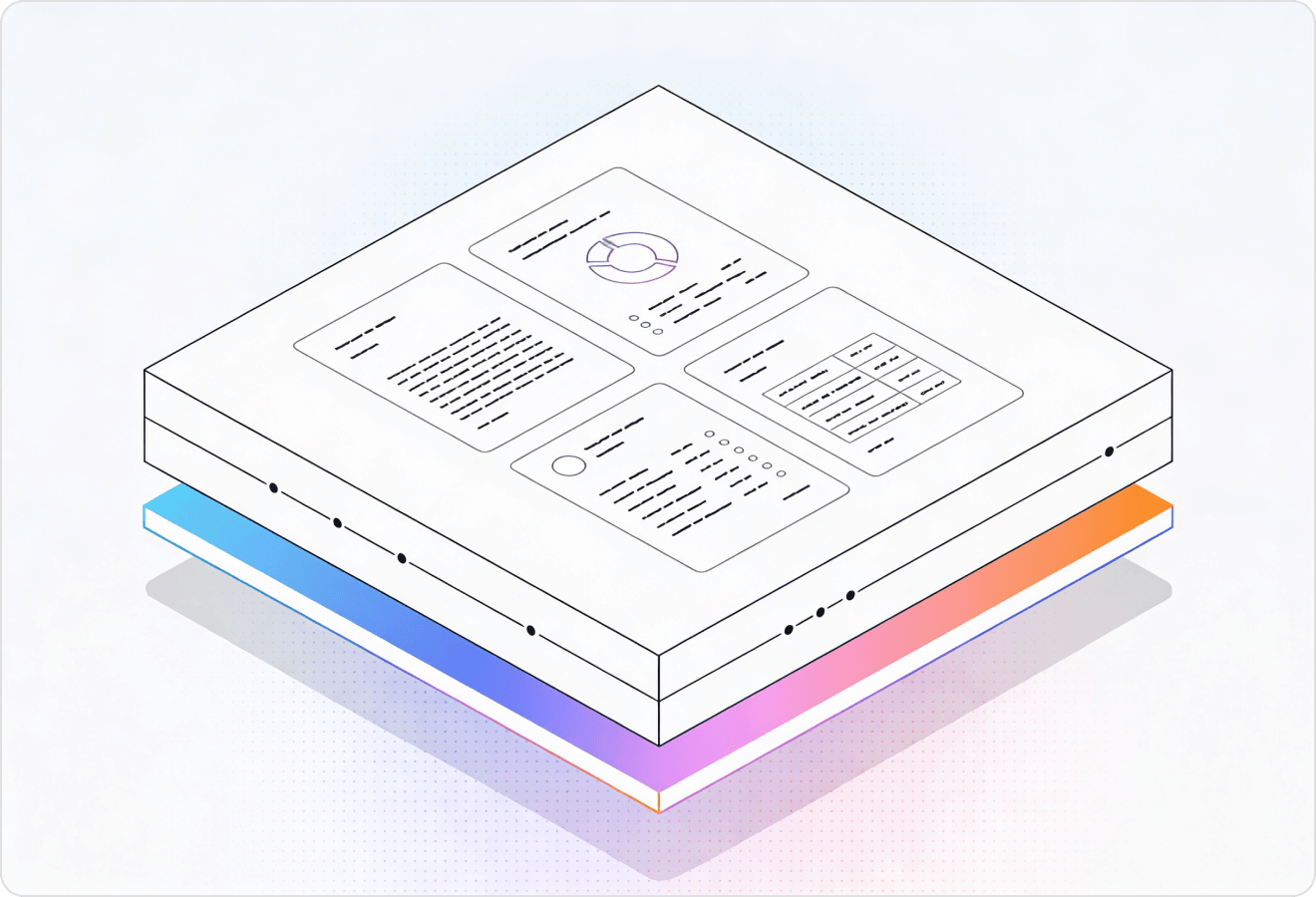
LlamaParse lets your Node.js app turn messy PDFs into clean, structured Markdown or JSON that downstream code can trust. It uses agentic document parsing to understand layout, tables, and embedded visuals, with validation loops and metadata for confident automation.
Best-in-Class Accuracy

Turn user-uploaded PDFs into clean Markdown or JSON in Node.js with LlamaParse, so your product can ship reliable document ingestion without weeks of brittle parsing code. Layout-aware extraction preserves tables and reading order, which means your AI features can cite the right section and your support team stops debugging broken customer files.

Parse bank statements, pay stubs, and underwriting packages into structured JSON with granular metadata (page + coordinates) to power auditable decisioning and faster exception handling. LlamaParse extracts complex tables and multi-column disclosures accurately, reducing manual re-keying and cutting time-to-funding for approved loans.

Ingest contracts, exhibits, and scanned PDFs with agentic document parsing that preserves clause structure, headings, and references instead of flattening everything into unreliable text. Output verifiable extractions with citations so legal teams can review faster and trust what the system pulled from each page.

Extract BOMs, spec sheets, safety manuals, and drawing packages where tables, symbols, and mixed layouts typically break traditional parsers. Multimodal parsing converts charts and technical content into AI-ready formats, enabling faster QA checks, parts matching, and automated compliance documentation in Node.js pipelines.
The Solution
01
LlamaParse understands page structure (headings, multi-column flows, headers/footers) so extracted text keeps its real reading order. In a Node.js PDF parsing pipeline, this means you can stop writing brittle heuristics to un-scramble content after extraction.
02
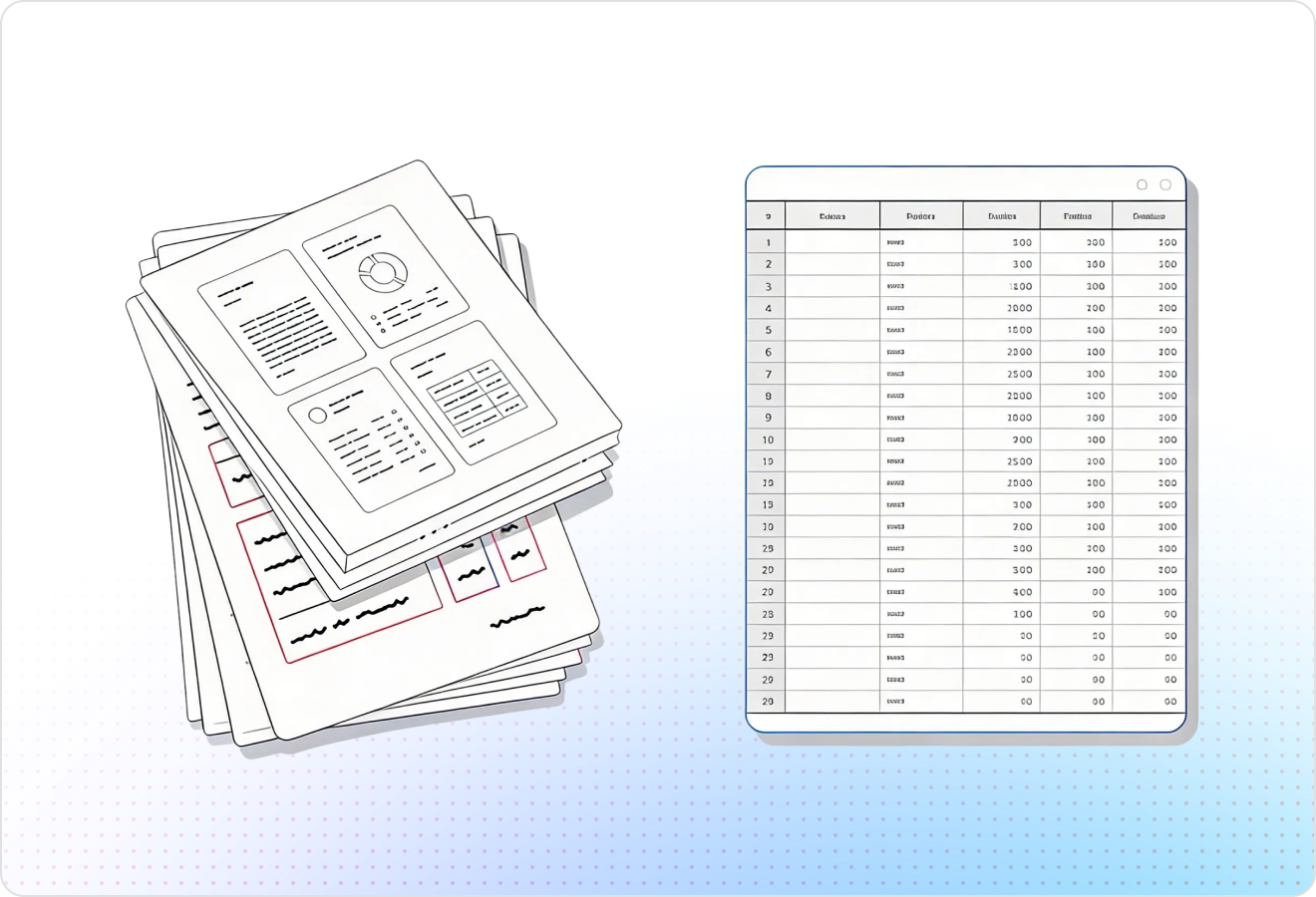
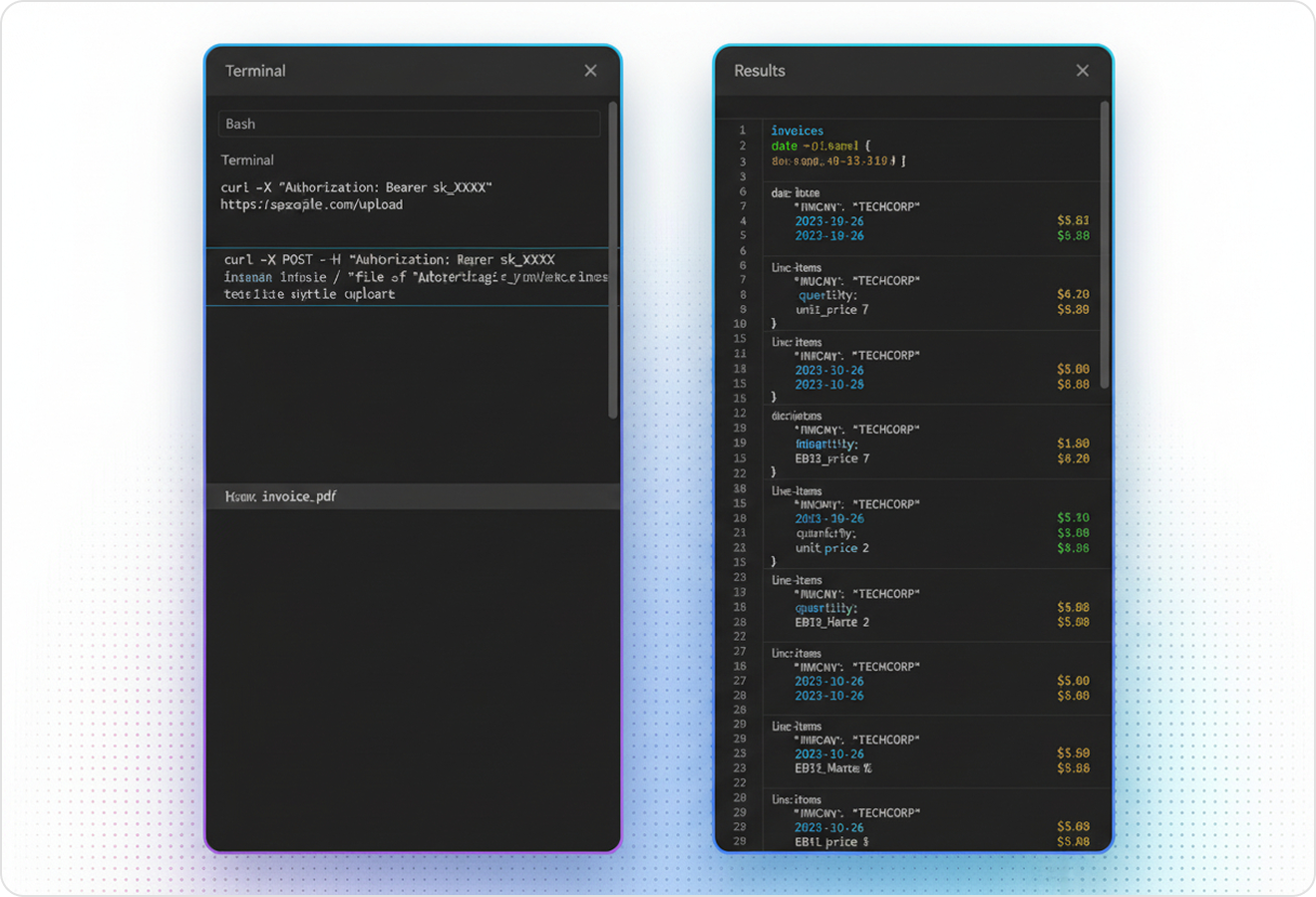
LlamaParse reliably captures tables from PDFs—including nested tables and cell alignment—without flattening everything into unreadable text. For Node.js apps ingesting invoices, reports, or statements, you get usable rows and columns you can validate and push straight into your database.
03
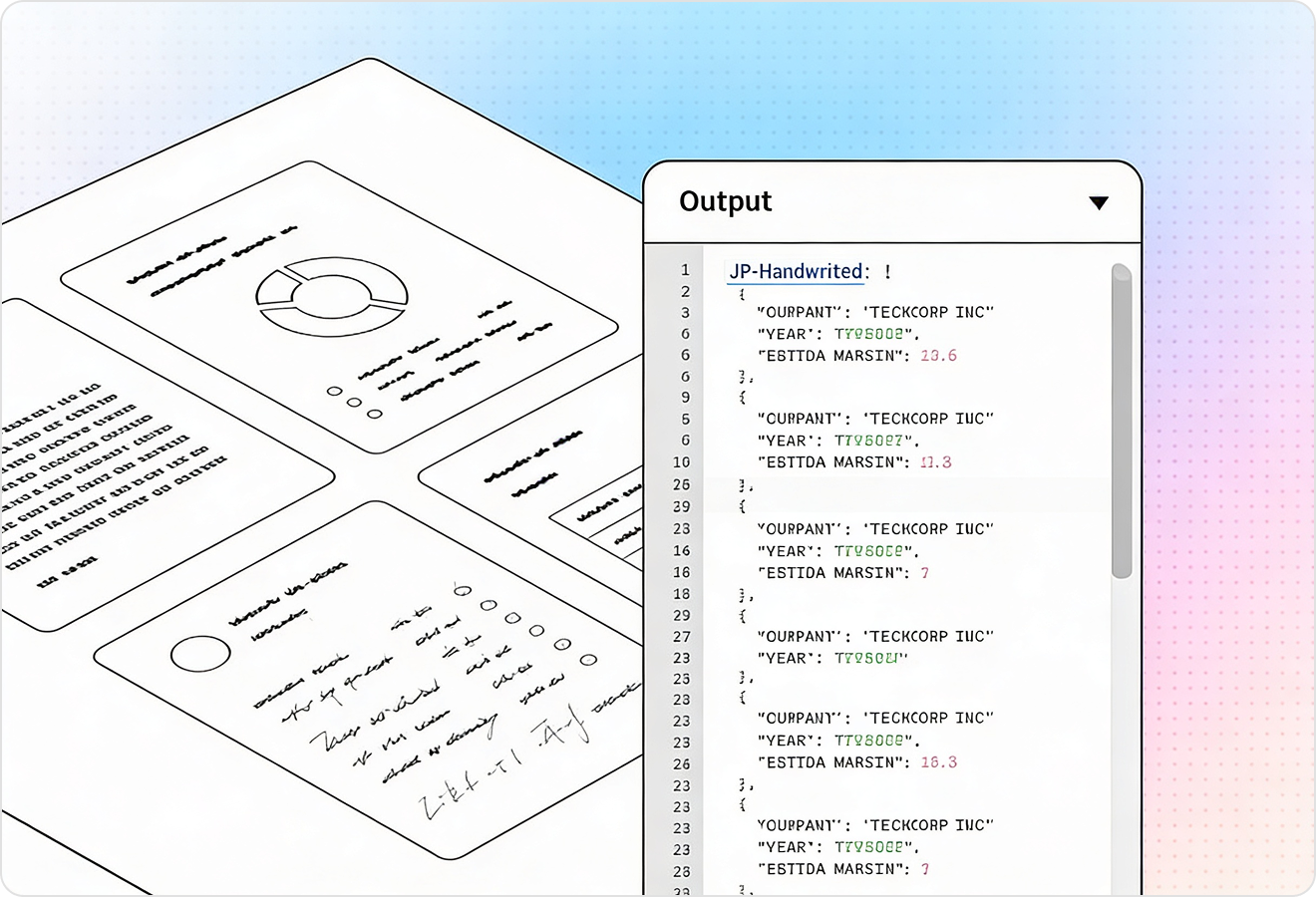
LlamaParse can emit structured JSON with element-level metadata like page numbers, content types, and bounding boxes for traceability. This is ideal in Node.js services where you need deterministic parsing outputs for downstream ETL, auditing, and UI highlighting.
04
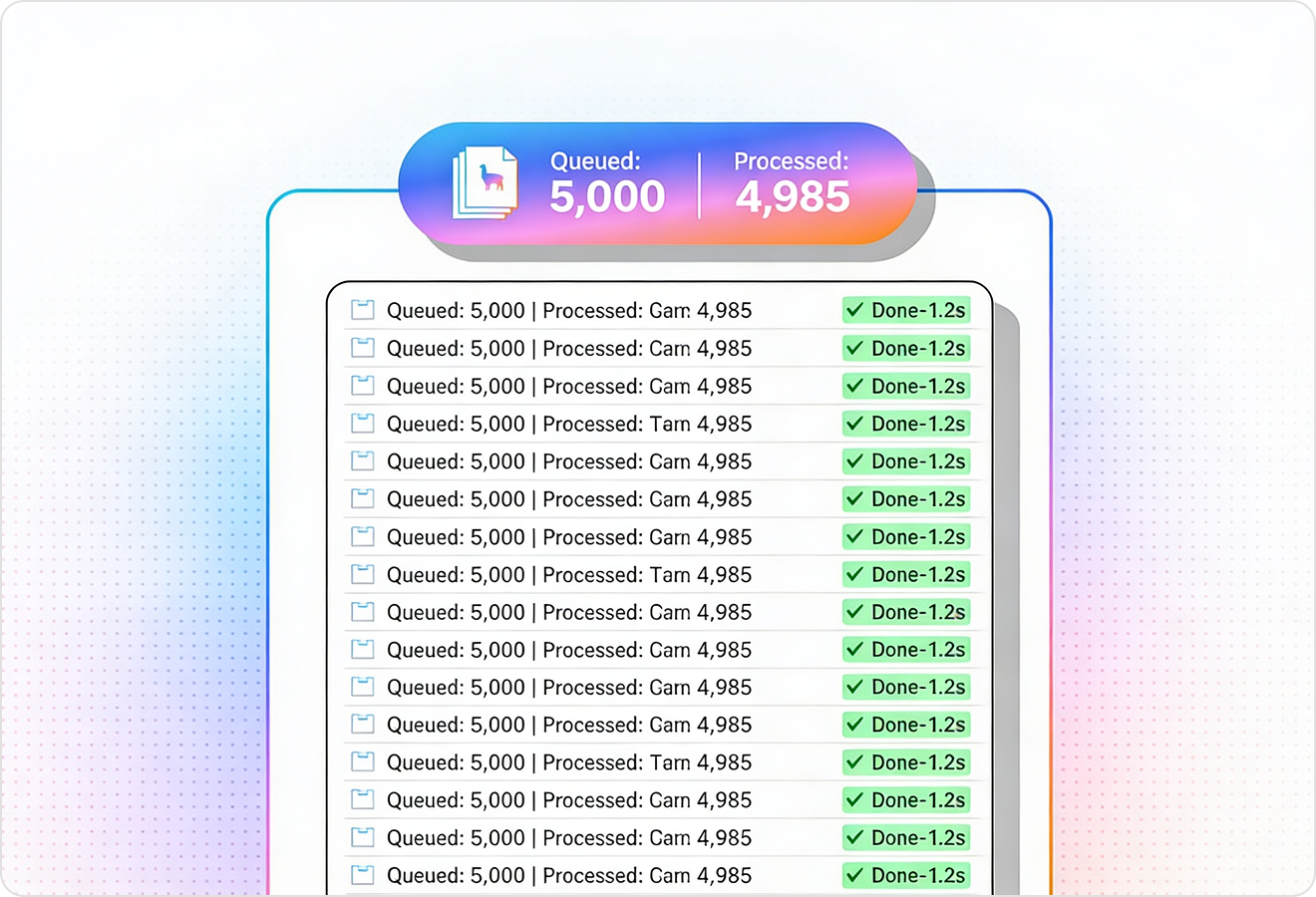
LlamaParse runs validation and self-correction steps to reduce common extraction errors on messy or scanned PDFs. In practice, your Node.js PDF parsing jobs require less post-processing and fewer manual exception cases before the data is production-ready.
Technical OCR documentation
Explore our developer guides to easily connect your document pipelines to LlamaParse.
Explore the documentation
Our AI catches the typos that tired eyes miss.

Export to Excel, JSON, XML, or directly via API.

SOC2 Type II compliant with end-to-end encryption.

Train the tool on your specific forms in minutes, not days.

Average processing time of <3 seconds per page.
LlamaParse’s support of a wide variety of filetypes and its accuracy of parsing made it the best tool we tested in our evaluations. The LlamaIndex team was very responsive and we were off to the races within a day.
Common FAQs
01
Layout-aware parsing preserves the real reading order by understanding headings, multi-column flows, and headers/footers. That means your Node.js jobs stop producing scrambled text and you can remove brittle post-processing heuristics. You get cleaner outputs that are reliable across different PDF templates.
02
Yes—tables are captured as true rows and columns with cell alignment preserved, even with complex or nested structures. This makes validation and database inserts straightforward in Node.js, without manually reconstructing grids from flattened text. It’s built for the kinds of documents teams actually ingest at scale.
03
You can get structured JSON with element-level details like page numbers, content type, and bounding boxes. This makes outputs deterministic for ETL and auditing, and enables UI features like highlighting the exact source region in the PDF. It’s a practical fit for production Node.js services that need traceability.
04
How does it handle messy PDFs or scans that typically break parsers?
Agentic correction loops validate results and apply self-correction steps to reduce common extraction mistakes. In practice, your Node.js pipeline needs fewer custom exception handlers and less manual review. You spend more time using the data and less time cleaning it.
05
Will it reduce the amount of custom code I need to maintain in Node.js?
Yes—by preserving layout and producing consistent structured output, it eliminates much of the glue code teams write to re-order text, detect sections, and patch table extraction. That reduces maintenance when document templates change. Your parsing layer becomes simpler, more testable, and easier to scale.
06
Is it suitable for production use cases like ETL, auditing, and downstream automation?
The combination of structured JSON, metadata, and correction loops is designed for deterministic, repeatable outputs—key for ETL and compliance workflows. You can trace every extracted value back to its page location and confidently automate downstream steps. It’s a solid foundation for reliable document pipelines in Node.js.