Nov 14, 2025
Document AI: The Next Evolution of Intelligent Document ProcessingPersona
Industry
Use cases
Timesheet OCR
[ Timesheet OCR ]

Use LlamaParse to turn messy timesheets into validated payroll data with fewer manual fixes.
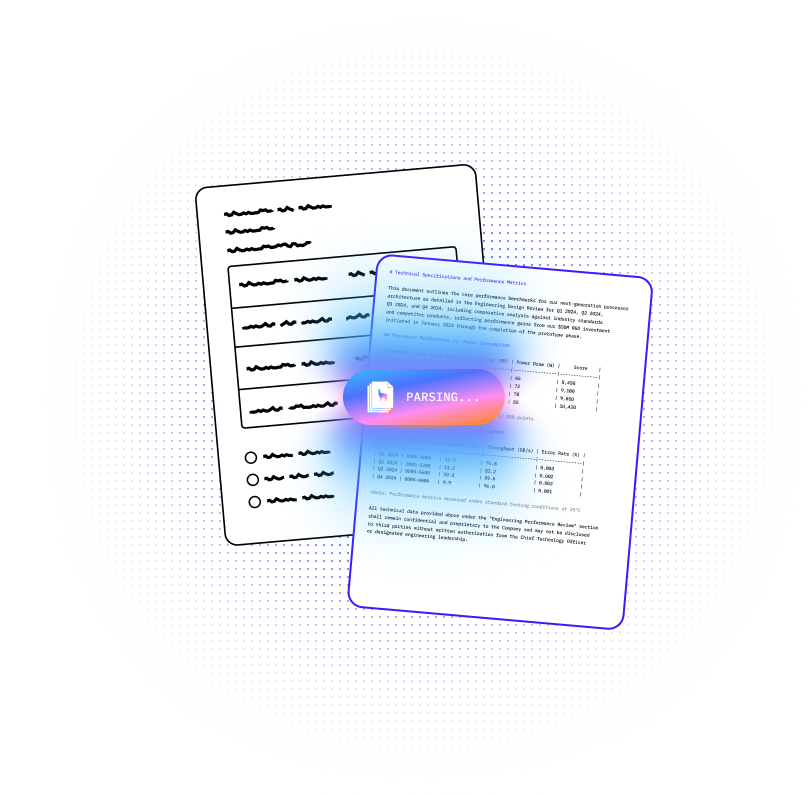


LlamaParse turns messy timesheets into reliable, structured records you can sync into payroll, billing, and project systems without manual cleanup. It’s layout-aware and uses agentic parsing with validation loops, so edits, handwritten notes, and tables stay accurate at scale.
Best-in-Class Accuracy

Turn messy supervisor timesheets, job codes, and crew hours into clean JSON/Markdown with layout-aware table extraction—even when the form changes across projects. Route exceptions to review with citations and coordinates so payroll disputes get resolved fast and job-costing stays accurate.

Parse clinical staff timesheets and on-call rosters into structured records that map cleanly to pay differentials, shift types, and cost centers without manual rekeying. Natural-language parsing instructions help standardize outputs across departments while preserving traceability for audits and compliance.

Extract driver timecards and dispatch times from scanned documents and mobile photos, including multi-column layouts with breaks, stops, and overtime rules. Multimodal parsing captures handwritten notes and embedded images so operations teams can reconcile hours, detention, and accessorials against TMS data.

Automate timesheet ingestion from PDFs, emailed scans, and exports into a single schema using LlamaParse JSON mode, so you can ship payroll and billing workflows without building brittle parsing code. Tier-based agentic processing keeps costs predictable by applying heavier models only to the gnarly pages that would otherwise break traditional OCR.
The Solution
01
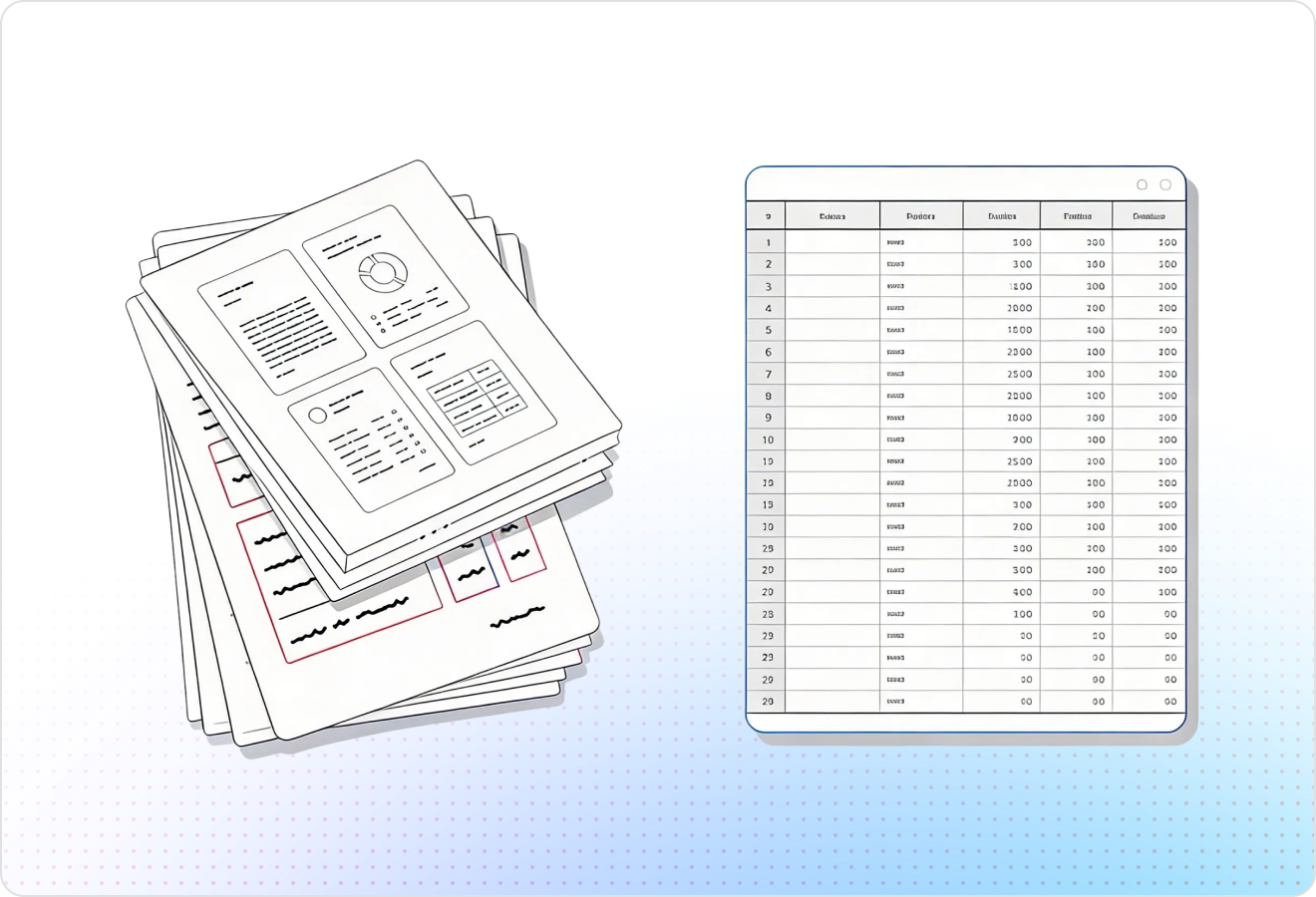
LlamaParse understands timesheet layout and reliably extracts day-by-day grids, breaks, and totals without scrambling rows or columns. That means you can ingest messy PDFs and scans and still get correct hours per date, per job, and per employee.
02
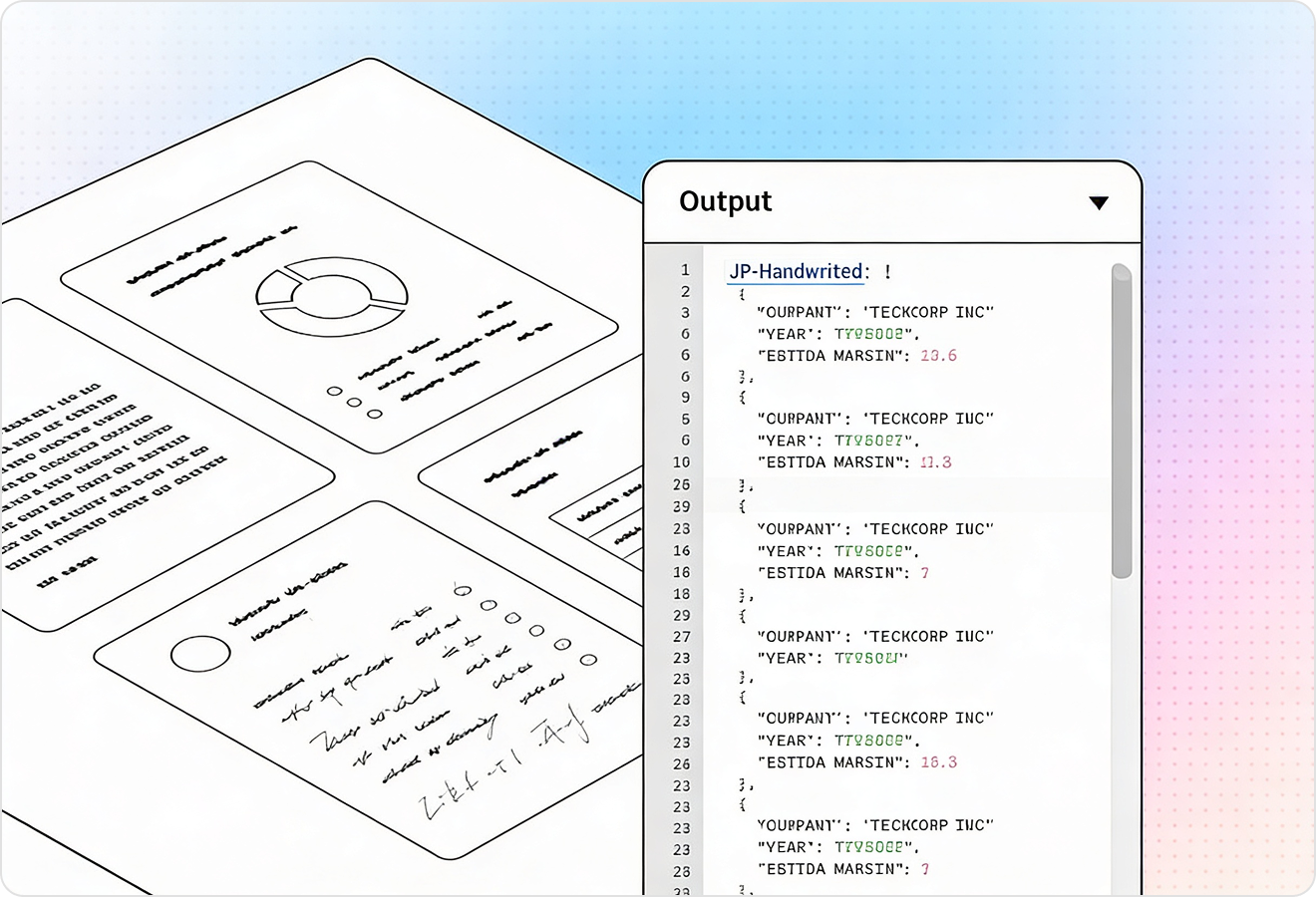
Export timesheets as clean JSON so fields like employee name, pay period, line items, and total hours land in a predictable schema. This makes it straightforward to push data into payroll, billing, or approval workflows without writing brittle post-processing.
03
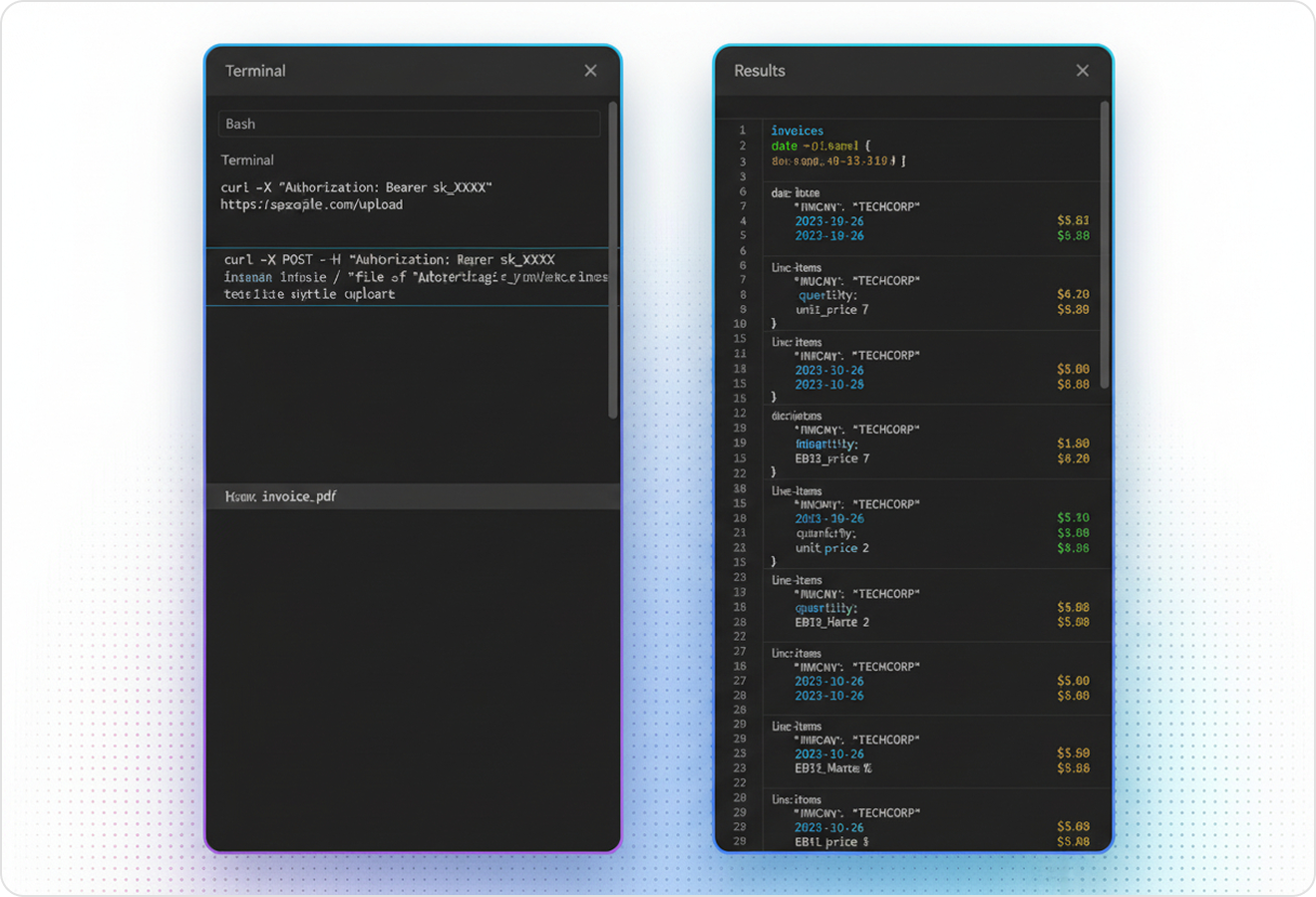
Every extracted value can include traceable metadata like page references and bounding boxes, so you can audit where “8.5 hours” came from on the original timesheet. It’s built for human-in-the-loop review and exception handling when a scan is ambiguous or incomplete.
04
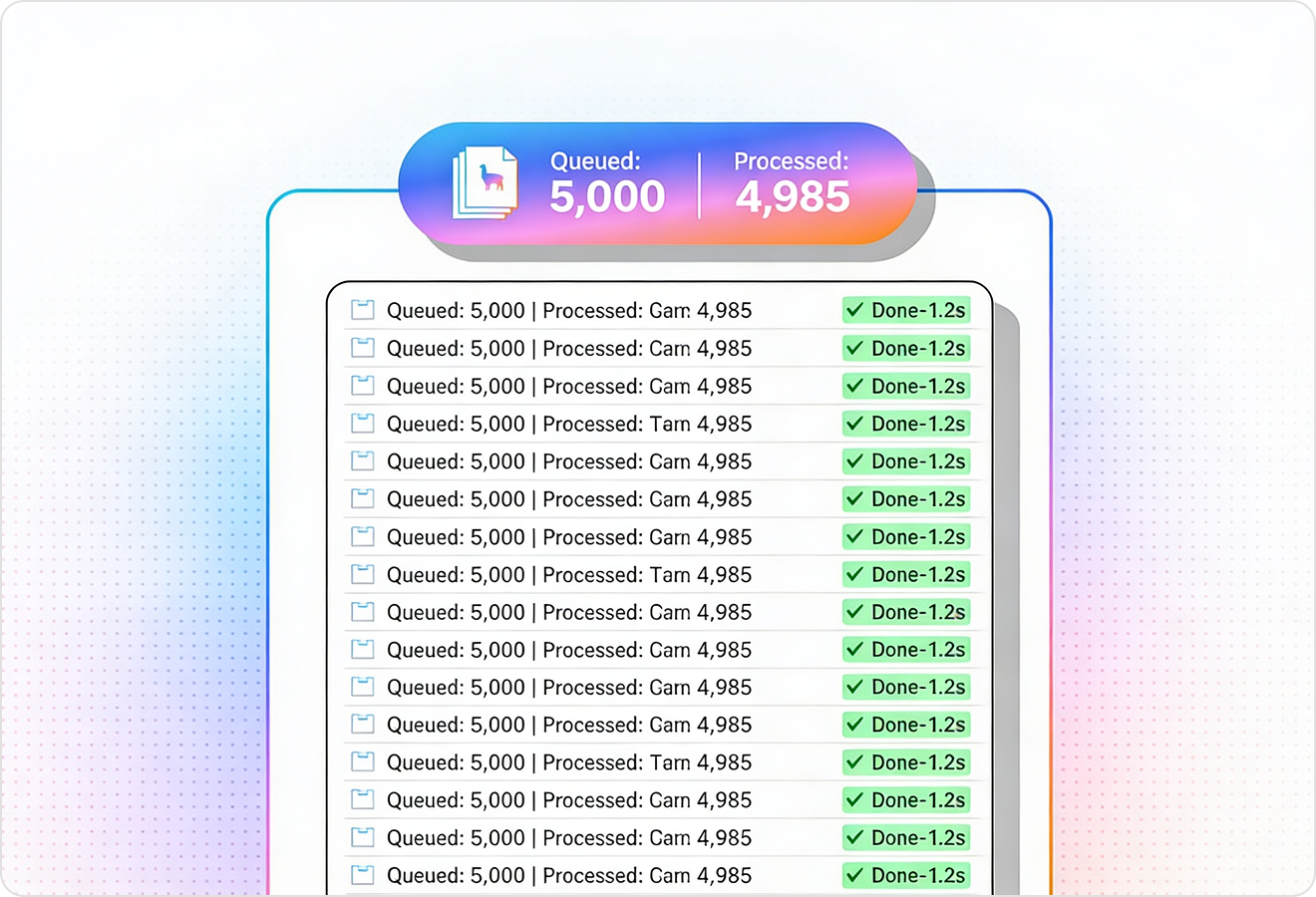
LlamaParse runs correction and validation steps to catch common timesheet issues like misread digits, shifted table cells, or inconsistent totals. This reduces manual QA by improving straight-through processing on real-world scans, faxes, and low-quality uploads.
Technical OCR documentation
Explore our developer guides to easily connect your document pipelines to LlamaParse.
Explore the documentation
Our AI catches the typos that tired eyes miss.

Export to Excel, JSON, XML, or directly via API.

SOC2 Type II compliant with end-to-end encryption.

Train the tool on your specific forms in minutes, not days.

Average processing time of <3 seconds per page.
LlamaParse’s support of a wide variety of filetypes and its accuracy of parsing made it the best tool we tested in our evaluations. The LlamaIndex team was very responsive and we were off to the races within a day.
Common FAQs
01
Yes. Layout-aware table capture preserves the day-by-day grid structure so breaks, job codes, and totals stay aligned with the right employee and date—even on messy PDFs and scanned images. This helps you trust the numbers without spending hours fixing scrambled tables.
02
You get structured JSON with a predictable schema for fields like employee name, pay period, line items, and total hours. That makes it easy to map data into payroll, invoicing, or approval systems with minimal transformation and fewer brittle parsing rules.
03
Each extracted value can include verifiable metadata such as page references and bounding boxes. This creates an audit trail for reviewers, making exception handling faster and giving you confidence for compliance and dispute resolution.
04
How does it handle low-quality scans, faxes, or partially cut-off uploads?
Auto validation loops are designed to catch common OCR failure modes like misread digits, shifted cells, and inconsistent totals. When a document is ambiguous, the extraction still provides traceable context so a reviewer can quickly confirm or correct the result.
05
Can it detect mistakes like totals that don’t match the sum of daily hours?
Yes. The system runs correction and validation steps to flag inconsistencies between line items and totals, reducing downstream payroll errors. This improves straight-through processing while ensuring edge cases are surfaced for review instead of silently passed through.
06
How much manual QA will we still need after implementing timesheet OCR?
Most teams see significantly less manual QA because the parser preserves table structure and validates common issues before output. For the small percentage of unclear scans, citations and metadata make reviews quick and targeted, so you only spend time where it’s truly needed.