Nov 14, 2025
Document AI: The Next Evolution of Intelligent Document ProcessingPersona
Industry
Use cases
Document Pipeline API
[ Document Pipeline API ]

Turn messy PDFs into verified JSON or Markdown with LlamaParse, so your pipeline runs reliably.
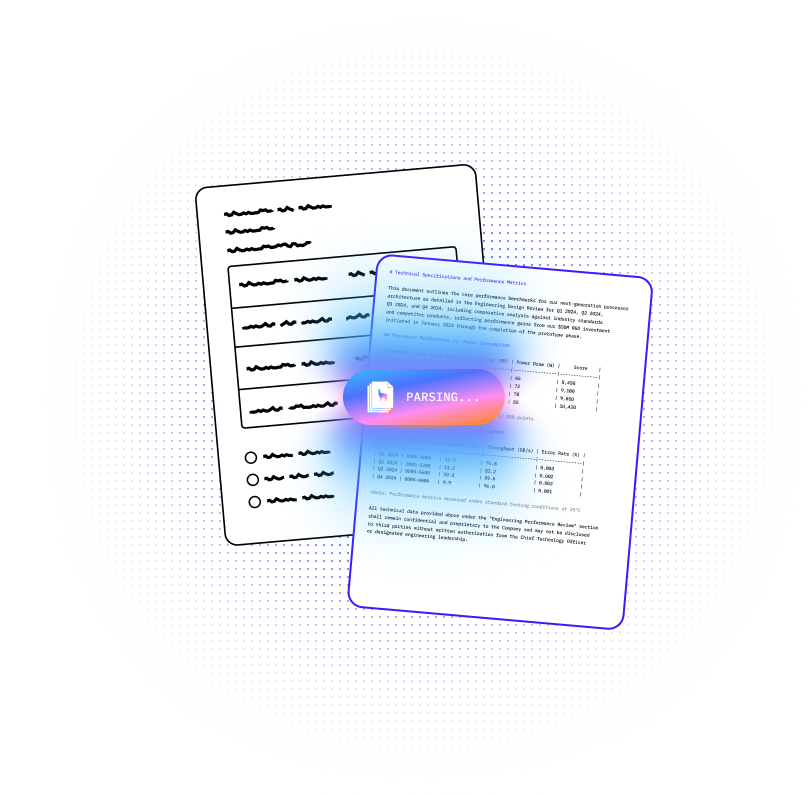


LlamaParse turns PDFs, scans, and weird vendor templates into clean JSON, Markdown, or HTML your Document Pipeline API can rely on. It reads layout, tables, and embedded visuals, then validates outputs with metadata so downstream extraction and automation stays accurate.
Best-in-Class Accuracy

Turn messy statements, ACORD forms, loss runs, and underwriting packs into clean JSON/Markdown with layout-aware table extraction so key fields don’t get scrambled across columns. Use confidence scores and citations to route only low-trust extractions to review while the rest flows straight into policy admin, claims, and KYC systems.

Parse bids, SOWs, change orders, permits, and spec PDFs into structured line items—even when they’re buried in multi-page tables, headers/footers, and scanned attachments. Convert drawings, schedules, and annotated exhibits into searchable, traceable outputs that make closeout packets and compliance audits dramatically faster.

Extract protocols, lab reports, and regulatory PDFs with multimodal parsing that converts charts into tables and equations into LaTeX so researchers can query the actual results, not just the surrounding text. Standardize outputs via natural-language parsing instructions to populate study databases without writing brittle post-processing code for every new template.

Ship a reliable document ingestion layer in days by using LlamaParse APIs to turn user-uploaded PDFs and docs into AI-ready Markdown/JSON with metadata you can filter and debug. Keep burn under control with auto routing and cost-optimizer modes that spend premium compute only on the pages that truly need it.
The Solution
01
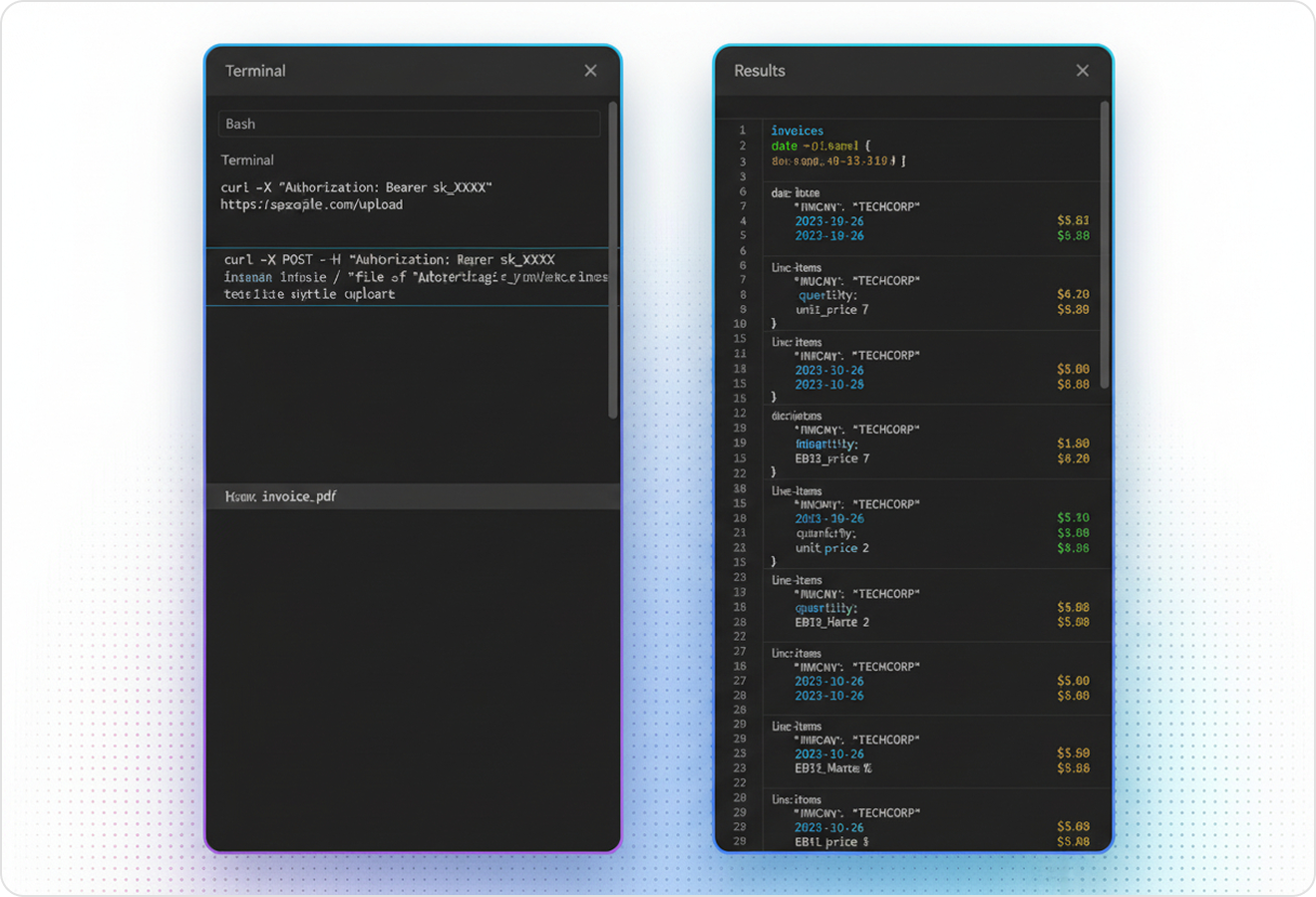
LlamaParse exposes straightforward REST endpoints and maintained Python/TypeScript SDKs, so you can drop parsing into any document pipeline without glue code. That makes it easy to standardize ingestion across services, queues, and worker fleets while keeping your pipeline interface stable.
02
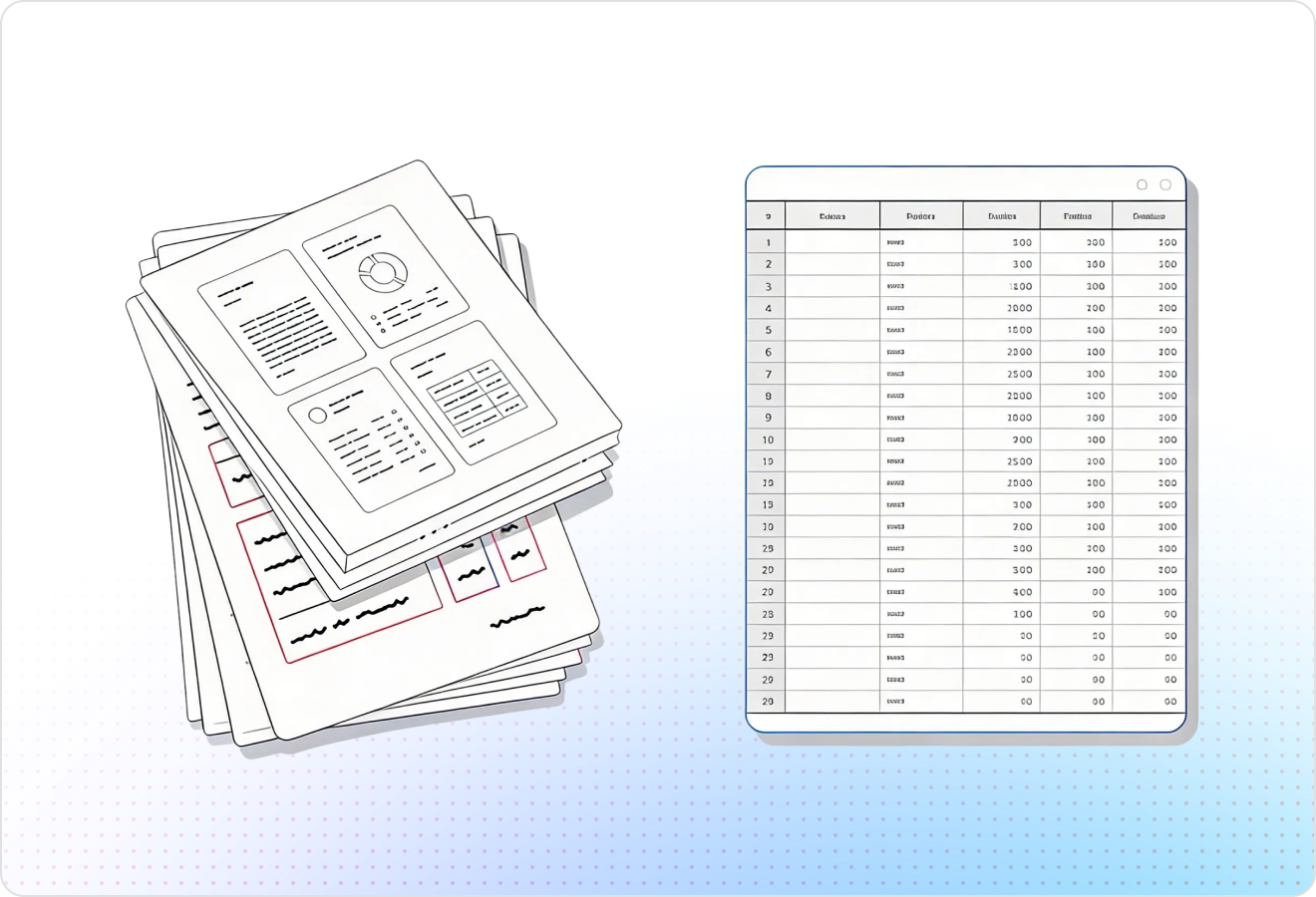
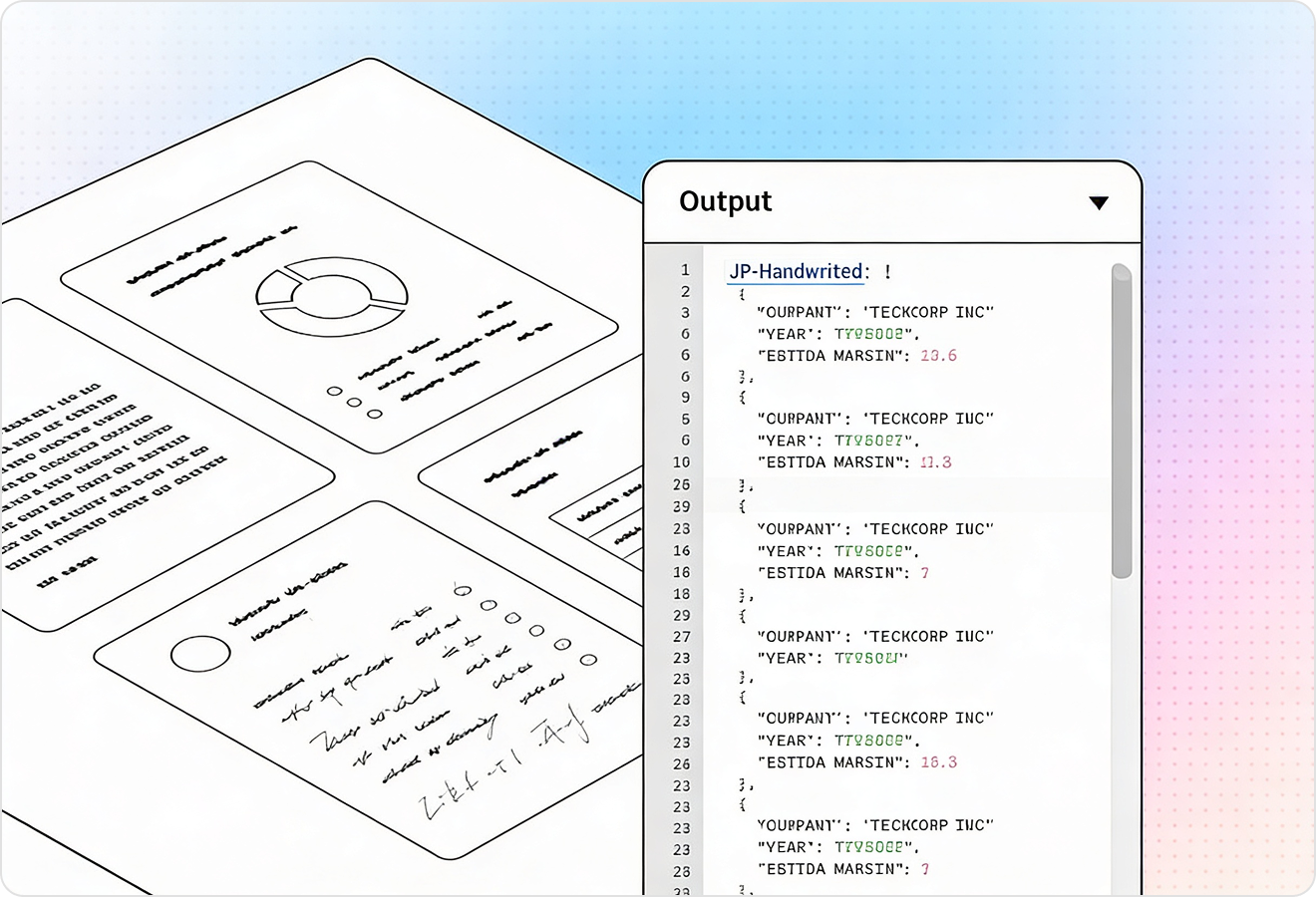
LlamaParse uses layout-aware vision to preserve reading order, sections, and tables instead of returning scrambled text. In a document pipeline API, that means downstream steps (chunking, indexing, extraction) can operate on reliable structure rather than brittle heuristics.
03
Return clean, structured JSON with element types, page references, and spatial coordinates for every extracted node. This lets your pipeline API provide traceability, deterministic post-processing, and programmatic routing based on document structure.
04
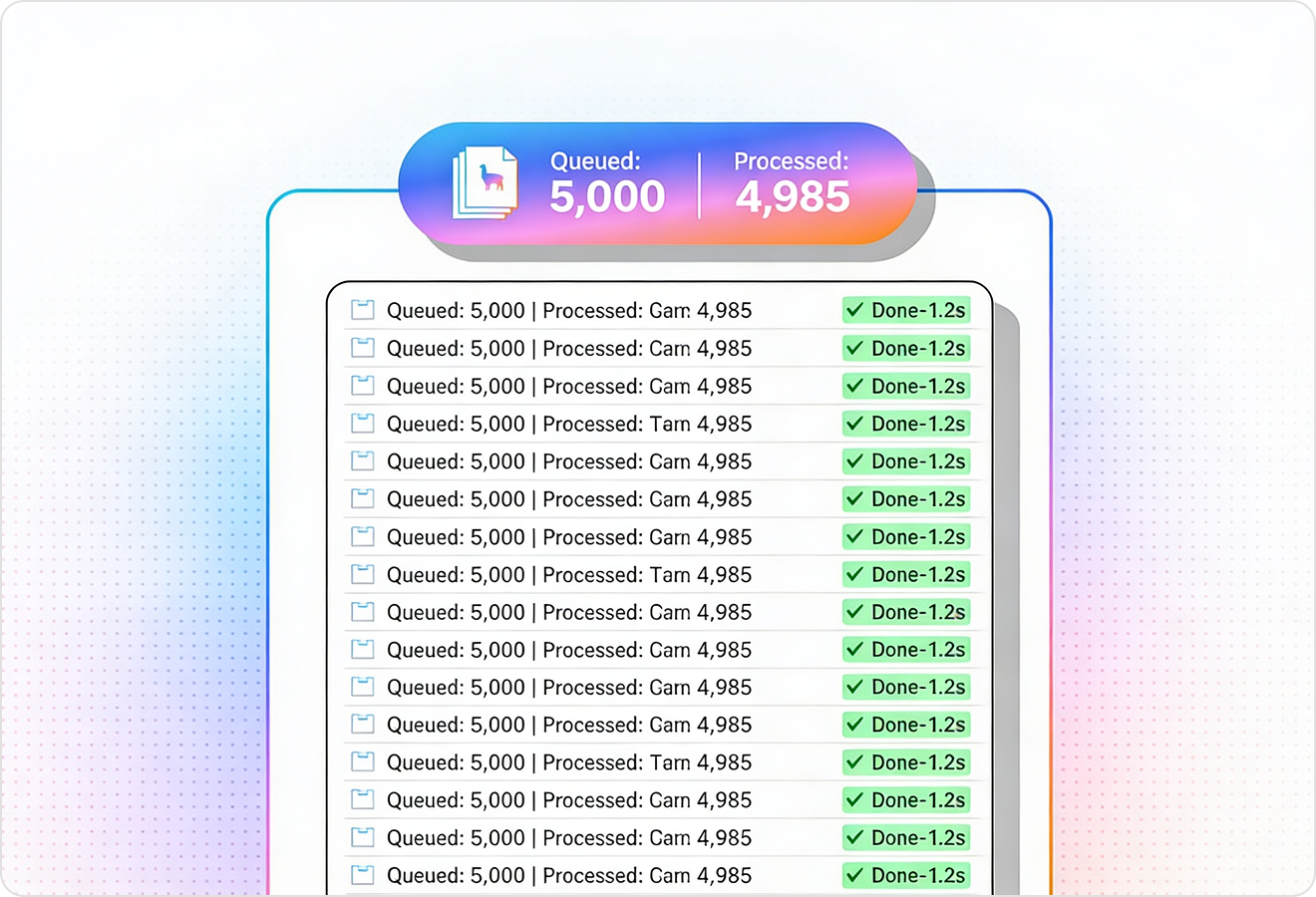
Auto mode routes simple pages to faster, cheaper parsing and escalates only the hard cases to more capable models when needed. For a pipeline API, that delivers predictable latency and cost controls without forcing you to maintain separate parsers or custom decision logic.
Technical OCR documentation
Explore our developer guides to easily connect your document pipelines to LlamaParse.
Explore the documentation
Our AI catches the typos that tired eyes miss.

Export to Excel, JSON, XML, or directly via API.

SOC2 Type II compliant with end-to-end encryption.

Train the tool on your specific forms in minutes, not days.

Average processing time of <3 seconds per page.
LlamaParse’s support of a wide variety of filetypes and its accuracy of parsing made it the best tool we tested in our evaluations. The LlamaIndex team was very responsive and we were off to the races within a day.
Common FAQs
01
You can start with simple REST endpoints and move faster with the maintained Python and TypeScript SDKs. Most teams are able to plug parsing into queues, workers, or microservices without writing glue code, keeping the interface stable as your pipeline evolves.
02
The API produces layout-aware output that preserves structure like headings, paragraphs, and tables instead of scrambling content. That means downstream steps like chunking, indexing, and extraction can rely on consistent structure rather than fragile heuristics.
03
Yes—JSON mode returns clean structured nodes with element types, page references, and spatial coordinates. This makes it easy to audit results, build deterministic post-processing, and route documents programmatically based on what was found.
04
How do you balance cost and latency when documents vary from simple to complex?
Tiered agentic processing automatically routes easy pages to faster, lower-cost parsing and escalates only the hard cases when needed. You get more predictable spend and performance without maintaining separate parsers or custom decision logic.
05
Can we standardize parsing across multiple services and worker fleets without breaking changes?
Yes—the REST API and SDKs are designed to keep your pipeline interface consistent across services, queues, and distributed workers. That helps you standardize ingestion once and scale confidently without constantly reworking integrations.
06
What makes this better than building our own parser or stitching together OCR + rules?
DIY stacks often degrade on real-world layouts and require ongoing maintenance as formats change. This API gives you reliable layout-aware structure and metadata out of the box, so your team can focus on extraction and product logic instead of parser upkeep.