Nov 14, 2025
Document AI: The Next Evolution of Intelligent Document ProcessingPersona
Industry
Use cases
Tax Return OCR
[ Tax Return OCR ]

Use LlamaParse to turn messy tax returns into clean JSON with confidence scores you can trust.
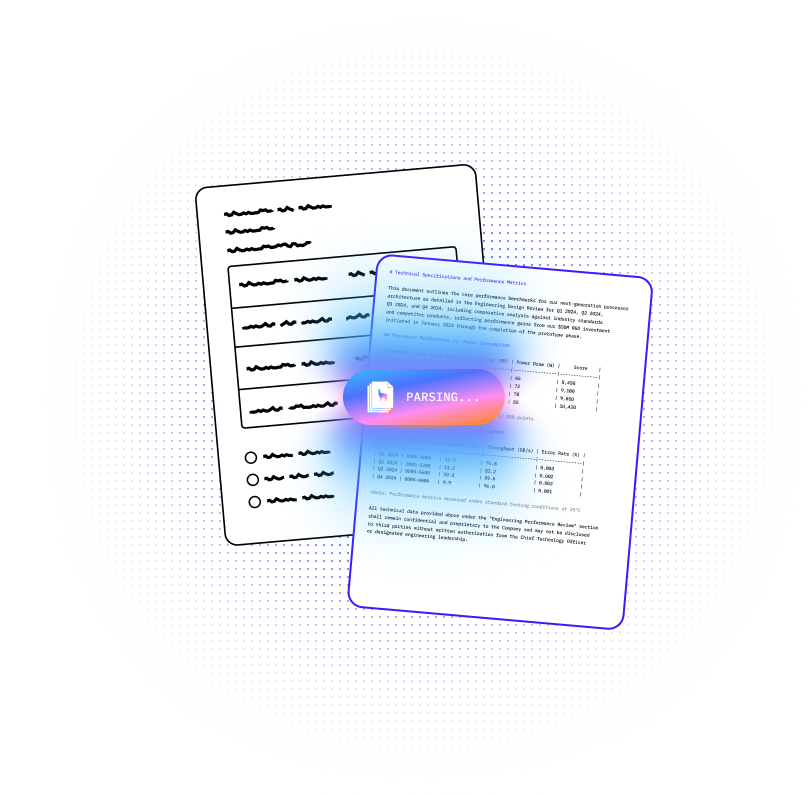


LlamaParse turns messy 1040s, W-2s, and multi-page attachments into reliable, structured fields your workflow can actually trust. Its agentic parsing understands layout and tables, runs validation loops, and returns JSON or Markdown with metadata for review.
Best-in-Class Accuracy

Use LlamaParse to turn mixed-format client tax packets (W-2s, 1099s, K-1s, brokerage statements, prior-year returns) into clean JSON and Markdown with citations, so staff stop re-keying fields and hunting for line items. Layout-aware table extraction preserves multi-column forms and footnotes, while validation loops reduce review time and help you hit filing deadlines with fewer errors.

Automate income verification by parsing tax returns and schedules into a standardized underwriting schema, even when scans are skewed, low-res, or include stamped annotations that break traditional OCR. Granular metadata and confidence scores let you route only exceptions to ops, improving decision SLAs and lowering per-loan processing cost without sacrificing auditability.

Convert applicant tax returns into structured income and business-cashflow summaries to speed lease approvals for self-employed renters and reduce back-and-forth for missing details. Multimodal parsing captures tables and attachments reliably, so your team can validate eligibility faster and document decisions consistently for compliance.

Ship tax-return ingestion in days by calling LlamaParse APIs to extract key fields into your product’s data model, rather than building brittle, form-specific parsing rules that break every tax season. Tier-based processing and cost controls keep unit economics predictable while you scale from pilot to production across varied document formats.
The Solution
01
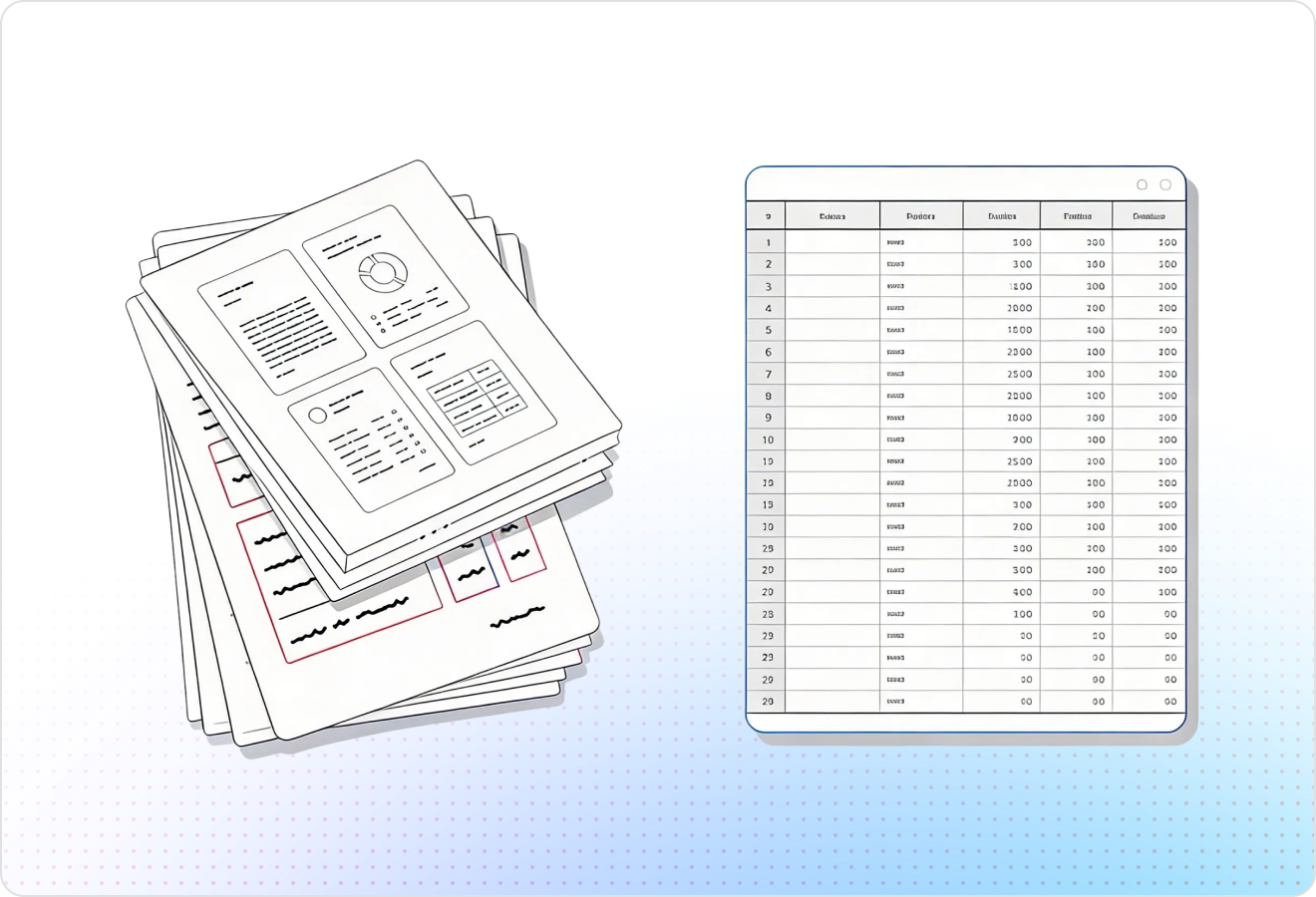
LlamaParse understands page layout and reading order in dense, multi-section tax returns, including multi-column blocks, headers/footers, and repeated schedules. That means your downstream pipeline gets clean, correctly ordered text instead of scrambled fields that break validations and mapping.
02
LlamaParse extracts complex tables and line-item grids into structured representations without losing row/column alignment. This is critical for tax returns where amounts, codes, and subtotals must stay attached to the right line numbers and descriptions.
03
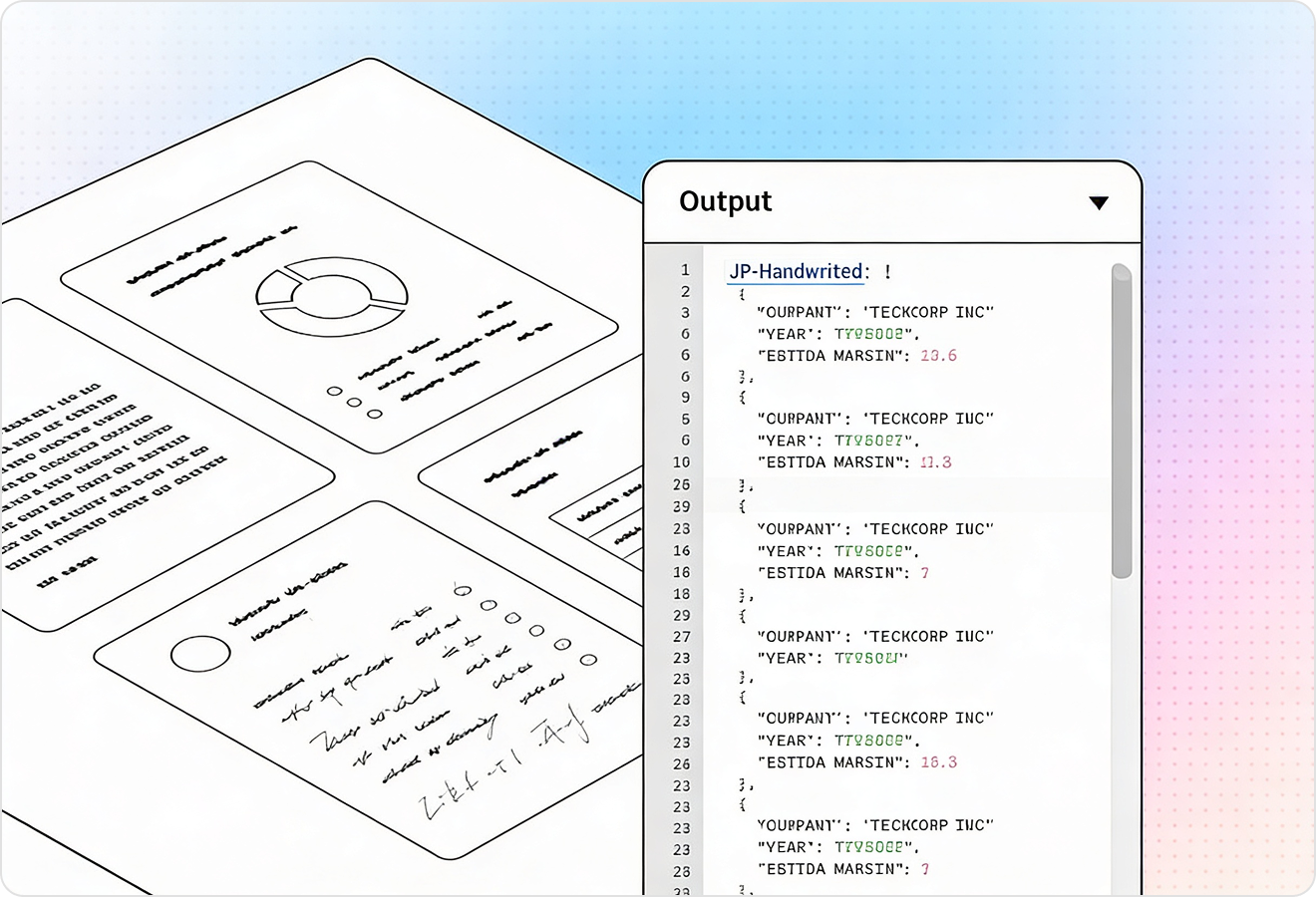
LlamaParse can return AI-ready JSON with granular metadata like page numbers and coordinates for each extracted element. For tax return processing, this gives you traceability to audit every captured value and quickly route low-confidence items to review.
04
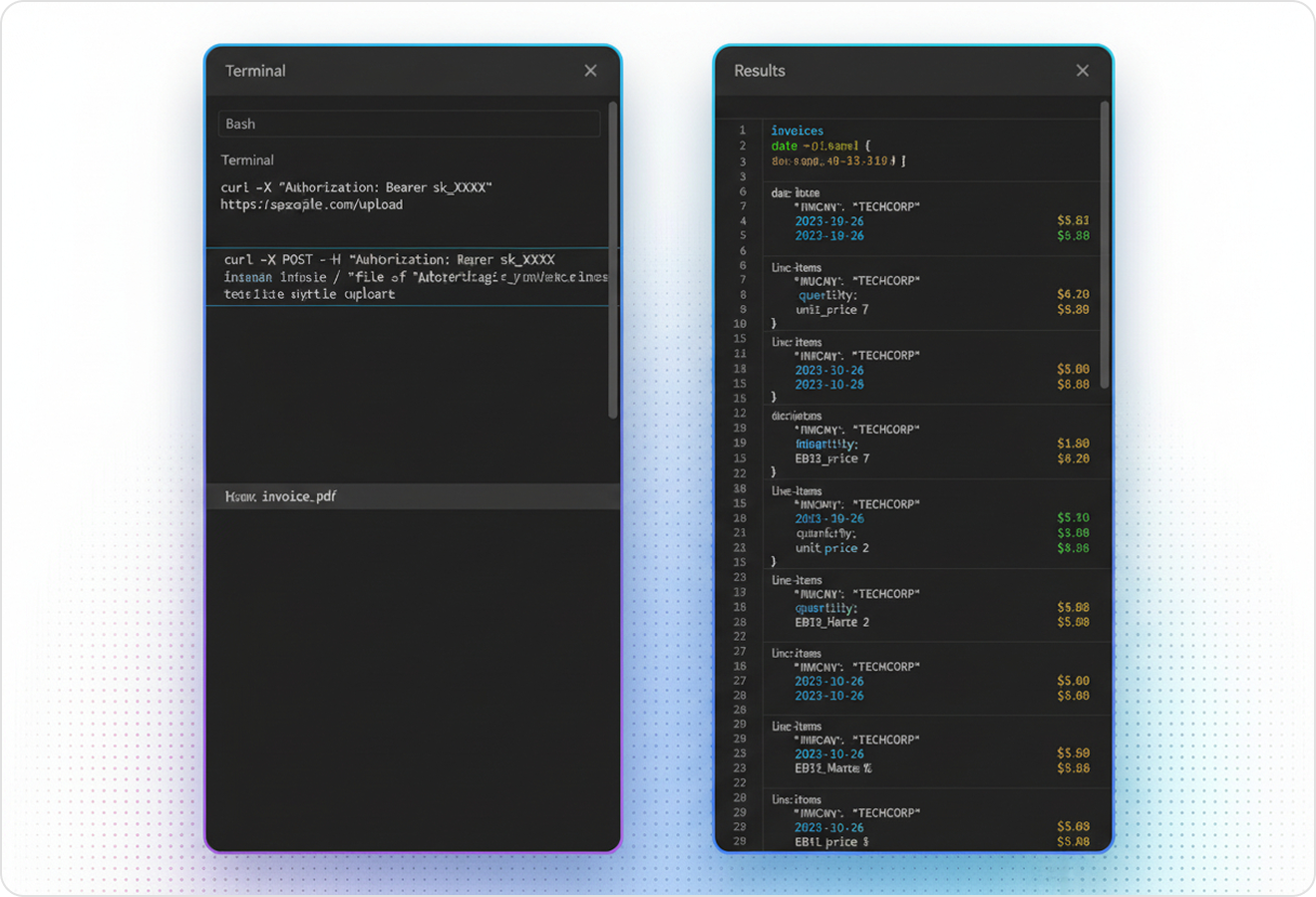
LlamaParse uses built-in validation and self-correction loops to catch common extraction failures like misread digits, swapped columns, or missing negatives. The result is higher straight-through processing on real-world scans and fewer manual fixes before filing or reconciliation.
Technical OCR documentation
Explore our developer guides to easily connect your document pipelines to LlamaParse.
Explore the documentation
Our AI catches the typos that tired eyes miss.

Export to Excel, JSON, XML, or directly via API.

SOC2 Type II compliant with end-to-end encryption.

Train the tool on your specific forms in minutes, not days.

Average processing time of <3 seconds per page.
LlamaParse’s support of a wide variety of filetypes and its accuracy of parsing made it the best tool we tested in our evaluations. The LlamaIndex team was very responsive and we were off to the races within a day.
Common FAQs
01
Our layout-aware parsing follows the actual reading order across columns, headers/footers, and repeated schedules, so extracted text and fields don’t get scrambled. That means your mapping rules and validations run cleanly, even on dense returns and add-on forms.
02
Yes—complex tables are captured as structured data while preserving row/column relationships and line numbers. This keeps amounts, codes, and subtotals tied to the correct descriptions, reducing downstream reconciliation errors.
03
We can return AI-ready JSON with citations like page numbers and coordinates for each extracted element. That traceability makes it easy to verify values during review, support audits, and explain where each number came from.
04
How do you handle common OCR mistakes like swapped columns, missed negatives, or misread digits?
Built-in validation and auto-correction loops detect and fix frequent failure modes before results reach your system. You get higher straight-through processing on real-world scans and fewer manual corrections before filing or reconciliation.
05
What happens when the scan quality is poor or the return includes non-standard layouts and attachments?
The parser is designed for messy, real-world documents and uses layout signals to stay resilient when formatting varies. When confidence is low, citations make it straightforward to route only the specific fields or pages for quick human review.
06
How quickly can we integrate this into our existing tax return processing pipeline?
You can integrate via JSON outputs that are easy to map into your current schema and validation flow, with citations to support exception handling. Most teams start with a pilot on a few return types, then expand once extraction accuracy and review time meet targets.